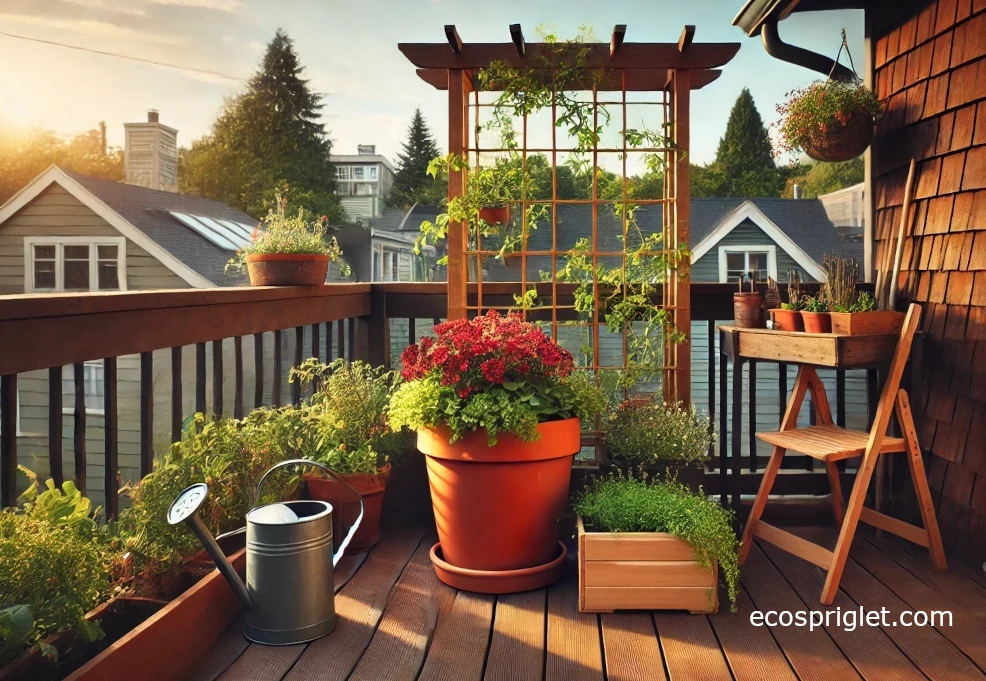
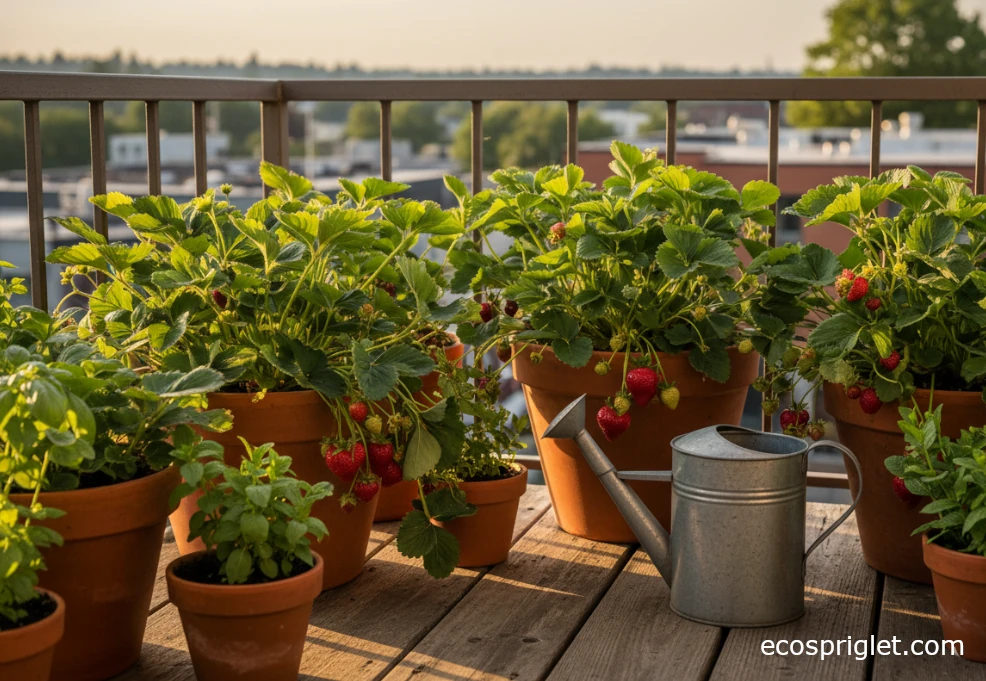
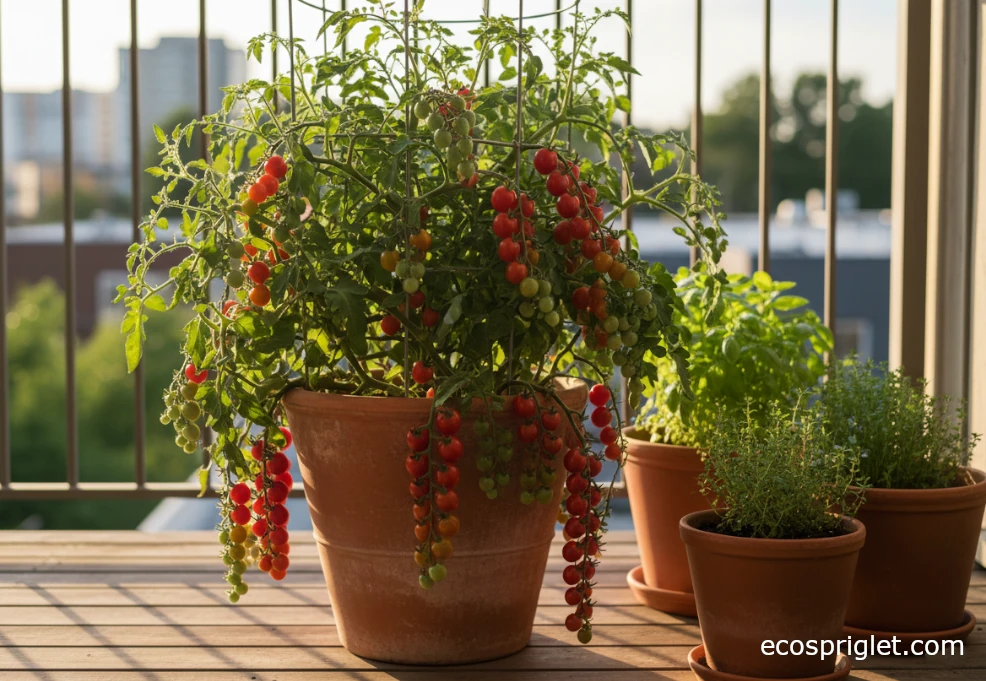
The best plants for pots are not always the showiest ones on the garden center bench. They are the plants that fit your light, your container size, your watering habits, and the real conditions of a balcony or patio. On a small urban terrace, a plant has to earn its space. It should either bloom for weeks, give you structure, handle heat, feed pollinators, provide privacy, or make your apartment feel a little more alive when you step outside with coffee.
For beginners, I like to separate container plants into three simple groups: dependable flowers for color, tough foliage plants for structure, and practical edibles or houseplants that can live in pots with the right care. Outdoor potted plants dry faster than plants in the ground, especially on windy balconies, so pot size and drainage matter as much as the plant itself. Illinois Extension notes that full sun generally means at least 6 hours of direct sunlight, and container plants often need frequent watering because pots dry quickly.
Here is how I would choose plants for a small-space container garden without wasting money on the wrong pot, the wrong plant, or a setup that becomes a chore by July.
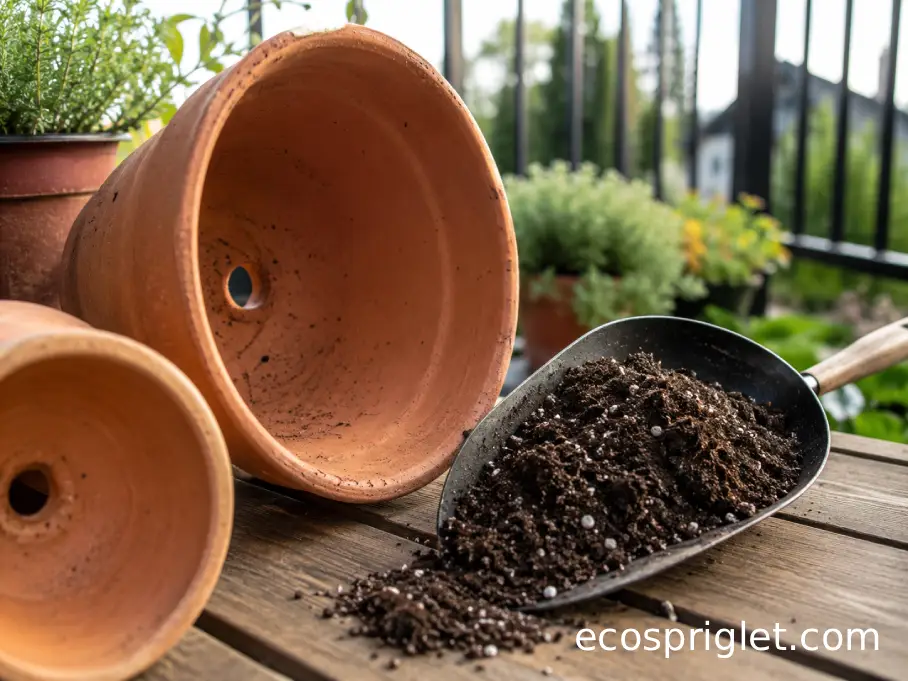
Start With the Pot Before You Pick the Plant
A good container starts with three things: enough root space, drainage holes, and a potting mix made for containers. Garden soil is usually too heavy for pots, especially on a balcony where water needs to drain cleanly and roots need air. Oregon State University Extension recommends all-purpose potting soil with ingredients such as perlite or vermiculite for drainage, while Illinois Extension explains that gravel inside the bottom of a pot does not improve drainage and can leave soil wetter above the gravel layer.
For most annual flowers, herbs, and compact foliage plants, a 10- to 14-inch pot is a comfortable starting size. For larger plants such as dwarf shrubs, small ornamental grasses, patio tomatoes, blueberries, or a privacy-style planter, think in gallons instead: 5 gallons is a practical minimum for many medium plants, while 10 to 20 gallons gives roots more buffer against heat and drought.
On my own balcony, the pots that fail fastest are almost always the tiny decorative ones. They look charming in April, then need watering twice a day during hot spells. If you are choosing between a cute 6-inch pot and a plain 12-inch pot, the bigger pot usually wins for outdoor success.
- Use 6- to 8-inch pots for small succulents, compact herbs, and starter annuals.
- Use 10- to 14-inch pots for geraniums, begonias, coleus, basil, and many mixed flower pots.
- Use 5-gallon containers for peppers, compact tomatoes, small shrubs, and deeper-rooted perennials.
- Use 10-gallon or larger containers for blueberries, dwarf evergreens, canna, ornamental grasses, and privacy plants.
If your balcony has a weight limit, use lightweight potting mix, resin or fiberglass containers, and fewer large pots rather than a row of heavy ceramic planters. Check building rules before attaching railing planters, tall trellises, or anything that could shift in wind.
The Best Plants for Pots by Light and Space
The easiest way to choose the best plants for pots is to match the plant to the light before you fall in love with the flower tag. A south- or west-facing balcony often behaves like a hot patio by midsummer. An east-facing balcony is kinder and usually suits the widest range of flowers. A north-facing balcony can still be beautiful, but foliage plants and shade-tolerant bloomers will do more reliable work than sun-hungry annuals.
| Condition | Good Pot Choices | Container Tip |
|---|---|---|
| Full Sun, 6+ Hours | Calibrachoa, petunia, zinnia, lantana, rosemary, lavender, dwarf grasses | Use 12-inch or larger pots so roots do not overheat as quickly. |
| Morning Sun, Afternoon Shade | Geranium, begonia, coleus, parsley, chives, dwarf hydrangea | Water when the top 1 inch feels dry, not on a fixed calendar. |
| Bright Shade | Impatiens, caladium, fuchsia, fern, hosta, coleus | Choose moisture-retentive potting mix and avoid hot black pots. |
| Windy Balcony | Sedum, lavender, rosemary, dwarf conifers, ornamental grasses | Use low, wide containers and avoid top-heavy plants near railings. |
For beginners, I would start with one reliable flowering pot, one foliage pot, and one edible or fragrant plant. That gives you color, texture, and a reason to keep checking in. A 12-inch pot of geraniums, a 10-inch pot of coleus, and a 5-gallon blueberry or rosemary can feel like a real garden without crowding a small balcony.
Illinois Extension lists calibrachoa as a full-sun annual that works well in containers and baskets, and also notes that coleus varieties can suit both sun and shade conditions depending on the type.
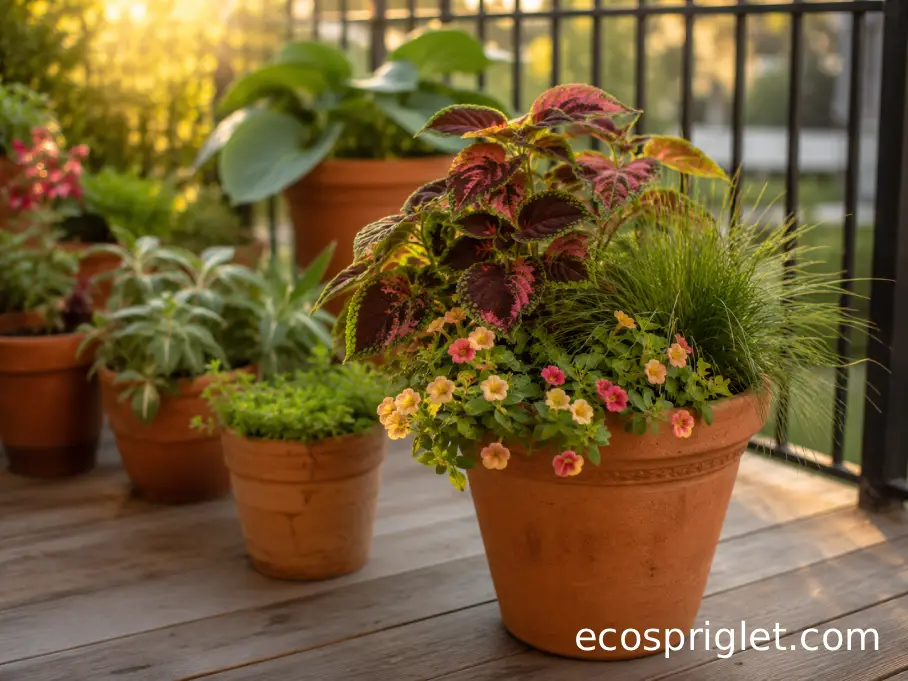
Container Plants for Full Sun That Handle Balcony Heat
Container plants for full sun need more than a cheerful plant label. On balconies, heat reflects off walls, decking, concrete, and glass, so a plant that enjoys sun in the ground may still struggle in a small black nursery pot. Start with tough plants, then help them with the right container.
For sunny balconies, I like calibrachoa, petunias, lantana, zinnias, salvia, lavender, rosemary, sedum, thyme, compact ornamental grasses, and dwarf conifers. Calibrachoa is especially useful because it spills over the edge of a pot without needing much training. Lavender and rosemary are good choices when you want fragrance and structure, but they need fast drainage and should not sit in a wet saucer.
Use a 12- to 16-inch pot for most sun-loving annuals, or go larger if the balcony gets afternoon sun. A bigger soil volume does not mean you can ignore watering, but it gives you a wider margin. During warm, windy stretches, check the top 1 to 2 inches of potting mix daily. Water thoroughly until excess drains from the bottom, then empty the saucer so roots are not sitting in water. Illinois Extension recommends watering containers deeply enough that water reaches the bottom and drains through the holes.
If leaves wilt in late afternoon but perk up by morning, the plant may simply be reacting to heat. If it is wilted in the morning too, check the soil. Bone-dry mix needs a slow soak. Wet, sour-smelling mix points toward overwatering or poor drainage.
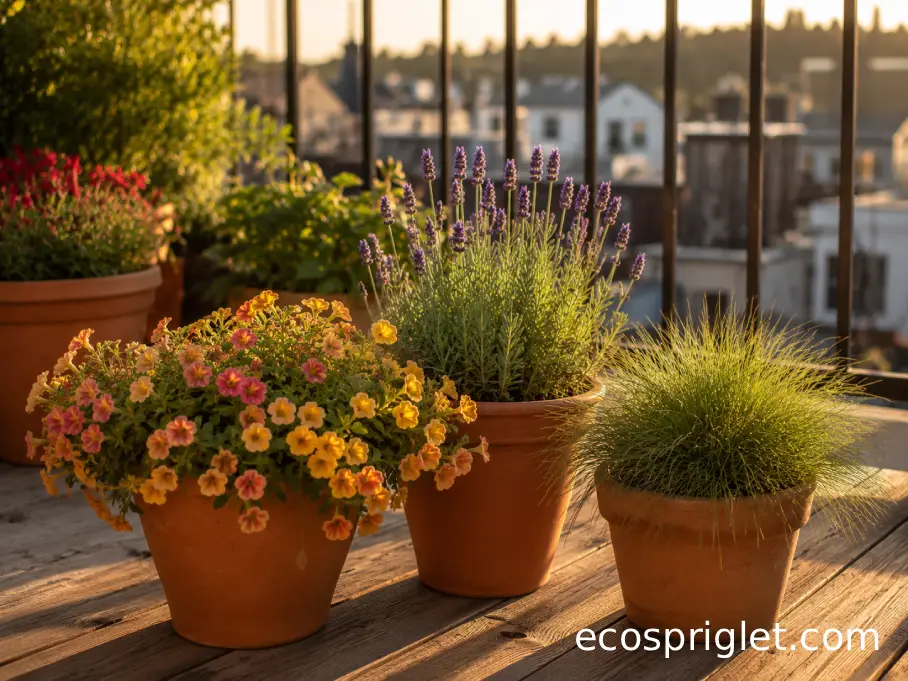
Easy Flowers That Keep Pots Colorful for Months
The best flowers for plant pots are the ones that keep producing without demanding fussy care. For sunny spaces, try calibrachoa, petunias, zinnias, marigolds, lantana, geraniums, salvia, and dwarf dahlias. For part shade, begonias, impatiens, fuchsia, browallia, and coleus are more forgiving. Coleus is grown for foliage rather than flowers, but on a dim balcony it can give you the color that sun-loving blooms will not.
For a single-flower container, plant one type in a 10- to 12-inch pot and let it fill out. For a mixed container, avoid cramming too many plants together on day one. Three young plants in a 12-inch pot often look sparse at first, then fill in cleanly. Six plants in the same pot may look impressive for two weeks, then compete for water and airflow.
- For a sunny 12-inch pot, try one upright geranium with two trailing calibrachoa.
- For a bright-shade 12-inch pot, try one coleus with two begonias.
- For a pollinator-friendly pot, try salvia, zinnia, and lantana in a 14- to 16-inch container.
- For a low-maintenance edge, use trailing thyme or sedum instead of a thirsty spiller.
Deadheading helps some flowers keep blooming, but not all need the same attention. Pinch off faded geranium blooms at the stem. Trim leggy petunias back by about one-third when they look tired. With calibrachoa, a light trim and regular feeding often matter more than picking off every tiny flower.
University of Georgia Extension lists popular annuals such as begonias, lantana, salvia, petunias, coleus, caladiums, impatiens, geraniums, and zinnias for warm-season color, while Illinois Extension notes that calibrachoa blooms from May into fall in suitable conditions.
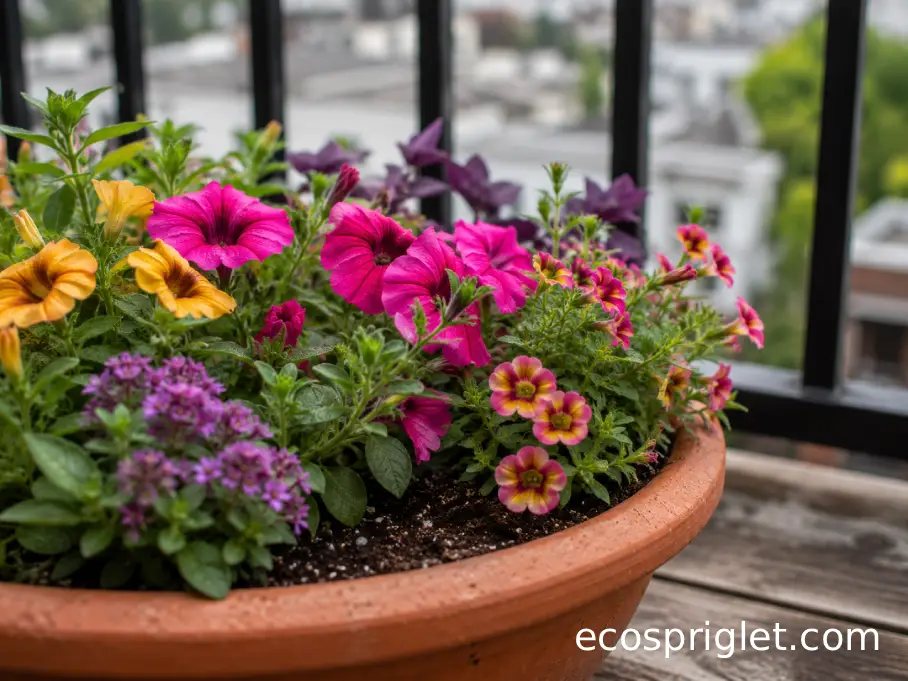
Large Garden Pot Plants for Structure and Privacy
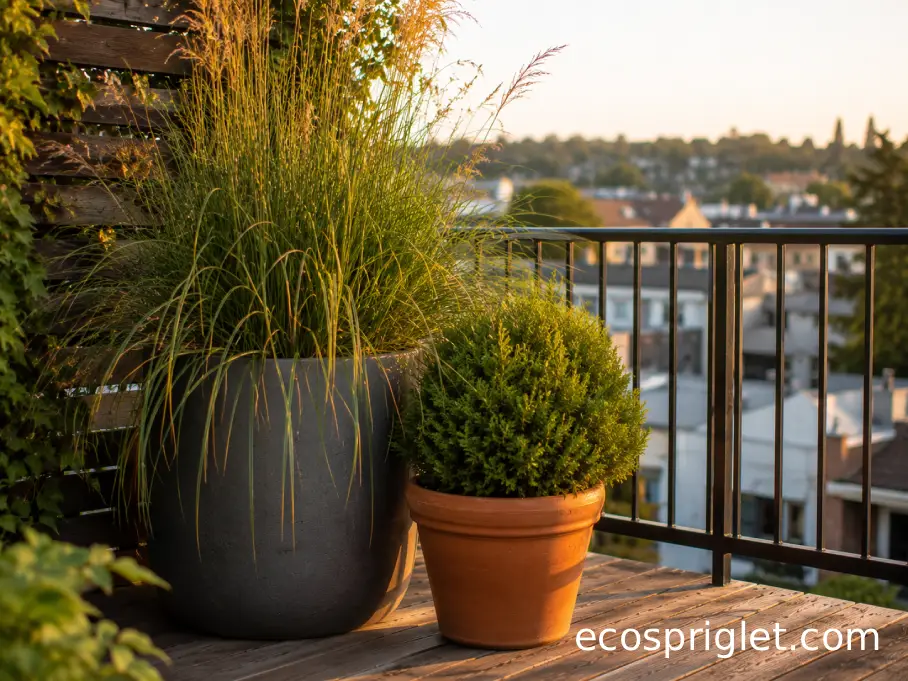
Large garden pot plants do the visual work that small flowers cannot. They give height, shade a seating corner, soften a railing, and make a balcony feel less exposed. The trick is choosing plants that stay reasonably compact and can tolerate container life.
Good structural choices include dwarf conifers, compact hydrangeas, boxwood, bay laurel, rosemary standards, canna, elephant ear in warm seasons, fountain grass, switchgrass, and clumping bamboo only where it is legal, contained, and suitable for your region. If you rent, avoid anything that needs permanent fastening or sends aggressive roots through a weak container.
For shrubs and grasses, I usually start with a 10- to 20-gallon container. That sounds large, but it is often the difference between a plant that survives summer and one that becomes a daily watering emergency. Use a broad-bottomed pot for tall plants, especially on windy balconies. A narrow urn with a top-heavy grass may look elegant until the first gust rolls through.
Leave 1 to 2 inches of space between the potting mix surface and the rim so water can soak in instead of spilling over the sides. Oregon State University Extension recommends filling containers close to the lip while leaving a small reservoir for watering, and University of Georgia Extension also advises leaving about 2 inches at the top when planting containers.
My practical rule is simple: if the plant will be taller than your knee, the pot should feel stable before you add the plant. Test the empty container location first. Once it is full of moist potting mix, it will be much harder to move.
Blueberries, Aloe, and Snake Plants Need Different Pots
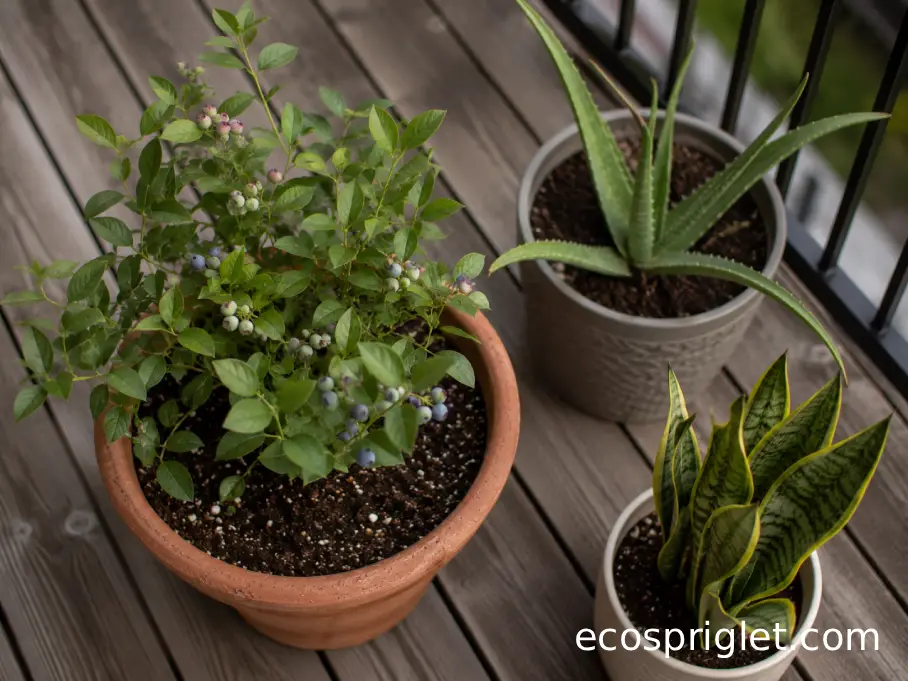
Some plants are popular in containers but fail when treated like ordinary mixed annuals. Blueberries, aloe, and snake plants are good examples. They can all grow well in pots, but they want very different soil moisture and container choices.
Blueberry plants for containers need acidic potting conditions, consistent moisture, and full sun for best fruiting. UNH Extension notes that blueberries grow best in acidic soil around pH 4.5 to 5.0 and that full sun supports the best production. In pots, choose a container at least 18 to 24 inches wide for a young patio blueberry, use an acid-loving plant mix, and mulch the surface with pine bark or pine needles to slow drying.
Aloe is the opposite. It needs a pot with drainage holes and a fast-draining succulent mix. The best pot for aloe is usually only 1 to 2 inches wider than the root ball, because an oversized pot holds extra moisture. University of Minnesota Extension recommends drainage holes for cacti and succulents and advises letting the soil dry completely between waterings.
Snake plants are even more forgiving, but they still dislike soggy soil. Use a sturdy pot with drainage, let the mix dry well between waterings, and keep them in bright indirect light or gentle outdoor shade if you move them outside for summer.
I learned this the hard way with my first aloe. I put a small plant in a handsome oversized ceramic pot, watered it like basil, and watched the base soften within a month. The fix was not more care; it was less water, a smaller pot, and a grittier mix.
- For blueberries: large pot, acidic mix, full sun, steady moisture.
- For aloe: smallish pot, drainage holes, gritty mix, dry-down between watering.
- For snake plant: stable pot, free drainage, bright shade, very conservative watering.
- For homes with pets: place aloe and snake plants out of reach.
The ASPCA lists aloe as toxic to dogs and cats, and snake plant as toxic to dogs and cats, with digestive signs possible after ingestion.
Common Mistakes to Avoid With Outdoor Potted Plants
Most container problems are not mysterious. They usually trace back to the wrong plant for the light, a pot that is too small, poor drainage, or watering by habit instead of by soil feel. Once you learn those patterns, outdoor potted plants become much easier to manage.
The first mistake is choosing flowers for full sun when your balcony gets only bright shade. The plant may stay alive, but it will stretch, bloom less, and look disappointing. The second mistake is using a pot without a drainage hole because it matches the furniture. Decorative cachepots are fine, but keep the plant in a nursery liner and remove standing water after watering.
The third mistake is watering lightly every day. A shallow splash wets the top and leaves lower roots dry. Water thoroughly, let excess drain, then check the soil before watering again. In hot weather, that may mean daily watering for thirsty annuals. For succulents, it may mean waiting much longer.
- If leaves are crispy and soil is dry, water slowly until the full root ball is rehydrated.
- If leaves are yellowing and soil smells sour, improve drainage and let the mix dry before watering again.
- If flowers stop blooming, check light first, then feeding and root crowding.
- If a tall pot tips in wind, move it lower, use a broader pot, or group it with heavier containers.
- If water runs straight through dry mix, soak the pot slowly in stages so the mix can absorb moisture again.
Container plants are honest once you pay attention. They show stress faster than in-ground plants, but they also recover quickly when you fix the real cause.
A Simple Planting Formula for a Good-Looking Pot
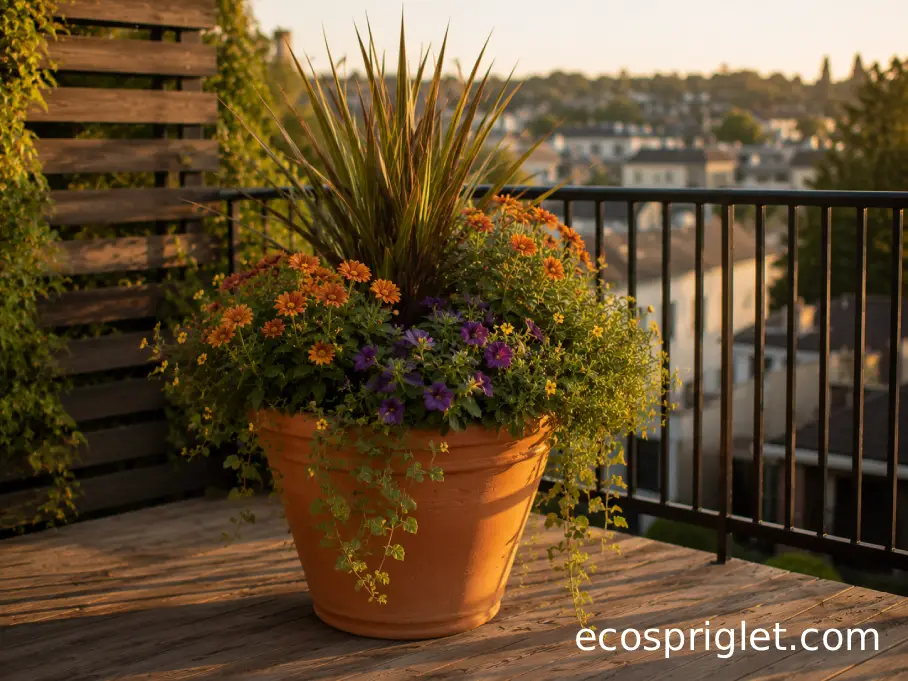
If you want a pot that looks intentional rather than random, use the classic structure of one upright plant, one mounding plant, and one trailing plant. Gardeners often call this thriller, filler, and spiller. It works because each plant has a job: height, fullness, and softness around the edge. Oregon State University Extension recommends mixing plant shapes such as spiky, mounding, and trailing forms for container design.
For a sunny balcony, that might be purple fountain grass, geranium, and trailing verbena. For part shade, try coleus, begonia, and creeping Jenny. For an edible-fragrant pot, rosemary can be the upright plant, parsley can fill the middle, and thyme can trail lightly over the rim.
Keep plants with similar water needs together. Lavender and rosemary do not belong in the same pot as thirsty impatiens. A blueberry should not share a planter with ordinary annuals that prefer neutral potting mix. This is where beginner container gardens often go sideways: the arrangement looks pretty at planting time, but one plant is always too wet while another is too dry.
For a 12-inch mixed pot, three young plants are usually enough. For a 16-inch pot, four or five can work if they have similar growth habits. Leave a little breathing room. Plants need airflow, and crowded containers are harder to water evenly.
For more small-space layout ideas, see our balcony container gardening guide.
Conclusion: Build Your Pot Garden One Good Container at a Time
The best container garden is not the one with the most plants. It is the one you can keep healthy, watered, and enjoyable through the season. Start with your light, choose the right pot size, and group plants by similar needs. A sunny balcony can carry bold flowers, herbs, dwarf shrubs, and heat-tough foliage. A shady balcony can still look lush with begonias, coleus, ferns, caladiums, and compact foliage plants. If you want fruit, blueberries are possible in containers, but they need acidic conditions and a roomy pot. If you love houseplants, aloe and snake plant can spend time outdoors in the right conditions, but they need drainage and pet-safe placement.
My favorite small-space gardens are built slowly. One strong container teaches you more than six struggling pots. Choose a plant you genuinely like, give it enough root room, water by feel, and watch how it responds. Once that pot settles in, add the next one. Before long, your balcony or patio starts feeling less like leftover space and more like a small, living room outdoors.