Yes, you can grow blueberries in a pot—and it’s one of my favorite “small space wins” when you get two things right: an acidic root zone and steady moisture. The part that trips up most beginners isn’t sunlight or pruning. It’s that blueberries are picky about pH, and containers magnify every little mistake (drying out fast, fertilizer salt buildup, hard tap water slowly pushing things alkaline).
In this guide to planting blueberry plants in pots, I’ll walk you through choosing a container that won’t dry out in a day, mixing an acidic potting blend that holds moisture without turning swampy, and setting up a watering + feeding routine that’s realistic for apartment life. You’ll also get a simple long-term plan for repotting and winter protection, because blueberry plant care in containers is really about playing the long game.
Why Blueberries Do So Well in Containers
If your native soil is heavy clay or naturally alkaline, pots are often the easiest way to give blueberries what they crave: consistently acidic growing media. You’re basically creating a controlled “mini habitat” that stays in the right pH lane instead of fighting your yard (or your building’s landscaping soil) forever. The Royal Horticultural Society even recommends large containers with ericaceous (acid-lover) compost when soils aren’t naturally acidic.
Container growing also makes it easier to manage wind exposure on upper floors, protect flowers from a surprise cold snap, and keep birds from stealing the entire crop in a single enthusiastic morning. The trade-off is attention: pots dry faster, and blueberries dislike drying out. So we’ll build your setup to buy you margin.
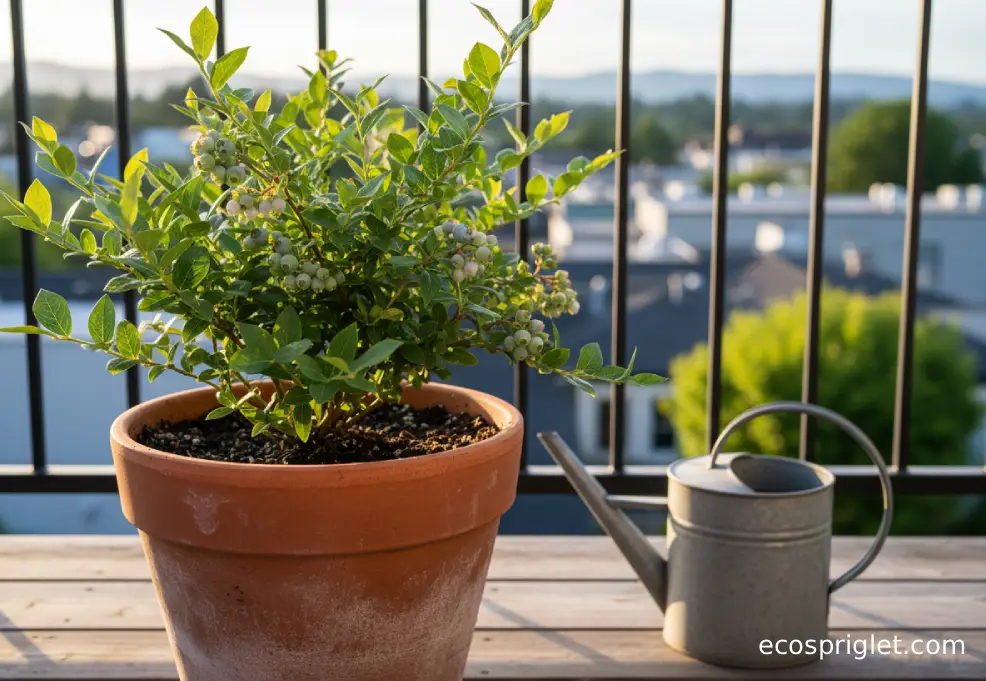
Choosing the Right Blueberry Plant for Pots
For containers, think “compact roots, manageable height, good cold tolerance for your climate.” You’ll often see these categories in garden centers:
- Compact/low-growing types (often marketed for patios): easier to keep stable in wind and less likely to outgrow a pot quickly.
- Hardy types (important if your pots live outdoors year-round): container roots get colder than in-ground roots, so a bit of extra hardiness helps.
- Two varieties if you have room: many blueberries are at least partly self-fertile, but a second variety blooming at the same time can improve pollination and yield. (If you only have room for one, it can still fruit—just expect a smaller, slower-building crop.)
If you’re unsure what you bought, don’t panic. Most “can blueberry plants be grown in pots?” questions come down to pot size and acidity, not the label.
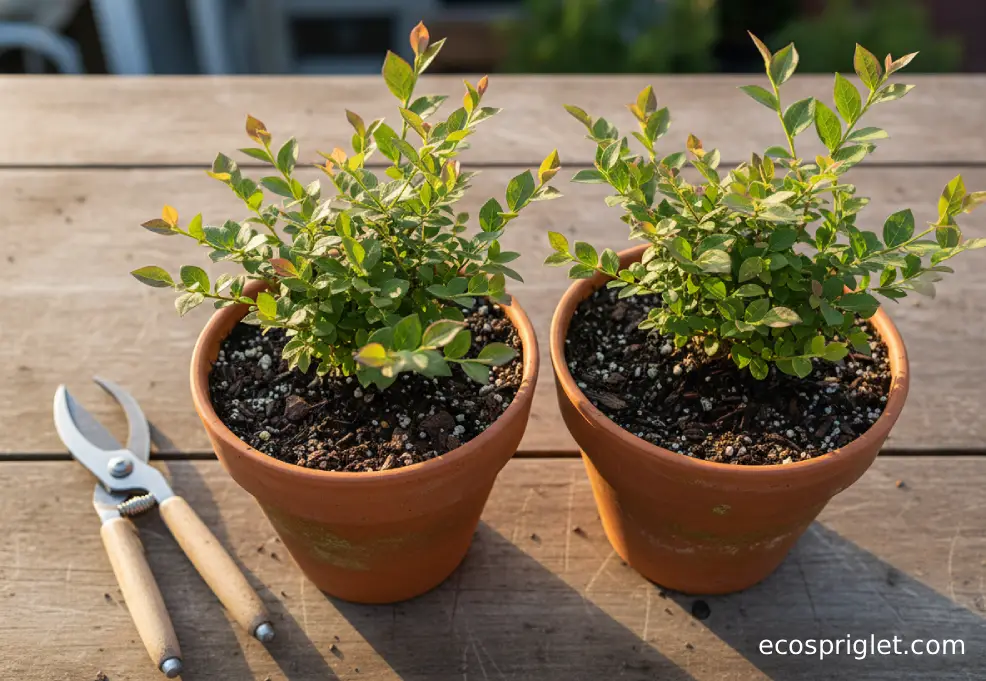
Picking a Container That Won’t Dry Out Overnight
Here’s the container truth: bigger is calmer. A larger pot buffers heat, holds moisture longer, and gives you more wiggle room on busy weeks. A practical approach supported by Extension guidance is to start a young plant in a 5-gallon container, then move it up as it matures into something like a 16–20 inch pot or even a barrel-style container.
| Plant Stage | Container Target | Why It Helps |
|---|---|---|
| New purchase (young plant) | Start around 5 gallons | Easy handling while roots establish |
| Established and growing strongly | Up-pot to 16–20 inches wide | Stabilizes moisture and supports long-term growth |
| Long-term “permanent” pot | Large, stable container with great drainage | Less stress, fewer emergency waterings |
Two beginner mistakes I see constantly:
- No drainage hole: blueberries hate sitting in water. If the pot can’t drain, don’t use it.
- “I’ll fix drainage with rocks”: skip the gravel layer. NC State Extension warns that a rock layer doesn’t improve drainage and can actually keep the potting mix above it wetter.
Building an Acidic Potting Mix That Stays Evenly Moist
I remember my first potted blueberry like it was yesterday: gorgeous plant, cute pot, watered faithfully… and it still looked sad by midsummer. The “aha” moment was realizing I’d used regular potting mix and my tap water was slowly nudging the root zone out of the acidity range blueberries prefer. Once I rebuilt the pot with an acid-focused mix, everything got easier.
Two reliable container options from Extension guidance:
- Peat + pine bark mix: University of Wisconsin Extension describes an acidic soilless medium using one part sphagnum peat moss and one part shredded pine bark.
- Potting soil + peat mix: University of Maryland Extension suggests a 50/50 blend of potting soil and peat moss for container blueberries.
Whichever route you choose, aim to keep the root zone in the acidic range many extensions recommend for blueberries (often around pH 4.5–5.5). If your water is very hard (high mineral content), consider collecting rainwater for containers when you can. If your blend feels too dense, adding perlite can help improve aeration without making the container mix heavy.
If you want a simple way to monitor the “invisible” part of blueberry planting and care, keep a basic pH meter or test kit in your supplies and check periodically (especially if leaves start yellowing). A deeper walk-through lives at How to Test Soil pH at Home.
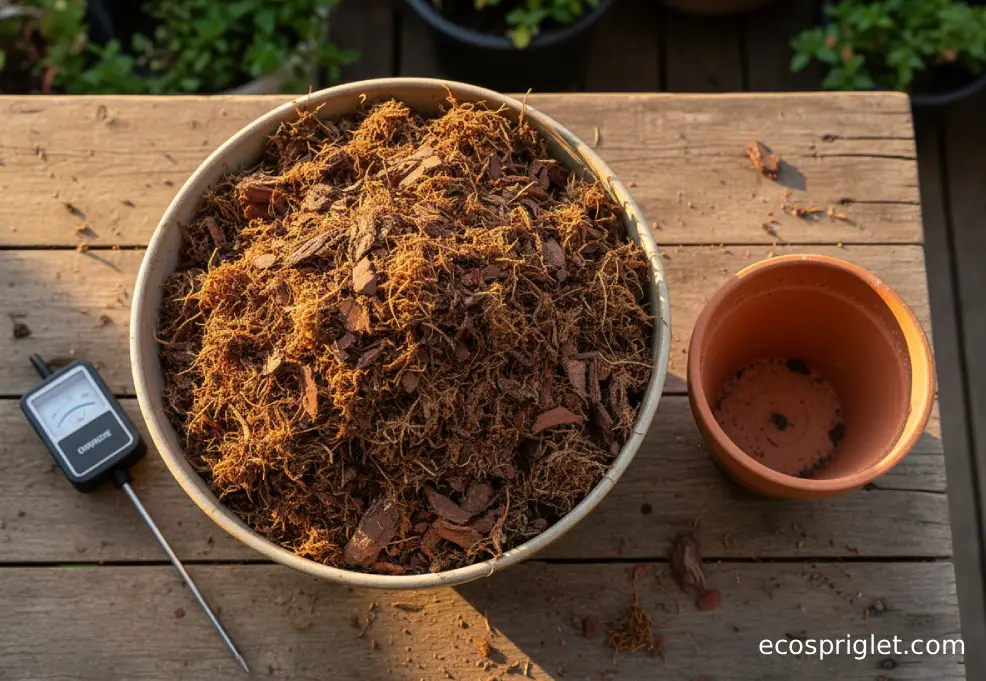
How to Plant Blueberries in a Pot Step by Step
- Pre-moisten your mix. Damp potting mix settles more evenly than bone-dry mix, and it helps eliminate hidden dry pockets.
- Set the plant at the same depth. Don’t bury the crown deeper than it was in the nursery pot. University of Maryland Extension specifically recommends planting at the same depth as the original container.
- Tease circling roots. If the plant is root-bound, gently loosen the outer roots so they grow into the new mix (not around it).
- Water thoroughly to settle. Water until you see drainage, then top up the mix if it sank more than about 1 inch.
- Mulch the surface. A thin mulch layer (like pine bark) helps slow evaporation and keeps roots cooler.
A beginner-friendly move: if your plant is young and full of flowers, pinch most blooms off the first year so it puts energy into roots. Maryland Extension notes that removing flowers on young plants helps focus growth on roots, and it can take several years to reach a “full” crop.
Sun, Wind, and Balcony Placement
Full sun is your friend for fruiting, but balconies come with quirks: reflected heat from walls, gusty wind tunnels, and “late-day blast furnace” corners. University of Maryland Extension recommends full sun for containers, with potential protection from late afternoon sun if needed.
Two placement tips that save real headaches:
First, prioritize morning-to-midday sun if your balcony is a hot western exposure. Blueberries can handle sun, but pots can overheat and dry fast. Second, anchor the pot where it won’t tip in wind—wide bases, heavier pots, and a corner that breaks gusts matter more on upper floors.
One safety note I always include for apartment folks: wet potting mix is heavy. If you’re building a mini orchard out there, check your balcony’s load guidance and spread weight over multiple spots (instead of lining everything against one rail).
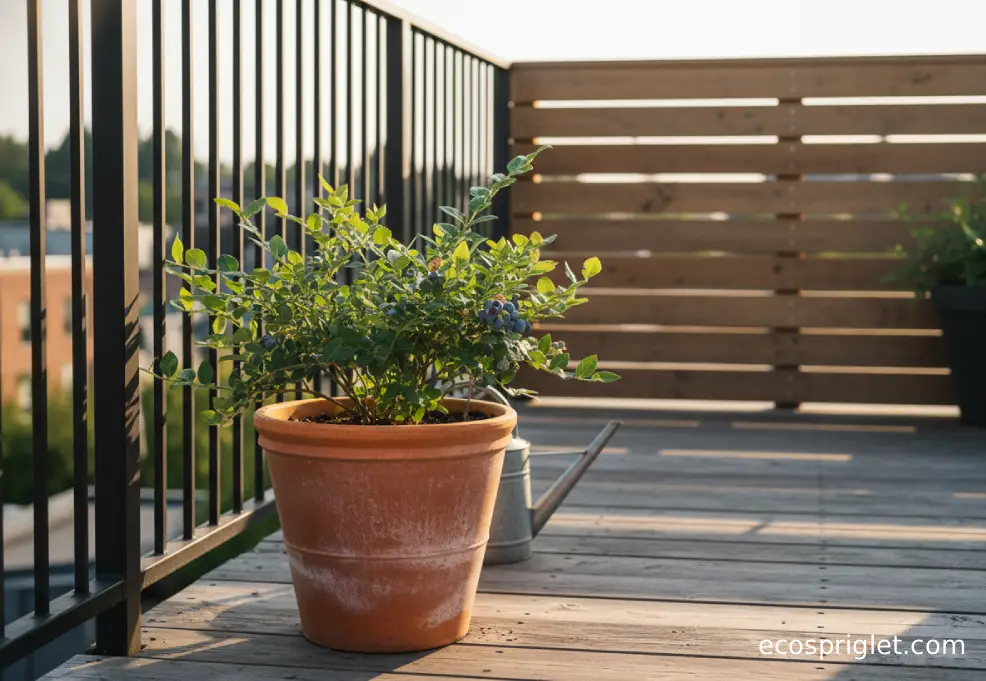
Watering and Feeding Without Guesswork
Blueberries are shallow-rooted and they really notice inconsistent moisture. A classic benchmark from multiple Extension sources is roughly 1–2 inches of water per week in the growing season (from rain and/or irrigation), adjusted for heat, wind, and container size. In pots, that often translates to smaller, more frequent waterings rather than one big weekly soak.
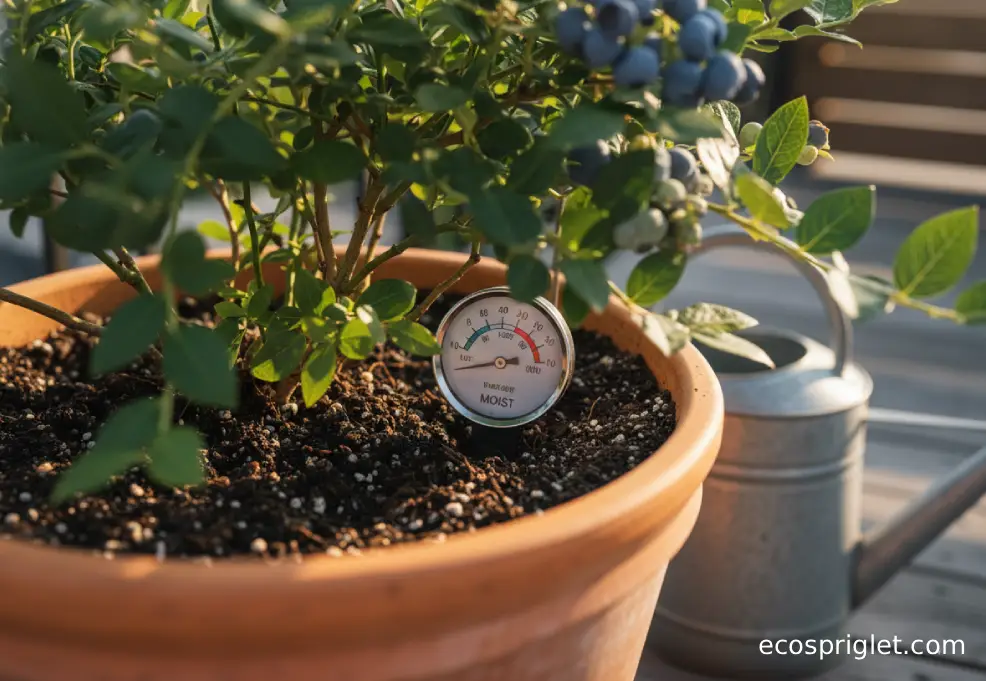
- Use a simple trigger: water when the top 1–2 inches of mix feel dry, then water until it drains.
- Aim for “moist, not soggy”: Wisconsin Extension suggests frequent, light watering for container blueberries, with an occasional deeper drench to help flush salts.
- Feed like an acid-lover: University of Maryland Extension recommends fertilizing container blueberries in early spring before leaves expand and avoiding fertilizers containing nitrates or chlorides.
- Watch for salt stress: crispy leaf edges + white crust on the pot rim can hint at fertilizer/mineral buildup—flush with a thorough watering (and reconsider your fertilizer strength).
If you want an easy apartment hack, set the pot on “feet” or bricks so drainage holes stay clear (Maryland Extension notes this specifically for containers placed on hard surfaces).
Pruning, Repotting, and the Long-Term Container Plan
Container blueberries aren’t “set it and forget it.” The mix slowly breaks down, drainage changes, and roots fill the pot, and old potting soil can go bad if it is stored poorly or reused after pest problems. A good rhythm is to plan for periodic refreshing rather than constant panic repotting.
The RHS notes a common container endpoint: once plants reach a final pot size around 16–20 inches across, you can repot/refresh every couple of years by removing some old compost and roots and replacing with fresh ericaceous mix.
My practical approach for small spaces:
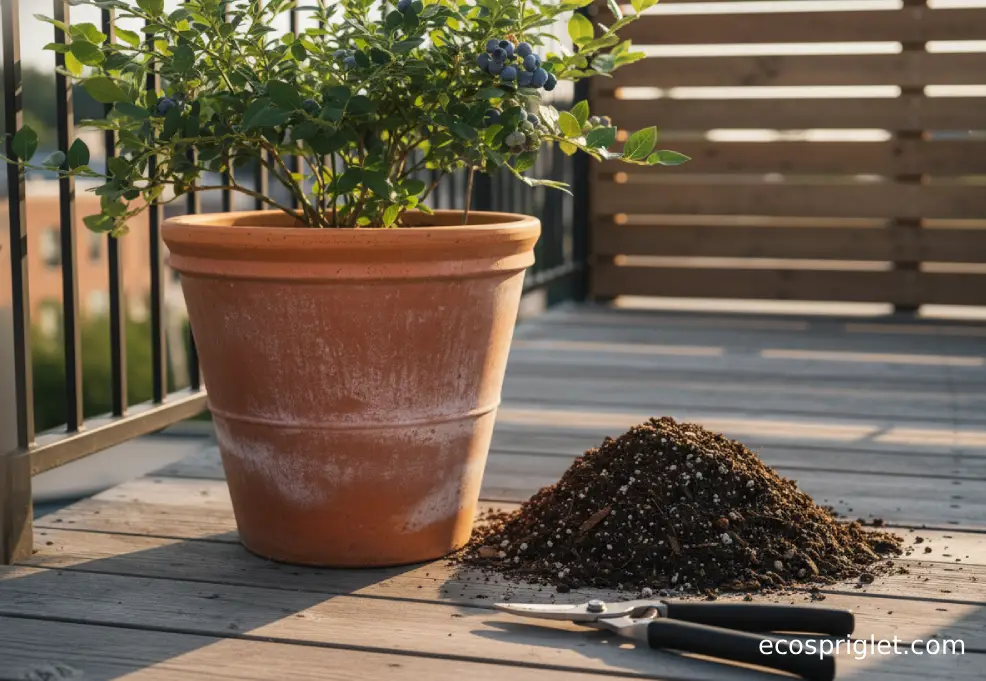
- Each late winter or early spring: prune out dead wood and any weak, spindly growth.
- Every 2–3 years: refresh the container mix; if you are reusing part of an old blend, knowing how to sanitize soil can help reduce pest and disease carryover before you repot.
- Annually: topdress with fresh acidic mix and renew your mulch layer.
If you’re new to pruning, keep it simple: remove dead or damaged stems first, then thin a little for airflow. Blueberries reward patience more than aggressive haircutting.
Pollination, Flowers, and the Patience Part
It’s normal to feel impatient with blueberries in containers. They’re shrubs, not salad greens. University of Maryland Extension points out that you shouldn’t expect a big harvest the first year, and that it can take years for a plant to reach a full crop.
Two ways to make the wait feel “worth it”:
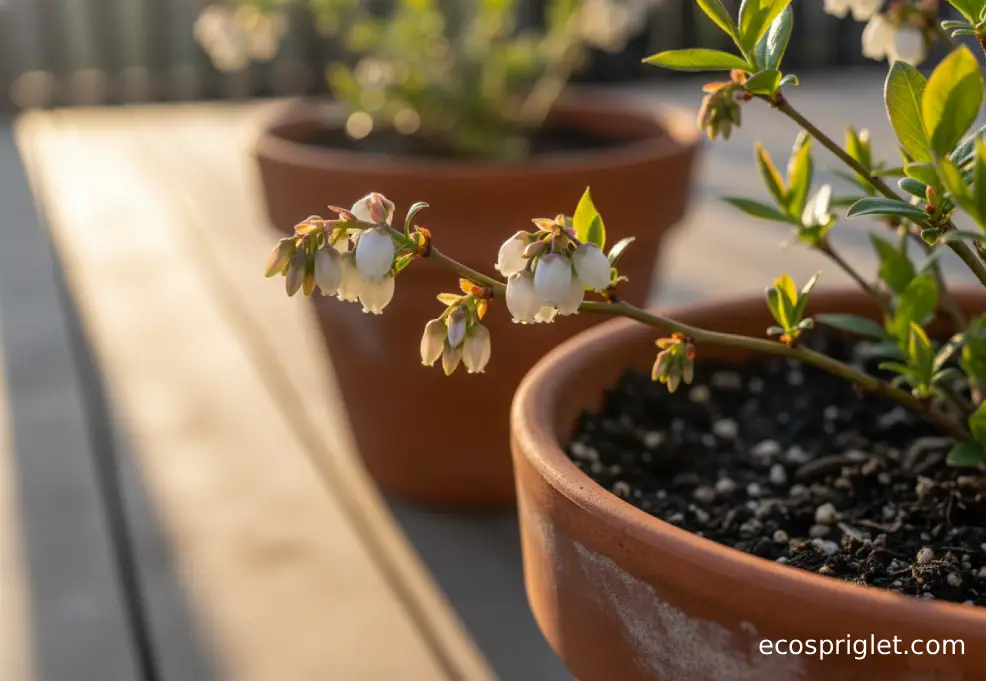
- First, treat the first year as a root-building year—pinch most flowers and focus on steady growth. Second, if you can fit two pots, pick varieties that bloom around the same time; multiple sources note that cross-pollination often improves yield even when plants can self-fruit.
- And don’t forget the balcony reality: fewer pollinators on higher floors sometimes means fewer berries. A pot or two of pollinator-friendly flowers nearby can help (even a small patch of blooms makes a difference).
Troubleshooting Common Container Problems
- Yellow leaves with greener veins: often points to pH drifting too high for nutrient uptake. University of Minnesota Extension warns that planting or growing blueberries outside their preferred pH range can lead to poor growth and failure. Check pH, then correct your mix and watering habits (hard water can push pH up over time).
- Crispy leaf edges in summer: usually drought stress + heat + wind. Increase pot size (if it’s small), mulch the surface, and shift watering to earlier in the day.
- Flowers but no berries: could be low pollination (common on high balconies) or the plant is still young. Adding a second variety can help when space allows.
- Lots of growth, no vigor: review fertilizer type and timing—avoid nitrate-based products and don’t overfeed.
One more “potted fruit reality”: birds. If you see berries begin to color, net early. It’s not dramatic—it’s just practical.
Common Mistakes New Balcony Gardeners Make
If I could intercept every first-time “growing blueberries in pots” setup before it happens, I’d fix these three things:
- Going too small on the pot. A tiny container is basically a timer counting down to the next wilt. Start at a reasonable size and plan to up-pot as the plant matures.
- Trying to force blueberries into neutral potting mix. Blueberries are acid lovers. If pH isn’t in range, they struggle no matter how perfect your watering is, so you may need to make soil more acidic.
- Believing drainage myths. Don’t add a gravel layer to “help drainage.” Use a pot with real holes, quality mix, and proper watering habits instead.
Fix those, and blueberry planting and care becomes a lot more forgiving.
Winter Care for Blueberry Plants in Pots
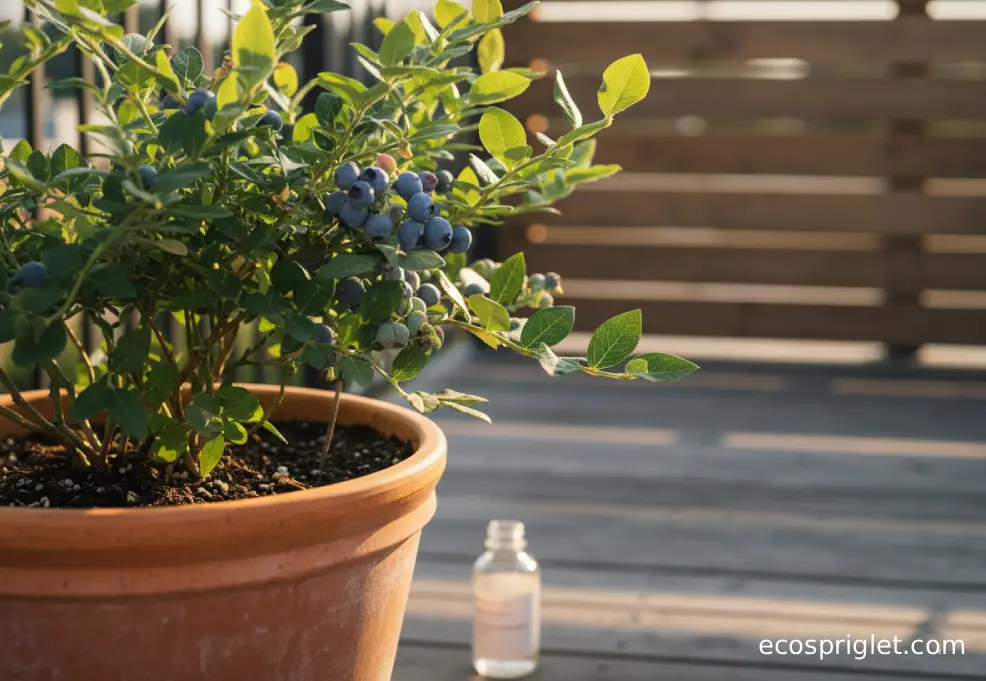
Here’s what containers change: the roots are more exposed to cold and winter wind than they would be in the ground. University of Maryland Extension recommends keeping containers in a sheltered location during winter months and protecting them from winter winds.
Three realistic options for apartment life:
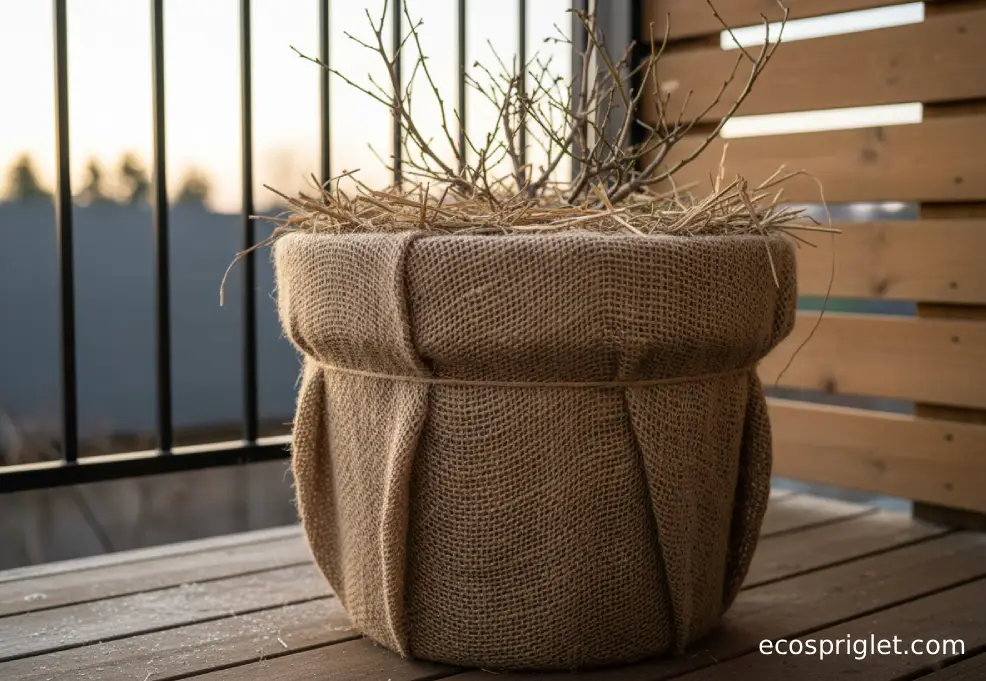
- Shelter + insulation: wrap the pot (burlap works) and keep it out of the wind. RHS also notes wrapping pots or moving them into a cool shed/garage during cold spells to protect roots.
- “Heel in” the pot: if you have access to a ground-level bed or a friend’s yard, burying the pot for winter insulation is a classic trick; Wisconsin Extension describes burying containers and mulching to protect roots.
- Unheated garage or cold storage: a cool, protected spot can reduce wind stress and temperature swings (avoid warm indoor rooms that confuse dormancy).
Water less in winter, but don’t let the root ball go bone-dry—especially in windy weather under cover.
Creative Ways to Use Potted Blueberries in Small Spaces
Blueberries aren’t just a fruit project—they’re genuinely pretty shrubs in a pot. I like using them as “functional structure” on balconies: something with presence that also produces.
- Use one as a living privacy accent: place a larger pot near the railing corner where you want a bit more greenery.
- Create a two-pot pollination pair: if you can fit two containers, you get better flowering synergy and a more balanced look.
- Seasonal swap strategy: in spring, the blossoms shine; in summer it’s fruit; in fall, foliage can color up beautifully—plan the pot where you’ll actually see it daily.
If you’re short on floor space, remember you can build “up” visually: pair one blueberry pot with smaller herb pots around it rather than trying to cram in multiple large shrubs.
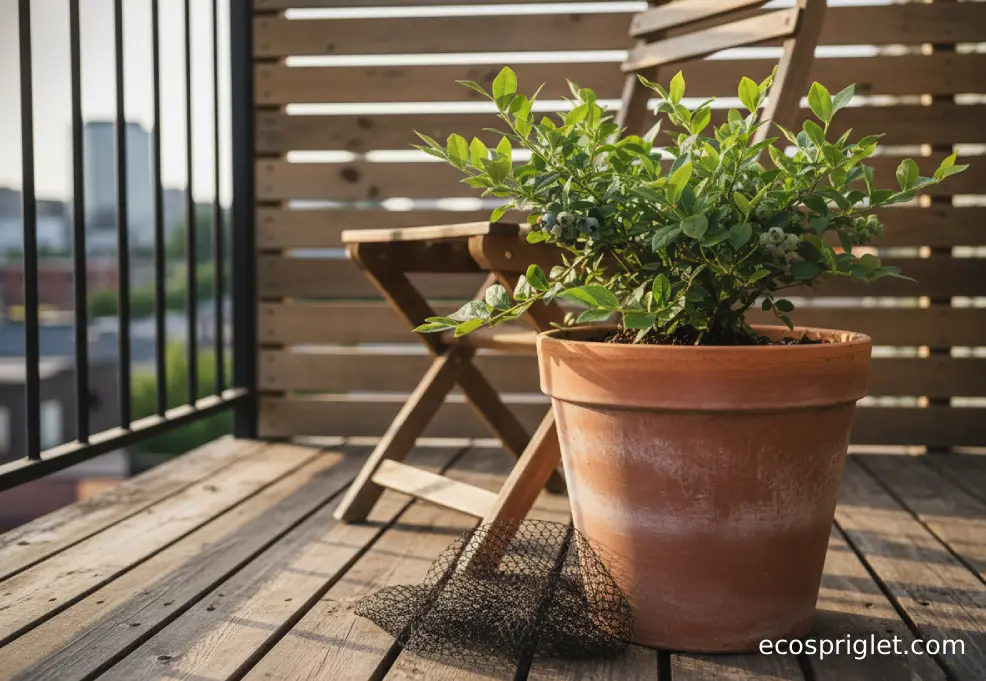
Planting blueberry plants in pots is absolutely doable for apartment gardeners—and once you dial it in, it’s one of the most satisfying container crops you can grow. The winning formula is simple but specific: a generously sized container with real drainage, an acidic potting mix that holds moisture, and a routine that keeps the root ball evenly moist without staying soggy. From there, blueberry plant care becomes a steady rhythm: spring feeding, summer watering consistency, occasional netting, and a long-term plan to refresh the potting mix every couple of years.
If your first season is mostly leafy growth, take it as a good sign. Strong roots and healthy stems are the foundation for the berries you want later.