If you’ve ever walked into a friend’s place and thought, “Wow, it feels calmer in here,” there’s a decent chance a big-leaf plant was doing some quiet heavy lifting. A large leaf indoor plant doesn’t just fill a corner—it softens hard lines, bounces light around, and makes even a tiny living room feel more “finished.” The trick is choosing one that matches your windows and your habits, because big leaves come with big opinions about light and watering.
I’m Daniel Carter (Portland, Oregon), and most of my indoor plant wins have come from learning one simple rhythm: match the plant to the spot first, then make care boring. In this guide, you’ll get a practical way to choose among large leafed indoor plants, set them up in a pot and mix that won’t punish you for one missed watering, and troubleshoot the usual apartment problems like crispy tips, yellow leaves, and pests.
Along the way, I’ll point you to reliable references (think Missouri Botanical Garden, Extension programs, and ASPCA) so you can feel grounded—not guessy—about what you’re doing.
Why Big Leaves Feel Like Instant Decor
Big leaves do three things especially well indoors: they grab light, they hide visual clutter, and they make scale work in your favor. In apartments, the stuff you can’t “unsee” (cords, vents, blank walls, awkward corners) gets softened by one confident plant. I’ve had a lanky floor lamp look 10x better just because a broad leaf was nearby reflecting light back into the room.
The flip side: large leaves are basically solar panels. If the light is too low, they’ll stretch, shrink new leaves, or lean hard toward the window. Missouri Botanical Garden’s houseplant guidance is blunt about how light intensity drives spindly growth and pale leaves, especially when plants are placed too far from their best window.
So yes—big leaves are decor. But they’re also a “light meter with feelings.” Once you accept that, choosing and caring gets way easier.
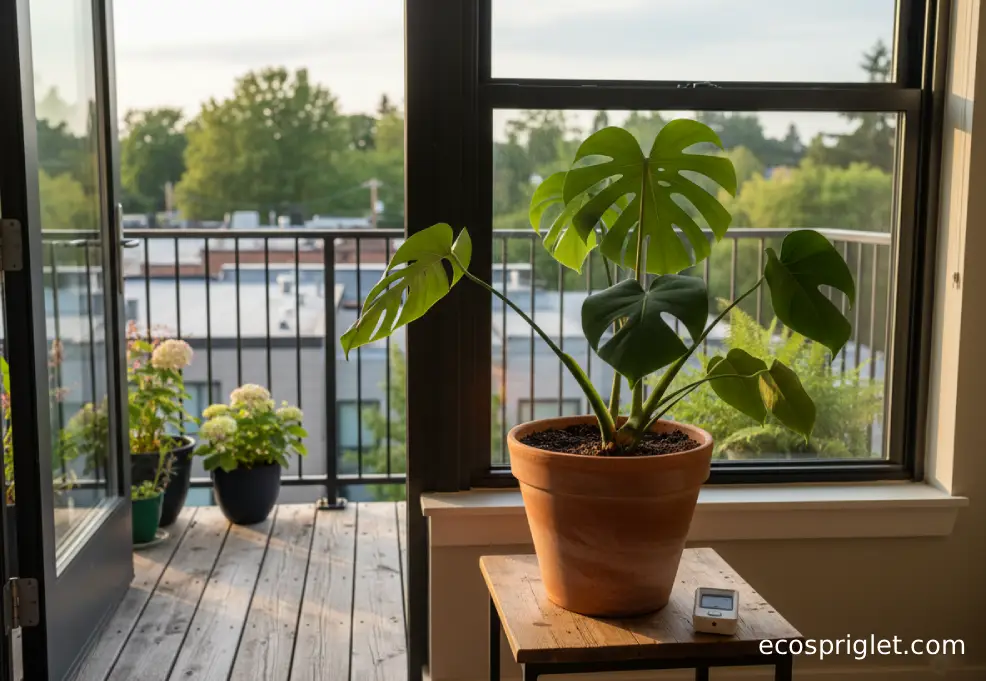
Sources: Missouri Botanical Garden (houseplant light guidance).
Choose the Right Large Leaf Indoor Plant for Your Room
I remember when I bought my first “statement” plant on pure vibes—huge leaves, perfect Instagram shape, absolutely no plan for where it would live. I wedged it in a dim corner, then spent two months wondering why it looked offended. The plant wasn’t dramatic. I was just asking it to photosynthesize in a cave.
Here’s the fast, apartment-friendly way to choose:
- Start with your brightest window. Stand there at midday. If it’s bright enough to comfortably read without turning on a lamp, you’re in “bright” territory for many big-leaf plants. Missouri Botanical Garden also describes window exposures using light intensity ranges (foot-candles) and notes how distance from the window matters a lot.
- Measure your “leaf space,” not your floor space. Big leaves need clearance so they don’t scrape walls every time you walk by. Aim for at least 18–24 inches of open space on one side of the plant if you want it to look relaxed, not cramped.
- Decide what you’ll forgive: dryness or fussiness. If you want a large green leaf indoor plant that tolerates a little neglect, many folks do well with rubber plant types and some philodendrons. If you want ultra-dramatic leaves (like Alocasia), expect more humidity and steadier watering.
Popular picks (and why they work):
| Plant Type | What You’ll Notice First | Best Light in Apartments | Watering Cue | Pet Note |
|---|---|---|---|---|
| Monstera (Swiss cheese plant) | Large split leaves, bold shape | Bright, indirect; support helps it climb | Water when top inch is dry, keep evenly moist | Toxic to cats/dogs (ASPCA) |
| Bird of paradise (often sold as a big floor plant) | Huge paddle leaves, “tropical” look | Very bright window, some direct sun usually helps | Water after top couple inches dry; avoid soggy pot | Check ASPCA before bringing home |
| Alocasia (elephant ear types) | Dark, graphic leaves; dramatic veins | Bright, indirect; stable warmth and humidity | Moist but not wet; don’t let it sit in water | Toxic to cats/dogs (ASPCA) |
| Peace lily (not the biggest, but can read “big-leaf” fast) | Glossy green leaves, arching form | Filtered/low to medium light indoors | Even moisture; wilts as a “please water me” signal | Toxic to cats/dogs (ASPCA) |
| Persian shield (purple foliage option) | Shimmery purple leaves (a fun large purple leaf indoor plant choice) | Bright light, often best color in part shade | Consistently moist, not waterlogged | Check pet safety sources before placing low |
| Ti plant (Cordyline) | Long, colorful leaves (often red/purple) | Bright indoor light for best color | Even moisture; don’t swamp the roots | Toxic to cats/dogs (ASPCA) |
The table above leans on Extension-style “watch the soil” cues and known pet-toxicity listings from ASPCA, plus Missouri Botanical Garden’s guidance on how window exposure and distance change the light your plant actually receives.
If you live with pets, don’t skip the quick safety check. ASPCA’s plant database lists Monstera, Alocasia, peace lily, and ti plant as toxic to cats and dogs, and their pet-safety article also flags fiddle leaf fig as mildly toxic.
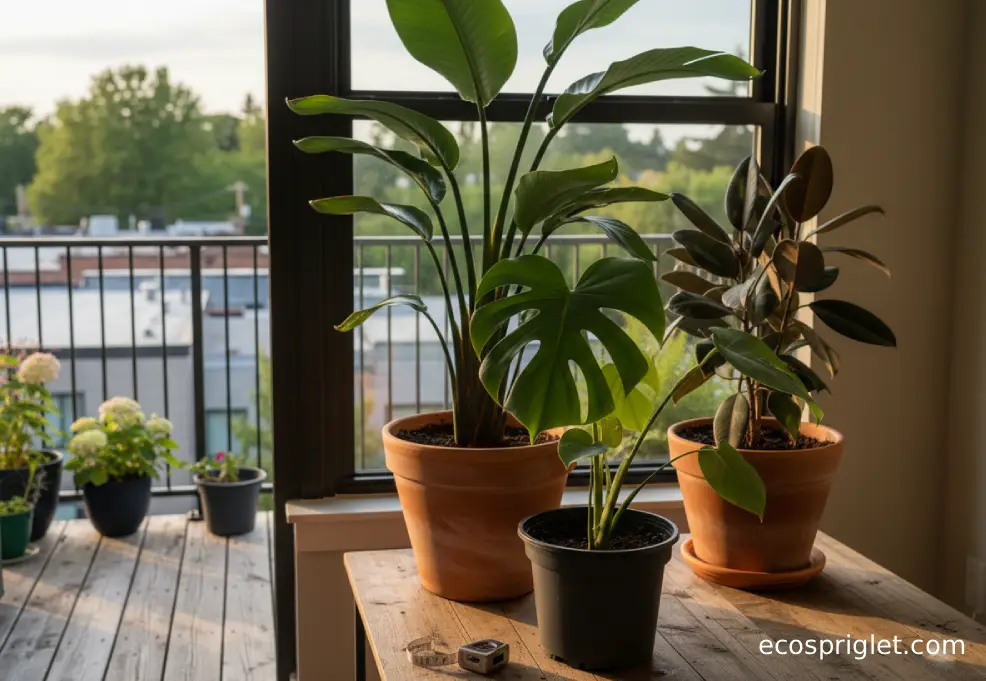
Sources: Missouri Botanical Garden; WVU Extension; ASPCA; Missouri Botanical Garden Plant Finder (Persian shield).
Pot, Soil, and Drainage: A Setup That Makes Watering Easier
If you want big leaves, you need a root zone that can breathe. In apartments, most “mystery plant problems” are actually drainage problems dressed up as leaf drama.
Three setup rules I follow almost every time:
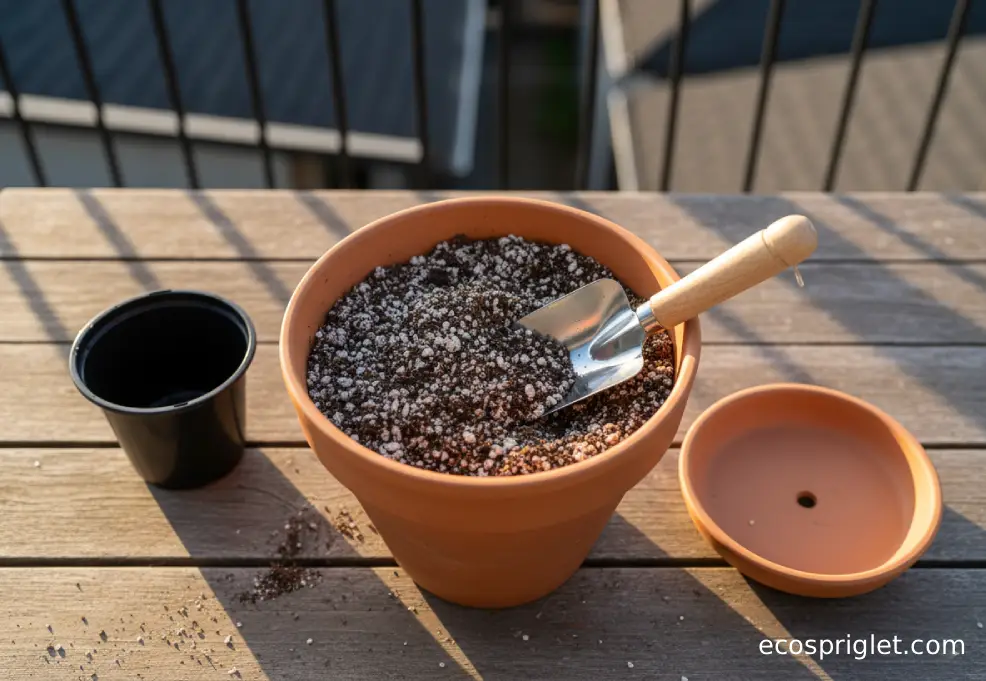
- Use a pot with a real drainage hole. Washington State University Extension is clear that drainage holes matter for root aeration.
- Skip the gravel layer myth. Adding rocks or gravel to the bottom of a pot doesn’t improve drainage—it can actually keep more moisture in the soil above the gravel layer. WSU Extension lays out why water doesn’t move easily from fine soil into a coarser layer underneath.
- Go “airy,” not “heavy.” For most large leaf indoor plants, a well-draining indoor potting mix is the safer baseline than garden soil. If your mix compacts easily, add a chunkier amendment (like perlite or bark) so water moves through instead of pooling.
Repotting guidance that keeps beginners out of trouble: move up only a little. UCANR’s repotting note describes choosing pots about 1–2 inches larger than the original, and Missouri Botanical Garden also advises moving to a container that’s only slightly larger. That small step reduces the chance of water sitting in unused soil for weeks.
My personal “apartment hack” is the saucer routine: water thoroughly until it drains, let it drip for 10–15 minutes, then empty the saucer. Missouri Botanical Garden warns against letting plants sit in drainage water, and it’s one of the fastest ways to prevent root stress.
Light and Placement: Reading Your Windows Without Guessing
“Bright indirect light” sounds vague until you tie it to a window. Missouri Botanical Garden breaks window exposures into ranges of light intensity (foot-candles) and reminds us that distance matters: low light can be as little as 25–100 foot-candles, while indirect light can be 100–300, and direct light near a strong southern exposure can be much higher. Translation: that cute corner eight feet from the window is usually not where a big-leaf plant thrives.
Two practical placement tips that work in real apartments:
- Start closer than you think. If your plant label says “bright,” try 1–3 feet from your brightest window (filtered by a sheer curtain if the sun is intense). Watch the new growth, not the old leaves. New leaves shrinking or stretching is the plant telling you the truth.
- Rotate, don’t chase. Instead of moving the pot every week, rotate it a quarter turn every time you water. I started doing this after my monstera leaned like it was trying to eavesdrop on the neighbors. WVU Extension even notes that Monstera benefits from staking to support growth—support plus steady light makes the whole plant look intentional.
Watering and Humidity for Large Leaf Indoor Plants
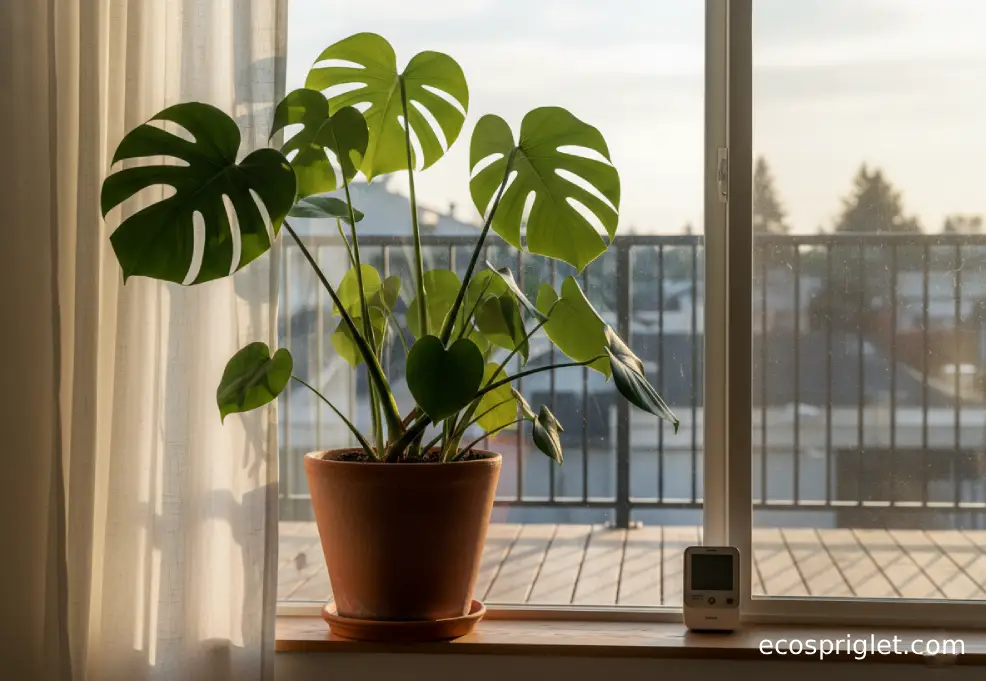
Watering big-leaf plants is mostly about timing, not volume. Most people either “sip” too often (keeping soil constantly wet) or they wait until the plant collapses in protest.
Two reliable watering cues show up across good houseplant guidance:
- The one-inch test: Missouri Botanical Garden suggests checking about one inch down; many plants are ready when it’s dry at that depth, then you water thoroughly until it drains.
- The top-inch rule: WVU Extension’s common houseplant care notes watering when the top inch is dry for many plants, and Mississippi State Extension also describes watering when the top layer begins to feel dry.
Humidity matters more than most people want to admit—especially once your heater turns on. Missouri Botanical Garden notes that nearly all houseplants prefer humidity around 50% or more, and big leaves can show low humidity as brown, crispy edges even when watering is “fine.”
My low-effort humidity fix: cluster plants together and keep them away from direct blasts of heat or AC. If you want to use a pebble tray, keep the pot above the waterline (pot on pebbles, water below), so the roots aren’t sitting in water.
Feeding, Cleaning, and Support for Strong New Growth
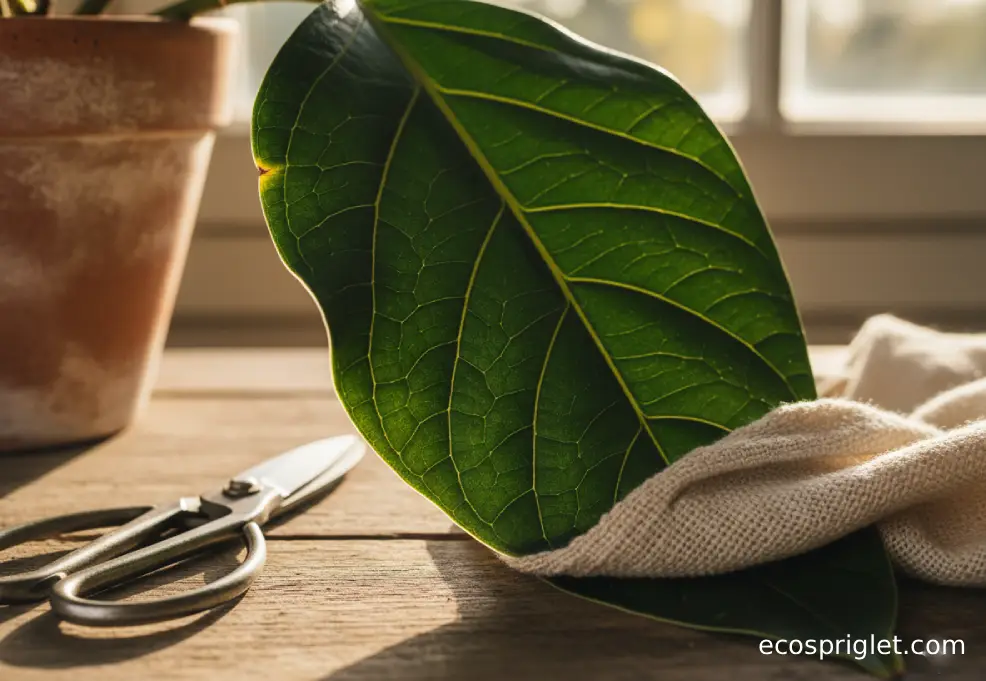
This is the unglamorous truth: dust and weak structure are the enemies of a “lush” look. Missouri Botanical Garden recommends cleaning leaves with a soft cloth and notes that grooming improves function as well as appearance. I do this about once a month, usually when I notice the plant looks a little dull under the window light.
For fertilizer, I’m conservative—especially for beginners. Missouri Botanical Garden suggests balanced fertilizers and warns that over-fertilizing can show up as brown, crisp leaf margins and mineral crusts. My rule: feed only during active growth (often spring through early fall) and follow the label rate—then cut it in half if your apartment is low light.
Support is the other half of the “big leaf” look. If your plant is a climber or wants to lean, stake it early. WVU Extension specifically mentions using a stake for Monstera to support growth, and it’s one of those small changes that makes the plant look like it belongs in the space.
Troubleshooting Yellow Leaves, Brown Tips, and Pests
When a big-leaf plant looks rough, it’s tempting to throw ten fixes at it. Don’t. Pick one likely cause, adjust, and wait for new growth to tell you if you nailed it.
Quick Symptom Decoder
| What You See | Most Common Cause | What to Do This Week |
|---|---|---|
| Yellow lower leaves, soil stays wet | Overwatering or slow-draining mix | Let top 1–2 inches dry; confirm drainage hole; empty saucer after watering |
| Brown crispy tips, leaf edges | Low humidity, inconsistent watering, or fertilizer salts | Water on a steady cue (top inch dry); rinse soil occasionally; cluster plants; avoid heater blasts |
| New leaves smaller, long gaps between leaves | Not enough light | Move 1–3 feet closer to brightest window; rotate every watering |
| Sticky residue or tiny specks under leaves | Spider mites, scale, or mealybugs | Isolate plant; wipe leaves; repeat checks every 5–7 days until clean |
Two notes I learned the hard way:
- Old leaves don’t “heal.” They might stop getting worse, but the real win is healthy new growth after you fix light or watering.
- Check the underside of leaves. Big leaves hide pests like a tiny umbrella. Missouri Botanical Garden advises inspecting leaves and stem junctions for insect or disease issues when selecting plants, and that habit helps during troubleshooting too.
If you keep pets, remember that some common big-leaf plants are toxic when chewed. ASPCA lists Monstera, Alocasia, and peace lily as toxic to cats and dogs, so place them where curious mouths can’t reach.
Common Mistakes New Indoor Gardeners Make
- Buying the plant before choosing the spot. Big leaves need real light; Missouri Botanical Garden emphasizes matching plants to light intensity and duration.
- Putting rocks in the bottom of the pot “for drainage.” WSU Extension calls this a persistent myth and explains it can actually hinder water movement.
- Watering on a calendar. Use a cue (top inch dry or one-inch-down test) instead of a rigid schedule.
- Jumping to a much bigger pot. “Slightly larger” is safer; UCANR mentions 1–2 inches larger as a practical step, and Missouri Botanical Garden also advises only slightly larger containers.
- Ignoring pet safety. ASPCA lists several popular big-leaf options (like Monstera and Alocasia) as toxic, and also flags fiddle leaf fig as mildly toxic in their pet-safety article.
I learned the “calendar watering” mistake with a plant I loved a little too aggressively. Once I switched to the finger test, it stopped being a weekly guilt project and became… honestly kind of relaxing.
Styling Ideas: Make One Plant Look Like Five
This is where big leaves really shine. If your plant is healthy, you can style it in ways that make your whole room feel calmer without adding clutter.
My three favorite apartment moves:
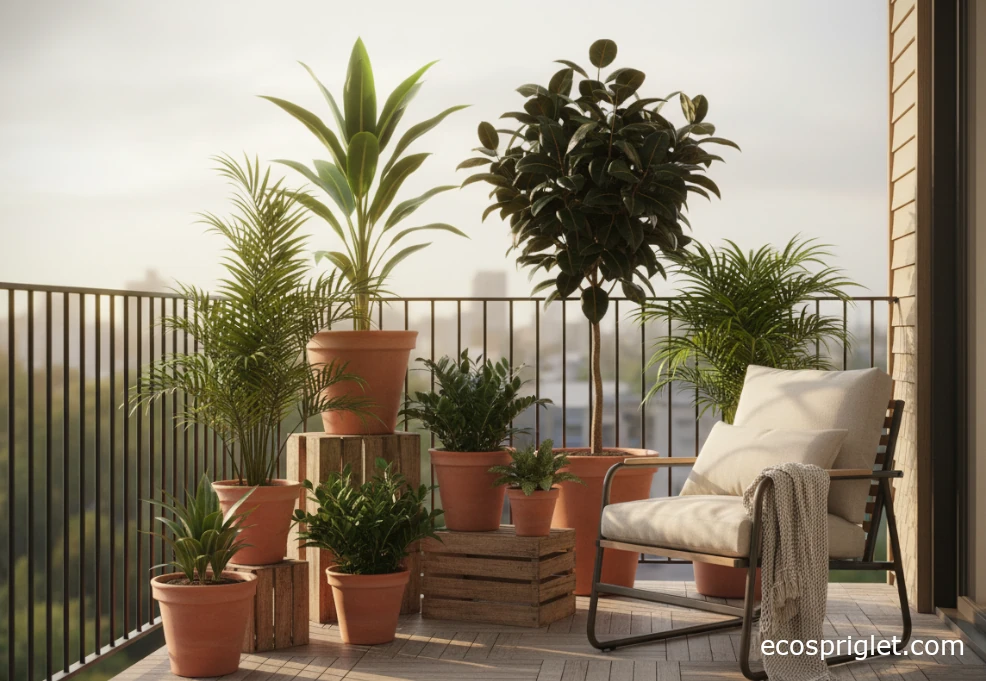
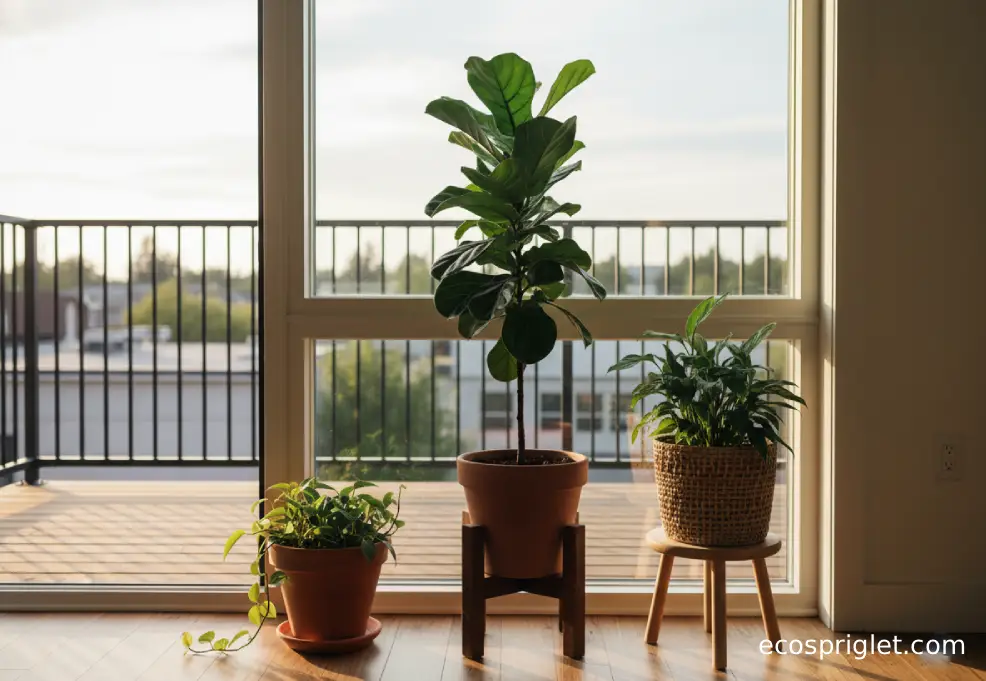
- Height stacking: Put your tallest plant on the floor, then add one medium plant on a stand, and one small plant on a table. Your eye reads it as a “collection,” even if it’s just three pots.
- One strong light source: If you can, keep your main big plant near your best window and use lower-light plants farther away. Missouri Botanical Garden notes that low light can be 25–100 foot-candles and often describes spaces beyond about eight feet from windows as low light—so don’t expect big leaves to stay big in that zone.
- Leaf direction matters: Rotate the pot so the “face” of the plant opens toward the room, not just toward the glass. It sounds fussy, but it changes the vibe immediately.
If you’re building a cluster, keep airflow in mind. Big leaves can trap still air, and pests love still air. Leave a little breathing room between pots, especially in winter when windows stay closed.
Bringing It All Together
A large leaf indoor plant doesn’t need complicated care—it needs a good match. Pick a plant that fits your brightest window, give it a pot with drainage and an airy mix, then water on a simple cue instead of a calendar. If you do those three things, you’ll be amazed how quickly a “plant that survives” turns into a plant that looks intentional.
When you’re choosing among large leaf indoor plants, remember: the biggest wins come from boring consistency. Rotate, wipe dust, empty the saucer, and don’t panic over one imperfect leaf. Watch the newest leaf and the overall posture of the plant—those are the honest signals.
If you want to keep building your indoor setup, start here next: How Often to Water House Plants. And if you share your home with pets, take 60 seconds to check ASPCA’s plant listings before you bring anything home—better safe than sorry.