Choosing the best organic potting mix for a balcony or apartment is not the same as shopping for a backyard bed. Containers need a light, airy growing medium rather than dense garden soil, and the best mixes balance moisture retention with drainage so roots get both water and oxygen. University and extension guidance is pretty consistent on this: container media should be lightweight, well-drained, and able to hold moisture and nutrients, while ordinary garden soil tends to compact and stay too dense in pots.
For small-space gardeners, I also care about things the bag itself does not advertise well: how much room it takes up in a closet, whether it is aimed at indoor or outdoor containers, how often you will need to start feeding, and whether it helps or complicates the watering routine. A good organic potting soil mix helps, but it still will not fix a pot with poor drainage, a too-small tomato container, or a tiny self-watering reservoir that empties fast in summer. Based on current manufacturer details and container-growing guidance, Espoma Organic Potting Mix is the best overall pick for most readers, while the right alternative depends on whether you want lower upfront cost, a smaller indoor-friendly bag, or better moisture retention for thirsty balcony vegetables.
Quick picks
If you just want the short answer, these are the mixes I would narrow it down to first for a balcony, windowsill, or compact patio setup.
- Best overall: Espoma Organic Potting Mix — the best all-around fit for mixed use because it is clearly intended for both indoor and outdoor containers and uses a broad all-purpose ingredient blend rather than being narrowly tuned to one setting.
- Best budget: Miracle-Gro Organic Outdoor Potting Mix — currently a lower-cost way into an OMRI-listed container mix, especially for balcony vegetables and flowers, with a 16-quart size and built-in feeding for up to two months.
- Best for beginners: Burpee Premium Organic Potting Mix — a manageable 9-quart bag with coconut coir and up to three months of feeding, which lowers the number of decisions you need to make right after potting up.
- Best for tight spaces: Back to the Roots Organic Indoor Potting Mix — a 6-quart, peat-free indoor mix that is easier to store and is specifically designed without bark or compost, making it less prone to indoor gnats according to the brand.
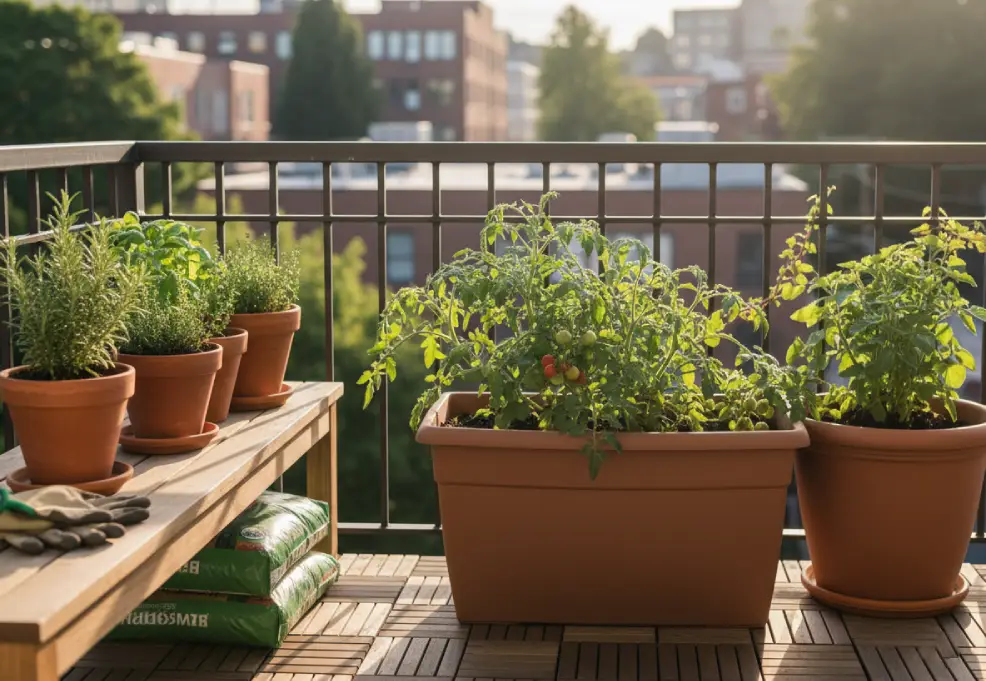
- Best organic potting mix for tomatoes on a hot balcony: Espoma Organic Moisture Mix — the added coir and moisture-holding focus make more sense for thirsty summer containers than a drier, more neutral all-purpose bag.
Comparison table
| Product | Best for | Size note | Key strength | Main trade-off | Verdict |
|---|---|---|---|---|---|
| Espoma Organic Potting Mix | Most readers who want one mix for indoor plants and containers | General all-purpose bag line | Broad indoor/outdoor use | Less specialized for very hot, thirsty containers | Best overall |
| Miracle-Gro Organic Outdoor Potting Mix | Budget balcony vegetables and flowers | 16 qt. and 25 qt. | OMRI listed and feeds up to 2 months | Outdoor-focused, not my first indoor pick | Best budget |
| Burpee Premium Organic Potting Mix | Beginner container gardeners | 9 qt. | Small, manageable bag with coir and built-in feeding | Not much volume for large planters | Best for beginners |
| Back to the Roots Organic Indoor Potting Mix | Windowsills, shelves, and indoor repotting | 6 qt. | Peat-free and indoor-focused | Not built for large outdoor containers | Best for tight spaces |
| Espoma Organic Moisture Mix | Tomatoes, herbs, and sun-baked balcony pots | 8 qt. and 1 cu. ft. | Coir added for moisture retention | Not ideal for plants that want a drier root zone | Best for tomatoes |
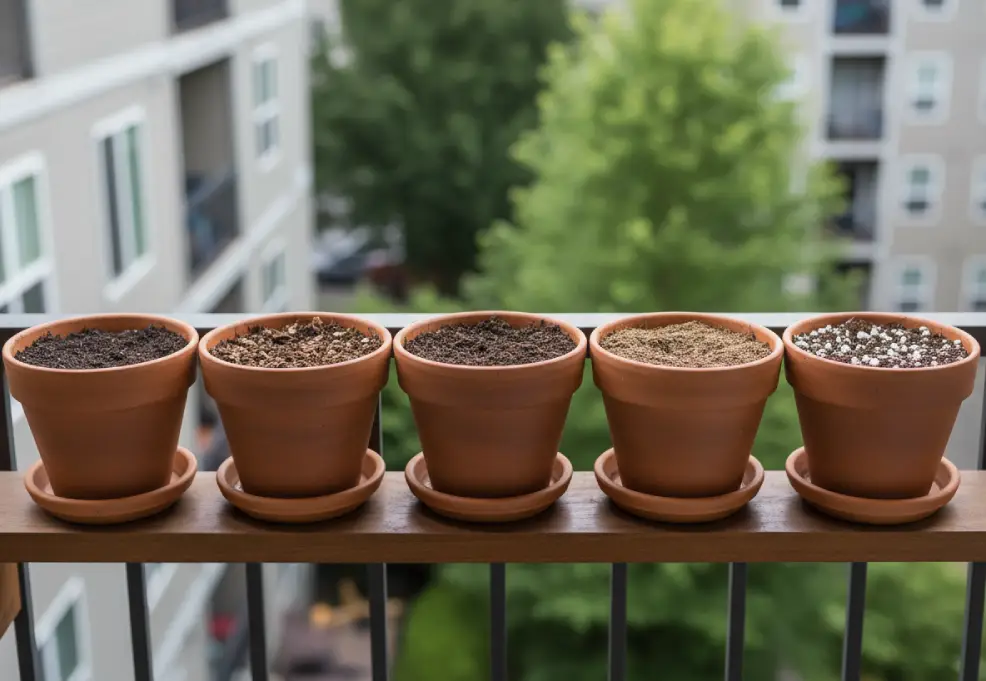
The mixes I would actually consider for a balcony or apartment
Espoma Organic Potting Mix — Best overall
This is the easiest overall recommendation because Espoma positions it for all indoor and outdoor container plants, and the ingredient list reads like a sensible all-purpose container mix rather than a niche formula. The current product page lists peat moss, forest-product or humus components, perlite, earthworm castings, meals, yucca extract, and mycorrhizae, which is the kind of broad base that works well when your plant lineup includes a little of everything: herbs on the balcony, a few foliage plants inside, maybe a pepper or compact tomato outside.
- What stands out: It covers both indoor and outdoor containers without feeling overly specialized.
- Why that matters in a small space: One bag can handle mixed repotting jobs instead of forcing you to keep separate indoor and outdoor mixes around. That is a real storage win in an apartment.
- Main limitation: It is still a general potting mix, not a magic long-season feeder. Repeated watering gradually leaches nutrients from containers, so regular feeding still becomes part of the routine.
I would choose this if you want the best organic potting mix for container gardening in the broadest sense, especially when your containers are small to medium and you do not want a different bag for every plant category. I would skip it only if your bigger problem is fast summer dry-down rather than general versatility.
Miracle-Gro Organic Outdoor Potting Mix — Best budget
This lands in the budget slot because the current official listing puts the 16-quart bag at a lower entry price than several competing organic options, and it is OMRI listed, made for outdoor containers, and includes natural fertilizers that feed for up to two months. That combination makes it a practical choice for balcony vegetables, flowers, and herbs when you want a straightforward bag you can grab without overthinking the mix. Pricing will move around, but the value case is clear right now.
- What stands out: OMRI-listed container mix with up to two months of feeding.
- Why that matters: New container gardeners often forget the feeding side of the equation, and this buys you a little time.
- Main limitation: The brand itself says this mix is really at its best outdoors, so I would not make it my first pick for a shelf full of indoor foliage plants.
This makes the most sense if your main question is really “what is the best organic potting mix for vegetables or flowers in containers without spending much?” It makes less sense if most of your repotting happens indoors, where a smaller, indoor-specific bag is easier to manage and easier to store.
Burpee Premium Organic Potting Mix — Best for beginners
Burpee’s 9-quart bag is a very beginner-friendly size. It is small enough not to become a storage problem, large enough for several herbs or a few medium containers, and the mix includes coconut coir plus plant food that the company says feeds for up to three months. That combination lowers friction at the start, which matters more than people think. A lot of beginner frustration comes from buying a giant bag, making a mess, and then realizing you also need fertilizer right away.
- What stands out: 9-quart size, OMRI labeling, and moisture-retaining coir.
- Why that matters: It is easier to pour, store, and finish in a small household than a bulky bag.
- Main limitation: Volume is the obvious trade-off. If you are filling several balcony boxes or larger vegetable pots, you will move through it quickly.
I would lean toward this one if you are repotting a few herbs, flowers, or beginner vegetable containers and you want the least fussy starting point. It is not the smartest buy if you are filling multiple large planters at once.
Back to the Roots Organic Indoor Potting Mix — Best for tight spaces
This is the best fit for tight spaces because it is explicitly designed for indoor potted plants, comes in a 6-quart bag, is peat-free, and uses perlite, coir, yucca extract, dolomitic limestone, organic plant food, and mycorrhizae. Back to the Roots also says it is made without bark or compost and is therefore less prone to indoor gnats. I would still treat that as a helpful design goal rather than an absolute promise, but the indoor logic is solid.
- What stands out: 6-quart size, peat-free formula, and indoor-specific ingredient profile.
- Why that matters: Smaller bags are simply easier to stash in a closet, carry up stairs, and use without turning the living room into a potting shed.
- Main limitation: This is not the bag I would buy for several outdoor vegetable containers. It is more of an indoor plants and small repotting solution.
This is probably the most apartment-friendly option here for indoor plants. I’d pass on it for larger balcony vegetables, though, because the bag size and indoor focus make it less practical outdoors.
Espoma Organic Moisture Mix — Best for tomatoes and hot balconies
For balcony tomatoes, peppers, and thirsty herb pots in full summer sun, I like the direction of this formula more than a plain all-purpose mix. Espoma says the blend is enhanced with coir to help hold moisture and reduce watering, while still using a typical container mix structure with peat moss, perlite, humus or forest products, meals, castings, and mycorrhizae. That is a sensible match for containers that dry fast from wind and reflected heat.
- What stands out: Coir-focused moisture retention in an organic-approved container mix.
- Why that matters: Tomatoes in containers need a medium that drains well but does not dry too quickly, and hot weather can push container plants into daily watering or more.
- Main limitation: Moisture-retentive formulas are not ideal for every plant. UNH Extension notes that these kinds of moisture-retaining treatments are a poor fit for succulents and other drought-tolerant plants.
The trade-off is pretty clear here. This is the better choice if your balcony tomatoes or mixed summer containers dry out too fast. It is not a substitute for enough root volume, though. Iowa State says standard tomatoes should have at least a 4-gallon container, and even self-watering setups can still need frequent refills in summer. A potting mix can help the rhythm, but it cannot erase container limitations.
How we evaluated these picks
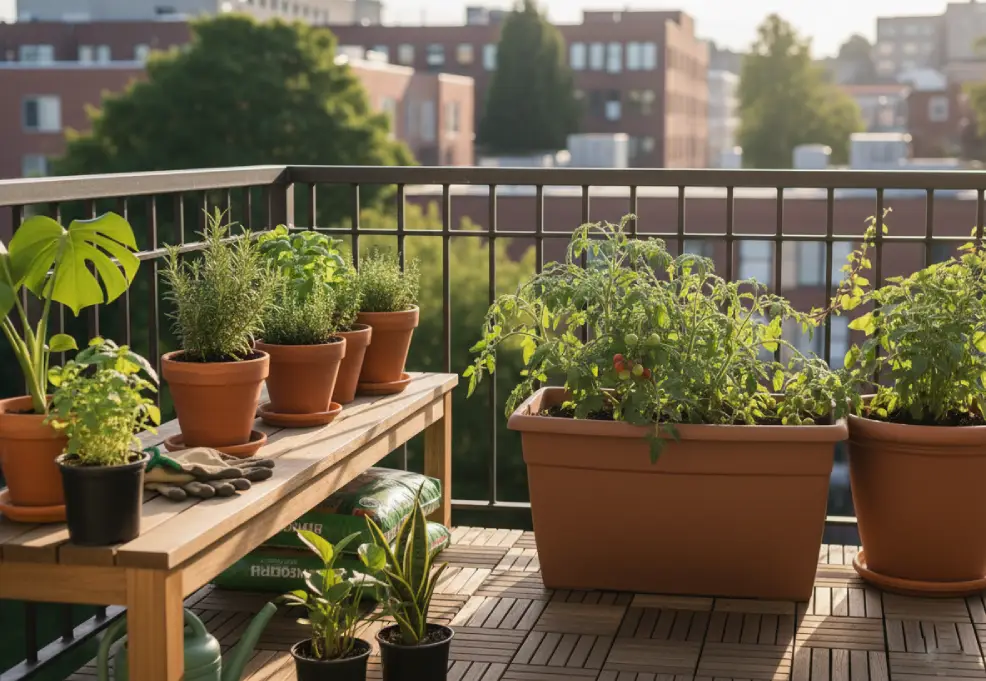
This is a research-based guide, not a hands-on lab test. I compared current manufacturer pages for intended use, bag sizes, ingredient structure, moisture-retention claims, and whether each mix is clearly aimed at containers rather than raised beds or in-ground use. Then I filtered those details through container-growing guidance from university extension sources, which consistently emphasize lightweight, soilless media that drain well, hold moisture, and avoid compaction.
The small-space filter mattered just as much as the ingredient list. A bag can be technically good and still be the wrong choice if it is oversized for an apartment closet, too specialized to justify shelf space, or likely to create extra watering drama on a hot balcony. That is also why I left some otherwise interesting options out. For example, Coast of Maine’s peat-free Acadia Blend looks appealing on sustainability grounds, but the current official sizes begin at 20 quarts and 40 quarts, which is harder to justify for many indoor growers or renters with limited storage. If you already have an opened bag sitting around, it is also worth checking whether potting soil can go bad before using it on fresh containers.
What actually matters before you buy
The first thing to check is whether the bag is truly for containers. University of Maryland Extension notes that commercial soilless mixes are excellent for containers because they are lightweight, drain well, hold water and nutrients, and are generally free of weeds, insects, and diseases. That is very different from dense “garden soil” products, which are too heavy and can drown roots in shallow pots. If you plan to reuse old mix instead of starting with a fresh bag, knowing how to sanitize soil can help reduce pest and disease problems before repotting.
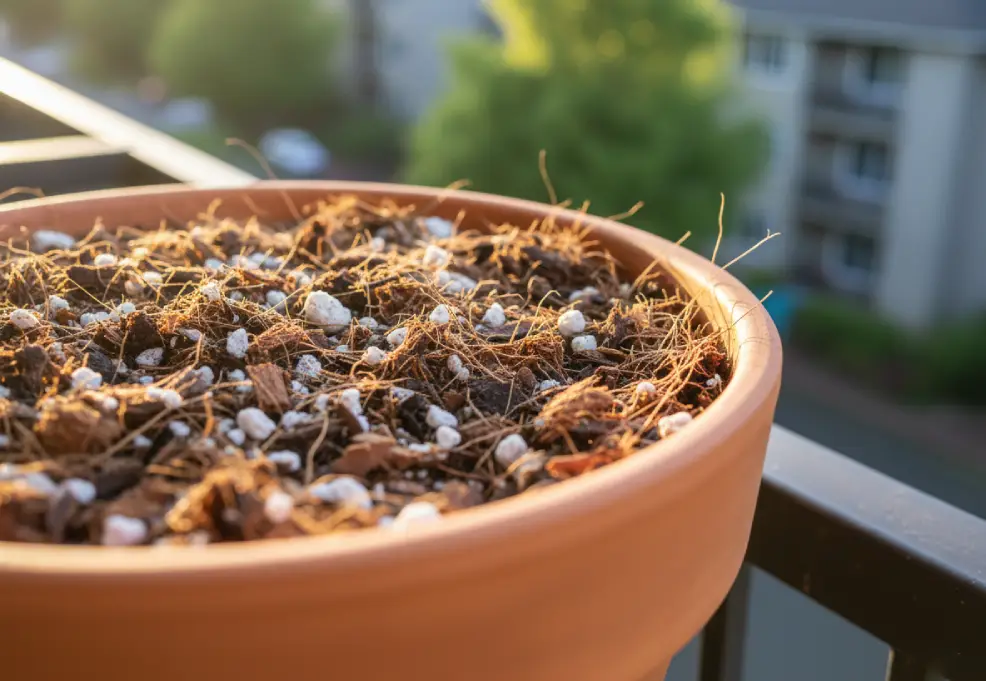
- Look for a light, fluffy structure. UNH Extension says quality mixes are typically lightweight and contain materials such as peat, coir, bark, perlite, or vermiculite.
- Match the bag to your plant type. A moisture-retentive mix can help balcony vegetables and tomatoes, but a drier-loving succulent will resent that same setup.
- Think about storage before you think about yield. In a small apartment, a slightly pricier small bag you can actually use cleanly is often smarter than a bargain bag that lives open in a hallway closet for six months.
- Do not overestimate starter nutrients. Slow-release feeding helps, but Minnesota Extension notes that repeated watering leaches nutrients from containers over time, so feeding usually becomes necessary sooner or later.
- For tomatoes, prioritize root volume as much as mix quality. Iowa State says standard tomatoes should have at least a 4-gallon pot and can need daily watering in hot weather.
One more small-space note: a better potting mix will not rescue a badly designed self-watering setup. Even University of Maryland’s self-watering bucket example still needs regular summer watering, with daily attention in full sun and one to two quarts a day to refill the reservoir. So yes, reservoir design matters. A good mix helps the margin for error, but it does not turn a tiny reservoir into a reliable vacation system.
Common mistakes to avoid
- Buying raised-bed or garden soil for pots. Container roots need more air space than dense garden soil usually provides.
- Assuming “moisture control” means “no more watering.” Container plants can still need daily watering, or more than once daily in hot weather.
- Trying to grow standard tomatoes in undersized containers. The best organic potting mix for tomatoes still cannot make a too-small pot behave like a large one.
- Letting one bag do a job it is not meant for. Indoor-focused mixes make more sense on a shelf of houseplants; outdoor-focused mixes make more sense on a sunny balcony.
- Ignoring the feeding timeline. A mix that feeds for two or three months is helpful, but it is not a full-season nutrition plan for fast-growing container vegetables.
This is one of those categories where overbuying is common. On a small balcony, the “more serious” bag is not always the smarter one. Sometimes the better call is simply the bag you can store, pour, finish, and keep consistent with. That sounds less glamorous, but it is usually how container gardens stay alive through August.
FAQ
What is the best organic potting mix overall?
For most small-space gardeners, Espoma Organic Potting Mix is the best overall choice because it is positioned for both indoor and outdoor containers and uses a broad all-purpose ingredient blend that is easier to recommend across herbs, foliage plants, and general container gardening.
What is the best organic potting mix for vegetables?
For budget-friendly balcony vegetables, Miracle-Gro Organic Outdoor Potting Mix is the most practical entry point here because it is OMRI listed, made specifically for outdoor containers, and feeds for up to two months. For hotter balconies where vegetables dry out fast, Espoma Organic Moisture Mix is the more useful step up.
What is the best organic potting mix for indoor plants?
Back to the Roots Organic Indoor Potting Mix is the best fit when your priority is indoor plants in a small home. The 6-quart size is easier to store, and the formula is indoor-specific, peat-free, and designed without bark or compost. Espoma Organic Potting Mix is still the better all-around option if you want one bag to handle both indoor and outdoor containers.
What is the best organic potting mix for tomatoes?
Espoma Organic Moisture Mix is the strongest tomato pick in this list because tomatoes in containers need a medium that drains well but does not dry too quickly, and Espoma specifically adds coir for moisture retention. Just remember that the pot size still matters a lot. Iowa State recommends at least a 4-gallon pot for standard tomatoes, and hot weather can still mean daily watering.
Do I still need fertilizer if I buy a good organic potting mix?
Usually yes. Some mixes include starter nutrition for two or three months, but extension guidance is clear that repeated watering leaches nutrients from containers over time. Fast-growing vegetables and fruiting plants often need regular feeding after that initial window.
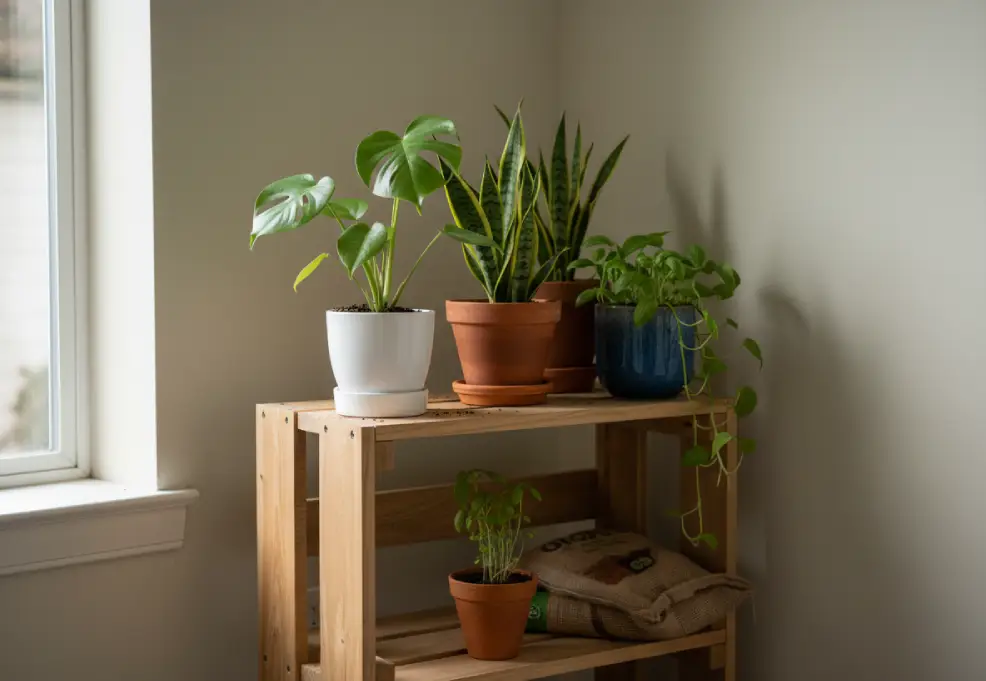
If you want the safest all-around answer, go with Espoma Organic Potting Mix. It is the most flexible pick here, and flexibility matters when your gardening life spans a few houseplants inside, a handful of herbs outside, and maybe a vegetable container or two. If budget is the deciding factor, Miracle-Gro Organic Outdoor Potting Mix is the better value play for balcony containers. If your real challenge is indoor storage and small repotting jobs, Back to the Roots is the cleanest fit. And if you are trying to keep tomatoes or thirsty herbs steadier through summer heat, Espoma Organic Moisture Mix is the smarter specialist choice.
The bigger point is that the best organic potting soil mix is the one that matches your actual setup, not the one with the loudest bag. On a small balcony, container size, drainage, reservoir design, and feeding rhythm still matter just as much as the mix itself. If you are building out a compact growing setup, the next guides I would read are how to water container plants and Indoor Herb Garden Guide. Those decisions work together, and they matter more than chasing a “perfect” bag that does not fit your space or routine.