Peonies have a reputation for being “garden bed only,” but apartment dwellers don’t have to miss out. The honest answer to can peonies grow in pots is yes—if you treat the container like a long-term home, not a temporary bucket. That means going bigger than you think, keeping the crown planted shallow, and planning for winter dormancy (peonies need a cold rest to bloom well year after year).
I’ve seen plenty of potted peonies thrive on patios and balconies, but the failures almost always come down to the same few things: a pot that’s too small, soggy potting mix, or a “cozy indoor winter” that steals the plant’s chill time. If you can give your peony a roomy container, 6+ hours of sun, and a realistic winter plan, you can absolutely grow peonies in containers and get those big, ridiculous blooms right outside your sliding door.
The Short Answer: Yes, Peonies Can Grow in Pots
Peonies in pots are totally doable, but they’re not “set it and forget it” the way they can be in a garden bed. In a container, the roots have less insulation, the potting mix dries faster in summer, and the crown can rot quicker if drainage is poor. The win is that you can control the soil, move the pot to chase sun, and keep blooms right where you’ll enjoy them.
Think of a potted peony like a small shrub-level commitment: give it a big, stable planter and a consistent spot. The Royal Horticultural Society’s guidance for herbaceous peonies is basically the same foundation you’ll use in containers—sun, rich but well-drained soil, and careful planting depth.
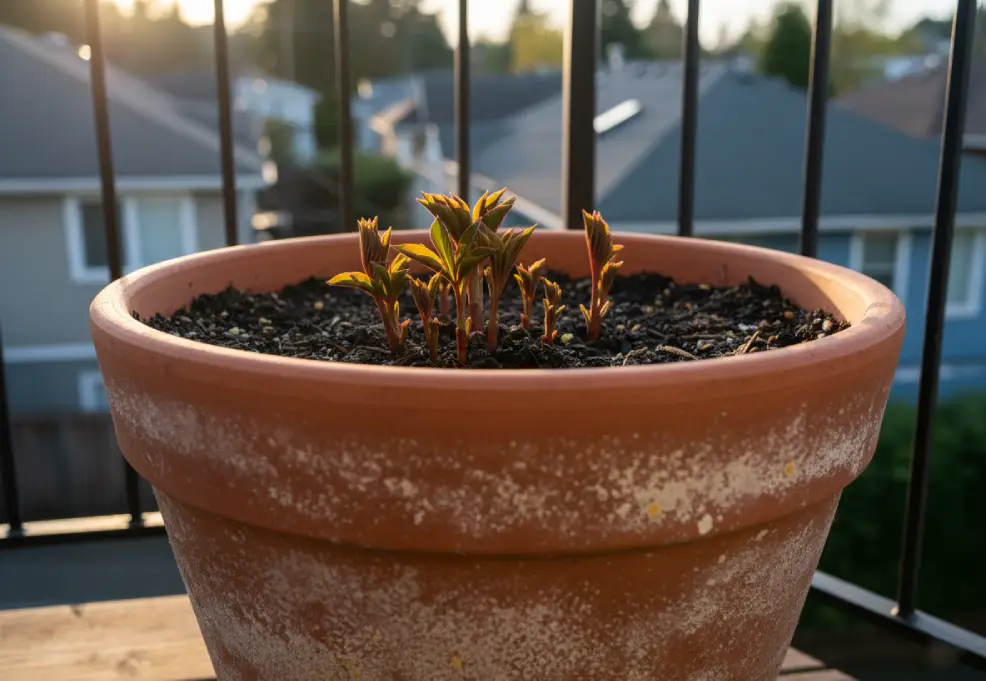
Choose a Pot That Won’t Cramp the Roots
If you do one thing right for growing peonies in pots, make it this: go big from day one. A peony can live for decades, and even when it’s “just” a few years old, it wants room. The American Peony Society recommends starting with a container about 18 inches deep and at least as wide, with plenty of drainage holes—exactly the kind of hefty patio planter that makes a balcony peony feel at home.
| Container Goal | What To Use | Balcony-Friendly Notes |
|---|---|---|
| Long-term potted peony | Planter about 18 inches deep and at least as wide | Heavier pots (thick plastic, fiberglass, glazed ceramic) are more stable in wind. |
| Temporary potting (nursery-style crowns) | 1–3 gallon nursery pots for production-sized crowns | Great for a season, but most balcony gardeners will want to upsize for longevity. |
Two beginner-friendly balcony tips:
- Put the pot on a sturdy plant caddy or feet so water can drain freely. A peony sitting in a puddle is a fast track to root trouble.
- Skip the “rocks in the bottom” habit. University of Illinois Extension explains it doesn’t improve drainage in the way people hope, and it can keep the root zone more saturated.
If your balcony is windy, treat stability as part of “pot size.” A taller, top-heavy peony in bloom can act like a sail. I like to tuck the container near a wall and use a simple plant support early in spring (before the stems flop).
Pick the Right Type of Peony for Containers
Most people mean herbaceous peonies when they say “peony” – the kind that dies back in winter and re-sprouts in spring. Those are the easiest to manage in pots because you can cut them back and let the container go dormant. Intersectional (Itoh) peonies can also work well in containers because many stay a bit more compact and have sturdy stems, but they still want a big pot.
Tree peonies are gorgeous, but they’re woody and can get large—more like a shrub than a perennial. On a balcony, that can be a space and weight problem unless you have a truly roomy corner and a serious container.
My practical rule: choose a peony that tops out around 2–3 feet tall if you want it to feel “right” in a pot near a railing. If the tag shows a big spread, assume it’ll be happier in the ground later.
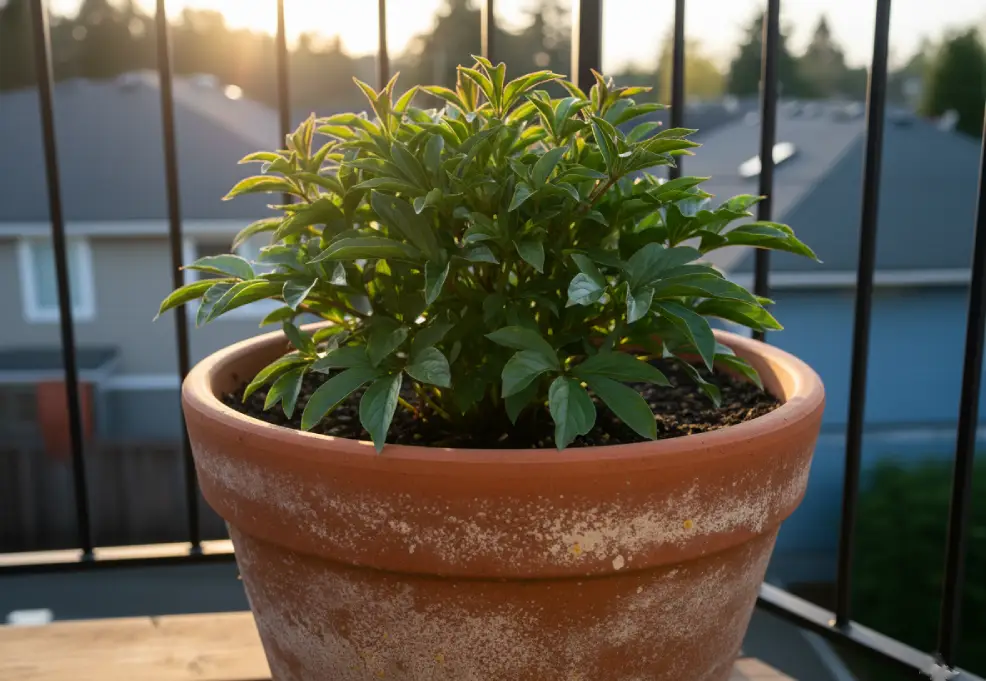
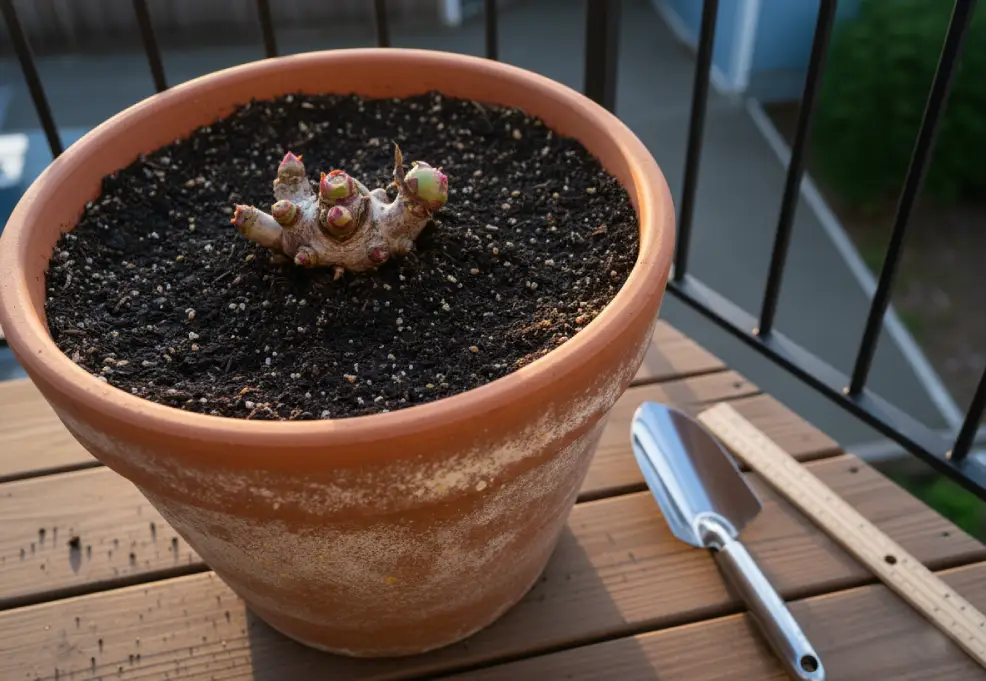
Planting Peonies in Pots Without Burying the Buds
The number one reason potted peonies don’t bloom is painfully simple: the crown is planted too deep. Iowa State University Extension recommends setting the buds (eyes) about 1–2 inches below the soil surface for common peonies—shallow on purpose.
I remember my first attempt at planting peonies in pots: I treated it like a bulb, buried it, watered it lovingly… and then waited two springs for flowers that never came. When I finally lifted the crown and replanted it higher, it fixed the issue the very next season.
- Fill the pot partway with high-quality potting mix (not garden soil) and check that water drains fast.
- Create a small mound, set the crown on top, and spread the roots outward.
- Backfill so the buds end up 1–2 inches under the surface, then water thoroughly to settle the mix.
- Mulch lightly (about 1 inch) after planting to reduce drying, but don’t bury the crown under a thick blanket.
Sources: Iowa State University Extension; RHS (planting depth and general care guidance).
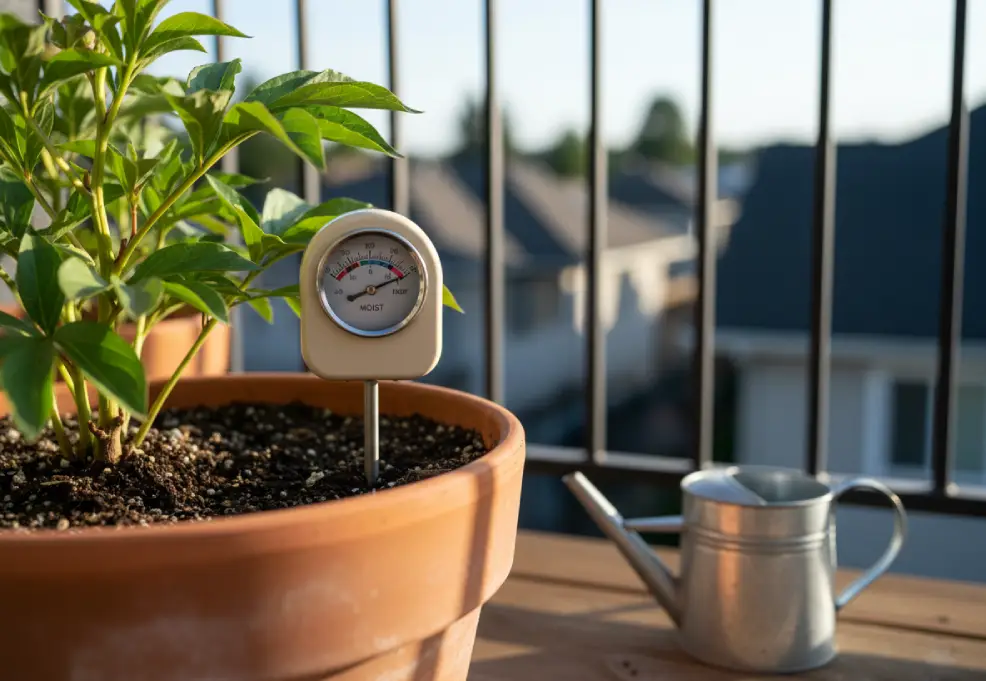
Sun, Water, and Feeding: Container Care That Actually Works
On a balcony, your peony will live or die by light and drainage. The UConn Home & Garden Education Center notes peonies thrive with about 8 hours of sun and can tolerate 5–6 hours (usually with fewer blooms).
Watering is the other big lever. Containers dry faster than beds, but peonies hate soggy roots. I use this simple trigger: water when the top 1–2 inches of mix feel dry, then water deeply until it runs from the drainage holes. If you’re using a saucer, empty it.
- Spring: Keep moisture steady while stems are growing, especially if your balcony gets wind.
- After bloom: Don’t “forget” the plant—this is when it rebuilds energy for next year’s flowers.
- Fertilizer: A light application of a balanced, slow-release fertilizer in early spring is usually enough. Too much nitrogen can mean lush leaves and fewer blooms.
Winter Dormancy on a Balcony: How to Overwinter Potted Peonies
Here’s the part that makes or breaks potted peonies: they need a cold winter rest to bloom well. Don’t treat your peony like a houseplant. If you bring it into a warm apartment all winter, it may grow weakly and flower poorly.
University of Illinois Extension recommends overwintering many potted perennials in an unheated garage or similar place where temperatures stay roughly between 20°F and 45°F—cold enough for dormancy, protected enough to avoid harsh swings.
If you don’t have indoor storage, Penn State Extension suggests another classic method: bury the whole pot in the ground (or a raised bed) and mulch over it so the surrounding soil insulates the roots. That’s tricky for apartment life, but a friend’s yard or a community garden plot can make it possible.
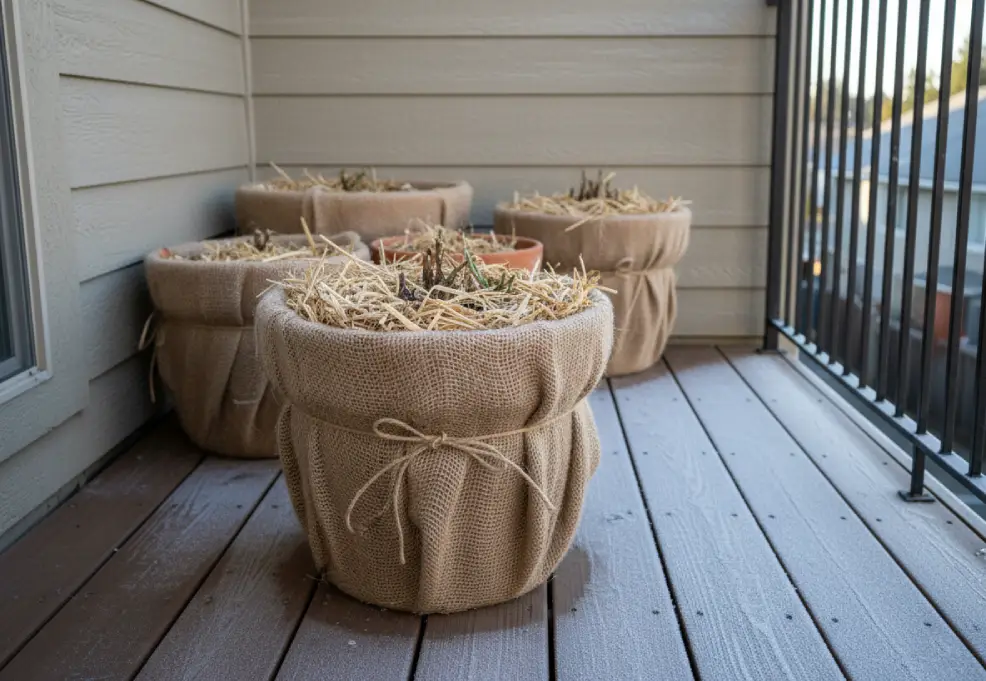
Balcony-only workaround I’ve used: cluster pots against the most sheltered wall, wrap the container with burlap or a foam blanket, and mulch the top lightly after the mix has cooled down in late fall. Water lightly a few times during winter thaws so the root ball doesn’t dry into dust.
Why Your Potted Peony Isn’t Blooming Yet
If your peony is alive but not flowering, don’t panic—most balcony problems come down to a short checklist:
- Planted too deep: Re-check the crown. Those buds should be only 1–2 inches under the surface.
- Not enough sun: If you’re under 5–6 hours, you may get leaves but very few blooms.
- Too warm in winter: A mild indoor winter can reduce flowering the following spring.
- It’s still settling in: Peonies often take time to build a strong root system before they bloom heavily. In a pot, that “settling in” can feel even slower.
Source touchpoints I rely on for troubleshooting: RHS and university Extension planting-depth guidance.
Transplanting Peonies to Pots (and When Not to)
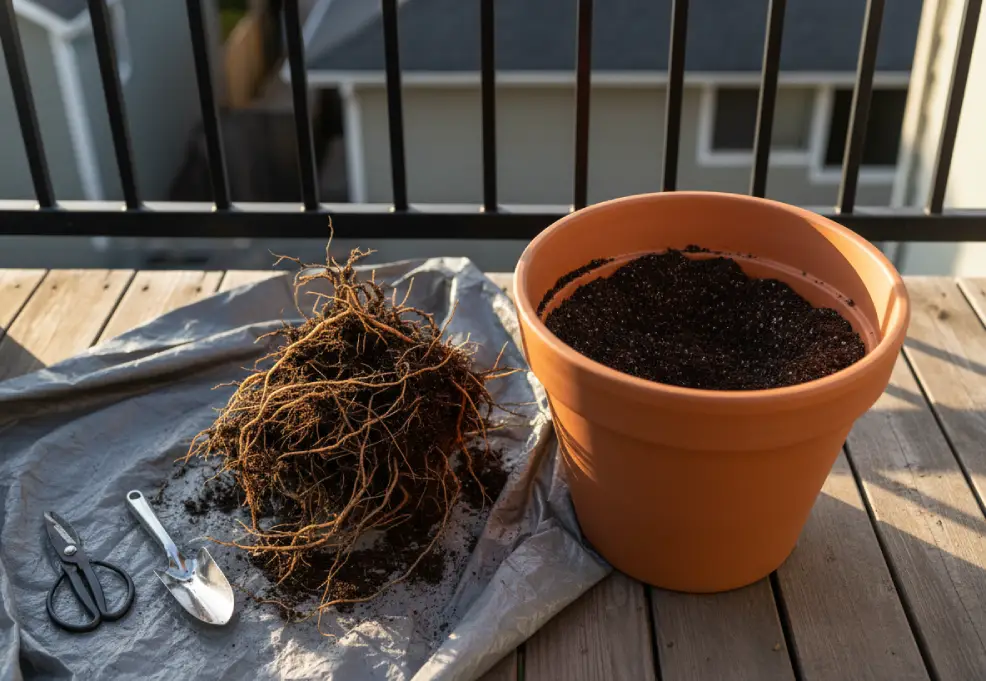
Transplanting peonies to pots is possible, but it’s not something I’d do casually. Peonies generally prefer to stay put, and every move is a small setback. If you’re moving a plant from ground to container (say, you’re relocating), plan it for fall after the foliage dies back and the plant is going dormant. That timing reduces stress and gives roots a cool season to recover.
If you’re already growing peonies in pots and they’re clearly root-bound (drying fast, declining vigor, fewer shoots), also aim for a fall repot into a bigger container. Lift the crown gently, keep divisions large if you split it, and replant at the correct shallow depth. Iowa State’s planting-depth guidance is still the rule here.
Common Mistakes to Avoid With Peonies in Containers
- Using a medium pot: Peonies aren’t “12-inch pot” plants. Start with a deep, wide container for long-term success.
- Adding gravel inside the pot for drainage: It’s a persistent myth; focus on drainage holes and a good mix instead.
- Planting the crown too deep: Great foliage, no blooms—classic.
- Overwintering in a warm living room: A peony needs a real cold dormancy to perform.
- Letting the pot blow around: Wind stress is real—stabilize the container and support stems early.
Small-Space Styling Ideas for a Peony Flower Pot
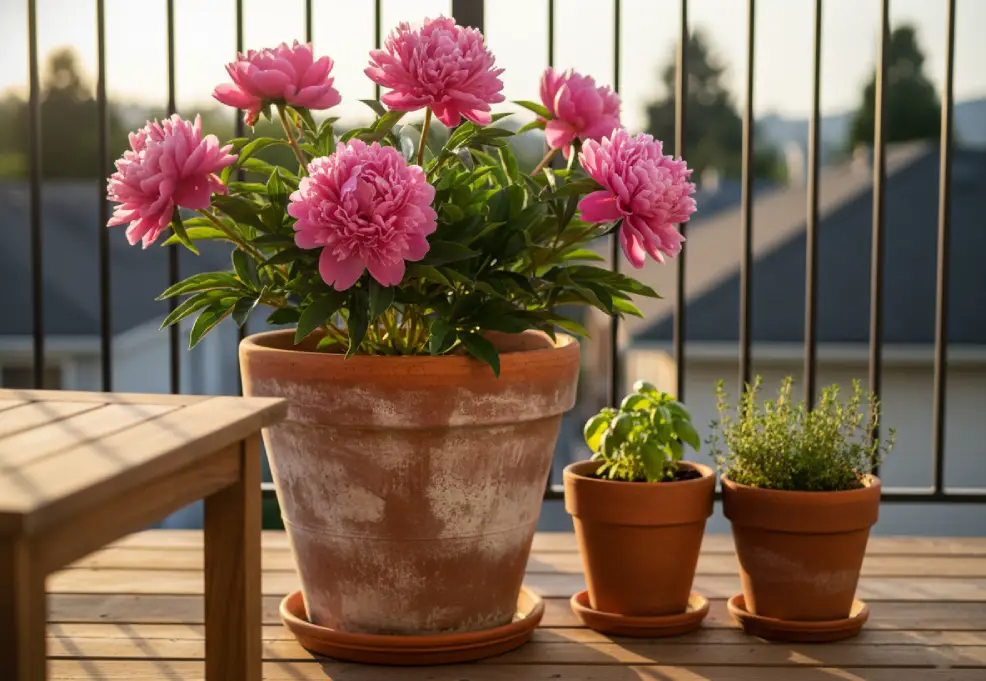
A peony in a container reads like a “statement plant,” so give it a little breathing room. I like pairing one big peony pot with lower, practical companions—think thyme, chives, or trailing nasturtiums—so the peony stays the star without the balcony feeling cluttered.
Two small-space tricks that make a potted peony look intentional:
- Use one large pot and just two or three smaller companions. Fewer containers usually looks calmer (and is easier to water).
- Keep bloom season from feeling too short by choosing companions that look good before and after peony flowers—evergreen herbs, compact grasses, or a neat box of annuals.
Safety Note for Pets and Curious Nibblers
If you have pets that chew plants, it’s worth knowing that the ASPCA lists peony as toxic to dogs, cats, and horses (typically causing gastrointestinal upset). The simplest fix is placement: keep the pot out of reach, especially when petals drop and become tempting “confetti.”
Peonies in containers are one of those “small-space flex” plants: they look fancy, but the care is mostly about getting the fundamentals right. Start with a truly roomy pot, keep the crown shallow, and make peace with the fact that winter dormancy is part of the deal. If your balcony can offer solid sun and a protected winter spot (or an unheated garage window of 20°F–45°F), you can grow peonies in pots for years and get blooms that feel almost unfairly luxurious for apartment living.
Sources referenced: American Peony Society; RHS; Iowa State University Extension; UConn Home & Garden Education Center; Penn State Extension; University of Illinois Extension; ASPCA.