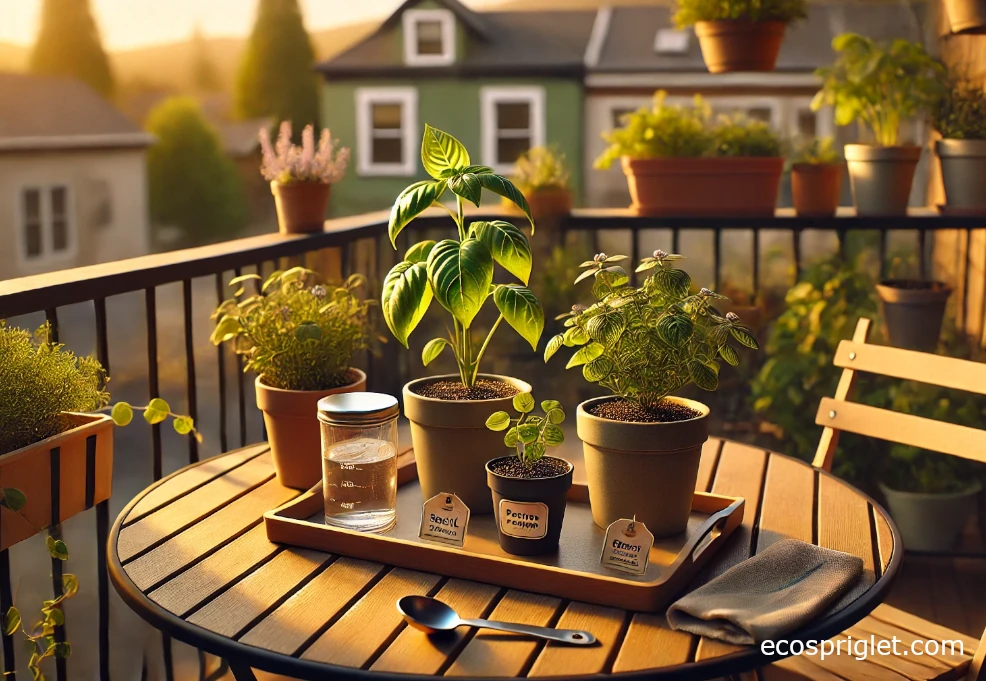
Fresh basil is one of those balcony wins that feels like cheating—snip a few leaves, tear them over dinner, and suddenly your tiny apartment kitchen smells like summer. The frustrating part is how quickly basil can flop, blacken, or get slimy after you pick it. The good news: basil isn’t “hard to store,” it’s just picky. It bruises easily, hates cold air, and gets unhappy when it’s too wet for too long.
This guide walks you through the simplest ways to store fresh basil leaves (and whole stems) so they stay usable for days—and sometimes over a week—without turning into a sad green puddle. We’ll cover the countertop “bouquet” method for fresh cut basil, what to do if you must store basil in the fridge, and the best options if you’re wondering: can you freeze fresh basil leaves? Along the way, I’ll point out the rookie mistakes I still see (and yes, I’ve done most of them myself).
Why Basil Goes Bad Fast in Apartments
Basil is a tender, warm-weather herb. Postharvest research from UC Davis notes that basil (including sweet basil and many Thai basil types) is chilling-sensitive and does best stored above about 50°F—colder temperatures can trigger leaf browning and that dreaded black, water-soaked look. That’s why basil often hates a typical refrigerator, which runs around 40°F for food safety (FDA and FoodSafety.gov both emphasize keeping fridges at 40°F or below).
The other enemies are bruising and trapped moisture. Basil leaves bruise just from rough handling, and once bruised, they darken faster. Meanwhile, if leaves stay wet in a sealed bag, you invite slime and mold. So the storage “game” is really three things:
Keep basil warm enough, handle it gently, and manage moisture (not too wet, not bone dry).
| Storage Method | Best For | Typical Apartment Results |
|---|---|---|
| Countertop bouquet (stems in water) | Fresh cut basil, best flavor and color | Often the longest-lasting option when kept out of harsh sun |
| Fridge (protected in bag/towel) | Short-term backup when your kitchen is very warm | Can last a few days, but higher risk of blackening |
| Freezer (cubes/pesto/blanched) | Saving extra basil for cooking later | Great for sauces and soups; texture changes, flavor stays useful |
| Dried basil | Pantry convenience | Works, but the flavor is softer than frozen or fresh |
Prep Before Storage: Gentle Handling and Smart Washing
Before you decide how to store basil, do a quick “triage” pass. This is especially helpful if you harvested basil from a balcony pot and you’ve got a mix of perfect leaves and a few that got splashed by soil.
- Leave basil on the stems when possible. Loose leaves bruise faster and are harder to keep dry.
- Remove anything damaged. One slimy leaf can speed up the rest going downhill.
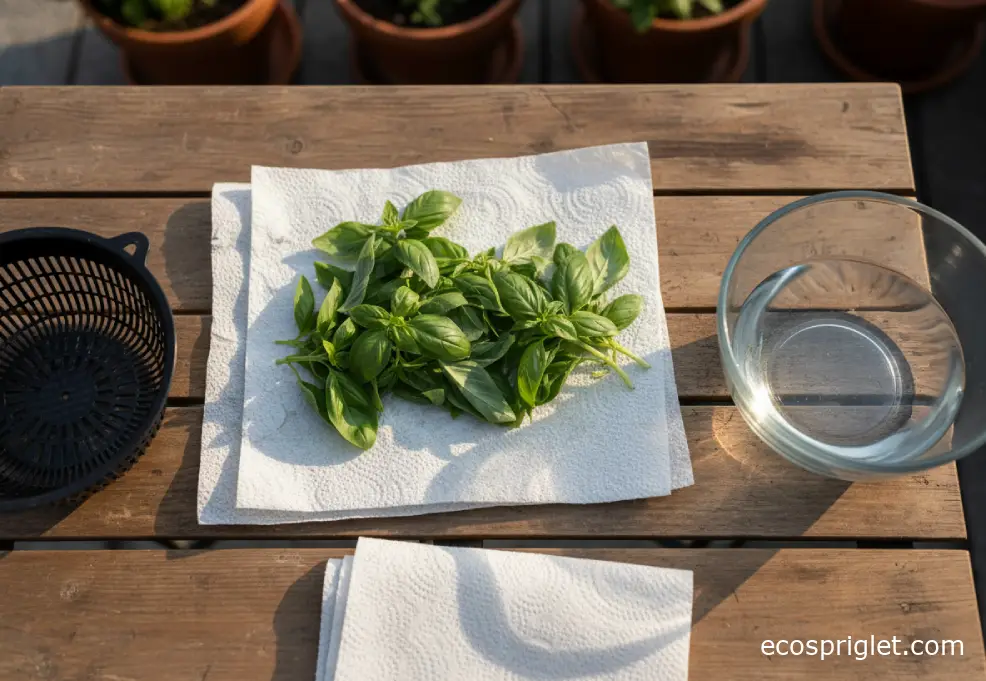
- Wash only if you need to. Colorado State University Extension notes that washing produce before storage can speed spoilage; if you do rinse, dry thoroughly. The FDA also recommends drying washed produce with a clean towel or paper towel to reduce moisture and surface bacteria.
- Dry like you mean it. I pat gently, then air-dry for 10–15 minutes on paper towels if I rinsed it. Basil hates being sealed up wet.
If you’re dealing with gritty balcony basil, a calm rinse works better than blasting it under the faucet. A USDA/NIFA produce-washing guide suggests dipping and swishing herbs in cool water, then drying with paper towels—gentle is the whole point.
If you want more harvest timing tips (so your stems are sturdier and less droopy), bookmark our How to Grow Kitchen Herb Plants.
The Countertop “Bouquet” Method for Cut Basil
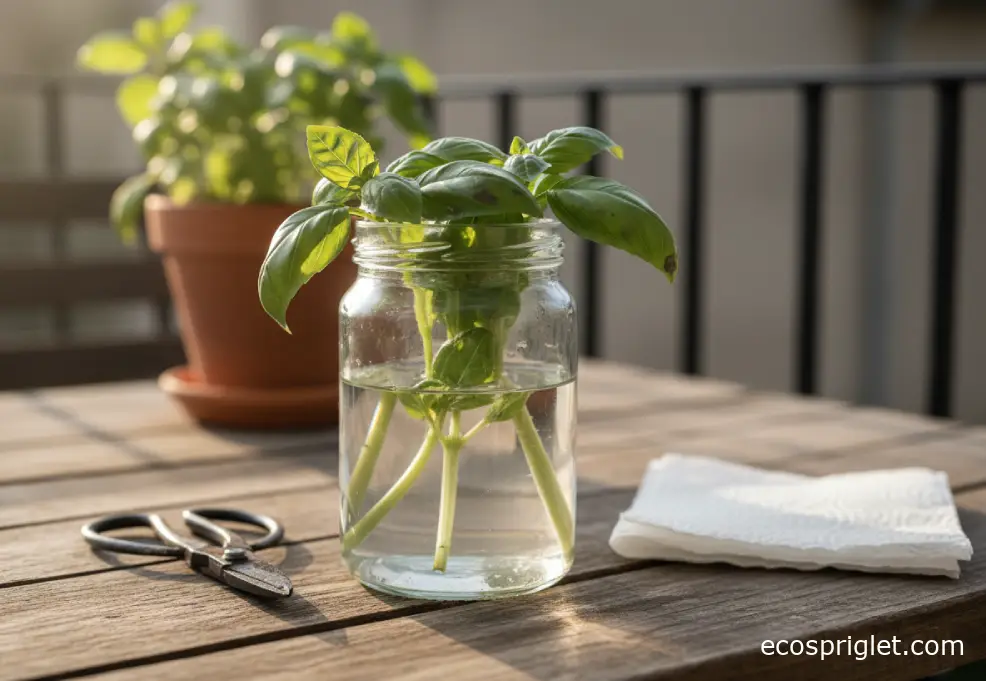
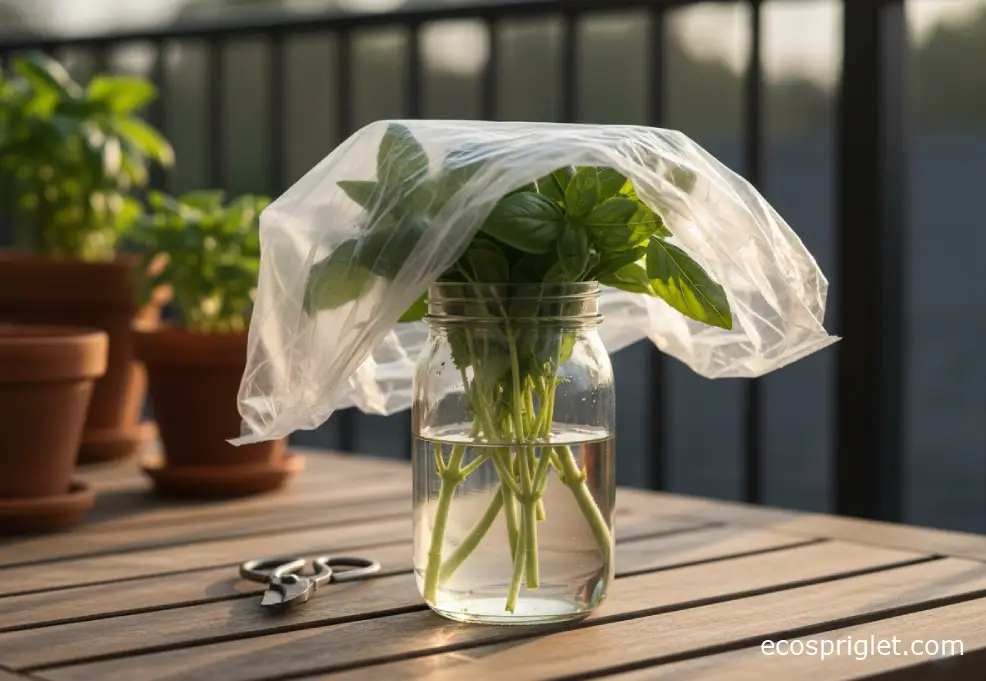
If you only learn one method for how to keep basil fresh, make it this one. Purdue Extension’s FoodLink resource suggests treating basil with stems like a bouquet: trim the base and stand it upright in water, ideally in a cool spot around 50–65°F. That range matters because UC Davis Postharvest points out basil is chilling-sensitive and prefers storage above about 50°F.
I remember the first time I tried this, I did everything “right”… except I parked the jar in a sunbeam like it was a houseplant. Two days later the leaves were wilted and the water smelled like regret. Basil wants bright room light, not direct heat.
- Trim the stems: Slice 1/4–1/2 inch off the bottoms so they can drink.
- Use a small jar: Add about 1 inch of water—enough to cover stems, not leaves.
- Bag it loosely: Drape a produce bag over the top (not sealed tight) to slow moisture loss while still letting it breathe.
- Change water: Daily is ideal; at minimum, when it looks cloudy.
- Pick a safe spot: Bright counter, away from the stove, radiator, and direct sun.
In most apartments, this is the best way to store fresh cut basil if you want it to stay green and fragrant for several days without refrigeration drama.
How to Store Basil in the Fridge Without Wrecking It
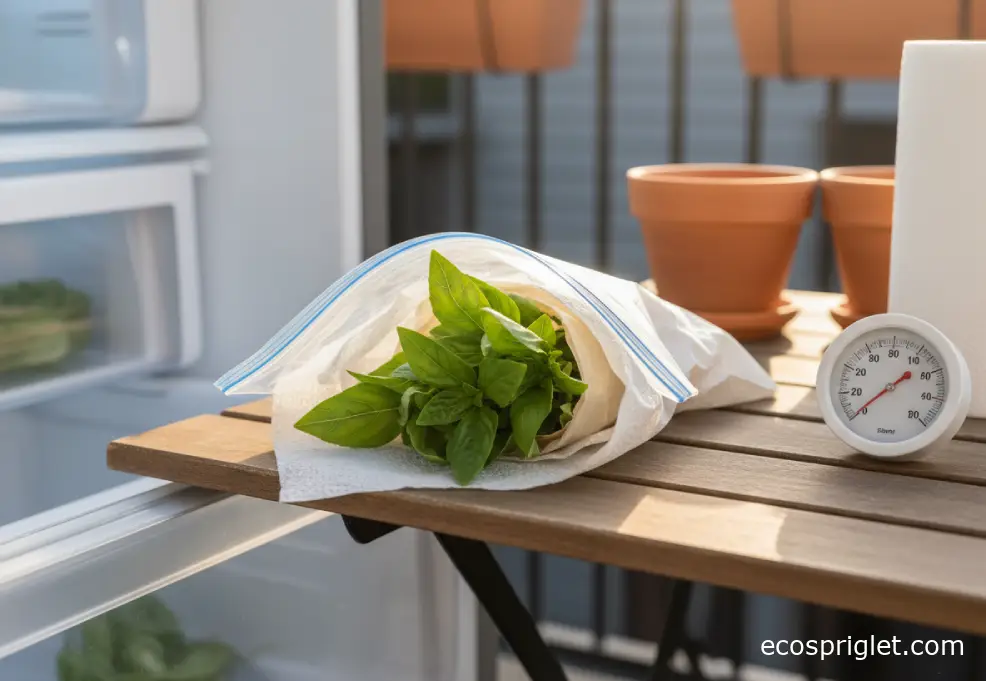
Let’s be honest: sometimes the fridge is the only option—maybe your apartment runs hot, you’ve got fruit flies, or your basil is already cut short without long stems. Here’s the tradeoff: food-safety guidance says your refrigerator should be at 40°F or below (FDA), but basil quality often drops below about 50°F (UC Davis Postharvest). So fridge storage is a “short-term compromise,” not the gold standard.
If you need to store basil in the refrigerator, aim for moisture control and gentle protection from the coldest zones:
- Keep it mostly dry: Wrap basil lightly in a paper towel (barely damp if the leaves are starting to wilt), then place in a bag.
- Don’t seal it like a submarine: Leave the bag slightly open to reduce condensation.
- Avoid the back wall: That’s where accidental freezing and cold spots happen.
- Plan to use quickly: North Dakota State University Extension notes basil may last about 3–5 days refrigerated in a bag, but expect more blackening than countertop storage.
One more small-space tip: if you’re cramming groceries into a tiny fridge, don’t crush basil under heavier produce. Compression bruises leaves, and bruises become black spots by tomorrow.
Can You Freeze Fresh Basil Leaves? Three Methods That Actually Help
Yes—you can freeze fresh basil. The texture won’t be “salad pretty” after thawing, but for soups, sauces, eggs, and pasta, frozen basil is a lifesaver. South Dakota State University Extension notes frozen herbs in airtight containers are best used within about six months for good quality.
Here are the three freezer methods I use most:
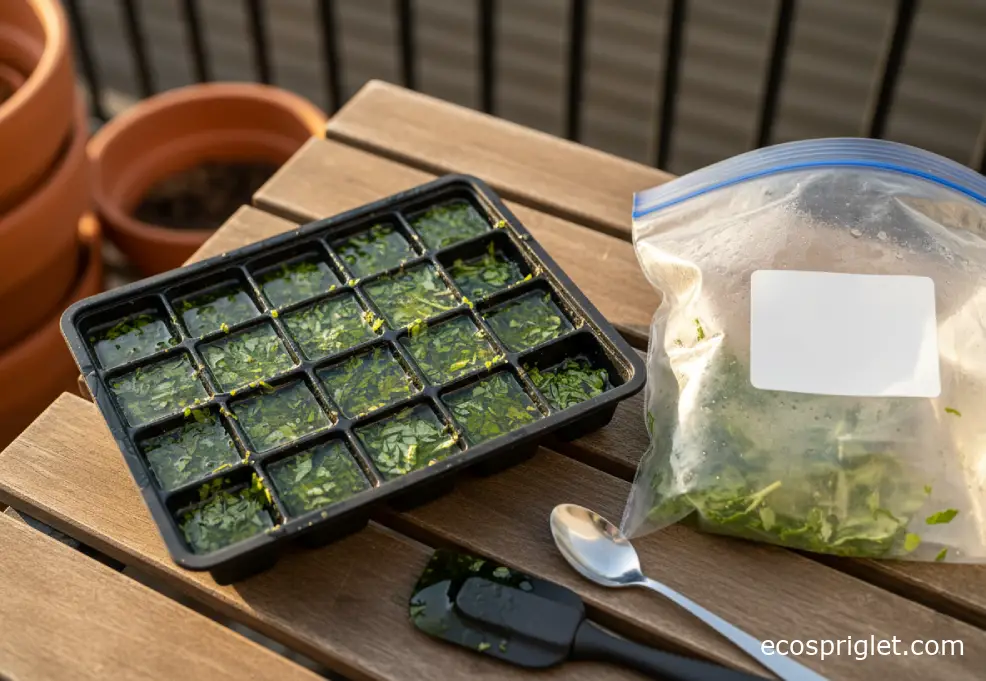
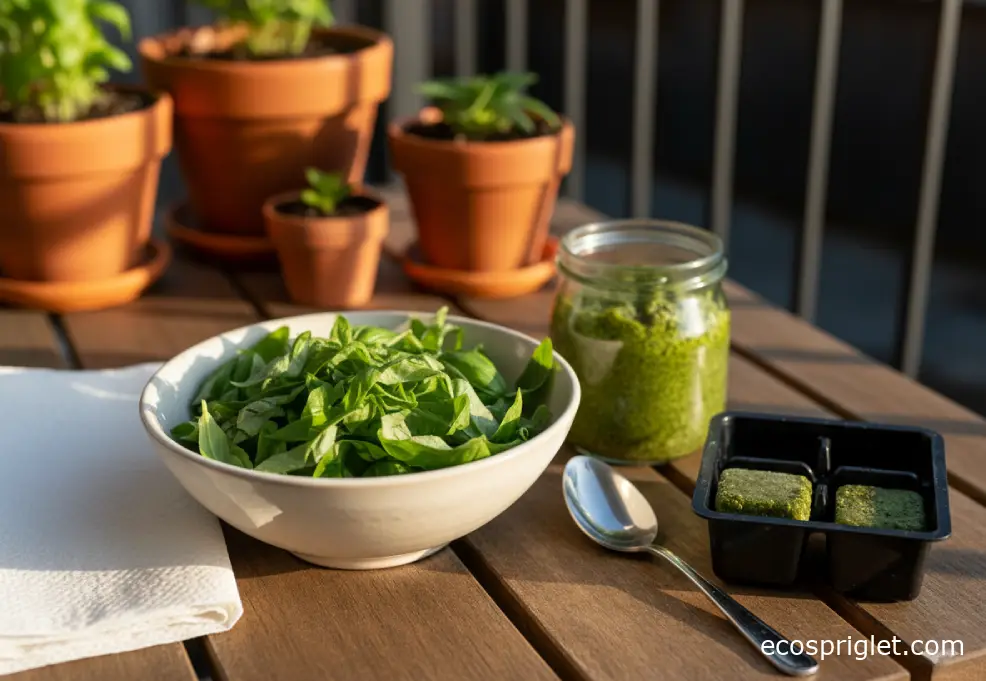
- Ice cube tray cubes (water or oil): Chop or tear basil, pack into an ice cube tray, and top with water or olive oil. Freeze solid, then pop cubes into a freezer bag. SDSU Extension describes this cube method as an easy way to portion herbs.
- Quick pesto portions: Blend basil with oil (and your preferred pesto ingredients), then freeze in small scoops or tray portions. This is my favorite “use-it-later” flavor bomb for weeknights.
- Blanch-and-freeze for greener basil: Penn State Extension notes you can blanch larger herb leaves like basil for about 15 seconds, then plunge into ice water to slow enzyme changes. Dry well before freezing.
A very important safety note for apartment kitchens: Penn State Extension also warns not to store herbs in oil at room temperature. If you’re making basil-oil cubes, keep them frozen (or refrigerated and used promptly), not sitting on the counter.
Drying Basil for Pantry Storage (When Freezer Space Is Tight)
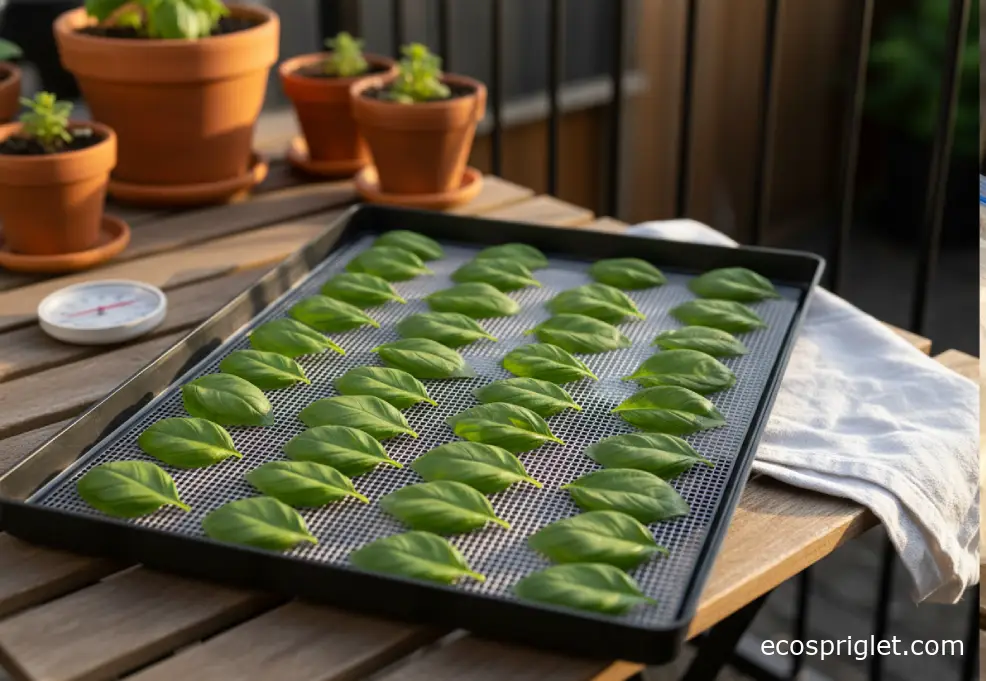
Drying basil is absolutely doable, especially if your freezer is a tiny shoebox and you’re already playing Tetris with ice trays. The tradeoff is flavor: dried basil is milder than frozen basil cubes or fresh leaves. Still, it’s handy for quick soups and sauces.
For best results, use controlled low heat. The National Center for Home Food Preservation (UGA) recommends preheating a dehydrator to about 95–115°F for herbs, and notes you may need up to 125°F in higher humidity. Penn State Extension gives a similar range for dehydrator drying. In practice, I’d rather go slower and keep more aroma than rush and “cook” the leaves.
When basil is fully dry, it should crumble easily. University of Maryland Extension suggests storing dried herbs for up to about six months for best quality. Keep dried basil in a tightly sealed container in a dark cabinet (not above the stove—heat and light are flavor thieves).
Troubleshooting: Black Leaves, Slimy Stems, and Bland Basil
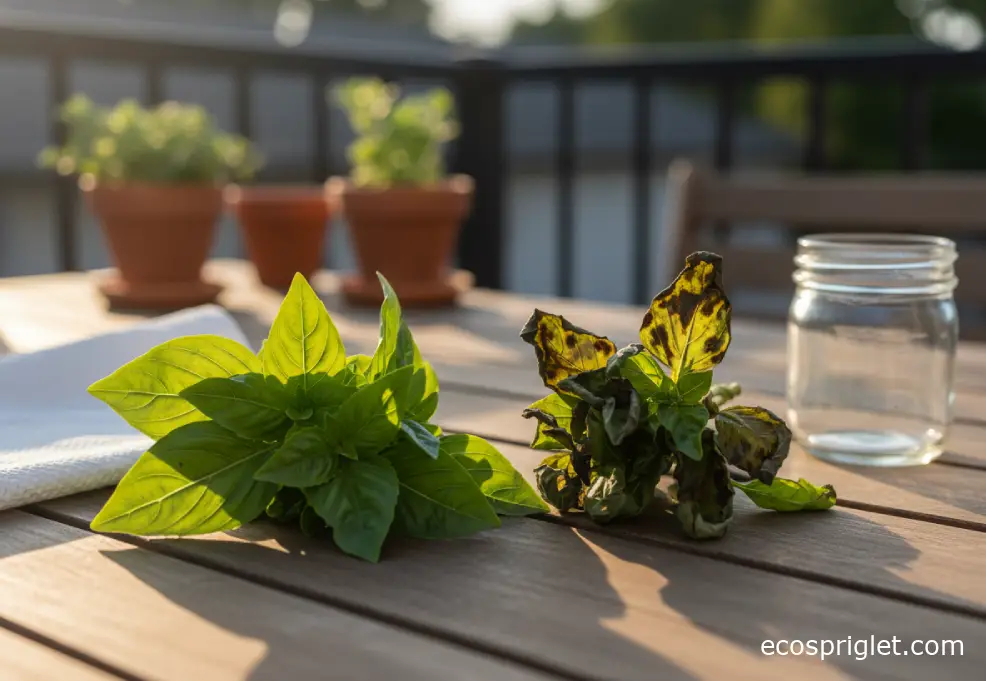
Leaves turning black: This is usually cold damage or bruising (often both). If it happened in the fridge, you didn’t “fail”—basil is just sensitive below its comfort zone (UC Davis Postharvest). Move to the countertop bouquet method next time, and keep basil away from the cold back wall if refrigerating.
Slimy stems or mold: Too much trapped moisture. If you rinsed basil and bagged it while wet, it’s basically a tiny sauna. Next round: store unwashed until use (Colorado State Extension’s guidance), or dry extremely well before storing. Change jar water daily if using the bouquet method.
Bland flavor: Time and exposure. NDSU Extension notes basil loses flavor with time, so the best “fix” is using it sooner—or freezing it quickly in cubes or pesto.
Wilted but not slimy: Often dehydration. Trim stems again, refresh the water, and loosely tent with a bag. If you’re storing loose leaves, a barely damp paper towel can help, but keep airflow so it doesn’t get soggy.
Common Mistakes to Avoid
- Stuffing basil into a cold fridge and forgetting it: Basil is chilling-sensitive (UC Davis Postharvest). If you refrigerate, treat it as short-term.
- Sealing wet leaves in a bag: Condensation leads to slime and mold. Dry thoroughly (FDA guidance supports drying produce after washing).
- Washing everything “to be efficient”: CSU Extension notes washing before storage can speed spoilage; wash closer to use unless it’s truly gritty.
- Letting leaves sit in water: Only stems should be submerged. Leaves in water rot fast.
- Making herb oil and leaving it on the counter: Penn State Extension warns against storing herbs in oil at room temperature—freeze or refrigerate instead.
Quick Ideas for Using Extra Basil This Week
- Toss into eggs: Add basil at the end of scrambling so it stays aromatic.
- Make a 5-minute “no rules” pesto: Basil + oil + whatever nuts or seeds you have, then freeze portions.
- Brighten canned soup: Drop in a frozen basil cube while it simmers.
- Quick basil salt: Finely chop basil with coarse salt, spread thin to dry, then stash in a jar (best used quickly for punchy flavor).
If you’re growing basil on a balcony, the real flex is harvesting often—small, frequent harvests are easier to use fresh. For pruning tips that keep plants bushy (and less leggy by the window), see Basil Growing Tips for Balconies.
If you’ve been disappointed by basil turning black overnight, you’re not alone—and you’re not doing anything “wrong.” Basil just has a different personality than hardier herbs. The most reliable approach for how to store fresh basil is keeping stems in water on the counter like a bouquet, in a spot that’s bright but not hot. That lines up with what postharvest experts emphasize: basil is chilling-sensitive and generally prefers storage above about 50°F (UC Davis Postharvest), even though your refrigerator needs to stay at 40°F or below for safety (FDA/FoodSafety.gov).
When the counter isn’t an option, fridge storage can work as a short-term backup if you control moisture and avoid the coldest spots. And when you’ve got more basil than you can use, freezing is the stress-free move—especially basil cubes or small pesto portions (SDSU Extension is a fan of the cube approach for herbs). Ready to put your basil to work? Pick one method today, and your next pasta night will taste like you planned ahead (even if you didn’t).