If tiny flies are hovering over your pots, you’re probably dealing with fungus gnats, not fruit flies. The good news: you can clear most houseplant infestations without harsh indoor sprays. The fastest natural approach is simple: trap the adults, treat the larvae in the potting mix, and change the damp conditions that let them keep breeding.
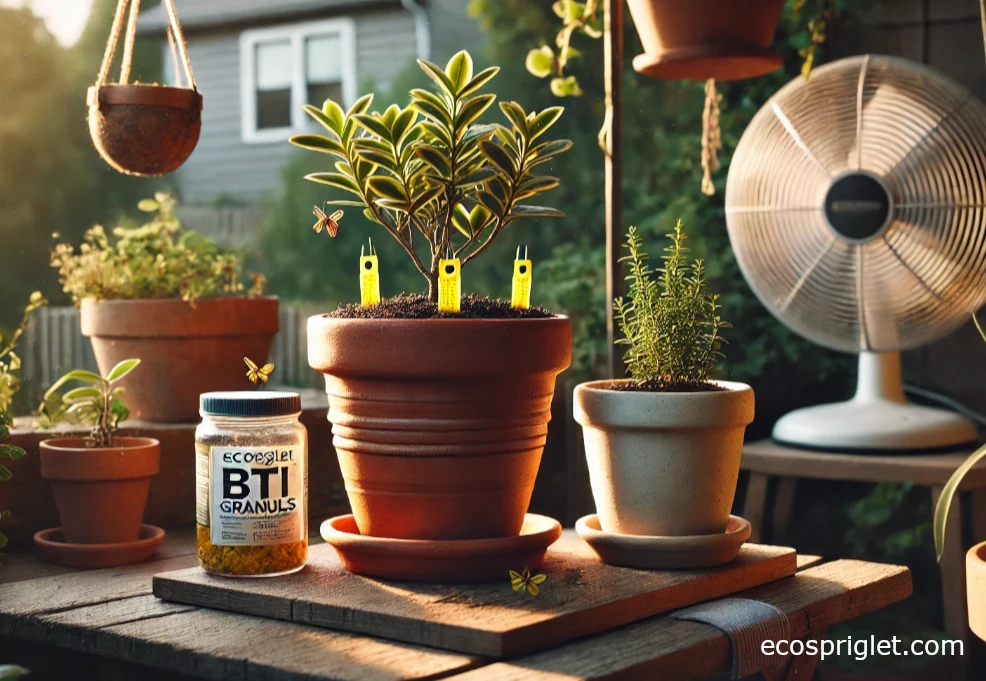
Here’s the practical setup I use at home and recommend first: yellow sticky traps at soil level, a BTI soil drench used exactly as the label directs, and a small fan on low to help the top layer dry. Then we fix the root causes: overwatering, heavy potting mix, soggy saucers, old plant debris, and open bags of damp soil.
With steady follow-through, you should see fewer adults within a few days and a much quieter plant corner within two to three weeks. Fungus gnats have a short life cycle, so stopping early is the mistake that usually brings them back.
The Quick Answer: What Works And How Long It Takes
Use a three-part plan: let the top 1 to 2 inches of potting mix dry between waterings, add yellow sticky traps to catch adults, and treat the soil with BTI or beneficial nematodes to target larvae. Traps alone make the problem look better, but they do not solve the larvae feeding and developing in the damp mix.
Most light to moderate fungus gnat problems calm down in about two to three weeks if you repeat the soil treatment as directed and stop keeping the surface constantly wet. UC IPM notes that at about 75°F, fungus gnats can move from egg to adult in roughly 17 days, which is why one good week is usually not enough.
- Place one yellow sticky trap close to the soil surface and another near the lower leaves if adults are flying around the plant.
- Apply BTI as a soil drench according to the product label. Keep the surface drier between drenches instead of watering daily.
- Use a small fan on low nearby, not blasting directly at delicate leaves, to reduce still, damp air around indoor pots.
- Keep going for at least one full gnat life cycle after you see the adult numbers drop.
Fungus Gnats Vs. Fruit Flies: Check The Pest First
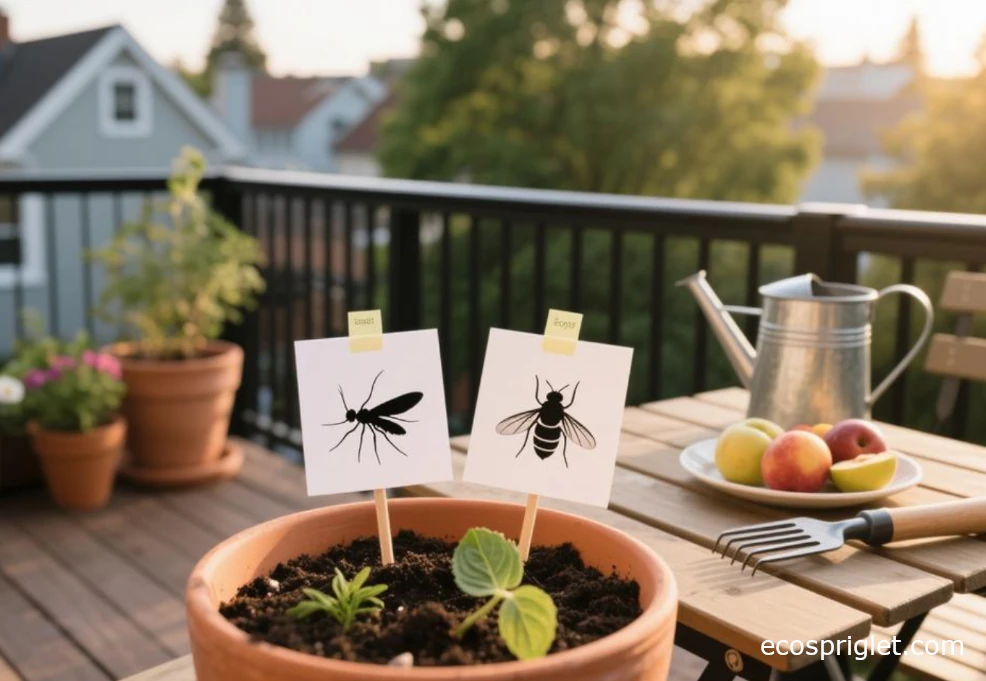
Fungus gnats are tiny, dark, delicate flies with long legs. They usually zig-zag around the soil surface, pot rims, lower leaves, and windows near houseplants. Fruit flies are stockier, often tan-brown, and tend to hover around ripe fruit, compost caddies, drains, or sticky kitchen spills.
The easiest check is to tap the pot rim. If several small dark flies lift from the soil surface, you are probably dealing with fungus gnats. A yellow sticky trap placed just above the potting mix will usually confirm it within a day or two.
- Fungus gnats: slender, mosquito-like, usually near damp potting mix.
- Fruit flies: rounder bodies, usually near fruit, food scraps, drains, or fermentation smells.
- Drain flies: fuzzy, moth-like wings, usually resting near sinks, showers, or floor drains.
Vinegar traps can catch some wandering adults, but they are not a complete fungus gnat fix. If the larvae are in your pots, the treatment needs to reach the potting mix.
Why Fungus Gnats Show Up In Houseplants
Fungus gnats thrive when the top layer of potting mix stays damp and rich in decaying organic matter. Old fallen leaves, algae, dense peat-heavy mixes, and pots sitting in water-filled saucers all create the kind of soft, moist surface where females want to lay eggs.
Indoors, this often shows up in winter or in low-light corners because pots dry more slowly. A plant that was fine in summer may suddenly become a gnat nursery once the days shorten, windows stay closed, and watering habits do not change.
- Remove dead leaves from the soil surface before they soften and break down.
- Empty saucers 10 to 20 minutes after watering so the pot is not sitting in runoff.
- Move plants a little closer to bright indirect light if the mix stays wet for a week or more.
- Improve dense indoor mixes with perlite for aeration; this helps the surface dry more evenly.
For container plants, I usually avoid gravel layers inside the bottom of pots. They do not improve drainage the way many beginners expect, and they can leave the root zone wetter. A pot with drainage holes, a free-draining mix, and an emptied saucer is a better setup.
The 7-Day Natural Action Plan
This is the plan I would start with before repotting everything. It is simple, low-mess, and realistic for an apartment plant shelf or balcony door area.
Day 1: Trap Adults And Treat The Soil
Add yellow sticky traps near the soil surface of every affected pot. Then apply BTI as a soil drench according to the label. Water slowly enough that the surface is evenly moistened, let the pot drain fully, and empty the saucer afterward.
Days 2 And 3: Dry The Surface
Do not water again just because the top looks pale. Check with your finger first. For most houseplants, wait until the top 1 to 2 inches feel dry before watering again. Remove dead leaves, algae, and any mushy decorative moss from the surface.
Day 4: Check Trap Counts
If traps are covered, replace them. If only a few adults are showing up, leave the traps in place for monitoring. Repeat BTI only at the product’s labeled interval. Some indoor routines use repeated applications several days apart, but the label should guide timing and concentration.
Days 5 And 6: Add A Surface Barrier If Needed
For pots that stay damp, add a thin layer of coarse horticultural sand, pumice, or LECA on top. Keep it light, usually about 1/4 to 1/2 inch. Avoid fine play sand because it can compact, crust over, and make watering less predictable.
Day 7: Decide Whether To Continue Or Escalate
You should see fewer adults, but do not stop just because the flying gnats are less annoying. Keep monitoring traps and continue the soil treatment through the next cycle if adults are still appearing. If one pot is still producing most of the gnats, quarantine it away from the rest.
- For stubborn cases, use beneficial nematodes such as Steinernema feltiae, following storage and application directions carefully.
- For sour-smelling or broken-down mix, skip the slow fix and repot into fresh, airy potting mix.
- For seedlings, act sooner because larvae can damage tender roots more easily.
Natural Tools That Actually Help
The best natural fungus gnat control is not one magic ingredient. It is matching the tool to the stage of the insect. Adults need trapping. Larvae need a soil treatment. The plant needs better dry-down.
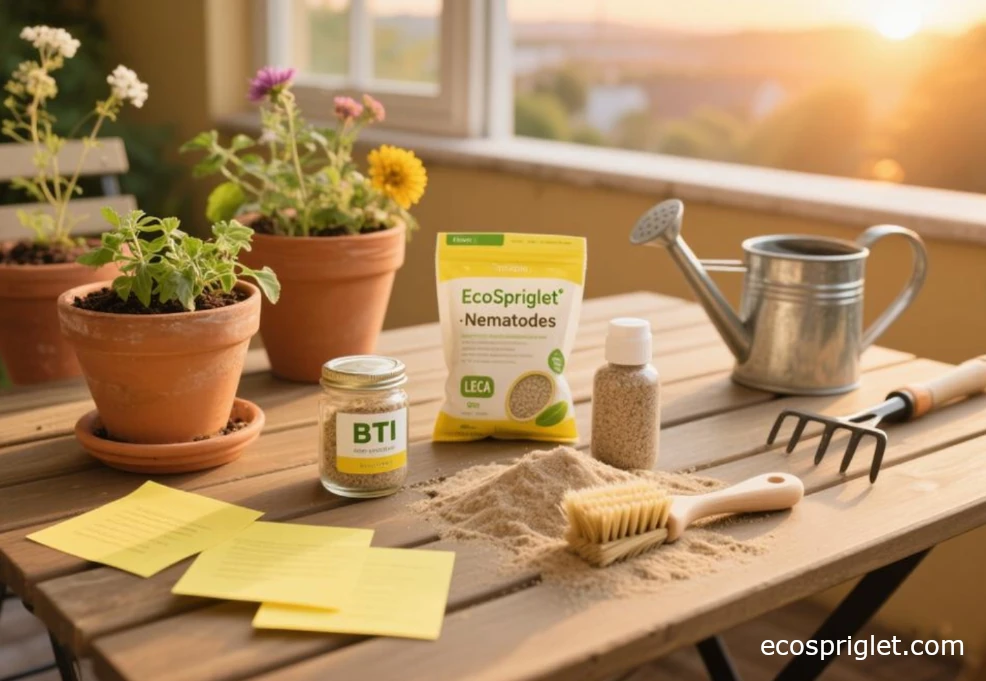
- Yellow sticky traps: These catch adults and help you see whether the population is rising or falling. They do not kill larvae.
- BTI: Bacillus thuringiensis var. israelensis is a biological control used against certain fly larvae. Use it as directed on the label and keep it away from children and pets like any garden product.
- Beneficial nematodes: Steinernema feltiae can help with larvae in moist potting mix. Buy fresh, store as directed, and apply with non-chlorinated or dechlorinated water when possible.
- Coarse top-dressings: Coarse horticultural sand, pumice, or LECA can make the surface less inviting for egg-laying. Do not bury the plant crown or create a heavy, soggy cap.
- Diatomaceous earth: It only works when dry, so it is unreliable on constantly moist potting mix. Use sparingly and avoid breathing the dust.
I do not rely on cinnamon, vinegar cups, or random soap drenches for a real infestation. Cinnamon may make the surface smell nicer and vinegar may catch a few adults, but neither is as dependable as a dry-down plan plus BTI or nematodes.
Watering And Soil Fixes That Keep Gnats Away
The long-term fix is changing the moisture pattern in the pot. Fungus gnats love a surface that is damp every day. Most established houseplants do better when the mix is watered thoroughly, allowed to drain, and then allowed to dry partly before the next watering.
Use the finger test before watering: if the top 1 to 2 inches still feel cool and damp, wait. For small pots, check a little shallower. For large floor plants, check deeper because the top can dry while the lower mix stays wet.
- Water thoroughly when the plant needs it, then let excess water drain out.
- Empty saucers after 10 to 20 minutes.
- Use pots with drainage holes whenever possible.
- Refresh old, compacted potting mix that stays wet too long.
- Blend in perlite for aeration if the mix is dense and slow to dry.
Bottom-watering can help keep the surface drier, but do not treat it as a permanent no-flush method. Every so often, water from the top until a little runoff appears, then empty the saucer. That helps prevent fertilizer salts from building up in the mix.
If you want to improve the potting mix itself, this guide to perlite for aeration is a helpful next step.
When To Repot Instead Of Treating Again
Repotting is not always necessary, but it is the cleanest reset when the mix has broken down or smells sour. If sticky traps are still filling after two to three weeks of good watering, BTI or nematodes, airflow, and cleanup, the potting mix may be holding too much moisture to recover easily.
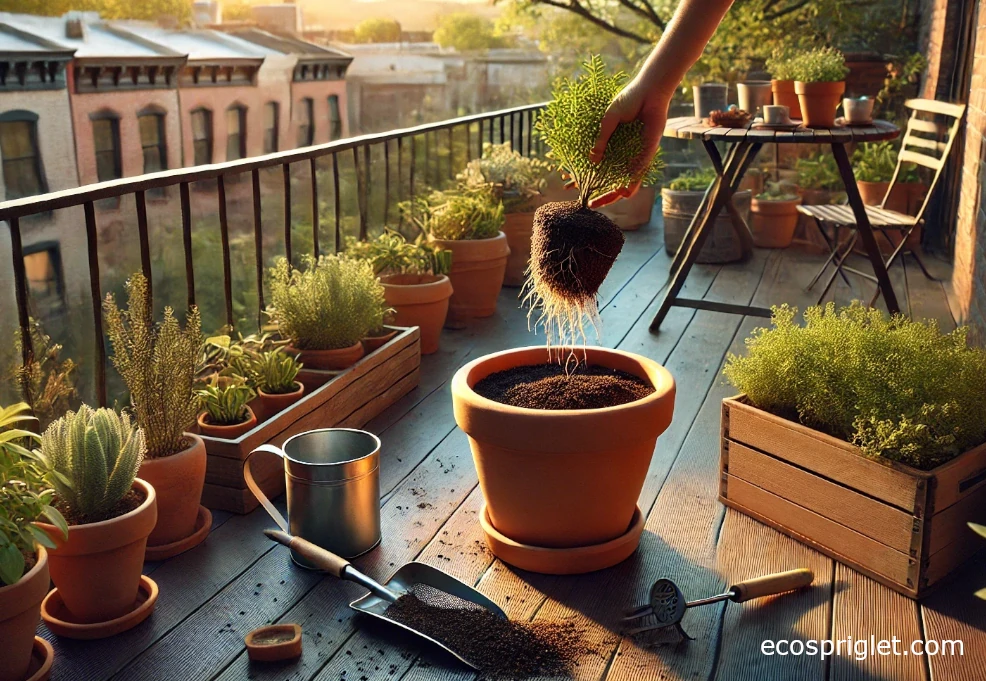
To repot, slide the plant out gently, loosen the outer soil, and discard the old mix in the trash. Wash the pot with warm, soapy water, rinse well, and replant into a fresh, airy indoor potting mix. Cover the drainage hole with mesh if needed, not gravel, so mix does not wash out while water can still drain.
- Choose a pot only 1 to 2 inches wider than the root ball unless the plant is badly rootbound.
- Do not pack the new mix down hard. Fill, tap the pot lightly, and water in.
- Keep the surface slightly drier for the next few weeks while the plant settles.
- Label the repot date if you manage a lot of plants; it helps you spot which mixes age fastest.
Special Cases: Seedlings, Cuttings, And LECA
Seed trays and propagation boxes need extra attention because they are warm, humid, and intentionally moist. That is perfect for germination, but it is also perfect for fungus gnats. In seedlings, heavy larval feeding can be more than a nuisance because tender roots do not have much reserve.
- Vent humidity domes daily once seeds have sprouted.
- Bottom-water seedlings carefully, then let trays drain instead of sitting in water.
- Use sterile seed-starting mix rather than old open potting soil.
- Place sticky cards near trays before you see a major problem.
- Use BTI in watering water only according to the product label.
For cuttings, reduce trapped humidity once roots begin forming. A sealed propagation box that never gets fresh air can grow algae and fungus on the surface, which invites gnats.
In LECA or semi-hydro setups, fungus gnats are usually linked to algae, decaying roots, or an overfilled reservoir. Keep the waterline below the root zone recommended for that plant, rinse LECA during resets, remove dead roots, and let the top layer stay relatively dry.
Hidden Sources That Bring Gnats Back
When fungus gnats return after a good cleanup, the source is often outside the obvious plant pot. I usually check open bags of potting mix first. A damp bag folded loosely in a closet can quietly breed gnats, especially if it contains bark, compost, or old organic matter.
- Store potting mix in a sealed tote, not an open bag.
- Place a sticky card inside the tote as an early warning.
- Dry and clean saucers before putting plants back.
- Check compost caddies, overripe fruit, and kitchen bins if flies are also in the kitchen.
- Clean suspect drains if flies gather there, but remember drain flies and fruit flies need different fixes.
New plants can also bring fungus gnats home from the nursery. Quarantine new arrivals for one to two weeks, keep a sticky trap nearby, and avoid placing them directly among your clean plants until you know the soil is quiet.
Mistakes To Avoid
- Using traps only: Sticky traps reduce adults but do not treat larvae in the soil.
- Watering on a calendar: A weekly schedule can be too often in winter or low light. Check the mix first.
- Stopping after three quiet days: Fungus gnats overlap generations, so continue monitoring through the next cycle.
- Using fine sand as a thick cap: It can crust, hold moisture unevenly, and make watering harder.
- Leaving saucers full: Standing runoff keeps the lower mix wet and slows dry-down.
- Spraying harsh aerosols indoors: They may knock down adults but do not fix the potting mix problem and can be unpleasant around people, pets, and sensitive plants.
When A Tough Infestation Is Not Worth Saving
If one plant keeps loading traps after two to three weeks of careful treatment, isolate it. Sometimes the best move is to repot that plant completely, restart it from cuttings, or discard a badly struggling plant to protect the rest of your indoor collection.
This is especially true with cheap starter plants in old, soggy nursery mix. I would rather save the healthy shelf than spend a month chasing gnats from one failing pot.
- Quarantine the worst pot in a bathroom, laundry room, or covered balcony area if temperatures are safe for the plant.
- Bag and trash old infested mix instead of storing it for later.
- Clean the shelf, saucer, and nearby window area before moving treated plants back.
Conclusion: Keep The Surface Dry, Clean, And Monitored
Getting rid of fungus gnats naturally is mostly about consistency. Trap the adults, treat the larvae, and make the potting mix less inviting. Once the top layer stops staying damp all the time, the population loses momentum quickly.
Keep a small gnat kit on hand: yellow sticky traps, BTI, fresh potting mix, perlite, and a small fan. Use it when you bring home new plants, repot old ones, or notice the first few adults near the soil. Do the simple things early, and your plant corner stays peaceful without harsh indoor sprays.
- Start today with sticky traps, a BTI drench, and a watering pause until the top 1 to 2 inches dry.
- Check traps twice a week until numbers stay low.
- Store potting mix sealed so you do not reintroduce the problem.
Ready to level up your small-space growing setup? Explore our Beginner’s Balcony Herbs Guide.