If you’ve ever bought a knobbly piece of ginger root, used two slices, and then found the rest shriveled (or fuzzy) a week later, you’re not alone. In a small apartment kitchen, ginger tends to get shoved into a door bin, forgotten behind the mustard, and punished by dry fridge air and condensation. The good news: learning how to store ginger is mostly about two things—controlling moisture and limiting air exposure.
In this guide, I’ll walk you through the easiest ways to store fresh ginger on the counter, in the fridge, and in the freezer, plus the best approach for storing ginger root after cutting. I’ll also include a balcony-gardener bonus: how to store ginger rhizomes if you want to replant a piece in a container. By the end, you’ll have a simple routine that keeps ginger fresh, easy to grate, and ready for weeknight cooking.
Quick Storage Cheat Sheet for Ginger
I keep this “decision tree” in my head when I’m unpacking groceries: how soon will I use the ginger, and do I want it ready to grate? If you pick one method and stick with it, ginger stops being a mystery ingredient and starts being a reliable staple.
| Storage Method | Best For | Typical Quality Window | My Apartment Tip |
|---|---|---|---|
| Counter (cool, dry spot) | Using within days | Up to about 1–2 weeks | Keep unpeeled; avoid sunny windowsills |
| Fridge (airtight + paper towel) | Everyday fresh ginger | Often 4–6 weeks | Paper towel prevents “sweating” and mold |
| Fridge (peeled, tightly wrapped) | Prepped ginger | Often 2–3 weeks | Wrap tight; rewrap after each use |
| Freezer (slices or grated) | Long-term convenience | Best quality ~3 months | Freeze in thin layers or cubes for easy portions |
| Jar in alcohol (fridge) | Quick cooking flavor | About 1–2 months | Great for stir-fries; label the jar lid at home |
Food-safety baseline matters, too: keep your refrigerator at 40°F or below and your freezer at 0°F.
Pick Ginger That Stays Fresh Longer
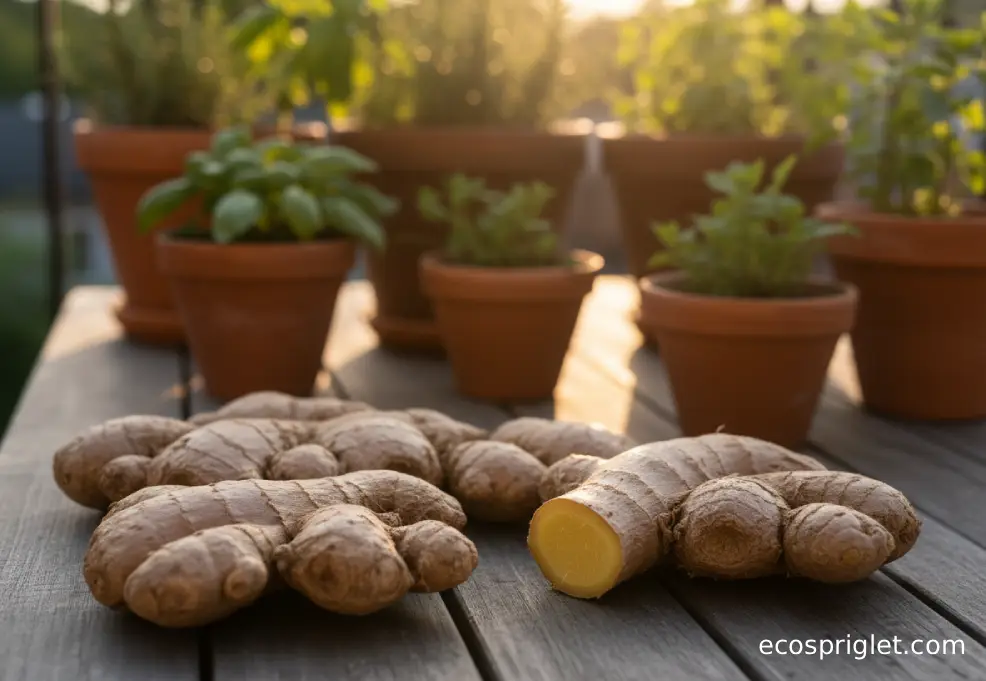
Storage starts at the store. Ginger that’s already dehydrating or bruised won’t “recover” in your fridge—it just declines slower. Look for rhizomes that feel firm and heavy for their size, with tight skin and minimal wrinkles. A little branching is fine, but deep creases often mean it’s been sitting around drying out.
Two quick checks I use:
- Press with your thumb: it should feel hard, not spongy.
- Sniff near a nub: it should smell bright and gingery, not musty.
One more nuance: young “spring” ginger tends to be juicier with thinner skin, while mature ginger is more fibrous and pungent. Young ginger is amazing, but it can lose moisture faster, so I treat it like “use soon” produce. Sources like Iowa State University Extension and Outreach describe how storage time varies by freshness and how ginger’s quality drops as enzymes break things down over time.
Short-Term Counter Storage That Actually Works
If you’re cooking with ginger several times this week, counter storage can be fine—especially in a cooler season. The trick is to keep it dry and shaded. My “don’t overthink it” method: leave it unpeeled, put it in a paper bag or a breathable bowl, and keep it away from the stove, dishwasher steam, and direct sun.
In a warm apartment, I plan on the shorter end of the range (about a week). In a cooler, dry spot, it can last closer to 1–2 weeks. Iowa State University Extension and Outreach notes that unpeeled ginger can hold at room temperature for roughly 1–2 weeks, but generally lasts longer in the refrigerator.
One thing I avoid: sealing ginger in a tight plastic bag on the counter. That’s how you get condensation, and condensation is how you get mold.
How to Store Fresh Ginger in the Fridge
If you want the best “set it and forget it” method for fresh ginger root, the fridge wins—assuming you protect it from dry circulating air and from wet condensation. My go-to setup is simple:
- Keep ginger unpeeled.
- Wrap it in a paper towel to buffer moisture.
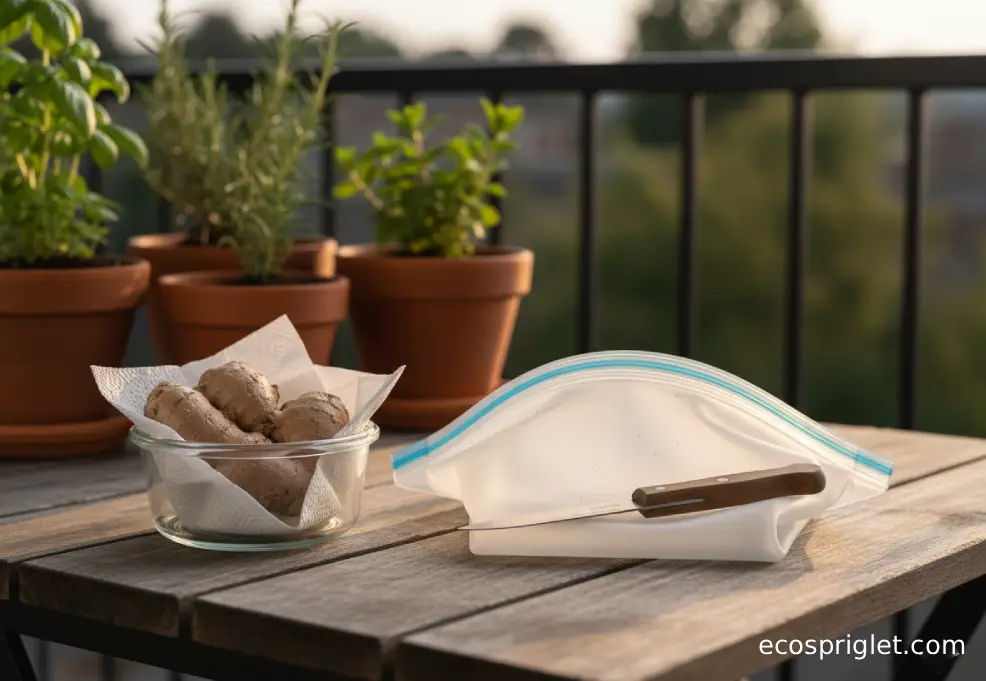
- Slip it into an airtight container or zip-top bag, then park it in the crisper drawer.
This combo works because the paper towel catches tiny droplets (so the surface stays dry), while the container prevents the fridge from pulling moisture out of the ginger. Iowa State University Extension and Outreach reports that fresh, unpeeled ginger stored airtight in the refrigerator crisper can retain freshness for roughly 4–6 weeks, and peeled ginger can keep about 2–3 weeks when tightly wrapped.
Two beginner mistakes I see a lot:
- Storing it loose in the fridge: it shrivels fast.
- Putting it away damp: moisture on the surface invites mold, especially around broken ends.
Freezer Storage for Ginger Root
Freezing is the best answer when you want ginger to be available anytime without babysitting it. I remember the first winter I started freezing grated ginger in little “coins”—suddenly weeknight soups and stir-fries tasted like I’d planned ahead (I absolutely had not).
Three freezer methods that stay practical in a small apartment:
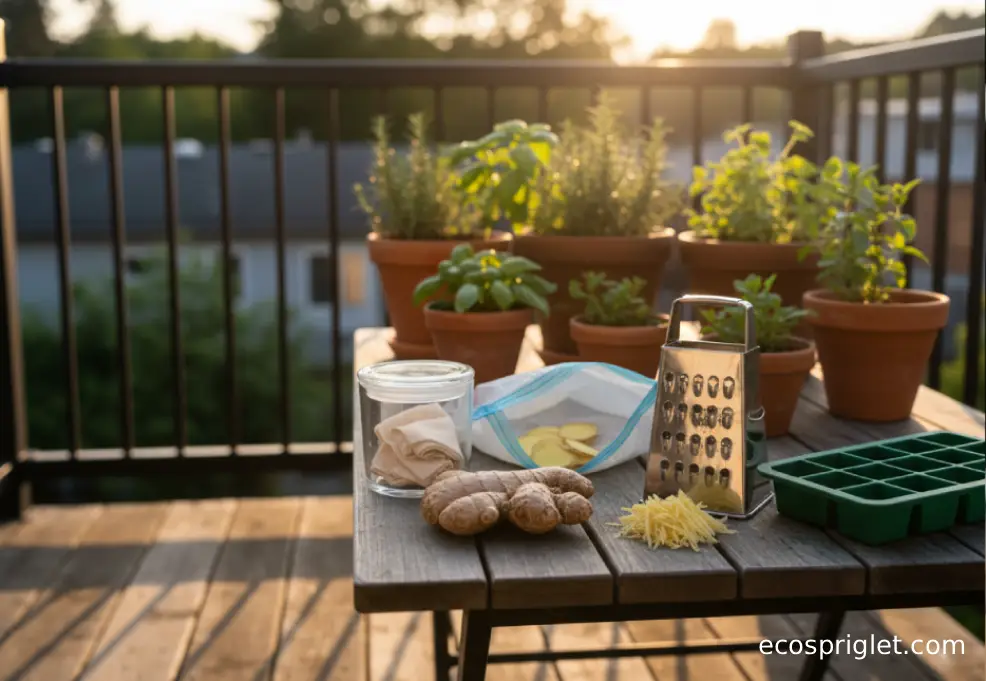
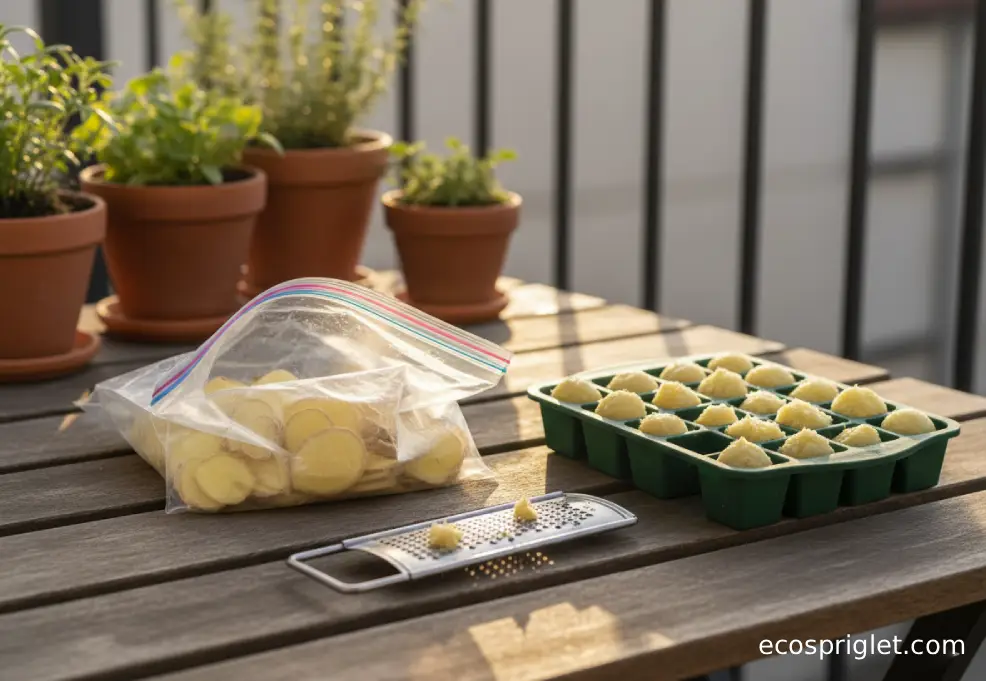
- Slice and bag: slice into thin coins, freeze flat in a bag, then break off what you need.
- Grate and portion: freeze small mounds on parchment, then transfer to a bag once solid.
- Ice cube tray: pack grated ginger into tray wells (plain ginger is fine), freeze, then pop into a bag.
Iowa State University Extension and Outreach notes that ginger keeps its best quality in the freezer for about 3 months, but remains safe well beyond that when kept continuously frozen at 0°F.
One pro tip: don’t thaw ginger for grating. Frozen ginger grates beautifully straight from the freezer and turns into fluffy shreds that melt into sauces.
Storing Cut or Peeled Ginger Without Drying It Out
This is where most ginger goes wrong: the moment you cut it, the exposed face dries out and turns tough. Here’s the fix I use every time I store ginger root once cut:
- Press a paper towel gently against the cut face if it’s wet.
- Wrap the ginger tightly (the goal is no air pocket on the cut surface).
- Put it into an airtight container or bag and return it to the crisper.
If you peel ginger in advance, treat it like “more perishable ginger.” Iowa State University Extension and Outreach gives a practical window of about 2–3 weeks for leftover peeled ginger when tightly wrapped and refrigerated.
A small habit that helps: every time you use it, rewrap it cleanly. If the wrap is damp or ginger-scented (it happens), swap it out—your future self will thank you.
Beyond the Fridge: Alcohol, Pickling, and Dehydrating
If you’ve got a big hand of ginger (or you grew some in a pot), it’s worth using one of the “bonus” preservation methods—especially if your fridge is always packed. Iowa State University Extension and Outreach lists several options, and these are the ones I’ve found easiest to keep up with.
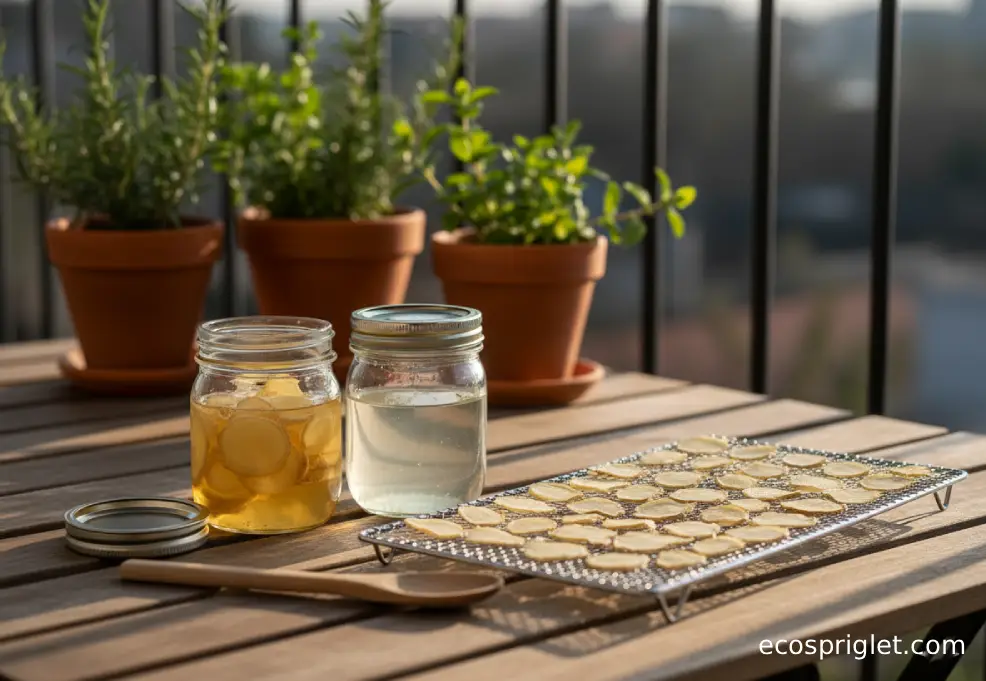
- Alcohol jar in the fridge: slice peeled ginger, cover with alcohol, and use the ginger for cooking. Iowa State notes about 1–2 months for this method.
- Quick pickled ginger: great for rice bowls and salads; keep refrigerated and use clean utensils to avoid contamination. Iowa State describes pickled ginger lasting up to about 3 months refrigerated.
- Dehydrated slices: best for tea blends and grinding later, as long as the dried pieces stay truly dry and well sealed.
Troubleshooting: Mold, Shriveling, and Sprouts
If you store ginger long enough, you’ll eventually see one of these issues. Here’s how I handle them in a normal home kitchen:
Mold
If you spot fuzz or a musty smell, don’t “just cut a little off” if the mold is widespread or the ginger has gone soft. Mold risk rises when condensation collects, especially around broken ends—keeping surfaces dry and packaging breathable-but-protected helps prevent it.
Shriveling
This is almost always dehydration. It’s still usable if it smells normal, but it will be tougher and less juicy. Prevent it by using an airtight container in the crisper and wrapping the ginger (paper towel + container is a great combo).
Sprouting
Ginger can sprout buds, especially if it’s been warm. For cooking, I treat sprouting ginger as “use soon.” The flavor is usually still fine, but the texture can get more fibrous over time. If the sprout makes you think, “Maybe I should plant this,” skip ahead to the replanting section.
Storing Ginger for Replanting in Containers
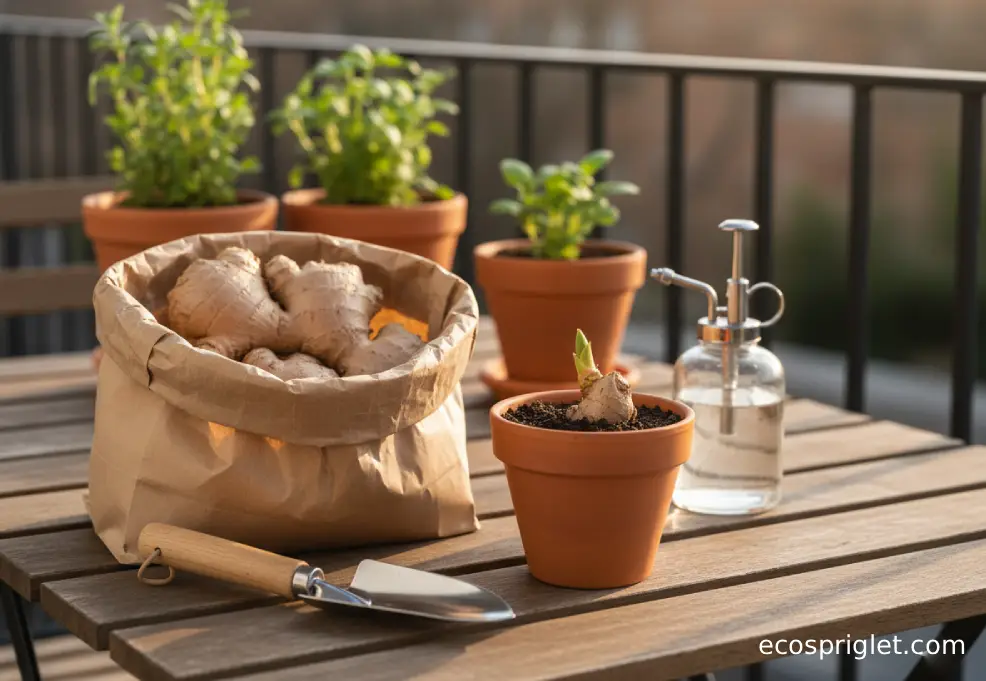
If you’re growing ginger on a balcony (or you’re tempted to), storage rules change a bit. For replanting, you’re trying to keep the rhizome alive and firm, not “culinary perfect.” University of Wisconsin–Madison Extension notes you can overwinter rhizomes in the soil in the container, or dig and store them in a brown paper bag in a cool, dry place—and specifically warns not to refrigerate rhizomes intended for replanting.
If you cut ginger into pieces for planting, let the cut ends dry and callus for a couple of days before potting them up. Virginia Cooperative Extension (Virginia Tech) describes this healing step as a way to reduce rot risk while the rhizome is sprouting.
If you want the full balcony setup, I’ve got you covered here: Growing Ginger Indoors. And for general container skills that translate to everything from herbs to ginger, bookmark Indoor Herb Garden.
Common Mistakes to Avoid
- Storing ginger loose in the fridge and wondering why it shrivels.
- Putting ginger away wet (surface moisture turns into condensation, and condensation invites mold).
- Leaving a cut face exposed to air instead of wrapping it tight.
- Freezing a big chunk and then fighting it later—slice, grate, or portion first.
- Trying to store “seed” ginger for planting in the refrigerator instead of a cool, dry spot or in its pot.
If you fix just the first two, you’ll feel like you discovered a kitchen cheat code.
Ginger doesn’t need fancy gear—just a consistent method. For most apartment kitchens, the sweet spot is unpeeled ginger wrapped in a paper towel and stored airtight in the crisper, with a freezer backup for anything you won’t use soon. Once you get in the habit, you’ll stop asking “how do you keep ginger fresh?” and start treating ginger like lemons: always around, always useful.
And if you’re the kind of person who gets a little thrill from seeing a sprout, consider saving one firm knob for a container experiment. Ginger is surprisingly satisfying to grow on a balcony with warmth and patience.