If you’ve ever brought home a pint of berries, rinsed them right away, and then watched them turn soft by the next day… yeah, you’re not alone. In a small apartment kitchen, it’s tempting to “just soak everything,” but strawberries are delicate little sponges. This guide walks you through how to clean strawberries with the least fuss and the least bruising—whether they’re store-bought, farmers’ market finds, or balcony-grown gems from your own containers.
You’ll learn the best way to wash strawberries with plain water (the method food-safety folks actually recommend), plus when an optional vinegar or baking soda bath can make sense for your comfort. We’ll also cover how to wash strawberries to remove bugs, and how to wash and store strawberries so they stay fresh longer. No gadgets required—just a colander, a gentle touch, and a couple of smart habits.
When You Should Wash Strawberries (and When You Shouldn’t)
The biggest “secret” to keeping berries firm is timing. For everyday eating, it’s usually better to keep strawberries unwashed until right before you plan to eat or use them—extra moisture speeds up mold and mush. University Extension guidance for berries says to wait to rinse until directly before use, specifically because berries are so mold-prone.
That said, there are two moments when washing sooner can be reasonable:
- Right before serving: rinse, drain, and dry, then put them out.
- Right before preserving: if you’re freezing or dehydrating the same day, wash once, dry well, and move quickly into your prep.
One more food-safety note that matters in tiny kitchens: rinse produce under running water (not soap, not detergent), and keep your prep area clean so you don’t spread grime from one berry to the whole batch.
Quick Kitchen Setup: Tools and a 2-Minute Sorting Routine
Before water ever hits the berries, do a fast sort. This step saves you from the classic “one fuzzy berry ruins the party” situation in your crisper.
I remember when I first started growing balcony strawberries in containers—I’d harvest, dump everything into a big bowl of water, and feel very proud… until I realized the bruised berries were leaking into the clean ones. Now I do this quick routine instead:
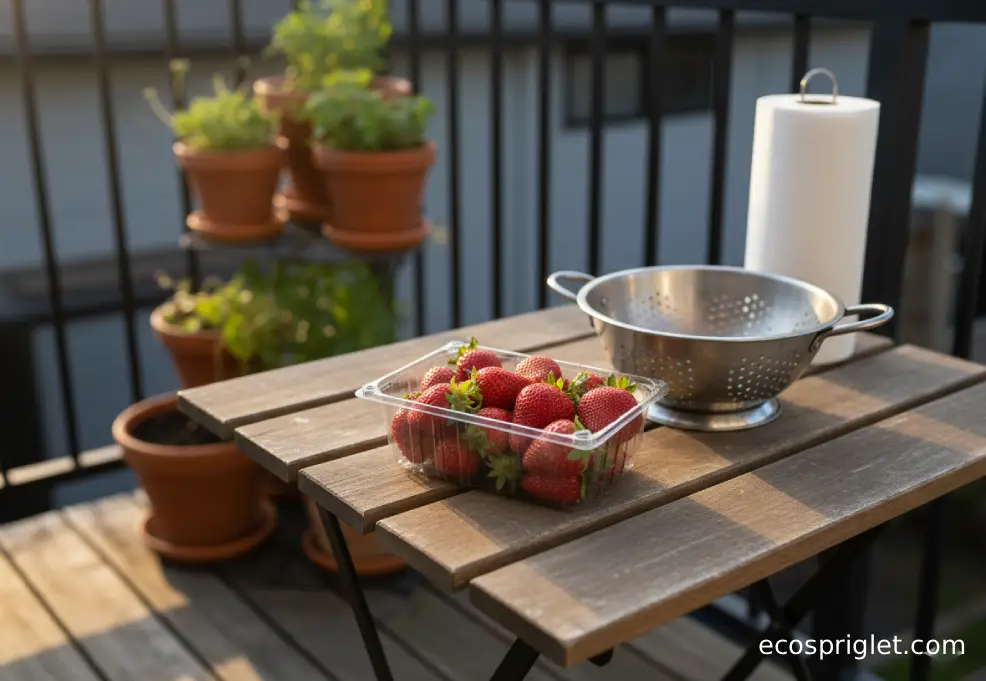
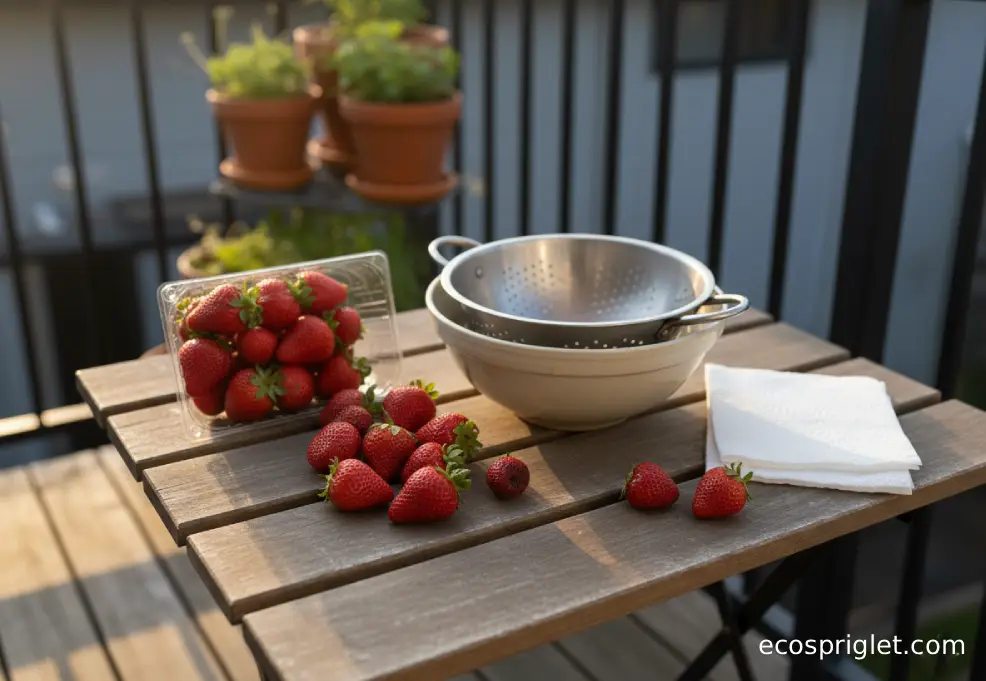
- Set up: a clean colander, a bowl (just to catch drips), and a couple of paper towels.
- Pick out the troublemakers: remove any moldy berries immediately; set aside lightly bruised ones for smoothies or cooking the same day.
- Leave caps on for washing: the green tops help keep water from soaking into the fruit.
Extension guidance also emphasizes trimming away damaged areas and keeping surfaces clean while prepping produce—small habits that make a real difference in a compact kitchen.
The Best Way to Wash Strawberries With Plain Water
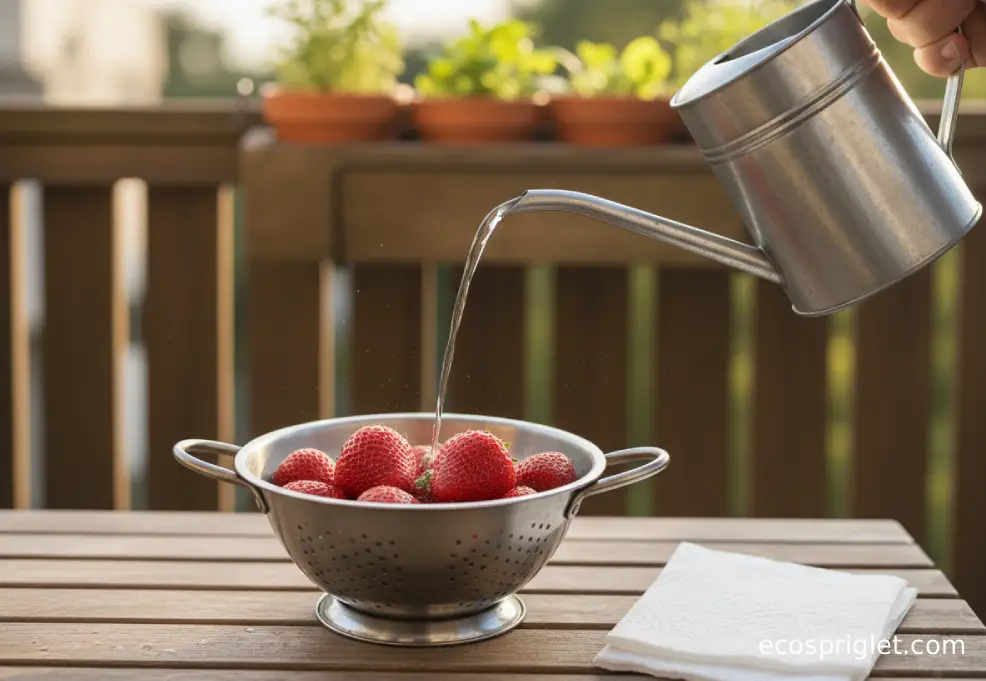
If you want the simplest answer to how to wash strawberries properly, this is it: rinse them under cool running water, drain, and dry. Both FDA and food-safety guidance emphasize washing produce under running water and skipping soaps, detergents, and commercial “produce washes.”
- Keep caps on: rinse first, hull later.
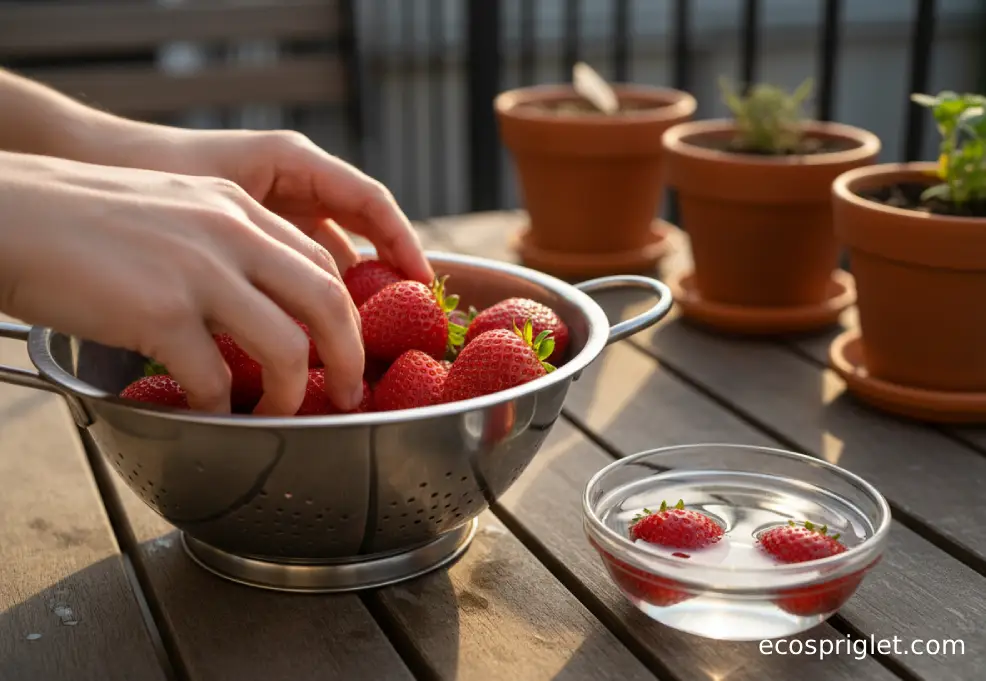
- Use a colander: gently move the berries with clean hands so all sides get exposed to the water.
- Don’t soak in a sink full of water: standing water can spread contamination from one berry to another.
- Drain well, then pat dry: paper towels work great; aim for “dry to the touch” before you store or serve.
Iowa State University Extension and Outreach echoes this approach—rinse thoroughly under cool running water, drain in a clean strainer, and pat dry—and specifically recommends avoiding washing strawberries in standing sink water.
Vinegar or Baking Soda Baths: When They Help and How to Do Them Safely
Let’s talk about the internet-famous methods: cleaning strawberries with vinegar and cleaning strawberries with baking soda. The most important baseline is still this—FDA’s recommendation is plain running water, and soap/detergent or commercial produce washes aren’t recommended.
So why do people do baths anyway? Usually for peace of mind (or to nudge off fine grit). A University of Illinois expert note says a brief soak in clean water, optionally with a small amount of vinegar or baking soda, followed by a fresh-water rinse, can be a practical approach—as long as you rinse again so you don’t leave flavors behind.
Here’s the version I’m comfortable recommending for an apartment kitchen—gentle, short, and followed by a thorough rinse:
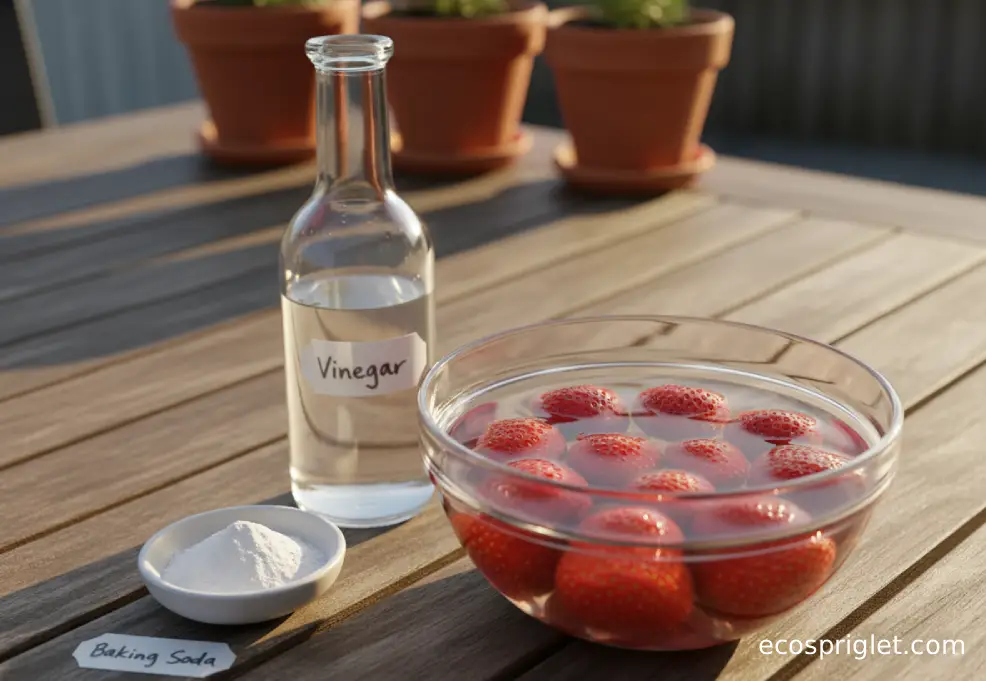
- Vinegar bath (optional): mix 1 part distilled white vinegar with 3 parts water, soak strawberries for a couple of minutes, then rinse under cool running water and dry well.
- Baking soda bath (optional): dissolve a few teaspoons of baking soda in a large bowl of water, soak briefly, rinse under cool running water, and dry well.
One caution: Michigan State University notes that soaking solutions (like vinegar-water or salt-water) aren’t advisable specifically as a “pesticide removal” strategy, and that plain water is easy and effective for routine washing. So if your goal is everyday cleaning, don’t feel like you need the chemistry set.
And yes—there is lab research showing sodium bicarbonate solutions can remove some surface pesticide residues on certain produce surfaces (not a guarantee for strawberries, and not a substitute for safe handling).
Sources: FDA; Michigan State University Extension; National Pesticide Information Center (Oregon State University/UC Davis); University of Illinois.
How to Wash Strawberries to Remove Bugs Without Ruining the Fruit
Most of the time, “bugs in strawberries” is more fear than reality—but it does happen, especially with very ripe local berries. The gentlest approach is still the plain-water method: rinse in a colander under cool running water and lightly shuffle the berries so the water reaches all surfaces.
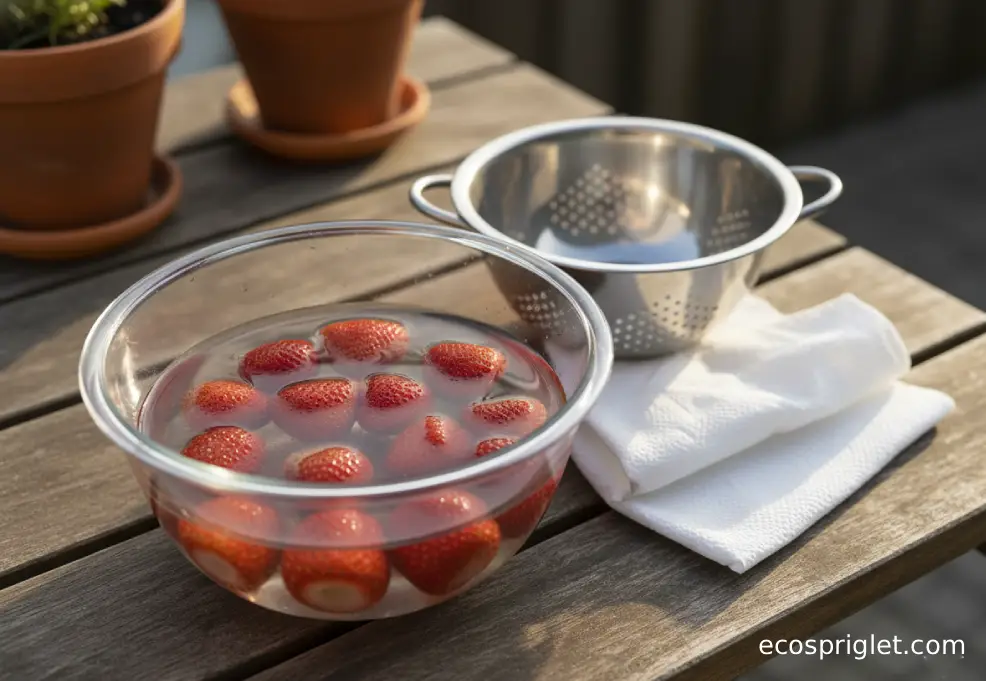
If you’re specifically worried about tiny larvae (like spotted wing drosophila) and you want to check a suspicious handful, Michigan State University describes a salt-solution method used to detect larvae in harvested berries: dissolve about 1–2 teaspoons of salt in 1 cup of water and submerge suspect berries for about 10–15 minutes to see if larvae emerge. This is more of an inspection tool than an everyday “wash routine,” and you’d still rinse and dry the berries afterward.
Apartment-friendly tip: if you do any soak, keep it to a small batch, then rinse under running water and dry thoroughly—moisture is what shortens strawberry life the fastest.
How to Wash and Store Strawberries So They Last Longer
If you only remember one storage rule: strawberries keep best when they’re dry. Extension guidance recommends washing only before eating/using, and if you do wash, drain and pat dry well.
| Situation | What to Do | Apartment-Friendly Notes |
|---|---|---|
| Storing berries for later (best quality) | Do not wash; remove any spoiled berries; refrigerate in a vented container | The crisper drawer is a good home; strawberries don’t ripen after picking, but cold slows mold growth |
| You already washed them | Drain and pat very dry; store in a towel-lined container | Paper towels help absorb extra moisture between berries |
| Sliced or hulled berries | Cover and refrigerate promptly | Don’t leave cut fruit out; keep your fridge cold (40°F or below) |
Temperature matters too. USDA and CDC both emphasize keeping refrigerators at 40°F or below for food safety.
Common Mistakes to Avoid When Cleaning Strawberries
- Soaking in a sink full of water: standing water can spread contamination; rinse under running water instead.
- Washing as soon as you get home: extra moisture speeds mold; rinse right before use when possible.
- Using soap, detergent, or “produce wash” sprays: FDA does not recommend them for produce.
- Hulling before washing: water gets inside the berry, softening it fast—keep caps on, wash, then hull.
- Putting wet berries back in the clamshell: dry thoroughly first (paper towels help).
I learned the “don’t hull first” lesson the hard way—hulled berries look pretty, but they go soft in a hurry. If you want that fresh, snappy bite, keep them intact until the last minute.
Cleaning Strawberries and Blueberries Together
If you’re building a quick berry bowl, you can rinse strawberries and blueberries the same way: cool running water in a colander, gentle movement, then drain and dry. For berries, Extension guidance still leans toward rinsing just before use to protect shelf life—especially if you’re not eating them immediately.
One small difference: blueberries often have a natural “bloom” (that powdery look). Don’t scrub it off aggressively—treat it like a delicate coating and stick to a gentle rinse.
Cleaning strawberries well is mostly about being gentle and being smart with moisture. Rinse under cool running water, skip the soaps and sprays, and dry like you mean it. If you choose to use an optional vinegar or baking soda bath, keep it brief and always follow with a fresh-water rinse—then dry thoroughly before the berries go anywhere near your fridge.
In apartment life, the “system” matters more than fancy tools: a colander that fits your sink, a towel-lined container, and the habit of sorting out the questionable berries before they infect the rest. If you’re growing your own on a balcony, you’ll notice this even more—homegrown berries can be extra tender, and they reward a light touch.