If you’ve ever popped a perfectly sun-warm strawberry into your mouth and wished you could grow your own, the good news is you don’t need a yard to do it. You can grow strawberries in containers on a balcony, patio, sunny front step, or very bright windowsill, and you can harvest more berries than you might expect from a few well-kept pots.
The key is understanding what these shallow-rooted plants want: plenty of sun, a wide container with good drainage, a light potting mix, and steady moisture. Strawberries are not difficult, but they do complain quickly when a pot is too crowded, too dry, or too soggy.
In this guide, we’ll walk through how to plant and grow strawberries in containers step by step, from choosing the right container and variety to watering, feeding, troubleshooting, and harvesting. Whether you’re a beginner or you’ve already grown herbs on your balcony, you’ll finish with a practical plan for a small but productive container strawberry patch.
Why Grow Strawberries in Containers on a Balcony?
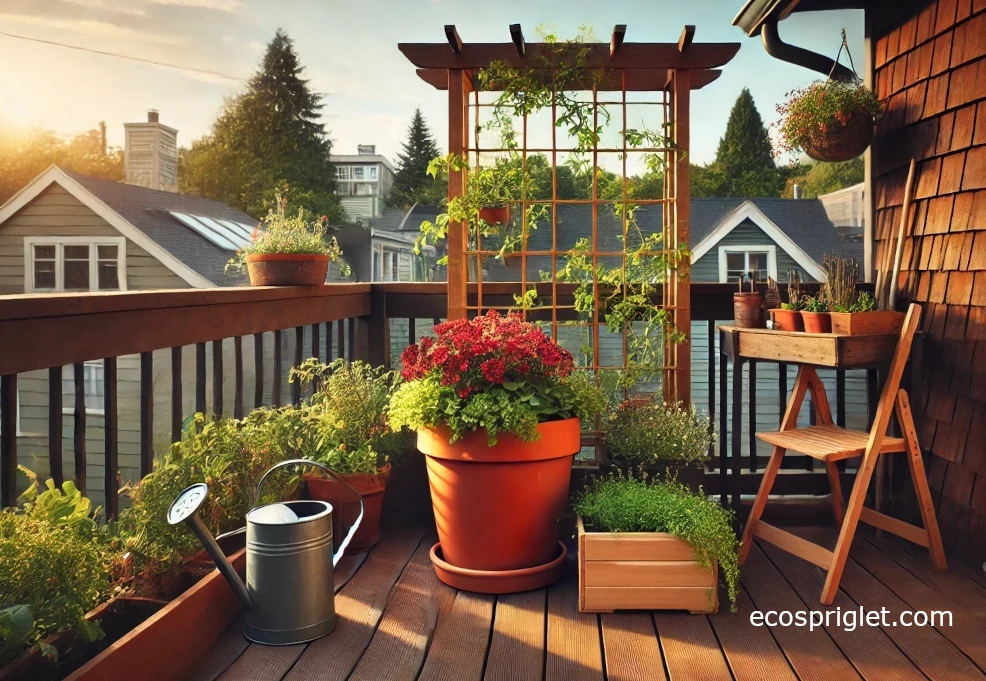
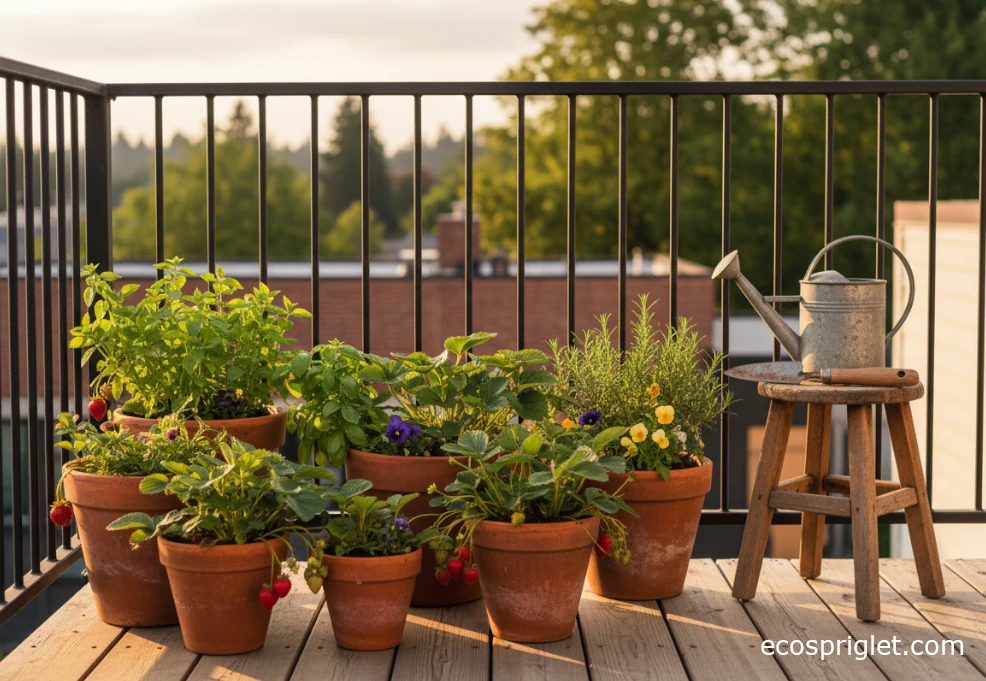
Container strawberries are almost made for small-space gardening. They stay compact, their roots are relatively shallow, and they grow well in pots, hanging baskets, railing planters, and troughs as long as the container drains properly. For renters, containers also mean you can take your berry patch with you when you move.
Strawberries need at least 6 hours of direct sun per day, and 8 or more hours usually gives better flowering and sweeter fruit. On a balcony, that often means choosing the brightest rail, corner, or patio edge. A pale wall behind the plants can bounce a little extra light onto the leaves, while a dark floor or metal railing may add heat on summer afternoons.
Container growing also keeps berries cleaner because the fruit can drape over the side instead of resting on damp ground. It may reduce some slug and soil-splash problems too. You still need airflow, clean tools, and careful watering, but a well-drained potting mix gives apartment growers a big head start.
One caution: avoid placing pots on fire escapes, shared stairways, or anywhere they block emergency access. For railing planters and hanging baskets, use brackets rated for the filled weight of the container, wet soil, and mature plants. A watered planter is heavier than it looks.
Choose The Right Strawberry Type For Containers
Before you buy plants, it helps to know the difference between the main strawberry types. The best choice depends on whether you want one larger harvest or smaller pickings across the season.
- June-bearing strawberries produce one main crop, usually over a few weeks in late spring or early summer. They can be productive, but they often send out more runners and need a little more space.
- Everbearing strawberries usually produce a spring crop and another lighter crop later in the season. They are a friendly choice for small containers because the harvest is spread out.
- Day-neutral strawberries can flower and fruit repeatedly when temperatures are comfortable. For balcony pots, this is often the easiest type if you want a few berries at a time for snacks.
- Alpine strawberries produce small, intensely flavored berries and can tolerate slightly less perfect conditions than many large-fruited types. They are lovely in small pots, though the berries are tiny.
For most apartment gardeners, I’d start with day-neutral or everbearing plants in a few 12- to 18-inch containers. You won’t get supermarket-sized harvests from a windowsill, but you can get steady handfuls when the plants are well placed and not overcrowded.
The Best Containers To Grow Strawberries In
When choosing a container to grow strawberries in, think wide rather than deep. Strawberries do not need a huge root run, but they do need enough surface area for airflow, watering, and fruit that can hang over the edge. A pot that is at least 8 inches deep works for most strawberry plants, and 10 to 12 inches deep gives you a little more forgiveness in hot weather.
Good options for growing strawberries in containers include:
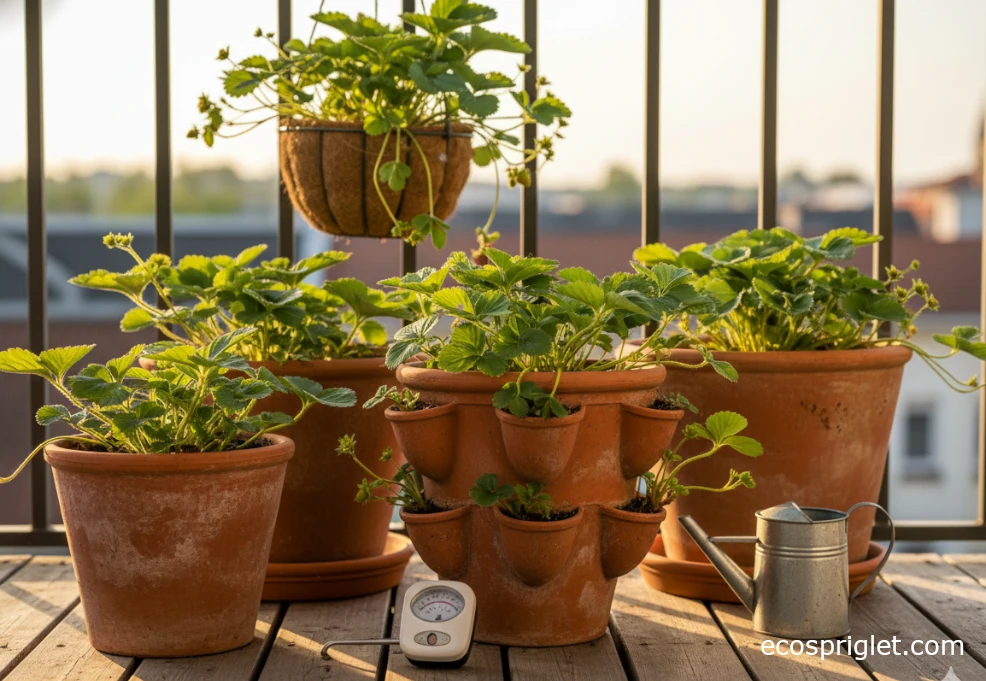
- Standard pots: Use an 8- to 10-inch pot for one plant, a 12- to 14-inch pot for 2 plants, or a 16- to 18-inch pot for 3 to 4 plants.
- Window boxes or troughs: Choose a container at least 8 inches deep and space plants about 6 to 8 inches apart for a compact balcony planting.
- Classic strawberry pots: These tall pots have side pockets that let individual plants drape fruit over their own openings. They dry out quickly, so they need attentive watering.
- Hanging baskets: A 12- to 14-inch hanging basket can hold 2 to 3 strawberry plants and keeps berries away from pets, kids, and some pests.
- Fabric grow bags: These drain well and are lightweight, but they dry faster than plastic or glazed ceramic pots.
Whatever you choose, make sure the container has several drainage holes. Healthy strawberries hate sitting in waterlogged mix. Skip the gravel layer at the bottom of the pot; Washington State University Extension has explained that coarse drainage layers can actually leave the potting mix wetter above the gravel. Fill the container with potting mix instead, and let the drainage holes do the work.
On windy balconies, heavier floor pots are usually safer than tall, narrow planters. For hanging containers, I prefer lightweight plastic, resin, or fiberglass because wet potting mix already adds plenty of weight, especially if you are using a DIY macrame plant hanger indoors or near a sheltered balcony wall.
How To Plant Strawberries In Containers Step By Step
This is where the container strawberry patch really begins. Give yourself a calm half-hour, a bag of fresh potting mix, and your plants, and the job is straightforward.
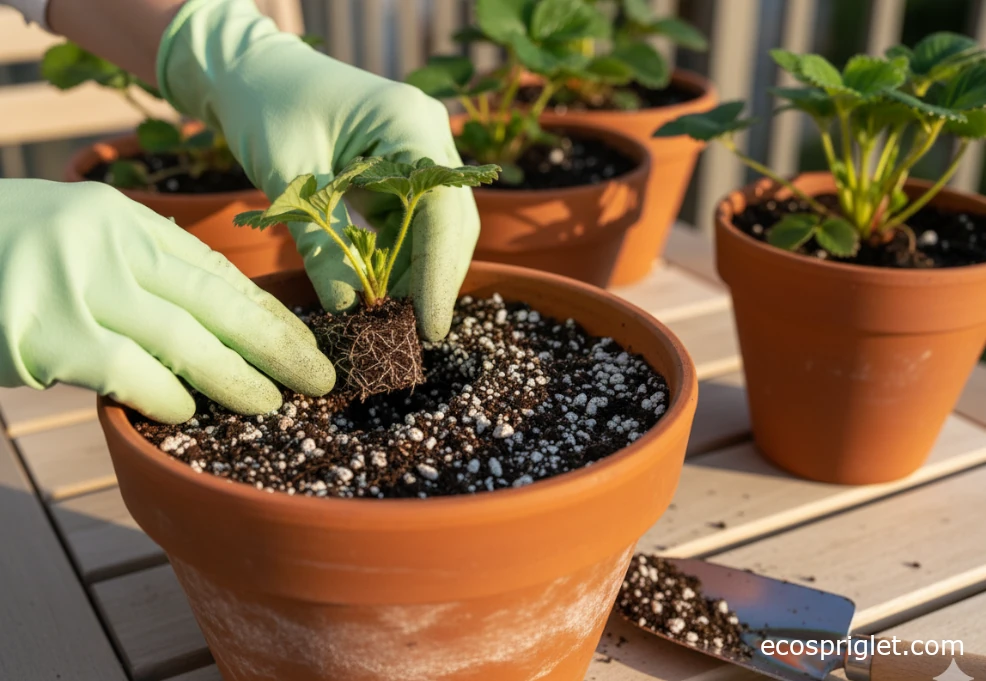
Use a peat- or coir-based potting mix made for containers, not garden soil. Garden soil often compacts in pots and can stay wet around the roots. If your mix feels heavy, blend in about 20% to 30% perlite by volume to improve drainage and air space. At planting time, you can mix a slow-release balanced fertilizer into the top half of the potting mix according to the label.
Plant your strawberries this way:
- Moisten the potting mix slightly before planting so it feels damp but not muddy.
- Fill the container, leaving about 1 inch of space below the rim so water does not spill over immediately.
- Set each plant so the crown, the firm leafy growing point, sits right at soil level.
- Spread bare roots gently downward if you are planting bare-root strawberries. Trim only broken or very long roots that cannot fit without bending sharply.
- Space plants about 6 to 8 inches apart in troughs or wide bowls, giving more room if the variety is vigorous.
- Firm the mix gently around the roots to remove large air pockets.
- Water slowly until you see water drain from the bottom of the pot.
The crown is the part beginners most often get wrong. If you bury it, the plant can rot. If you leave the roots exposed, they dry out. Aim for the crown to sit right where the leaves meet the potting mix, with roots fully covered and the growing point open to the air.
If you start with small bare-root plants, pinch off the first few flowers for 2 to 3 weeks so the plants can settle in. If you bought sturdy nursery plants already blooming, you can leave some flowers, but do not ask a stressed, newly planted strawberry to carry a heavy crop before it has fresh roots.
Daily Care: Light, Water, And Feeding
Once the plants are settled, growing strawberries in containers is mostly about keeping a steady rhythm. If you get the light, water, and feeding right, the plants usually do the rest.
Sunlight
Strawberries are full-sun fruiting plants. Aim for at least 6 hours of direct sun daily, with 8 to 10 hours being better for flowering and fruiting. If your balcony gets only morning sun, choose the brightest spot you have and favor day-neutral or alpine types. A plant can survive in less light, but it will usually make more leaves than berries.
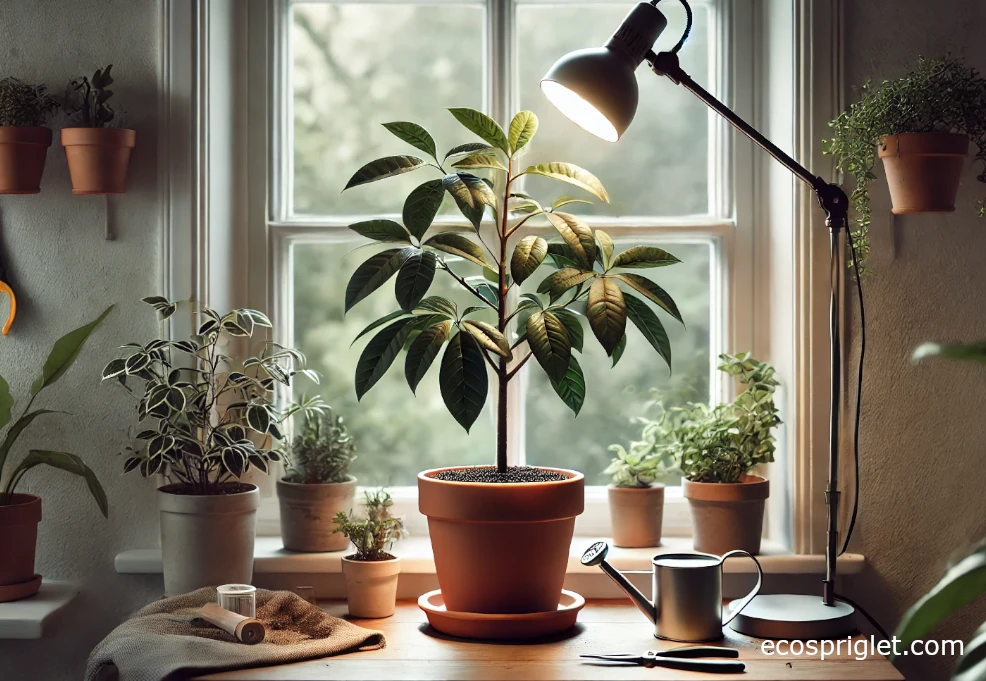
Indoors, a sunny window may not be enough once glass, screens, overhangs, and short winter days are involved. If you want indoor strawberries, place them in your brightest south- or west-facing window and consider a simple grow light kept a few inches above the foliage for 12 to 14 hours per day.
Watering
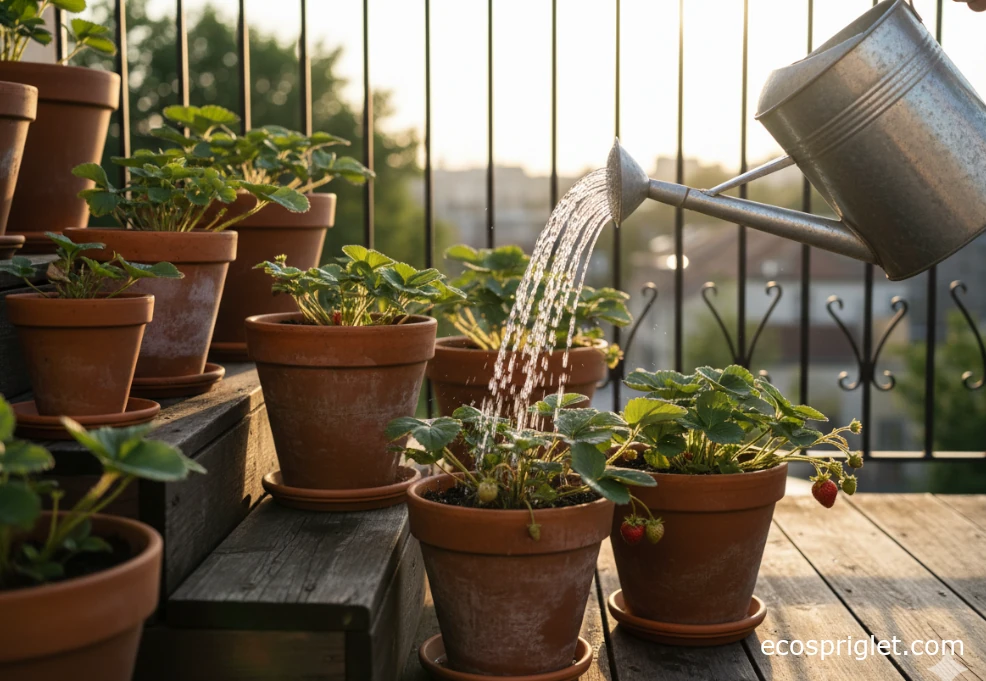
Container strawberries dry out faster than strawberries in the ground. Water deeply when the top 1 to 2 inches of potting mix feel dry to your finger. In hot, windy weather, that may mean watering once a day, and small hanging baskets may need checking twice. In cool, cloudy weather, the same pot may go several days between waterings.
When you water, water slowly until a little drains from the bottom. Empty saucers after about 15 to 30 minutes so the pot is not sitting in standing water. Light daily splashes only wet the surface and encourage shallow roots, so it is better to water thoroughly and then let the top of the mix begin to dry again.
Feeding
Potting mixes do not hold nutrients forever. A slow-release fertilizer at planting gives the plants a steady start. During active growth, use a balanced liquid fertilizer at half strength about every 4 to 6 weeks, or follow the instructions for your specific container fertilizer.
If leaves look pale and growth is weak, the plant may need feeding or better drainage. If leaves are huge and dark green but flowers are scarce, back off the nitrogen. With container strawberries, a little fertilizer on a steady schedule usually works better than heavy feeding all at once.
A thin mulch layer also helps. Straw, pine needles, or clean dry shredded leaves can keep moisture more even and reduce soil splashing onto berries. Keep mulch loose and do not pile it over the crown.
Common Mistakes To Avoid With Container Strawberries
I’ve made just about every mistake you can make with container fruit, and strawberries are honest plants. They show stress quickly. Here are the slips I see most often when people ask why their container strawberries are not thriving.
- Too little sun. A pot that gets only 2 to 3 hours of direct light may grow leaves but produce very few berries. Move the container to the brightest safe spot you have.
- Overcrowding. Stuffing 8 plants into a 12-inch pot looks full at planting time, but it leads to weak growth, poor airflow, and smaller berries.
- Watering on a rigid schedule. The plant does not care what day it is. Check the potting mix and water when the top 1 to 2 inches feel dry.
- Burying the crown. Soil piled over the crown invites rot. Keep the crown at soil level.
- Using garden soil in pots. Heavy soil compacts, drains poorly, and can hold too much water around the roots. Use container potting mix.
- Letting runners take over. Runners are useful for propagation, but in a small pot they steal energy and crowd the mother plant. Remove most runners unless you are rooting one or two new plants.
- Ignoring heat from hard surfaces. Balcony floors, brick walls, and metal rails can make pots hotter than the air temperature. Move plants back from harsh reflected heat if leaves wilt every afternoon despite moist soil.
One spring, I crammed far too many bargain bare-root strawberries into a single barrel because I thought more plants meant more berries. Instead, every plant sulked, and I harvested less from that barrel than from one sensibly planted 14-inch pot nearby. With container strawberries, space and airflow really do matter.
Troubleshooting Problems In Container Strawberry Plants
Even when you do most things right, container strawberries can throw you a puzzle. The good news is that pots make problem-solving easier because light, soil, water, and spacing are all under your control.
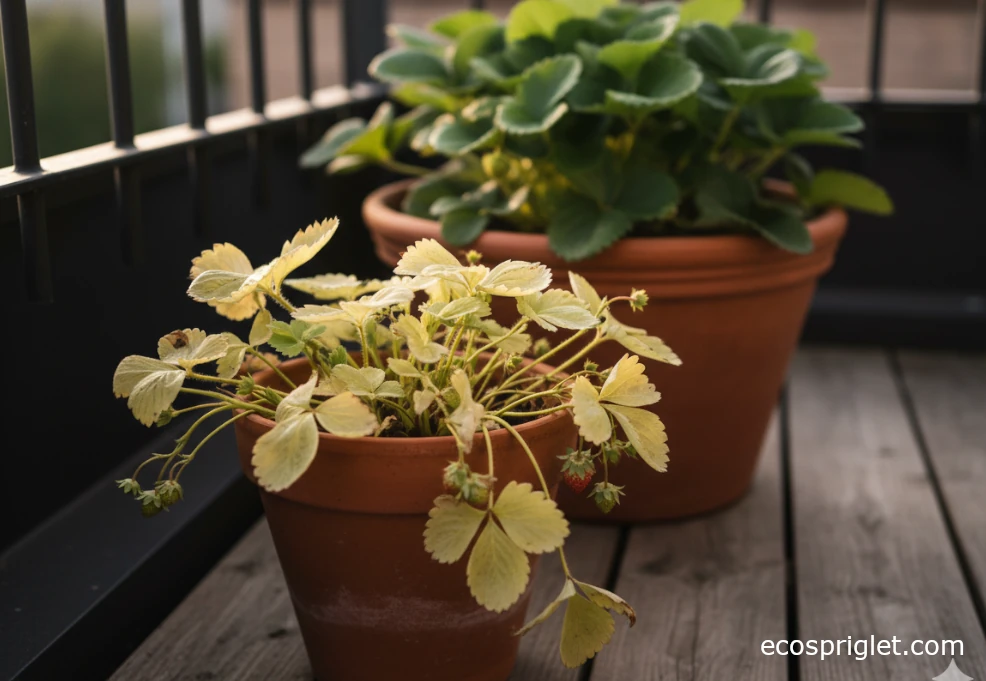
If leaves are pale with green veins, the plant may be short on nutrients, growing in mix that stays too wet, or struggling in cool conditions. Check that the pot drains freely, then review your feeding schedule. Do not keep adding fertilizer to a soggy pot; fix the drainage first.
If the plant wilts even when the mix is wet, slide it gently from the pot and inspect the roots. Healthy roots should look firm and light colored. Dark, mushy roots or a sour smell usually point to chronic overwatering. Let the mix dry more between waterings, and repot into fresh, well-drained mix if the roots are badly affected.
Misshapen berries can be caused by incomplete pollination, cool weather during bloom, or uneven moisture. On a high balcony with little insect traffic, gently tap the flower stems during bloom or brush open flowers with a soft paintbrush to move pollen around. Keeping moisture steady by watering thoroughly when the top 1 to 2 inches are dry also helps.
For leaf spots, remove the worst leaves and throw them away rather than composting them in a small indoor bin. Water at the soil surface instead of showering the foliage, and water early enough that leaves dry before night. University Extension programs commonly recommend good airflow and dry foliage as basic strawberry disease-prevention habits.
If a container strawberry plant gets weaker after a couple of seasons, it may simply be aging. Many small-space growers refresh their plants every 2 to 3 years because older container strawberries often produce less and carry more disease pressure.
Creative Ways To Grow Strawberries In Pots, Rails, And Hanging Containers
Once you’ve grown strawberries in a basic pot, it’s hard not to look at every sunny balcony surface as possible berry space. Hanging containers, railing planters, and tiered pots let you grow more fruit without giving up much floor area.
Some small-space layouts to try:
- Railing trough of berries: Mount a deep, well-secured planter on a sunny rail and plant strawberries 6 to 8 inches apart. Let fruit hang over the outer edge where it stays clean and easy to spot.
- Tiered pot fountain: Stack stable pots from largest to smallest and plant strawberries around each rim. Keep the structure low and steady so wind cannot tip it.
- Mixed herb and strawberry pot: Tuck a couple of strawberries around the edge of a large container with chives, thyme, or parsley. Avoid pairing strawberries with very thirsty plants or woody herbs that prefer drier soil.
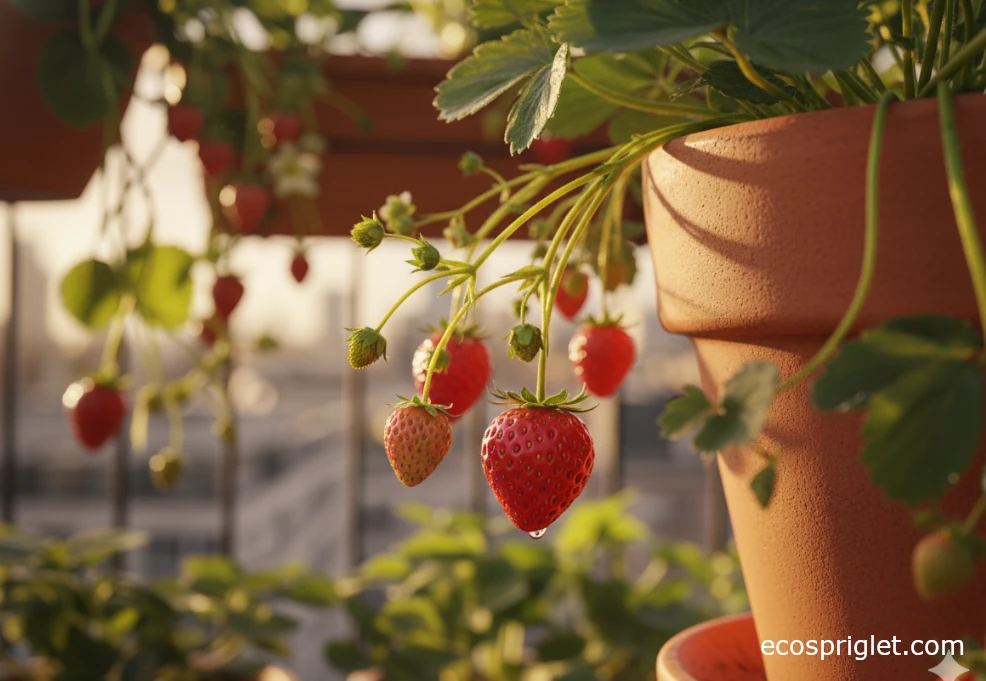
- Hanging waterfall basket: Plant 2 to 3 strawberries around the edge of a 12- to 14-inch basket so the fruit hangs freely in the air.
- Windowsill alpine pot: Grow alpine strawberries in a long narrow planter if outdoor space is limited. Expect smaller fruit, but the plants are charming and compact.
If you share your home with pets, strawberries are listed by the ASPCA as non-toxic to dogs and cats. That does not mean pets should gorge on leaves or fruit, since too much plant material can still upset a stomach. I still like hanging baskets for dog households because they keep the berries cleaner and stop the dog from “harvesting” every ripe one before I get outside.
Seasonal Care, Runners, And Winter Protection
Container strawberries change through the season, so adjust care instead of treating them the same way every month.
In spring, remove dead leaves, refresh the top inch of potting mix if it looks crusty, and start watering more often as growth speeds up. If the container is more than a couple of years old, lift the plant, trim away tired outer crowns, and replant the strongest sections into fresh mix.
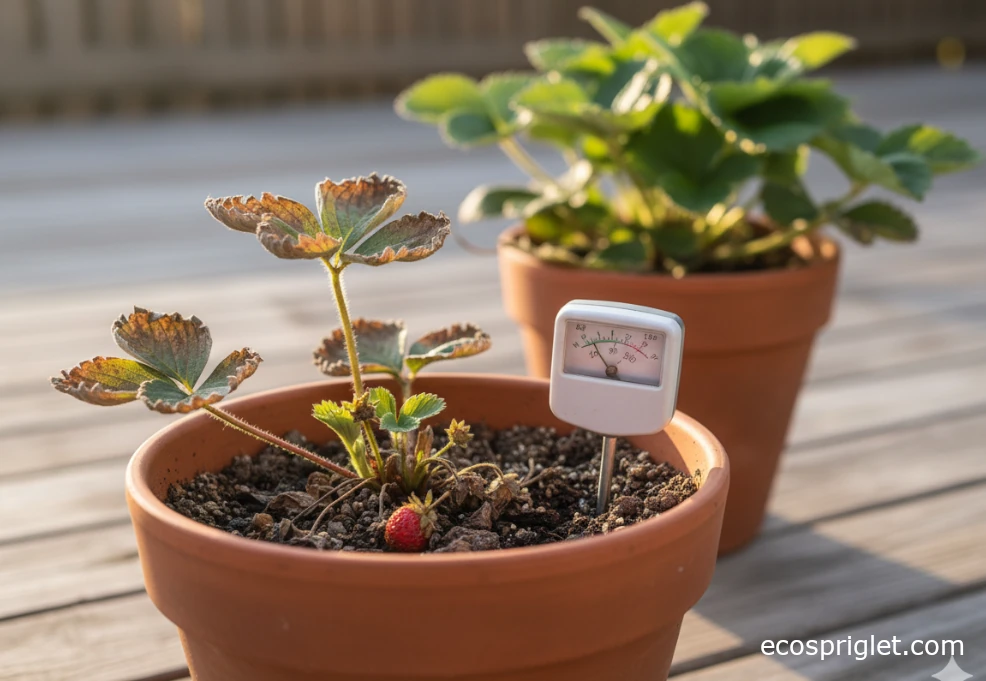
In summer, watch heat and water closely. Small pots can dry fast, especially on upper-floor balconies where wind is stronger. If the plant wilts every afternoon but recovers at night, move it a foot or two away from reflected heat, add a thin mulch layer, or use a slightly larger container next time.
Runners are the long stems that strawberry plants send out to make baby plants. In ground beds, they can be useful. In containers, too many runners crowd the pot. Snip off most runners unless you want to root a new plant in a small pot beside the mother plant. Once the new plant has roots, cut the runner connecting it to the parent.
In cold-winter areas, containers need extra protection because roots in pots freeze faster than roots in the ground. After plants go dormant, move pots against a sheltered wall, into an unheated garage, or into a protected outdoor corner. Keep the mix barely moist, not soggy. A layer of straw around the pot or over the dormant crown can help buffer freeze-thaw swings, but uncover the crown gradually when growth resumes in spring.
Harvesting And Eating Your Balcony Strawberries Safely
Pick strawberries when they are fully red, fragrant, and slightly soft at the tip. Strawberries do not ripen much after picking, so pale shoulders usually mean the berry needs another day. Use clean fingers or scissors and leave a small bit of stem attached if you want the fruit to keep a little longer.
For the best flavor, harvest in the morning after the plants are dry. Eat sun-warm berries right away, or refrigerate them soon after picking. The FDA recommends washing strawberries under running water before eating, including homegrown produce, but skip soap, detergent, and produce washes. For storage, wait to wash strawberries until just before use because wet berries spoil faster.
Discard berries that are moldy, slimy, or badly damaged. If birds, pets, or pests have been nibbling, cut away damaged fruit and be conservative. A small balcony harvest feels special, and it is worth keeping it clean.
Bringing It All Together: Your Container Strawberry Patch
The best way to grow strawberries in containers is to keep the setup simple and the care consistent. Start with a wide container with drainage holes, fill it with a light potting mix, and plant your strawberries with the crown right at soil level. Give them at least 6 hours of direct sun, water deeply when the top 1 to 2 inches of mix feel dry, and feed lightly during active growth.
From there, pay attention to what the plants are telling you. Pale leaves, soggy mix, tiny berries, too many runners, or wilting in afternoon heat are all clues you can act on. Protect pots from harsh wind, reflected heat, and winter freezes, and refresh older plants when yields drop.
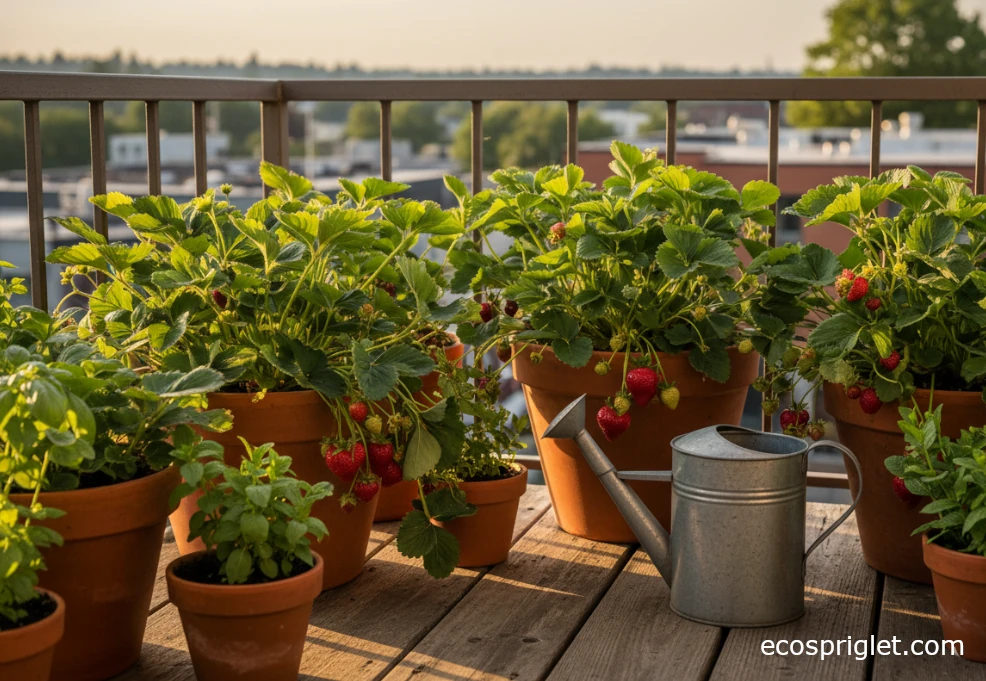
I still remember the first summer I picked a whole cereal bowl of berries from a single 16-inch pot on my apartment balcony. It was not a farm-scale harvest, but it felt like magic, especially knowing those berries ripened a few steps from the kitchen. Start with one good container this season, learn its rhythm, and build your berry patch from there.