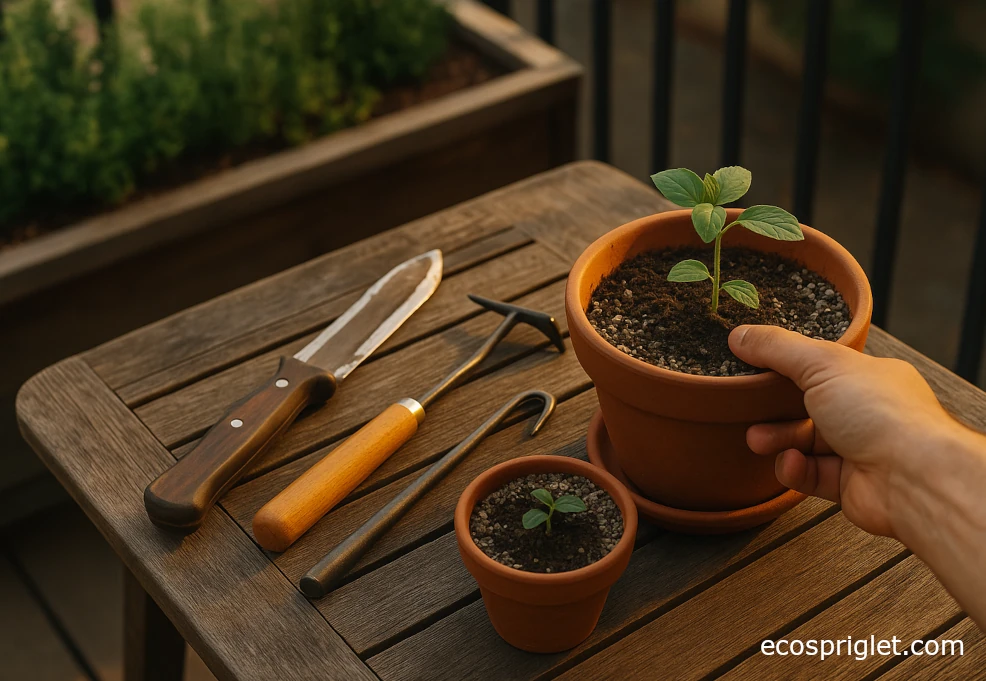
Mint is one of those balcony herbs that grows like it owns the place—until the moment you bring a beautiful bunch inside and it turns limp or slimy overnight. I’ve had that exact “how did this happen so fast?” moment after snipping mint for iced tea, only to find a soggy mess the next day. The good news: storing mint well isn’t complicated, but it is a little different from sturdier herbs like rosemary.
This guide walks you through the most reliable ways to store fresh mint leaves in a small apartment kitchen: the fridge methods that actually work, how to freeze mint leaves for longer storage, and how to dry mint if you want a pantry-ready stash. You’ll also get practical “if/then” fixes for common problems (blackened leaves, weak flavor, excess moisture), plus a few easy ways to preserve mint leaves in portions you’ll really use.
If you’re growing mint in containers, you’ll also find quick tips for storing fresh cut mint without stressing the plant.
Start With the Right Prep (It’s Mostly About Moisture)
Mint hates sitting wet in the fridge, but it also hates drying out. The sweet spot is “clean and mostly dry, then stored with gentle humidity.” Before any storage method, do this:
- Remove the troublemakers: pull off bruised or blackened leaves. One damaged leaf can speed up spoilage in a closed container.
- Rinse fast, if needed: if your mint has soil or grit, rinse briefly in cool running water, then shake it off.
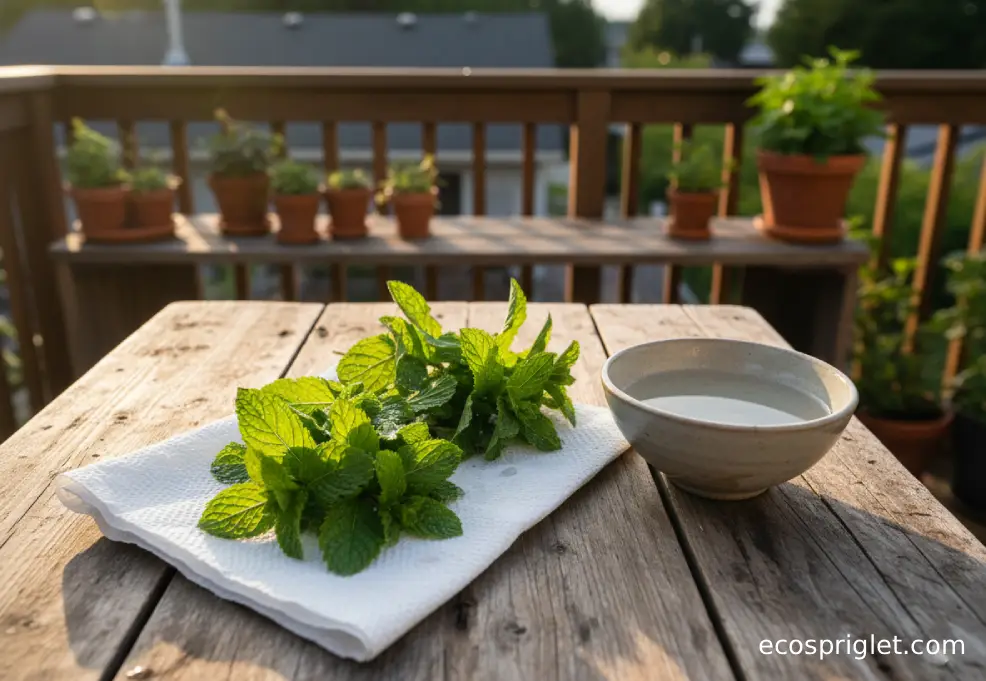
- Dry thoroughly: spin in a salad spinner or pat dry until the leaves feel dry to the touch. If you see water pooled at the stems, keep drying.
Sources I follow for herb handling and preservation basics: University of Missouri Extension (freezing methods and prep) and University of Arizona Cooperative Extension (fresh-herb storage approaches).
Best Fridge Method for Mint: Treat It Like a Bouquet
If you’re trying to keep mint leaves fresh in the refrigerator, this is the method I reach for first—especially when the mint is on stems (like what you cut from a pot, or what you buy in a bunch). The idea is simple: keep the stems hydrated, keep the leaves from drying out, and don’t trap puddles of water on the leaf surfaces.
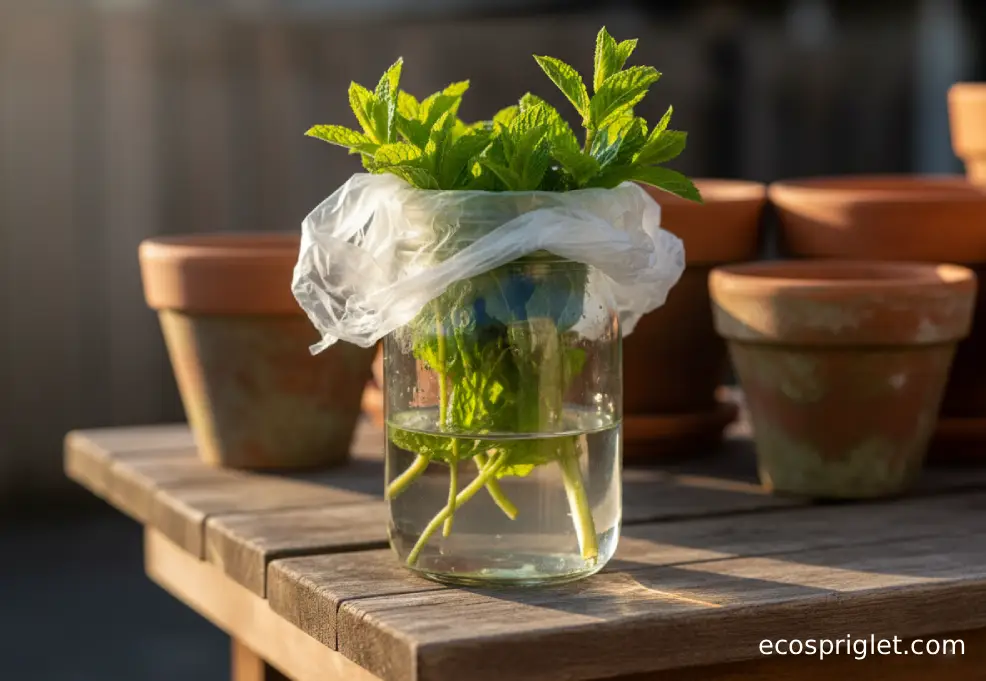
How to store mint in the fridge (bouquet method):
- Trim the stem ends by about 1/2 inch to reopen the “straws.”
- Stand the mint in a jar with about 1 inch of water.
- Loosely tent the top with a clean produce bag (don’t seal it airtight).
- Refrigerate and change the water every 1–2 days.
This approach is also recommended broadly for storing fresh herbs in water (including mint) by the University of Arizona Cooperative Extension.
Beginner mistake I see a lot: sealing the jar/bag tightly so condensation builds up. If you notice fogging and wet leaves, loosen the cover and blot the leaves dry again.
Second Fridge Option: Paper Towel + Container (Great for Loose Leaves)
If you already stripped the leaves (or your stems are short and awkward), go with a humidity-buffer method. You’re aiming for “slightly damp paper towel,” not wet. If you can squeeze water out of it, it’s too damp.
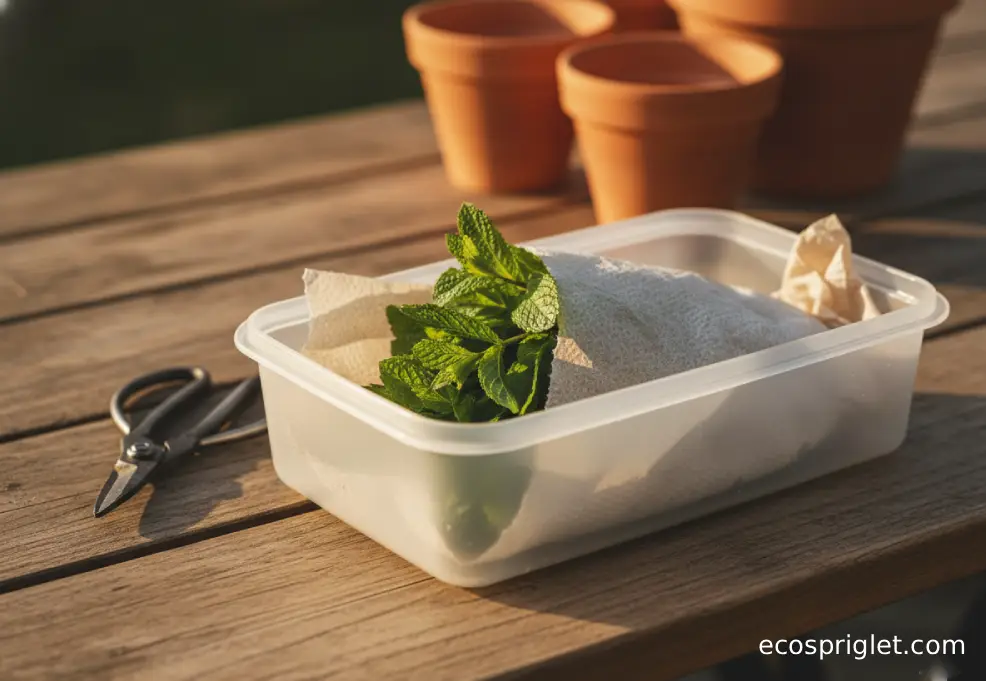
How to store mint leaves in the refrigerator (towel method):
- Lay mint in a single layer on a paper towel, then roll it loosely.
- Place the roll in a container or bag, and leave it slightly unsealed for airflow.
- Check after 24 hours. If the towel feels wet, replace it with a fresh barely-damp one.
University of Arizona Cooperative Extension includes wrapping herbs in a damp paper towel as a standard refrigerator storage option.
A Quick Storage Cheat Sheet (Fridge, Freezer, Pantry)
| Method | Best For | What to Watch |
|---|---|---|
| Jar of water + loose cover (fridge) | Stemmed mint you’ll use this week | Condensation; change water every 1–2 days |
| Damp towel + container (fridge) | Loose leaves; short stems | Towel getting wet; swap it if soggy |
| Frozen leaves or cubes (freezer) | Long-term storage for tea, smoothies, cooking | Freezer burn; label and seal well |
| Dried mint (pantry) | Tea blends, baking, rubs | Heat/light exposure; store airtight |
For food safety, keep your refrigerator at 40°F or below and your freezer at 0°F or below.
How to Freeze Mint Leaves Without Wrecking the Flavor
Freezing is my go-to when mint is exploding on the balcony and I know I won’t use it all fresh. You can freeze whole leaves, but mint cubes are easier to portion and protect the leaves from drying out.
Two reliable ways to freeze mint leaves:
- Tray-freeze whole leaves: spread dry leaves in a single layer on a tray, freeze until firm, then transfer to a sealed freezer container.
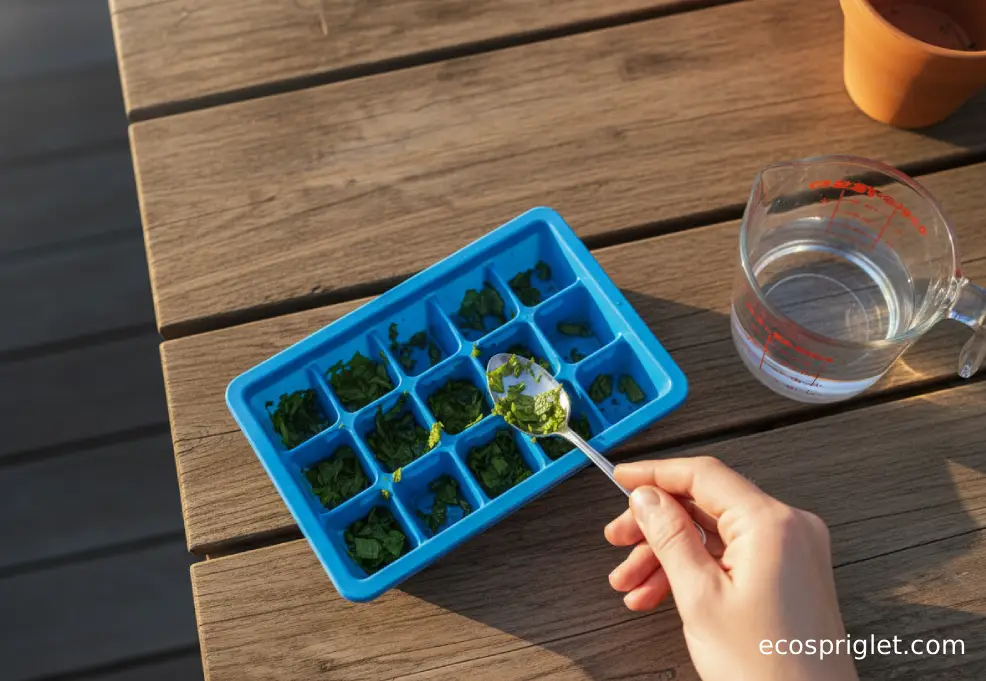
- Freeze in cubes: pack chopped (or small whole) leaves into an ice cube tray, top with water (or oil for cooking uses), freeze, then move cubes to a labeled freezer bag.
University of Missouri Extension recommends freezing herbs either by tray-freezing leaves or by freezing them in ice cube trays with water or oil.
Daniel note: I used to skip the “move cubes to a bag” step and just leave the tray in the freezer. The cubes picked up freezer odors fast. Now I transfer cubes as soon as they’re solid and label them like a responsible adult.
Drying Mint for Tea and Pantry Storage (Dehydrator Works Best)
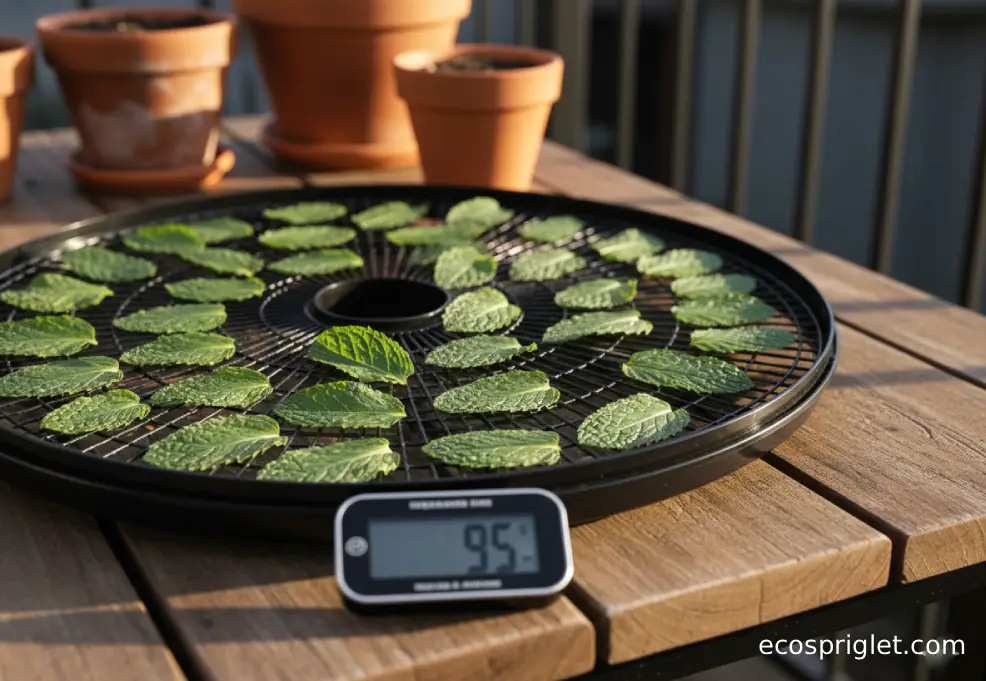
If your goal is mint tea (or mint that won’t hog freezer space), drying is perfect. A dehydrator gives the most consistent results in an apartment because you can control temperature and airflow.
Dehydrator guideline: many Extension resources recommend drying herbs around 95–115°F, with higher settings (up to about 125°F) in more humid conditions.
Simple drying steps: rinse quickly if needed, shake off water, let leaves air-dry on a towel for 15–30 minutes, then dry in a single layer until they’re crisp and crumble easily. Store fully dried mint in an airtight jar away from heat and light.
Beginner mistake: packing mint away while it’s still a tiny bit bendy. That’s how you get musty smells and clumping. If you’re unsure, dry it longer—mint should crackle, not fold.
Troubleshooting: Slimy, Blackened, or Flavorless Mint
Mint problems are usually moisture, temperature, or bruising. Here’s the quick diagnosis I use:
- Leaves are slimy: too wet + too airtight. Fix by drying the mint again, swapping in a dry or barely-damp towel, and leaving the container slightly vented.
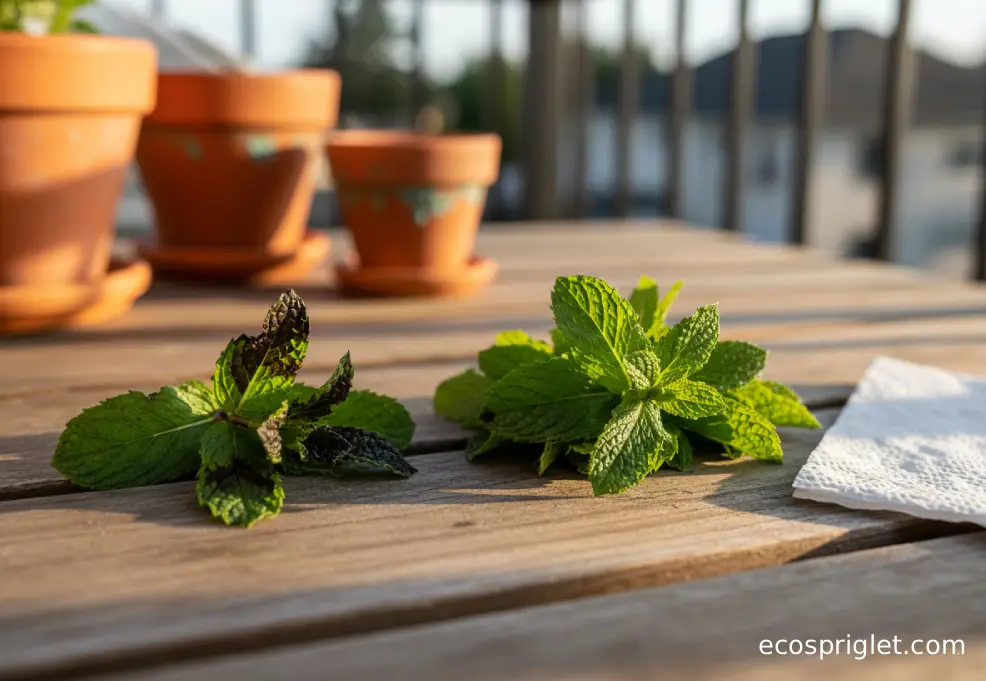
- Leaves turn black: bruising + cold spots. Handle gently, don’t cram mint under heavy items, and keep it away from the coldest back wall of the fridge.
- Mint tastes weak after storage: older stems or too much time. For best aroma, use fridge-stored mint sooner, and use frozen mint in cooked dishes, syrups, tea, and smoothies where texture matters less.
One more practical note: keep your fridge cold enough for safety (40°F or below), but store delicate herbs where they won’t partially freeze.
Common Mistakes New Balcony Gardeners Make With Stored Mint
I learned a couple of these the hard way, usually while trying to “save time” in a tiny kitchen.
- Storing mint wet: even small droplets can turn into slime fast. Dry it like you mean it.
- Sealing mint airtight: mint needs humidity, but it also needs a little airflow. Slightly vented beats vacuum-tight for fresh storage.
- Overhandling the leaves: bruising leads to black spots. Hold stems, not leaves, when you can.
- Forgetting temperature basics: keep the fridge at 40°F or below and the freezer at 0°F or below for safe storage.
Creative Ways to Preserve Mint Leaves You’ll Actually Use
If you’re preserving mint leaves, it helps to match the method to how you cook and drink. Here are options that don’t create a “mystery bag of herbs” you never touch:
Portion-first ideas that fit apartment life:
- Mint ice cubes (water): drop into iced tea, lemonade, or sparkling water.
- Mint cubes (oil): great for tossing into a warm pan with peas, zucchini, or grains (mint loves buttery, mild foods).
- Dried mint jar: label it for tea, yogurt sauces, or baking so it doesn’t get lost behind the cinnamon.
University of Missouri Extension supports freezing herbs in ice cube trays with water or oil as a practical preservation method.
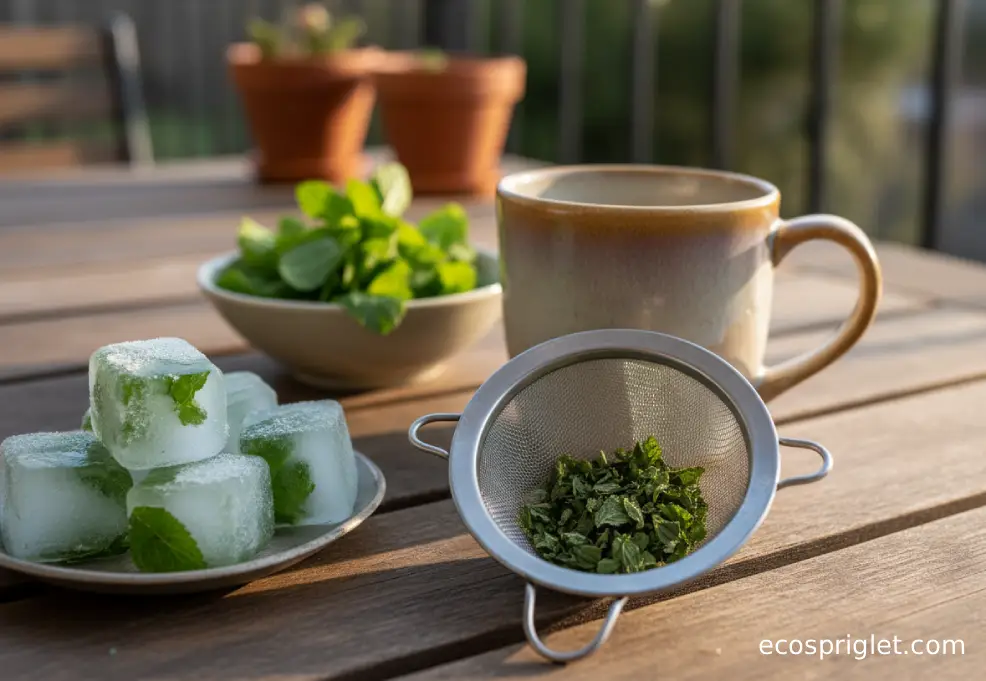
Once you get the moisture balance right, storing mint becomes easy: dry it well, then choose a fridge method that matches how the mint is cut. For stemmed bunches, the jar “bouquet” approach keeps mint perkier because the stems stay hydrated. For loose leaves, the paper-towel method prevents both sogginess and dehydration. And when your balcony pot goes into overdrive, freezing mint leaves (especially as cubes) is the simplest way to preserve mint leaves in portions you’ll actually use.
Keep the basics in mind: a refrigerator at 40°F or below and a freezer at 0°F or below protect food safety, while gentle airflow and reduced surface moisture protect mint quality.