Looking for apartment patio ideas that actually work in tight spaces? Small patio, big potential. The trick is to plan the space like a tiny outdoor room, not a storage corner with a chair squeezed into it.
Start by mapping light, wind, water, and lease rules. Then choose one comfortable anchor piece, add renter-friendly privacy, layer warm lighting, and use containers or vertical planters to bring in greenery without eating up the floor. You do not need a huge budget or a perfect patio. You need a layout that fits how you actually use the space.
By the end, you’ll have a clear plan, a realistic shopping list, and a cozy outdoor room you’ll actually want to step into after work.
Start Here: Measure, Light, Wind, And Lease Rules
Before you buy a single chair, measure your patio. A 6-foot by 8-foot patio can feel roomy with the right layout, or crowded fast if every piece is a little too deep.
- Footprint: Measure width and depth in feet. Mark doors that swing outward, vents, hose bibs, outlet locations, and any railings or posts.
- Clearances: Keep 24 to 30 inches for your main walking path. Leave about 36 inches where a door swings open.
- Sun: Check where the sun lands at 9 a.m., 1 p.m., and 6 p.m. A corner that bakes at 1 p.m. is better for herbs than a reading chair.
- Wind: Notice where wind funnels between buildings. That spot needs heavier planters, low furniture, or a screen that can be removed before storms.
- Lease Rules: Check whether you can attach items to railings, hang lights, use rugs, add deck tiles, or mount railing planters.
- Water Plan: Decide where extra water goes before you bring in plants. Use saucers, boot trays, or cachepots so water does not drip onto a downstairs neighbor.
Daniel’s note: On my first 6-foot by 8-foot patio, mapping the sun made the biggest difference. The shady side became my reading spot, and the hot corner became my herb zone.
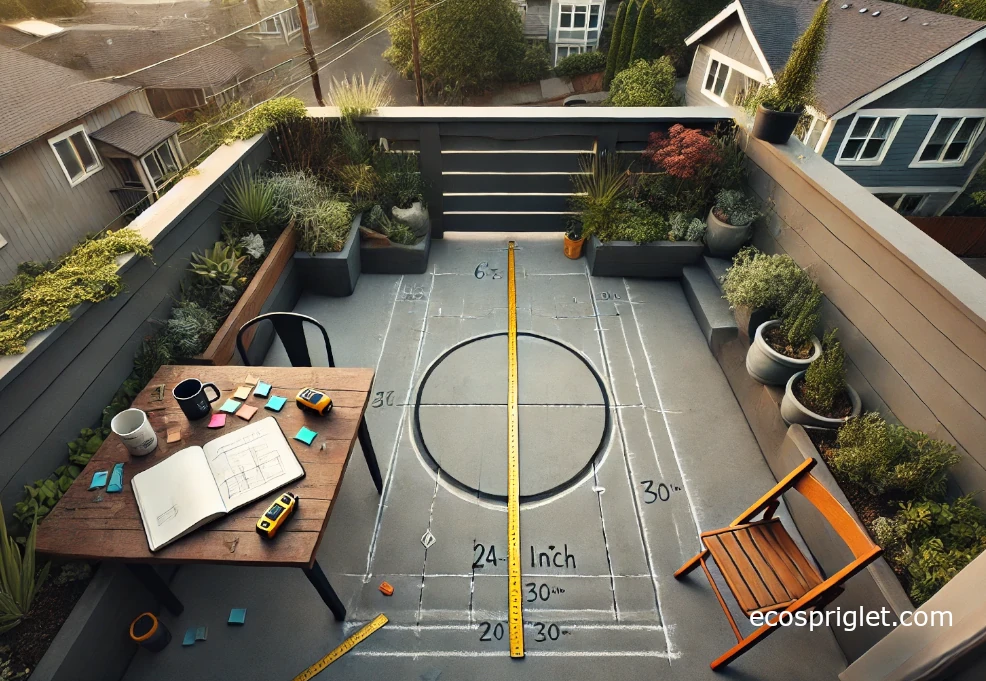
Choose One Layout Before You Shop
Most small patios work better with one clear layout than with several small ideas competing for space. Pick the version that matches your habits first, then buy furniture to fit that plan.
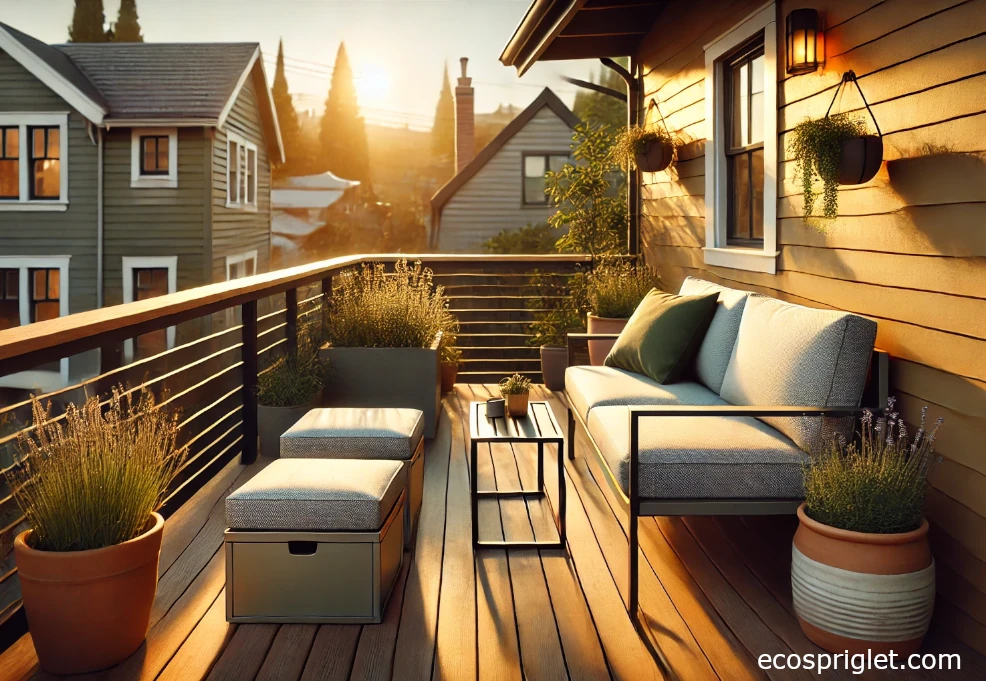
Lounge Nook For A 6-Foot By 8-Foot Patio
Place one slim loveseat, about 52 to 58 inches wide, against the long wall. Add one nesting side table and one floor lantern. Keep the walkway along the front edge so you are not stepping around furniture every time you go outside.
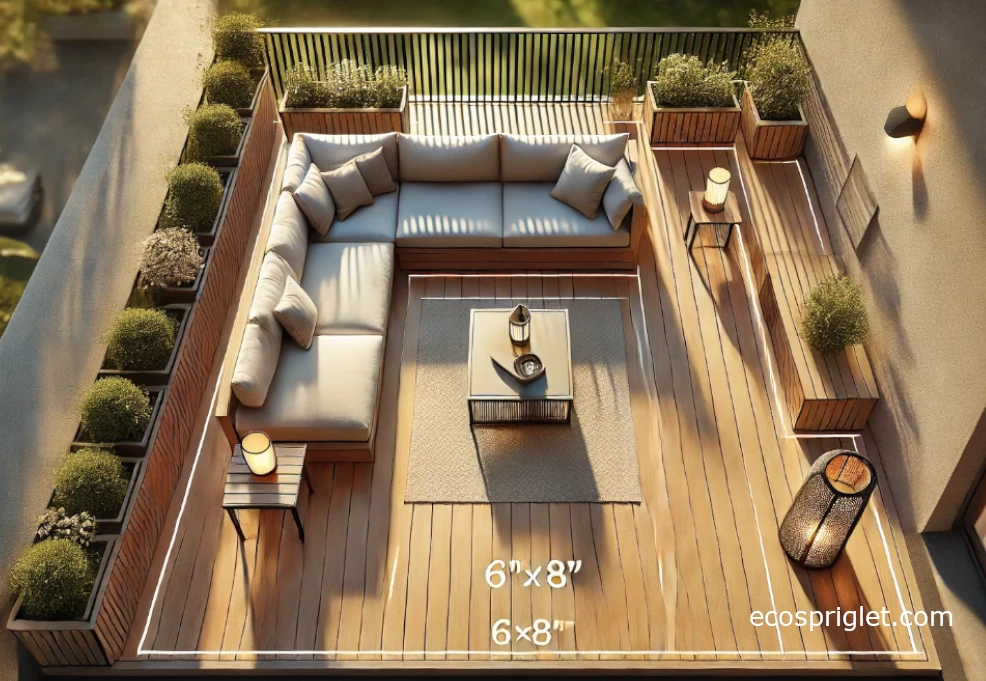
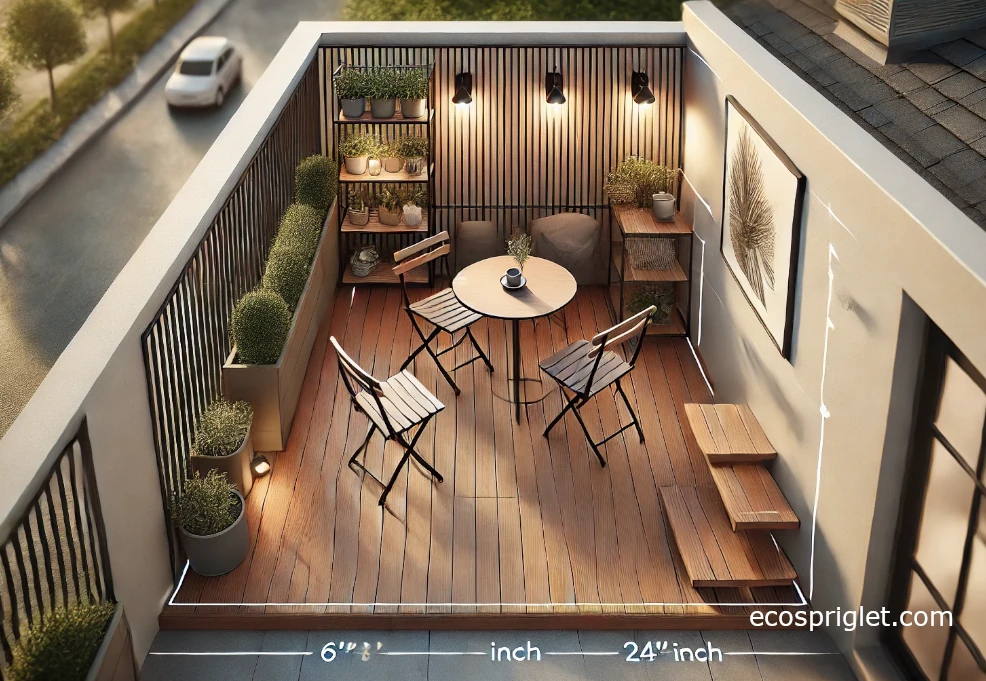
Café Corner For Morning Coffee
Use a folding bistro table, about 24 to 28 inches across, with two folding chairs. Push the set into a corner instead of centering it. This leaves more open floor and makes the patio feel less like a hallway.
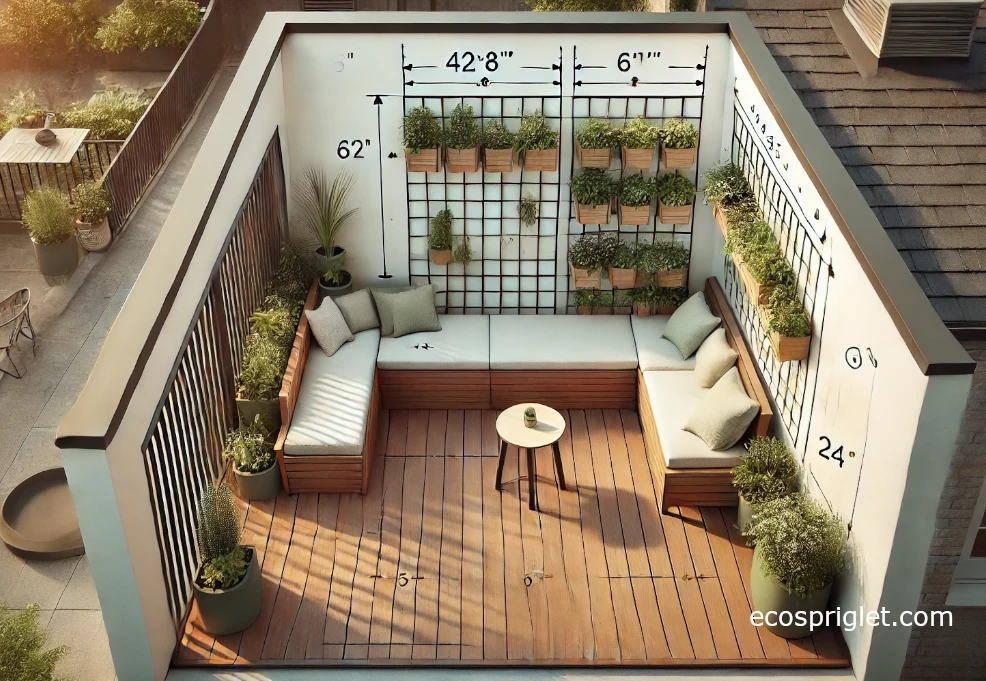
Plant Wall And Storage Bench
Set a 42 to 48 inch storage bench opposite a vertical plant grid or tiered plant stand. The bench holds cushions, hand tools, and lanterns, while the plant wall gives you greenery without covering the whole floor.
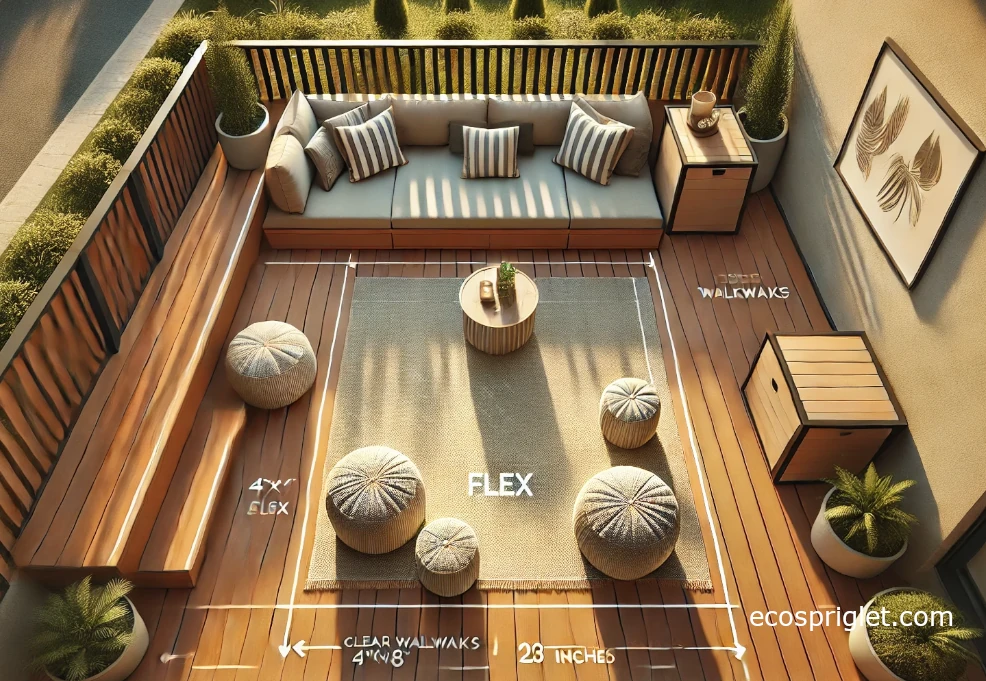
Kid-Friendly Flex Patio
Use a 4-foot by 6-foot outdoor rug, two poufs, and one lidded storage box. Keep everything light enough to move quickly. This layout works well when the patio has to switch between snack spot, play space, and grown-up seating.
Micro-Dining For Two To Four
Choose a slim rectangular table, about 24 to 28 inches deep and 40 to 48 inches long. Place it along the rail or wall and use stackable chairs. For four people, keep the extra chairs stacked until you need them.
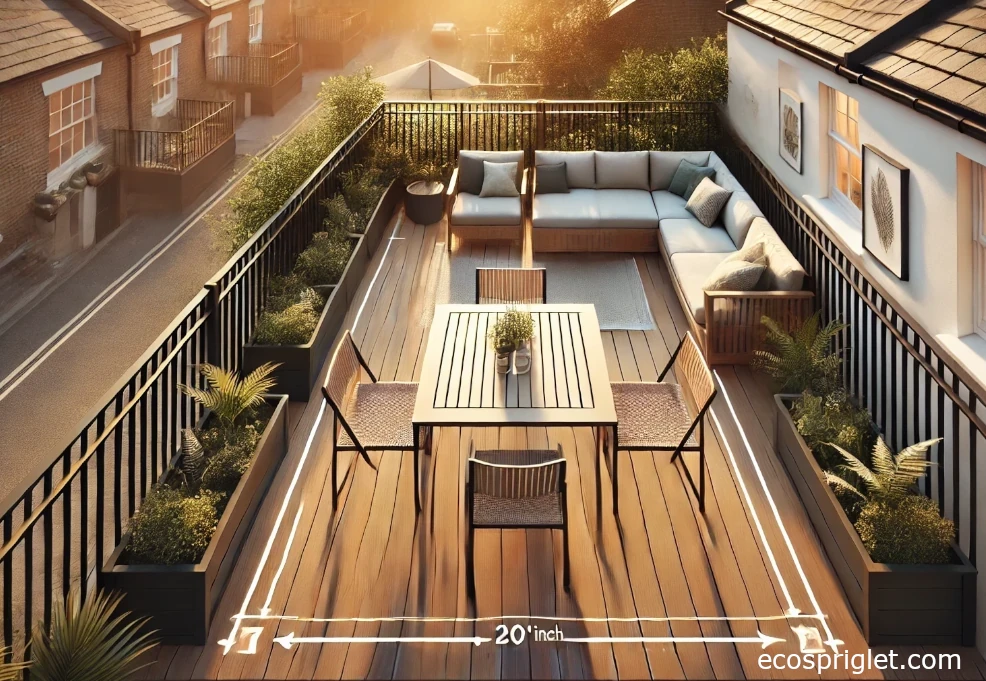
Tip: Put the tallest piece, such as a privacy screen or plant rack, where it blocks the least useful view. Keeping one sightline open makes a small patio feel larger.
Pick Furniture That Earns Its Floor Space
Small patio furniture should do at least one of three jobs: fold, stack, or store something. Pretty pieces are fine, but comfort matters more. If the chair is too upright or the table is always in the way, you will stop using the patio.
- Slim Loveseat: Best for lounging. One comfortable loveseat often feels calmer than two small chairs.
- Folding Café Set: Best for renters, small patios, and anyone who wants open floor space part of the time.
- Storage Bench: Best for cushions, throws, battery lanterns, plant tools, and kids’ outdoor items.
- Nesting Tables: Better than one bulky coffee table because you can spread them out only when needed.
- Stackable Chairs: Useful for micro-dining or guests, especially when indoor storage is limited.
For materials, powder-coated aluminum is light and usually easy to move. Resin and HDPE furniture are low-maintenance. Eucalyptus and teak look warm but need seasonal care. Steel can be sturdy, but use furniture pads so the feet do not scrape concrete or trap rust stains.
Daniel’s note: A single loveseat is usually the first thing I would try on a tiny patio. It gives you one real place to relax instead of three little pieces you keep bumping with your knees.
Use Decor To Make The Patio Feel Finished
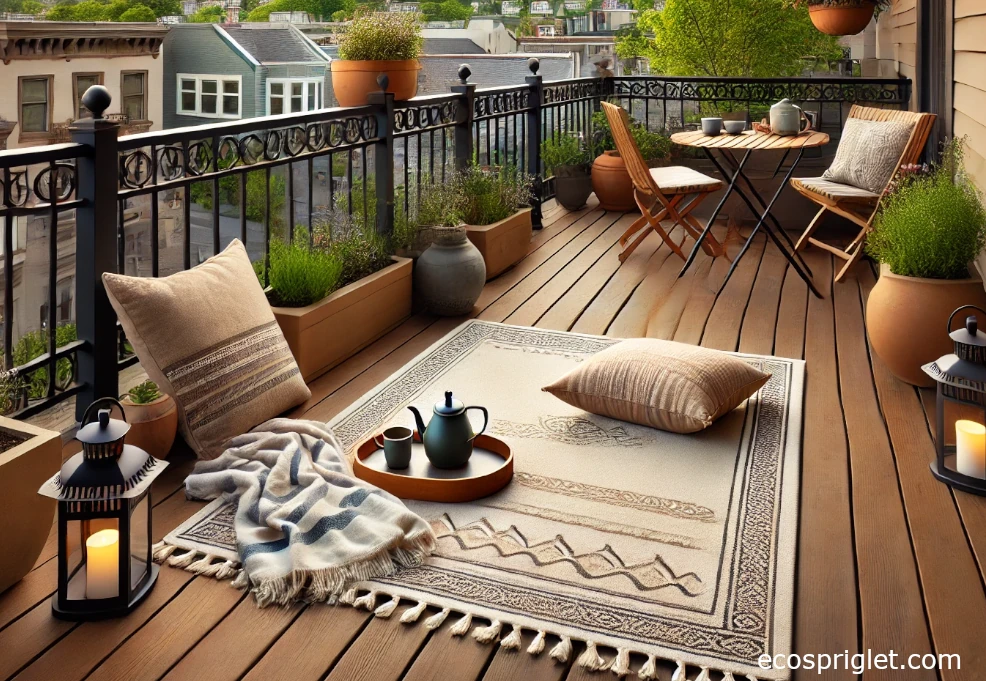
Decor is where a bare slab starts to feel like a room. Keep it simple: one rug, one tight color palette, a few soft textures, and a place to set a drink.
- Outdoor Rug: A 4-foot by 6-foot rug works for many compact patios. Try to get the front legs of your seating on the rug so the area feels intentional.
- Pillows And Throws: Choose three colors and repeat them across pillows, planters, trays, and lanterns.
- Tray: Use one tray for drinks, snacks, seed packets, or a book. Bring it inside when rain is coming.
- Baskets Or Lidded Boxes: Use them for small items that otherwise make the patio look messy.
- Over-Rail Hooks: Good for lightweight lanterns or small hanging planters where your lease allows them.
If your patio gets heavy rain, lift the rug occasionally so the concrete can dry underneath. A breathable outdoor rug is easier to manage than a thick mat that stays soggy for days.
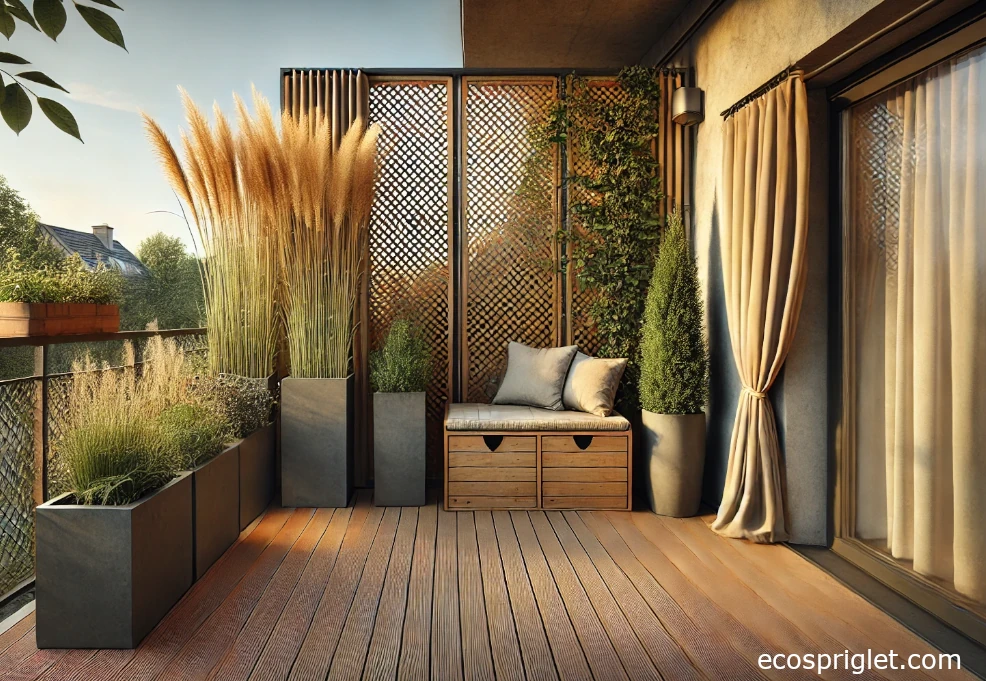
Add Privacy Without Drilling
Privacy changes how often you use a patio. Even a partial screen can make dinner, reading, or watering plants feel less exposed.
- Freestanding Screen: Choose a folding screen with stable feet. Weight it carefully and bring it in before storms.
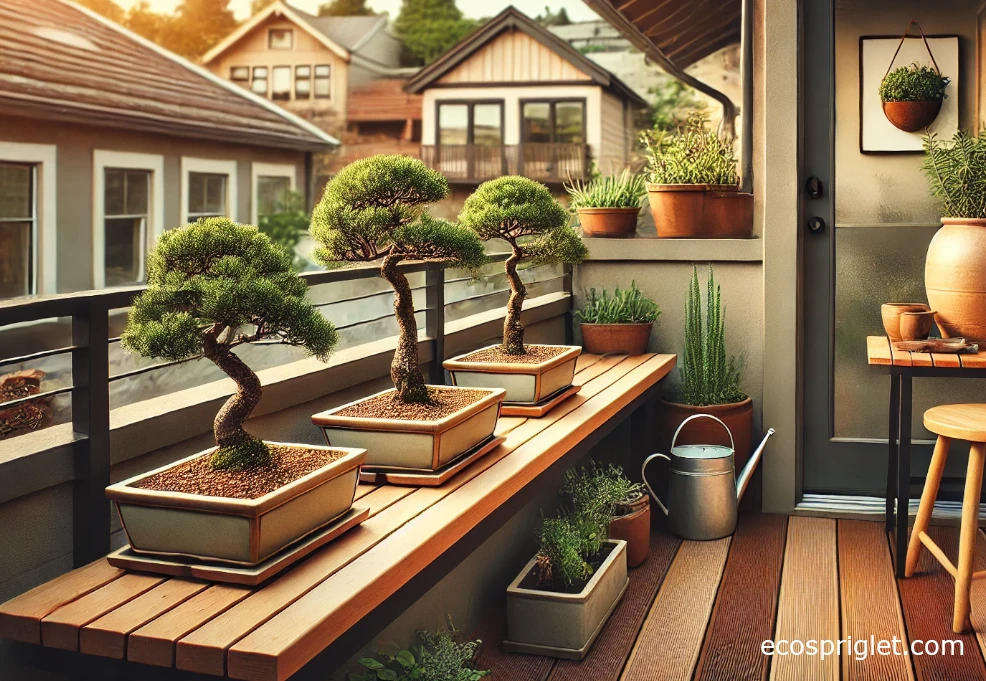
- Planter Divider: Line up two or three long planters with ornamental grasses, dwarf evergreens, or tall annuals.
- Tension-Rod Curtains: Use outdoor fabric panels between two walls or posts. Remove them during high wind.
- Reed Or Bamboo Panel: Attach it to an existing railing with zip ties only if your lease allows it. Add extra ties near the top and bottom so it does not flap.
- Tall Containers: Use large foliage plants to block seated sightlines without enclosing the whole patio.
A height of 60 to 72 inches is enough for most seated privacy. Leave some open space at the top or sides for airflow, especially on hot balconies where still air can make plants and people miserable.
Control Shade And Wind Before They Ruin The Space
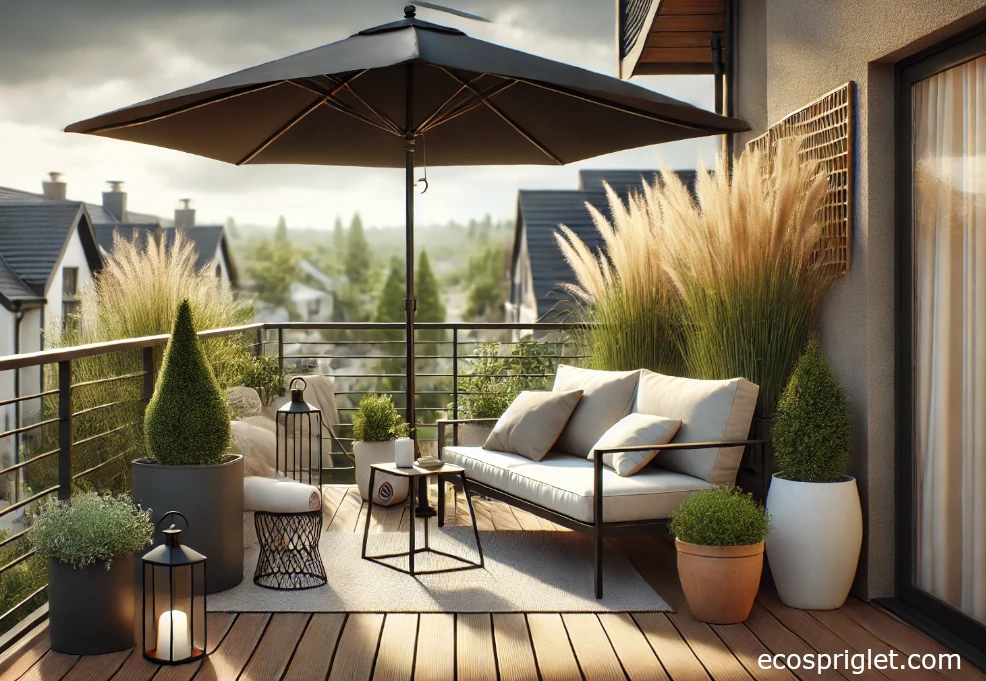
Sun and wind are the two things that make a small patio uncomfortable fast. Fix those first, and the rest of the setup works better.
- Cantilever Umbrella: Good when you need shade but do not want a pole in the middle of the patio. Close it whenever wind picks up.
- Clamp-On Shade: Useful for railing areas with harsh afternoon sun. Check that the clamp is allowed and secure.
- No-Drill Shade Sail: Works only when you have safe anchor points and can remove it before storms.
- Plant Wind Buffer: Put dense grasses, dwarf evergreens, or sturdy foliage plants near the wind path. Avoid lightweight pots in exposed corners.
- Low Furniture: In breezy spots, low seating and heavy planters usually behave better than tall shelves and loose curtains.
On upper-floor patios, treat anything tall and lightweight as temporary. If you would not leave it out before a storm, make sure you have somewhere to store it quickly.
Layer Lighting Like A Small Living Room
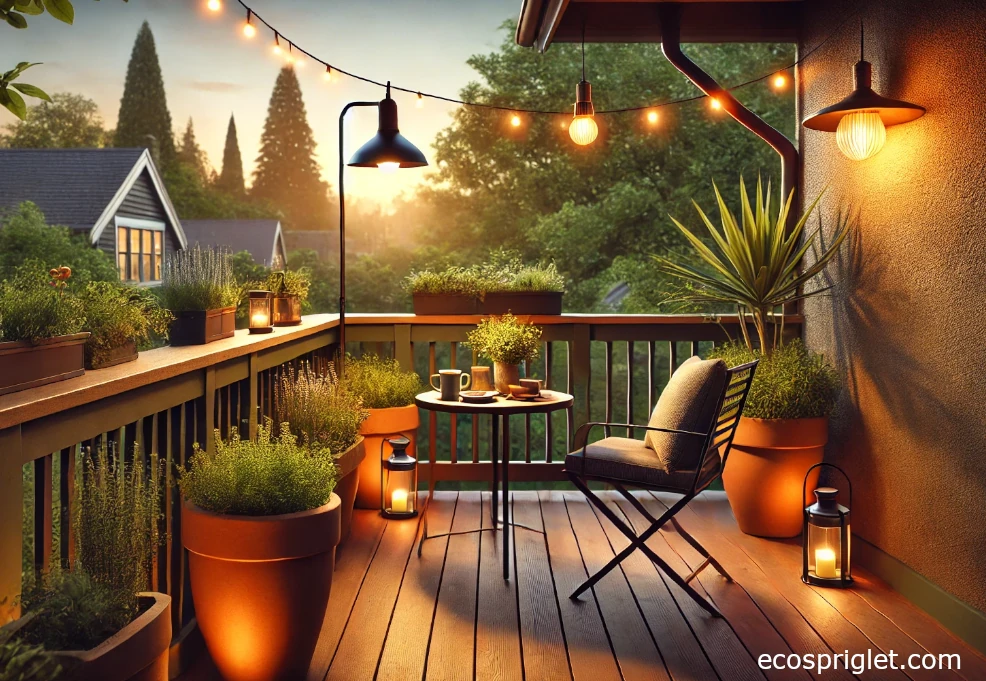
Lighting is one of the easiest ways to make an apartment patio feel cozy at night. Use warm light instead of bright white light, and aim for several soft sources rather than one harsh fixture.
- Ambient Light: Hang LED string lights with outdoor-safe removable hooks or a no-drill tension line.
- Task Light: Add a rechargeable lantern or clamp light near the main seat for reading.
- Accent Light: Place solar lanterns in planters or on a side table.
- Candle Look Without Flame: Use battery candles inside hurricane jars if children, pets, wind, or building rules make real candles a bad idea.
Warm white bulbs around 2700 to 3000K usually feel best outdoors. If you plug anything in, use outdoor-rated cords and lights, keep connections off wet floors, and plug into a GFCI-protected outlet. The Electrical Safety Foundation International also recommends using outdoor cords only for outdoor use and avoiding cords that run through water.
Grow Up With Vertical And Container Gardening
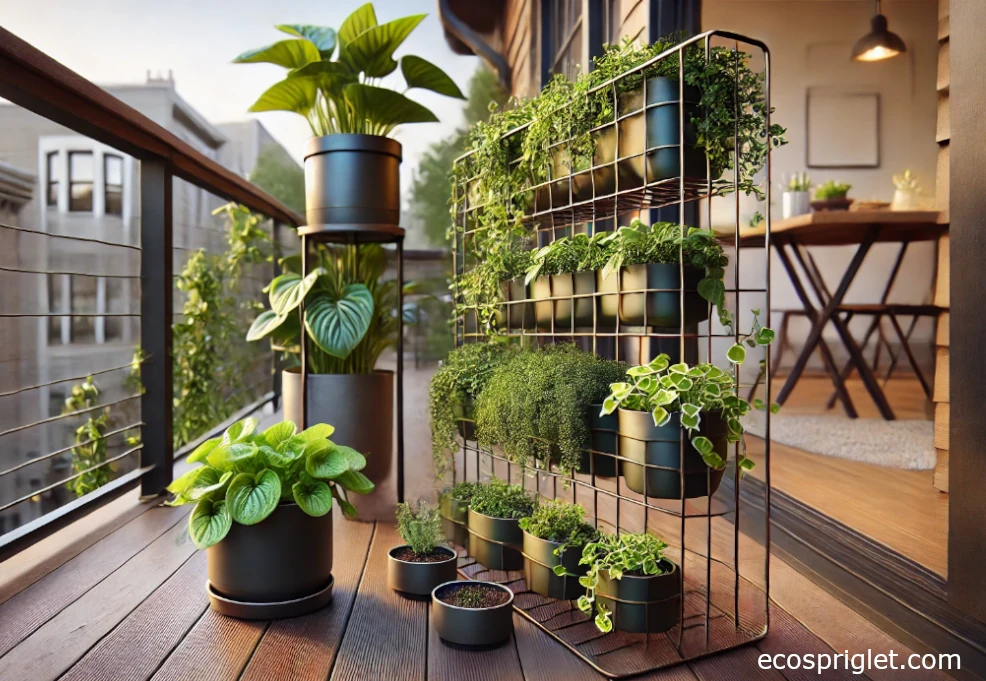
Plants make a patio feel alive, but too many small pots can turn into clutter. Use fewer, larger containers and vertical space where you can.
- Tiered Stands: Place them against a wall so they do not block the walking path.
- Wall Grids: Use no-drill or freestanding grids for small herbs, trailing plants, and lightweight pots.
- Railing Planters: Use rail-safe brackets and confirm your lease allows them. Remember that wet potting mix is much heavier than dry mix.
- Lightweight Containers: Resin, fiberglass, and fabric grow bags are easier to move than ceramic or concrete.
- Drainage: Use pots with drainage holes, then catch water with saucers or trays. Empty standing water after about 30 minutes so roots are not sitting in it.
- Potting Mix: Use lightweight potting mix, not garden soil. Garden soil is usually too heavy and compacted for patio containers.
Skip the old gravel-in-the-bottom trick. Washington State University Extension and UC Agriculture and Natural Resources both explain that gravel layers do not improve container drainage. A pot with drainage holes and a good potting mix is the better fix.
- Full Sun: Try cherry tomatoes, peppers, rosemary, lavender, basil, zinnias, or dwarf citrus in warm climates.
- Part Shade: Try parsley, mint in its own pot, lettuce, begonias, impatiens, or coleus.
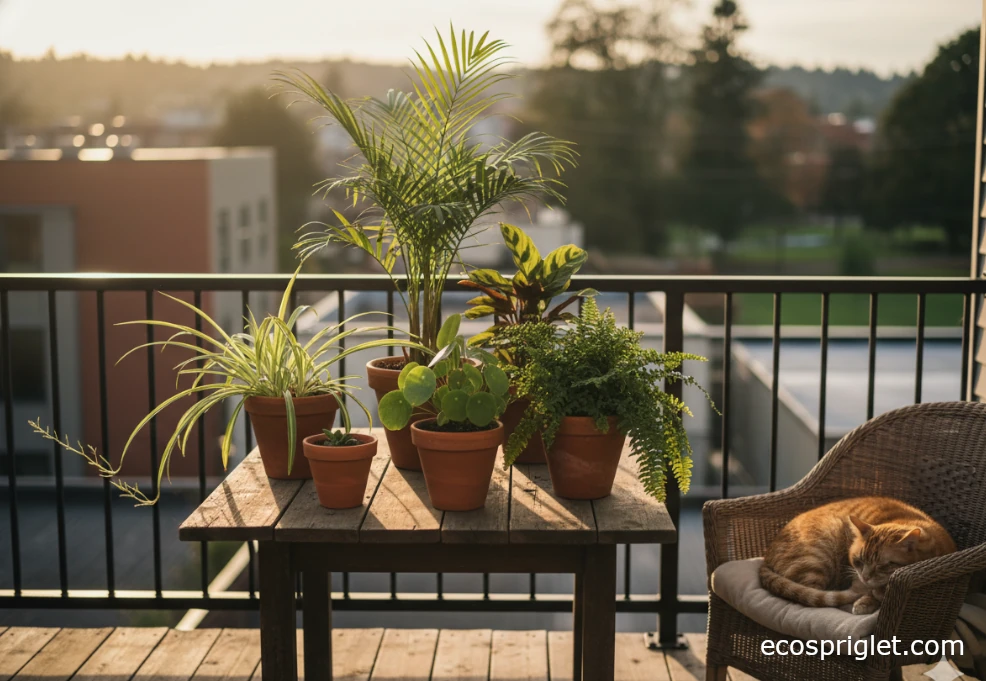
- Shade: Try ferns, hosta in containers, caladium, cast iron plant, or pothos and philodendron outdoors only during warm weather.
If you have pets, keep pothos, philodendron, alocasia, and many other tropical foliage plants out of reach. The ASPCA lists pothos and philodendron as toxic to cats and dogs because they contain insoluble calcium oxalates.
Create A Tropical Patio With Containers
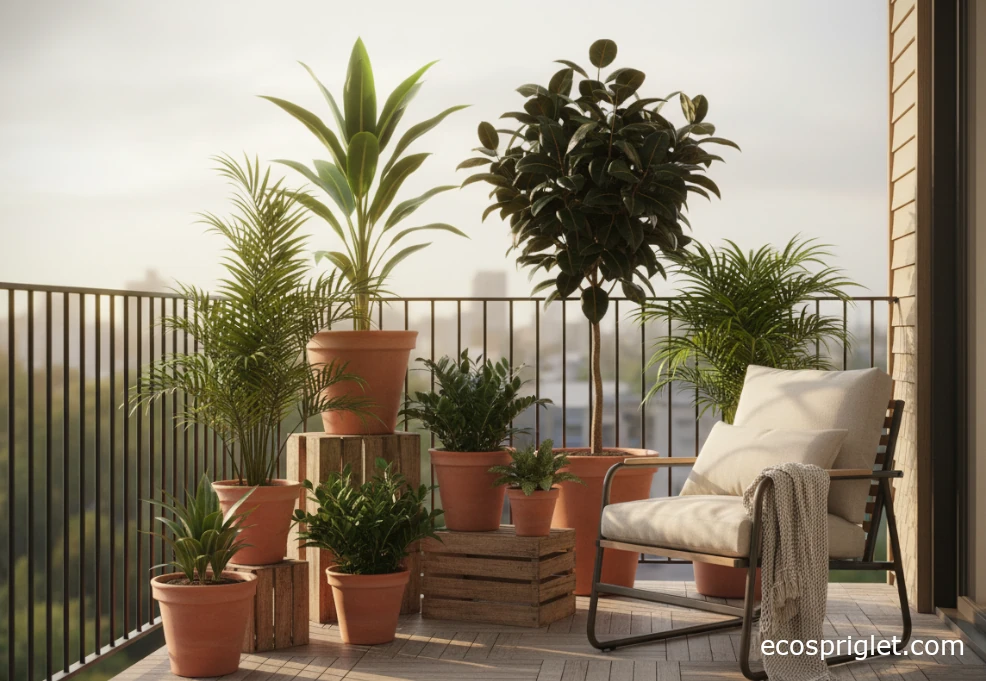
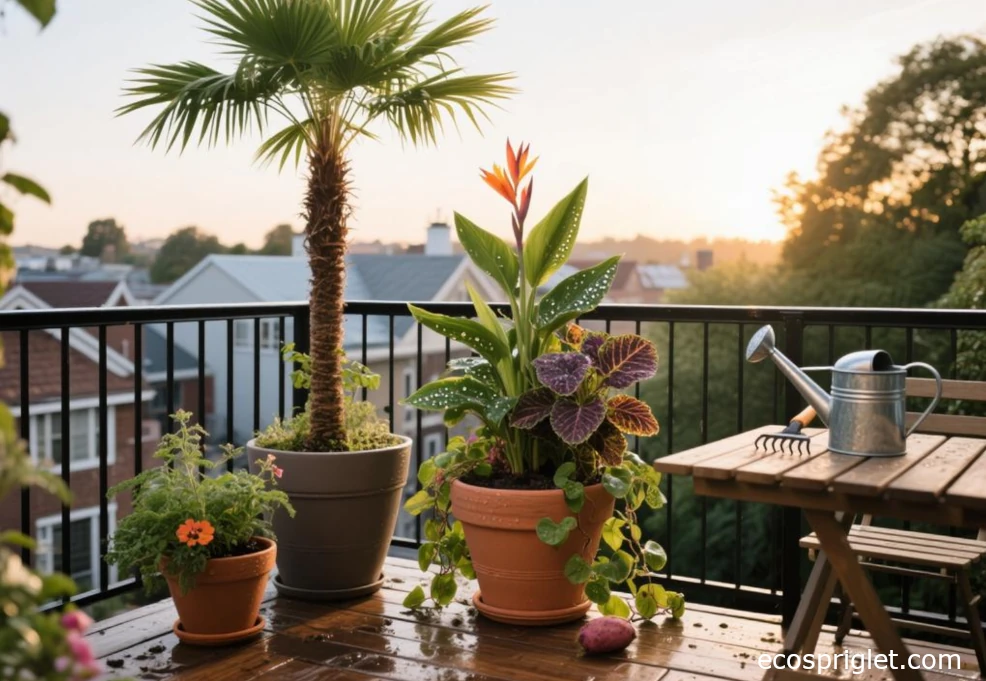
A tropical patio works especially well in apartments because one bold foliage plant can do the work of several tiny pots. Think big leaves, layered heights, and containers grouped in odd numbers.
- Thrillers: Use a dwarf palm, cordyline, canna, banana plant, alocasia, or colocasia as the tall focal point.
- Fillers: Add caladiums, coleus, bromeliads, begonias, or compact philodendron varieties for color and texture.
- Spillers: Let sweet potato vine, creeping Jenny, pothos, or trailing philodendron soften the front edge of containers.
- Arrangement: Put the tallest pot in the back corner, medium pots in the middle, and trailing plants near the front.
- Watering: Tropical foliage usually wants steady moisture, but not soggy roots. Water until excess drains, then empty the saucer after about 30 minutes.
- Seasonal Move: Bring tender tropical plants indoors before nights drop into the 50s°F. Acclimate them near a bright window instead of shocking them with a sudden move.
Daniel’s note: For a small patio, I would rather use three strong foliage containers than twelve tiny pots. It looks calmer, dries out less dramatically, and is much easier to water without making a mess.
Keep Water, Mess, And Weight Under Control
Apartment patios have different rules than backyard gardens. You have neighbors, building surfaces, lease limits, and often no outdoor hose. A little planning prevents most problems.
- Use Saucers Or Trays: Place saucers under pots and empty them after watering. A boot tray works well under a row of herbs.
- Water Slowly: Fast watering often runs down the side of the pot and straight onto the floor. Slow watering gives the mix time to absorb moisture.
- Group Plants By Water Needs: Put thirsty herbs together and drought-tolerant plants together so you are not overwatering half the patio.
- Avoid Heavy Clusters: Large ceramic pots, wet soil, and water reservoirs add up. Ask your property manager before adding very heavy planters, stone, or a large water feature.
- Use Pot Feet: They improve airflow under containers and reduce staining on concrete or deck tiles.
- Store Soil Indoors Or Sealed: An open bag of potting mix on a patio can attract moisture, fungus gnats, and mess.
For edible plants, wash herbs and vegetables before eating, especially if your patio faces a busy street or dusty parking area. Avoid using pesticide products on edible containers unless the label clearly says they are allowed for that crop.
Set Up A 15-Minute Weekly Reset
A tiny patio gets messy quickly because every item is visible. The good news is that cleanup is fast when everything has a home.
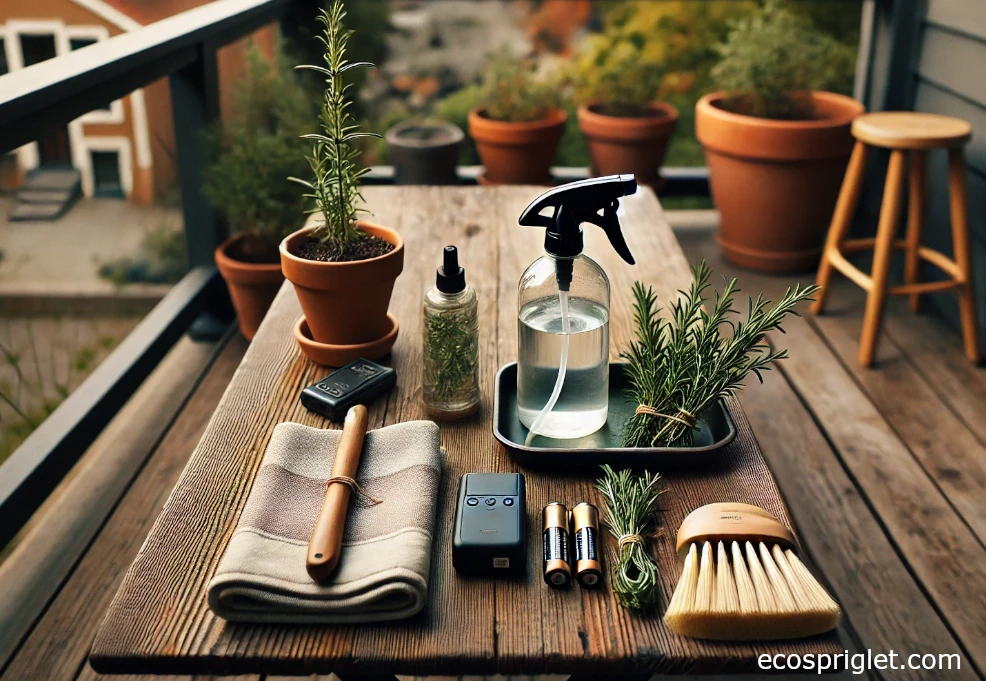
- 5 Minutes: Put pillows, throws, candles, and small tools into the storage bench or indoor basket.
- 5 Minutes: Sweep the floor, shake out the rug, and wipe the table with a damp cloth.
- 5 Minutes: Empty saucers, deadhead flowers, snip herbs, and check the undersides of leaves for pests.
Once a month, rinse the rug, wash cushion covers if needed, oil wood furniture if the manufacturer recommends it, and check zip ties, hooks, screen feet, and umbrella hardware. Before storms, fold the umbrella, bring in lightweight decor, and remove anything that could blow into a railing or neighbor’s patio.
Budget Apartment Patio Upgrades
You can make a patio feel better in one weekend without replacing everything. Spend first on the item that fixes your biggest problem: comfort, privacy, shade, lighting, or plant space.
- Under $25: Add pot feet and saucers, two outdoor pillows, a battery lantern, a small tray, or herb labels.
- Under $75: Try a folding side table, a 4-foot by 6-foot outdoor rug, a two-tier plant stand, or warm string lights.
- Under $150: Look for a storage bench, freestanding privacy screen, compact bistro set, or secondhand slim loveseat with new cushion covers.
- DIY Upgrade: Use removable deck tiles only if your lease allows them and water can still drain underneath.
- Free Upgrade: Remove extra pieces, group plants by size, and move the best chair to the spot with the best light and view.
Common Small Patio Mistakes
- Too Many Small Pieces: Choose one anchor piece and two helpers. Donate, store, or repurpose the rest.
- No Walkway: Leave 24 to 30 inches for movement. A patio you have to shuffle through will not feel relaxing.
- Wrong Plants For The Light: Match plants to the light you actually have, not the light you wish you had.
- No Drainage Plan: Use saucers, trays, and slow watering so runoff stays on your patio.
- Loose Privacy Screens: Secure screens safely and remove them before storms or strong wind.
- Oversized Rug: Choose a rug that defines the seating area without blocking drainage or bunching at the door.
- Ignoring Storage: Add one lidded box or storage bench so the patio does not become a pile of cushions and plant supplies.
Quick Wins Checklist
- Measure the patio and mark door swings.
- Keep a 24 to 30 inch walking path.
- Map sun and wind at morning, midday, and evening.
- Choose one layout before buying furniture.
- Pick one anchor piece: loveseat, bench, café set, or narrow dining table.
- Add a 4-foot by 6-foot rug if it fits your patio and lease rules.
- Use renter-friendly privacy: screen, planters, curtains, or rail panel.
- Layer warm lighting with string lights, a lantern, and one task light.
- Use vertical planters or tiered stands to save floor space.
- Put saucers or trays under containers.
- Bring soft goods inside before heavy rain.
- Set a 15-minute weekly reset.
FAQs
How Do I Make An Apartment Patio Look Nice On A Budget?
Start with editing, not shopping. Remove anything you do not use, then add one outdoor rug, one comfortable seat, one warm light source, and two or three larger plants. That combination usually looks better than a patio packed with small mismatched decor.
How Do I Add Privacy Without Drilling?
Use freestanding folding screens, planter dividers, tension-rod curtains, or a reed panel attached to an existing railing where allowed. For windy patios, choose privacy you can remove quickly before storms.
What Plants Work On A Shady Apartment Patio?
Try ferns, hosta in pots, caladium, cast iron plant, begonias, impatiens, pothos, or philodendron during warm weather. If you have pets, keep pothos and philodendron out of reach because the ASPCA lists them as toxic to cats and dogs.
Can I Put An Outdoor Rug On Concrete?
Yes, but choose a breathable outdoor rug and lift it after heavy rain so the concrete can dry. Sweep grit underneath so the rug does not trap dirt and moisture.
How Do I Stop Water From Dripping Onto My Downstairs Neighbor?
Water slowly, use saucers or boot trays, and empty standing water after about 30 minutes. For railing planters, choose secure brackets and keep a tray or liner in place if your setup allows it.
What Is The Best Small Patio Furniture For Two People?
A slim loveseat with a nesting side table is usually the most comfortable choice for lounging. For meals, choose a folding bistro table with two chairs or a narrow rectangular table pushed against the wall or railing.
Your patio might be small, but it can still become the most relaxing room in your apartment. Start with measurements and clearances, then choose one layout and one anchor piece that invites you to sit. Add privacy where you feel exposed, warm lighting for evenings, and containers that fit your real light and watering routine.
Grow up instead of out with vertical grids, tiered stands, and railing planters where allowed. Keep water on your side with saucers, trays, and slow watering. Finish with a weekly reset so the space stays easy to use.
With a few smart, renter-friendly choices, even a compact patio can become a cozy outdoor retreat you use every day.
Ready to grow something useful in a small space? Explore our Indoor Herb Garden Guide next.