If you live with a cat and love houseplants, you have probably done that late-night “is this plant toxic?” search more than once. I remember bringing home my first spider plant and then immediately wondering if I had just set up a salad bar for my new kitten. The good news is that you can have a lush indoor jungle and keep your feline family safe. It just takes careful plant selection, a little label-reading, and a layout that works with your cat instead of against them.
This guide walks through what cat safe houseplants really mean, which beginner-friendly options are worth starting with, and how to place plants in a small apartment without creating a daily game of “who knocked over the fern?” We will cover reliable non-toxic options like spider plants, parlor palms, calatheas, pileas, Boston ferns, African violets, and several larger statement plants. We will also flag common toxic lookalikes such as pothos, peace lilies, dieffenbachia, dracaena, true lilies, and sago palm.
By the end, you will know which houseplants are safer around cats, which plants are better left at the shop, and how to make your plant shelf a little less tempting to a curious paw.
What “Cat Safe” Really Means
When gardeners say a houseplant is cat safe, they usually mean it is listed as non-toxic to cats by a veterinary-backed source such as the ASPCA Animal Poison Control plant database. That is a helpful starting point, but it does not mean the plant is meant to be eaten. The ASPCA notes that any plant material can cause vomiting or stomach upset in some pets, even when the plant is not expected to be life-threatening.
So the safest approach has three layers: choose non-toxic species, keep plants from becoming chew toys, and know what to do if your cat eats more than a tiny nibble. I like to think of non-toxic plants as “lower worry,” not “zero responsibility.” A spider plant is a much better choice than a lily, but I still do not want my cat shredding it for dinner.
Plant names can also be confusing. Common names change from store to store, and some labels are too vague to trust. If a tag only says “tropical foliage” or “assorted green plant,” I leave it behind unless I can identify the scientific name. That extra minute matters because safe-looking plants can belong to very different families.
Before buying a plant for a cat household, check the exact species or genus against a trusted toxicity list. This is especially important with “palms,” “ferns,” and “lilies.” A parlor palm is a cat-safe choice, but sago palm is dangerous. Boston fern is a safer fern, but asparagus fern is not a true fern and is listed as toxic to cats. True lilies in the Lilium and Hemerocallis groups are especially serious for cats and should not be kept in homes where cats can reach them.
Easy Cat-Safe Houseplants for Beginners
If you are just starting a cat-safe plant collection, choose forgiving plants before you chase rare varieties. Beginner-friendly plants should handle normal apartment light, tolerate the occasional late watering, and recover from small mistakes without dropping leaves everywhere.
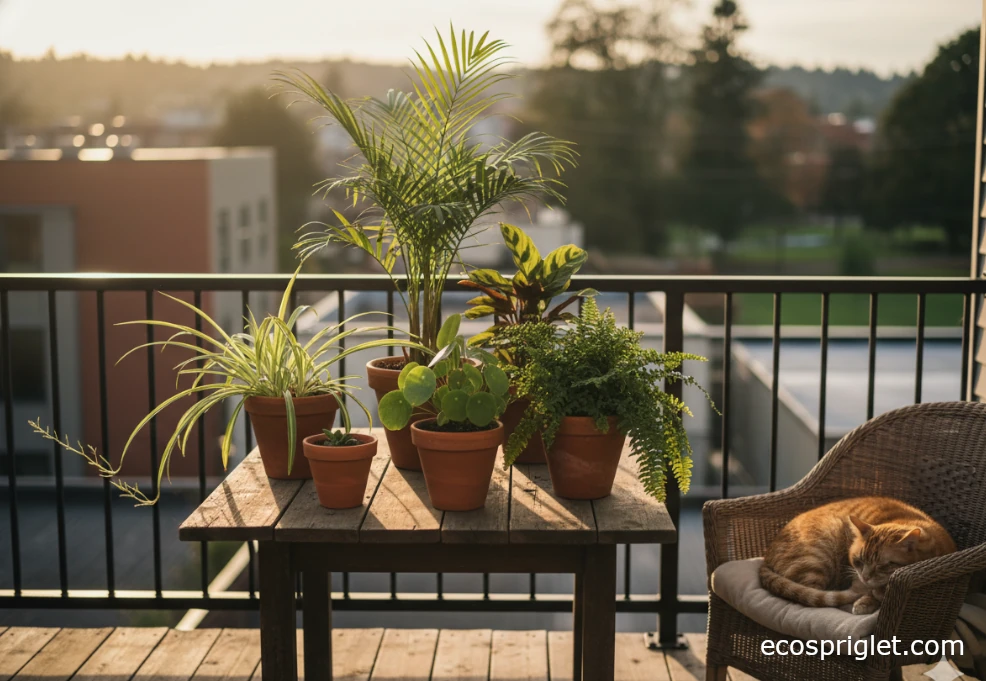
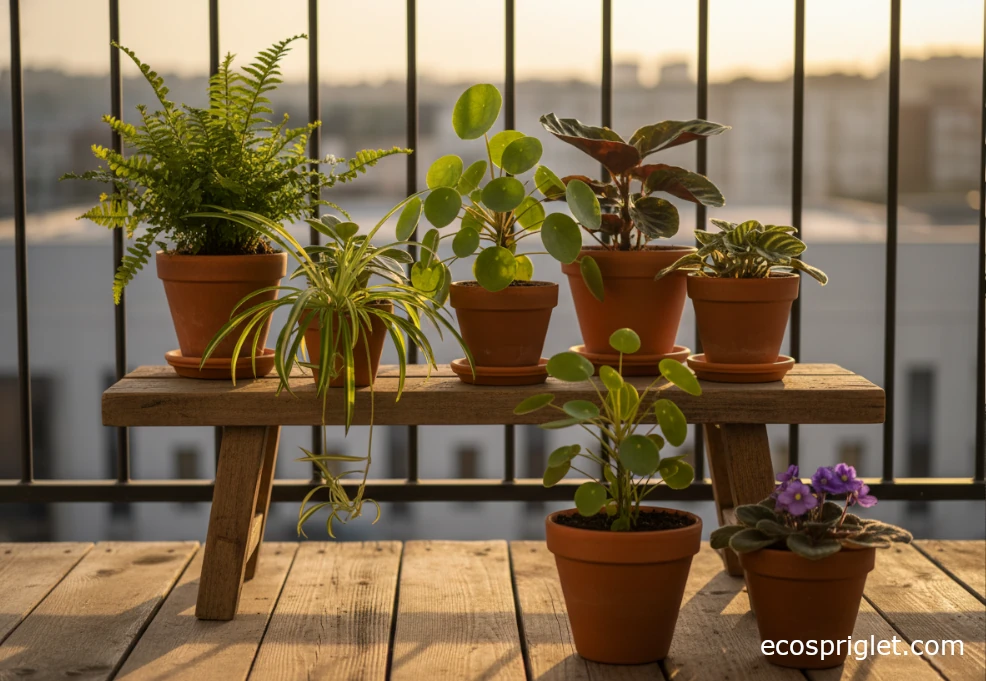
- Spider plant, Chlorophytum comosum: One of the easiest cat-safe houseplants to start with. It likes medium to bright indirect light and does well when the top 1 to 2 inches of potting mix dry before watering. The dangling baby plants can tempt cats, so hanging baskets work well.
- Parlor palm, Chamaedorea elegans: A soft, feathery palm that stays manageable indoors and tolerates lower light better than many tropical plants. It is a good choice for a living room corner where a large leafy plant would be too tempting.
- Calathea and prayer plants: These patterned foliage plants are listed as non-toxic to cats and bring a lot of color without flowers. They prefer bright indirect light, evenly moist soil, and protection from hot, dry air.
- Pilea species: Several pileas, including creeping pilea and artillery plant, are listed as non-toxic to cats. Chinese money plant is widely grown as a pet-friendly houseplant, but check the exact plant name when buying because store labels are not always precise.
- Boston fern, Nephrolepis exaltata: A classic hanging plant with soft fronds and a cat-safe reputation. It likes bright indirect light and more humidity than the average apartment provides, so it may need a bathroom window, pebble tray, or regular attention to watering.
- African violet, Saintpaulia spp.: A compact flowering plant for bright indirect light. It is a nice windowsill choice if you want color without bringing in risky flowering plants.
A simple starter setup for a small apartment is one spider plant in a hanging pot, one parlor palm in a heavy 10 to 12 inch container, and one African violet on an east-facing windowsill. That gives you height, texture, and flowers without relying on common toxic houseplants like pothos or peace lily.
If you are building a plant corner that also includes edible greenery, keep herbs separate from decorative plants and make sure each herb is safe for your household. For more small-space ideas, this indoor herb garden guide pairs well with a cat-safe plant shelf.
Cat-Safe Houseplants for Low-Light Apartments
Most apartments do not have perfect plant light. Low light for houseplants does not mean no light, though. It usually means a spot a few feet from a bright window, near a north-facing window, or farther back from an east or west window. If you cannot comfortably read in that corner during the day without turning on a lamp, most houseplants will struggle there.
University Extension light guides often describe low indoor light as roughly 50 to 250 foot-candles, while brighter houseplants need more. You do not need a light meter to start, but it helps to watch the plant. Long stretched stems, tiny new leaves, leaning growth, and soil that stays wet for many days are all signs the spot may be too dim.
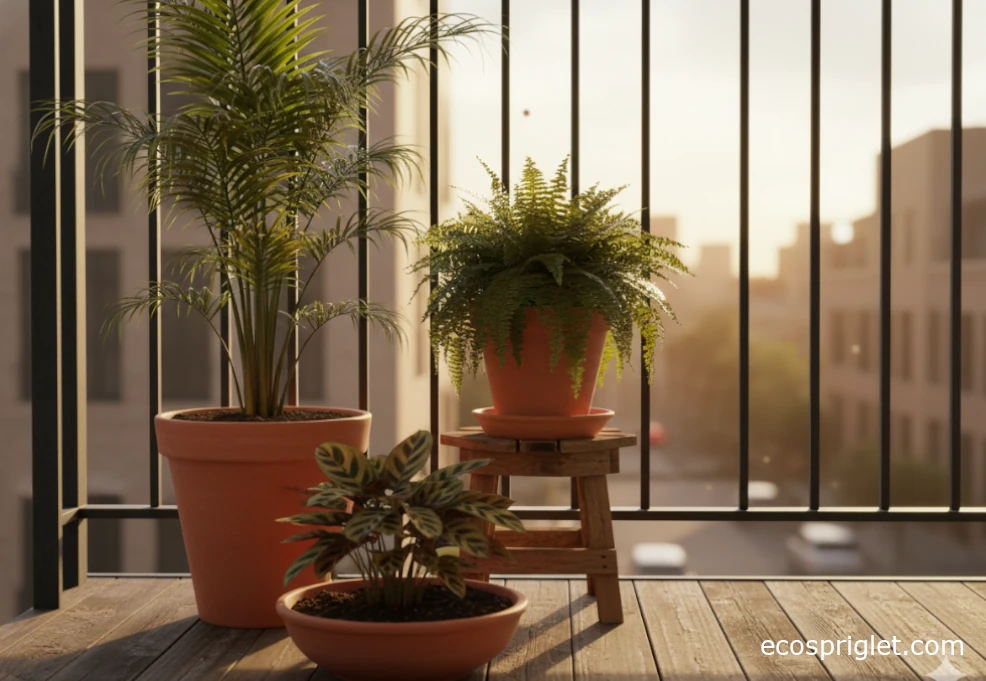
- Parlor palm: One of the better cat-safe choices for lower light. It will grow slowly in shade, but it usually stays attractive if you avoid overwatering.
- Boston fern: Handles bright filtered light well and can work near an east window or several feet back from a brighter window. It dislikes drying out completely.
- Calathea and maranta: Often sold as low-light plants, but they look better in bright indirect light. In a dim room, place them as close to the window as your cat layout allows.
- African violet: Good for a bright north or east window. Too little light reduces flowering, while harsh direct afternoon sun can scorch the leaves.
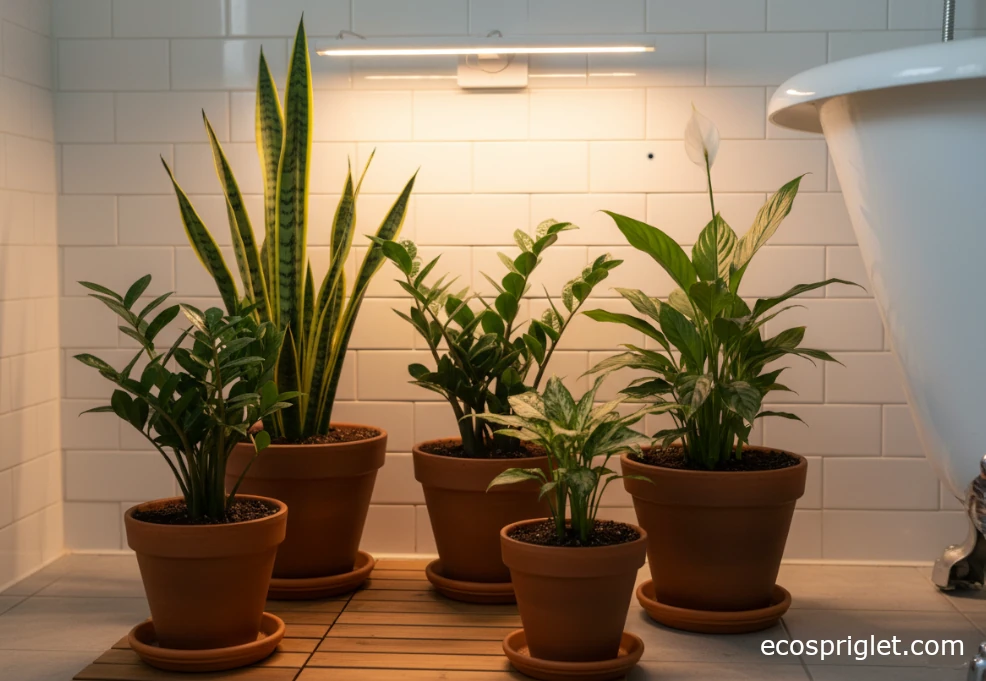
If your apartment is genuinely dim, a small full-spectrum LED grow light can make the difference between surviving and growing. Run it for about 10 to 12 hours per day, position it according to the manufacturer’s directions, and keep cords tucked away so they do not become cat toys. I use a slim bar light over my shadier plant shelf in winter, and it keeps the calatheas from fading without turning the room into a greenhouse.
Place plants slightly to the side of your cat’s favorite sun patch. Cats love warm windows, and a plant directly in the landing zone is usually a temporary plant. Give the cat the best perch and the plant the next-best light, and you will prevent a lot of soil spills.
Large Houseplants Safe for Cats
Once you have a few small plants doing well, it is natural to want a statement plant. This is where cat owners need to be extra careful because many popular large houseplants are toxic to pets. Rubber plants, fiddle leaf figs, dracaenas, monstera, and many philodendrons are better avoided in cat-accessible spaces.
These larger cat-safe options are more suitable for apartments and indoor corners:
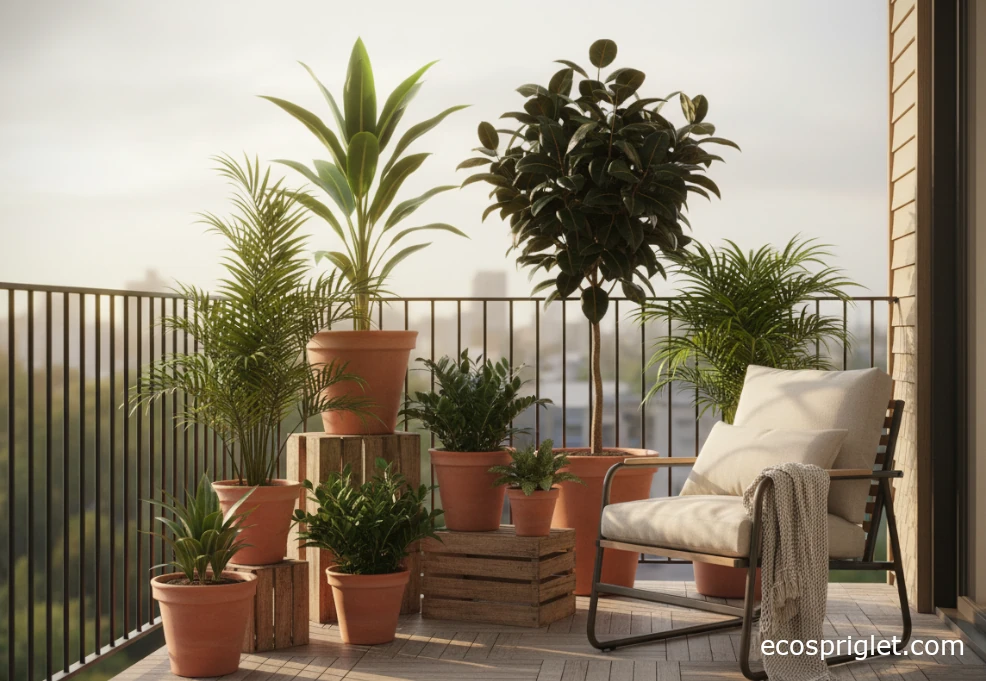
- Parlor palm: A reliable floor plant that can reach about 2 to 6 feet indoors over time. Use a sturdy 10 to 12 inch pot for a young plant and move up gradually as roots fill the container.
- Areca palm: A brighter-light palm that can become a soft, airy statement plant. It needs more room than a parlor palm, so give it a wide, heavy pot and enough space for arching fronds.
- Lady palm: A slower-growing palm with upright fan-shaped leaves. It is usually more expensive, but it is a good long-term choice if you want a refined floor plant.
- Banana plant, Musa spp.: A dramatic foliage plant that is listed as non-toxic to cats. Indoors, it needs bright light, consistent moisture, and a heavy pot at least 12 to 14 inches wide for stability.
- Kentia palm: A graceful palm for bright indirect light. It is slower and pricier than many beginner plants, but it can be a good pet-conscious statement plant if you have the space.
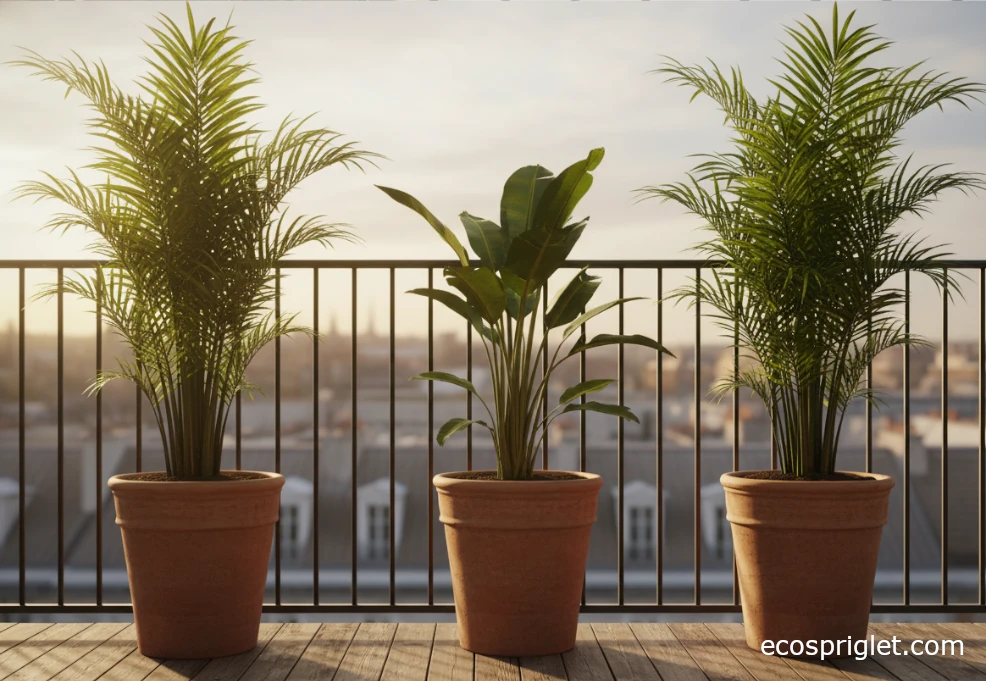
With large containers, toxicity is only one part of safety. A tall plant in a lightweight pot can tip if a cat jumps against it. Choose wide ceramic or terracotta pots, keep the soil line about 1 inch below the rim, and avoid top-heavy arrangements with several tall stems in a narrow container.
I also avoid loose decorative pebbles in cat-accessible pots. They look tidy for about a week, then they become tiny toys under the couch. If your cat digs in soil, try a larger plant collar, a snug pot grid, or a layer of coarse orchid bark instead, while still keeping the pot breathable and easy to water.
How to Set Up a Cat-Friendly Plant Layout
Cat safe houseplants are only half the equation. The layout matters just as much, especially in an apartment where plants, furniture, windows, and cat paths all overlap. A good setup gives plants enough light while leaving your cat clear routes to jump, nap, and supervise the neighborhood.
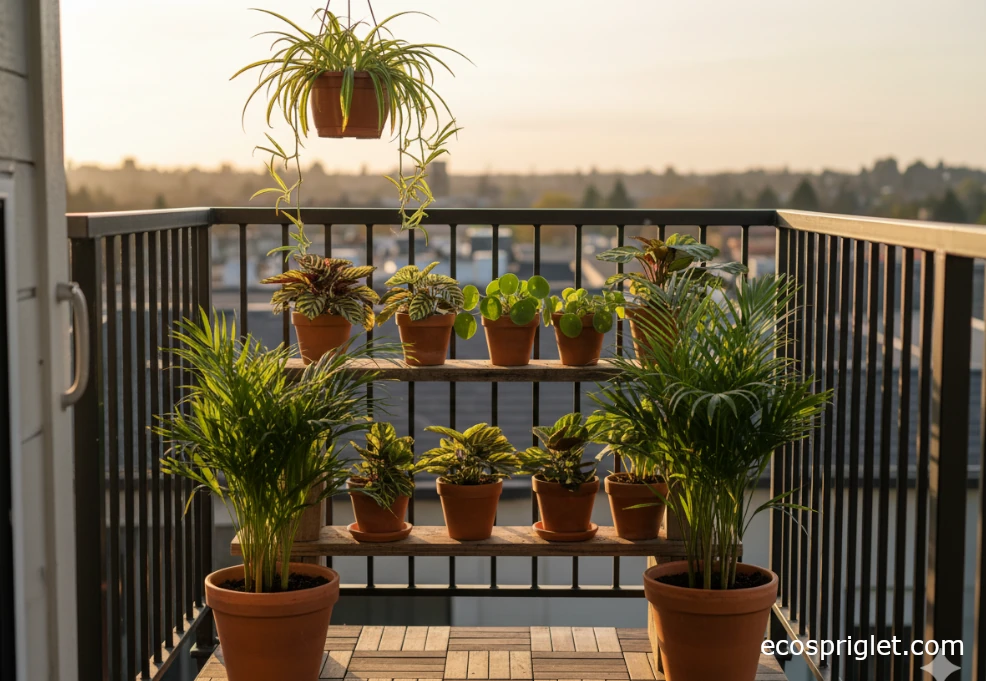
The easiest layout is a three-level system:
- Hanging level: Use sturdy ceiling hooks, wall brackets, or a macrame plant hanger for spider plants, Boston ferns, and trailing pileas. Make sure hanging baskets cannot swing into shelves or windows when a cat bats at a leaf.
- Middle shelf level: Place compact plants like African violets, calatheas, and small pileas on wall-mounted shelves or a stable plant stand. Anchor tall stands if your cat climbs furniture.
- Floor level: Keep large plants in heavy pots tucked into corners rather than in narrow walkways. Parlor palms and lady palms work well here if the pot is stable.
Leave one plant-free highway for your cat. This might be a windowsill, the top of a low bookcase, or a cat tree next to the plant shelf. When I cleared one shelf just for my cat, she claimed it within an hour and stopped trying to squeeze behind the ferns. Sometimes the easiest way to protect plants is to give the cat a better option.
For renters, avoid anything that depends on weak adhesive hooks. A wet hanging fern is heavier than it looks. Use properly installed hooks where allowed, freestanding plant racks with a broad base, or tension poles designed for plant weight. If you are on a balcony, add wind to the equation and keep tall pots away from railing edges.
Toxic Houseplants to Avoid Around Cats
Some plants are common, beautiful, and simply not worth the risk in a cat household. Others may cause irritation rather than life-threatening poisoning, but that still does not make them good choices for a curious chewer.
| Plant | Why It Is A Problem | Safer Swap |
|---|---|---|
| True lilies, including Easter lilies, Asiatic lilies, and daylilies | Very dangerous to cats; even pollen exposure can be serious | African violet or orchid species checked as non-toxic |
| Pothos and satin pothos | Can cause mouth irritation, drooling, vomiting, and swallowing discomfort | Spider plant or trailing pilea |
| Peace lily | Contains irritating compounds and is often confused with true lilies | Calathea or parlor palm |
| Dieffenbachia | Can cause intense oral irritation and swelling | Prayer plant or peperomia checked as non-toxic |
| Dracaena and snake plant | Common floor plants listed as toxic to cats | Lady palm, areca palm, or parlor palm |
| Sago palm | A highly toxic cycad, despite the “palm” name | Parlor palm or kentia palm |
| Asparagus fern | Not a true fern and listed as toxic to cats | Boston fern or bird’s nest fern checked as non-toxic |
The biggest mistake I see beginners make is trusting a common name. “Lily” can refer to very different plants, “fern” does not always mean true fern, and “palm” can include plants that are not safe at all. When in doubt, check the scientific name before the plant comes home.
Common Mistakes to Avoid With Cats and Houseplants
Every cat-and-plant home has a learning curve. These are the mistakes most likely to create trouble, mess, or unnecessary worry.
Assuming Popular Plants Are Automatically Safe
Pothos, peace lilies, monstera, snake plants, aloe, and dracaenas are everywhere in garden centers, but that does not make them cat-safe. If your cat chews plants, skip these in shared spaces and choose lower-risk alternatives from the start.
Mixing Safe and Unsafe Plants on One Shelf
A cat jumping into a leafy shelf will not distinguish between a spider plant and a toxic plant beside it. Keep any questionable plants in a closed room your cat never enters, or rehome them. High shelves alone are not enough for determined climbers.
Letting Soil Stay Wet
Overwatered pots attract fungus gnats and can smell musty in small apartments. Most beginner-friendly houseplants do better when the top inch or two of potting mix dries before watering. Ferns and calatheas prefer more consistent moisture, but they still should not sit in soggy saucers.
Using Harsh Pest Sprays Indoors
For light pest problems, start with the least dramatic fix: rinse leaves, prune badly infested growth, isolate the plant, use sticky traps for fungus gnats, or wipe pests with a cotton swab where appropriate. If you use any pesticide, follow the label exactly, remove pets from the area, keep bowls and toys away, and do not let your cat near treated plants until the product is fully dry and the room is ventilated.
Skipping Veterinary Advice After A Big Chew
If your cat eats a plant and then drools, vomits repeatedly, refuses food, acts weak, or seems unlike themselves, call your veterinarian or animal poison control promptly. Keep the plant label or take a clear photo of the leaves, stems, flowers, and pot tag so the plant can be identified quickly.
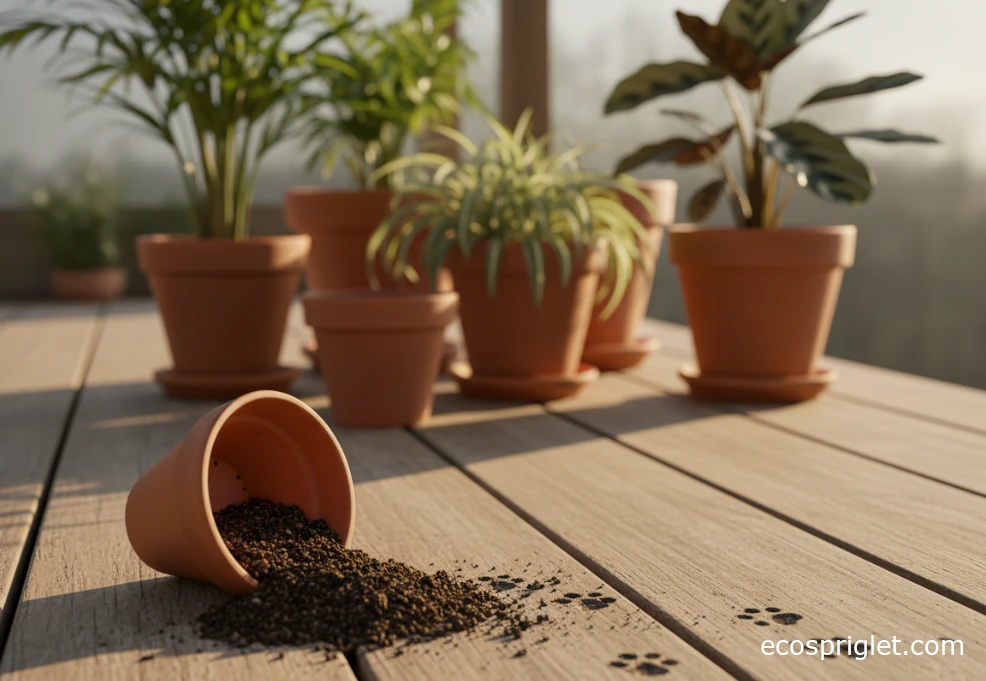
I learned the “do not assume it is safe” rule after bringing home a clearance-rack plant with only a vague common name on the tag. Once I looked it up properly, it turned out to be a poor choice for a cat household. Now, if I cannot identify a plant before buying it, it does not come home with me.
Quick Answer: What Houseplants Are Safe for Cats?
If you want a short shopping list, start with these widely available cat-safe houseplants and verify the exact plant name before buying:
- Spider plant, Chlorophytum comosum
- Parlor palm, Chamaedorea elegans
- Areca palm, Dypsis lutescens
- Lady palm, Rhapis spp.
- Calathea and prayer plants, Calathea and Maranta spp.
- Boston fern, Nephrolepis exaltata
- African violet, Saintpaulia spp.
- Several pilea species, including creeping pilea and artillery plant
- Banana plant, Musa spp.
- Many orchids, bromeliads, peperomias, and air plants, after checking the specific species
Remember that houseplants safe for cats are safer from a toxicity standpoint, not necessarily safe from your cat’s personality. Some cats ignore plants completely. Others will uproot a 5-gallon palm just to see what happens. If your cat is a chewer or digger, combine non-toxic plant choices with cat grass, scratching posts, daily play, and clear climbing routes.
Final Tips for a Safe Indoor Jungle
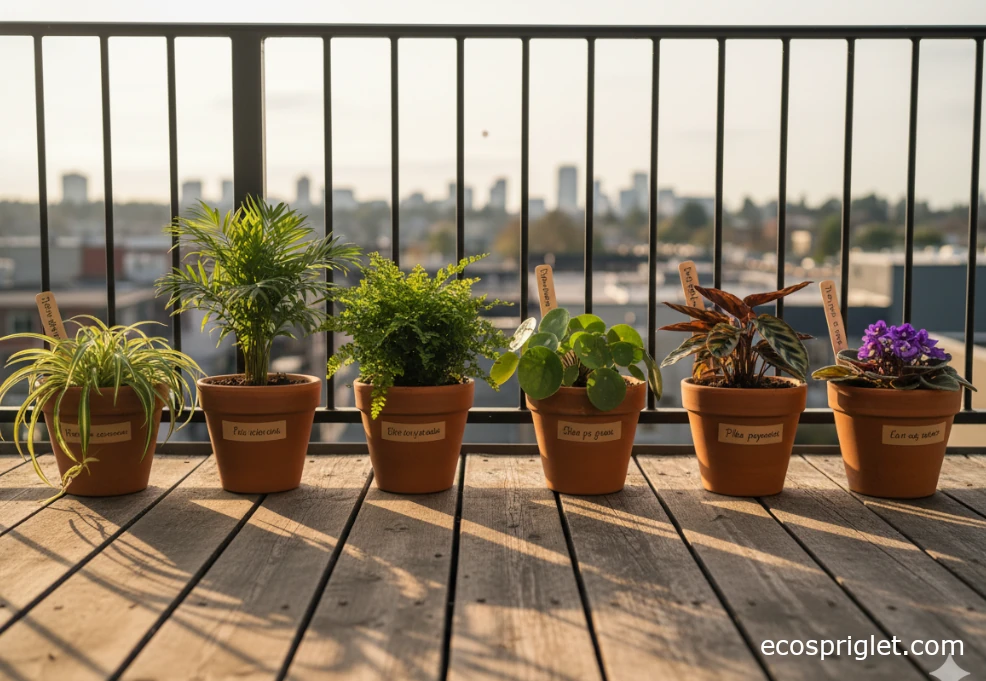
Living with both cats and plants is less about strict rules and more about thoughtful design. Start with a core group of cat safe houseplants such as spider plants, parlor palms, calatheas, pileas, Boston ferns, African violets, and a carefully chosen larger palm. Match each plant to the light you actually have, water by checking the soil rather than the calendar, and use heavy, stable pots where your cat can reach them.
Keep a short “no-go” list on your phone for plant shopping: true lilies, sago palm, pothos, peace lily, dieffenbachia, dracaena, snake plant, and asparagus fern are all worth avoiding in cat-accessible rooms. If you receive flowers as a gift, check the bouquet before setting it down. Lilies in mixed bouquets are one of the easiest hazards to miss.
From there, build a layout around your cat’s habits. Use hanging baskets for dangly plants, sturdy shelves for compact pots, and at least one plant-free perch where your cat can sit without knocking anything over. A safe indoor jungle should feel calm, not like a daily negotiation with a tiny furry landscaper.