Trailing indoor plants are the small-space cheat code I wish I’d taken seriously sooner. They don’t need a big footprint, they soften hard apartment lines (hello, boxy windows and sharp corners), and they make a room feel lived-in without turning your floor into a jungle gym of pots. If you’ve ever wondered what are trailing plants, think of vines and spillers that naturally grow outward and downward—perfect for shelves, bookcases, and hanging planters.
In this guide, we’ll keep things practical: which trailing indoor house plants handle bright windows versus low light trailing indoor plants conditions, how to hang an indoor plant safely and cleanly, and the care habits that keep vines full instead of leggy. I’m writing from my Portland apartment setup, where light changes by season and every hook or shelf has to earn its keep. You’ll leave with simple “do this when you see that” cues—no fussy routines, no mystery guesses.
What a Trailing Plant Is and Why It’s Perfect Indoors
A trailing plant is simply a plant with a growth habit that wants to sprawl, drape, or vine rather than stand upright. Indoors, that habit is gold: you can grow “up” with a hook or shelf instead of sacrificing precious floor space. And because the stems naturally hang, you get that full, lush look even when you’re working with a tiny corner of light.
One thing beginners don’t realize: trailing doesn’t automatically mean “low light.” Many indoor trailing plants will tolerate shade, but they look their best with decent brightness. If you put them too far from a window, they often stretch—long stem gaps, smaller leaves, and a sad little tuft at the end. We’ll fix that with placement tricks in a minute.
If you’re building a cohesive look, trailing plants also mix well with upright “anchor” plants (snake plant, dracaena, rubber plant). I like a simple formula: one taller plant, one trailing indoor plant, and one tabletop plant per room zone. It keeps things intentional, not cluttered.
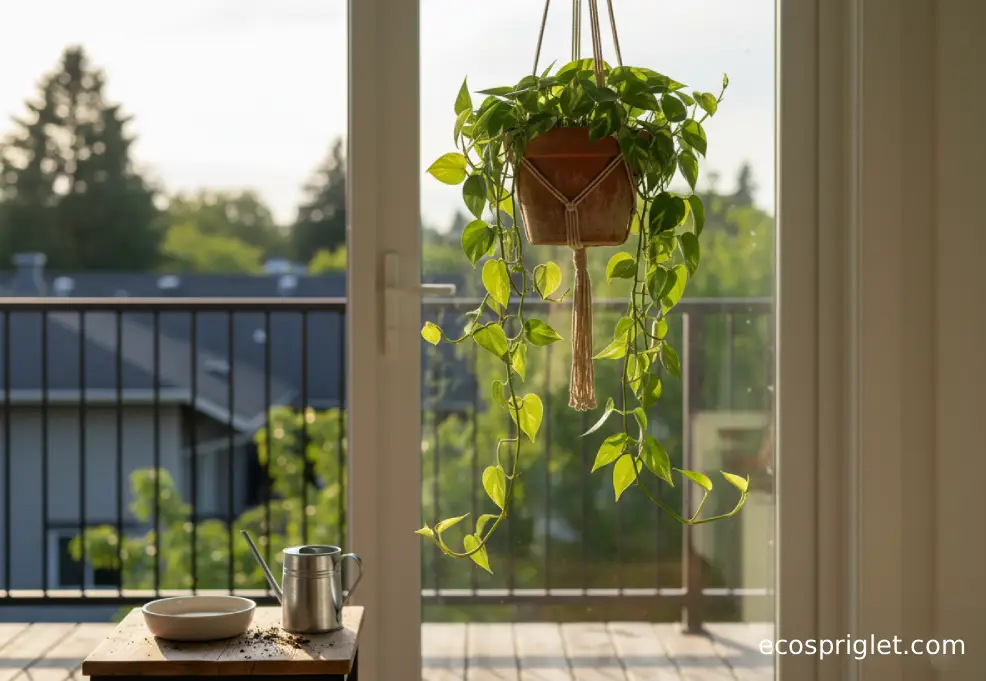
Top Trailing Indoor House Plants for Bright and Low Light
If you’re choosing trailing plants indoor, start with a couple of reliable “forgivers” and add the fussier beauties later. Here’s a practical shortlist I’d happily recommend for apartment life, including options that handle lower light.
| Plant | Light Sweet Spot | Watering Cue | Apartment Notes |
|---|---|---|---|
| Pothos (Epipremnum) | Bright, indirect; tolerates some shade | Water when top ~1 inch is dry | Great starter trailing indoor plant; variegation fades in low light. Sources: RHS, ASPCA. |
| Heartleaf Philodendron | Bright, indirect | Water after the top layer dries | Fast, forgiving, and easy to prune for fullness. Sources: RHS, ASPCA. |
| Spider Plant | Bright, indirect; adapts well | Water when top inch is dry | Not a vine, but a classic “hanger” with arching leaves and plantlets; ASPCA lists it as non-toxic to cats and dogs. |
| Tradescantia zebrina | Bright, filtered/indirect | Water moderately; don’t keep soggy | Color pops in better light; pinch tips to avoid bare stems. |
| String of Hearts | Bright light; treat like a succulent | Let mix dry well between waterings | Looks delicate, but tough when you stop overwatering it. |
| String of Beads (Curio/Senecio) | Bright, indirect; can take some sun | Modest watering; gritty, free-draining mix | Toxic and sap can irritate skin; keep away from pets and kids. |
| “Trailing Jade” (often Senecio jacobsenii) | Bright light | Let mix dry between waterings | Names get messy—some sellers use trailing jade for different succulents. Source for plant ID: RHS. |
Quick tip for low light trailing indoor plants expectations: “tolerates low light” usually means “won’t die,” not “will look amazing.” If you’re in a north-facing apartment, keep vines within about 3–6 feet of the brightest window you have, and rotate the pot a quarter turn every week so one side doesn’t go bald.
Pet note: pothos and heartleaf philodendron are toxic if chewed (ASPCA lists both), so in pet homes I lean hard on spider plants and high placement.
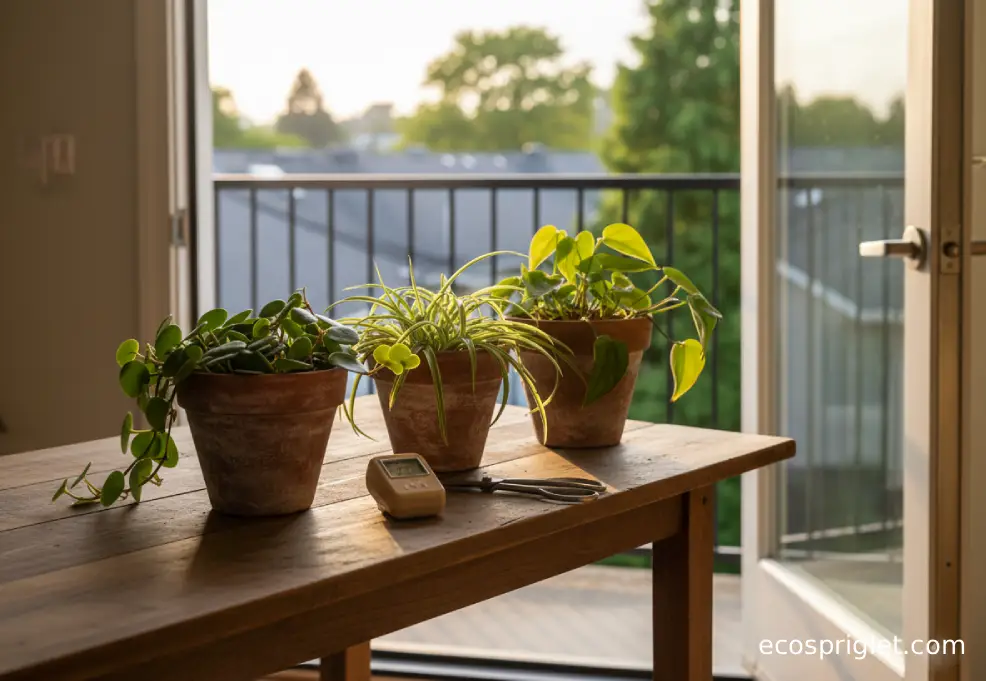
Light and Placement: Make Vines Cascade, Not Stretch
Most indoor trailing plants want bright, indirect light—close to a window, but not baking in harsh midday sun. The Royal Horticultural Society is very consistent on this for popular trailers like epipremnum (pothos) and philodendrons.
My apartment rule of thumb: if you can comfortably read a book there during the day without turning on a lamp, it’s usually bright enough for decent growth. For truly low light corners, treat the plant like decor that you occasionally “recharge” by moving it closer to the window for a couple of weeks.
- Use the window “side-light” trick: hang the plant slightly to the side of a window, not dead center. Leaves grow toward the light and fill in more evenly.
- Rotate weekly: a quarter turn every 7–10 days prevents the classic “bald back” facing the room.
- Watch for stretching: longer gaps between leaves mean it needs more light (or a prune and restart).
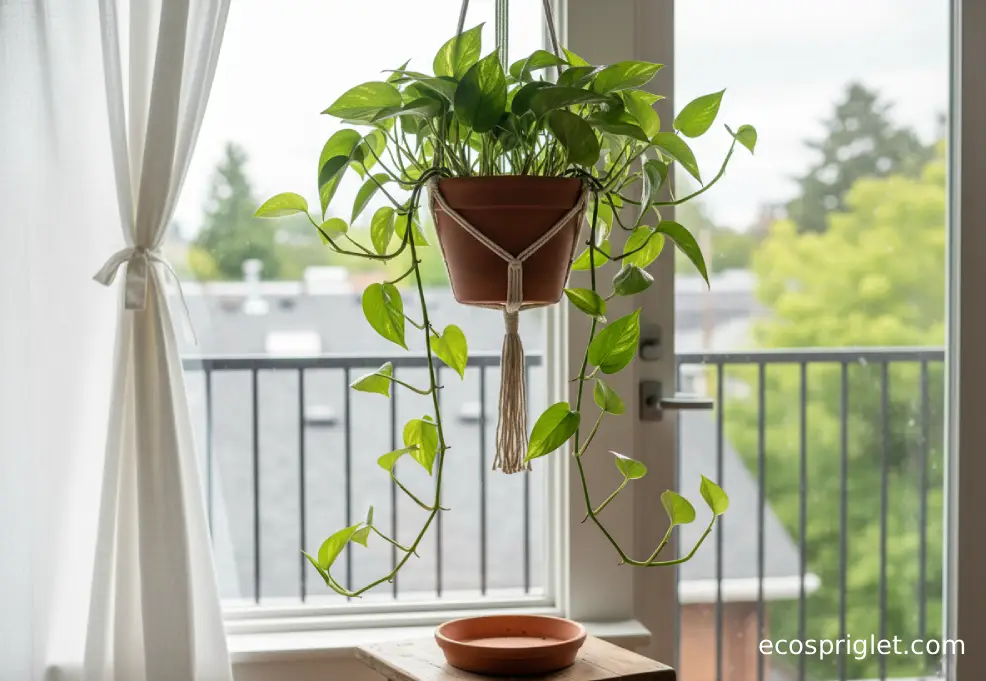
Pots and Potting Mix: Drainage Without the Gravel Layer
Let’s save you from one of the most stubborn container myths: adding gravel, rocks, or pot shards at the bottom of a pot does not improve drainage. Research summarized by Washington State University Extension explains that water tends to “hang” at the boundary between fine potting mix and coarse gravel, which can actually keep the root zone wetter.
What actually matters is simpler (and cheaper):
- Drainage holes: non-negotiable for most trailing indoor plants.
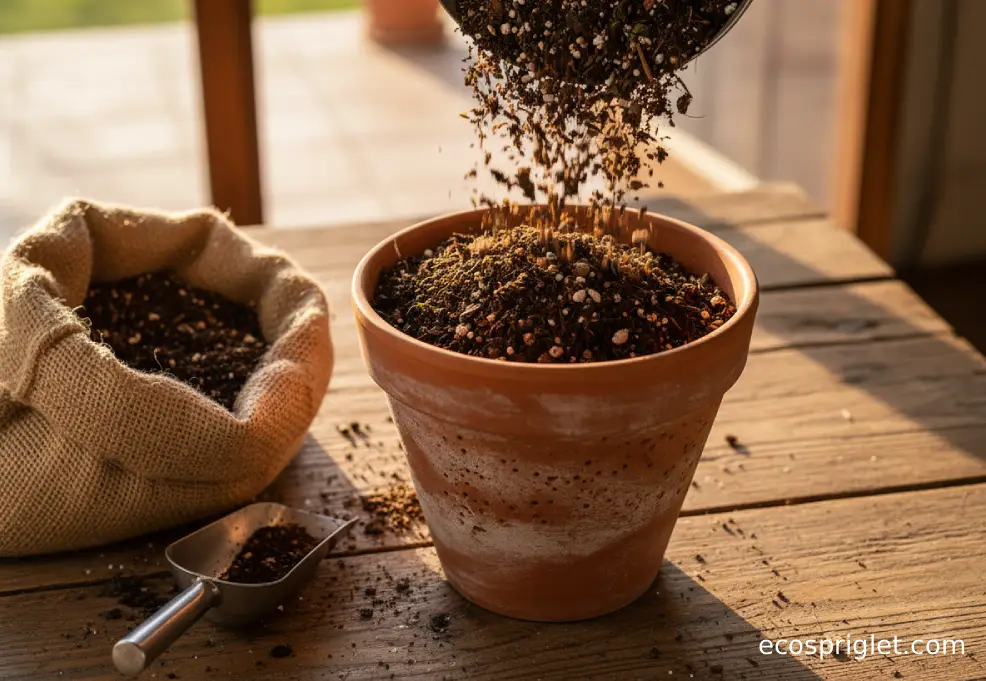
- A well-aerated mix: for tropical trailers (pothos, philodendron), use a quality potting mix and consider blending in extra perlite or orchid bark if it stays wet too long in your apartment.
- Right-sizing the pot: if you jump to a pot that’s way bigger, the extra mix holds water longer and roots sit damp—classic root-rot setup.
The RHS growing guidance for common trailing houseplants emphasizes bright, indirect light and avoiding excess watering; pairing that with a pot that drains well is the whole game.
If you love hanging planters with no drainage (they’re everywhere), treat them like “cachepots”: keep the plant in a nursery pot with holes, then set it inside, and empty any collected water within 10–15 minutes after watering.
Watering and Feeding: A Simple Routine That Prevents Root Rot
I remember when I first got serious about hanging plants indoors, I “loved” my pothos to death—watered on a schedule, not on a signal. It looked fine for a month, then the leaves started yellowing in clusters and the soil smelled… swampy. That’s when I learned the boring truth: most indoor trailing plants fail from too much water, not too little.
The RHS guidance for epipremnum (pothos) is refreshingly clear: avoid watering excessively and let the top layer dry between waterings. Philodendrons are similar—water after the top layer dries rather than keeping the mix constantly wet.
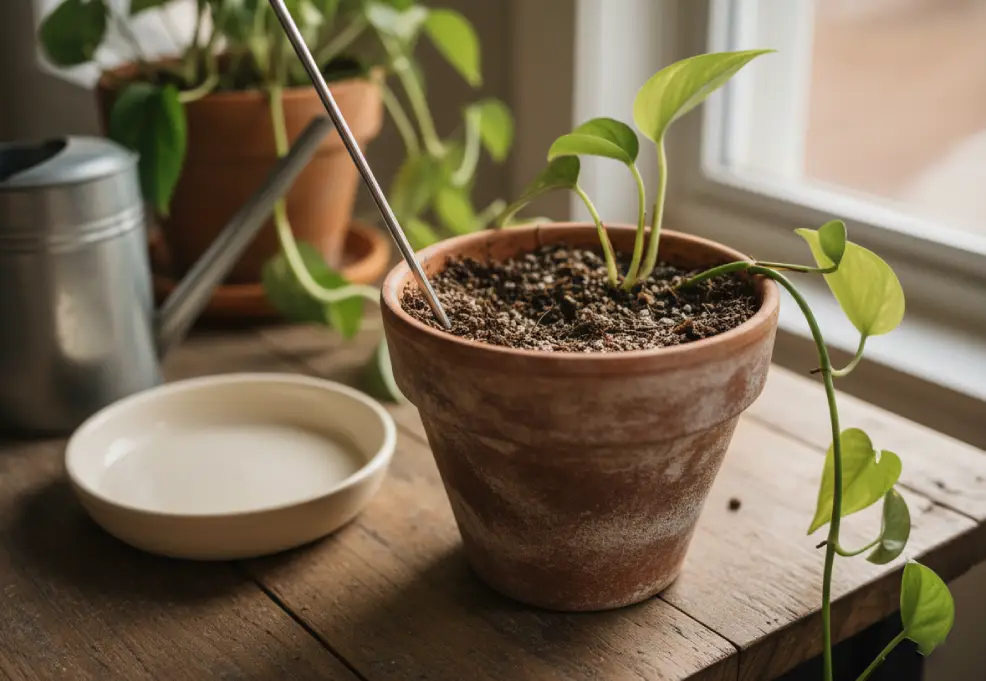
- Water by feel, not by date: check the top ~1 inch of mix. If it’s dry, water. If it’s still cool and damp, wait.
- Soak, then drain: water until you see steady drips from the bottom, then empty the saucer or cachepot.
- Feed lightly in active growth: a balanced liquid fertilizer at label strength once every 4–6 weeks in spring and summer is plenty for most vines.
- Succulents are the exception: “string of” plants want bright light, gritty free-draining compost, and modest watering—let them dry much more between waterings.
If you want a simple checklist you can stick on your fridge, here you go: How Often to Water House Plants .
Pruning, Training, and Propagation for Fuller Hanging Plants
If your indoor trailing plant is getting long and stringy, pruning is not a setback—it’s how you tell the plant to branch. This is especially true for pothos, philodendron, and tradescantia.
- Cut above a node: on most vines, a node is where a leaf meets the stem. Snip just above it to encourage new growth points.
- Pinch the tips: tradescantia responds well to tip pinching to promote bushiness.
- Restart bare stems: if the top is thin but the ends look great, take 4–6 inch cuttings and plant them back into the same pot to thicken the crown.
For propagation, keep it simple. Many tropical trailers root easily in water, while succulent trailers generally do better with a drier approach and a gritty mix. If you’re growing “string of” plants, the RHS notes they’re easy to propagate, but they also appreciate bright light and a free-draining compost so they don’t rot.
Troubleshooting Common Problems: Yellow Leaves, Pests, Bare Stems
Most problems with trailing indoor plants come back to three causes: light, water, and tiny pests that show up right when you finally feel confident.
Yellow leaves (especially several at once): suspect overwatering first. Let the mix dry more between waterings and make sure you’re dumping any standing water. For pothos, RHS specifically warns against watering excessively and recommends allowing the top layer to dry between waterings.
Long bare sections with leaves only at the ends: that’s usually low light plus time. Move it closer to the window, then prune back to nodes so it can branch. If you want the hanging look but only have low light, plan to prune more often and accept slower growth.
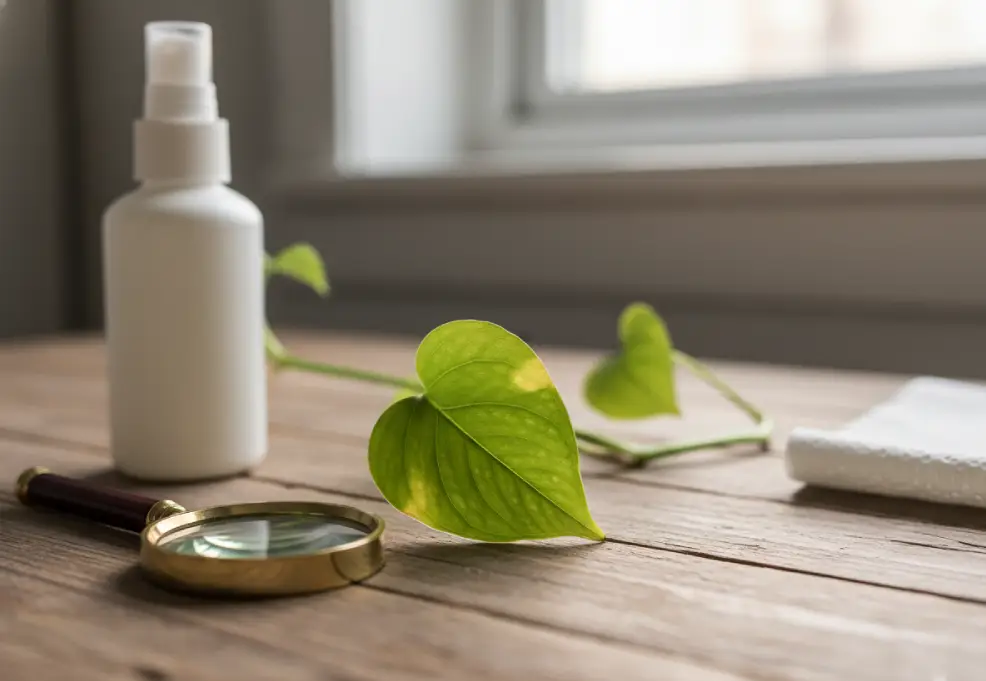
Sticky leaves, tiny webs, or speckling: check for aphids, spider mites, or mealybugs. The fastest apartment-friendly approach is a shower rinse (lukewarm water), then a wipe-down of stems and leaf undersides. Repeat every 5–7 days for a few rounds so you catch hatchlings.
Succulent trailers getting mushy: they’re telling you the same story—too wet for too long. “String of” plants want free-draining gritty compost and modest watering, and the RHS also notes they’re poisonous and the sap can irritate skin, so handle with care while pruning or cleaning.
Common Mistakes New Indoor Trailing Plant Owners Make
- Choosing a planter without drainage: if you use one, keep the plant in a nursery pot inside it and empty water after watering.
- Hanging it too far from light: “low light” is not “no light.” Leggy growth is your early warning.
- Watering on a schedule: I learned this the hard way. Check the mix first; for epipremnum, RHS recommends letting the top layer dry between waterings.
- Adding gravel for drainage: skip it—WSU Extension explains it can hinder water movement at the soil interface.
- Ignoring pet reality: pothos and heartleaf philodendron are toxic if chewed, per ASPCA. Put them truly out of reach or pick pet-safer options like spider plant.
Creative Ways to Hang and Style Indoor Trailing Plants
Hanging plants indoors should make life easier, not create a constant drip-and-sweep situation. Here are a few setups that work especially well in apartments:
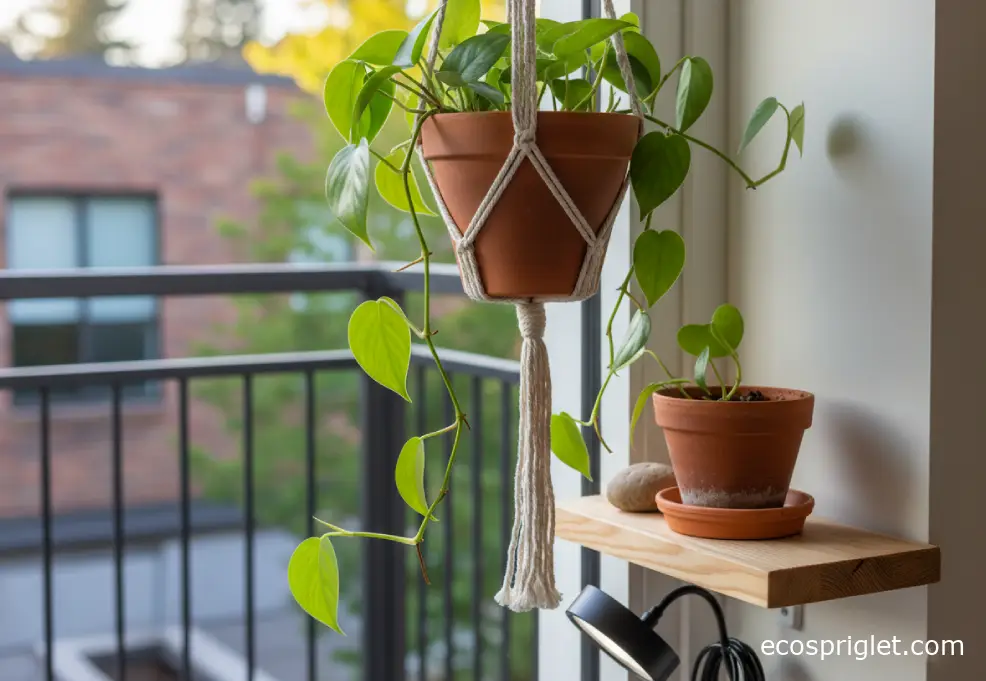
Shelf + hanger combo: hang the plant, but keep a shelf underneath as your “landing zone” for watering days (saucer, towel, and your watering can live there). It also makes maintenance less annoying, which is half the battle.
Window-side curtain rod trick: if you can’t drill the ceiling, a sturdy rod bracket near a window can hold a lightweight hanging planter, and you get better light automatically. Just keep the plant weight conservative and think about what happens when the pot is fully watered (it’s heavier).
Grow light for low light trailing indoor plants corners: if your best hanging spot is dim, a small grow light can keep vines from stretching. Aim for steady consistency rather than blasting the plant for one weekend and forgetting it for two weeks.
If you’re building out a whole small-space wall, I like to start with one “hero” hanger, then add a slim shelf beneath it. It looks intentional and gives you a place to rotate plants into better light when needed.
Trailing indoor plants are one of the most satisfying ways to make an apartment feel greener without giving up your living space. Once you understand what is a trailing plant (a natural draper, spiller, or viner), the rest is mostly matching the plant to the light you actually have and keeping the roots healthy. Bright, indirect light and a pot that drains well solve more problems than any fancy product ever will—and the watering cue that matters most is still simple: wait until the top layer dries, then water thoroughly and drain.
If you’re deciding where to start, pick one forgiving vine (pothos or heartleaf philodendron) plus one “fun” hanger (spider plant or a stringy succulent if your light is strong). Then hang it where you’ll actually notice it—plants thrive when we pay attention.