Figuring out the right watering frequency for succulents is less about picking a fixed day on the calendar and more about learning one simple rhythm: water deeply, then wait until the potting mix dries well before watering again. That matters even more in apartments, where light levels, room temperature, radiator heat, and pot size can vary from one windowsill to the next.
In many indoor setups, succulents may need water about once a week or less during brighter months, then every few weeks in winter, but the real signal is the soil, not the date. Illinois Extension notes that many indoor succulents are watered once a week or less and that the mix should dry completely between waterings, while University of Minnesota Extension advises thorough watering followed by a full dry-down, especially with reduced winter watering.
I’ve found that beginner problems usually come from kindness, not neglect. People see a dry-looking surface, add a splash of water, and repeat that every few days. Succulents usually prefer the opposite approach: a full soak that reaches the root ball, quick drainage, and then patience. The sections below explain how to judge the right watering schedule in a real apartment, how to spot early signs of thirst, and how to avoid the soft, mushy roots that develop when the pot stays wet too long.
The Best Indoor Succulent Watering Rule
If you want the simplest answer, start here: water thoroughly, then do not water again until the mix has dried most or all of the way through. Many indoor growers end up watering about every 10 to 14 days in brighter spring and summer conditions, then every 2 to 4 weeks in winter, but that range shifts with light, pot size, and room heat. Illinois Extension says many indoor succulents need water once a week or less, and University of Minnesota Extension says winter watering should be reduced to just enough to prevent shrinking and withering.
That is why the first question should not be “How often should I water this succulent?” but rather “Has this plant actually used the water already in the pot?” When you do water, soak the mix until water runs from the drainage hole, then empty the saucer so the roots are not left sitting in water. UC ANR and RHS both recommend this kind of thorough watering with free drainage instead of frequent light sips.
I remember when I first started growing echeverias on a narrow shelf by a south-facing window. I kept trying to be “consistent” by watering every Sunday. What actually happened was that one pot stayed damp too long, another dried quickly, and both looked unhappy for different reasons. Once I switched to checking the soil first, everything got easier.
What Affects Succulent Watering Frequency?
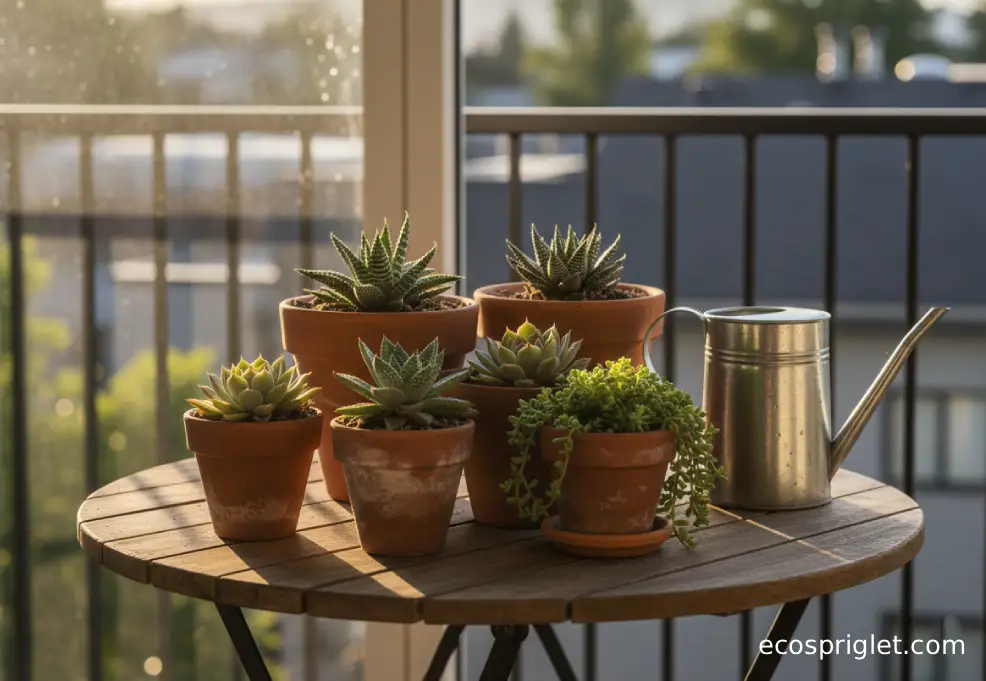
No apartment gives every plant the same drying speed. A succulent in a 3-inch terracotta pot near a bright window may dry much faster than one in a glazed pot tucked a few feet back from the glass. University of Arizona Extension notes that warm, dry, sunny locations increase water needs, while cooler, lower-light settings reduce them; it also notes that a large plant in a small pot dries faster than a small plant in a large pot.
- Light: More sun usually means faster drying and more frequent watering.
- Season: Spring and summer growth often means more water; winter dormancy means less.
- Pot material: Terracotta dries faster than plastic or glazed ceramic.
- Pot size: Small pots dry quickly, while oversized pots can stay wet too long.
- Airflow and heat: Bright windows, heaters, and dry indoor air can shorten the gap between waterings.
This is why there is no single weekly watering schedule that works for every succulent. Two identical jade plants in different corners of the same apartment may need water several days apart.
How to Tell When a Succulent Actually Needs Water
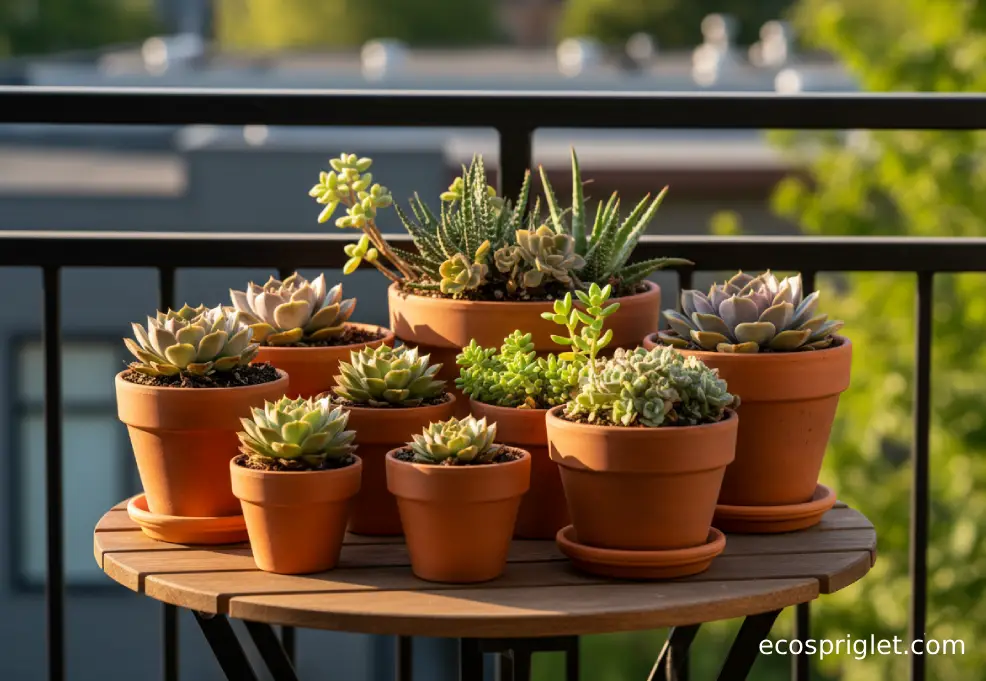
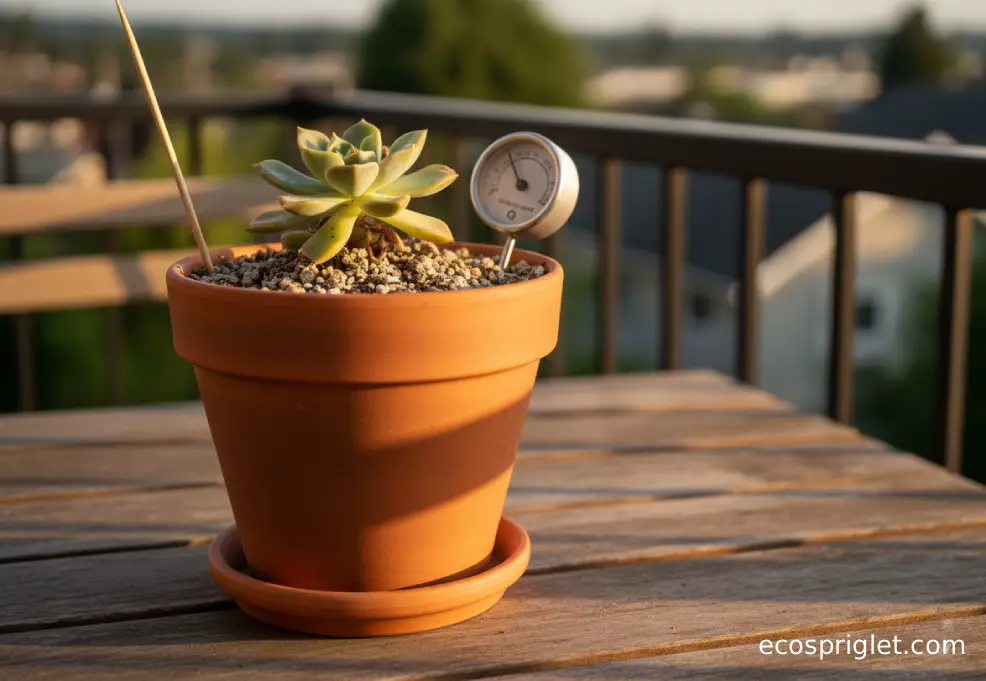
The easiest way to judge whether a succulent needs water is to stop guessing and check the mix. Put a finger about 1 inch down, use a wooden skewer, or lift the pot to see whether it still feels heavy. UC ANR advises checking the top inch in containers and watering when it feels dry, while a UC ANR succulent guide says not to water again until the mix is almost dry and suggests checking deeper into the pot.
Look at the plant too. A thirsty succulent may seem a little lighter in weight and show slight wrinkling or softer leaves. An overwatered one often turns mushy, translucent, or yellowish and may drop leaves from the bottom. Illinois Extension specifically warns that overwatering is a common cause of succulent failure and recommends letting the soil dry completely between waterings.
A good apartment rule is this: if you are unsure, wait another day or two and test again. Succulents usually recover from mild dryness more easily than from roots that stay wet too long.
A Simple Indoor Watering Rhythm for Spring, Summer, Fall, and Winter
Most apartment growers do well with a loose rhythm instead of a fixed schedule. In brighter months, many types of succulents need water about every 7 to 14 days. In winter, many shift to every 2 to 4 weeks, sometimes even less in cool, low-light rooms. Illinois Extension and University of Minnesota Extension both support lighter winter watering, and RHS says watering should be reduced in autumn and winter as growth slows.
- Spring: Check every 5 to 7 days, but water only when the mix is dry.
- Summer: Check at least weekly; hot, sunny windows may push some pots closer to every 7 days.
- Fall: Stretch the interval as days shorten and growth slows.
- Winter: Many indoor succulents go much longer, often 2 to 4 weeks between waterings.
One helpful adjustment: during a heat wave or strong dry indoor airflow, check more often, not automatically water more often. UC Master Gardeners in Orange County note that high temperatures can sharply increase succulent water needs, but that does not cancel the dry-down rule.
Common Mistakes to Avoid When Watering Succulents
The biggest beginner mistake is giving tiny splashes every few days. University of Minnesota Extension warns that repeated shallow sprinklings can lead to poor growth, and Illinois Extension points to overwatering as the number one killer for many succulents.
Another common problem is overpotting. If the container is far larger than the root ball, the extra mix can stay wet for too long. RHS specifically advises using a pot only slightly larger than the previous one for some succulents because too much compost can hold excess moisture and cause rot.
- Do not water on a strict weekly alarm if the mix is still cool and damp.
- Do not leave water pooled in a saucer for hours.
- Do not use a pot without a drainage hole for routine succulent growing.
- Do not mistake low light for low maintenance; darker rooms usually mean slower drying and fewer waterings.
I learned this the hard way with an aloe in a decorative cachepot. The plant looked tidy from above, but water kept collecting below the nursery pot. By the time the leaves softened, the roots were already in trouble.
The Right Pot and Soil Make Watering Much Easier
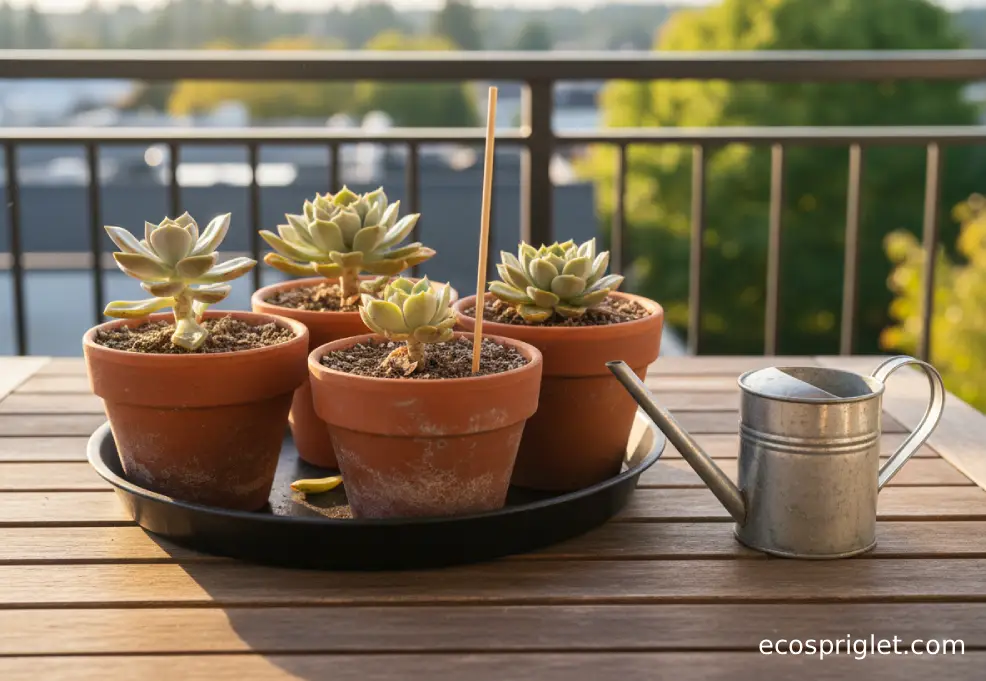
If you want watering to feel easier and more predictable, improve the setup first. A pot with a drainage hole and a fast-draining mix gives you a much wider safety margin. University of Minnesota says succulents need lots of light and dry soil between waterings, while UC ANR notes that container plants should be watered until water exits the bottom, which only works properly when the pot can drain freely.
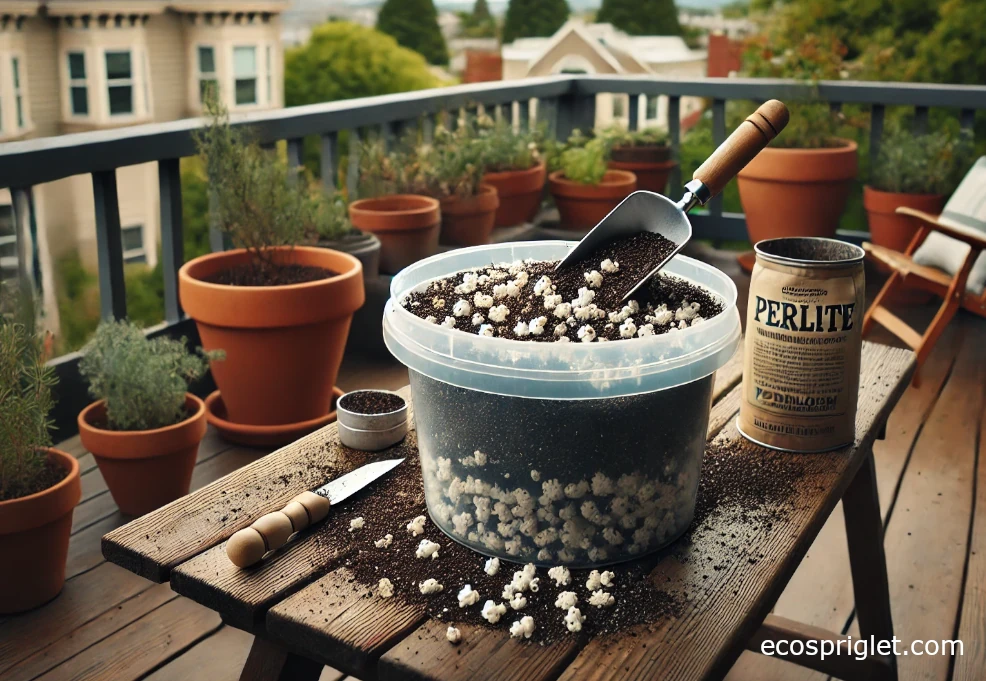
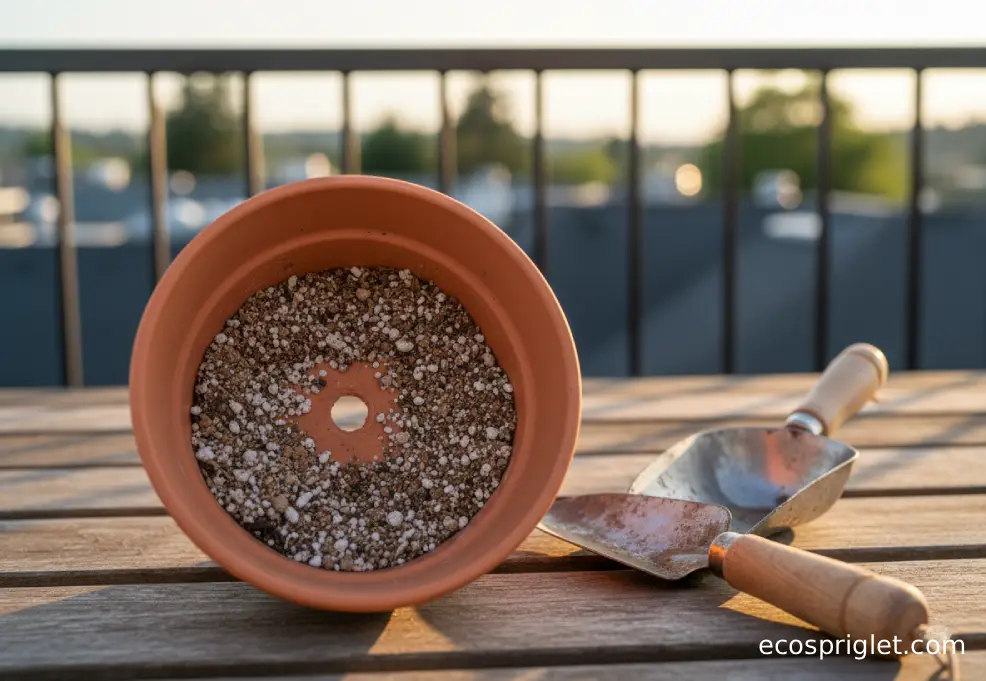
For the mix, look for a cactus or succulent blend that drains fast rather than a heavy moisture-holding houseplant mix. UC Master Gardeners of Sonoma recommend well-draining soil and note that drainage is faster with materials such as perlite or pumice. Also skip the old gravel-at-the-bottom trick. UC Master Gardeners of Santa Clara call that a myth because layered materials can worsen drainage behavior rather than improve it.
In a small apartment, I usually like terracotta for succulents because it helps excess moisture leave the root zone faster. It is not magic, but it does make it easier to avoid overwatering when you are still learning your plant’s pace.
Pet Safety, Light, and Apartment Placement
Watering and placement go together. Succulents usually need a bright, sunny window or strong supplemental light to use water at a healthy pace; University of Minnesota says succulents need lots of light and recommends a bright, sunny window for indoor growing. In a dim room, the plant may stay wet longer and stretch at the same time, which is a frustrating combination for beginners.
If pets share your apartment, check the plant identity before bringing it home. Some common succulents are safer than others. ASPCA lists blue echeveria as non-toxic to dogs and cats, while its plant list flags aloe as toxic to dogs. That does not change the basic watering approach, but it does affect which varieties make sense on a low shelf or coffee table.
When people ask how often to water succulents, the most useful answer is this: less often than many houseplants, but more thoroughly each time. Let the mix dry well, water until excess drains out, then wait again. In many apartments, that means roughly every 7 to 14 days during active growth and every 2 to 4 weeks in winter, but those numbers are only starting points. Window light, pot size, terracotta versus glazed ceramic, indoor heat, and season all matter. The healthiest habit is checking the soil before reaching for the watering can.
Once you get that rhythm down, succulents become much less mysterious. You do not need a complicated calendar, and you definitely do not need to hover over them every day. A fast-draining mix, a pot with a drainage hole, bright light, and a little patience will solve most watering problems before they start.