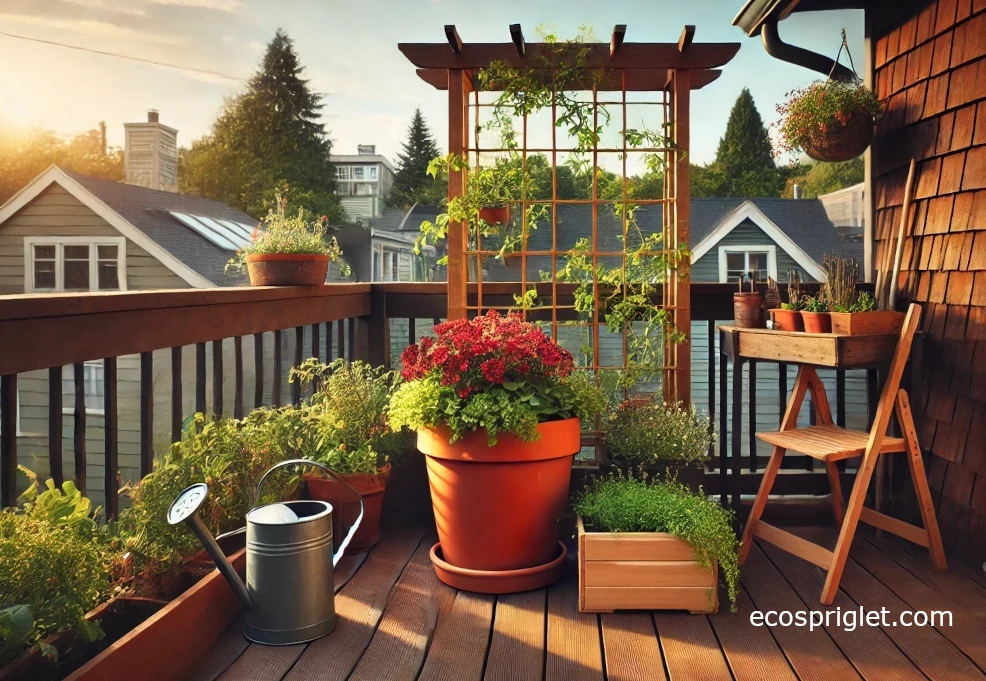
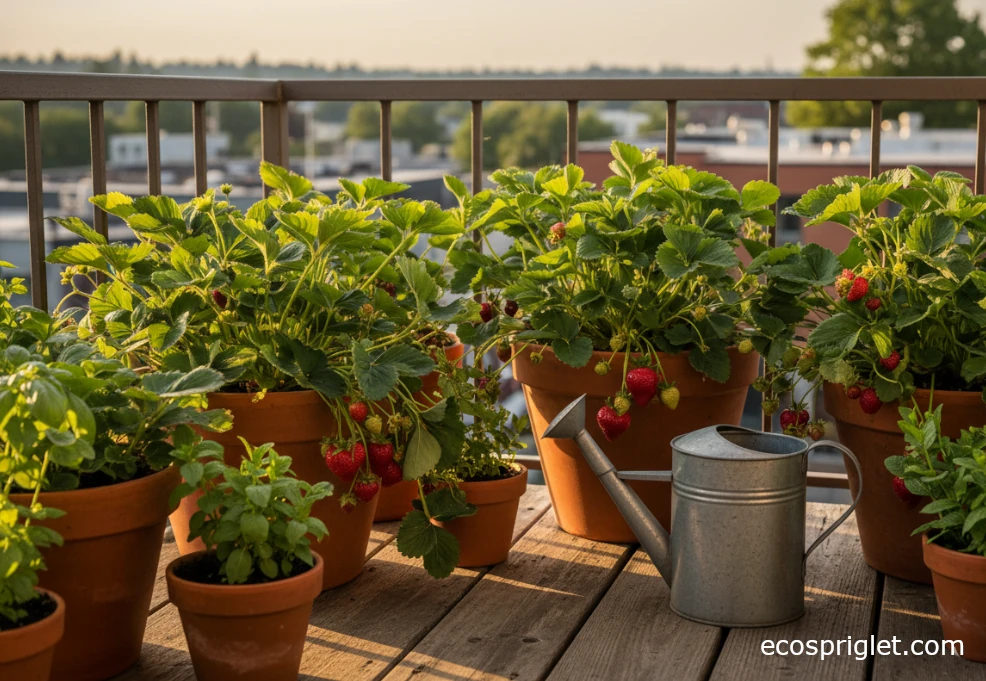
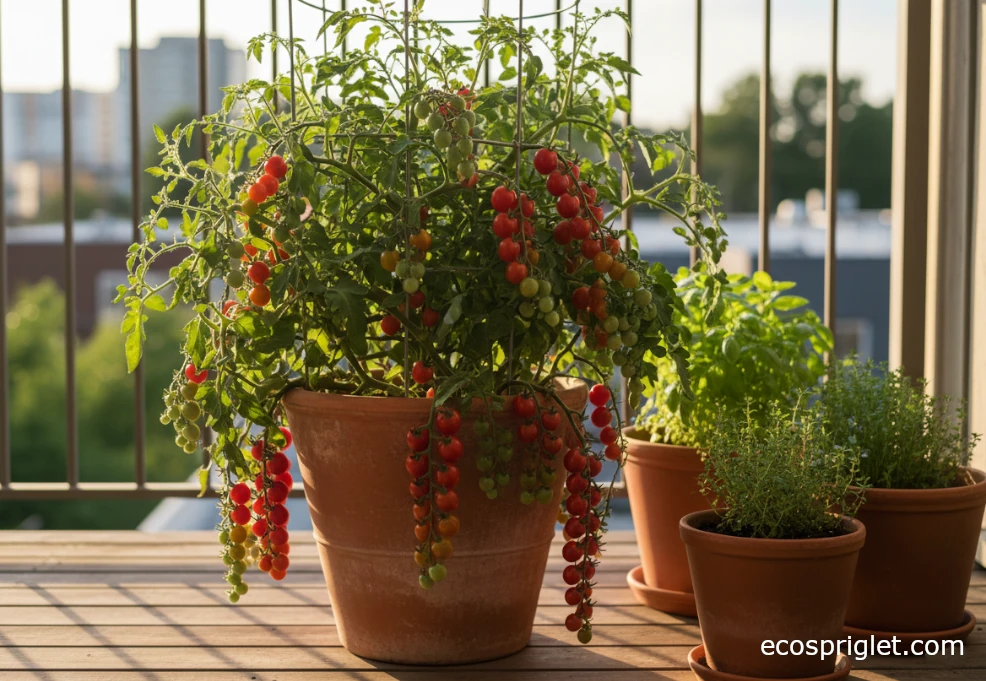
A sunny balcony can feel like a gift in spring and a test by midsummer. The same six to eight hours of direct light that make flowers bloom can also bake potting mix, dry out trailing stems, and turn a cute little planter into a daily watering job. That does not mean you need a yard to grow a lush, colorful garden. It means you need the right plants, the right pot size, and a setup that respects heat, wind, drainage, and apartment life.
For most gardeners, full sun container plants are the annuals, perennials, herbs, and compact shrubs that keep growing when the light is strong and the container warms quickly. Some love dry conditions once established. Others bloom heavily in sun but still want steady moisture. I learned that difference the hard way years ago with a gorgeous hanging basket that looked perfect on Friday and crispy by Sunday.
Below is a practical, small-space guide to choosing container plants for full sun, arranging them well, and keeping them healthy through hot weather without turning your balcony into a chore.
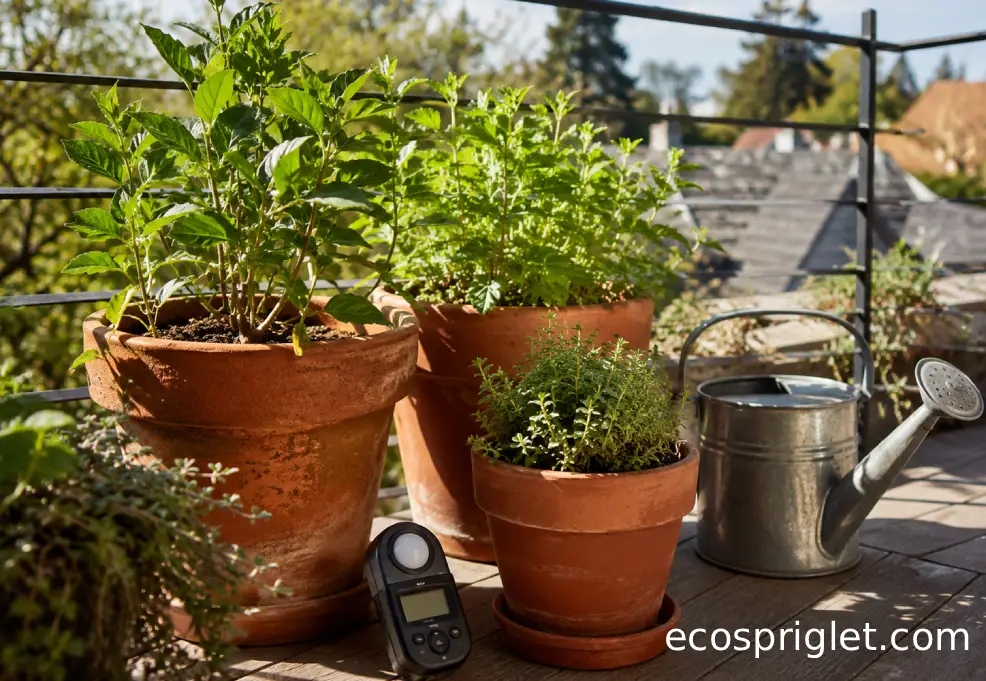
What Full Sun Really Means on a Balcony
Full sun usually means at least six hours of direct sunlight per day, but many flowering annuals perform best with more. University Extension guidance often gives six hours as the baseline for sun-loving vegetables, while petunias, geraniums, zinnias, calibrachoa, and marigolds are repeatedly described as stronger performers in long, bright exposure. On a balcony, that light may also reflect off windows, pale walls, concrete, or metal railings, so the plant can feel more heat than the forecast suggests.
Before buying plants, watch your space for one clear day. Count direct sun only when the plant would actually be hit by sunlight, not when the balcony feels bright. Morning sun from 8 a.m. to noon is gentler than west-facing sun from 1 p.m. to 7 p.m. If your railing casts stripes of shade, place compact bloomers toward the front and taller plants where they will not shade everything behind them.
My simple test is this: if the top inch of potting mix is drying by lunchtime, choose heat-tough plants and larger containers. If the pot stays damp for two days after watering, you may have bright light but not true heat stress, and you can widen your plant choices a little.
The Best Full Sun Container Plants to Start With
The best container plants for full sun are not just the ones that tolerate light. They are the ones that still look good when roots are confined, watering is imperfect, and hot air bounces around a balcony. For beginners, I would start with reliable annuals before investing in large perennial combinations.
| Plant | Best Role in a Pot | Container Tip | Watch For |
|---|---|---|---|
| Petunia | Filler or trailing edge | Use in 12-inch or wider pots and keep evenly watered in heat. | Spreading types need more water and feeding than compact types. |
| Calibrachoa | Trailing plant for rims and baskets | Give sharp drainage and steady moisture, not soggy soil. | Can sulk in heavy, alkaline, or waterlogged mixes. |
| Signet Marigold | Compact filler | Good for smaller sunny pots where taller marigolds would crowd the space. | Too much fertilizer can mean leaves instead of flowers. |
| Vinca | Heat-tough flowering filler | Wait until warm weather is settled before planting outside. | Avoid overwatering; it prefers well-drained conditions. |
| Geranium | Upright color and structure | Use a pot that does not tip easily and remove tired blooms. | Less sun usually means fewer flowers. |
| Zinnia | Compact pollinator color | Choose shorter types for containers and give room for airflow. | Keep foliage as dry as practical to reduce disease pressure. |
Petunias and calibrachoa are especially useful when you want trailing plants for containers in full sun. Vinca, marigolds, and geraniums bring the sturdy, no-fuss middle layer. Zinnias are excellent for pollinators, though compact forms are usually easier in pots than tall, garden-bed types. University of Minnesota Extension notes that petunias grow well in containers, calibrachoa needs full sun and well-drained mix, vinca handles heat and containers well, and zinnias want very bright, warm sites.
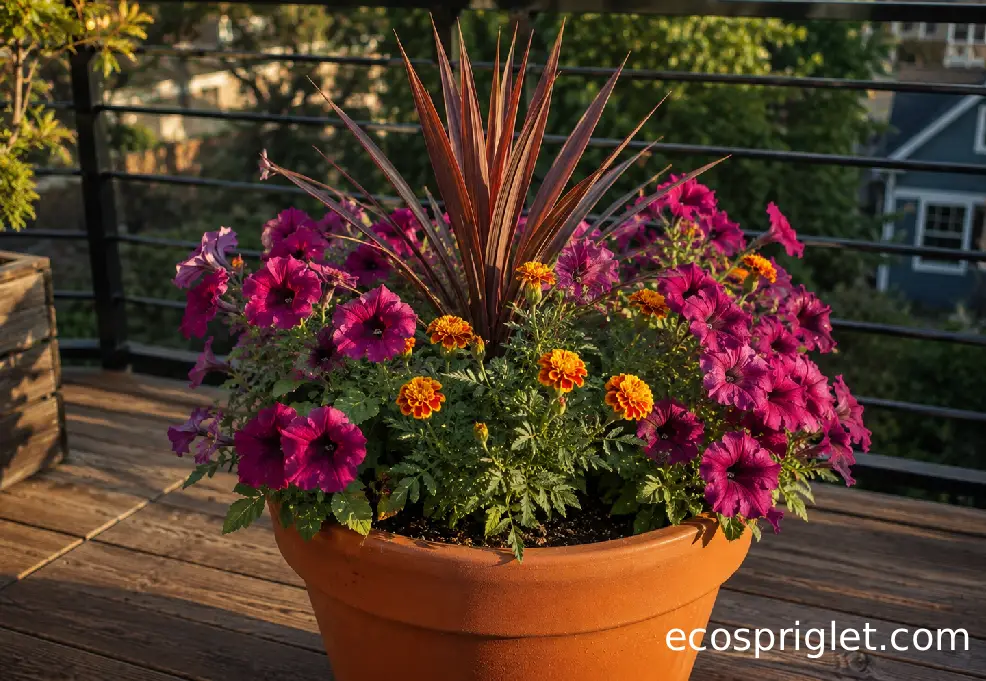
For a first sunny container, keep the recipe simple: one upright plant, two rounded fillers, and one trailing plant in a 12- to 16-inch pot. That gives roots enough room to share moisture without creating a crowded, thirsty tangle by July.
Build a Pot That Can Handle Heat
A sunny container succeeds or fails below the soil line. Outdoor container plants in full sun need enough root volume to buffer heat and enough drainage to keep oxygen around the roots. For most flowering annual combinations, I like a pot at least 12 inches wide. For tall thriller plants, compact shrubs, canna, dwarf sunflowers, or vegetables, move toward 16 inches wide or larger. Illinois Extension lists a 12-inch pot at about 5 gallons and a 16-inch pot at about 10 gallons, which is a useful way to think about root space.
Use organic potting mix, not garden soil. A good mix should feel light, fluffy, and springy, often containing ingredients such as peat, coir, bark, perlite, or vermiculite. UNH Extension specifically cautions that garden topsoil is too dense for small containers because roots need both moisture and air.
Skip the old gravel layer at the bottom. It sounds logical, but Penn State Extension notes that coarse material such as gravel or stones can actually hinder water movement and steal root space. A drainage hole matters more than a decorative rock layer; Illinois Extension also calls a bottom drainage hole critical because roots need air as well as water.
- Choose containers with drainage holes and a saucer you can empty after watering.
- Use wider, straight-sided pots on windy balconies because they are less tippy than narrow tapered pots.
- Leave 1 inch of space below the rim so water can soak in instead of running over the edge.
- Add a thin mulch layer, such as fine bark or composted leaf mulch, to slow surface drying.
On my west-facing balcony, moving one petunia mix from a 10-inch pot to a 14-inch pot cut the droop almost in half during hot spells. The plant did not suddenly need less sun. It simply had more root room and a cooler moisture reserve.
Watering and Feeding Without Guesswork
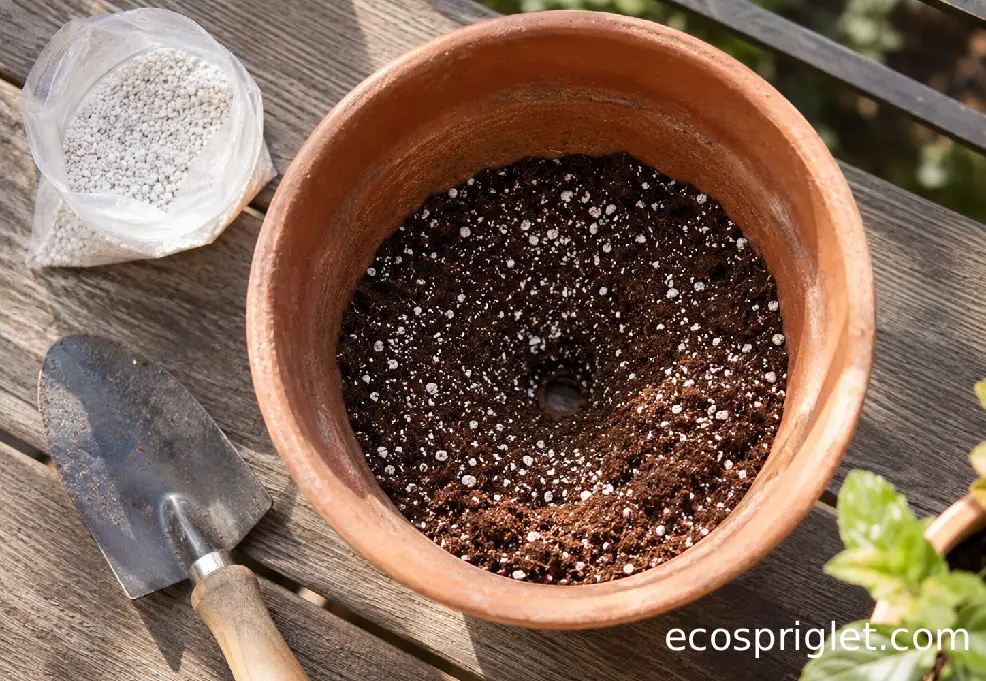
Full sun makes watering feel personal. One balcony gardener may water every other day in June, while another waters twice on a 95°F afternoon because the pot is small, dark-colored, and exposed to wind. University of Minnesota Extension notes that container plants may need watering more than once per day depending on container size and temperature, and that most container plants prefer moist, not soggy, soil.
Use your finger before using the watering can. For many mixed flower pots, water when the top 1 inch feels dry and the pot feels noticeably lighter. For thirsty hanging baskets, check again in late afternoon during heat waves. UNH Extension recommends thorough watering for container vegetables when the mix dries near the surface, which is a helpful reminder that shallow sips are rarely enough in pots.
Feeding matters because repeated watering leaches nutrients from potting mix. Start with a slow-release fertilizer blended into the mix, or begin a diluted liquid feed two to six weeks after planting, depending on plant growth and the product label. Follow the label rather than guessing; overfertilizing can damage plants and send excess nutrients out through drainage water.
- If leaves are firm in the morning but limp at 4 p.m., check moisture before assuming disease.
- If water runs straight out of a dry pot, water once lightly, wait 10 minutes, then water again deeply.
- If lower leaves yellow after weeks of heavy watering, the plant may need nutrients, not more water.
- If the saucer stays full for hours, empty it so roots are not sitting in stagnant water.
For more detail on building a heat-smart watering routine, see our watering guide.
Tall, Trailing, and Perennial Choices for Sunny Pots
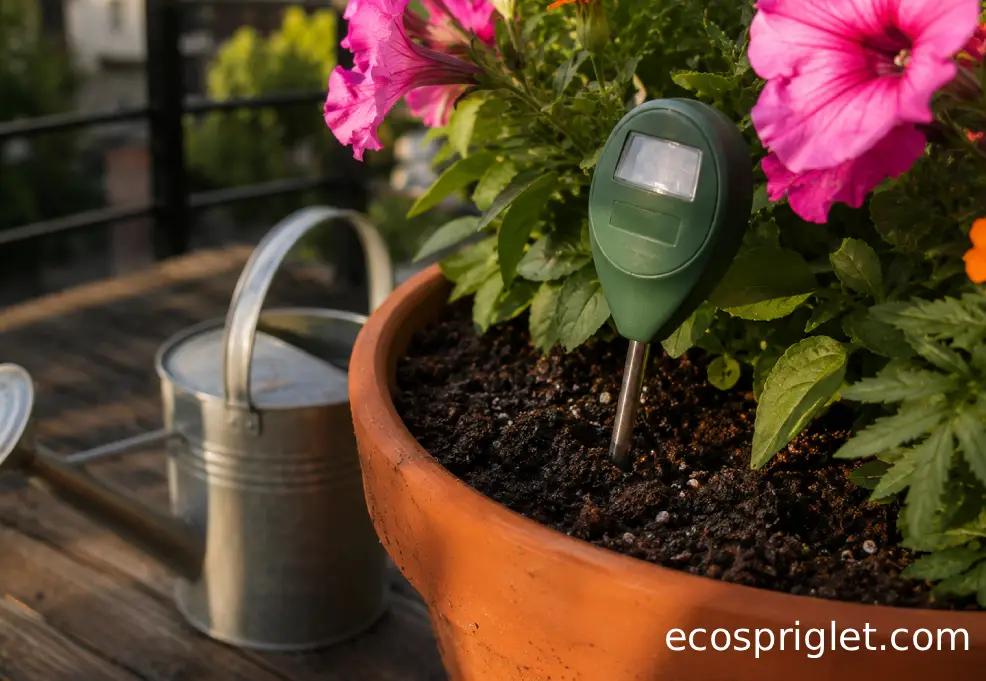
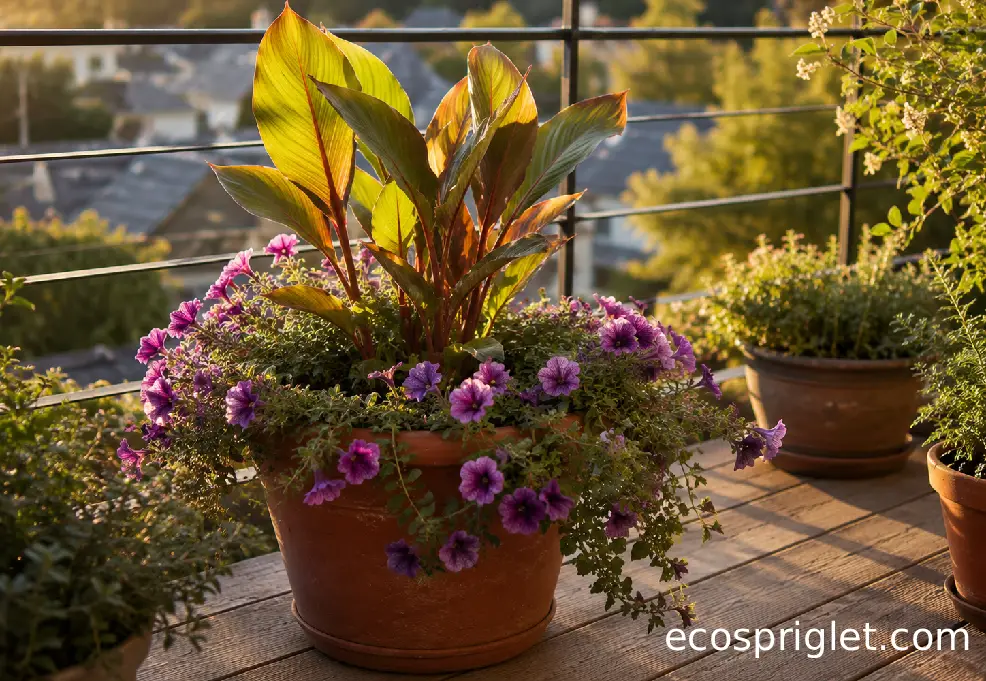
A good sunny pot has structure. The classic thriller, filler, spiller idea still works, as long as the plants have similar light and watering needs. Tall full sun container plants give height, trailing plants soften the rim, and perennials add staying power when you have room for a larger container.
For tall accents, try canna, compact sunflower, upright geranium, ornamental pepper, or a patio-type tomato if you want something edible. Cannas are especially good for a bold tropical look in summer containers, while dwarf sunflowers can work beautifully when the container is large and stable. University of Minnesota Extension describes cannas as dramatic container plants and notes that dwarf sunflowers can perform well in containers and full sun.
For trailing plants, petunias and calibrachoa are the easiest sunny-basket choices. Trailing verbena, portulaca, and fan flower can also work well in hot, bright containers, especially when the mix drains freely. Missouri Extension lists several heat-tolerant annuals for full sun, including portulaca, lantana, geranium, petunia, vinca, and zinnia, while also noting that containers can dry rapidly on hot days.
For perennial container plants in full sun, keep expectations realistic. Lavender, sedum, yarrow, hardy salvia, compact ornamental grasses, and small hardy shrubs can be excellent, but perennials in pots face colder roots in winter and hotter roots in summer than the same plants in the ground. RHS container guidance supports using perennials and shrubs in containers, with drought-tolerant plants such as Mediterranean herbs being especially useful in pots.
- For a 12-inch pot, choose one upright accent, one or two fillers, and one trailing plant.
- For a 16-inch pot, use one tall plant, three fillers, and two small trailing plants around the edge.
- For perennial pots, choose one main perennial and seasonal annuals around it so roots are not crowded.
I like to leave one hand-width of open space between the tallest plant and the railing. It looks less crammed, improves airflow, and makes it easier to turn the pot if one side starts leaning toward the sun.
Common Mistakes to Avoid
The most common mistake with full sun plants for containers is treating the plant tag as the whole care plan. Full sun tells you the plant likes light. It does not tell you whether the pot is big enough, whether the roots are cooking, or whether the plant will need water before dinner.
I learned this the hard way with a narrow railing planter packed with petunias, marigolds, and a small ornamental grass. It looked fantastic for two weeks. Then the petunias wilted every afternoon, the grass shaded the marigolds, and the whole planter started drying from the edges inward. The fix was not dramatic: I moved the grass into its own pot, refreshed the mix, and cut the petunias back by about one-third. Within two weeks, the planter looked like itself again.
- Planting too tightly: Leave enough room for mature width. A small transplant can double fast in warm weather.
- Using tiny pots in hot exposure: Move from 8 inches to 12 inches or from 12 inches to 16 inches when plants wilt daily.
- Adding gravel for drainage: Use drainage holes and proper potting mix instead.
- Watering on a fixed calendar: Check the mix. Weather, wind, and pot size change the schedule.
- Forgetting to groom: Remove spent blooms and yellow leaves weekly so the pot stays airy and productive.
If a sunny pot looks tired in midsummer, do not give up immediately. Trim leggy stems by one-quarter to one-third, remove dead flowers, water deeply, and feed lightly according to the label. Many annuals respond well once roots have moisture and the top growth is not carrying more stems than the pot can support.
Pet, Wind, and Balcony Safety Notes
Sunny balcony gardening is not only about plants. Wind, pets, children, and building rules all shape what belongs in the space. Illinois Extension notes that container shape affects stability and that tall plants may need strapping or anchoring on exposed balconies, rooftops, and decks. Start with wide, straight-sided pots for tall plants, and avoid lightweight planters balanced on narrow stands near railings.
Check your lease or building rules before attaching railing planters, trellises, hooks, or privacy screens. Wet potting mix is heavy, and a 16-inch container can weigh much more after rain than it does when you carry it home empty. Spread heavier containers near walls or corners rather than clustering every large pot at the outer railing.
Pet safety deserves the same practical attention. ASPCA lists petunias and zinnias as non-toxic to dogs and cats, while lantana and vinca are listed as toxic. That does not mean a pet should chew any plant freely, but it does help you choose safer options for low pots or curious animals.
For pet-friendly sunny color, I would start with petunias, zinnias, sunflowers, and many culinary herbs, then double-check the exact plant before bringing it home. If you love lantana or vinca, place them out of reach or skip them in homes with persistent nibblers. Plant labels are not always written with pets in mind, so verify the botanical name when safety matters.
For more apartment-specific setup ideas, visit our balcony container gardening guide.
Bring It Together With One Sunny Container Recipe
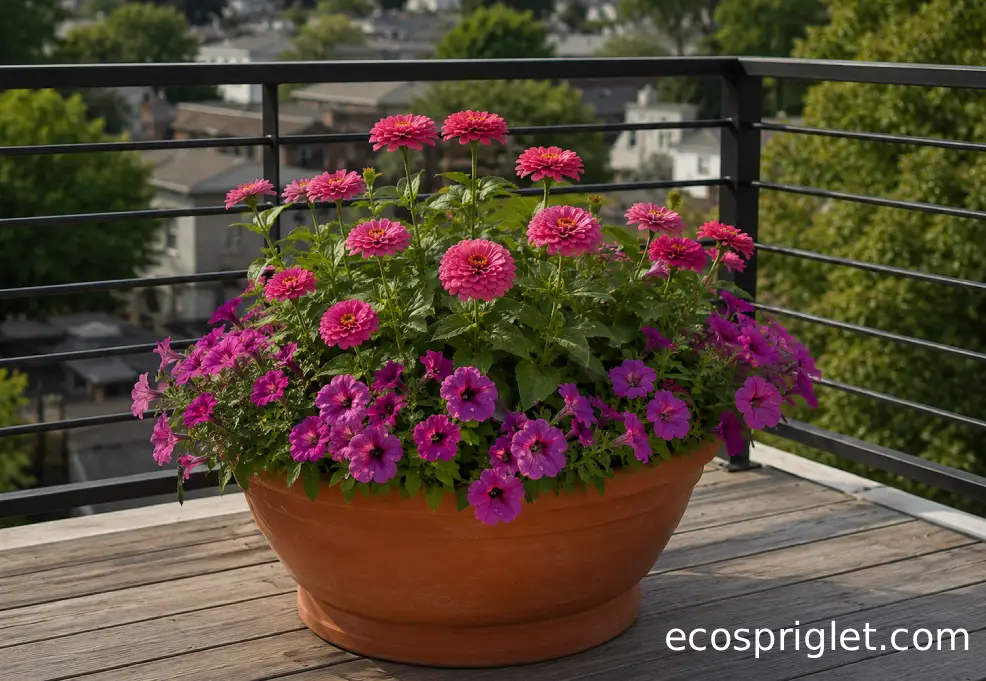
For a dependable first container, use a 14- to 16-inch pot with drainage holes, (not old) potting mix, one upright geranium, two or three signet marigolds, and two trailing calibrachoa or petunias near the rim. Place it where it receives at least six hours of direct sun, then check moisture every morning for the first two weeks. Once you know how fast the pot dries, the routine becomes much easier.
That one container teaches nearly everything you need to know about sunny balcony gardening: how light moves, how quickly potting mix dries, which flowers bounce back after heat, and how much space your plants really need. From there, you can add a tall thriller pot, a drought-tolerant herb container, or a perennial planter that carries texture from one season to the next.
The best full sun plants for containers are not always the flashiest ones at the garden center. They are the ones that fit your light, your watering habits, your balcony rules, and your real summer weather. Start with one sturdy pot, give the roots room, and let the plants prove what your sunny space can do.