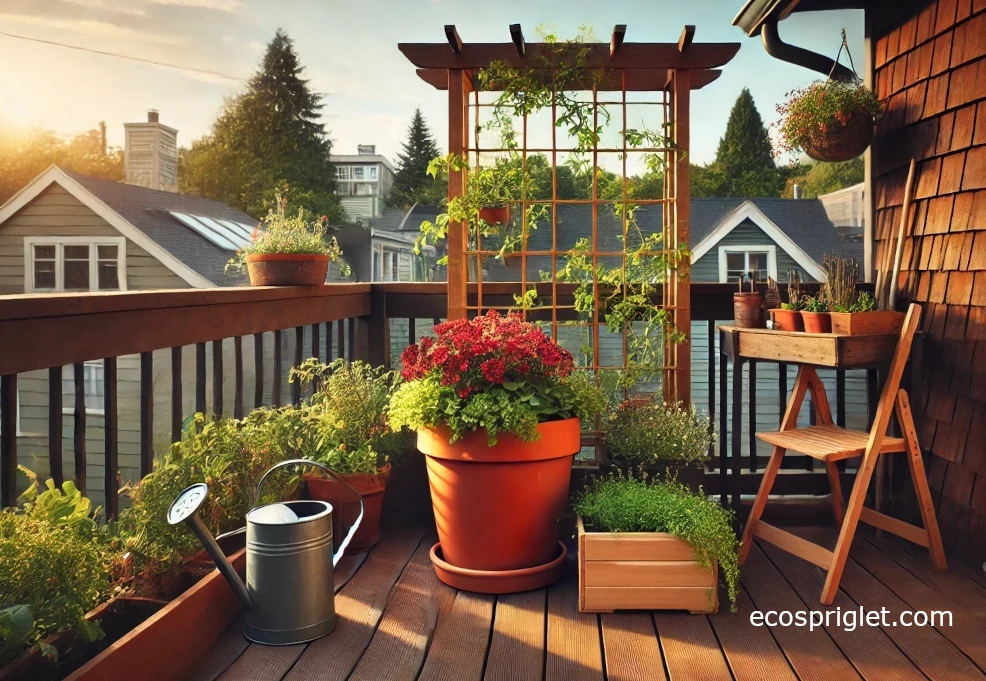
A shady balcony or porch can still look green, layered, and full of life. You just need plants that enjoy softer light instead of sulking through it. The trick with container garden plants for shade is to think less about “bright flowers everywhere” and more about texture, leaf color, moisture, and smart pot size.
For apartment gardeners, shade usually comes from buildings, railings, overhangs, trees, or the north side of a structure. That shade changes during the day, so a pot that looks dim at breakfast may get a sharp slice of afternoon sun later. University of Minnesota Extension describes part shade as about 3 to 6 hours of sunlight and full shade as less than 3 hours, while other Extension definitions put full shade closer to less than 2 hours; either way, observing your own space for a full day matters before you buy plants.
Below is a practical, small-space way to choose shade container plants that look intentional, not leftover.
Start by Reading Your Shade Before Buying Plants
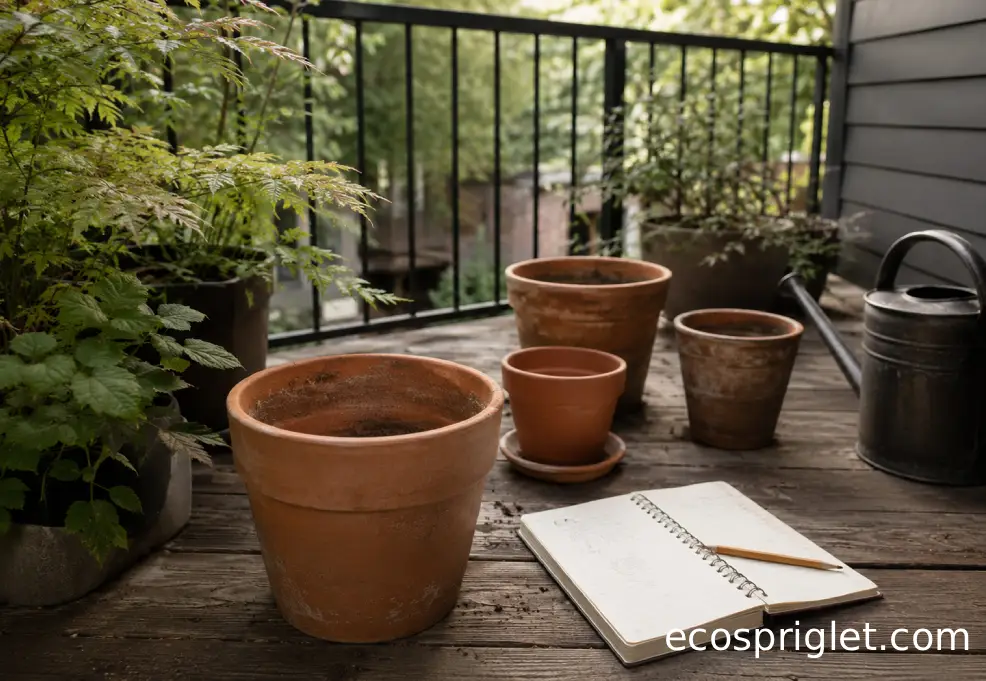
Shade is not one fixed condition. A covered porch, a balcony under another balcony, and a patio shaded by a maple tree all behave differently. Before choosing plants for containers in the shade, watch your space at 9 a.m., noon, 3 p.m., and 6 p.m. for one clear day. Write down where direct sun actually lands, even if it only lasts 30 minutes.
In my Portland balcony notes, I mark shade in three simple buckets: bright shade, dappled shade, and deep shade. Bright shade has no direct sun but still feels open to the sky. Dappled shade gets broken light through leaves or railing gaps. Deep shade feels dim most of the day, often under an overhang or in a corner beside a wall.
That small test saves money. Tuberous begonias, for example, can bloom well in shady, protected sites with good indirect or dappled light, but they still need enough brightness to keep flowering. UMN Extension also notes that petunias flower less as shade increases, which is why impatiens are usually the better choice for blooming in shady places.
- For less than 2 to 3 hours of direct sun, lean on foliage plants, ferns, hostas, caladiums, and impatiens.
- For 3 to 6 hours of morning sun, try begonias, coleus, heuchera, fuchsia, and mixed annuals.
- For hot afternoon sun, even briefly, avoid tender leaves against dark walls or metal railings.
- For covered porches, remember that rain may not reach your containers at all.
The Best Plant Types for a Full, Layered Shade Pot
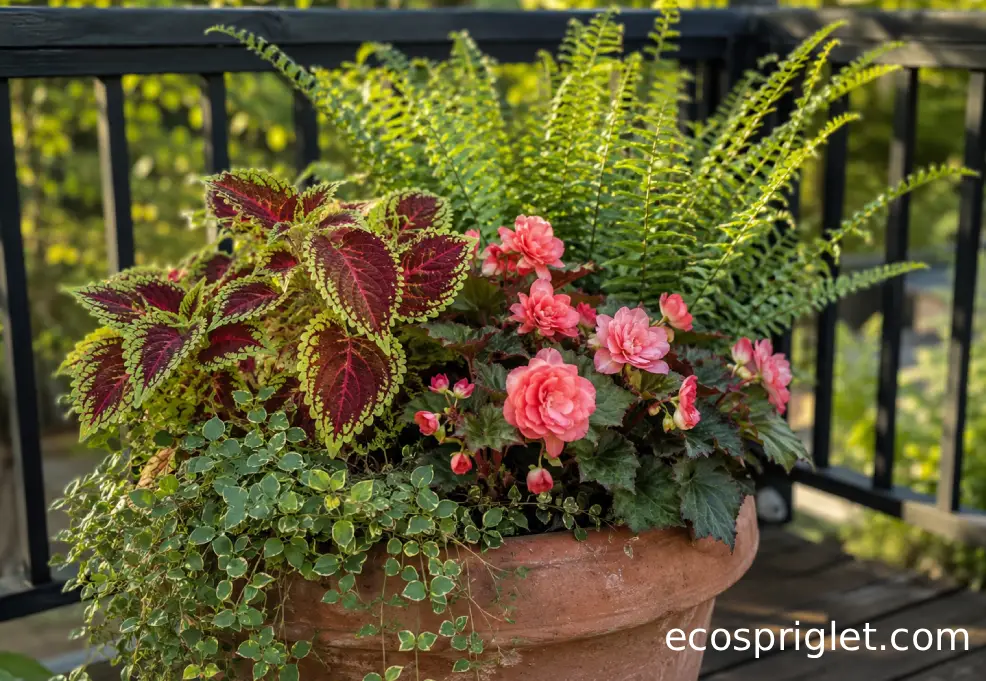
The easiest shade containers use three jobs: a tall or bold focal plant, a rounded filler, and something that softens the rim. You may know this as thriller, filler, and spiller, but don’t treat it like a rigid formula. On a 30-inch balcony, two strong plant shapes often look better than five cramped ones.
For thriller plants for shade containers, I like bold foliage more than tall flowers. Coleus, caladium, upright fuchsia, dwarf papyrus for bright shade, or a compact hosta can give the pot structure. Coleus is especially useful because UMN Extension notes that it grows well in containers and that cultivars are available for shade, partial shade, and sun. It is cold sensitive, so wait until outdoor conditions are reliably warm before using it outside.
Fillers are the plants that make the container look generous. Begonias, impatiens, heuchera, browallia, polka dot plant, and small ferns all work well in the middle layer. Tuberous begonias are one of the best flowering container plants for shade because they can bloom through summer in shady patio and porch settings when protected from harsh wind.
Spillers are optional, especially on windy balconies. If your railing catches gusts, skip long trailing plants and use compact edging instead. Creeping Jenny, trailing fuchsia, variegated ivy, and small-leaved plectranthus can look beautiful, but they need trimming when stems start brushing the deck or tangling around railing hardware.
| Plant Type | Good Choices | Best Use in a Container | Practical Pot Tip |
|---|---|---|---|
| Foliage Focal Plant | Coleus, Caladium, Hosta | Center or back of the pot | Use at least a 10- to 12-inch-wide pot for one strong plant. |
| Flowering Filler | Impatiens, Begonia, Fuchsia | Middle layer for color | Keep evenly moist, not soggy, and avoid tiny pots in summer heat. |
| Texture Plant | Fern, Heuchera, Carex | Softens strong leaf shapes | Choose a wider pot if mixing with fast-growing annuals. |
| Trailing Edge | Creeping Jenny, Ivy, Plectranthus | Softens rims and window boxes | Trim when stems reach 6 to 10 inches below the rim. |
Flowering Container Plants for Shade That Earn Their Space
Shade flowers are more selective than sun flowers. That does not mean they are dull; it just means the best shade container plants usually bloom in a softer, steadier way. Instead of chasing sun-loving annuals that limp along, choose plants already known for lower-light performance.
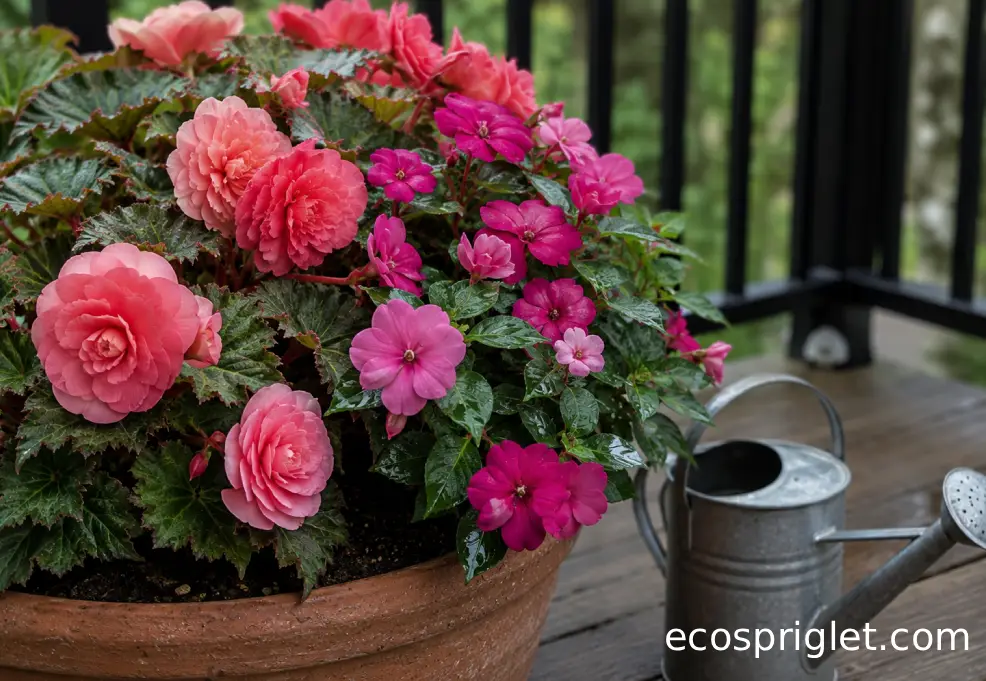
Tuberous begonias are the showiest choice for many shaded patios. They like shade for much of the day, good indirect light, wind protection, and well-drained but consistently cared-for potting mix. In containers under a roof or tree canopy, check moisture more often because rainfall may miss the pot entirely.
Impatiens are the classic option for porch full shade container plants because they flower without demanding long hours of sun. UMN Extension recommends daily watering for impatiens in containers while also stressing drainage holes, which is a good reminder that moist and waterlogged are not the same thing.
Fuchsia is worth trying where the light is bright but cool, especially in hanging baskets or raised pots. It dislikes hot, drying exposure, so I give it morning light, afternoon shade, and a pot that is large enough to stay evenly moist. A 10- to 14-inch hanging basket is a better starting point than a tiny decorative basket that dries out before lunch.
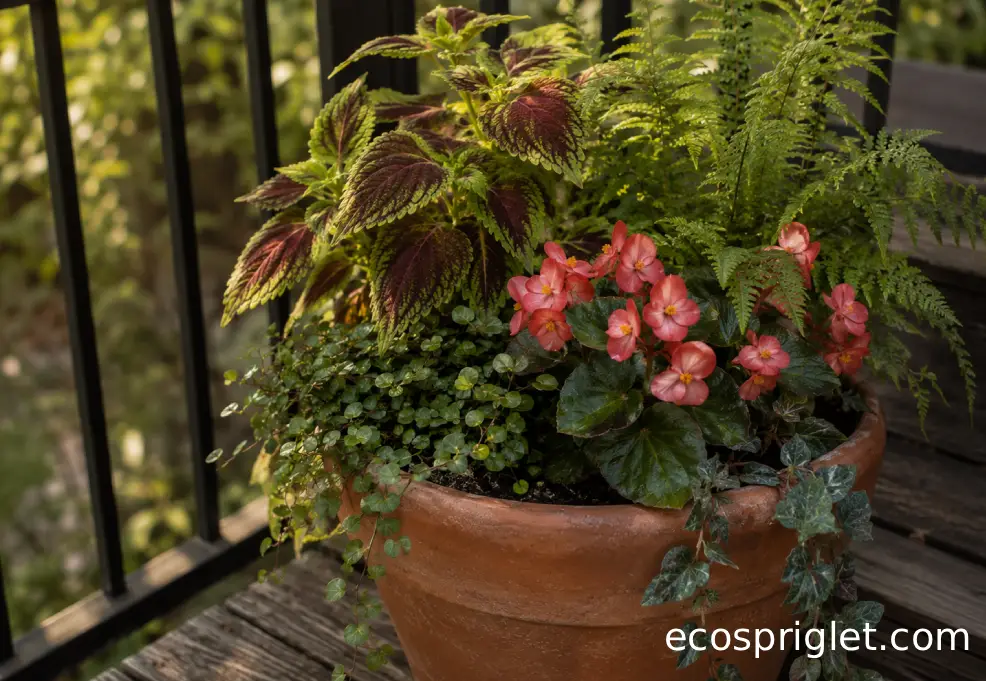
A small-space note from my own terrace: I no longer force one big flower show in deep shade. I pair one reliable bloomer with two foliage plants. A begonia beside coleus and a fern often looks better in August than three struggling bloomers packed into the same pot.
Evergreen and Perennial Choices for Year-Round Structure
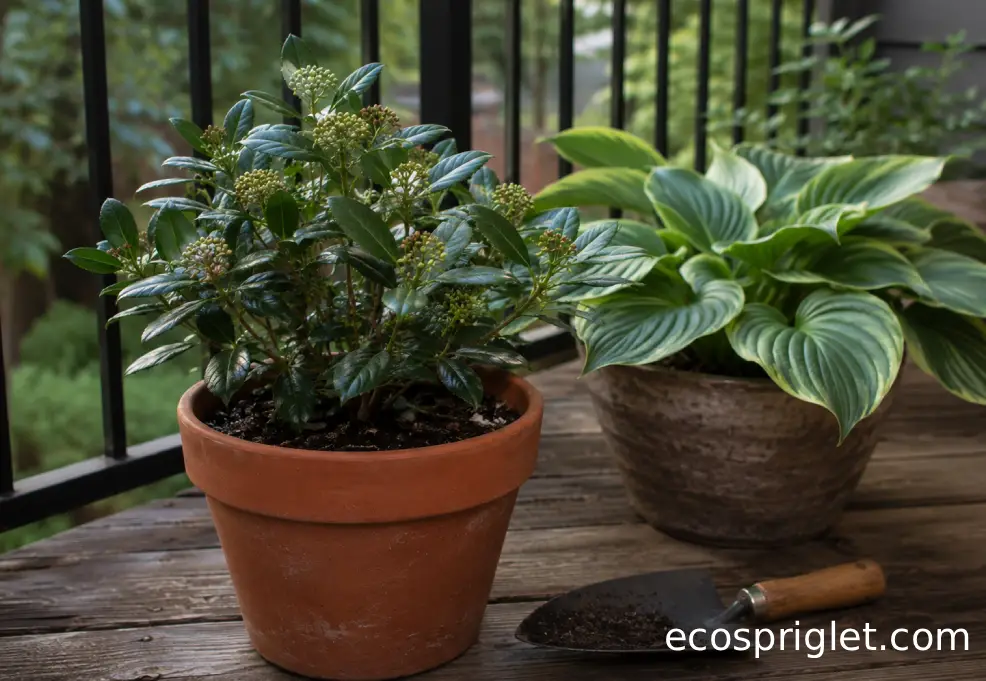
Annual shade plants for containers are great for quick color, but a balcony feels calmer when one or two pots have lasting structure. For evergreen container plants for shade, think compact and slow-growing. Japanese skimmia is a good example for mild climates and protected spaces; Missouri Botanical Garden lists it for part shade to full shade, with evergreen leaves and winter interest, though it is generally suited to Zones 6 to 8.
Small boxwood, dwarf yew, evergreen fern in mild regions, and shade-tolerant broadleaf evergreens can also work, but match the plant to your winter climate and your container size. In cold-winter regions, roots in pots experience more temperature swing than roots in the ground. That means a shrub rated hardy in the ground may still need a sheltered wall, a larger insulated pot, or winter protection when grown above ground.
Hostas are not evergreen in cold climates, but they are dependable perennial container plants in shade. UMN Extension notes that hostas thrive in filtered or dappled shade and can survive deep shade, though very dark conditions slow growth. Yellow and gold hostas often color better with 2 to 3 hours of morning sun.
For renters, I would start with one 14- to 18-inch pot for a hosta or compact evergreen instead of buying several small perennials. Larger pots dry more slowly, stand up better to wind, and make the planting look intentional. Before placing heavy containers on a balcony, check lease rules and building limits; University of Maryland Extension notes that a 20-inch container filled with moist potting mix and plants can weigh about 100 pounds.
Build the Container So Roots Stay Healthy
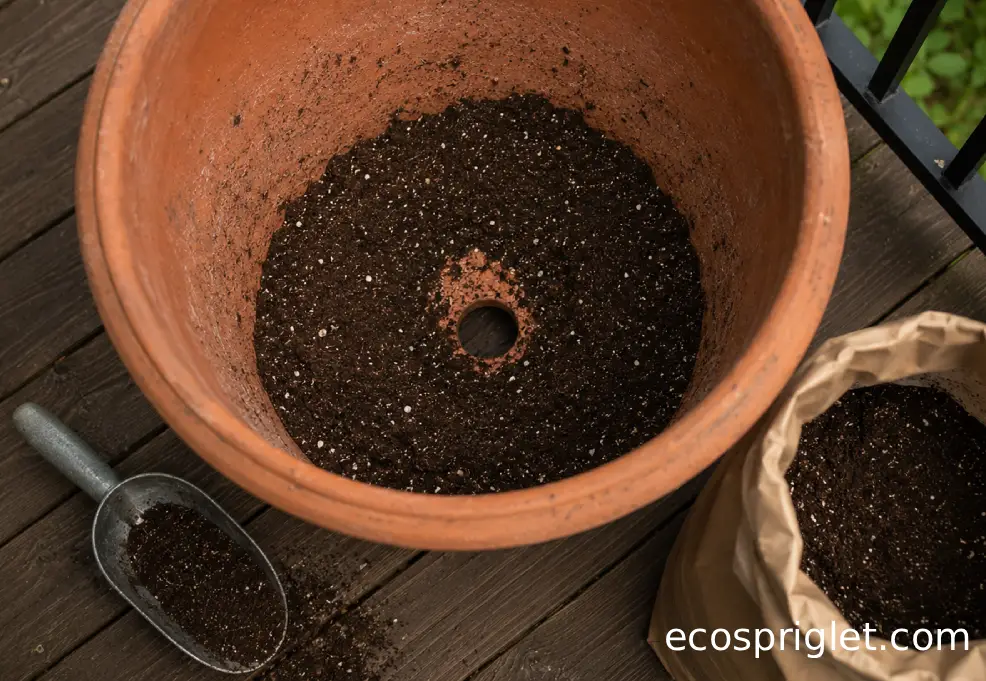
The container matters almost as much as the plant. Shade pots dry more slowly than sun pots, but they can still fail fast if water cannot leave the root zone. Every outdoor container should have drainage holes or a reliable overflow system. University of Maryland Extension says drainage holes help prevent roots from drowning and rotting, and Penn State Extension explains that gravel or shards at the bottom do not improve drainage and can actually interfere with water movement.
For most shade plants containers should be wide enough to hold steady moisture without staying swampy. A 10- to 12-inch pot is a good minimum for one annual focal plant. A 14- to 16-inch pot is more forgiving for a mixed planting. For shrubs, hostas, or long-term perennials, move up to 16 to 20 inches only if your balcony can handle the weight and you have room to move around it safely.
- Use fresh, lightweight potting mix rather than garden soil, which can compact in pots.
- Fill the whole root zone with potting mix for containers; do not reserve the bottom third for gravel.
- Leave about 1 inch of headspace below the rim so water can soak in instead of running off.
- Raise pots slightly on feet if water pools under them on wood or concrete.
- Use saucers carefully and empty standing water after watering.
If your favorite decorative cachepot has no hole, double-pot it. Keep the plant in a nursery pot with drainage, set that inside the outer pot, and lift it out to water. UMN Extension gives the same practical advice for shade containers: let the inner pot drain well before putting it back.
Watering and Feeding Shade Containers Without Overdoing It
Shade containers fool beginners because the surface can look damp while the root ball is dry, or the top can look fine while the bottom stays saturated. The simplest test is still your finger. Push down 1 to 2 inches. If the mix feels lightly moist, wait. If it feels dry at that depth, water slowly until water runs from the drainage holes.
University of Maryland Extension recommends thorough watering until excess water drains out, rather than quick shallow splashes, and notes that containers near buildings or under porches may not receive natural rainfall. That detail matters on apartment balconies. I have had pots under an overhang stay bone dry during a rainy week because the rain never crossed the railing line.
Morning watering is usually the cleanest routine. UMN Extension recommends watering gardens and containers in the morning when possible and watering at the base of plants to help leaves dry and reduce disease pressure.
Feeding should be steady, not aggressive. Many mixed annual containers do well with a slow-release fertilizer blended into the potting mix at planting, then a diluted liquid feed every 3 to 4 weeks during active growth if leaves pale or flowering slows. Foliage-heavy shade pots often need less fertilizer than sun-baked flower baskets. Too much nitrogen can make impatiens and begonias lush but weak, especially in still, humid corners.
- If leaves wilt but the soil is wet, stop watering and check drainage.
- If leaves wilt and the pot feels light, water deeply and consider a larger container.
- If water runs straight down the sides, pre-moisten the mix slowly in two passes.
- If fungus gnats appear indoors or on enclosed porches, let the top layer dry more between waterings.
Common Mistakes to Avoid With Shade Plants in Containers
The mistake I learned the hard way was treating shade like a low-maintenance setting. My first north-facing balcony pot looked great for two weeks, then the middle turned mushy because I kept watering on a sunny-garden schedule. Shade slows evaporation, but containers still need close observation.
- Overplanting the pot: A 12-inch pot cannot comfortably hold a coleus, two begonias, three impatiens, and trailing ivy all summer. Start with three plants, then pinch and trim for fullness.
- Choosing sun plants because they are on sale: Petunias, marigolds, and many salvias want more direct sun. In shade, they usually stretch, bloom less, and invite disappointment.
- Ignoring wind: Balconies can be shady and windy at the same time. Use heavier pots, compact plants, and secure railing planters properly.
- Letting saucers stay full: Standing water encourages root problems and can attract mosquitoes. Empty saucers after the pot drains.
- Skipping pet checks: Caladium is beautiful, but ASPCA lists it as toxic to dogs and cats, with oral irritation and digestive signs after ingestion.
Slugs can also show up in cool, damp shade, especially on lower patios. UMN Extension notes that wet conditions from excessive shade or poorly drained soil can increase slug numbers, and recommends watering at the base rather than wetting leaves. In containers, I check under pot rims and saucers once a week after spring rains.
If you garden with pets, children, or a curious cat who samples leaves, choose placement as carefully as plant type. Hanging baskets, plant stands, and closed balcony corners can help, but they are not a substitute for checking plant toxicity before you buy. ASPCA lists calathea as non-toxic to dogs and cats, making it a safer summer porch foliage option in covered shade than many dramatic tropicals.
Small-Space Planting Ideas for Porches, Patios, and Balconies
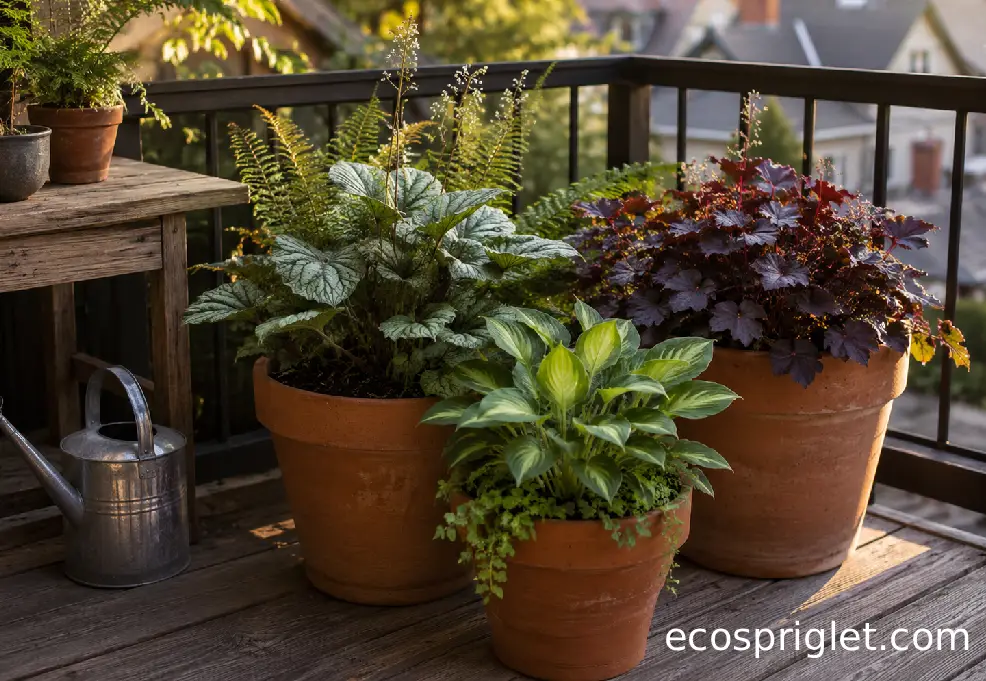
Good container plants for shade look best when you repeat a few shapes instead of buying one of everything. On a tiny balcony, repetition makes the space feel designed. Try one bold leaf, one soft texture, and one flower color, then echo them in two or three pots.
For a covered porch, use a tall coleus in the back of a 14-inch pot, tuberous begonia in the middle, and trailing plectranthus near the edge. In a deep-shade entry, make a hosta or fern the main plant and add impatiens for color. On a narrow balcony rail, skip top-heavy thrillers and plant a simple window box with impatiens, small ferns, and compact ivy or creeping Jenny.
Shade plants for patio containers also look better when you play with pot height. Put one pot on the floor, one on a sturdy low stand, and one on a small table. Keep the heaviest pot on the ground, especially on balconies. UMD Extension notes that containers become much heavier when filled with moist mix and plants, and tall plants in light pots can blow over unless anchored.
Three combinations I would actually use in an apartment setting are:
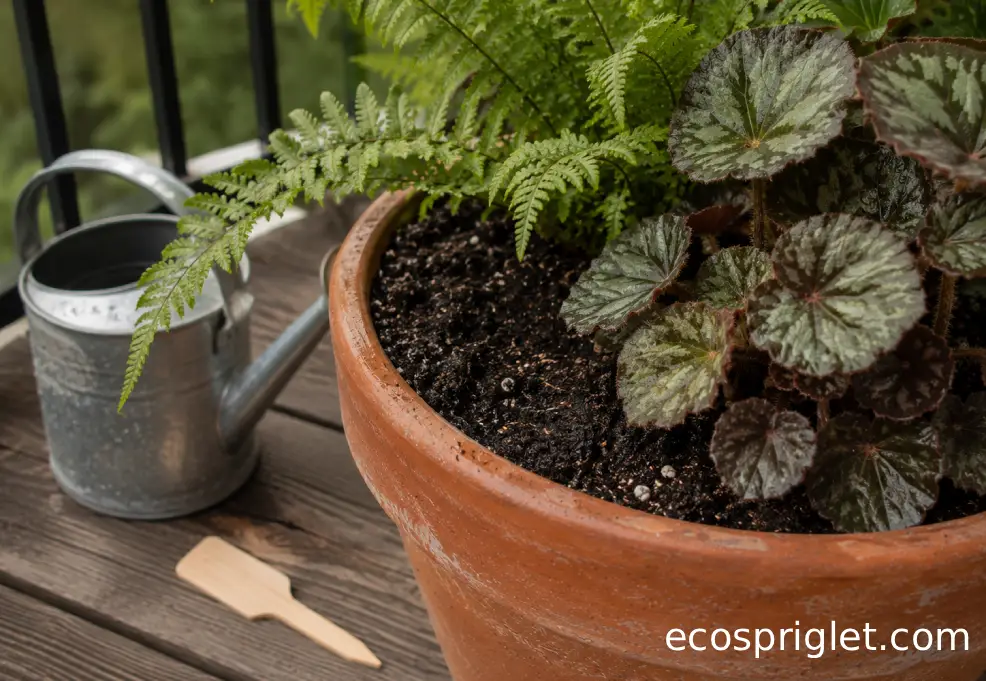
- Soft Flower Pot: Tuberous begonia, fern, and trailing plectranthus in a 14- to 16-inch pot.
- Foliage Drama Pot: Coleus, heuchera, and small ivy in bright shade.
- Low-Maintenance Porch Pot: Hosta, compact fern, and impatiens in a wide container with drainage.
For more small-space setup help, see our balcony container garden setup guide. If you are building a plant shelf for shade, pair this article with small patio garden ideas for renters.
Conclusion: A Shady Container Garden Can Still Feel Abundant
Shade is not a gardening dead end. It is a different design brief. The strongest container plants in shade usually bring texture, leaf color, steady moisture tolerance, and a little restraint. Once you know whether your space is bright shade, dappled shade, or deep shade, the plant choices become much easier.
Start with one generous pot rather than five tiny ones. Give it drainage holes, fresh potting mix, and plants that match your actual light. For flowers, begin with begonias or impatiens. Foliage options include coleus, hosta, ferns, heuchera, or caladium if pets cannot reach it. To add year-round structure, consider a compact evergreen only after checking hardiness, mature size, and balcony weight.
The best shade plants for containers are the ones you can care for consistently in your real apartment conditions: no hose, limited storage, shifting light, wind, pets, neighbors below, and summer heat bouncing off hard surfaces. Keep the first planting simple, observe it for a season, and adjust from there.