Vertical gardening is one of the easiest ways to make a small apartment balcony, patio, or plain boundary wall feel greener without giving up floor space. Instead of spreading pots across every inch of decking, you train plants upward, hang pockets, stack planters, or use trellises so leaves, flowers, and vegetables grow where your eye naturally travels.
I like this approach because it solves two common apartment-gardening problems at once: not enough room and not enough softness. A long gray wall, a narrow balcony rail, or an empty corner can become a practical growing zone with herbs, leafy greens, strawberries, compact flowers, or climbing vegetables. The trick is to keep the structure safe, the containers realistic, and the plant choices matched to your light.
Most vegetables and many flowering plants need at least 6 hours of direct sun, while shade-friendly foliage and herbs can handle less. Containers also dry faster than in-ground beds, so a vertical setup works best when you can reach every pocket or pot for watering. Sources such as University of Minnesota Extension, University of Maryland Extension, Illinois Extension, Penn State Extension, RHS, UC ANR, and ASPCA are useful checkpoints for container sizes, drainage, safe materials, wall supports, and pet safety.
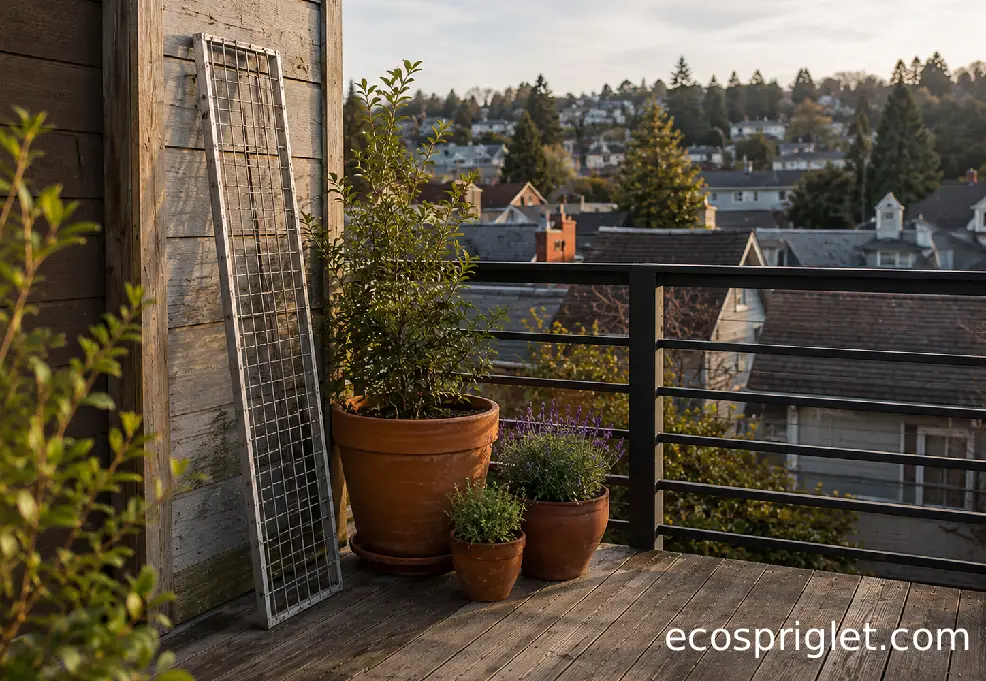
Start With the Space You Actually Have
The best vertical gardens begin with a tape measure, not a shopping cart. Measure the width of your wall, railing, or balcony corner, then note the depth you can spare without blocking the door, chair, or walkway. On a small balcony, I try to keep at least 24 inches of clear walking space so watering does not become a sideways shuffle every morning.
Next, watch the light for one full day. A south- or west-facing balcony often suits tomatoes, peppers, cucumbers, beans, strawberries, basil, thyme, and flowering annuals. East-facing spaces are gentler and can be excellent for lettuce, parsley, cilantro, mint in its own pot, ferns, and shade-tolerant ornamentals. North-facing balconies can still work, but they are usually better for foliage, herbs that tolerate partial shade, and decorative wall pockets rather than fruiting vegetables.
Weight and wind matter more once plants move upward. Wet potting mix, containers, trellises, and mature foliage all add load. Before fastening anything to a railing or wall, check your lease, building rules, and balcony weight limits. For renters, freestanding ladder shelves, plant stands, and weighted trellis planters are often safer than drilling. RHS also advises using strong mesh or trellis for vertical vegetable walls and checking that the wall itself is sound before installation.
For a first setup, choose one vertical surface and one growing goal. Herbs by the kitchen door, a green privacy screen, or a few climbing vegetables is easier to manage than trying to cover every wall in the first weekend.
Choose the Right Vertical System for Your Balcony
Vertical garden ideas fall into a few practical categories. The right one depends on whether you want food, flowers, privacy, or a softer view from indoors. I usually suggest starting with the simplest system you can water comfortably; a vertical garden that looks clever but needs a step stool every day quickly becomes annoying.
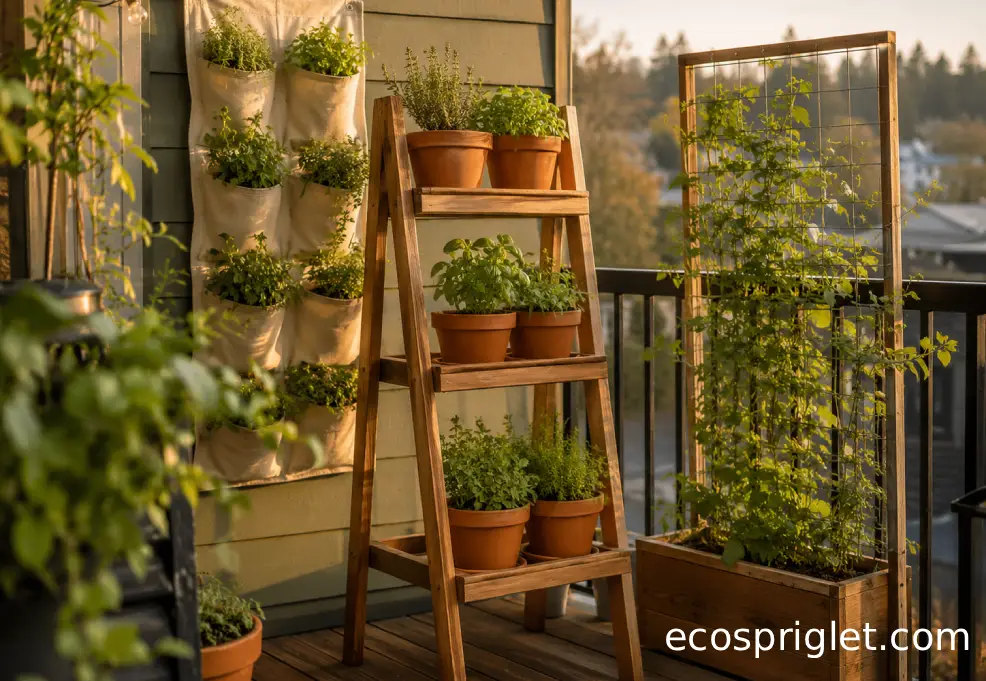
- Use a ladder shelf for renters because it is movable, does not need wall anchors, and works well for herbs, lettuce, small flowers, and trailing plants.
- Use a trellis planter for climbing beans, peas, cucumbers, compact tomatoes, nasturtiums, and flowering vines. Choose a planter with a broad base so the trellis does not act like a sail in wind.
- Use wall pockets for shallow-rooted herbs, strawberries, pansies, small lettuces, and decorative foliage. Check moisture daily in hot weather because small pockets dry quickly.
- Use railing planters only where your building allows them, and secure them on the inside of the railing when possible.
- Use stackable planters for leafy greens, herbs, and strawberries, but rotate them occasionally so lower pockets do not sit in shade all season.
Container depth sets the limit. Leaf lettuce, parsley, and many herbs can grow in smaller pots, while fruiting crops need more root room and steadier moisture. Illinois Extension’s container guidance shows how quickly soil volume rises as pot diameter increases, with a 12-inch pot holding about 5 gallons and a 16-inch pot about 10 gallons. That is why a tall tomato in a tiny wall pocket struggles no matter how sunny the balcony is.
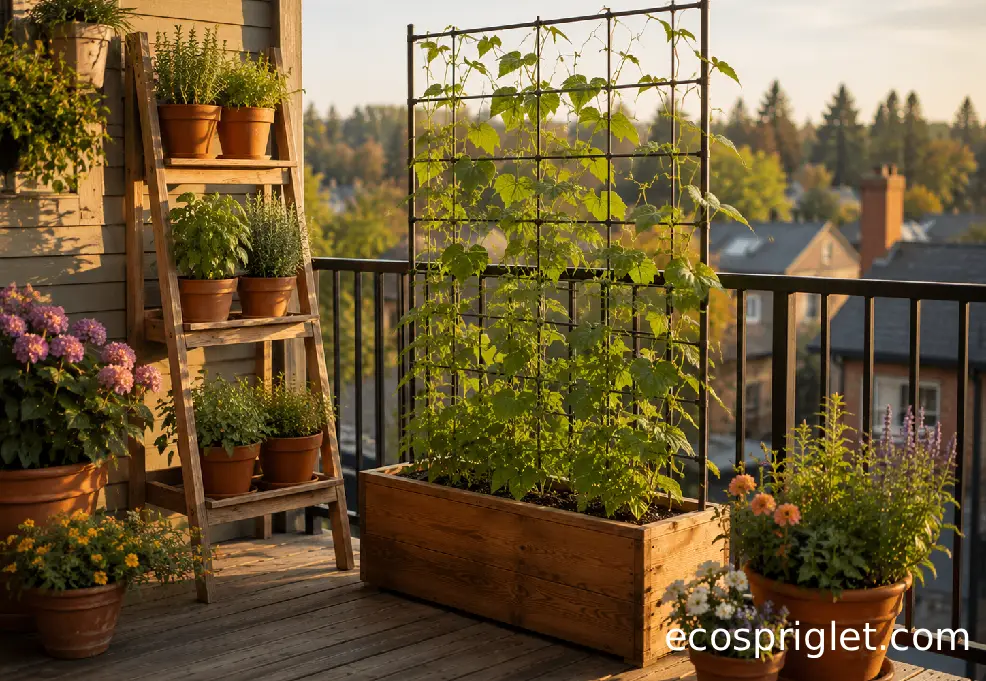
For most apartment gardeners, a mixed setup works best: one stable floor planter with a trellis, one shelf of herbs, and one decorative wall or railing feature. It gives you height without making the whole balcony feel top-heavy.
Turn a Long Gray Boundary Wall Into a Living Feature
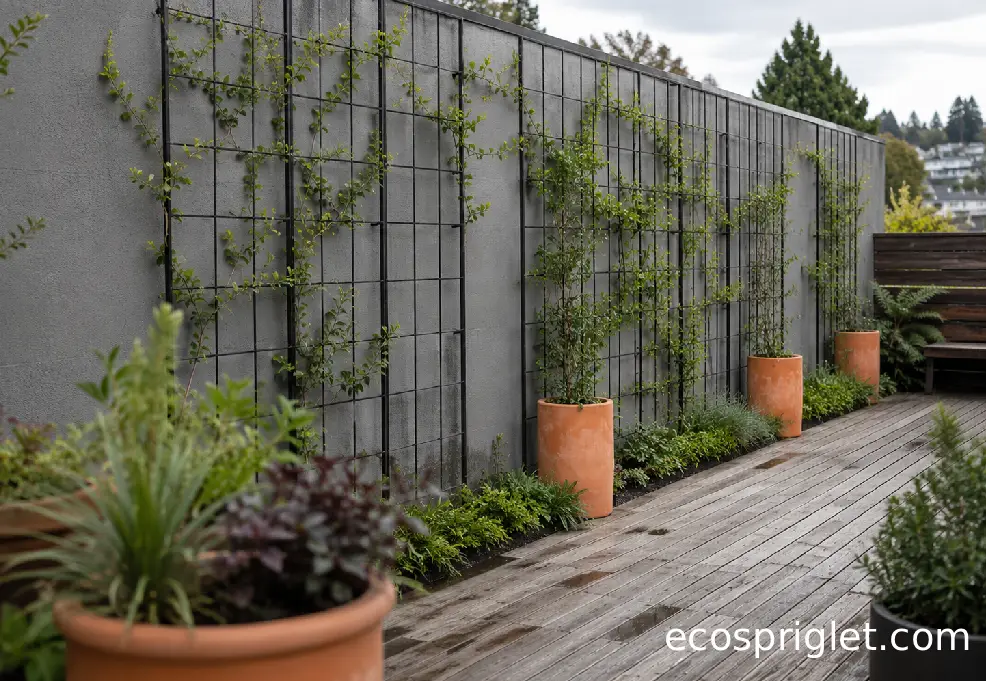
Long gray boundary walls can make a small outdoor space feel boxed in, but they are also excellent blank canvases. The goal is not to cover every inch immediately. A better approach is to create rhythm: a vertical panel, a small gap, another planted section, then a low pot or bench. That pattern feels calmer and is easier to maintain.
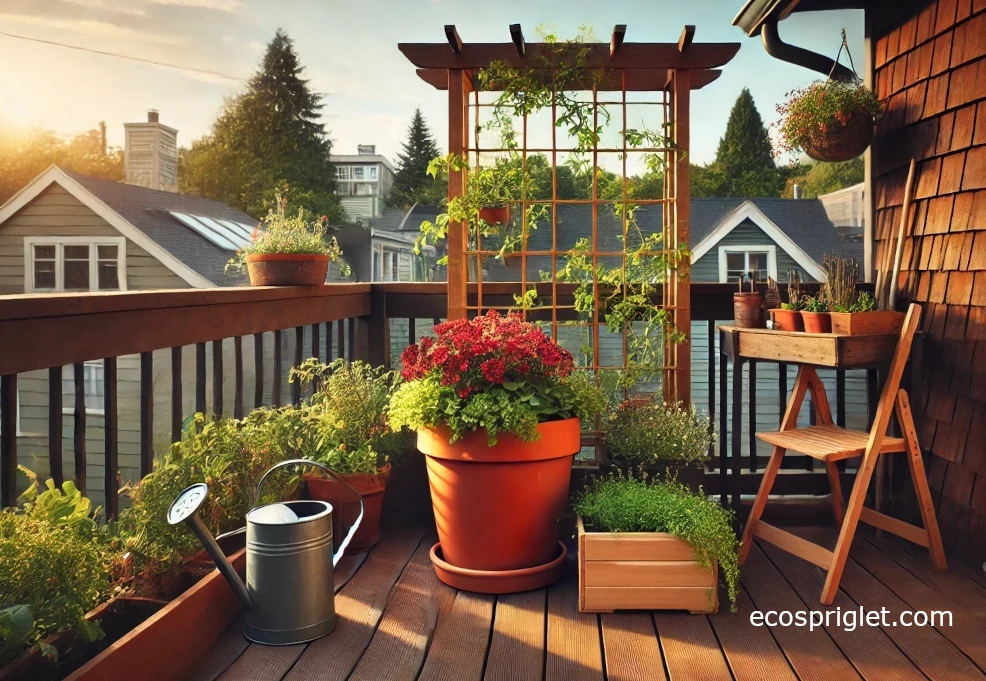
For renters or anyone unsure about drilling, use freestanding trellis panels set in long rectangular planters. Put the heaviest containers at the base, then train climbing plants upward with soft ties. If the wall is yours to modify, use battens or spacers to hold trellis or mesh slightly away from the wall so air can circulate behind the plants. RHS recommends strong supports and, for climbers, keeping trellis or wires raised from wall surfaces rather than pressing plants flat against masonry.
For a soft, leafy wall, try climbing nasturtiums, runner beans, peas, compact cucumbers, jasmine where climate allows, or annual flowering vines in containers. For a lower-maintenance look, mix vertical planters with hardy herbs, sedges, ornamental grasses in pots, trailing thyme, strawberries, and seasonal flowers. If the wall gets strong afternoon sun, light-colored containers can help keep roots cooler than dark plastic.
I once tried to hide a drab fence with too many small pots in a row. It looked busy and dried out constantly. The version that finally worked was simpler: two tall trellis planters, three matching terracotta pots below, and one open stretch of wall left visible. Negative space is not wasted space; it makes the greenery look intentional.
Grow Vegetables Upward Without Overloading the Setup
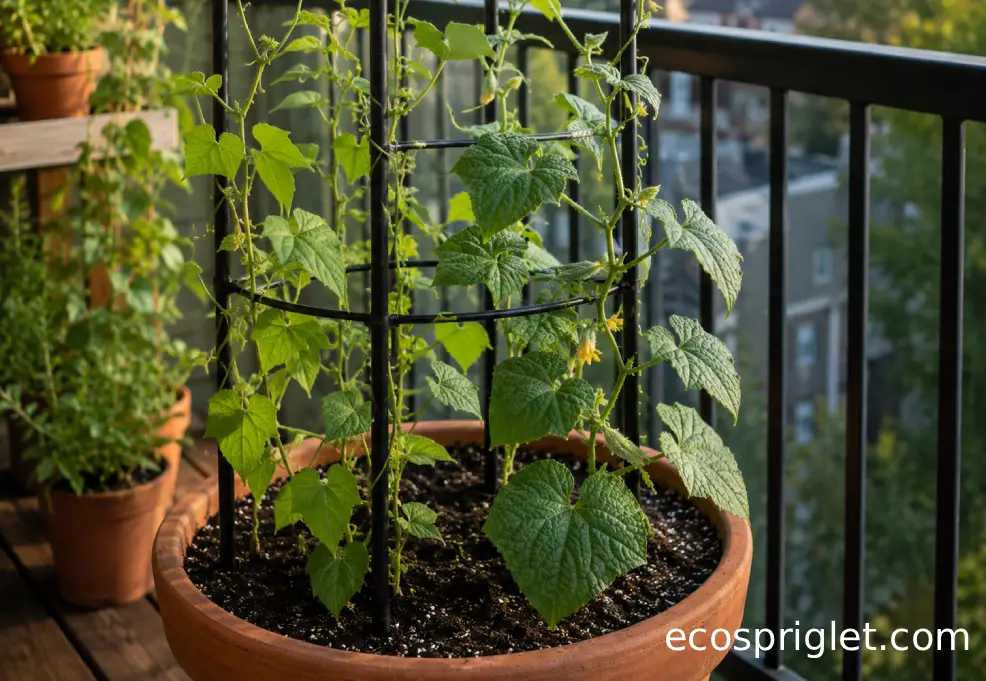
Vertical gardening vegetables work best when the plant naturally climbs, twines, or can be tied gently to a support. Pole beans, peas, cucumbers, small melons only with very strong support, indeterminate tomatoes, cherry tomatoes, and vining nasturtiums are classic choices. Lettuce, spinach, arugula, parsley, chives, and strawberries work better in shelves, pockets, towers, and stackable planters.
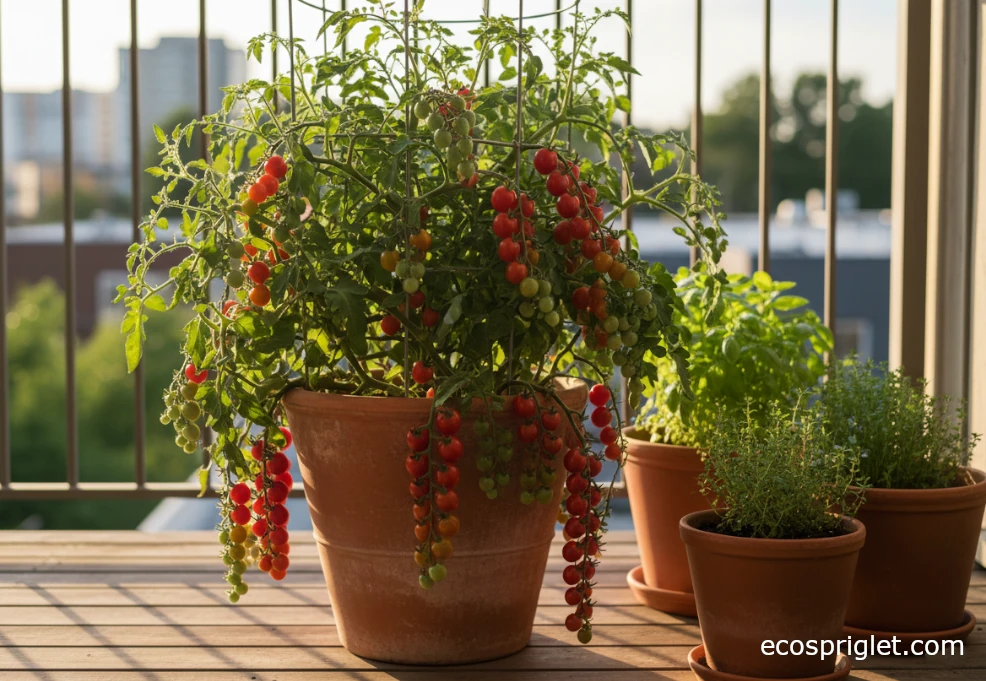
For fruiting vegetables, be generous with root space. A compact tomato usually needs a larger container than a beginner expects; a 5-gallon pot is often the bare minimum for small tomato types, while larger plants are steadier in 10 gallons or more. Peppers and compact eggplants can often manage in medium containers, but they still need drainage holes, quality potting mix, and consistent watering. Penn State Extension cautions against using straight garden soil in containers because it can be too heavy and dense, while University of Maryland Extension notes that rocks or gravel in the bottom do not improve drainage and can worsen waterlogging.
| Vertical Crop | Best Support | Container Starting Point | Small-Space Note |
|---|---|---|---|
| Pole Beans | Trellis, strings, or bamboo teepee | At least 10–12 inches deep | Good beginner crop for sunny balconies |
| Peas | Netting or twiggy supports | At least 8–10 inches deep | Better in cool spring or fall weather |
| Cucumbers | Strong trellis with soft ties | 5 gallons or larger | Choose compact or patio types |
| Cherry Tomatoes | Cage, stake, or trellis panel | 5–10 gallons or larger | Needs strong sun and steady moisture |
| Lettuce and Greens | Shelf, tower, or wall pocket | 6–8 inches deep | Best with morning sun or bright shade in heat |
Most edible crops still need regular feeding because container nutrients are used up quickly. University of Minnesota Extension recommends slow-release fertilizer or supplemental liquid feeding every couple of weeks for container gardens. Water when the top inch of potting mix feels dry, and check daily during summer heat or wind.
Use Pallets Carefully for DIY Vertical Gardens
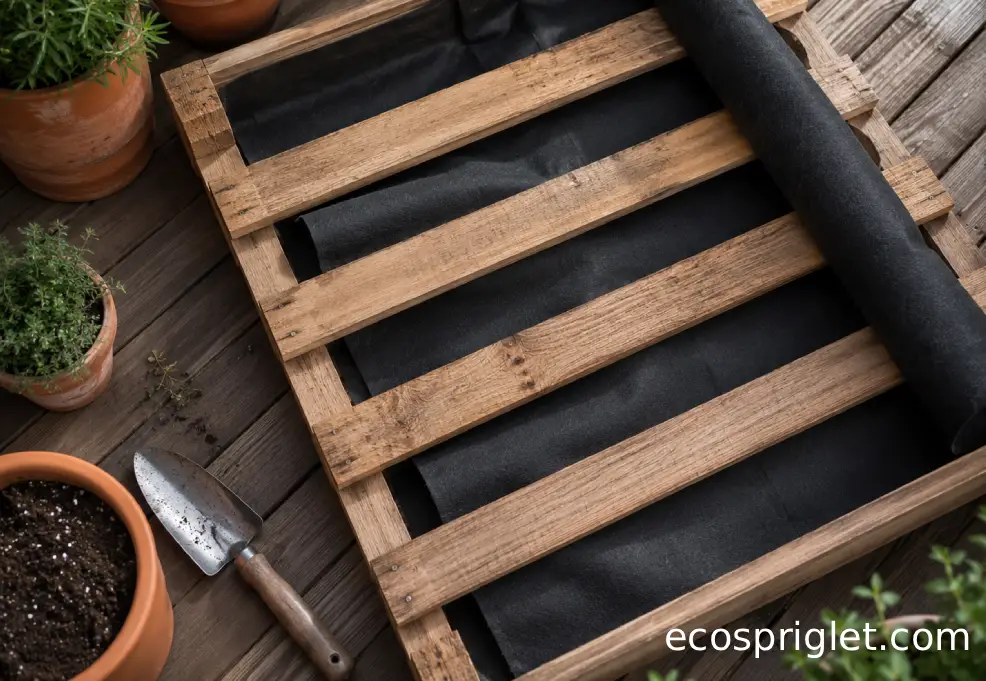
Vertical pallet gardening can be charming, affordable, and very apartment-friendly, but the safety details matter. Pallets are shipping materials, so you need to know how the wood was treated and what condition it is in before planting anything edible. UC ANR advises choosing heat-treated pallets marked HT and avoiding pallets marked MB for methyl bromide; Penn State Extension gives the same caution and says not to use MB-stamped pallets.
Reject pallets that are oily, stained, moldy, heavily splintered, or unmarked if you cannot confirm their history. For herbs and greens, I prefer to line pallet pockets with landscape fabric and set small nursery pots inside rather than filling the whole pallet with loose mix. It makes watering cleaner, keeps plants easier to replace, and reduces the chance of soil washing down the balcony wall.
- Sand rough edges before planting so splinters do not catch gloves, sleeves, or leaves.
- Use potting mix, not garden soil, because pallet pockets need a light medium that drains and holds moisture evenly.
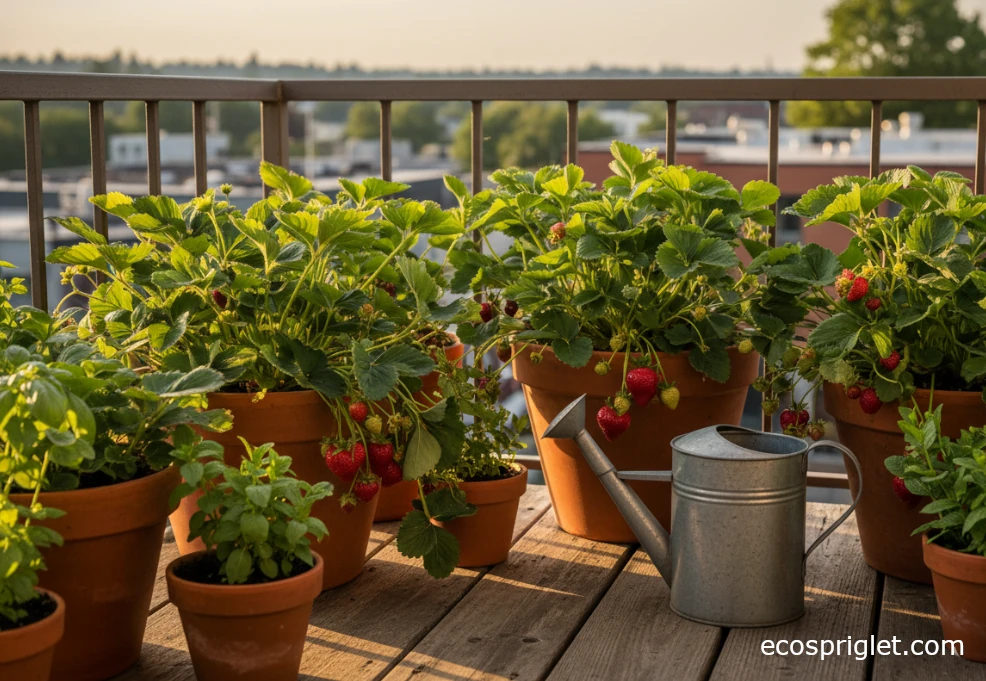
- Plant shallow-rooted crops such as thyme, parsley, chives, lettuce, pansies, violas, and strawberries.
- Let the pallet lie flat for 1–2 weeks after planting so roots settle before you stand it upright.
- Lean or fasten the pallet securely so wind cannot tip it forward.
The mistake I learned the hard way was packing every slot with thirsty plants. A pallet full of basil, lettuce, and strawberries looked terrific for about ten days, then the top dried out while the bottom stayed soggy. A better mix is half plants, half breathing room, with the thirstiest pots at hand height where watering is easiest.
Combine Raised Beds and Vertical Supports
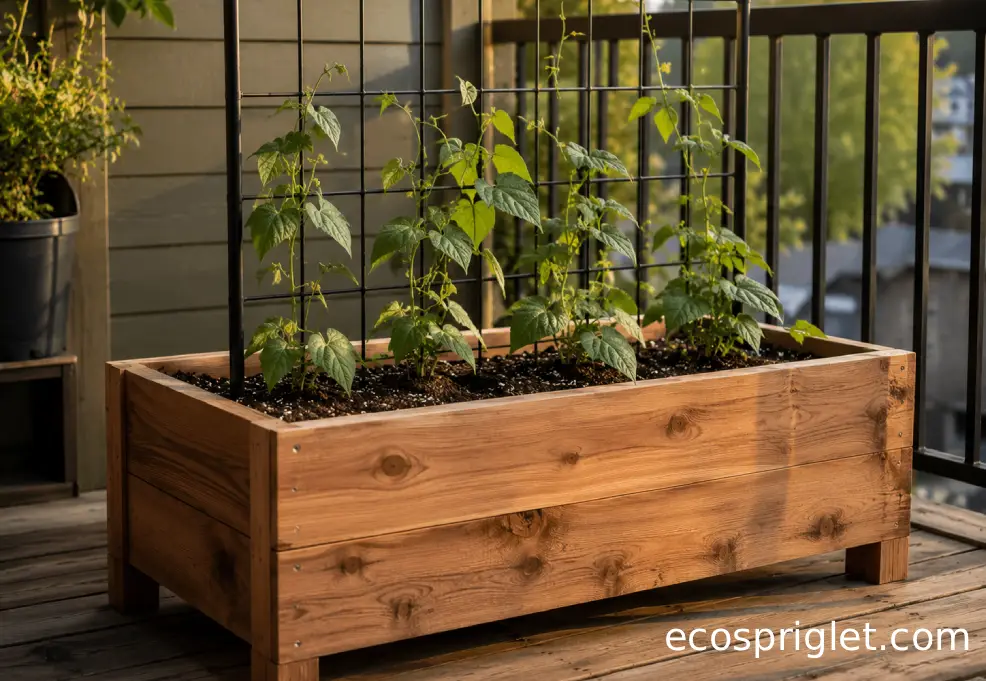
Raised bed vertical gardening is useful when you have a patio, rooftop terrace, or larger balcony where a floor-level container feels too low. A raised planter box brings soil to a comfortable working height, while a trellis at the back turns the bed into a productive green screen. It is especially good for peas, beans, cucumbers, nasturtiums, and compact flowering vines.
Keep the planter depth realistic. Shallow tabletop-style beds are great for salad greens, radishes, herbs, and strawberries, but climbing vegetables need deeper root room and more stable moisture. A raised box that is 10–12 inches deep can handle many leafy crops; fruiting vegetables usually appreciate deeper soil and larger total volume. University of Minnesota Extension notes that raised beds should be placed where light and water access match the plants being grown, and that same rule applies on patios and balconies.
Put taller trellised crops on the back or wind-sheltered side of the planter so they do not shade everything else. In a sunny box, I like beans or peas on the trellis, lettuce in the front during cooler months, and a few herbs at the corners. For a summer balcony, swap the lettuce for heat-tolerant herbs and flowers once the afternoon sun gets intense.
Raised planters also make watering tidier because runoff is easier to catch with a saucer or tray. Just do not seal the drainage holes. Illinois Extension is clear that drainage holes are critical because roots need air as well as water. If runoff is a problem for neighbors below, use saucers, water slowly, and empty standing water after the pot has drained.
Keep Vertical Gardens Healthy in Heat, Wind, and Shade
A vertical setup dries unevenly. Top pockets get more sun and wind, middle pockets often grow fastest, and lower pockets may stay shaded or damp. The fix is not watering everything on a strict schedule; it is checking the actual mix. Push a finger 1 inch into the potting mix. If it feels dry at that depth, water slowly until moisture reaches the root zone. If it still feels cool and damp, wait.
Morning watering is usually easiest because leaves dry during the day, which can reduce conditions that favor fungal disease. University of Minnesota Extension recommends watering near the base of plants and avoiding wet foliage where possible. On hot, windy balconies, small wall pockets may need daily checks, while larger 5–10 gallon containers may hold moisture longer.
- If leaves wilt in the afternoon but recover by evening, the plant may be reacting to heat rather than drought. Check the soil before adding water.
- If lower leaves yellow and the mix smells sour, drainage may be poor or the container may be staying too wet.
- If herbs become leggy, move them toward brighter light or prune lightly above a leaf node to encourage bushier growth.
- If a trellis rocks in the wind, lower the plant height, add a broader container, or move the whole setup to a more sheltered corner.
Shade is not failure; it just changes the plant list. For bright shade, try parsley, mint in its own pot, chives, lettuce in cool weather, ferns, spider plants, and begonias. For pet households, check plant safety before hanging tempting trailing foliage at nose height. ASPCA lists golden pothos and philodendrons as toxic to cats and dogs, while spider plant is listed as non-toxic.
Common Mistakes to Avoid
Most vertical garden problems come from enthusiasm, not neglect. It is easy to buy too many plants, hang them too high, and assume the wall will take care of itself. A living wall still needs the same basics as any container garden: enough light, enough root room, drainage, reachable watering, and a structure that stays safe when plants are wet and full-sized.
- Using tiny pockets for large vegetables. Save wall pockets for herbs, greens, strawberries, and flowers. Put tomatoes, cucumbers, and peppers in deeper containers.
- Forgetting wet weight. Potting mix is much heavier after watering. Keep heavy containers on the floor, not hanging from weak rails or unknown wall fixings.
- Adding gravel for drainage. Use containers with drainage holes instead. University of Maryland Extension explains that gravel at the bottom can raise the perched water table and lead to waterlogged mix.
- Planting every slot. Leave space for airflow and growth. Crowded pockets dry unevenly and invite pests.
- Letting vines grip unsafe surfaces. Use trellis, mesh, or wires rather than encouraging plants to cling directly to rented walls, painted surfaces, gutters, or railings.
I learned the overplanting lesson with a balcony herb wall that looked full on day one and exhausted by week four. Now I plant vertical gardens at about two-thirds of their possible capacity and let growth fill the gaps. It looks a little modest at first, but by midsummer it is healthier, easier to water, and much less prone to mildew.
Simple Vertical Garden Ideas to Try First
For a first project, choose something you can build in an afternoon and maintain with one watering can. A vertical garden for an apartment balcony does not need to be dramatic to be useful. Even three levels of herbs can change how the space feels and how often you cook with fresh leaves.
Try a herb ladder with basil, parsley, chives, thyme, and oregano if you have bright light. Keep mint in its own pot because it spreads aggressively. For a sunny food project, plant pole beans or peas in a rectangular planter with a trellis and add nasturtiums at the front. For a shady balcony, use ferns, spider plants, parsley, begonias, and trailing foliage plants that are safe for your household.
If you are working with a plain boundary wall, start with one freestanding trellis panel and repeat the same pot color below it. A long wall looks more polished when the containers match, even if the plants vary. For a DIY look, a safe heat-treated pallet can become a small herb wall, but keep it shallow-rooted and easy to inspect. In a raised bed setup, add a back trellis and grow upward from the rear while keeping lower greens or flowers at the front.
For more small-space planting ideas, you might pair this project with our indoor herb guide or plan the edible side with our container vegetable garden basics. Start with one vertical zone, learn how your balcony dries after watering, then expand when the first setup feels easy.
Vertical gardens are not just a space-saving trick. They are a way to turn awkward apartment edges into useful growing areas: a railing that holds herbs, a gray wall that becomes softer, a raised planter that grows upward instead of outward. The strongest designs are usually the simplest ones: stable base, reachable containers, good drainage, plants matched to the light, and enough breathing room for growth.
My advice is to begin with a modest system you can care for in five minutes: one trellis planter, one shelf, or one pallet-style herb wall. Check moisture with your finger, water at the base, feed lightly during active growth, and adjust after two or three weeks instead of judging the setup on day one. If a plant struggles, that is useful information, not failure. Move it, swap it, or simplify the design.
Once your first vertical garden settles in, you will see possibilities everywhere: balcony corners, bare fences, sunny wall strips, kitchen-door herb stations, and narrow patios that never had enough floor space before. Start small, build safely, and let the garden climb at a pace you can actually enjoy.