If you’ve ever brought home a “flowering indoor plant” that looked incredible for two weeks… and then never bloomed again, you’re not alone. Apartments are full of little bloom-killers we don’t notice at first: weaker light, dry winter heat, and that one spot near the vent that swings from cozy to arctic overnight.
The good news? A lot of indoor flowering plants are perfectly happy in small spaces once you match them to your light and give them a steady routine. In my place, the biggest shift was learning to stop guessing. I used a simple moisture check, repotted only one size up, and treated “bright indirect light” like a real location (not a vibe). The difference was dramatic—more buds, fewer sad yellow leaves, and blooms that actually returned.
This guide walks through what makes flowering indoor plants bloom, which “best indoor flowering plants” are genuinely beginner-friendly, and how to plant indoor flowers in pots without turning them into root-rot experiments.
What Makes Indoor Flowering Plants Bloom
Flowers are expensive for a plant to make. Indoors, the “energy budget” comes mostly from light, and that’s why many flowering indoor house plants do best when you treat light like their main fuel.
Here’s what usually needs to line up for reliable blooms:
- Enough light: Not necessarily direct sun, but bright, consistent light near a window (or a grow light) for most bloomers.
- Steady moisture (not soggy): Roots that swing between swampy and bone-dry tend to drop buds and pause flowering.
- Predictable temperatures: Many popular indoor flowering plants prefer typical room temps and hate drafts and heater blasts.
One small habit that helps: rotate your pot a quarter turn every week so growth stays even and buds don’t lean hard toward the glass. It’s also worth remembering that many plants “rest” after blooming—so reblooming is often about steady care, not heroic interventions.
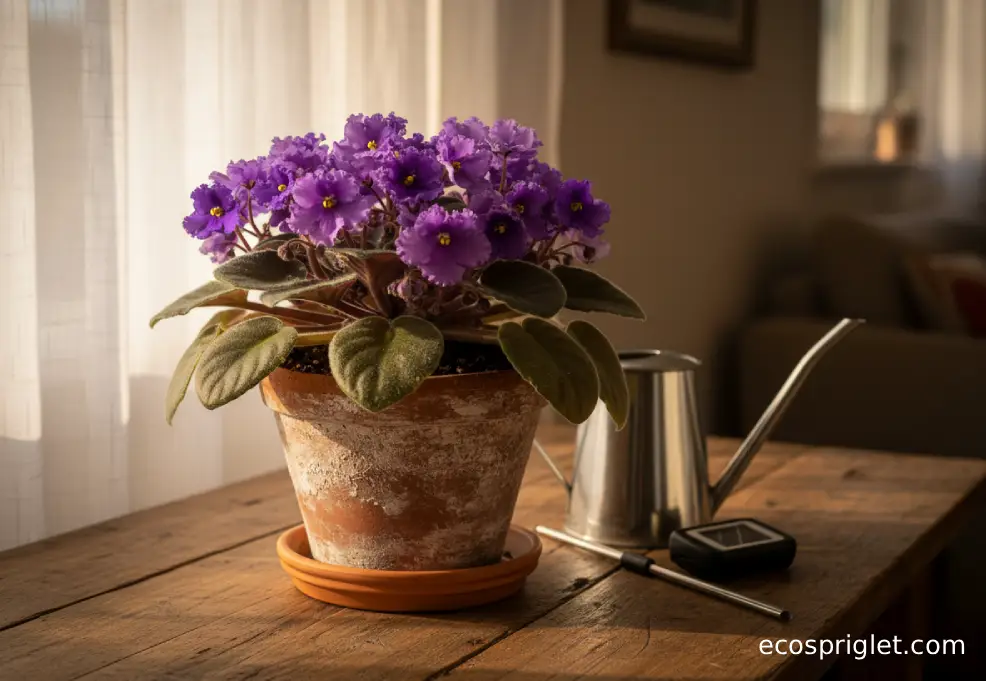
Match Plants to Your Window Light
I remember when I first tried to get a peace lily to bloom again—I kept moving it deeper into the room because “it likes low light,” and then I wondered why it only made leaves. The lesson: plenty of houseplants survive in lower light, but blooms usually ask for brighter conditions.
A quick, apartment-friendly way to think about light:
- Bright light: Right next to your brightest window (often south or west).
- Bright indirect: Near a bright window with a sheer curtain, or a spot that gets strong ambient light but not harsh midday rays.
- Medium light: A few steps back from the window; decent daylight, but not “sunny.”
- Low light: Far from windows or in dim rooms—fine for foliage plants, tougher for flowers.
| Window Direction | What It Usually Feels Like | Flowering Plant Matches |
|---|---|---|
| South | Brightest (often direct sun) | Kalanchoe, hibiscus, some geraniums, jasmine (if you can give real sun) |
| East | Gentle morning sun | African violet, holiday cactus, orchids (bright but not scorching) |
| West | Hot afternoon sun | Great for sun-lovers if you soften heat with a sheer curtain |
| North | Soft, indirect light | Peace lily may grow; blooms usually improve with brighter placement |
If your apartment is dim, don’t take it personally. A simple LED grow light on a timer (10–12 hours/day) can turn “no blooms ever” into “buds are back.”
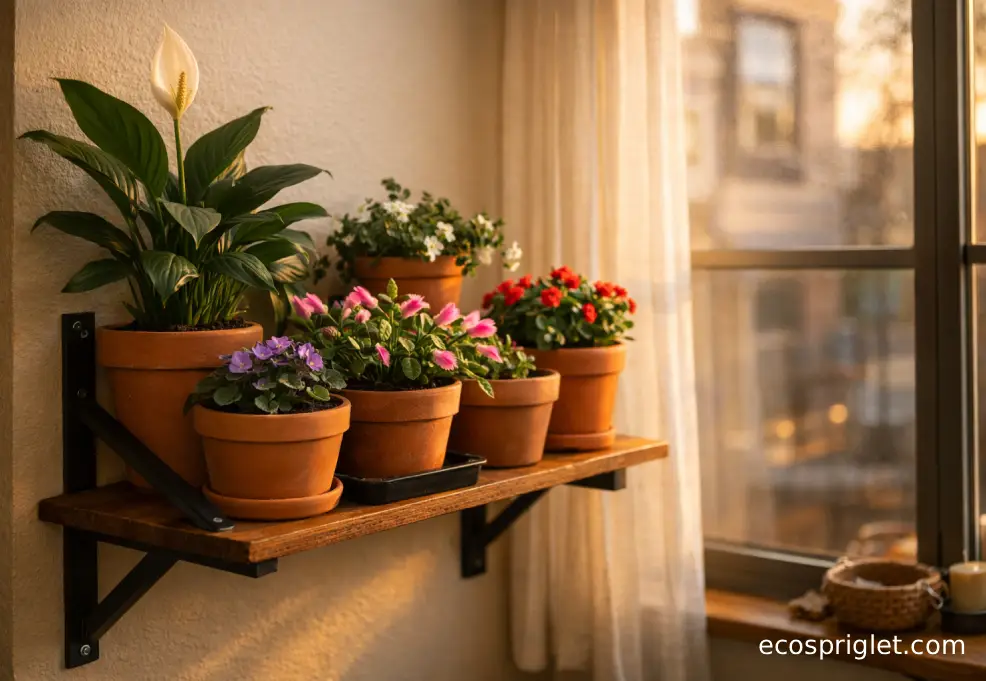
Best Indoor Flowering Plants for Beginners
If you want the “best flowering plants indoors,” pick from plants that are happy with consistent indoor temps and don’t demand full outdoor sun all day. These are the ones I recommend most often because they’re forgiving and widely available.
| Plant | Light | Watering Cue | Bloom Tip | Pet Note |
|---|---|---|---|---|
| African violet (Saintpaulia) | Bright indirect | Water when the surface feels dry; avoid cold water on leaves | Even light + steady moisture = steady blooms | Listed as non-toxic by ASPCA |
| Phalaenopsis orchid | Bright indirect | Water thoroughly, then wait until the mix is nearly dry | Keep water out of the crown; morning watering helps | Listed as non-toxic by ASPCA |
| Holiday cactus (Schlumbergera) | Bright indirect | Don’t let the mix stay wet; don’t let it go bone-dry | Cooler nights can help set buds (seasonal) | Listed as non-toxic by ASPCA |
| Peace lily (Spathiphyllum) | Medium to bright indirect | Water when the top inch is dry; droop can be a late signal | Brighter light usually means more blooms | Check ASPCA (can irritate pets) |
| Anthurium | Bright indirect | Let the top inch dry, then water | Warmth + steady light helps spathes keep coming | Check ASPCA (can irritate pets) |
| Bromeliad | Bright indirect | Keep mix lightly moist; many like water in the “cup” | One main bloom cycle, then pups (baby plants) | Check ASPCA |
| Kalanchoe | Bright light (some sun OK) | Let the pot dry more between waterings | Needs long nights to rebloom (short-day plant) | Check ASPCA |
| Begonia (many types) | Bright indirect | Even moisture; don’t leave it soaked | Pinch leggy growth to encourage more flower sites | Check ASPCA |
Care details vary by species, but the patterns above are solid starting points supported by University of Minnesota Extension (African violets) and the American Orchid Society (phalaenopsis orchids).
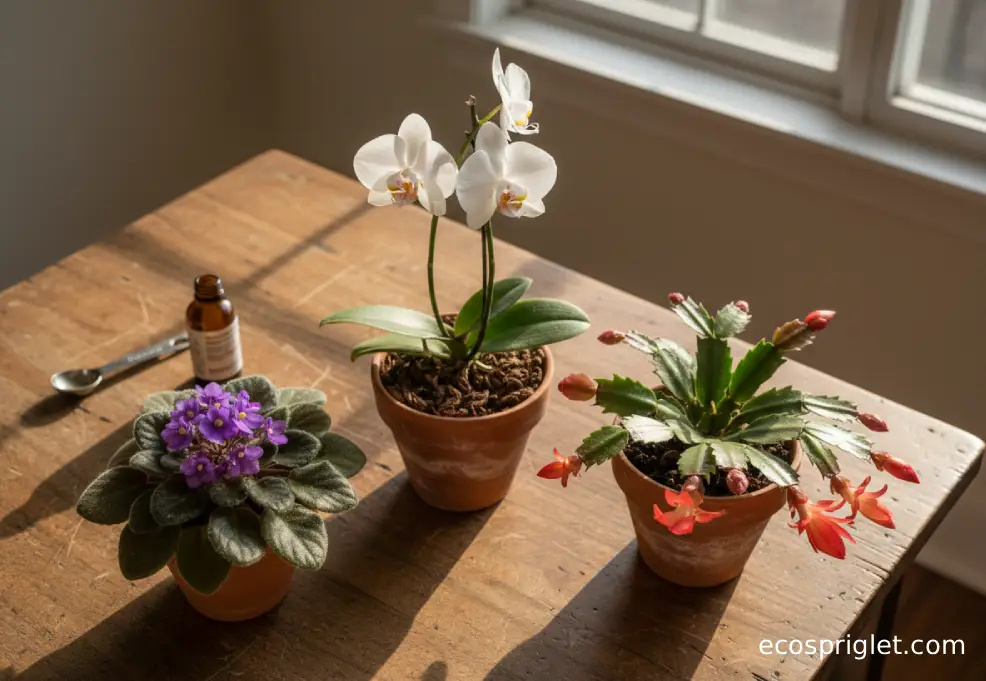
Potting Mix and Containers That Keep Roots Healthy
If indoor flowering plants fail, it’s often not “lack of fertilizer” first—it’s roots that stayed wet too long. Two fixes solve most of that: the right pot size and a potting mix that drains but still holds some moisture.
My non-negotiables:
- Use a pot with a drainage hole. Decorative cachepots are fine, but keep the plant in a draining nursery pot inside.
- Repot only one size up. A common guideline is 1–2 inches wider than the current pot. Oversized pots keep extra soil wet and invite rot. (University of Illinois Extension, NC State Extension, and RHS all emphasize “slightly larger,” not huge jumps.)
- Skip the gravel layer. Don’t fill the bottom of your pot with rocks to “improve drainage.” It can leave water sitting closer to roots. Washington State University Extension and University of Maryland Extension both advise against this practice.
For most flowering indoor house plants, a quality indoor potting mix is enough. If a plant hates staying wet (like many succulents), use a grittier mix made for cacti and succulents. The goal is simple: water should move through, but the mix shouldn’t collapse into mud.
Watering and Humidity Without Overthinking It
If I could tattoo one rule onto every new plant parent’s brain, it’d be this: water based on the soil, not the calendar.
A simple routine that works for many indoor flowering plant types:
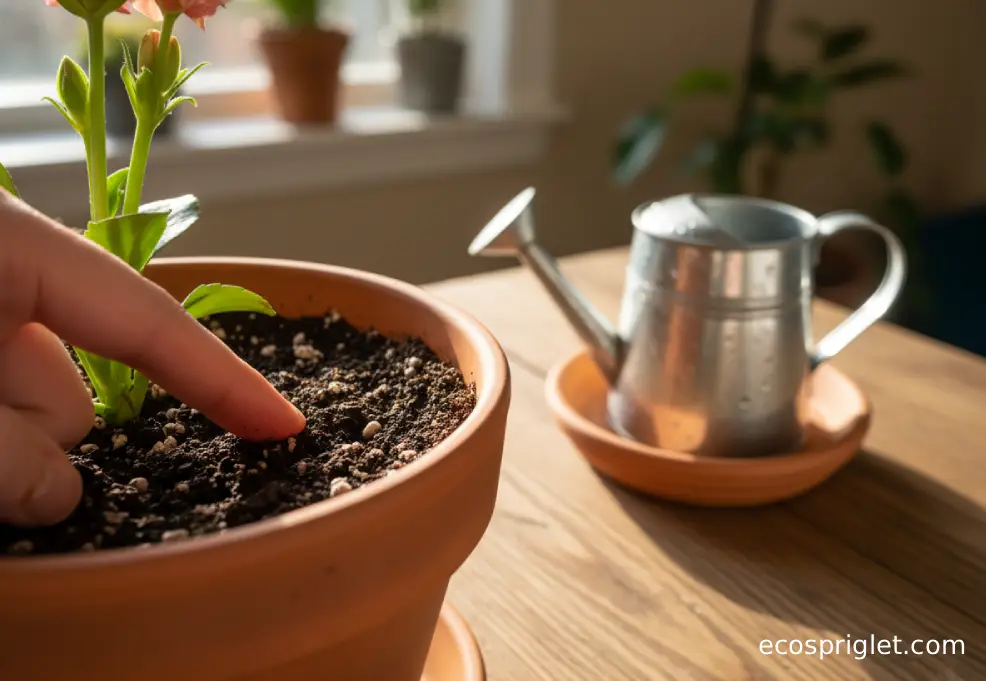
- Check the top 1 inch of mix. If it’s dry, water. If it’s still cool and damp, wait a couple days.
- Water thoroughly. Keep going until water runs out the drainage hole, then empty the saucer so roots don’t sit in it.
- Adjust for seasons. In winter, many plants drink less (lower light); in summer, pots can dry faster.
Humidity is the other quiet factor. Most houseplants do well around 40–60% relative humidity, though some tropical bloomers appreciate higher. If your leaf edges crisp up in winter, it’s a hint your air is too dry. University of New Hampshire Extension and University of Missouri Extension both discuss that 40–60% range as a practical target for many indoor plants.
My apartment-friendly humidity moves: group plants together, run a small humidifier nearby, and keep bloomers away from heater vents and drafty doors.
Fertilizer and Light Boosters for More Flowers
Fertilizer won’t replace light, but it can help once your plant is already growing steadily. For most flowering indoor plants, I stick to a low-drama schedule:
During active growth: feed with a balanced houseplant fertilizer at half strength about once a month. If your plant is pushing buds, stay consistent—but don’t “double up” because you’re excited. Overfertilizing can cause weak growth, leaf burn, and fewer flowers.
During low-light months: back off. Many plants slow down in winter, so extra fertilizer often just builds salts in the pot.
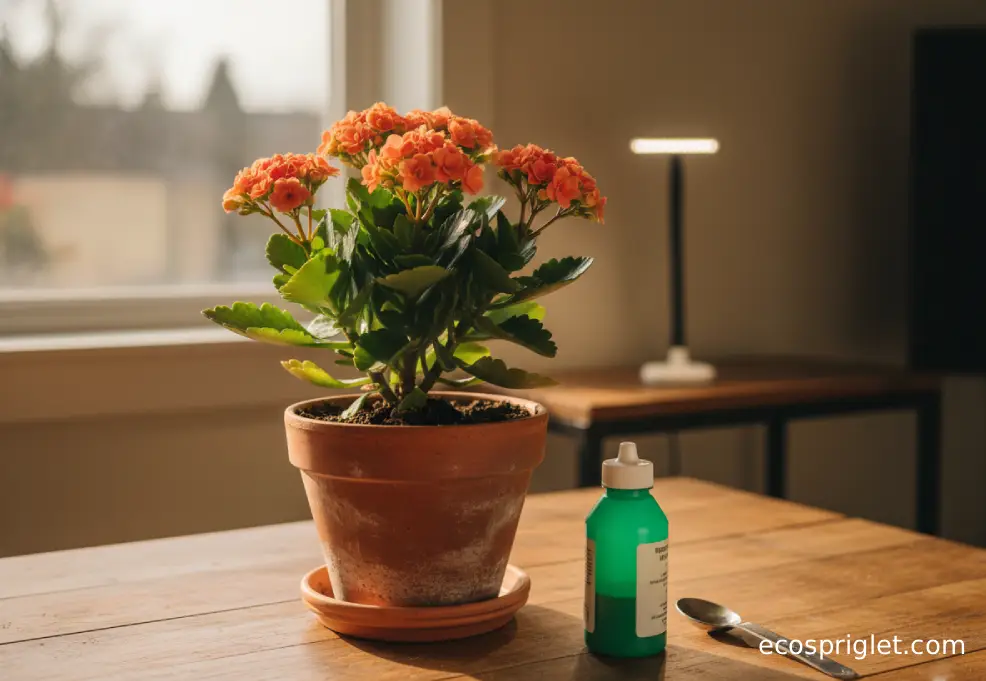
If you’re chasing reblooms on specific plants, learn their trigger. For example, kalanchoe is a short-day plant—long nights for several weeks can help initiate buds, and Illinois Extension notes this photoperiod effect in kalanchoe care.
If your place is low-light, a small grow light can be more “bloom boosting” than any fertilizer. Put it on a timer and let it do the boring work.
Common Mistakes New Indoor Gardeners Make
- Overpotting: jumping to a much bigger pot “to give roots room” usually keeps soil wet too long. Size up 1–2 inches instead.
- Rocks in the bottom for drainage: it doesn’t fix drainage and can make water sit higher in the pot.
- Watering on a schedule: weekly watering might be right—or wildly wrong—depending on light, pot size, and season.
- Drafty placement: flower buds drop fast near cold windows, exterior doors, or heater vents.
- Assuming “low light tolerant” means “will bloom in low light”: many plants live, but don’t flower, in dim corners.
If you fix just the first two mistakes, you’ll prevent a lot of the classic “my plant indoor flowers are disappearing” frustration.
Troubleshooting: When Flowers Won’t Show Up
If You Have Leaves but No Blooms
This is almost always light. Move the plant closer to your brightest window, or add a grow light for 10–12 hours/day. Then give it a few weeks—plants don’t flip a switch overnight.
If Buds Form and Then Drop
Look for sudden changes: a draft, a heater vent, a missed watering followed by a soak, or a move from one side of the room to the other. Bud drop is often the plant saying, “I can’t afford this right now.” Stabilize the routine and avoid big swings.
If Leaves Yellow and Soil Stays Wet
That’s a root-health alarm. Check for a drainage hole, empty the saucer after watering, and consider repotting into fresh mix in a pot only slightly larger. University guidance from Illinois Extension and NC State Extension emphasizes avoiding overpotting because it keeps media wet longer than roots can handle.
If You Suspect Pests
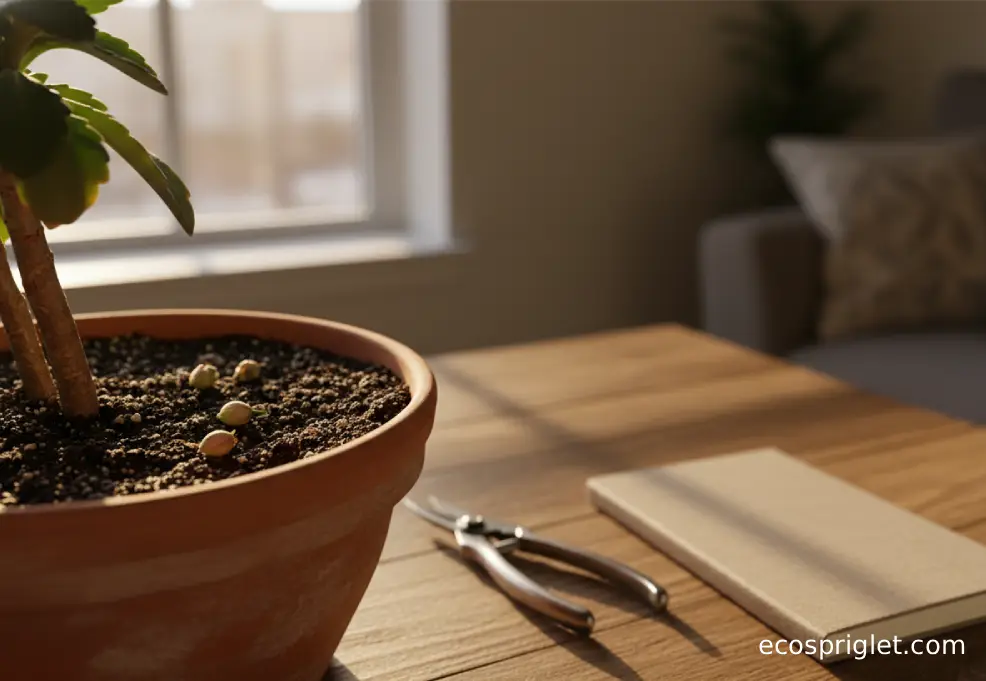
Indoor bloomers can attract aphids on buds and mealybugs in leaf joints. Isolate the plant, wipe visible pests with a cotton swab dipped in rubbing alcohol, and repeat weekly for a few rounds. Catching pests early is half the battle.
Pet Safety for Indoor Plants and Flowers
If you share your apartment with cats or dogs, it’s smart to treat “indoor plants and flowers” like you treat cleaning products: assume nothing, verify everything.
Here are a few reliable guardrails:
- Check the ASPCA database before bringing a plant home—especially if your pet nibbles.
- Keep lilies out of cat homes. The ASPCA notes true lilies can cause severe poisoning in cats, and even pollen exposure is a risk.
- Some popular flowering indoor plants are listed as non-toxic: African violet, phalaenopsis orchid, and Christmas cactus are all listed as non-toxic by ASPCA.
Even non-toxic plants can cause mild stomach upset if a pet eats a lot, so I still like to keep bloomers on higher shelves or in rooms pets don’t access.
Small-Space Styling Ideas for Flowering Indoor Houseplants
In a small apartment, the trick is to treat blooms like decor that also needs a power source: light. Put your best indoor plants flowering right where the light is strongest, then design around that spot.
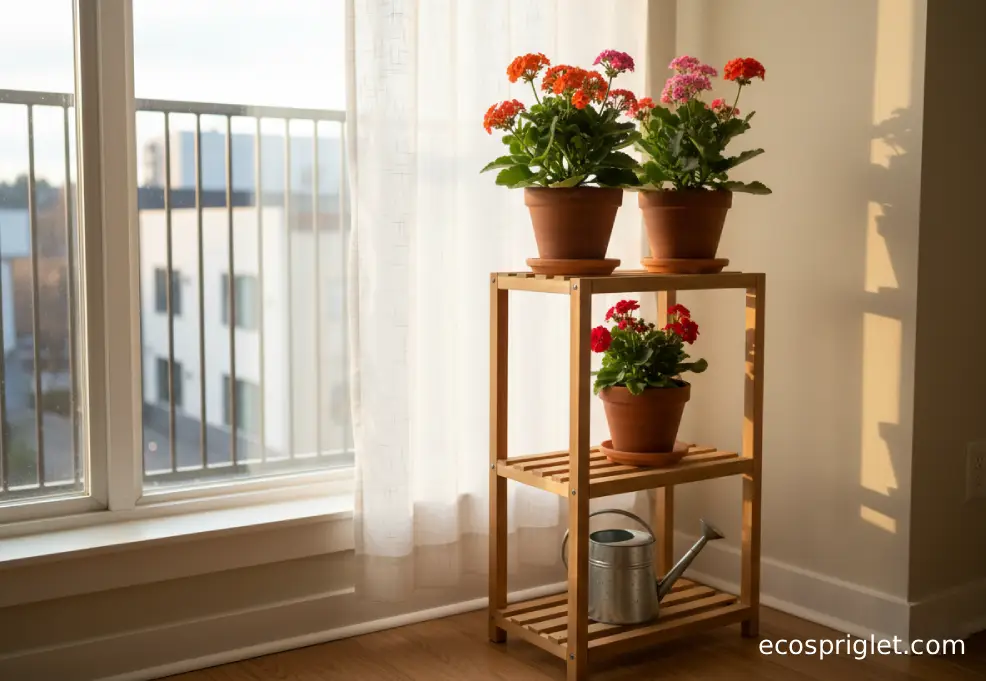
- Use vertical space: a narrow plant stand near a window can hold 4–6 pots without eating floor space.
- Make a “bloom shelf”: keep your current bloomers together so you can water and rotate them as one routine.
- Try a simple timer: for grow lights or even for “rotate plants” reminders—tiny automation beats good intentions.
If you’re mixing foliage and flowers, let the foliage plants fill the dimmer spots and reserve the bright real estate for your great indoor flowering plants.
That’s the core of it: pick the right plant for your light, keep roots healthy, and don’t swing the routine wildly. Do that, and “best indoor flowering plants” stops being a search phrase and becomes a real corner of your home that blooms on repeat.
Indoor flowering plants aren’t “hard,” but they are honest. If the light is weak or the roots stay wet, they’ll usually choose survival over flowers. The flip side is encouraging: you don’t need fancy tricks—just the right match between plant and window, plus a routine you can actually repeat.
Start with one or two reliable bloomers (African violets, phalaenopsis orchids, or a holiday cactus), put them in your brightest practical spot, and commit to the basics: pot with drainage, don’t overpot, water when the top layer dries, and keep the environment stable. If your air is dry in winter, aim for a more plant-friendly humidity range and keep pots away from vents and cold drafts. Over time, you’ll notice the “signals” faster—slower drying means less water, leaning growth means more light, dropped buds means a sudden change you can usually identify.