Growing sunflowers in pots is one of those projects that feels cheerful from day one. Even on a small balcony, a sunflower can bring height, color, and that unmistakable summer look without asking for a full backyard. The big question is usually not whether it can be done, but how to do it without ending up with a floppy stem, a root-bound plant, or a pot that dries out by lunch.
The good news is that yes, you can grow a sunflower in a pot, and in many urban spaces it’s actually the smartest way to do it. Dwarf varieties are especially well suited to containers, while taller kinds can work if you give them a large enough pot, full sun, and sturdy support. Sunflowers grow best with at least 6 hours of direct sun, and 8 to 10 hours is even better for strong flowering and sturdier growth.
I’ve grown them on cramped decks where every inch mattered, and the biggest difference always came down to matching the variety to the pot before I sowed a single seed. Get that part right, and the rest becomes much easier. Along the way, I’ll show you how to choose the right container, keep watering simple, avoid the usual beginner slip-ups, and make your balcony look like summer showed up on purpose.
Can You Grow Sunflowers in Pots?
Yes, you absolutely can grow sunflowers in pots, and container growing makes a lot of sense for apartment gardeners. The trick is to stop thinking of all sunflowers as giant fence-line plants. RHS notes that dwarf types are perfect for containers, while taller annual sunflowers become top-heavy and usually need support.
That means the real answer to can sunflowers grow in pots is this: compact varieties are easy, medium varieties are doable, and giant types are only worth the effort if you have serious sun, a large container, and a sheltered spot. I remember trying a tall variety in a decorative pot that looked generous until July. By midseason, it dried too fast, leaned in every gust, and taught me that pretty containers are not always practical containers.
For balcony gardeners, container-grown sunflowers also give you more control. You can place them where they get the best light, rotate pots if one side leans, and keep them out of poor ground soil entirely. A container with drainage and a coarse potting mix is a much better choice than scooping soil from the yard into a pot. Oregon State Extension recommends potting mix rather than garden soil for containers, and reminds growers to water when the soil surface feels dry.
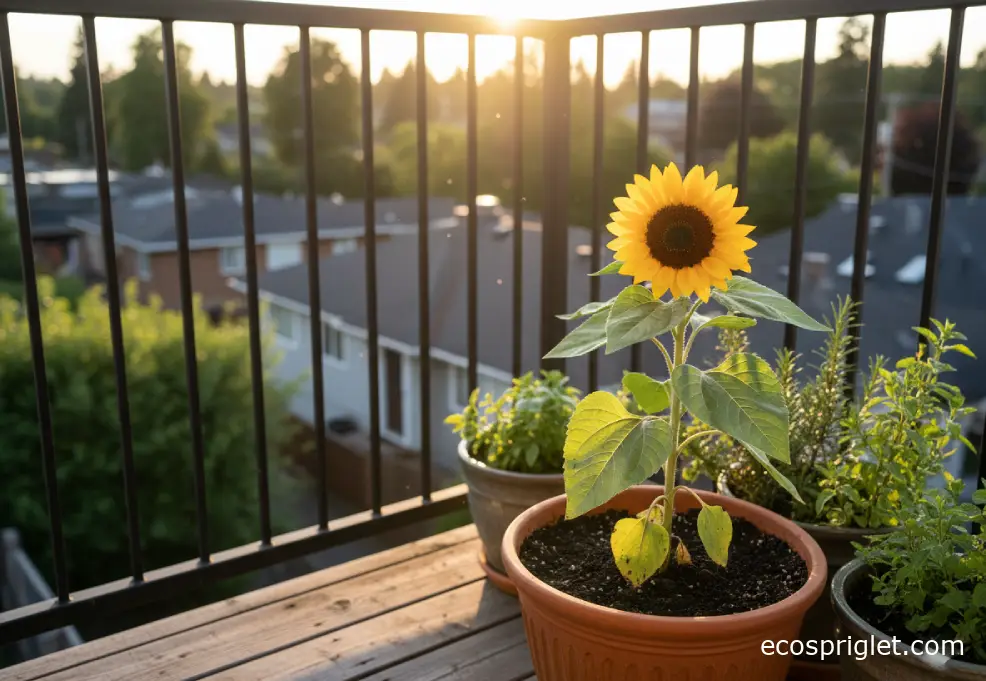
Choose the Right Pot and Variety First
If you want growing sunflower in a pot to feel easy, start with a compact or dwarf cultivar instead of a giant one. RHS specifically says dwarf sunflowers are ideal for containers and notes that some stay around 1 to 2 feet tall, while giant forms can climb past 8 feet and need far more support.
A simple rule I use is to give one sunflower one pot and not crowd companions into the same container unless the sunflower is a very small variety. A 12-inch container is a solid starting point for flowering annuals in general, and smaller pots dry out too quickly. For larger, deeper-rooted container plants, 5-gallon containers are a common benchmark in extension guidance, and one university propagation guide for Helianthus annuus notes that at least a 5-gallon container is needed to grow it to maturity.
| Sunflower Type | Good Pot Starting Point | Best Use |
|---|---|---|
| Dwarf (about 1–2 ft tall) | 12-inch wide pot, one plant | Rail-side color, easy balcony growing |
| Medium (about 2–5 ft tall) | Roughly 5-gallon container, one plant | Statement pot in a sunny corner |
| Tall or giant | Larger than 5 gallons plus staking | Only if you have full sun and shelter |
Use a pot with drainage holes, always. Fill it with a soilless potting mix rather than garden soil. OSU notes that container mixes are designed to stay coarse and drain well, while garden soil compacts too much in pots.
And despite how often the tip still gets repeated, a gravel layer at the bottom does not improve drainage; Penn State Extension specifically lists that as a garden myth.
For more compact edible-and-flower combinations in tight spaces, I like borrowing layout ideas from mixed containers rather than forcing too many plants together. 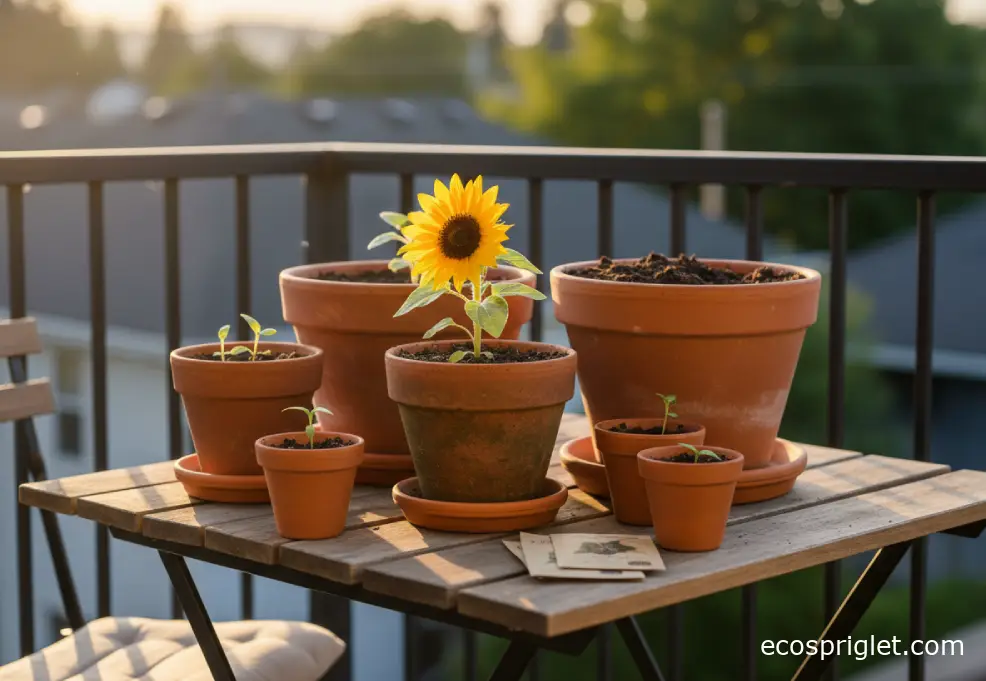
How to Sow and Plant Sunflowers in Containers
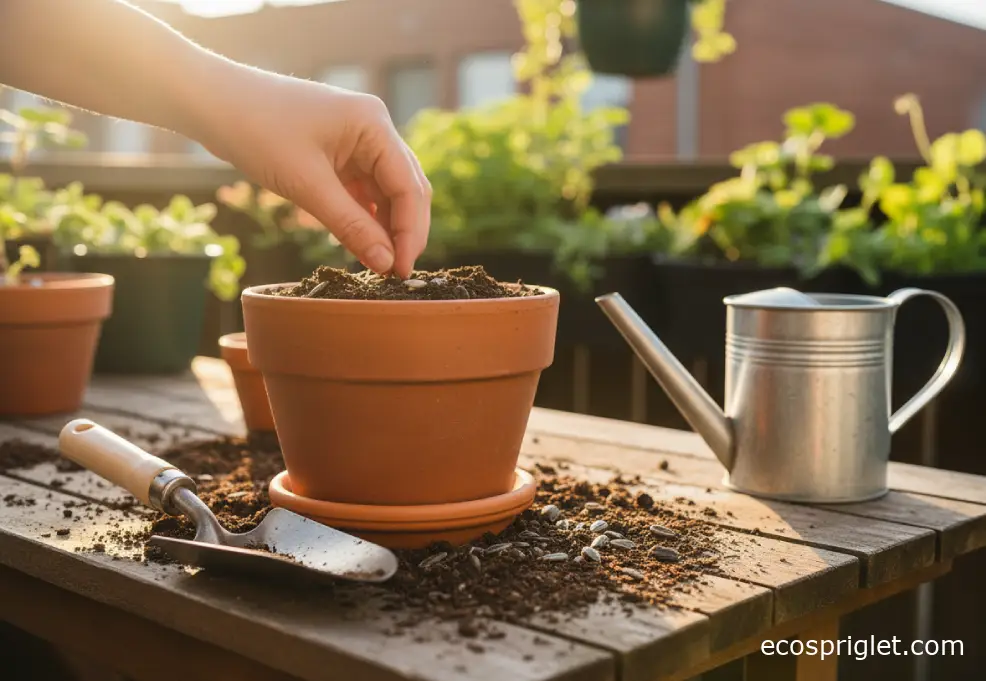
You can grow sunflowers in pots either by sowing seed directly into the final container or by starting them in biodegradable pots and moving them carefully. For beginners, I prefer direct sowing into the pot that will hold the plant to maturity. Sunflowers dislike root disturbance more than many balcony flowers do, and direct sowing removes one whole failure point.
WVU Extension recommends planting sunflower seeds 1 to 2 inches deep after the threat of frost has passed. For smaller varieties, seeds can be spaced about 6 inches apart before thinning, while taller types need more room. In a pot, that usually means sowing 2 or 3 seeds, then thinning to the strongest single seedling once they establish.
- Moisten the potting mix before sowing so it feels damp but not soggy.
- Plant seeds 1 to 2 inches deep and cover lightly.
- Sow 2 to 3 seeds in the center of the pot, then thin to one strong plant.
- Keep the container in a spot with at least 6 hours of direct sun from the start.
If you start indoors, harden seedlings off before moving them outside. WVU Extension recommends gradually increasing outdoor time over about a week so young plants can adjust. That step matters on exposed balconies, where wind and reflected heat can shock soft seedlings fast.
One more thing I learned the annoying way: do not wait until the stem is already thick and leaning before adding support for a taller variety. Put the stake in at planting time if the packet suggests anything beyond a compact form. It is much easier to train a straight stem early than rescue a bent one later.
Sun, Water, Feeding, and Support for Strong Blooms
Once your sunflower is growing, care is pretty straightforward, but containers make everything more immediate. A potted plant heats up faster, dries faster, and leans faster than one in the ground, so small routines matter.
Sunflowers need real sun, not bright shade. NC State Extension recommends at least 6 hours of direct sunlight, with 8 to 10 hours ideal for strong growth in sun-loving crops. On balconies, the difference between six hours and four is often the difference between sturdy stems and lanky ones.
Watering is where most container growers either overdo it or forget for a day too long. Oregon State Extension advises watering containers when the top of the soil feels dry and continuing until water runs from the drainage holes. RHS adds that container-grown sunflowers may need water whenever the compost feels dry, even daily in hot weather.
- Check moisture with your finger every day in warm weather.
- Water when the top 1 inch feels dry, then soak until water drains out the bottom.
- In hot spells, expect daily watering for smaller pots in full sun.
- Feed container sunflowers with a fertilizer suitable for flowering plants and follow the label rate; RHS specifically recommends a potassium-rich tomato fertilizer for annual sunflowers in containers.
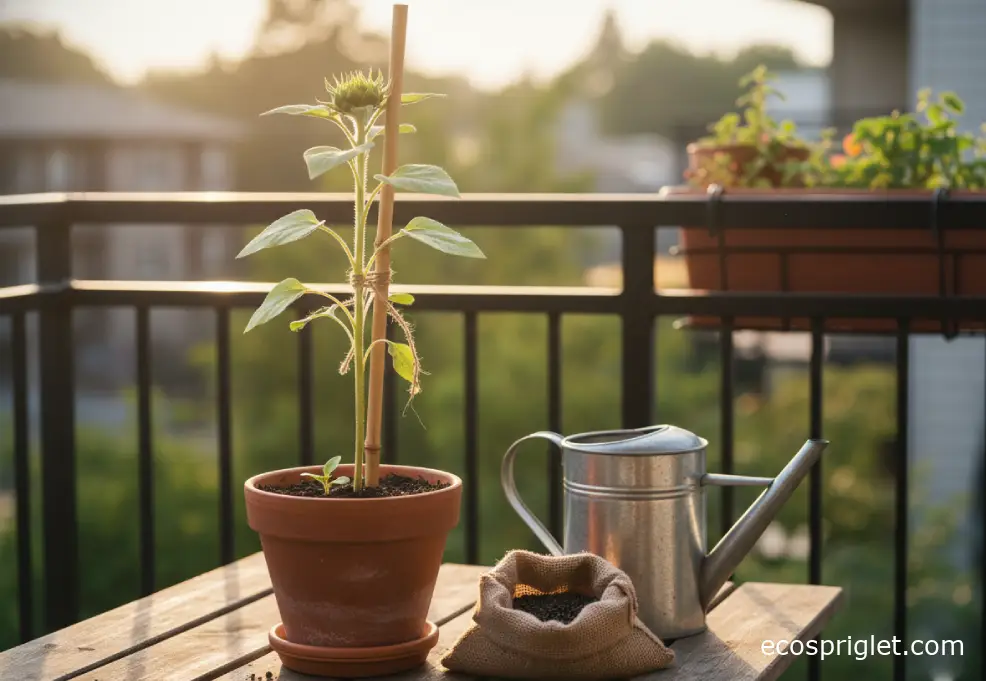
Tall kinds usually need staking. RHS recommends setting a strong bamboo cane in place at planting time and tying the stem loosely as it grows. I like soft ties and a little slack, because tight ties rub surprisingly fast once summer winds pick up.
If your balcony runs windy, place taller pots near a wall rather than directly on an exposed railing edge. That one change can save you a lot of frustration, especially when the flower head starts to gain weight.
Common Mistakes to Avoid With Potted Sunflowers
Most sunflower problems in containers are not mysterious. They usually come back to pot size, light, or watering habits. That is good news, because those are all fixable.
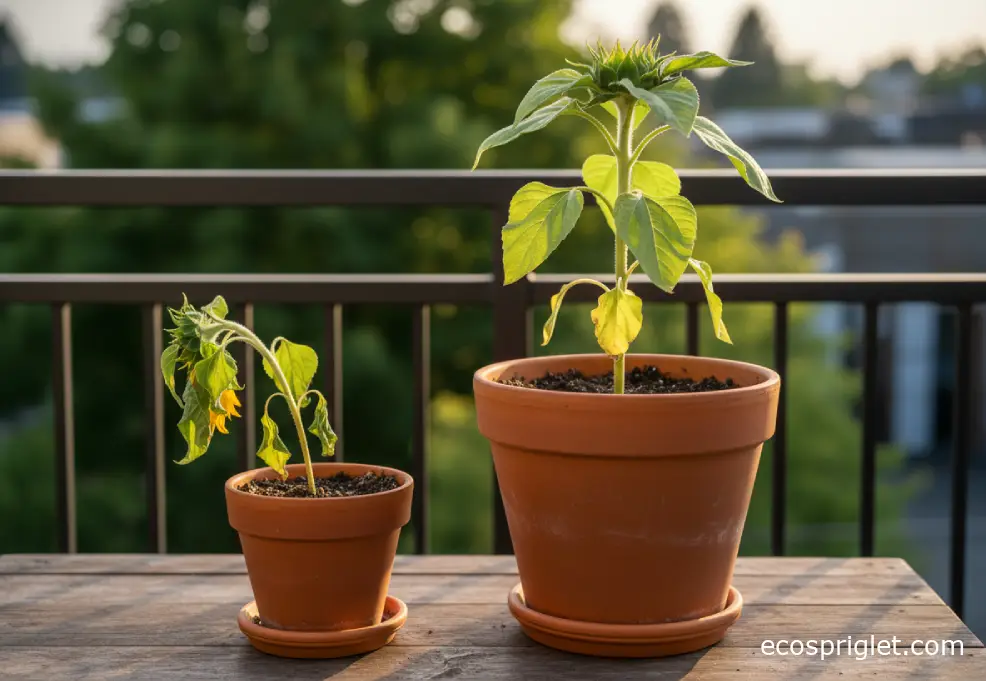
The first mistake is choosing a pot that matches the seedling instead of the mature plant. A tiny starter pot makes a young sunflower look neat for a couple of weeks, then turns into a stress machine once roots fill the container. Another common miss is using decorative pots without drainage. Even if the surface looks dry, roots can sit in stagnant water below. OSU emphasizes the need for drainage holes, and Penn State debunks the idea that gravel at the bottom solves drainage problems.
I learned this the hard way on my own balcony with a bright glazed pot that had just one stingy little drainage opening. The plant looked fine until a warm rainy stretch hit. A week later the lower leaves yellowed, growth stalled, and I had to repot the whole thing. Since then, I have been almost boring about drainage.
- Too little sun: below 6 hours of direct light usually leads to weak, stretched growth.
- Pot too small: the mix dries too fast and the plant stalls before flowering well.
- Crowding: more than one medium or tall sunflower per pot usually creates competition.
- Late staking: once stems lean, they rarely look truly straight again.
- Shallow watering: quick splashes do not wet the full root zone; water until it drains through.
If leaves droop in afternoon heat but recover by evening, that can simply be heat stress. If they stay limp into the next morning, check the potting mix right away. That little timing clue saves a lot of guesswork.
Balcony Styling, Pollinators, and Pet-Safe Notes
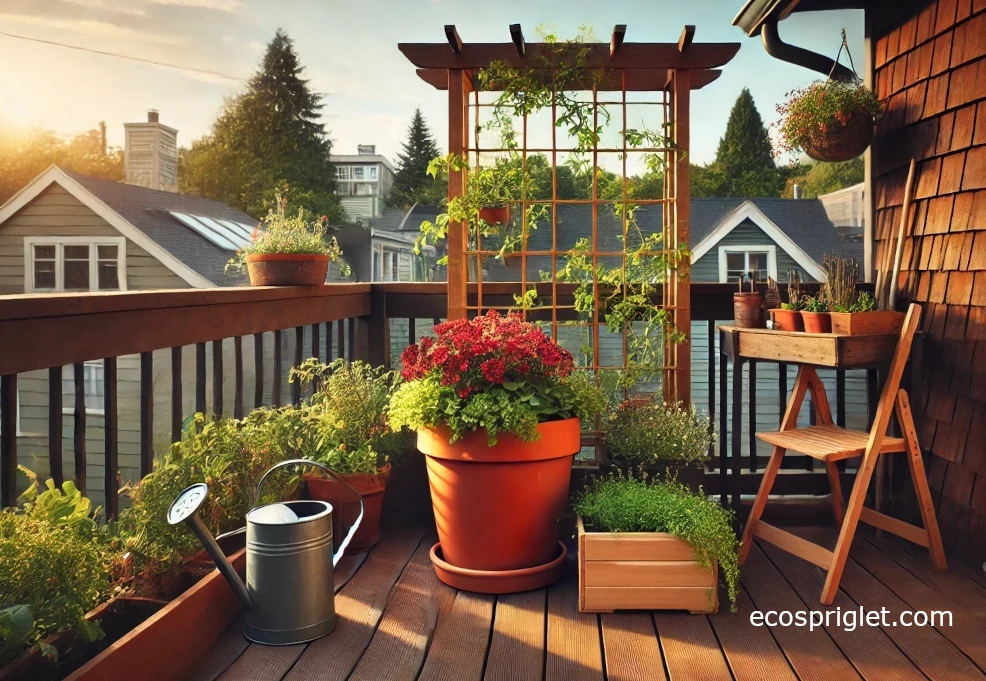
One of my favorite things about growing sunflowers in pots is that they pull double duty. They are practical container plants, but they also work as balcony design pieces. A single compact sunflower can anchor a corner, while two matching terracotta pots can frame a chair or a small outdoor table without making the space feel crowded.
RHS notes that sunflowers attract pollinators and seed-eating birds, which makes them especially nice for urban gardeners trying to create a livelier balcony. Compact forms pair well with lower herbs or trailing flowers, as long as you do not overcrowd the root space in the sunflower’s own pot.
For homes with pets, this is one of the easier flowers to feel good about. ASPCA lists sunflower as non-toxic to dogs, cats, and horses, though any plant material can still cause mild stomach upset if a pet chews enough of it. I still keep seed packets and fertilizers tucked away, because the flower may be pet-friendlier than the garden supplies around it.
A few balcony-friendly ways to use potted sunflowers:
- Place one dwarf sunflower in a sunny corner as a seasonal focal point.
- Repeat the same compact variety in two matching pots for a cleaner look.
If you save seed heads at the end of the season, leave a few outdoors for birds and collect a few for next spring. It is one of those small balcony rituals that makes container gardening feel less temporary.
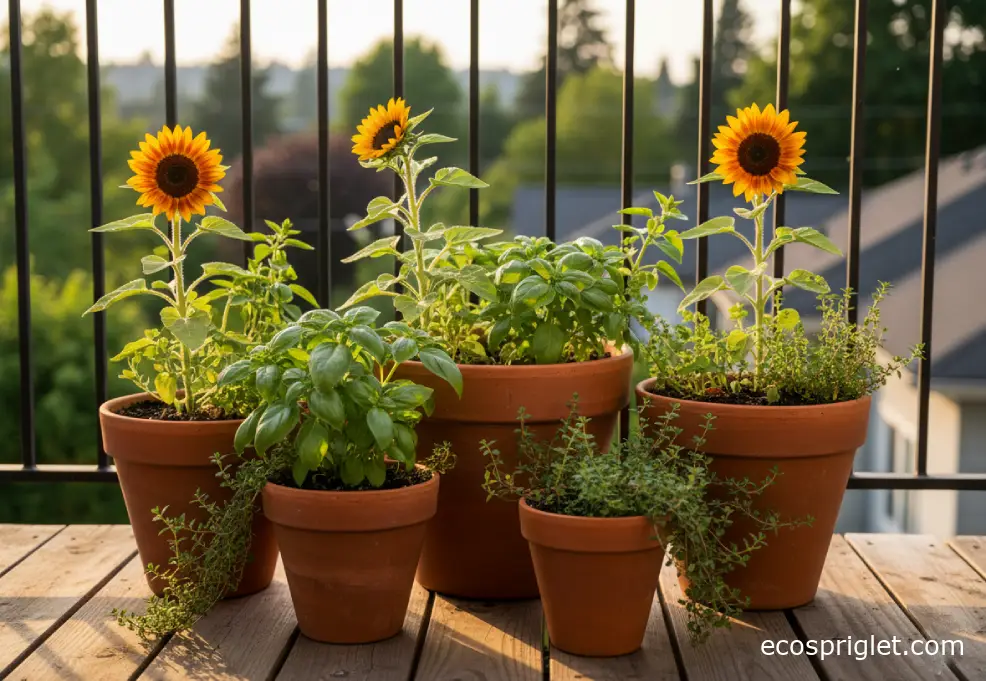
If you have been wondering can you grow sunflowers in pots, the answer is a very solid yes. The easiest path is to choose a dwarf variety, give it a 12-inch container or larger, use a loose potting mix, and keep it in full sun. For medium or tall kinds, step up to a larger container, expect to stake the stem, and stay much more consistent with watering. Those few decisions do more for success than any fancy trick.
What I like most about potted sunflowers is that they feel generous. They do not just give you flowers; they add vertical interest to a small space, make a balcony feel brighter, and pull your attention outside for a minute even on ordinary days. And because containers let you control soil, drainage, and placement, they are often easier for city gardeners than trying to force a plant into the wrong patch of ground.
Start with one good pot and one well-chosen variety. That is enough to learn the rhythm. Once you see how well a compact sunflower can perform in a container, it gets very tempting to try a second round the next season.