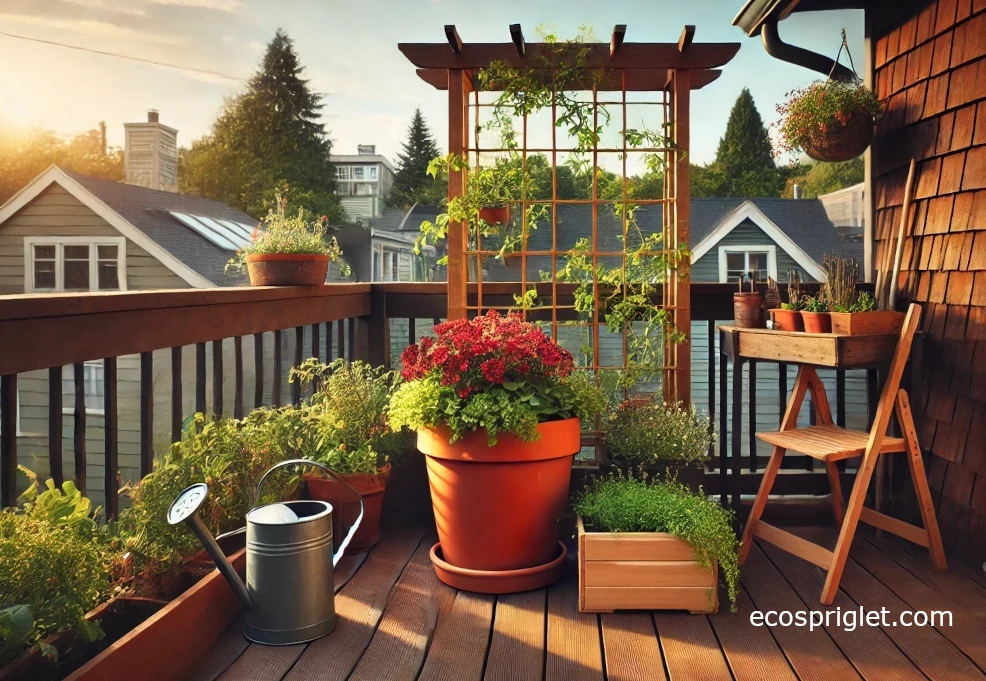
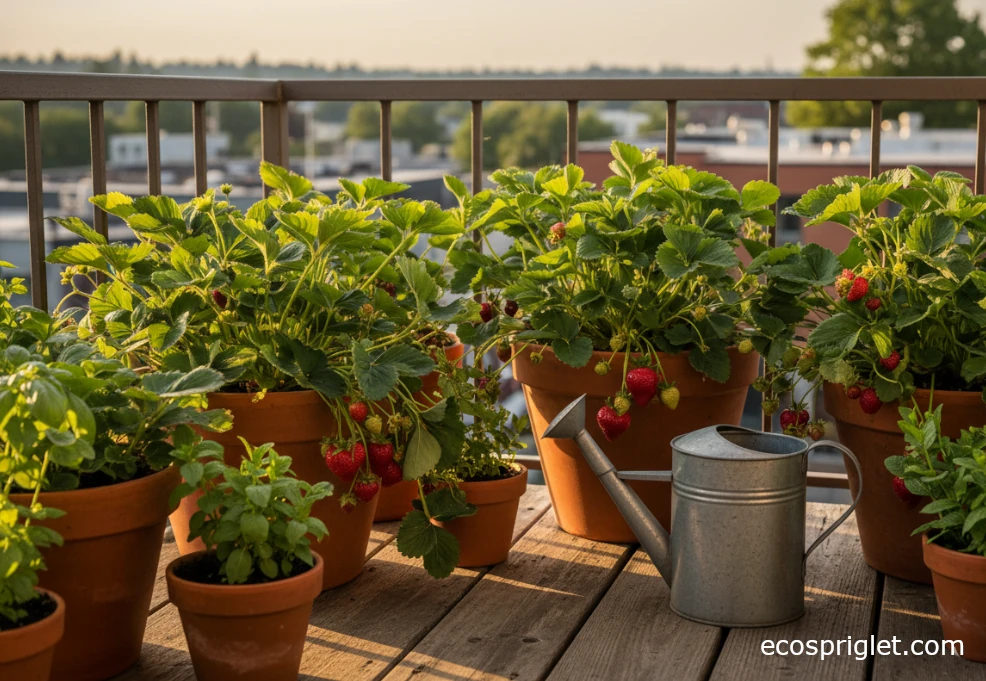
Container gardening is the easiest way to turn a balcony, patio, stoop, or sunny windowsill into a living garden without digging up a yard. You can grow herbs beside the kitchen door, tuck lettuces into a railing planter, or build a colorful flower pot garden around one big statement container. The trick is not buying every pretty plant at the nursery. It is matching the plant, pot, light, soil, and watering routine to the space you actually have.
I garden on a small Portland terrace, so I’ve learned to respect the unglamorous details: wind, drainage, saucers, hot pavement, heavy wet soil, and the one corner that gets less sun than I think it does. A good container garden does not need to be expensive or complicated, but it does need a few smart choices at the start. This guide will walk you through containers for gardening, basic supplies, pot sizes, plant combination ideas for container gardens, watering cues, common mistakes, and practical garden ideas in pots that work for apartment dwellers and beginner-to-intermediate growers.
Start With the Spot You Actually Have
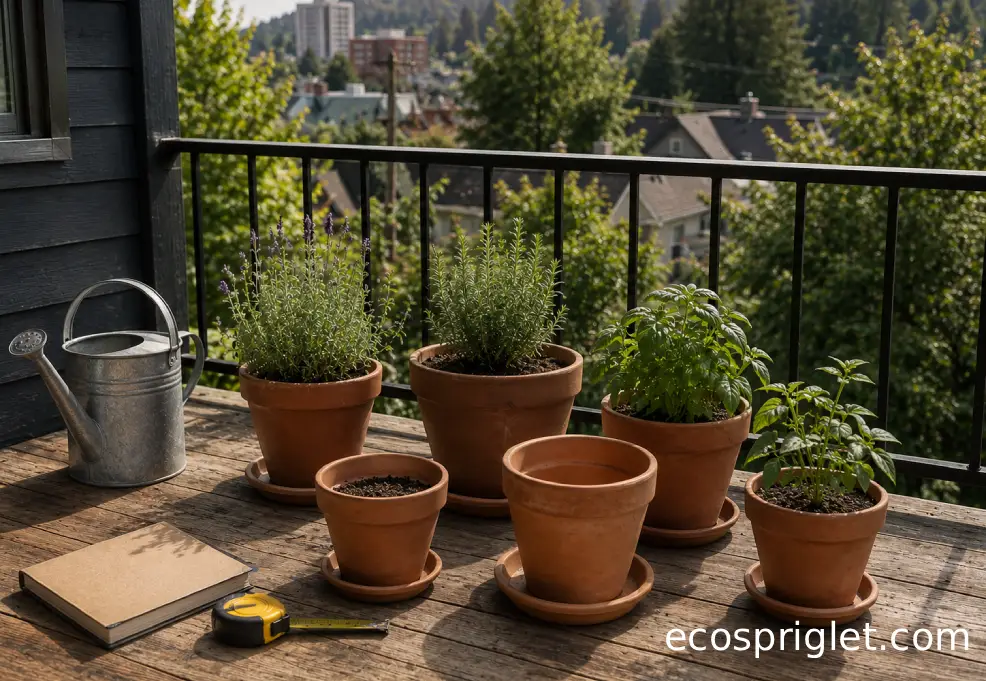
Before you buy containers or plants, watch your space for one normal day. Count direct sun, not general brightness. A south or west-facing balcony may be perfect for basil, peppers, tomatoes, petunias, and zinnias. An east-facing balcony often suits greens, parsley, mint, begonias, and many compact flowers. A north-facing balcony can still grow a calm, leafy container garden, but you will save yourself frustration by choosing shade-tolerant plants instead of forcing tomatoes into poor light.
For edible crops, University of Maryland Extension recommends about 6 to 8 hours of direct sun for warm-season vegetables such as tomatoes, peppers, eggplant, and squash, while cool-season greens such as lettuce and spinach can often manage with about 3 to 5 hours. Illinois Extension defines full sun for container vegetables as at least 6 hours, with partial shade around 4 to 6 hours.
Also notice wind and reflected heat. Pots on paved surfaces dry faster than pots on soil because the decking, concrete, or pavers warm up and radiate heat. On my terrace, the basil near the black railing needs water sooner than the parsley tucked beside the wall. If your balcony is windy, start with low, broad pots rather than tall narrow ones, and place larger containers near a wall where permitted by your lease or building rules.
Choose Containers That Fit the Plant and the Balcony
The best containers for gardening are not always the fanciest ones. They are the containers that hold enough potting mix, drain freely, stay stable in wind, and fit your daily routine. A small herb pot is easy to move, but it dries quickly. A big planter buffers heat and drought better, but it becomes heavy once filled and watered.
Use this as a beginner-friendly starting point, then adjust for the plant label, your climate, and how often you can water. University of Maryland Extension groups container crops by soil volume: small vegetables and flowering plants can start around 1 to 3 gallons, medium plants often need 4 to 6 gallons, and large vegetables such as tomatoes, cucumbers, eggplant, and many peppers are better in 8 to 10 gallons when space allows. UNH Extension notes that individual tomatoes are commonly grown in 4- to 5-gallon containers with good drainage, while Maryland recommends a 5-gallon minimum for peppers.
| Plant Type | Practical Container Size | Small-Space Tip |
|---|---|---|
| Basil, cilantro, parsley, thyme | 8 to 10 inches wide, or 1 to 3 gallons | Group herbs with similar water needs; keep mint in its own pot. |
| Lettuce, spinach, arugula, baby kale | 6 to 8 inches deep, or a window box with drainage | Sow small batches every 2 to 3 weeks in cool weather. |
| Peppers and compact eggplants | 5 gallons or larger | Use a short stake or cage early, before stems lean. |
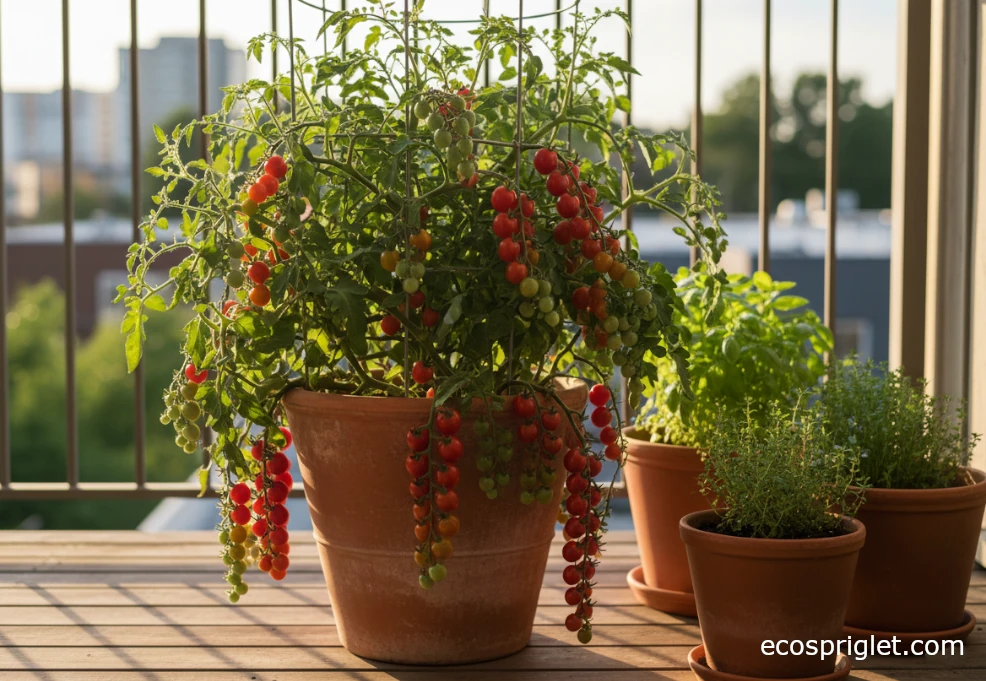
| Tomatoes | 5 gallons minimum; 8 to 10 gallons is easier in heat | Choose patio, bush, or dwarf types for balconies. |
| Mixed annual flowers | 12 to 16 inches wide for simple combinations | Use fewer plants than nursery displays suggest; they fill in fast. |
If you garden on a balcony, do not guess on weight. Wet potting mix, ceramic planters, water reservoirs, and mature plants add up. Check your lease, HOA rules, or building manager before setting up large troughs, railing planters, or trellises. Some public building guidance uses floor-load values such as 40 pounds per square foot for certain decks and balconies, but your building is the only number that matters.
Build a Simple Container Gardening Supplies Kit
You do not need a shed full of gear. For most apartment container gardens, I would rather see a beginner buy fewer tools and better potting mix. Keep the kit small enough to fit in a storage bin, because supplies that live in the hallway or under the kitchen sink are the ones you will actually use.
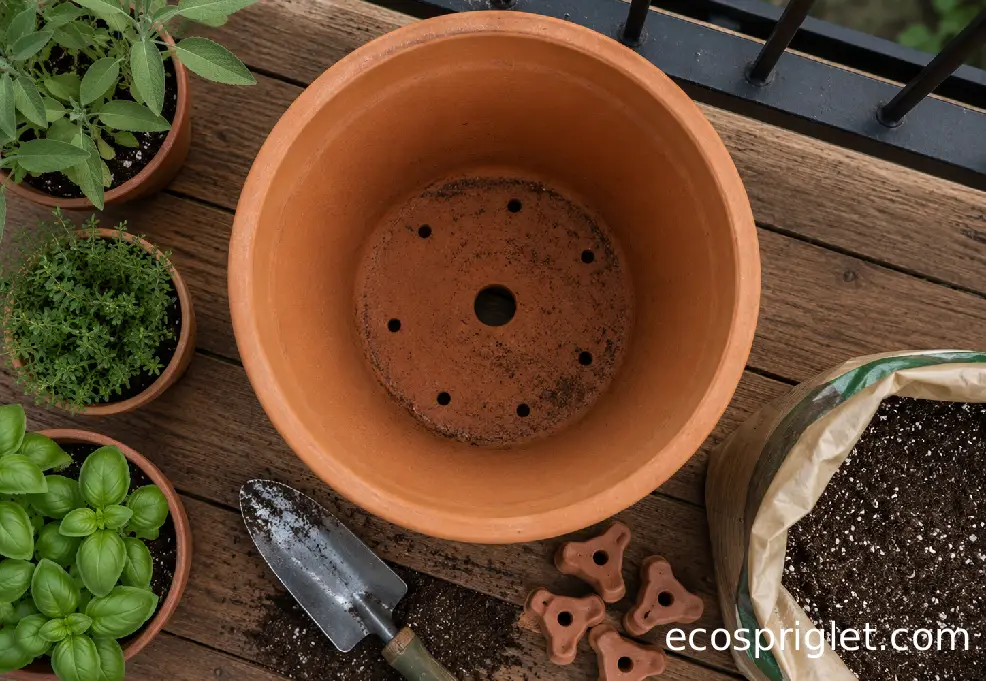
- Containers with drainage holes, plus saucers where water might stain decking or drip below.
- Lightweight potting mix labeled for containers, not dense garden soil.
- A watering can with a narrow spout, ideally 1 to 2 gallons so it is not awkward indoors.
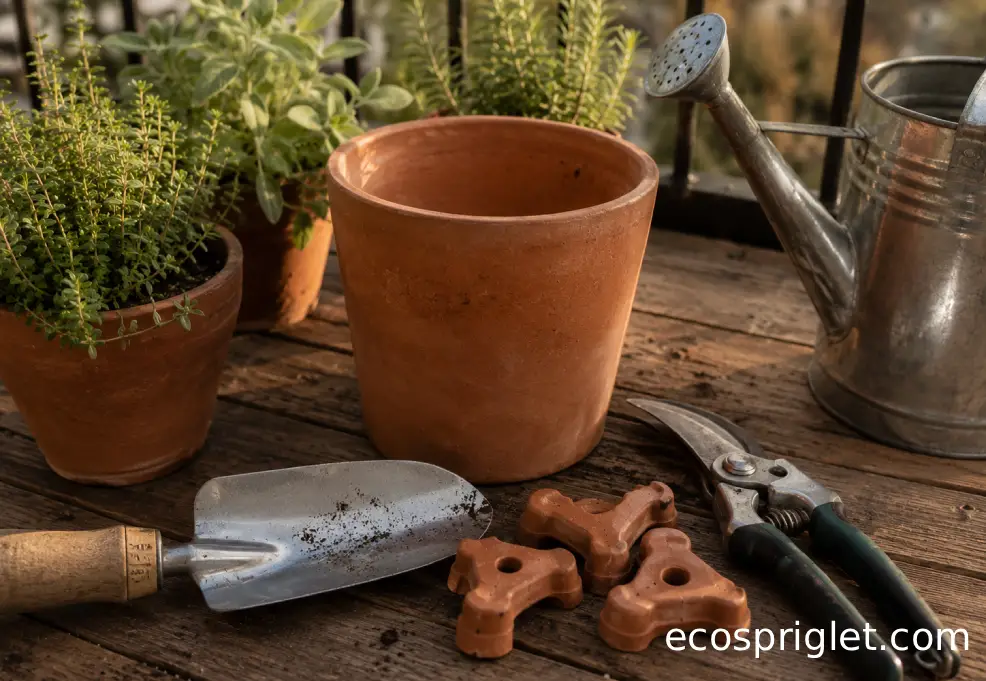
- Pot feet, bricks, or risers to lift containers about 1 inch and improve drainage.
- Small pruning snips, plant labels, and a simple all-purpose fertilizer.
University of Minnesota Extension notes that regular watering can leach nutrients from containers, so many container plants benefit from fertilizer after the initial planting period; follow the product label and start lightly rather than doubling up.
My budget rule is simple: spend money where it protects roots. A sturdy pot with drainage and a reliable potting mix will do more for a tomato than a decorative plant marker or a fancy mister. For deeper herb help, pair this setup with our balcony herbs guide.
Use Potting Mix, Drainage, and Watering Cues That Work
Roots need water and air. That is why drainage matters so much in container gardens. University of Maryland Extension says containers need holes or slits so excess water can drain, and Illinois Extension calls a bottom drainage hole critical because it lets water move out and air remain available to roots.
Skip the old gravel layer trick. It sounds sensible, but it does not fix a pot without drainage and can reduce the useful root zone. University of Maryland Extension specifically advises against filling the bottom of pots with gravel when potting plants. Use a proper potting mix instead; Maryland Extension describes container growing media as lightweight, well-draining, and able to hold water and nutrients better than dense garden soil in pots.
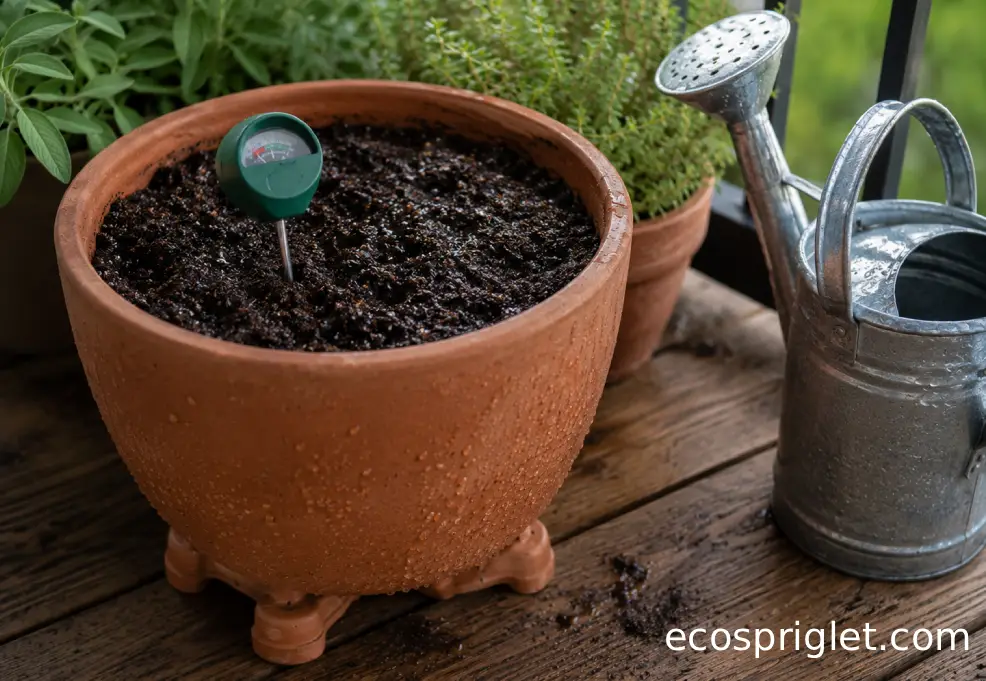
Water by touch, not by calendar. Push a finger 1 to 2 inches into the mix. If it feels dry at that depth, water slowly until some drains from the bottom. If it still feels cool and damp, wait. In hot, dry weather, University of Minnesota Extension notes that container plants may need water more than once per day depending on container size and temperature, while most prefer moist, not soggy, soil.
A saucer is useful indoors or on balconies where dripping is a problem, but do not let roots sit in water for hours. Empty saucers after the pot drains, especially under herbs, peppers, succulents, and Mediterranean plants such as rosemary and thyme.
Plant Combinations That Look Good and Grow Well
Good container garden design is partly visual and partly practical. Plants sharing one pot should want similar light and moisture. Basil with parsley can work in a roomy sunny pot because both appreciate regular water. Rosemary with thyme is easier than rosemary with thirsty lettuce. A tomato is usually happier with its own container than competing with flowers and herbs in a crowded showpiece.
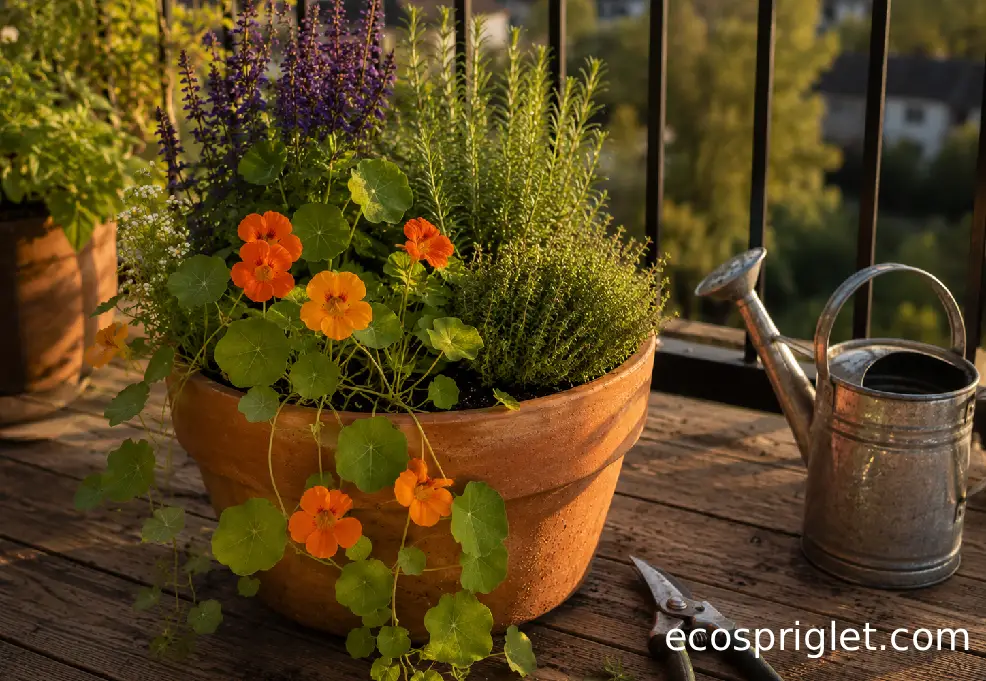
For flower pot garden ideas, the classic thriller, filler, spiller method is still useful: one upright focal plant, one or two mounding plants, and one trailing plant over the edge. Penn State Extension and Illinois Extension both describe this as a common container design approach.
- Full sun edible pot: basil in the center, parsley around the edge, nasturtium trailing over one side.
- Full sun flower pot: dwarf zinnia or salvia upright, calibrachoa or petunia as filler, sweet potato vine as a spiller.
- Part sun herb pot: chives, parsley, and cilantro in a 12-inch container, harvested often.
- Shade-leaning foliage pot: coleus, begonia, and creeping Jenny where edible crops struggle.
I learned this the hard way with a gorgeous mixed pot that had lavender, basil, and lettuce together. It looked great for two weeks. Then the lettuce wanted steady moisture, the lavender wanted sharper drainage, and the basil sulked in the middle. Now I group plants by care first and color second. The pot looks better for longer, and I spend less time apologizing to half-dead herbs.
Full-Sun, Partial-Sun, and Shade Pot Ideas
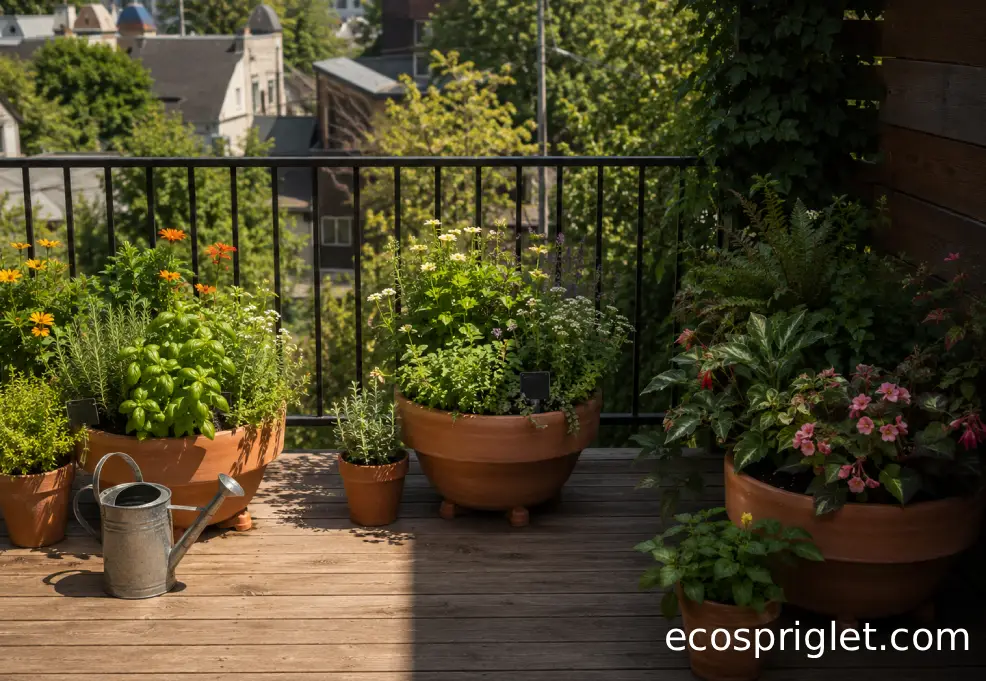
The best garden ideas in pots start with light. For full sun plant combination ideas for container gardens, choose heat-tolerant partners and give them enough soil volume. Basil, peppers, compact tomatoes, marigolds, zinnias, rosemary, thyme, salvia, petunias, and lavender all make sense in sunny spaces, though their water needs are not identical. Basil, for example, grows best with 6 to 8 hours of sun and can show cold damage around 50°F, according to Illinois Extension.
Partial sun is often kinder than beginners expect. Morning sun with afternoon shade can keep lettuce, cilantro, parsley, chives, pansies, violas, and many leafy combinations productive longer in warm weather. If your balcony gets only 3 to 5 hours of direct sun, lean into greens and herbs instead of fighting for fruiting crops.
Shade containers are more about texture than harvest. Try a potted garden idea built around coleus, ferns, begonias, impatiens, heuchera, or shade-tolerant foliage. If you want something edible in a shadier apartment setup, start small with mint, parsley, baby greens, or microgreens and keep expectations realistic.
For paved garden with plants in pots ideas, use groups of three: one large anchor pot, one medium edible or flower pot, and one small seasonal pot. Repeating terracotta, black, or muted green containers keeps a tiny space calm even when the plants are colorful.
Common Mistakes to Avoid
Most container gardening problems begin with enthusiasm, not neglect. We buy one more plant, squeeze it into the pot, water every morning because we are excited, and then wonder why the leaves yellow. I have made every one of these mistakes on a balcony, and the fix is usually simpler than the guilt feels.
- Using pots without drainage: move the plant into a draining container, or treat the decorative pot as a cachepot and remove the inner pot when watering.
- Filling pots with garden soil: switch to container potting mix; dense soil compacts, drains poorly, and gets very heavy.
- Overcrowding: leave enough room for mature growth; a 12-inch pot does not need five different starter plants.
- Watering only the surface: water slowly until the root zone is moist and excess water drains out.
- Ignoring wind: stake peppers and tomatoes early, and avoid tall top-heavy pots on exposed balcony corners.
Another mistake is mixing pet-risk plants into easy-reach pots without checking first. ASPCA lists rosemary and thyme as non-toxic to dogs and cats, and its plant database is a good place to confirm ornamental choices before placing them where pets can chew.
If children or pets use the balcony, avoid loose plant stands that tip easily, keep fertilizers sealed, and skip thorny or irritating plants at face height. A beautiful container garden should still feel safe to live with.
Keep Containers Healthy Through Heat, Wind, Pests, and Seasons
Containers react quickly. That is their charm and their challenge. A plant in the ground can chase moisture and nutrients; a plant in a pot depends on the small root zone you provide. During a 90°F spell, move vulnerable pots out of the harshest afternoon sun if you can, water early in the day, and check small pots again by evening. A half-inch layer of fine mulch, shredded leaves, or clean straw can slow surface drying without burying stems.
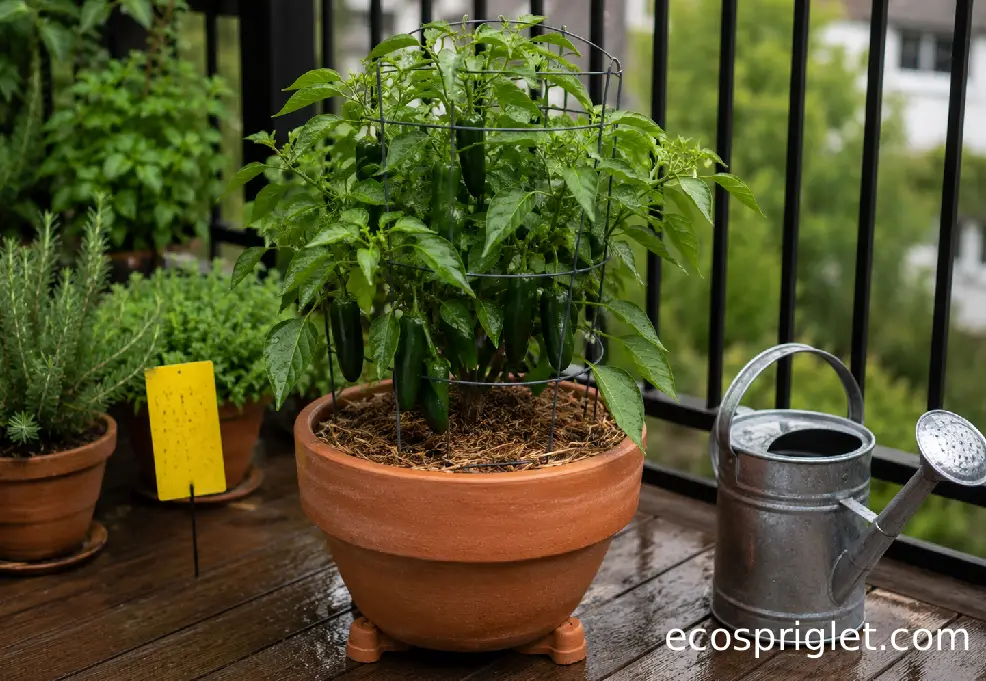
Wind is another quiet stressor. It dries leaves, tips tall planters, and snaps tender stems. Use tomato cages, short bamboo stakes, or a compact trellis before plants flop. University of Minnesota Extension advises that vegetable trellises need to be anchored deeply enough not to tip in strong wind; on balconies, that means using freestanding supports inside heavy containers and avoiding anything tied to railings unless your building allows it.
For pests, start with observation. Check undersides of leaves twice a week. Aphids and spider mites often show up on stressed container plants, especially in warm, sheltered spots. UC Integrated Pest Management recommends washing aphids off sturdy plants with water and using insecticidal soap or horticultural oil only when needed and according to the label. For fungus gnats in indoor or sheltered pots, University of Minnesota Extension recommends letting surface soil dry appropriately between waterings and using yellow sticky traps to monitor adults.
As seasons shift, be realistic. Tender herbs and peppers slow down in cool nights. Illinois Extension notes that peppers should be transplanted outdoors after nighttime lows are above 50°F, and basil can be damaged around that same temperature. Cool-season greens, on the other hand, often shine in spring and fall.
Start Small, Then Let Your Container Garden Grow
The most satisfying container gardens usually begin with three good pots, not thirty. Choose one edible you will actually use, one flower or foliage pot that makes the space feel alive, and one experiment that teaches you something. For a beginner balcony, that might mean basil in a 10-inch pot, a 14-inch flower combination, and a 5-gallon pepper. For a shadier apartment, try parsley, begonias, and a small tray of baby greens.
Once you understand your light, watering rhythm, and wind exposure, new pot garden ideas become easier to judge. You will know when a plant needs more root room, when a saucer is causing soggy soil, and when a beautiful nursery combination is too thirsty for your schedule. That confidence is the real harvest.