
Rosemary is the herb that makes new container gardeners feel personally targeted. It looks tough, smells amazing, and seems like it should thrive on “set it and forget it” care—yet it’s oddly easy to lose in a pot. The reason is simple: rosemary loves bright light, airflow, and soil that dries down between waterings… and many balconies (and indoor windowsills) deliver the opposite.
The good news is you absolutely can grow rosemary in a pot. In fact, pots are often the best option for apartment life because you can chase the sun, dodge winter cold snaps, and keep the plant near your kitchen. The trick is to build a setup that drains fast, then water like you mean it—deeply, but not often—while giving it enough light to stay compact and flavorful.
This guide walks you through pot size, soil mix, outdoor vs indoor placement, a simple watering rhythm, and the pruning moves that keep rosemary from turning into a woody, sparse broom.
Can You Grow Rosemary in a Pot Successfully?
Yes—rosemary can grow very well in containers when you match the plant’s natural preferences. It wants full sun, well-drained soil, and a watering rhythm that lets the roots breathe between soakings. University of Maryland Extension describes rosemary as a full-sun herb that grows best in well-drained soil, and UC Master Gardeners give similar advice: full sun, good drainage, and soil that is allowed to dry between waterings.
The part that tricks new container gardeners is that rosemary does not always wilt dramatically when something is wrong. The needle-like leaves can stay upright even while the roots are struggling. A plant can look “basically fine” for a while, then decline quickly after sitting too wet for too long.
That is why I don’t care for rosemary by vibes. I use repeatable checks: a pot with drainage holes, a gritty mix, the top 2 inches of soil as a watering guide, and the brightest spot I can offer. If you are building a broader herb setup, rosemary pairs nicely with other sun-loving herbs, but it should not be jammed into a crowded planter where airflow is poor. For a bigger small-space herb plan, see Indoor Herb Garden.
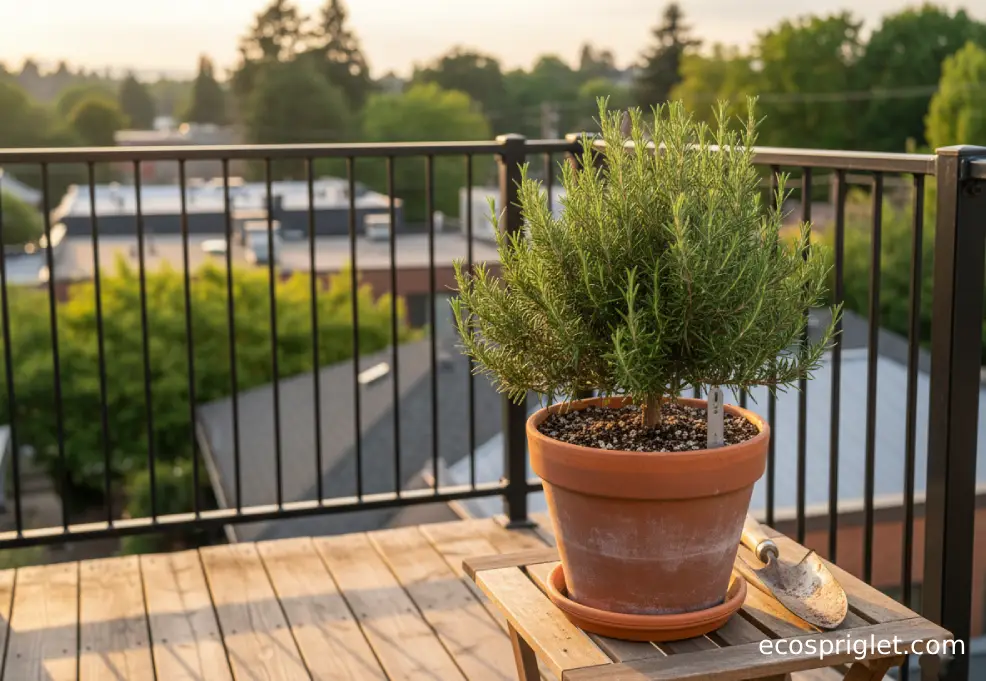
Choosing the Right Pot Size and Material
If you want rosemary to grow like a real shrub instead of a stressed twig, start with a pot that buffers moisture and heat. Tiny “cute” pots are tempting, but they swing from soaked to bone-dry too quickly. On a sunny balcony, that can stress roots every single day.
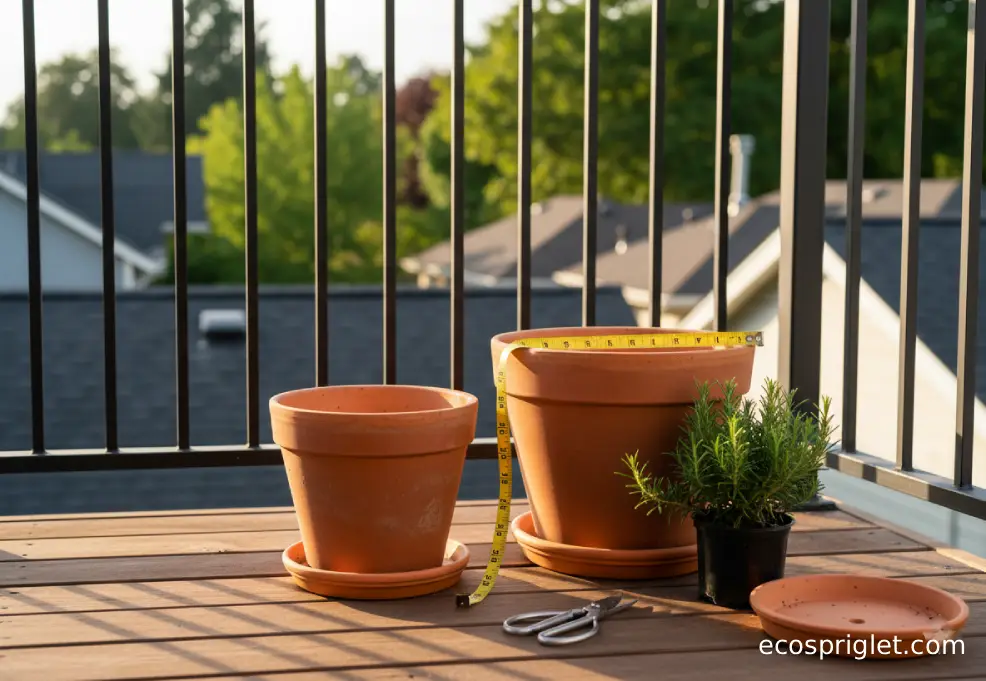
For most balcony growers, a pot around 12 inches wide is a practical minimum for one young rosemary plant. If your balcony is hot, windy, or exposed to strong afternoon sun, 14–16 inches wide is more forgiving. The goal is not to drown the plant in a huge container; it is to give the root zone enough volume that watering becomes predictable.
- 12 inches wide: workable for one young plant if the mix drains well and you monitor moisture.
- 14–16 inches wide: better for hot balconies, wind, and longer-term growth.
- Deeper pots: helpful because rosemary forms a woody root system over time.
Material matters too. Terracotta breathes and helps the mix dry down, which is useful if you tend to overwater. Plastic and glazed ceramic hold moisture longer, which can help on windy balconies but requires more discipline with watering. Whatever you choose, drainage holes are non-negotiable. Without them, you have a decorative cover pot, not a rosemary container.
Soil Mix and Drainage That Actually Works
Rosemary wants a potting mix that drains quickly and does not stay soggy at the bottom. Regular all-purpose potting mix can work outdoors if the pot is sunny and airy, but indoors or on a sheltered balcony it often stays wet for too long. If you are using an old open bag, check whether potting soil can go bad before repotting a rosemary plant that already hates damp, tired mix.
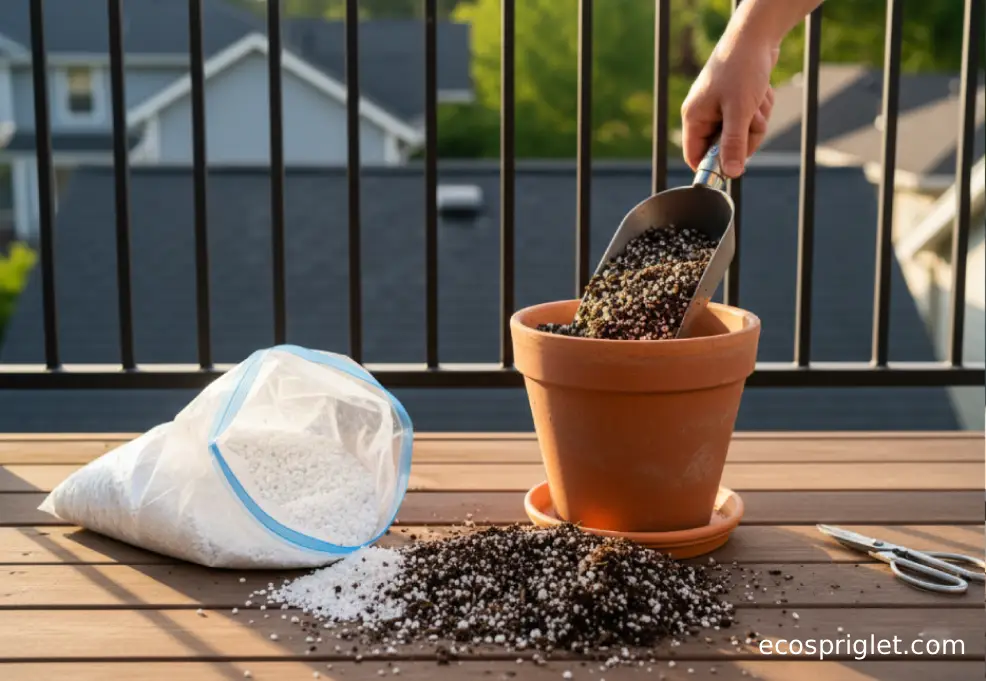
A simple rosemary container mix I like is:
- 2 parts quality potting mix
- 1 part perlite, pumice, or coarse horticultural sand
That mix keeps enough moisture for the plant to drink but opens the structure so oxygen can reach the roots. I’ll sometimes add a small handful of finished compost when repotting, especially if the potting mix feels very sterile, but I keep it modest. Rosemary is not a heavy-feeding herb that wants a rich, damp soil environment.
One myth to skip: gravel or rocks at the bottom of the pot. It sounds logical, but container drainage works better when you use one consistent mix from top to bottom and let excess water leave through drainage holes. Oregon State University Extension’s container guidance emphasizes containers that drain well, and Washington State University Extension horticulture educators have long warned against relying on coarse drainage layers inside pots.
If your decorative pot has no holes, use it as a cachepot: keep rosemary in a nursery pot with drainage, water it outside the decorative pot, let it drain fully, then return it.
Light and Placement Outdoors vs. Indoors
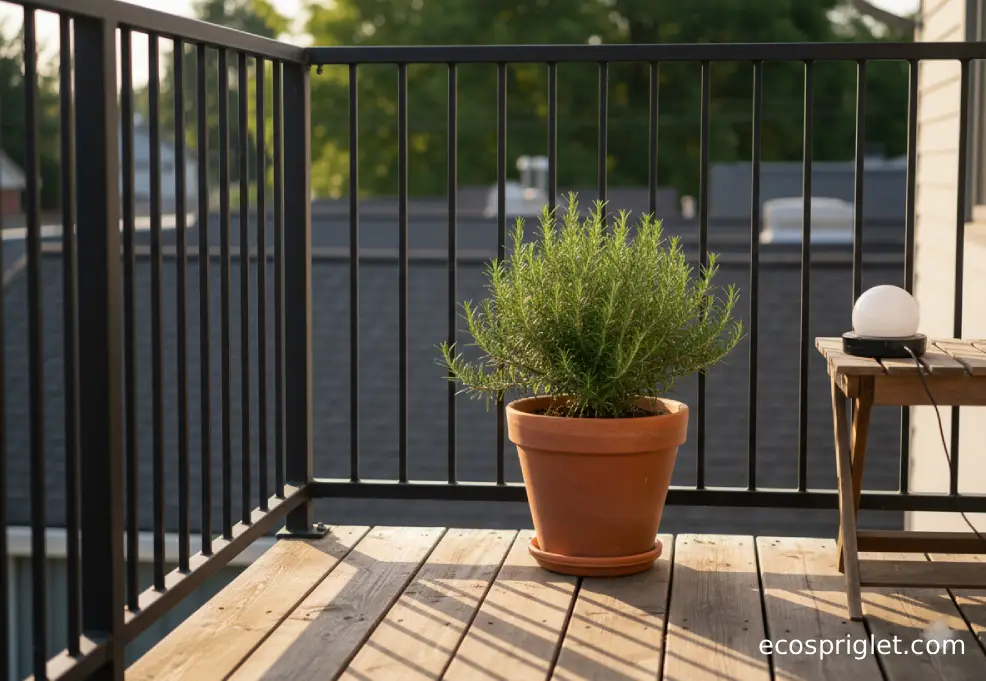
Outdoors, rosemary is happiest in full sun. Aim for at least 6 hours of direct light when possible. Morning through early afternoon sun is especially useful on balconies because it gives the plant strong light before containers heat up hard in late afternoon.
If your balcony only gets partial sun, give rosemary the brightest, most open position you have. Avoid tucking it behind railings, furniture, or taller herbs. Rosemary may survive in less light, but it tends to stretch, thin out, and lose that compact, fragrant growth people want from it.
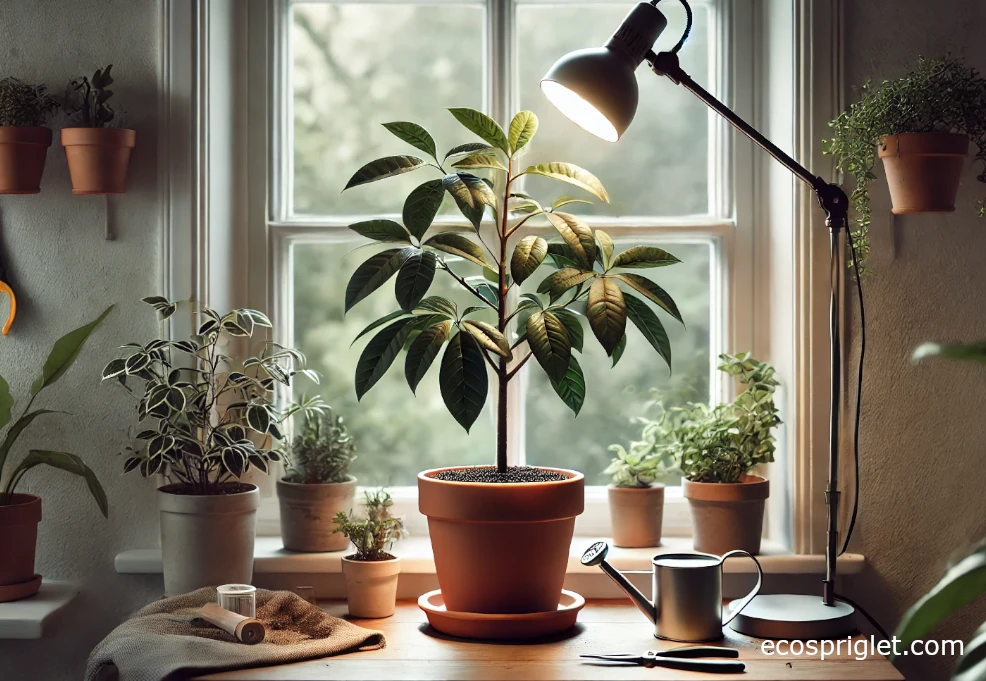
Indoors is harder. Michigan State University Extension gives a useful reality check: indoor rosemary often struggles in winter because homes are warm, light levels are low, and watering becomes difficult to judge. If you bring rosemary inside, choose your brightest window—usually south-facing in the Northern Hemisphere—and give it airflow. A small fan on low, placed a few feet away, can help prevent stagnant air without blasting the plant.
- Best outdoor spot: sunny, open, and protected from harsh wind tunnels.
- Best indoor spot: the brightest window you have, with cooler room temperatures if possible.
- Worst indoor spot: warm, dim, still air above a radiator or near a heating vent.
My balcony rule is simple: if cold nights start approaching frost, I move the pot close to the building wall first. If freezing weather is likely, I transition it to the brightest cool protected spot I can offer rather than a warm, dark living-room corner.
Watering and Feeding Without Root Rot
This is the make-or-break part of growing rosemary in pots. Rosemary does not want little sips every day. It wants a deep watering, then a real dry-down period.
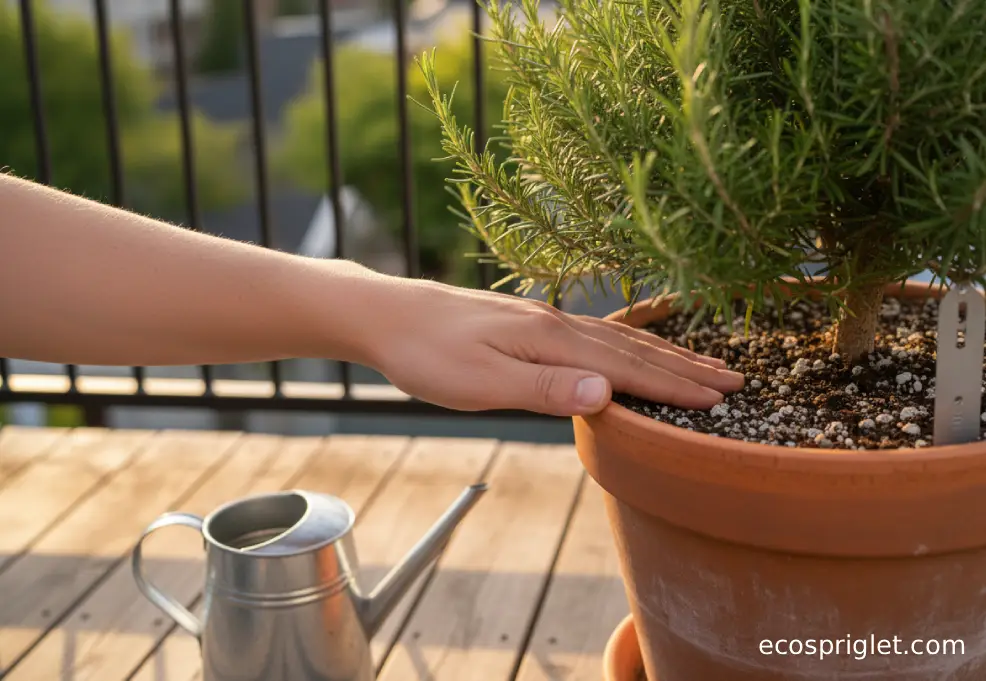
Check the top 2 inches of potting mix with your finger. If that layer still feels clearly damp, wait. If it feels dry and the pot feels lighter than it did after watering, water deeply until excess runs from the drainage holes. Then empty the saucer. Standing water under a rosemary pot is one of those small things that creates big root problems.
In real life, the rhythm changes with the season:
- Summer outdoors: often every 3–7 days, depending on heat, wind, pot size, and sun exposure.
- Mild spring or fall weather: often less frequently, especially in larger pots.
- Winter indoors: often every 10–14 days or longer, because growth slows and evaporation drops.
Those are not calendar rules. They are starting points. The soil check matters more than the day of the week.
Feeding should stay light. Rosemary does not need the same rich diet as leafy herbs like basil. If your plant has been in the same pot for a long time, a light balanced feed in spring can help, but heavy feeding often pushes soft growth and can reduce the strong aroma gardeners want. If you like making gentle homemade feeds, keep them mild and occasional; here is my practical guide to DIY Plant Fertilizer.
When in doubt, I lean slightly dry rather than slightly wet. Rosemary usually forgives being a day late with water. It rarely forgives sitting damp for a week.
Pruning, Harvesting, and Keeping Rosemary Bushy
I remember the first time I tried to shape balcony rosemary like a tiny hedge. I got confident, cut into woody sections, and ended up with a plant that looked like it had lost an argument. Rosemary can recover from pruning, but it responds best to small, regular trims while you stay mostly in green, leafy growth.
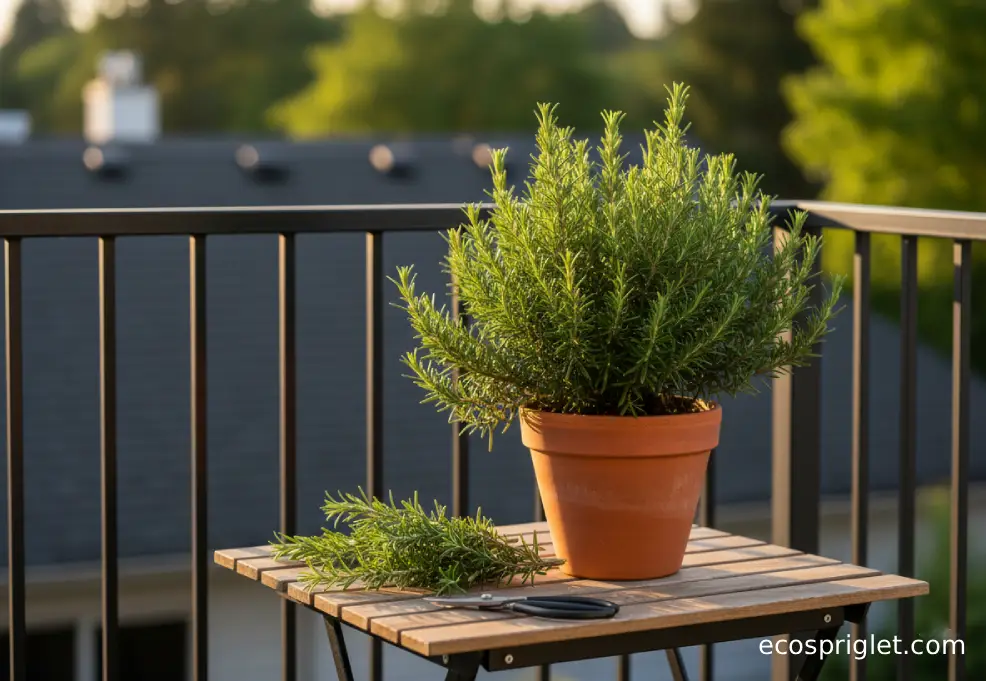
For a dense plant you can harvest from often, focus on the soft tips. Snip the top 1–2 inches of new growth just above a leaf node or branching point. That encourages side shoots and keeps the plant from becoming one long woody stem with a tuft at the end.
- Harvest lightly: take small sprigs often rather than stripping one side bare.
- Stay in green growth: avoid hard cuts into thick, leafless wood unless reshaping slowly.
- Rotate the pot: turn it weekly so one side does not stretch toward the light.
- Prune mainly in active growth: spring through early fall is the safest window outdoors.
Indoors in winter, go gentler. A few tips for cooking are fine, but avoid major reshaping while the plant is already dealing with weaker light. If you want the “mini tree” look, start early with a small stake, remove lower side shoots gradually, and trim little by little instead of giving the plant one dramatic haircut.
Troubleshooting Common Rosemary Pot Problems
When rosemary is unhappy, it usually points to one of three things: too little light, too much water, or not enough airflow. Here’s a quick diagnostic table I use on balconies and windowsills.
| Symptom | Most Likely Cause | What to Do This Week |
|---|---|---|
| Yellowing leaves, limp stems, soil stays damp | Overwatering / poor drainage | Let the pot dry; confirm drainage holes; switch to a grittier mix next repot; water only after the top 2 inches dry. If the plant declined from root rot or pest issues, it is also worth knowing how to sanitize soil before reusing any old mix. |
| Brown tips, crispy feel, pot dries super fast | Underwatering or heat/wind stress | Water deeply; move pot out of wind tunnel; consider a larger pot or less porous container if it’s drying daily. |
| Long, leggy growth with weak flavor | Not enough light | Move to brighter sun; rotate pot weekly; indoors consider a grow light and better airflow. |
| Fine webbing or stippled leaves indoors | Spider mites (often + dry indoor air) | Rinse foliage, isolate plant, increase airflow; treat with insecticidal soap if needed, following label directions. |
| Gray/white film, especially indoors | Mildew from stagnant air | Improve airflow (fan), give more spacing, avoid misting, and keep leaves dry overnight. |
Good airflow matters more than most people expect—especially indoors. That’s why I’d rather you run a tiny fan than spray something as a first step.
Pet note: rosemary is listed as non-toxic to cats and dogs, which is comforting if your “helper” likes to sniff your pots. (Still, any plant can cause mild stomach upset if a pet eats a lot of it.)
Common Mistakes New Balcony Gardeners Make
Most rosemary failures are not mysterious. They come from treating rosemary like a soft leafy herb instead of a woody, sun-loving shrub. I have made several of these mistakes myself, especially the tiny-pot mistake. A small rosemary in a cute pot looks great for a week, then the root zone becomes impossible to manage.
- Keeping the soil constantly moist: rosemary needs a dry-down period. If the pot never dries, change the mix or water less often.
- Using a tiny pot: small containers overheat and dry too fast. Start around 12 inches wide for one plant.
- Adding gravel at the bottom: use a consistent mix and drainage holes instead.
- Crowding it with other herbs: rosemary appreciates airflow and does better with breathing room.
- Overwintering in a dim warm room: low light, warm air, and nervous watering are a classic failure combination.
If you have already lost one rosemary plant, welcome to the club. The useful part is that rosemary teaches you quickly: brighter light, a better pot, a grittier mix, and less frequent watering usually solve far more than any special rescue trick.
Creative Ways to Use Rosemary on a Small Balcony
Once your rosemary is stable, it becomes one of the most useful balcony plants you can own. It is evergreen in milder conditions, fragrant when brushed, and handsome enough to look intentional even when the rest of the herb corner is between harvests.
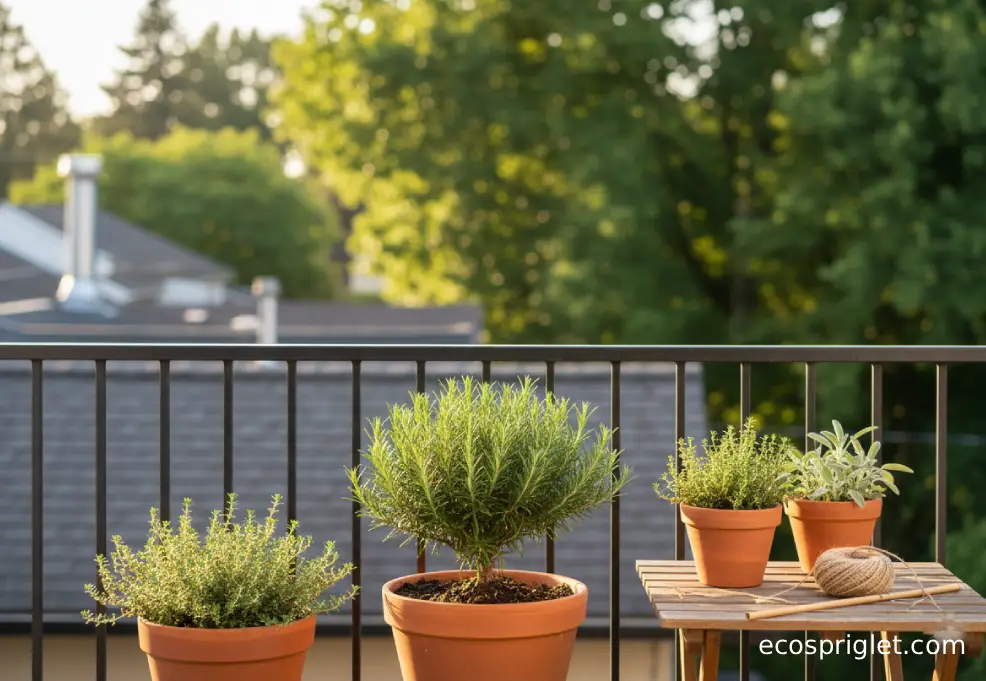
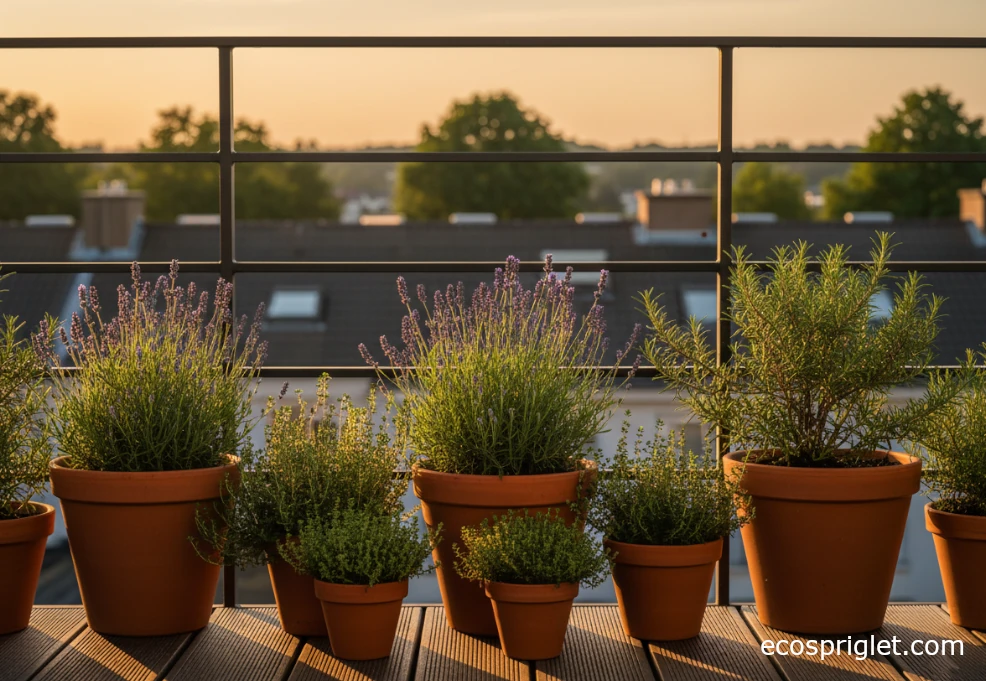
Place one pot near the kitchen door if you can. You will use it more often when it is close, and brushing past the foliage releases that clean piney scent. On a tiny balcony, rosemary can also act as a small structural plant beside softer herbs like parsley, chives, or thyme.
- Kitchen-door pot: keep it where you will actually snip a sprig for potatoes, bread, beans, or roasted vegetables.
- Simple topiary: train one upright stem early and shape gradually with small trims.
- Sunny herb anchor: use rosemary as the upright plant in a group of smaller pots, but leave space around it.
- Heat-buffer grouping: group containers so they shade each other’s sides, without crowding the foliage.
This is the herb that makes a balcony dinner feel more intentional with almost no effort. A few sprigs in a pan, and suddenly your apartment smells like you planned your life better than you did.
Conclusion: Rosemary Rewards the Right Kind of Neglect
Growing rosemary in a pot is mostly about setting boundaries. Give it a container large enough to buffer heat and moisture swings, use a gritty mix that drains fast, put it in the brightest spot you can manage, and water deeply only after the pot has genuinely dried down. That combination solves the “why is my rosemary dying?” mystery more often than any special product ever will.
Outdoors, rosemary can become one of the easiest balcony herbs once the setup is right. Indoors, it is still possible, but it needs premium real estate: strong light, airflow, and a cooler winter spot if you have one. Either way, small tip-pruning keeps it bushy, and a simple soil check prevents most container problems before they start.
Start with one plant, one good pot, and one bright location. Once rosemary settles in, it becomes the kind of herb you use constantly—not because you planned a perfect herb garden, but because it is right there, healthy, fragrant, and ready for dinner.

Love the plant..I will try to grow some…