Succulents are some of the easiest plants to fall for in an apartment because they look sculptural, tolerate dry indoor air, and do not ask for daily attention. Still, the world of types of succulent plants can feel surprisingly wide once you move beyond one cute rosette in a 3-inch pot. Some grow like tiny trees, some trail over shelves, some form tight clumps, and some are technically cacti with spines instead of smooth leaves.
The trick is not memorizing every name. It is learning the main growth shapes, light needs, and watering habits so you can choose a plant that fits your windowsill, balcony, shelf, or desk. A sunny south or west window can support very different succulents than a softly lit bedroom shelf. A pet-friendly home also needs a little extra screening because jade, aloe, snake plant, pencil cactus, and string of pearls can be risky for cats or dogs if chewed, according to ASPCA guidance.
Here is how I sort succulent houseplants in real small spaces, with names, visual cues, soil advice, and simple care rules that actually help beginners keep them alive.
The Main Succulent Groups You’ll Meet Indoors
A succulent is not one single plant family. It is a practical description for plants that store water in fleshy leaves, stems, or roots. That means cacti are succulents, but not every succulent is a cactus. Missouri Botanical Garden notes that succulents come from many plant families, including desert types and jungle cacti such as holiday cactus, mistletoe cactus, and orchid cactus.
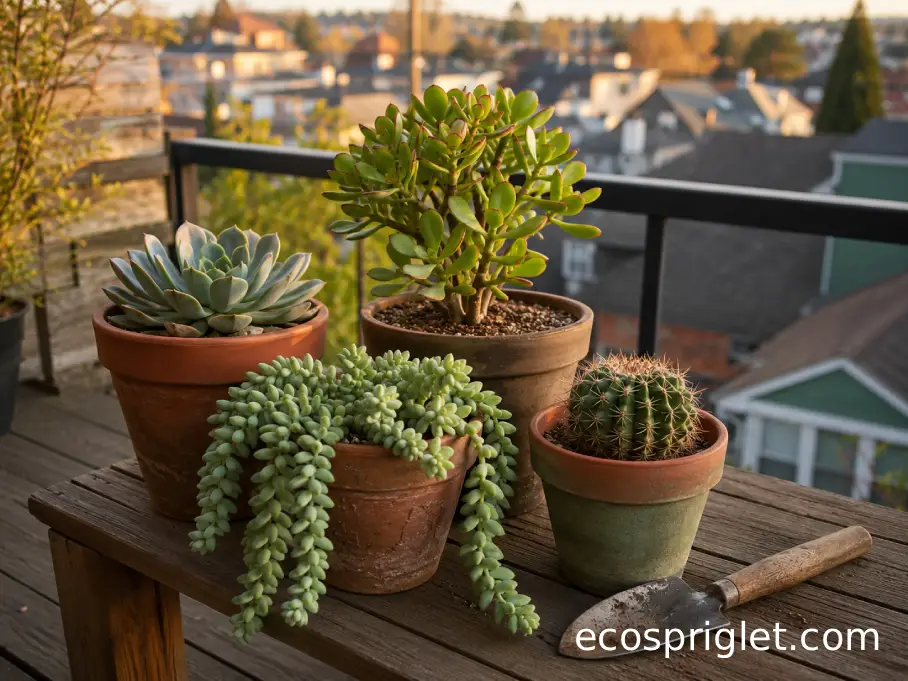
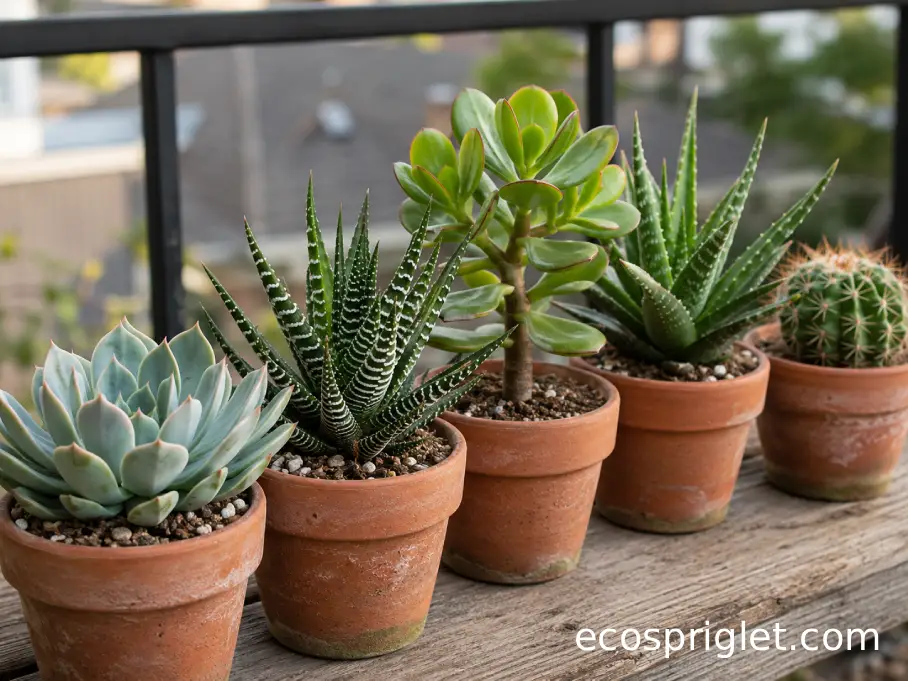
For apartment growers, I like sorting them by shape first. Shape tells you where the plant will fit and how quickly a care mistake will show up. Rosette types, such as echeveria and sempervivum, need strong light to stay compact. Upright woody types, such as jade plant, can become small tabletop shrubs. Spiky or striped types, such as haworthia and aloe, handle bright windows well and look tidy in narrow pots. Trailing succulents, such as burro’s tail and string of pearls, need a shelf or hanging spot where stems will not be bumped.
| Succulent Group | Common Names | Best Small-Space Use | Beginner Note |
|---|---|---|---|
| Rosette Succulents | Echeveria, Sempervivum, Aeonium | Sunny windowsills, shallow bowls with drainage | Stretch quickly in weak light |
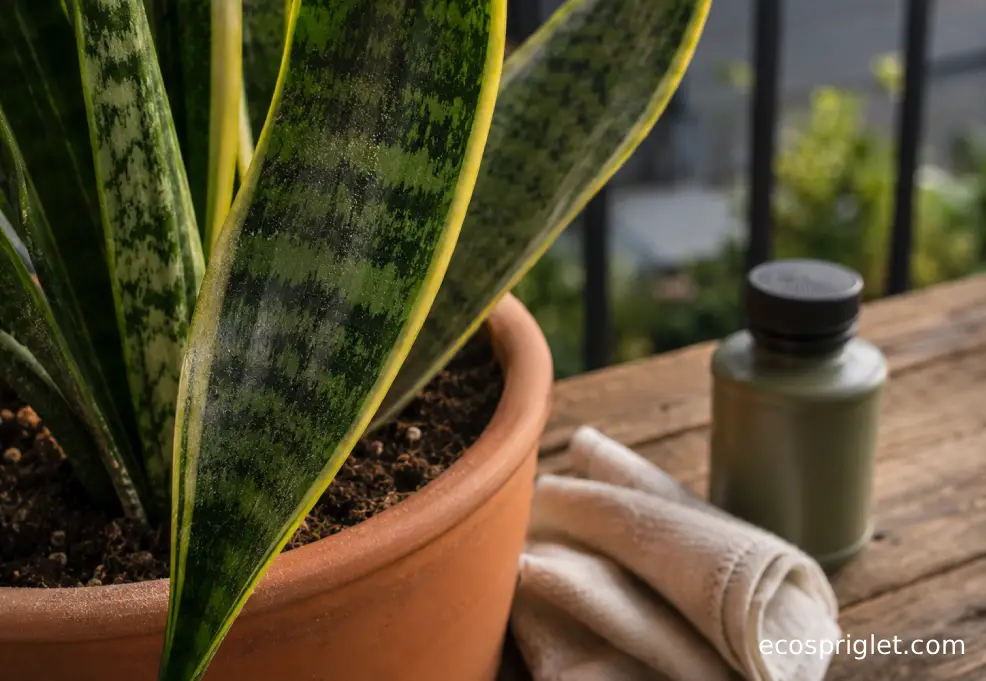
| Upright Succulents | Jade Plant, Aloe, Snake Plant | Desks, floor pots, bright corners | Check pet safety before buying |
| Trailing Succulents | Burro’s Tail, String of Pearls, String of Bananas | High shelves, hanging planters | Stems snap if handled often |
| Cacti | Mammillaria, Rebutia, Barrel Cactus | Very bright windows, dry shelves | Need less water than many leafy succulents |
| Jungle Cacti | Holiday Cactus, Rhipsalis, Orchid Cactus | Bright indirect light, hanging baskets | Prefer more even moisture than desert types |
No single indoor guide can cover all types of succulent plants, but these groups will help you recognize what you are looking at before you bring another pot home.
Popular Succulent Names and What They Look Like
Pictures help, but names become easier when you pair each plant with a visual clue. Echeveria usually forms a flower-like rosette with spoon-shaped leaves. Haworthia stays compact and often has striped, pointed leaves. Jade plant has oval, glossy leaves on thicker branching stems. Aloe grows in pointed rosettes with toothed edges. Holiday cactus has flattened segmented stems rather than a desert-cactus look.
University of Illinois Extension lists jade, haworthia, aloe vera, kalanchoe, sedum, echeveria, and euphorbia among easy-care succulents that can do well indoors, while also reminding gardeners to research each variety because light and water needs still vary. I see that variation all the time on apartment windowsills: one plant sulks from too little light while the one next to it is perfectly content.
| Name | Visual Cue | Indoor Fit | Watch For |
|---|---|---|---|
| Echeveria | Tight pastel or green rosette | Bright window with several hours of sun | Long gaps between leaves mean stretching |
| Haworthia | Small pointed leaves, often striped | Bright indirect light or gentle sun | Soft leaves may mean overwatering |
| Jade Plant | Oval leaves on woody stems | Sunny desk, shelf, or sill | ASPCA lists jade as toxic to cats and dogs |
| Aloe Vera | Upright toothed leaves in a rosette | Dry, sunny area | Bring indoors before nights dip below 50°F if summered outside |
| Holiday Cactus | Flat segmented stems, no desert spines | Bright indirect light | Needs different care than desert cacti |
| Burro’s Tail | Trailing stems with plump bead-like leaves | High shelf or hanging pot | Leaves drop easily when bumped |
| String of Pearls | Trailing strands with round pea-like leaves | Hanging spot with bright light | ASPCA notes ingestion can cause stomach upset and lethargy |
If you are shopping from types of succulent plants pictures, do not choose by color alone. Bright pink, blue, or purple tones often fade indoors unless the plant gets strong light. Choose by shape, mature size, and where the pot will actually live.
How to Match a Succulent to Apartment Light
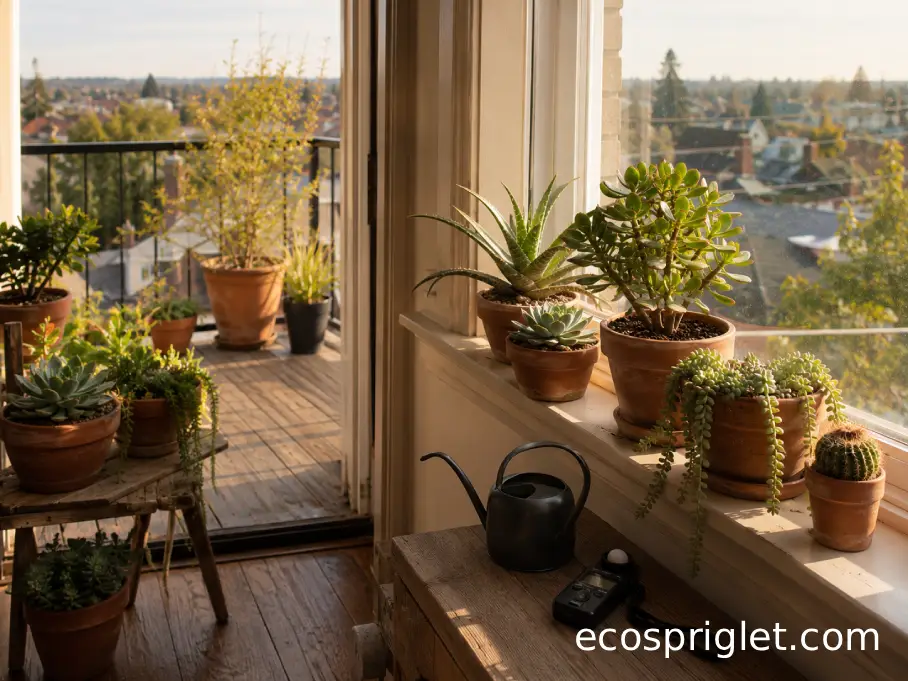
Light is the quiet deal-breaker with many succulent houseplants. University of Minnesota Extension recommends placing succulents in a bright, sunny window and notes that artificial light can help when natural light is not enough. Missouri Botanical Garden also says cacti and succulents generally need at least 4 hours of bright, direct light daily, though jungle cacti prefer medium light and should receive direct sun mainly in winter.
In a small apartment, I would treat windows like microclimates. A south or west window is usually the best place for echeveria, sedum, jade, aloe, and small desert cacti. An east window can work for haworthia, gasteria, holiday cactus, and some aloes because the light is bright but less punishing. A north window is usually too dim for compact growth unless you add a grow light.
There are two simple warning signs. If the plant leans hard toward the glass or grows longer spaces between leaves, it needs more light. If leaves turn pale, tan, or crispy after a move outdoors, the light jump was too sudden. When I move succulents from my Portland windowsill to the balcony in late spring, I start them in bright shade for 7 to 10 days before giving them more direct sun. That slow transition prevents the leaf scorch that surprises a lot of new growers.
What Type of Soil to Plant Succulents In
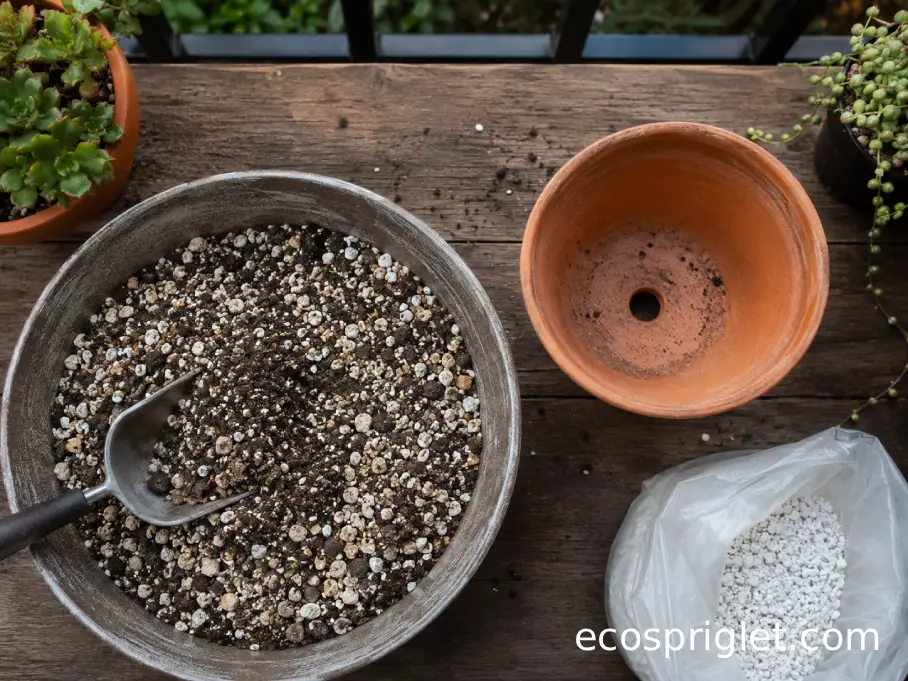
The best answer to what type of soil to plant succulents in is simple: use a fast-draining, gritty mix in a pot with drainage holes. University of Minnesota Extension recommends duplicating well-drained sandy conditions indoors and says a moist mix should fall apart when squeezed, not hold together like mud. University of Illinois Extension suggests either buying succulent potting soil or mixing one part organic material, such as potting soil or coir, with two parts mineral material, such as coarse sand, perlite, or pumice.
- For a 3- to 5-inch starter pot, use a cactus or succulent mix and add extra perlite or pumice if it feels dense.
- Choose a pot only 1 to 2 inches wider than the current root ball; oversized pots stay wet too long.
- Use terracotta when you tend to overwater, because it dries faster than glazed ceramic or plastic.
- Leave about 1 inch of space between the soil surface and pot rim so water does not spill indoors.
Skip the gravel layer inside the bottom of the pot. Illinois Extension explains that gravel beneath potting mix does not improve drainage; water can perch in the soil above the gravel and keep roots wetter than intended. Drainage holes, gritty mix, and emptying saucers matter much more.
For renters, double potting is often the cleanest solution: keep the succulent in a nursery pot with holes, then slip that inside a decorative cachepot. After watering, remove the inner pot, let it drain fully in the sink, and put it back once dripping stops.
Watering, Pots, and Small-Space Care That Prevent Rot
Overwatering is the mistake I learned the hard way with my first jade plant. The leaves wrinkled, so I assumed it wanted more water. In reality, the roots were already struggling in a pot that stayed wet too long. Succulents can look thirsty when roots are damaged, which is why checking the soil matters more than guessing from the leaves alone.
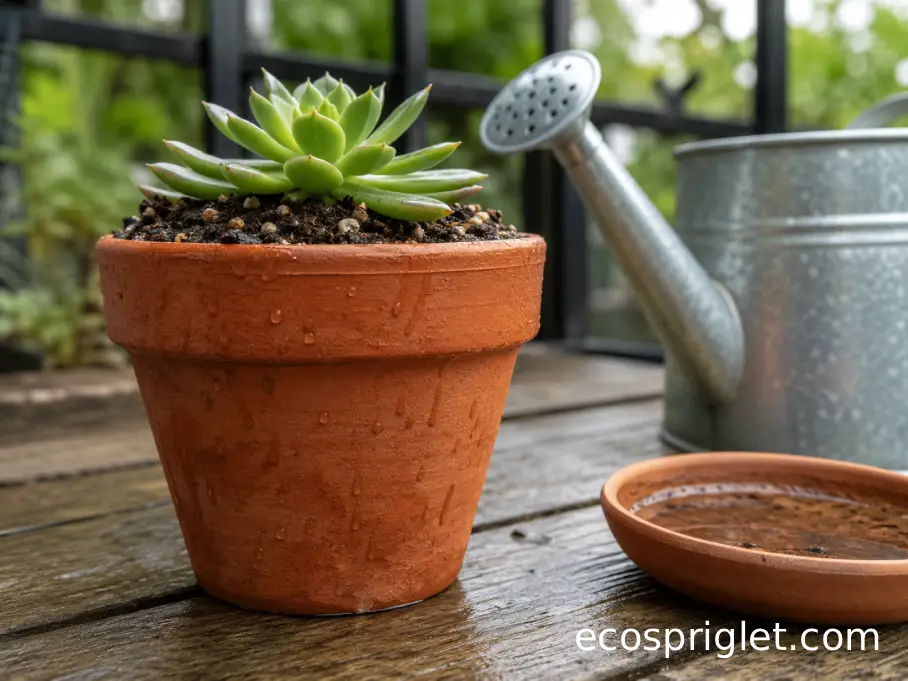
University of Illinois Extension gives a useful beginner rhythm: many succulents need water about every 2 to 3 weeks, but only when the soil is completely dry, and they should be watered deeply until water runs from the drainage holes. University of Minnesota Extension also recommends watering thoroughly, discarding excess water after a few minutes, and allowing soil to dry out completely between waterings.
- Check before watering: push a finger or wooden skewer 1 to 2 inches into the mix; if it comes out damp, wait.
- Water thoroughly: soak until water exits the drainage hole, then let the pot drain fully.
- Empty saucers: do not let indoor pots sit in water for more than a few minutes.
- Slow down in winter: low light means slower growth and less water use.
On a windy balcony, pots can dry much faster than the same plant indoors. In summer, I check small 3-inch pots twice a week, but I still water by dryness, not by calendar. A succulent in a hot terracotta pot may need water sooner than one in a glazed pot on a shaded shelf.
How to Identify the Succulent You Have
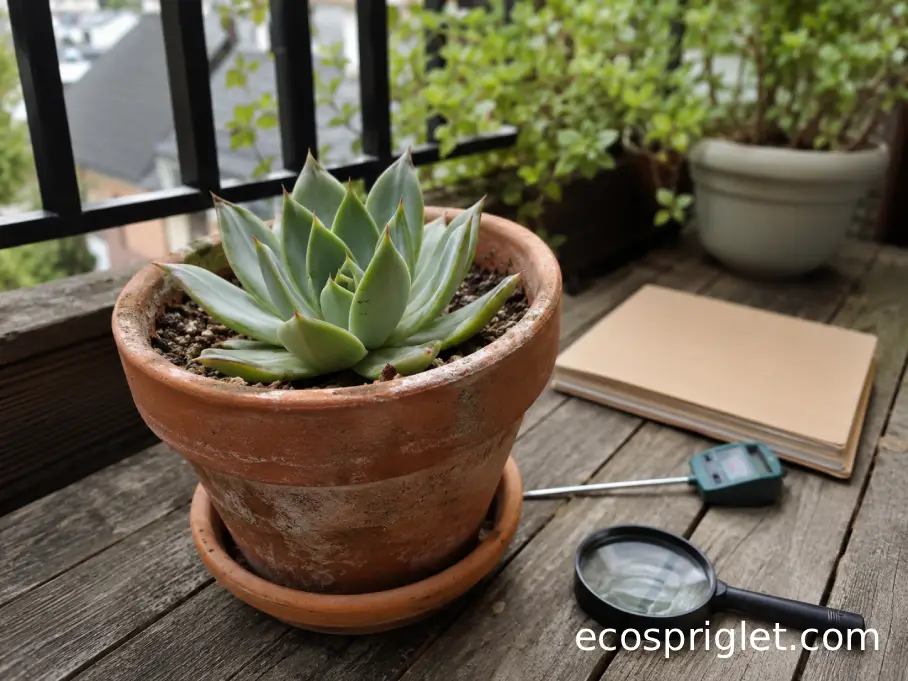
When someone asks what type of succulent plant they have, I start with structure before I start with plant apps. A clear photo helps, but your own observations are just as useful. Look at how the leaves attach, whether the plant forms a rosette or branching stems, whether it has spines, and whether new growth appears from the center, tips, or offsets near the base.
- Rosette with smooth spoon-shaped leaves: likely echeveria, aeonium, graptopetalum, or a related hybrid.
- Compact pointed leaves with white bands or dots: often haworthia, gasteria, or a small aloe.
- Oval leaves on woody stems: commonly jade plant or another crassula.
- Flat segmented stems: likely holiday cactus, orchid cactus, or another jungle cactus.
- Round beads or banana-shaped trailing leaves: usually a curio or senecio-type trailing succulent.
Take photos in bright natural light from three angles: top view, side view, and a close-up of the leaf edge. Include the pot size and a note about flower color if it blooms. If the plant was bought unlabeled from a grocery store, accept that it may be a hybrid rather than a tidy species. That is common with echeveria-style rosettes.
For care, you do not need a perfect botanical ID on day one. You need the right care category: desert-style dry grower, jungle cactus, trailing succulent, or upright succulent. Once that category is clear, your watering, light, and soil choices become much safer.
Common Mistakes to Avoid With Succulent Houseplants
The most common succulent problems in apartments are not dramatic pest outbreaks. They are small mismatches repeated for weeks: too little light, too much water, no drainage, or a pot that looked better than it functioned. Missouri Botanical Garden notes that overwatering is a frequent cause of problems with cacti and succulents, while University of Minnesota Extension points to bright light, proper watering, and good cultural conditions as key ways to prevent rot and pest trouble.
- Mistake: watering a little every few days. Fix: water deeply only after the mix dries completely.
- Mistake: planting in a glass bowl with no hole. Fix: use a nursery pot with drainage inside the decorative bowl.
- Mistake: mixing cacti and jungle cacti in one shallow dish. Fix: group plants with similar water and light needs.
- Mistake: assuming all succulents are pet-safe. Fix: check ASPCA before buying, especially for jade, aloe, snake plant, pencil cactus, and string of pearls.
- Mistake: placing a rosette far from a window. Fix: move it closer to stronger light or use a grow light 6 to 12 inches above the plant for 14 to 16 hours daily when natural light is weak, following University of Minnesota Extension guidance for supplemental lighting.
A small note from my own shelves: the prettiest pot is rarely worth it if you cannot empty the saucer easily. In a studio or apartment kitchen, a detachable saucer and a 4-inch terracotta pot will save more plants than a fancy sealed planter.
Creative Ways to Display Different Succulents in Small Homes
Succulents are excellent design plants because their shapes do half the decorating for you. In a small home, I would rather use fewer plants with stronger forms than crowd a tray until air cannot move around the pots. Crowding also makes it harder to spot mealybugs, scale, soft stems, or leaves that are dropping from stress.
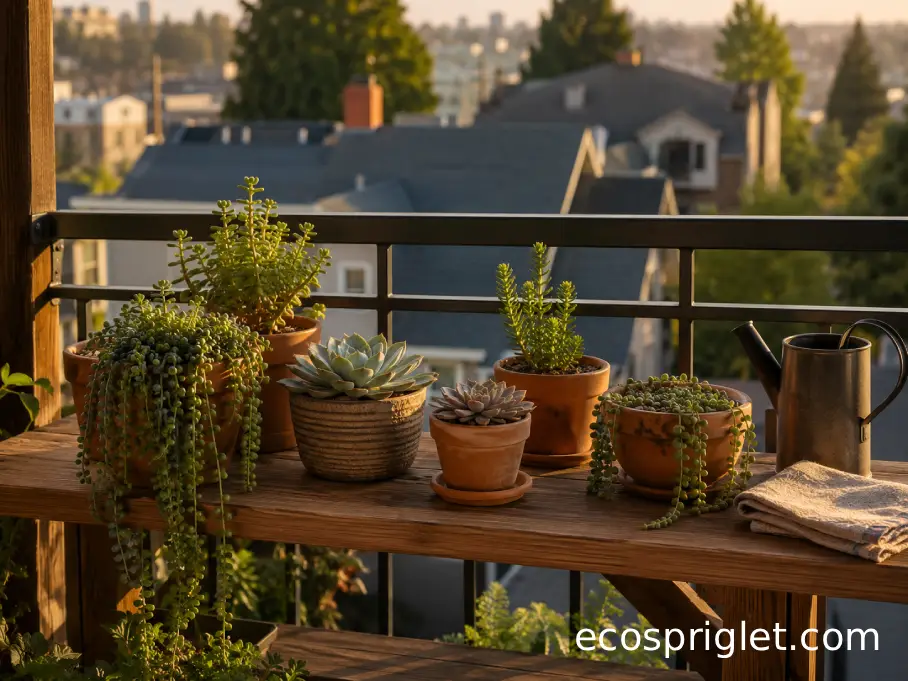
Try a three-level setup. Put upright jade, aloe, or snake plant on the lowest stable surface. Keep rosette succulents close to the brightest window or balcony edge. Place trailing succulents on a high shelf where stems can hang without brushing against coats, curtains, or pets. If you use railing shelves outdoors, check your lease and building rules first, then secure every pot so wind cannot tip it. A 4-inch pot feels light in your hand but can still make a mess if it falls from a balcony.
Dish gardens can look lovely, but they work best when all plants share similar water needs and growth rates. University of Minnesota Extension recommends choosing grouped succulents carefully so one plant does not outgrow the rest and so water needs match. For beginners, I prefer individual small pots set together on one tray. You get the same collected look, but each plant can be watered, turned, or rescued separately.
Final Thoughts: Build a Succulent Collection You Understand
Learning the different types of succulent plants is less about collecting every name and more about noticing patterns. Rosettes usually want strong light. Upright types need room to mature and may need pet-safety checks. Trailing succulents need a safe perch. Cacti often want the brightest, driest spot you can offer, while jungle cacti prefer a gentler rhythm with bright indirect light and somewhat more even moisture.
Start with one or two plants that match your actual apartment, not the dreamiest photo online. For a bright sill, try echeveria, jade, aloe, or a small cactus. For bright indirect light, try haworthia or holiday cactus. Use a gritty mix, a pot with drainage, and a simple rule: water thoroughly only after the soil has dried. That one habit solves more succulent problems than any special product.
Sources referenced for care and safety guidance include University of Minnesota Extension, University of Illinois Extension, Missouri Botanical Garden, and ASPCA.