If you’ve ever stared at a gray winter sky and wished your balcony or living room looked more like April, indoor tulips are a very satisfying project. The short answer to “can you grow tulips indoors?” is yes, but tulips need a convincing winter first. That means chilling the bulbs, planting them in a pot with drainage, and then waking them up slowly in bright light and cool indoor temperatures.
In this guide, I’ll walk you through how to plant tulip bulbs in pots, how deep to plant them, how to care for tulips indoors day to day, and how to try growing tulips indoors in glass vases. The advice is meant for real small spaces: apartment windowsills, balcony doors, fridge shelves, narrow plant stands, and the kind of indoor setup that does not involve a greenhouse or a garage full of equipment.
Think of indoor tulips as a slow, cozy project: a few minutes of potting in fall, a quiet “fake winter” in your fridge or a cool storage spot, and then a burst of color when your place needs it most. They are not the longest-lasting indoor flowers, but for a couple of weeks of fresh spring color, they earn their spot.
Indoor Tulips: Can Tulips Really Grow Inside?
Tulips are naturally outdoor spring bulbs, but what they really care about is the sequence: a long, cold rest followed by brighter light and gentle warmth. Indoors, you are re-creating that process on your schedule. That is why indoor tulip growing is often called forcing tulips. You are not making the bulb do something unnatural so much as giving it a managed version of winter and spring.
For indoor tulips, you will usually either buy pre-chilled bulbs or chill regular fall bulbs yourself. University of Minnesota Extension recommends a cold treatment of 35–48°F for at least 12–13 weeks for hardy bulbs grown indoors. In a small apartment, the refrigerator is often the simplest option, as long as the bulbs are kept away from ripening fruit.
One important safety note: tulips are toxic to cats and dogs, especially the bulbs. The ASPCA lists tulips as toxic to cats, dogs, and horses, with the highest concentration of toxin in the bulb. If you live with curious pets, keep both loose bulbs and planted containers completely out of reach, or choose a pet-safe plant instead.
Planning The Chill Before You Plant
Forcing tulips indoors starts months before you see flowers. In nature, tulip bulbs sit in cold soil through winter while they build roots and prepare the flower inside the bulb. Indoors, you mimic that cold period with a fridge, unheated storage space, or another spot that stays cold but does not freeze.
A practical rule is to plan for 12–16 weeks of chilling at about 35–48°F, followed by another 3–4 weeks in a cool, bright room before bloom. Some tulips may bloom a little faster or slower depending on variety, bulb size, and room temperature, but that timeline keeps expectations realistic.
- Buy large, firm tulip bulbs in fall. Avoid bulbs that feel soft, shriveled, or moldy.
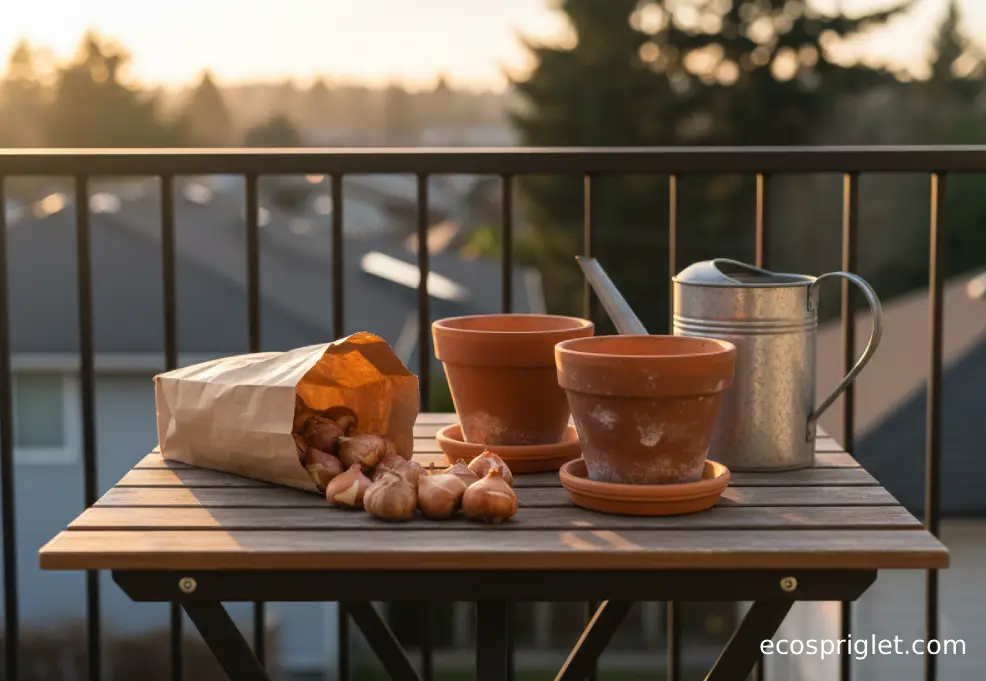
- Pot them before chilling, or chill the loose bulbs in a breathable paper bag until you are ready to plant.
- Keep bulbs away from apples, pears, bananas, and other ripening fruit in the fridge, because ethylene gas can interfere with flower development.
- Mark the chill start date on the pot, bag, or a piece of masking tape so you are not guessing later.
- After 12–16 weeks, bring the bulbs into a cool, bright indoor spot and expect flowers in roughly 3–4 weeks.
I like to set a phone reminder for 13 weeks after chilling begins. It sounds fussy, but it saves you from pulling the bulbs too early because you are impatient in January. Tulips that do not get enough cold often give short stems, weak flowers, or no proper bloom at all.
How To Plant Tulip Bulbs In Pots
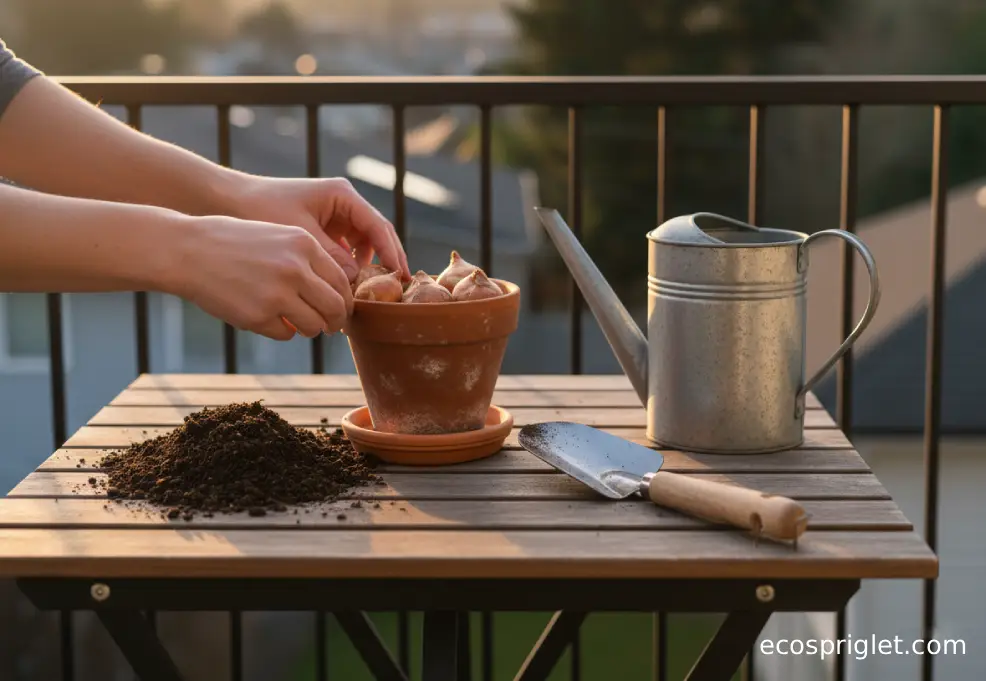
For potted indoor tulips, choose a clean pot at least 6 inches deep with drainage holes and a saucer. A 6-inch-wide pot can usually hold about six tulip bulbs for a full-looking display. The bulbs can sit close together, but they should not be pressed so tightly that they bruise or touch hard on every side.
Use fresh potting mix rather than garden soil. Garden soil can compact in containers, drain poorly, and bring in pests or disease. A regular indoor potting mix works well; the main goal is a mix that holds some moisture but still drains freely.
- Fill the bottom third of the pot with fresh potting mix.
- Set each bulb root-side down and pointy end up.
- Place the flatter side of each tulip bulb toward the outside of the pot if you want the largest leaves to frame the container neatly.
- Cover the bulbs so they are planted about 4 inches deep.
- Leave about 1/4 inch of space below the rim so water does not spill over.
- Water thoroughly once after planting, then let excess water drain away.
The potting mix should feel evenly damp after planting, not muddy. I aim for the feel of a wrung-out sponge. During the chilling period, check the pot every few weeks and add a little water only if the mix is starting to dry out. Cold bulbs do not use water quickly, but they should not sit bone-dry for months either.
Day-To-Day Tulip Care Indoors
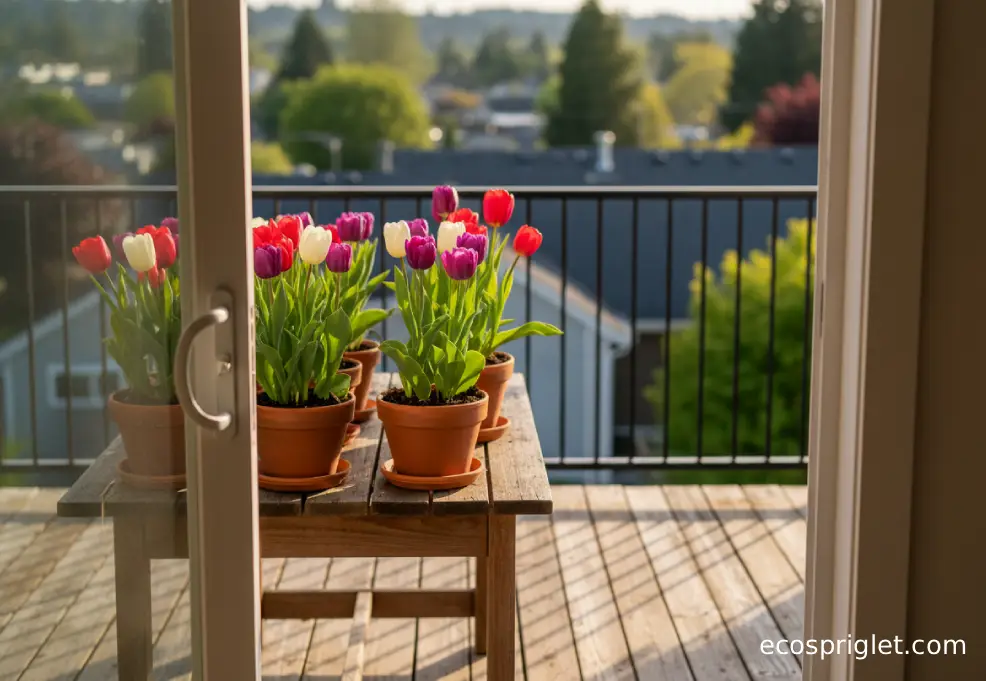
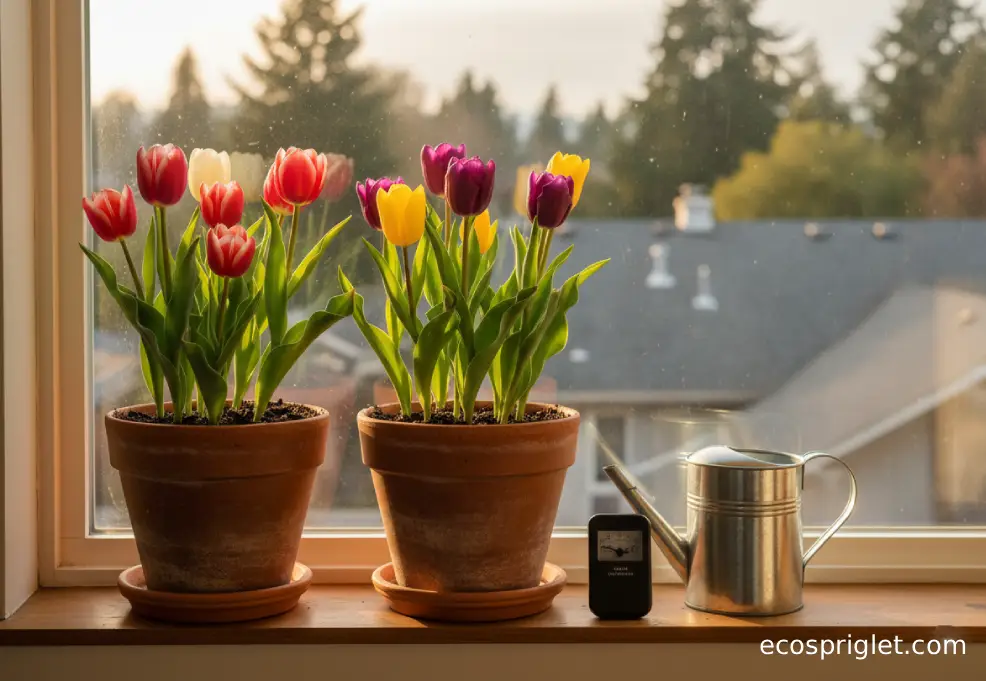
Once your chilled tulip pots are ready to come out of cold storage, wake them up gently. Start them in a cool, bright spot around 50–60°F if you can manage it. A bright east-facing window, a cool south-facing room, or a spot near a balcony door often works well. Rooms that stay under about 65°F usually keep the flowers looking fresh longer.
Water when the top inch or so of potting mix begins to feel dry. Water until a little drains into the saucer, then empty the saucer so the bulbs are not sitting in water. Soggy soil is one of the fastest ways to rot indoor tulips, especially in a cool room where moisture evaporates slowly.
Light matters, but heat matters too. Direct sun through glass can become surprisingly warm, especially in small apartments. If leaves look limp, stretched, or scorched, move the pot a foot or two back from the glass. If the stems lean toward the window, rotate the pot every day or two.
There is no need to fertilize tulips grown as a one-time indoor display. The bulb already contains the stored energy it needs for that flower. After the blooms fade, snip off the spent flowers, but leave the foliage until it yellows naturally if you plan to try saving the bulbs.
Growing Tulips Indoors In Glass Vases And Jars
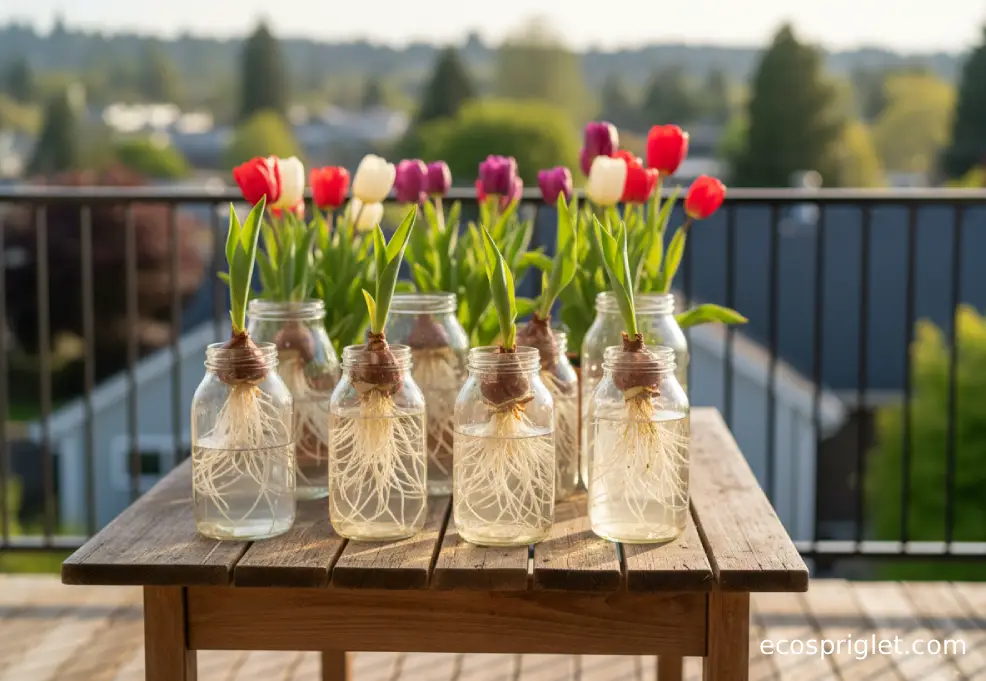
Growing tulips indoors in glass vases gives you that clean, minimalist look where the roots become part of the display. It can work beautifully, but it is less forgiving than growing in potting mix. The bulb must stay dry while the roots reach the water. If the bulb itself sits in water, it is much more likely to rot.
The Royal Horticultural Society gives this same water-level guidance for indoor bulb vases: keep the water just below the bottom of the bulb, not touching it. That rule works well for tulips too. The roots go into the water; the bulb stays just above it.
- Use a bulb vase, narrow jar, or glass container that supports the bulb above the water.
- Add water until the level sits about 1/8–1/4 inch below the base of the bulb.
- Chill the vase at 35–48°F for 12–16 weeks, checking the water level occasionally.
- After chilling, move the vase to a cool, bright spot.
- Top up the water as needed, but keep it below the bulb.
Glass-grown tulips are especially tempting for pets and children because the bulb is exposed. If that is your household, a covered pot on a high shelf is usually safer than a low glass vase on a coffee table.
If the stems flop, try a cooler location first. Warm rooms encourage fast, soft growth. Rotating the vase daily also helps keep the stems from leaning hard toward the window.
Common Indoor Tulip Problems And Easy Fixes
Indoor tulips are not difficult, but they do tell on you quickly when the temperature, water, or chill period is off. Here are the problems I see most often in small spaces.
- Short, stubby stems usually mean the bulbs did not get enough chilling or the room was too warm after chilling. Next time, give them the full 12–16 weeks of cold and start them around 50–60°F.
- Floppy growth is often caused by warm rooms or uneven light. Move the pot to a cooler bright spot and rotate it every day or two.
- Rotting bulbs usually come from soggy soil, no drainage, or water touching the bulb in a vase. Use drainage holes, empty saucers, and keep vase water just below the bulb.
- Leaves but no blooms often point to old bulbs, small bulbs, or too little cold treatment. Buy firm, large bulbs in fall and track the chill date.
- Yellowing leaves before flowering can come from stress, sudden heat, or inconsistent moisture. Keep pots away from radiators, heating vents, and cold drafts.
When I noticed my first pot of indoor tulips leaning almost sideways toward a south window, I set the nursery pot inside a heavier decorative pot and rotated it a quarter turn every morning. Within a week, the stems had straightened enough that no one visiting knew how dramatic they had looked before.
Common Mistakes To Avoid With Indoor Tulips
The biggest mistake is skipping the cold period or cutting it short. Tulips are not like many houseplants where you can simply add light and water and hope they catch up. Without enough cold, the flower inside the bulb may not develop properly.
The second mistake is using a pot without drainage. Decorative cachepots are fine as outer covers, but the actual growing pot should have holes. After watering, lift the inner pot out and empty any water collected in the outer container.
Another common issue is overwatering during the chill. It is easy to fuss over bulbs because nothing seems to be happening, but wet potting mix plus cold storage is perfect rot weather. Check moisture occasionally, but do not water on a schedule just to feel productive.
Finally, do not place blooming tulips right above a radiator or pressed against hot glass. They may open quickly, look wonderful for two days, and then collapse. A cooler table near a bright window often gives you a longer show than the hottest, sunniest sill.
After Flowering: What To Do With Indoor Tulips
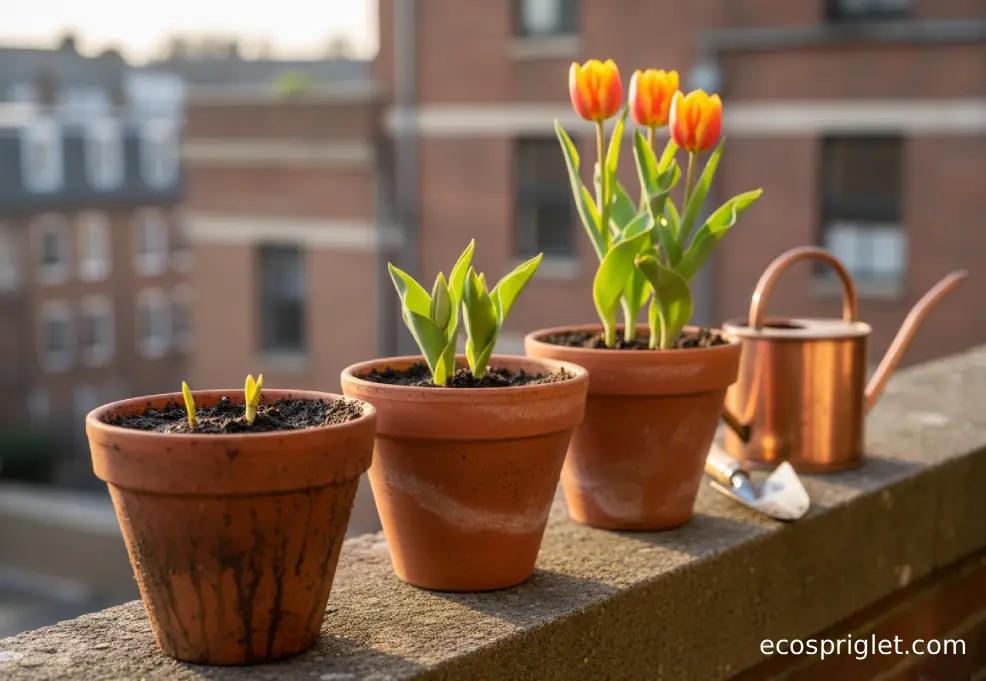
After flowering, you can either compost the bulbs or try to save them. For most apartment growers, composting is the more realistic choice. Forced tulips use a lot of stored energy to bloom indoors, and they are unlikely to flower strongly again as another indoor display.
If you have access to a yard, community garden, or outdoor planting area, you can try giving the bulbs a second life:
- Remove the faded flowers so the plant does not put energy into seed.
- Leave the leaves in place until they yellow naturally.
- Keep the pot in bright light and water lightly while the foliage is still green.
- Stop watering once the leaves die back.
- Plant the bulbs outside in fall, understanding that they may return weakly or not at all.
In a balcony or apartment context, I usually treat indoor tulips like seasonal flowers. Once the bloom is over and the foliage has yellowed, I compost the bulbs and reuse the pot for herbs, compact annuals, or another small-space plant.
Because tulip bulbs are the most toxic part for pets, do not toss spent bulbs somewhere a dog or cat can dig through them. Use a secure compost bin or trash container.
Designing With Indoor Tulips In Small Spaces
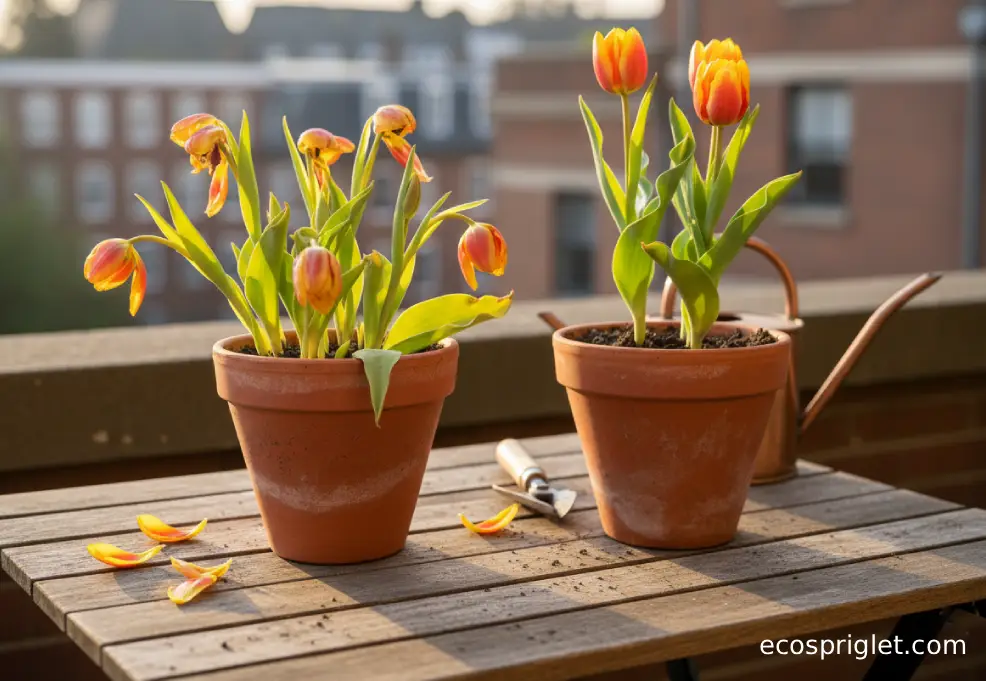
Once you know how to grow tulips indoors, the fun part is deciding where to put them. In a small apartment, even one or two pots can change the mood of a room. I like grouping containers at different heights: one pot near the window, one on a plant stand, and one glass vase where the roots catch the light.
- Near a balcony door, place two or three pots where they get bright light without blocking the walkway.
- On a narrow shelf, use matching pots in a row and bring chilled pots out in batches for staggered bloom.
- Among houseplants, tuck one tulip pot into leafy greenery so the flowers stand out.
- On a small dining table, use one compact pot instead of a large centerpiece that steals all the surface space.
Indoor tulips will not last forever, and that is part of their charm. You prepare them in the quiet months, watch green shoots appear when winter starts feeling long, and then enjoy a burst of color right where you live. For a small space, that is a pretty good trade for a bit of fridge space and a simple pot of bulbs.