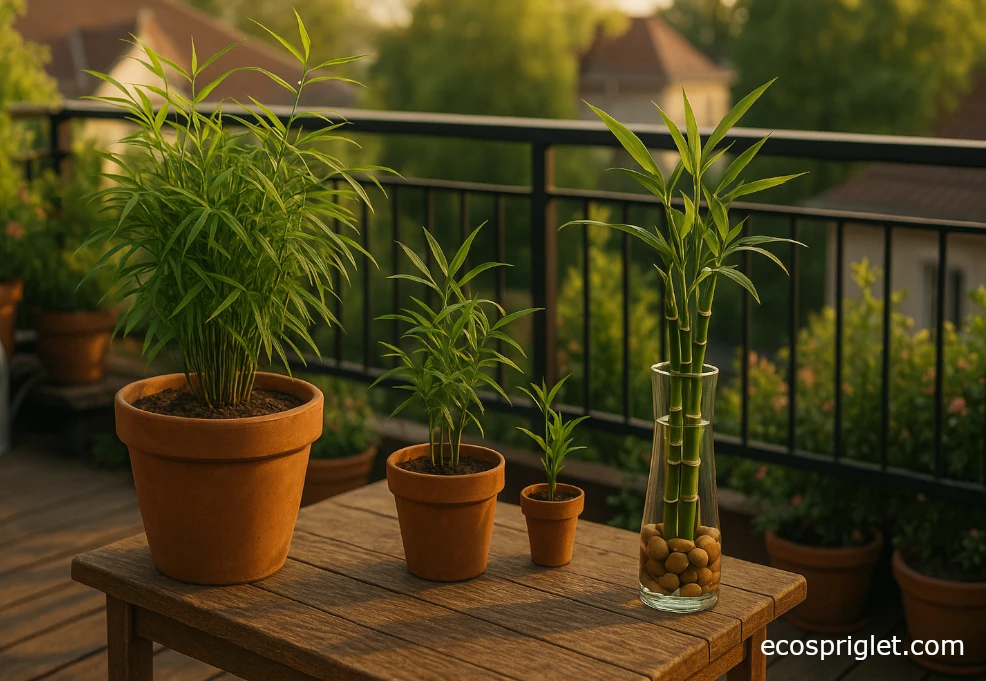
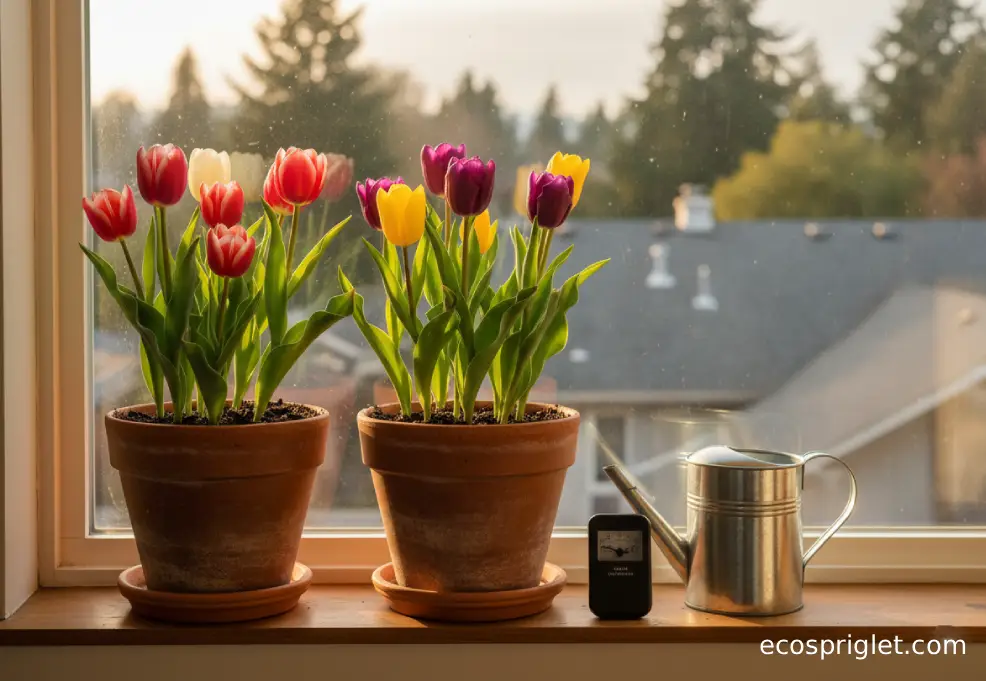
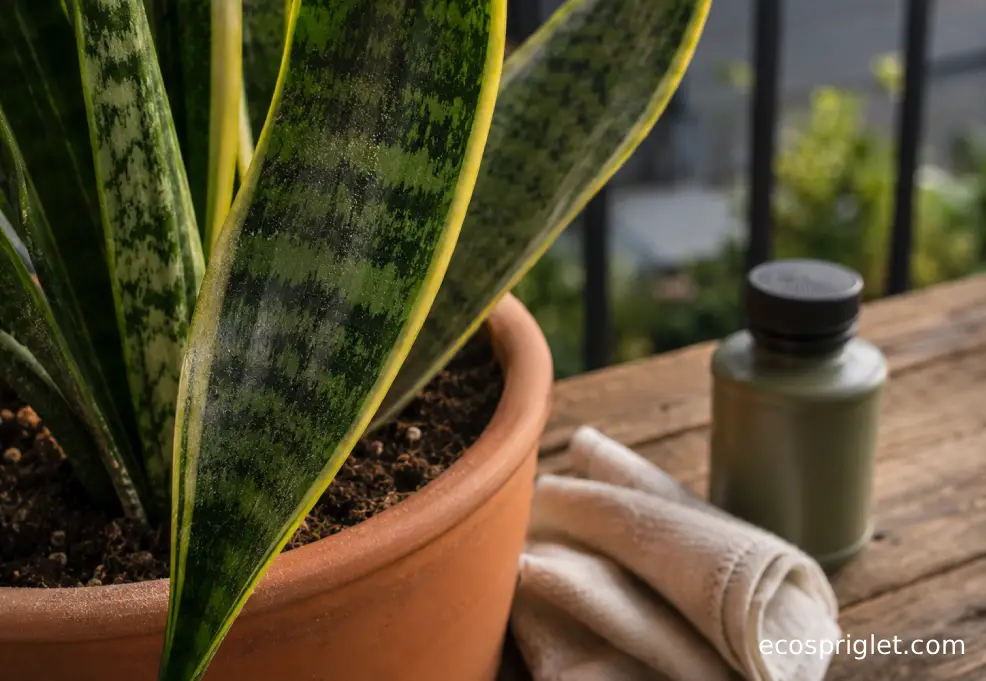
Succulent plants are wonderfully forgiving, but they are not magic. They still need the right mix of light, drainage, and restraint with the watering can. The reason they tolerate dry spells so well is simple: succulents store water in thick leaves, stems, and sometimes roots, which helps them handle periods of drought better than many leafy houseplants. Indoors, that same adaptation can work against them if the pot stays damp for too long.
For apartment gardeners, the good news is that succulent care can be very manageable. A sunny windowsill, a shallow pot with drainage holes, and a gritty potting mix can keep a small collection healthy without taking over your living room. I’ve grown them on narrow Portland balcony shelves, above radiators, and under simple grow lights during gray winters. The plants that do best are not always the rarest ones; they are the ones matched to your actual light, schedule, pets, and space.
This guide walks through how to choose, plant, water, grow, and propagate succulents in containers, with beginner-friendly fixes for the mistakes I see most often.
Meet Succulents Before You Buy
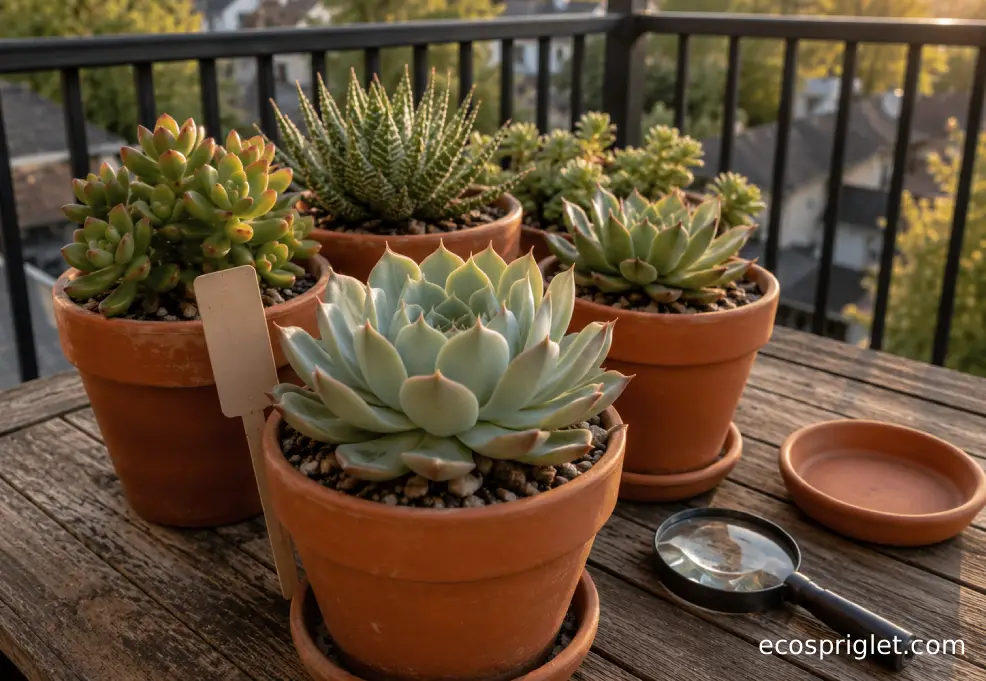
A succulent is not one single plant family. It is a broad group of plants that share a water-storing habit. Aloe, echeveria, jade plant, haworthia, sedum, kalanchoe, string of pearls, and many cacti can all be described as succulents, but they do not all want identical treatment. That matters when you’re buying a plant for a windowsill, shelf, or balcony.
Before you bring one home, check three things: the firmness of the leaves, the condition of the soil, and the shape of the growth. Leaves should feel plump, not mushy. Soil should be dry to slightly dry, not sour-smelling or swampy. Growth should be compact for most rosette types; long spaces between leaves usually mean the plant has been stretching for light.
| Care Factor | Apartment-Friendly Target | Beginner Warning Sign |
|---|---|---|
| Light | Bright window or grow light support | Long, pale, stretched stems |
| Water | Water thoroughly, then let the mix dry | Mushy leaves or blackened stems |
| Pot | Drainage hole plus saucer | Decorative cachepot with standing water |
| Soil | Fast-draining cactus or succulent mix | Dense, peat-heavy mix that stays wet |
University of Minnesota Extension notes that cacti and succulents need abundant light, modest water and fertilizer, and well-drained sandy soil. That combination is the heart of most good succulent care.
Choose the Right Type for Your Light
The easiest succulent plant is the one that fits your light. A south-facing window is usually the strongest indoor spot, while east and west windows can work for many forgiving types. North-facing windows are trickier unless the plant sits very close to the glass or gets help from a grow light. UNH Extension recommends about 6 hours from a south-facing window where possible and a draft-free spot that does not drop below about 50°F.
- For bright south or west windows, try echeveria, sedum, jade plant, aloe, or many compact cacti.
- For bright indirect light, haworthia, gasteria, and holiday cactus are often more forgiving.
- For shelves away from windows, use a grow light instead of hoping the plant will adapt.
- For tiny apartments with pets, check toxicity before buying, not after placing the plant.
I’d rather see a beginner buy one sturdy haworthia for a bright kitchen ledge than five colorful rosettes for a dim coffee table. Colorful stress tones on nursery succulents often fade indoors, and that is normal. What you want first is steady, compact growth. Beauty follows good placement.
A useful rule: if you can comfortably read a book in the spot at noon without turning on a lamp, it may support lower-light succulents. If the plant is casting a defined shadow for several hours, stronger sun-loving types have a better chance.
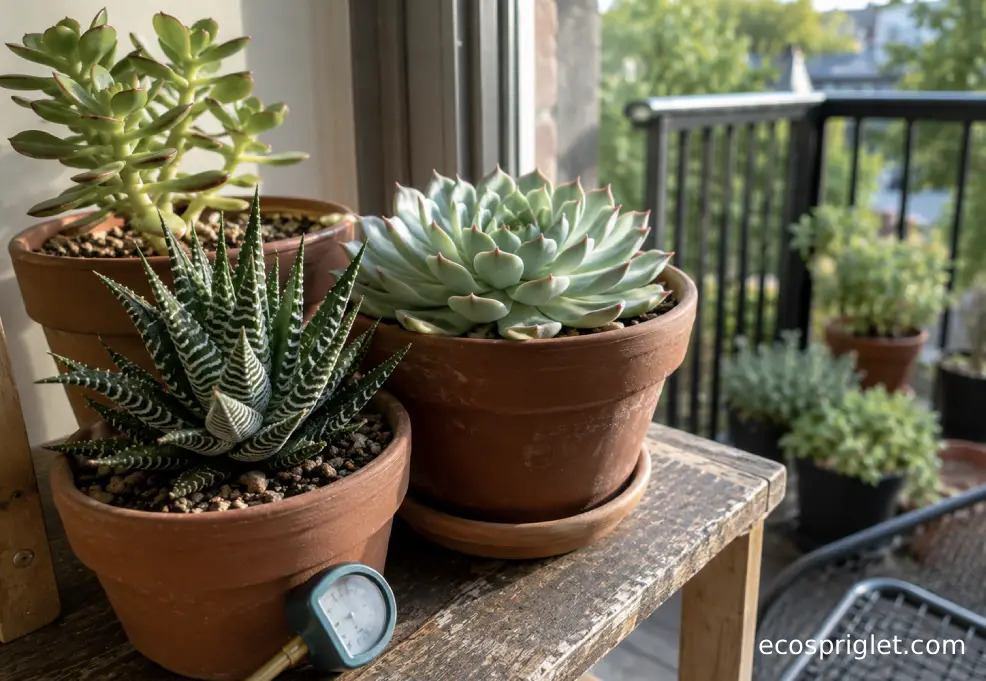
Plant Succulents in Containers That Actually Drain
The pot matters more than the pretty outer container. For most succulents in apartments, choose a pot only about 1 inch wider than the plant’s root ball, with at least one drainage hole. UNH Extension notes that an overly large pot can hold too much damp mix around a small root system, and University of Minnesota Extension gives similar guidance to choose a pot just one size larger when repotting houseplants.
Use a cactus or succulent mix, or amend a regular indoor potting mix with gritty material such as perlite, pumice, or coarse sand. The goal is not a bone-dry pot the second water hits it. The goal is a mix that wets evenly, drains through, and then dries in a reasonable time. In my apartment, a 4-inch terracotta pot near a bright window often dries far faster than a glazed ceramic pot of the same size.
- Pick terracotta when you tend to overwater; it helps moisture evaporate through the sides.
- Use glazed ceramic only if the pot has drainage and you are disciplined about checking soil.
- Skip gravel layers at the bottom. Coarse layers can interfere with normal drainage behavior instead of fixing a pot without holes.
- Place a saucer under the pot, but empty it within 10 minutes after watering.
Decorative cachepots are fine if you treat them like sleeves. Keep the plant in a nursery pot or inner pot with holes, water it at the sink, let it drain, and then return it to the outer container. That one habit prevents a surprising number of root problems.
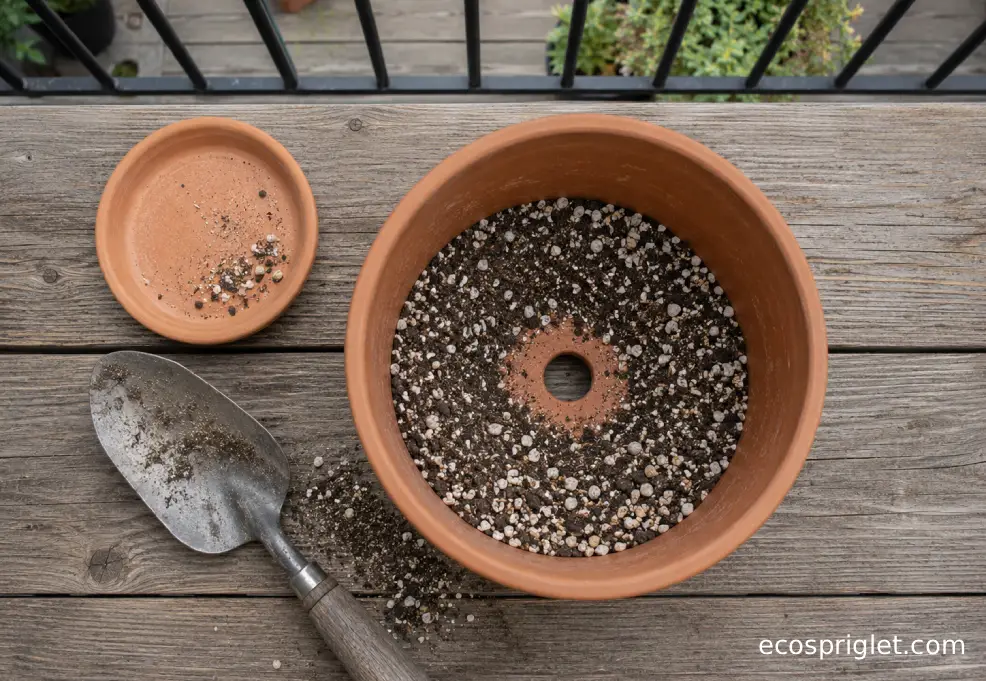
Water Deeply, Then Let the Pot Dry
Watering is where most succulent plants in a pot either settle in or start to fail. The pattern is simple: water succulent thoroughly until water runs from the drainage hole, discard the extra water, and wait until the potting mix dries before watering again. University of Minnesota Extension specifically advises thorough watering, draining excess water, avoiding repeated shallow sprinkling, and allowing the soil to dry completely between waterings.
Here is my small-apartment rhythm:
- Check the pot weight first. A dry 4-inch terracotta pot feels noticeably lighter.
- Push a wooden skewer or chopstick 2 inches into the mix. If it comes out damp with soil stuck to it, wait.
- Water at the sink until the whole root zone is wet, not just the top crust.
- Wait 7 to 21 days before checking again, depending on light, pot size, season, and indoor heat.
I learned this the hard way with my first jade plant. I gave it tiny sips every few days because I thought I was being careful. The top looked dry, but the lower half of the pot stayed wet. The leaves dropped, the stem softened, and I finally understood that shallow watering is not the same as careful watering.
In winter or in a low-light apartment, stretch the time between waterings. If the plant is under a bright grow light or outside in summer heat, it may dry faster. The calendar is a reminder to check, not a command to water.
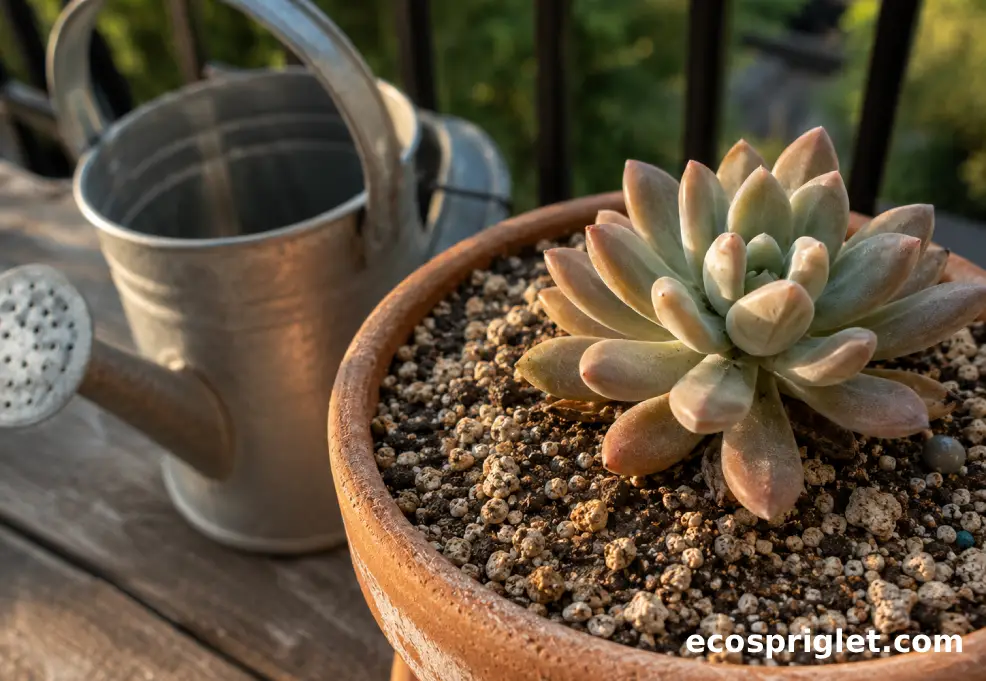
Use Windows and Grow Lights Without Scorching the Leaves
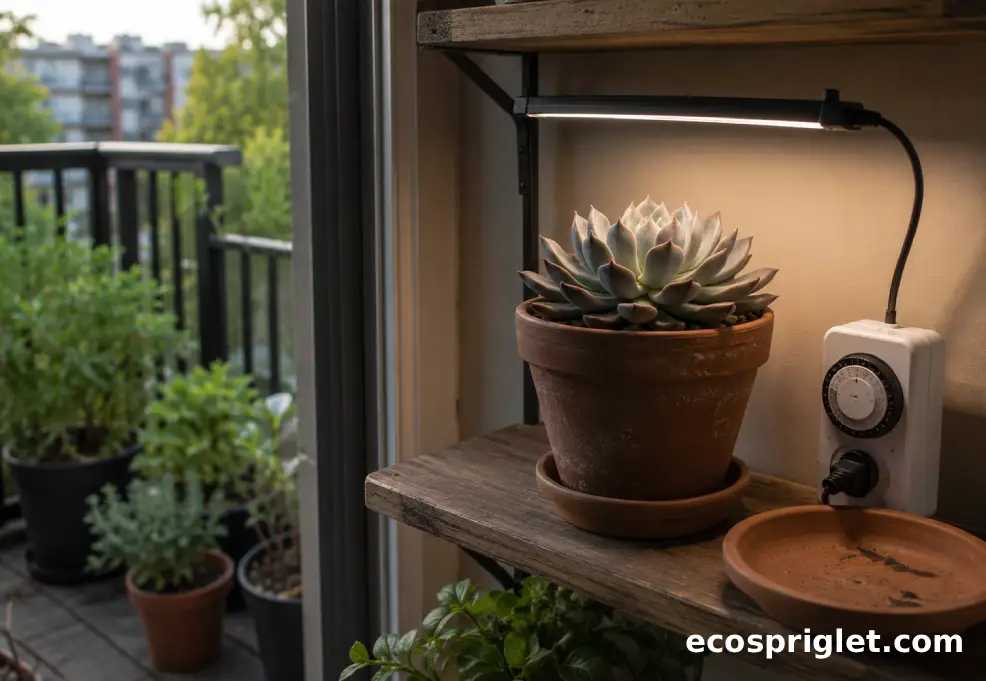
A succulent plant grow light is helpful when your apartment has winter gloom, deep overhangs, or only a north-facing window. University of Minnesota Extension recommends supplemental lighting when natural light is insufficient, and its indoor lighting guidance lists 12 to 14 hours for foliage houseplants; its cacti and succulents guidance suggests artificial lights 6 to 12 inches above succulents for 14 to 16 hours each day.
For a basic shelf setup, use a full-spectrum LED grow light on a timer. Start around 10 to 12 inches above the plant and watch the leaves for two weeks. If new growth stretches, move the light a little closer or run it longer. If leaves bleach, turn papery, or show tan patches on the side closest to the light or window, back the plant away.
Outdoor balcony moves need the same caution. Even sun-loving succulents can burn if they go from an indoor sill straight into hot afternoon sun. Begin with bright shade for a few hours a day, then gradually increase exposure over 7 to 10 days. University of Minnesota Extension also cautions that houseplants moved outdoors should start in a shady, sheltered spot and transition slowly to avoid sun and wind damage.
On windy balconies, use heavier pots and keep plants below railing height unless your building allows secured planters. A dry, top-heavy echeveria in a lightweight plastic pot can tip faster than you expect.
Grow Succulents From Cuttings and Leaves
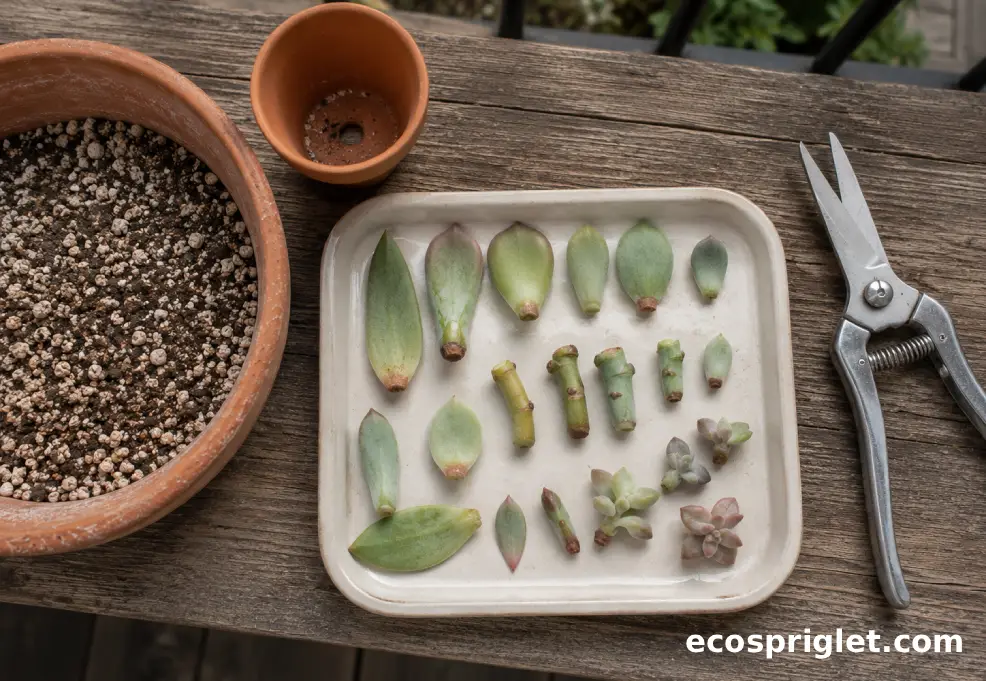
Learning how to grow succulents from cuttings is one of the most satisfying parts of keeping them. It also helps you rescue stretched plants instead of tossing them. University of Minnesota Extension says that stem cuttings are an easy way to propagate cacti and succulents, and that many types of succulents can also grow into new plants from broken leaves. The key is to let the wound air dry before placing the cutting in slightly moistened, sterile sand or a similarly fast-draining medium.
- Use clean snips and cut a healthy stem section 2 to 4 inches long.
- Remove the lowest leaves so the stem can sit in the mix without buried foliage.
- Let the cut end dry and callus for 1 to 3 days, longer for thick stems.
- Set the cutting into barely moist gritty mix and keep it in bright indirect light.
- Water sparingly until roots form; tug very gently after a few weeks to feel resistance.
For leaf propagation, twist a whole leaf cleanly from the stem. A torn leaf often shrivels without rooting. Lay the leaf on dry gritty mix, wait for tiny roots or a baby rosette, and mist very lightly only when roots appear. Some leaves will fail even when you do everything right, so start with several.
My favorite propagation setup is a shallow tray on a bright shelf, not a sealed terrarium. Succulent cuttings need air movement and patience more than humidity. Too much moisture at this stage can rot the cutting before it has a chance to root.
Common Mistakes to Avoid
Most succulent problems come from a small handful of habits. The good part is that you can correct many of them before the plant is too far gone.
- Watering by schedule: Check soil dryness and pot weight instead. A plant in bright July sun and a plant in a dim January room do not use water at the same speed.
- Using a pot with no drainage: Move the plant into a draining pot, then place that pot inside the decorative container after it has drained.
- Choosing a pot that is too large: Shift down to a snugger pot if the soil stays wet for more than a week in normal indoor conditions.
- Keeping sun-loving plants too far from the window: Move them closer gradually or add a grow light.
- Ignoring pests: Look under leaves and near stem joints for white cottony mealybugs or scale; University of Minnesota Extension suggests wiping these pests with alcohol-dipped cotton swabs.
Yellowing can mean overwatering, but it can also come from low light, old leaves aging out, or stress after repotting. Mushy, translucent leaves are more urgent; they usually point toward too much moisture. Dry, crispy lower leaves are often normal, especially on rosette succulents, as long as the center remains firm.
If a plant is stretched, you cannot make the long stem shrink back. You can move it to brighter light, then cut and root the compact top. I like this fix because it turns a mistake into two lessons: better lighting and propagation practice.
Keep Succulents Safe Around Pets, Kids, and Small Spaces
Succulents look harmless, but pet safety depends on the type. The ASPCA lists jade plant, pencil cactus, snake plant, and string of pearls among succulents or succulent-like houseplants that can cause problems if pets ingest them, while its Haworthia listing identifies haworthia as non-toxic to cats and dogs. If you share your apartment with a curious cat, dog, or toddler, choose plants carefully and keep unknown plants out of reach.
This is one reason I like haworthia and some holiday cacti for mixed-use apartments. They still need the right care, but they fit better on bright shelves where pets roam below. For spiny cacti, use stable pots and avoid narrow ledges where a bump could send the plant down. For euphorbia, be cautious with the milky sap, which the ASPCA notes can irritate pets.
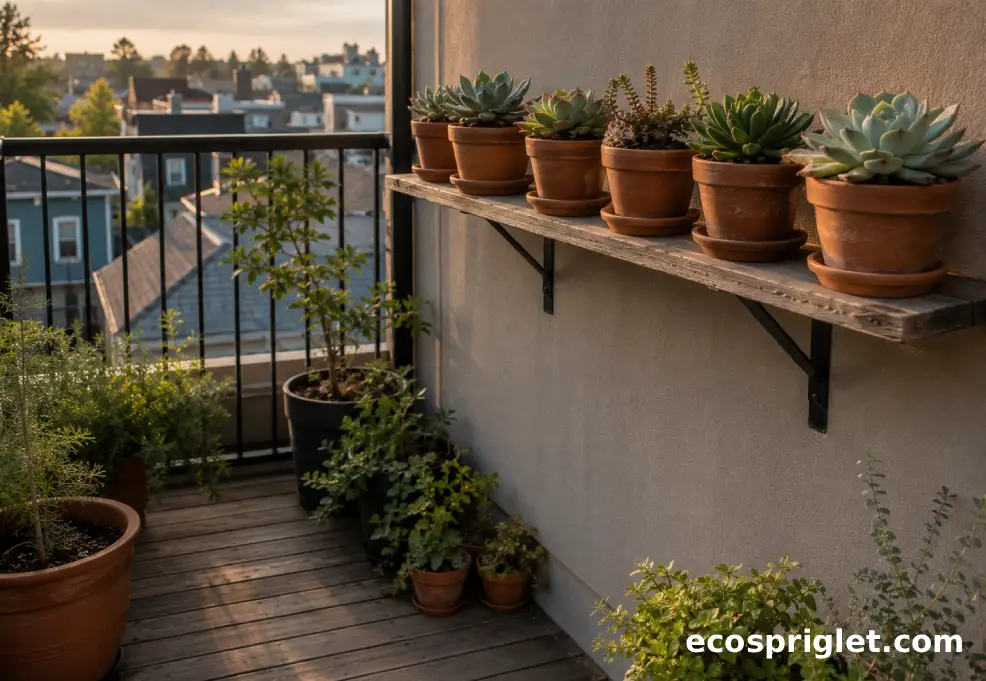
Balcony safety is just as practical. Put heavier pots low, secure shelving, and avoid hanging anything outside the railing unless your lease and building rules clearly allow it. Use saucers indoors to protect floors, but do not let water sit in them. If you have children helping, give them a small spoon for soil and a measured cup for watering. Succulents are great teaching plants, but the lesson should be observation, not flooding the pot.
Style a Small Succulent Collection Without Creating Clutter
A small succulent collection can look calm and intentional instead of crowded. The trick is to group plants by care needs, not just color. University of Minnesota Extension warns that grouped succulents should have compatible growth rates and similar water needs, especially in shallow dish gardens.
For apartment shelves, I prefer individual pots set close together over one big mixed bowl. Individual pots let you water a thirsty jade without soaking a cactus that is still dry-weather happy. They also make it easier to quarantine a plant if you spot pests.
Try a three-level arrangement: trailing plants such as string of pearls in a hanging spot away from pets, compact rosettes at eye level, and sturdier upright forms such as jade or aloe on a stable lower shelf if they are safe for your household. Leave at least 1 inch of space between small pots so air can move and leaves do not stay damp after watering.
If you are tempted by a succulent garden bowl, use a shallow container with drainage holes and combine plants that want similar light and water. A bowl with haworthia, echeveria, and a small cactus may look charming on day one, but those plants can grow at different speeds and may not dry evenly. Simple is not boring; it is easier to keep alive.
Build a Succulent Routine You Can Keep
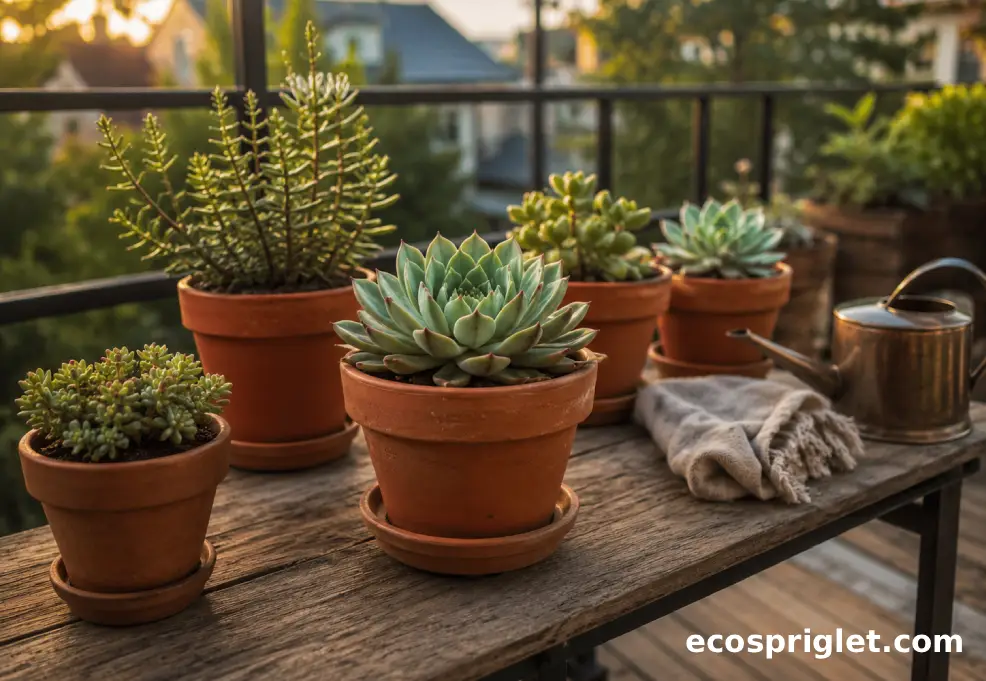
The best way to care for succulents is to build a routine around observation. Check light first, then soil, then leaf firmness. Water only when the pot has dried, feed lightly during brighter active growth, and repot only when the plant truly needs more room. For most apartment growers, that simple rhythm works better than a complicated schedule.
Start with one or two plants that match your brightest available spot. Give each one a draining pot, a gritty mix, and enough space for air movement. Keep a wooden skewer nearby for moisture checks, rotate the pot every week or two if growth leans toward the window, and take a photo once a month. Photos make slow changes easier to see, especially stretching, color fading, or recovery after repotting.
Succulents reward patience. They do not need daily fussing, and too much attention often causes more trouble than neglect. Once you get the feel for dry soil, bright light, and careful watering, you can branch into cuttings, balcony displays, or a small windowsill collection.