Letting cilantro go to seed feels a little backwards at first. For weeks, you have been pinching leaves for tacos, curry, salsa, or noodle bowls, and then suddenly the plant stretches upward, makes tiny white flowers, and looks like it is done being useful. That is actually the start of your coriander harvest.
In the United States, the leafy part of Coriandrum sativum is usually called cilantro, while the mature seed is called coriander. University of Illinois Extension explains it neatly: two kitchen ingredients, one plant. For apartment gardeners, this is good news because one modest balcony pot can give you leaves early in the season and spice or seed for next year later on.
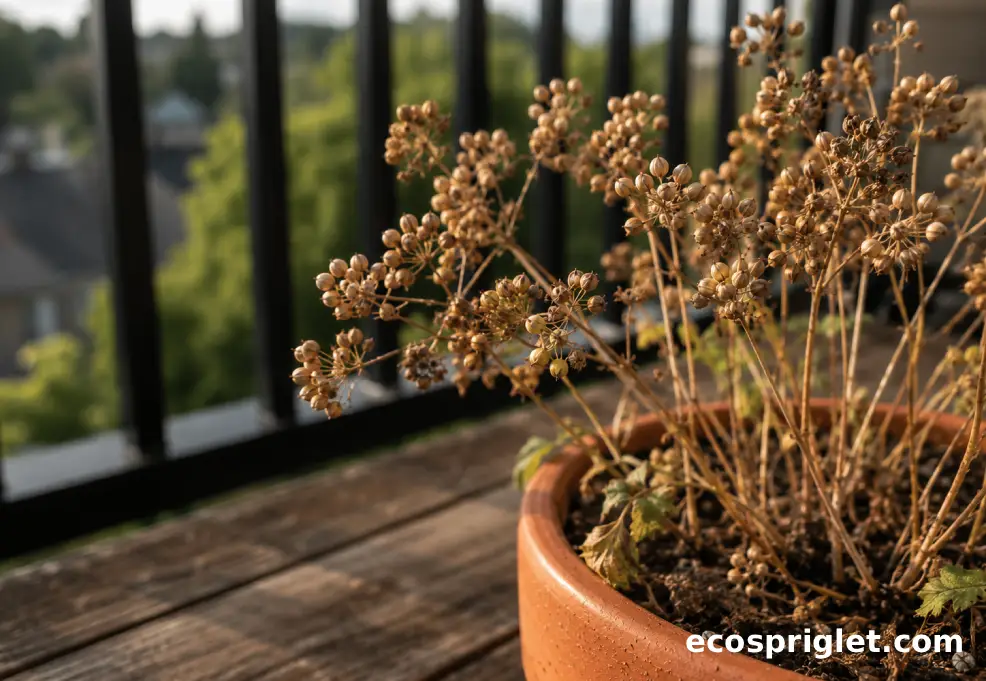
The trick is patience. Coriander seed is ready when the plant has flowered, the seed heads turn tan to brown, and the little round pods dry enough to release easily. Harvest too early and the seed may mold or lack flavor; wait too long and your balcony floor gets the harvest instead of your jar.
Know When Cilantro Is Ready to Become Seed
Cilantro is a cool-season annual, which means it grows, flowers, sets seed, and finishes its life cycle in one season. Utah State University Extension recommends waiting until the plant has flowered and the seed heads turn brown before collecting coriander seed. The Royal Horticultural Society also notes that coriander plants die after setting seed, so a browning plant is not a failure; it is the plant doing exactly what it is built to do.
On a balcony, I usually start checking once the airy white flowers fade and small green beads form along the stems. Those green seeds are edible and milder, but for drying, storing, and replanting, let them mature further. Look for seed heads that are mostly tan, beige, or light brown. A few green seeds on the same plant are fine, but if most of the cluster is still soft and bright green, give it more time.
A simple readiness test helps: hold a dry seed head over your palm and gently rub it with your thumb. If a few seeds loosen without crushing, you are close. If they smear, smell grassy, or cling tightly to the stem, wait several more days and keep the pot out of heavy rain where possible.
Set Up a Clean Small-Space Harvest
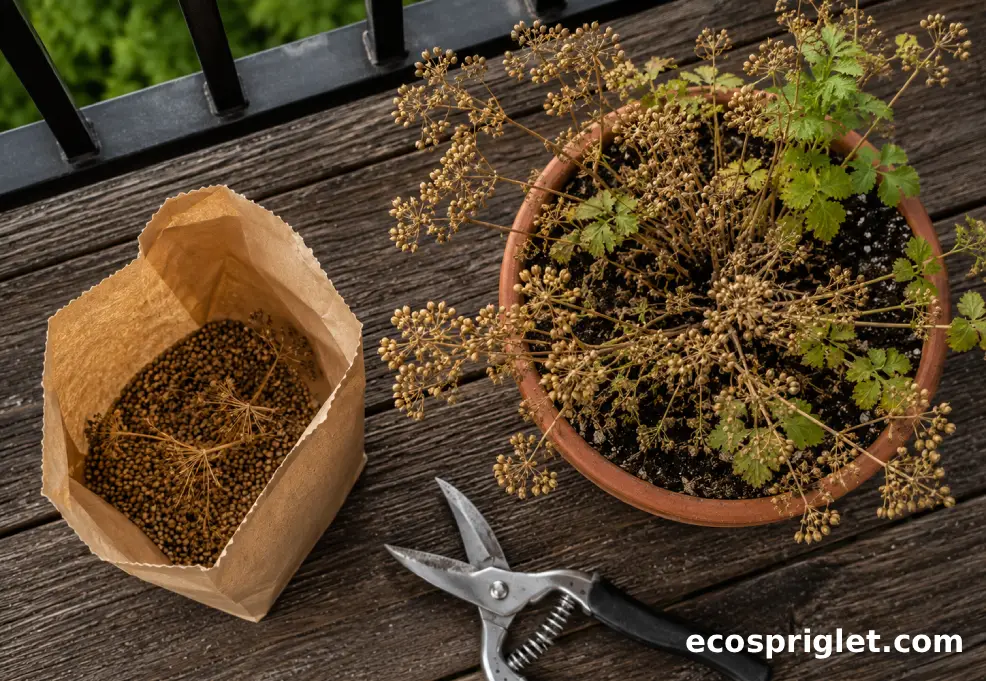
Coriander seed is small, round, and surprisingly eager to roll into deck cracks. Before cutting anything, gather a few simple tools: a clean paper bag, scissors or pruning snips, a shallow tray or baking sheet, and one labeled envelope or jar. Avoid plastic bags for the first drying stage because trapped moisture can encourage mold.
If you garden above a sidewalk or shared courtyard, harvest on a calm morning after dew has dried. Wind is the enemy here. I have chased coriander seeds across my balcony boards more than once, and the fix is embarrassingly simple: open the paper bag around the seed head before you cut. The bag catches the loose seeds and keeps the harvest tidy.
- Use a paper bag that is large enough for 6–10 cut stems without crowding.
- Cut stems 4–8 inches below the seed heads so they are easy to bundle or hang.
- Label the bag with the plant name and date before you forget.
- Keep the bag upright in a dry corner, away from kitchen steam or balcony rain.
For renters and apartment growers, this setup also keeps mess low. A tray under your work area catches stray seeds, while the paper bag lets the plant finish drying without shedding all over your floor.
Harvest the Seed Heads Without Losing the Best Seeds
The easiest method is the paper-bag harvest. University of Illinois Extension recommends letting flower heads turn brown, cutting the plant, placing it in a paper bag, storing it in a cool, dry spot, and shaking the bag to release the seed pods. Utah State University Extension gives similar guidance: cut seed heads when the plants begin to turn brown, place them in a paper bag, and let the seeds fall to the bottom.
Work from the driest stems first. Slip the seed head into the bag, hold the stem through the opening, and cut it with clean snips. If the whole plant is dry and finished, you can cut larger sections at once. If only the top seed clusters are brown, harvest those and leave the greener lower clusters for another week.
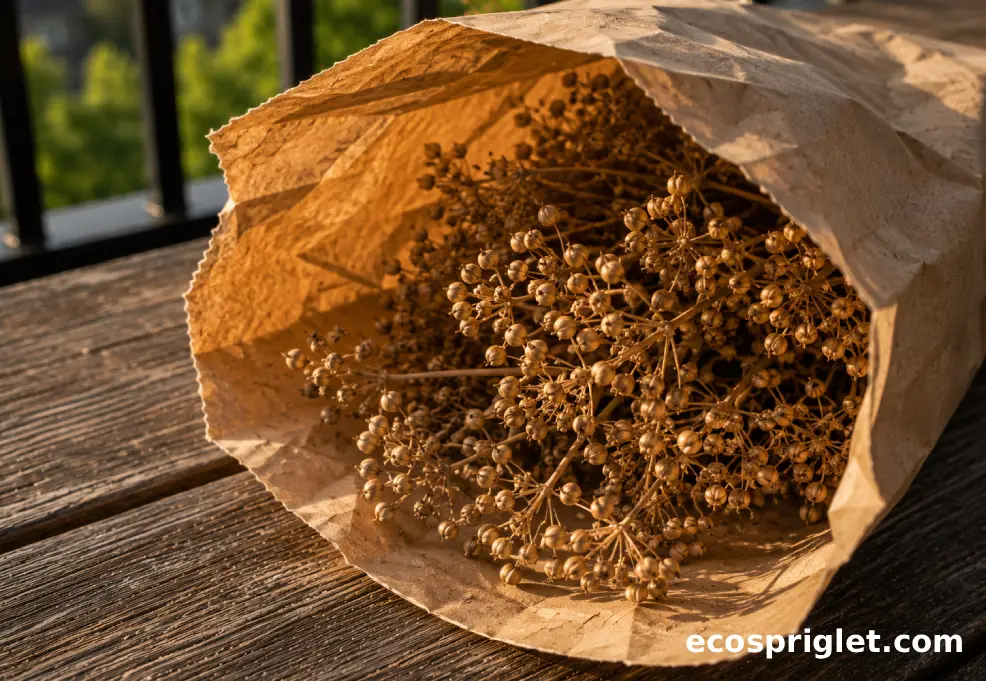
Once the stems are in the bag, do not seal it tightly. Fold the top loosely or clip it with a clothespin so air can still move. Hang the bag or set it upright in a dry room for about one to two weeks. Every few days, give it a gentle shake. Mature seeds will drop on their own or release with light rubbing.
The one thing I would not do is yank the plant and beat it hard against a bucket. That works in a big garden, but in a small apartment setup it scatters chaff, snaps green stems, and often mixes immature seed with mature seed.
Dry, Clean, and Sort the Seeds
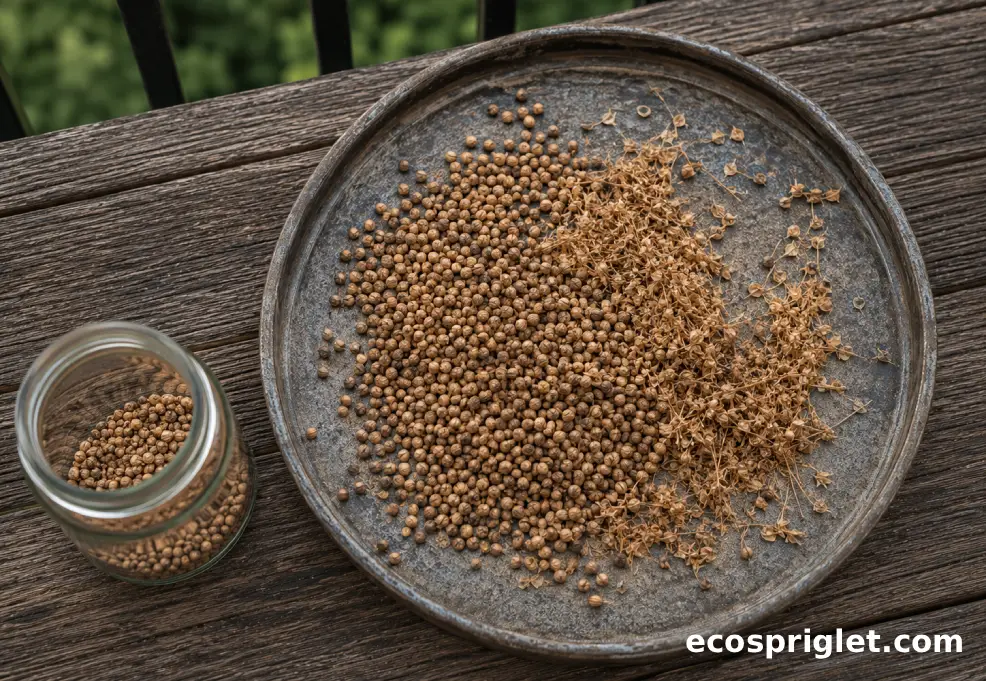
After the stems have dried in the paper bag, pour everything onto a shallow tray. You will see round tan seeds, tiny stem bits, and papery chaff. Rub the seed heads gently between your palms to release anything still attached. The goal is not to polish the seed perfectly; it is to remove enough dry plant material that the seeds store cleanly.
For a small harvest, hand sorting is usually easier than winnowing. Tilt the tray slightly and roll the heavier coriander seeds toward one side. Pick out stems with your fingers. If there is a lot of chaff, take the tray outside on a still day and blow very gently across the surface. Go slowly, because coriander seeds are light enough to move if you get enthusiastic.
Let the cleaned seeds sit in a single layer for another two to seven days before closing them in a jar. They should feel hard, dry, and lightweight. If they dent under a fingernail or smell damp, they need more drying time.
Penn State Extension advises storing dried herbs away from air, heat, and light in airtight, vapor-proof containers. For coriander seed, that means a small glass jar with a tight lid is ideal once the seed is fully dry.
Save Some Coriander Seeds to Replant
Saving coriander seed for replanting is one of the quiet pleasures of growing cilantro in a container. Choose the plumpest, driest seeds from your healthiest plant. Skip any seeds that are shriveled, gray, moldy, or harvested from a cilantro that looked diseased.
University of Maine Cooperative Extension recommends storing dry seed in clearly marked containers with the species, variety if known, and collection date, then keeping it in a cool, dry place with steady temperature and humidity. For small-space gardeners, a paper coin envelope inside a sealed glass jar works well. Add a small food-safe desiccant packet if your apartment gets humid.
When you replant, remember that cilantro develops a taproot and dislikes rough transplanting. Direct sowing is usually simpler. Utah State University Extension recommends planting cilantro seed about 1/4 to 1/2 inch deep; for seed production, thin plants to about 8–10 inches apart so each plant has room to branch and flower. In a container, I would give one seed plant its own pot at least 8–10 inches deep, with drainage holes and a saucer you can empty after watering.
If your saved seed is more than a year old, test a few seeds on a damp paper towel before giving them prime pot space. University of Maine Extension notes that properly stored vegetable seeds can remain viable for several years depending on species, but a quick germination test tells you what is true for your jar.
Store Coriander Seed for the Spice Rack
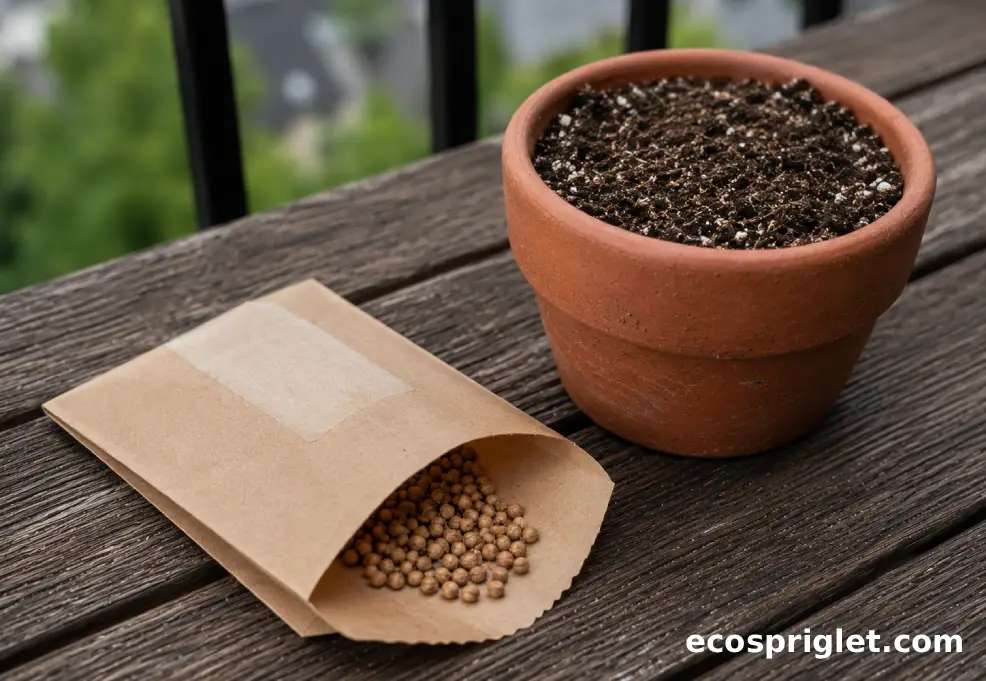
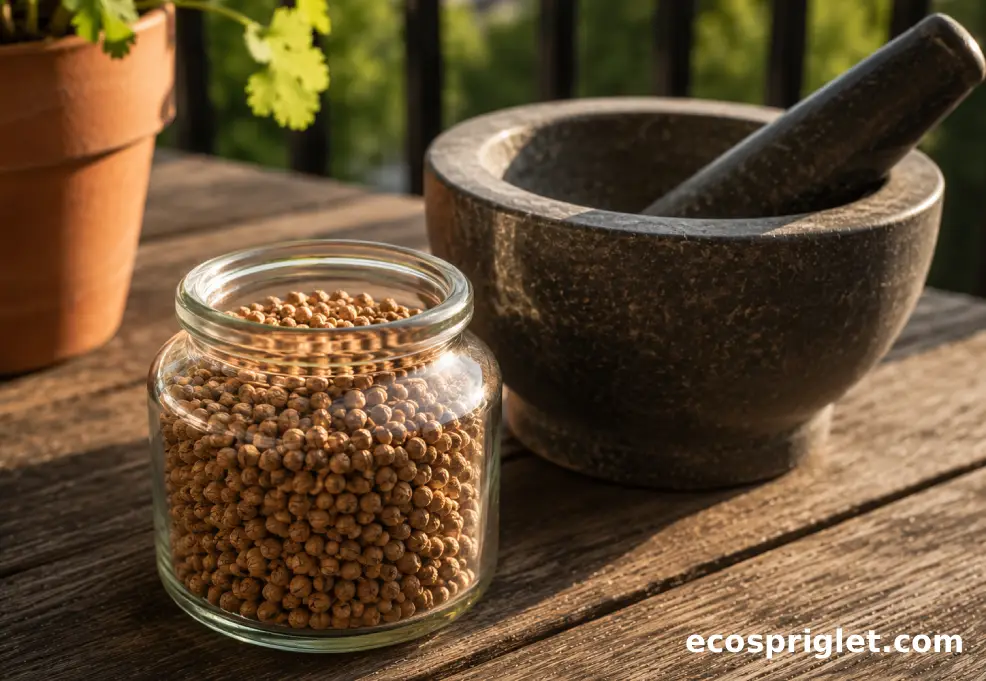
For kitchen use, store coriander seed whole rather than ground. Whole seeds hold aroma longer, and you can toast or crush only what you need. Once the seeds are fully dry, place them in a clean airtight jar, close the lid, and keep the jar in a cool, dark cabinet away from the stove, dishwasher, sunny windowsill, or radiator.
Moisture is the main problem. If you close the jar too soon, condensation can form and spoil the batch. I like to do a simple overnight check: put a spoonful of dried seed in a small jar, close it, and look the next morning. If the glass is clear and the seeds still smell clean, the batch is ready to store. If there is fogging or a musty smell, spread the seeds back on a tray and dry them longer.
- Use one jar for cooking seed and one envelope or jar for replanting seed.
- Label each container with the harvest month and year.
- Keep whole seeds dry until use; grind only small amounts at a time.
- Discard any seed that smells moldy, feels soft, or shows visible fuzz.
For best flavor, use your homegrown coriander within the year. It may remain usable longer if kept dry, but the bright aroma slowly fades after storage.
What Coriander Seed Tastes Like and How to Use It
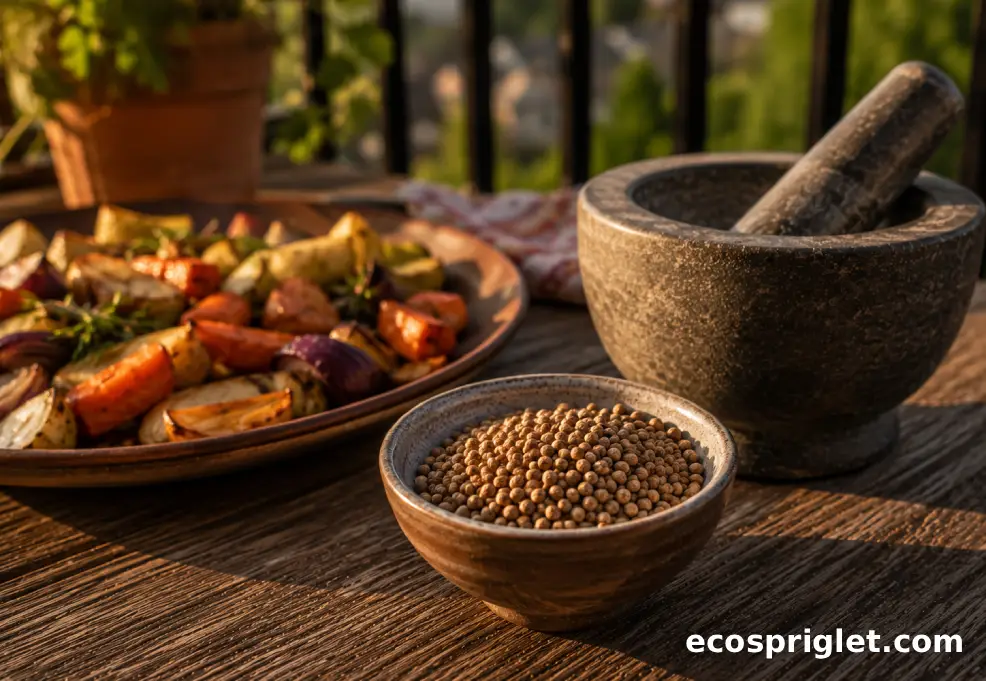
Coriander seed tastes different from cilantro leaves. The leaves are fresh and sharp; the seed is warmer, rounder, and gently citrusy. The Royal Horticultural Society describes coriander as producing tangy leaves and aromatic seeds, widely used in dishes such as Mexican and Asian cooking. In my kitchen, the seeds also fit beautifully with lentils, roasted carrots, quick pickles, rice, beans, and spice blends.
Toast whole seeds in a dry skillet over medium-low heat for 1–3 minutes, just until fragrant, then crush them with a mortar and pestle or the bottom of a sturdy mug. Do not walk away; tiny seeds can go from fragrant to scorched fast. Add crushed coriander early in soups and stews, or sprinkle it onto vegetables before roasting.
If you harvested a few seeds while they were still green, use them fresh rather than storing them. Green coriander seed has a softer, brighter flavor and works nicely crushed into yogurt sauces, dressings, or quick refrigerator pickles. Let mature brown seed do the long-term work: storing, grinding, cooking, and replanting.
One apartment-friendly note: grinding coriander smells wonderful, but it travels. If you share thin walls or have a tiny kitchen, grind just a teaspoon or two at a time and close the jar before the aroma takes over the room.
Common Mistakes to Avoid
The mistake I learned the hard way was harvesting a little too early. The seed heads looked close enough, I was impatient, and I sealed them in a jar after only a short drying time. A week later, the inside smelled damp instead of spicy. Now I wait for mostly brown seed heads and give the cleaned seeds extra tray time before storage.
- Harvesting Green Seed for Storage: Green coriander seed is edible, but it is not ready for the spice jar. Use it fresh or let later seed heads mature fully.
- Sealing Seeds Too Soon: If seeds feel cool, soft, or damp, dry them longer in a single layer before jarring.
- Leaving Ripe Plants in Strong Wind: Mature seed drops easily. Move container plants to a sheltered spot once the heads brown.
- Mixing Cooking Seed and Planting Seed: Keep the plumpest seed aside for replanting before you start toasting and grinding the rest.
- Forgetting to Label the Jar: Coriander seed looks a lot like several other small pantry seeds once it is stored.
Also avoid overwatering the parent plant once it is finishing seed. Cilantro needs regular water while establishing, but Utah State University Extension cautions that cilantro does not do well in damp or humid conditions. At the seed-ripening stage, soggy potting mix can encourage weak stems and moldy debris around the base.
Final Thoughts for a Better Balcony Seed Harvest
Harvesting coriander seeds is mostly a timing game: let cilantro flower, wait for the seed heads to turn brown, cut them into a paper bag, dry them fully, then sort and store the seeds in a clean container. Once you do it once, the whole process feels less like a special project and more like the natural end of a good herb crop.
For apartment gardeners, the paper-bag method is the cleanest and calmest way to collect coriander seeds from a cilantro plant. It keeps loose seeds off the balcony floor, gives the stems a place to finish drying, and makes it easy to divide your harvest between the spice rack and next season’s containers.
Use your best seed for replanting, your most aromatic seed for cooking, and any green seed right away in the kitchen. Then, when spring or early summer comes around again, direct sow a few saved seeds in a deep pot and start the cycle over.