A trellis for potted plants lets you grow upward when your balcony, patio, or windowsill has little room to spread out. The right support can turn one square foot of floor space into a productive column of pole beans, peas, cucumbers, flowering vines, or carefully trained houseplants. The wrong one may lean, uproot the plant, or send the entire pot rolling across the balcony during the first gusty afternoon.
The best setup is not necessarily the tallest or most decorative. It is the one that matches how your plant climbs, carries its mature weight, and remains stable when the potting mix is dry, wet, or exposed to wind. Small plants may need only a 12-inch fan trellis, while vigorous vegetables can require a support several feet tall and a much larger container underneath it.
This guide will help you compare trellis shapes, choose a sensible height, stabilize the pot, build an apartment-friendly DIY version, and train stems without damaging them. The same principles work for indoor pots, balcony vegetables, and compact container gardens.
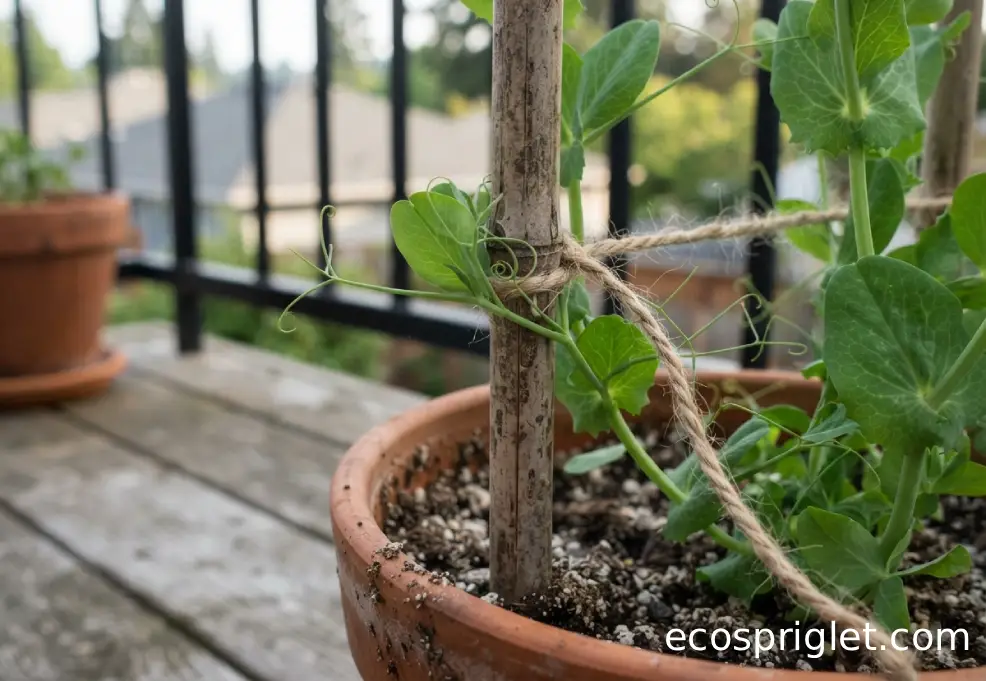
Start With the Way Your Plant Climbs
Plants do not all grip supports in the same way. Matching the trellis to the climbing method makes training easier and reduces the number of ties you need.
Peas, cucumbers, clematis, and many other tendril-producing plants grasp narrow supports. They usually perform better on string, netting, thin bamboo, or open wire mesh than on wide wooden slats. Twining plants such as pole beans and mandevilla wrap their stems around canes, string, or an obelisk. University of Minnesota Extension describes trellises as vertical supports joined by mesh and recommends stronger mesh for vigorous or heavier crops. The RHS likewise notes that many climbers need trellis, wires, or bamboo canes already in place.
Tomatoes and other sprawling plants do not climb naturally. They lean against a cage or must be attached to a sturdy frame. These plants need fewer delicate crosspieces and more structural strength. A small decorative lattice may suit a compact philodendron, but it is rarely enough for a fruiting tomato.
- Choose narrow string, mesh, or slender canes for tendrils.
- Use a teepee, obelisk, or vertical strings for twining stems.
- Select a rigid cage or framed panel for plants that require tying.
- Avoid large mesh openings when young shoots cannot reach the next grip point.
Observe the newest growth for a few days if you are unsure. A stem circling nearby objects is twining. Fine curling structures reaching outward are tendrils. A shoot that simply flops over will need tying rather than a surface to grip.
Match the Trellis Height to the Plant and Pot
A mini trellis between 12 and 24 inches tall works well for young houseplants, compact flowering vines, and stems that only need gentle direction. Peas, dwarf beans, and compact cucumbers often need more climbing room. Standard pole beans can grow around 6 feet or higher, while cucumbers may be trained on a trellis approximately 3 to 4 feet tall.
Do not choose height by plant size alone. A tall trellis creates leverage: when wind pushes the foliage at the top, that force transfers to the pot below. The narrower and lighter the container, the easier it is to tip. An exposed balcony therefore needs a lower, wider, or more securely anchored arrangement than a sheltered patio.
| Plant or Use | Practical Support | Container Consideration |
|---|---|---|
| Small houseplant or young vine | 12–24-inch fan, hoop, or ladder | Support should fit inside the root ball without crowding the stem |
| Peas or compact climbers | 24–48-inch mesh or string tower | Use a pot wide enough for several support legs |
| Cucumber | Approximately 3–4 feet of rigid mesh | Use a large container and keep developing fruit close to the frame |
| Pole beans | 5–7-foot teepee, strings, or narrow panel | Choose a broad, heavy planter or an independently anchored frame |
| Tomato or heavy flowering vine | Rigid cage, panel, or obelisk | Strength and stability matter more than decorative detail |
Large vegetables need enough growing media as well as support. University of Maryland Extension recommends roughly 8 to 10 gallons of mix and a depth of 12 to 16 inches for large container vegetables such as tomatoes, cucumbers, and winter squash.
Medium plants generally need less, but a tiny pot should not be used as the base for a tall trellis simply because the plant fits at planting time.
Make the Pot Part of the Support System
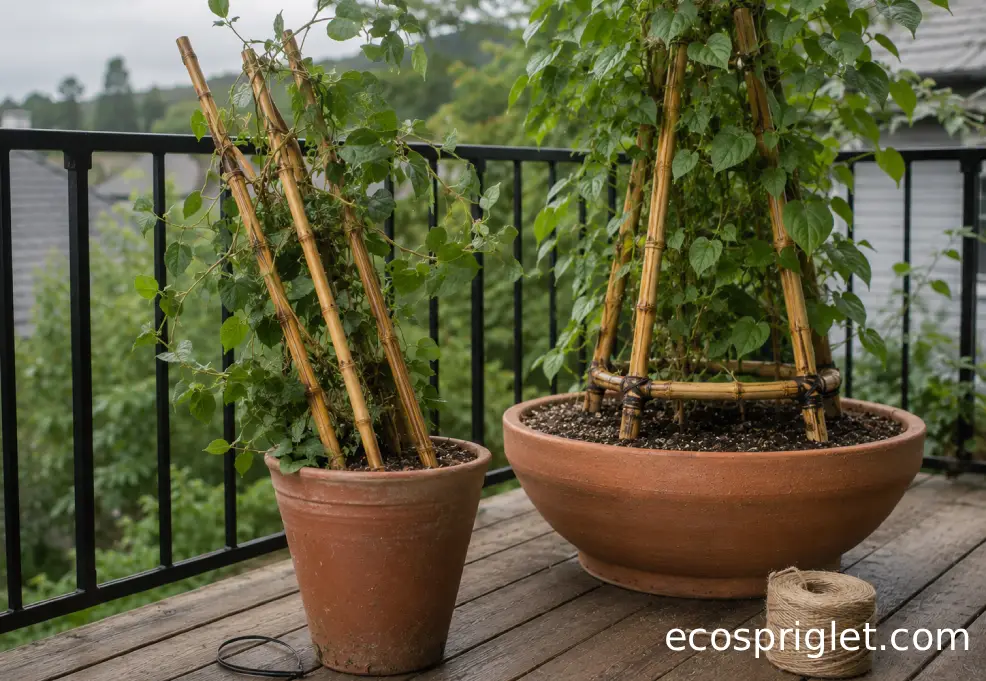
A trellis and container should behave like one balanced unit. Start with a pot that has a broad footprint, then position the support legs as far apart as the shape allows. A three- or four-legged frame is usually more resistant to twisting than one narrow stake pushed into the center.
I learned this the hard way with a bean teepee on my Portland balcony. The canes were tall, but I had squeezed them into a lightweight pot. One windy evening did not break the trellis; it lifted the rim of the pot and tipped the entire planting sideways. Replacing it with a broader container solved more than adding extra twine ever could.
Use this quick stability check before the plant fills out:
- Press the top of the empty trellis gently from several directions.
- Watch the pot rim rather than the trellis itself.
- If the rim lifts, the pot slides, or the root ball shifts, rebuild the base.
- Repeat the test after watering, because wet mix changes the weight distribution.
RHS balcony guidance recommends a low center of gravity for pots in exposed positions and notes that tall climbers must be secured appropriately. On a rental balcony, do not tie a heavy trellis to a railing, drainpipe, privacy screen, or building surface unless your lease and building rules allow it. A permitted wall anchor, freestanding frame, or low rectangular planter is safer than an improvised railing attachment.
Also check the weight of the complete setup, not just the empty pot. Growing media becomes heavier when saturated, and several large planters clustered together can create a concentrated load. Review your building’s stated limits and keep drainage water from collecting where it could create a slipping or leakage problem.
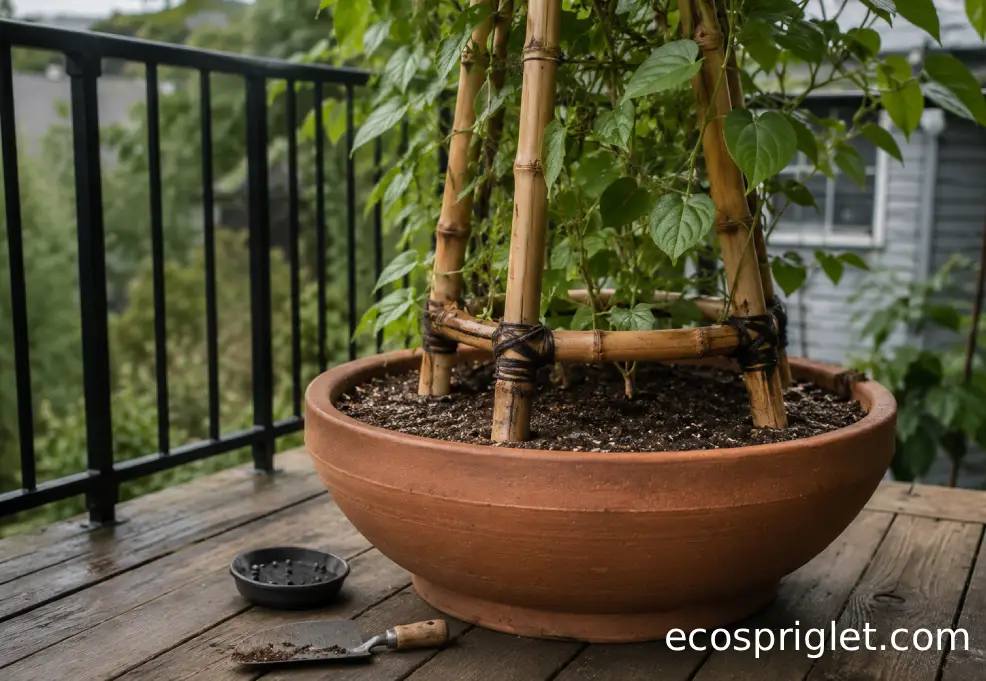
Build a Simple DIY Trellis for Potted Plants
A DIY trellis can be more useful than a store-bought panel because you can size it to the container and the space behind it. Bamboo canes, untreated wooden strips, rot-resistant branches, and garden twine are practical materials. For edible plants, avoid wood with an unknown chemical treatment and reused containers or materials that previously held harmful substances.
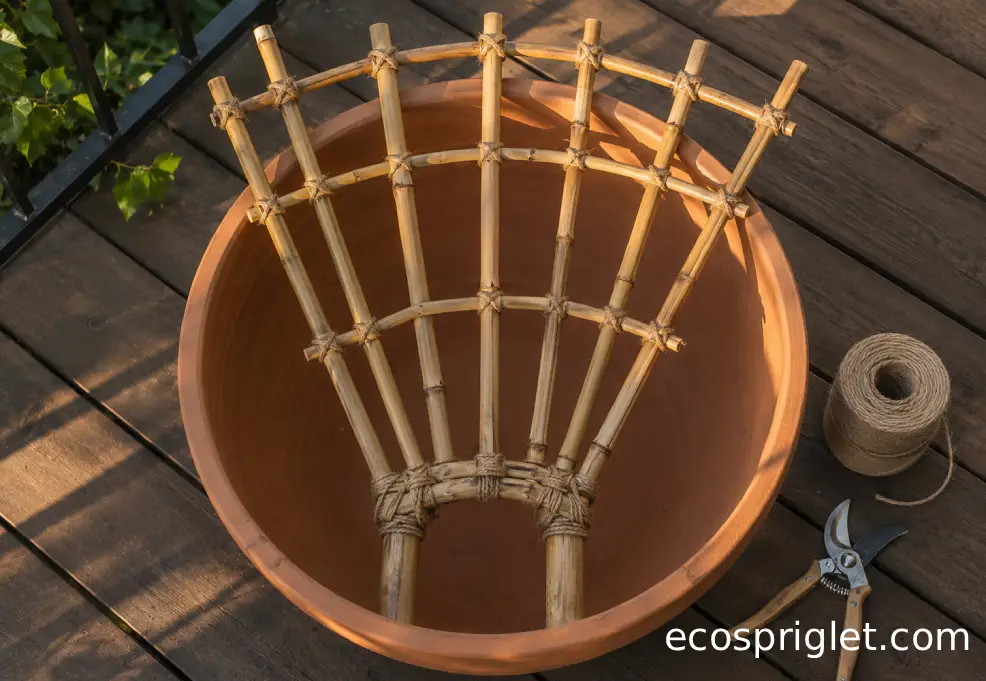
Option 1: A Bamboo Fan
Place three to five canes around the back half of the empty pot. Angle the outside canes apart, then join them with horizontal rows of twine every 6 to 8 inches. This creates a flat support that can sit close to a wall without consuming much balcony depth.
Option 2: A Three-Cane Teepee
Space three canes evenly around the container, lean their tops together, and bind the intersection firmly. Wrap twine in a loose spiral from the bottom upward if the plant needs more grip. This shape works especially well for twining beans because growth can circle the entire structure.
Option 3: A Narrow Ladder
Join two vertical canes with short horizontal pieces. Lash each joint in both directions instead of looping twine around it once. A 16- to 24-inch ladder makes a useful small trellis for a potted plant indoors, while a taller version can guide balcony peas or a compact flowering vine.
Build the support before filling the pot. You can then push the legs close to the bottom without stabbing through an established root system. Leave drainage openings unobstructed, and use a proper container potting mix rather than dense garden soil. Extension guidance notes that natural garden soil tends to drain slowly and contain too little air when confined inside pots.
Install the Trellis Without Damaging the Plant
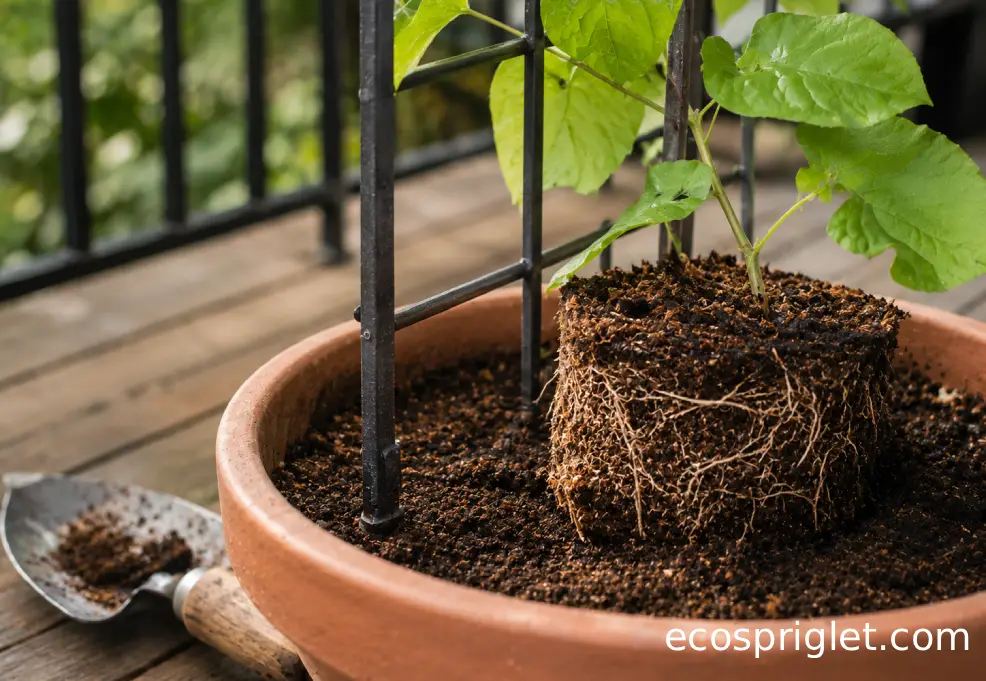
The cleanest time to add a trellis is when planting or repotting. Hold the support in its final position, arrange the root ball in front of or between the legs, and add mix around both. This lets you see where the roots and support meet instead of pushing blindly through the pot later. University of Maryland Extension similarly advises placing plant supports before or soon after planting.
If the plant is already established, water it lightly several hours before installation. Slightly damp mix holds together better than powder-dry soil, but a saturated pot can be messy and difficult to inspect. Slide a narrow trowel or blunt plant label into the proposed location first. Resistance close to the surface may indicate a large root or the side of the root ball.
Do not force a thick trellis leg through that resistance. Move it an inch or two toward the pot wall, or repot the plant so the support can be installed deliberately. Breaking a few fine roots is difficult to avoid, but severing several major roots simply to center the trellis can set the plant back.
Keep support legs away from drainage holes, self-watering fill tubes, and internal reservoirs. The container must still drain freely. A layer of gravel beneath the potting mix does not improve drainage inside an individual pot; Illinois Extension explains that it can leave saturated mix perched above the gravel. Use drainage holes and an appropriate potting medium instead.
Guide New Growth Before It Becomes Tangled
Young shoots are easier to direct than mature stems. Check fast-growing vines at least once or twice a week during active growth. Move tendrils toward the mesh, wrap twining stems loosely around the intended cane, and tie sprawling shoots before their weight pulls them outward.
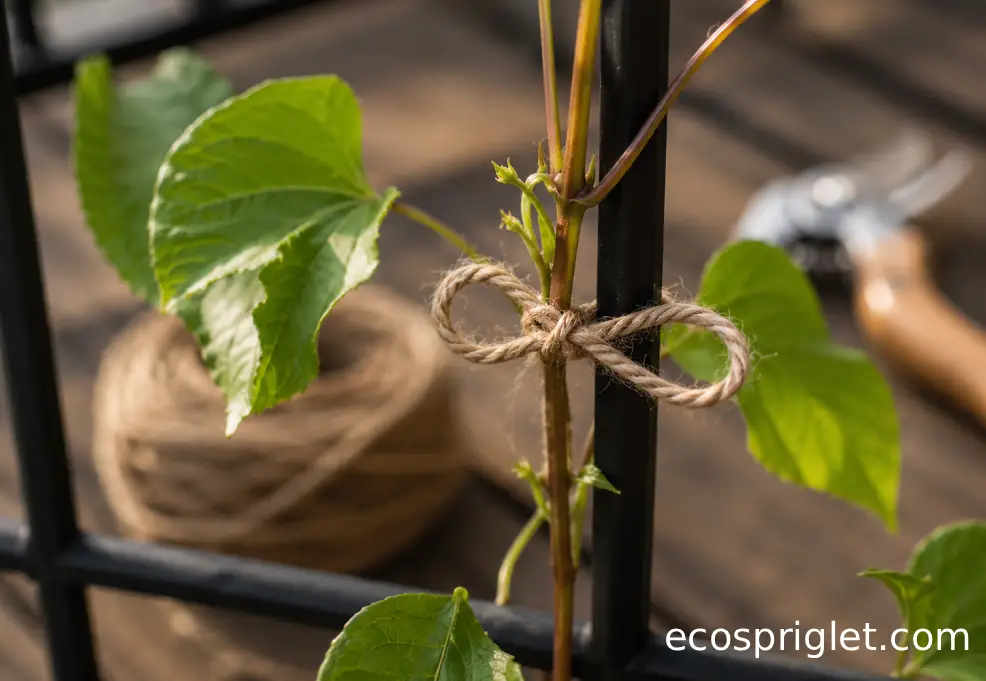
Use soft garden twine, reusable plant ties, or strips of soft fabric. A loose figure-eight tie places one loop around the support and another around the stem, leaving a small cushion between them. The RHS recommends soft ties and warns that wire or tight plastic ties can damage stems; its clematis guidance specifically recommends loose figure-eight knots for fragile growth.
Leave enough room for the stem to thicken. As a practical check, you should be able to shift the tie slightly without scraping the stem. Inspect older ties every two to three weeks and replace any that are becoming tight.
- Guide stems outward as well as upward so leaves do not pile into one dense column.
- Attach the main stem at several points instead of making one tight tie carry all the weight.
- Keep fruiting cucumber and tomato stems close to the strongest part of the frame.
- Pinch or prune growth that extends far beyond a safe balcony height.
Once pole beans or similar vigorous climbers reach the top, trimming excess growth can encourage lower side shoots while preventing the plant from becoming unnecessarily top-heavy.
Common Trellis Mistakes to Avoid
Choosing a Trellis That Is Too Short
A support that disappears under new growth by early summer leaves stems with nowhere to go. Check the plant’s likely mature height before buying, then choose a trellis that provides most of that climbing distance without making the container unstable. It is easier to prune growth at the top than to extend a weak trellis after it is covered in vines.
Putting a Tall Trellis in a Tiny Pot
This creates a top-heavy sail, especially once leaves become dense. Move the plant into a wider container, shorten the support, or use an independently anchored frame behind the pot. Adding rocks to the soil surface may increase weight slightly, but it does not correct a narrow footprint or weak trellis joints.
Installing the Support Too Late
Pushing stakes into a root-filled pot can tear major roots and still leave the support shallow. Install it during planting whenever possible. For established plants, probe carefully or repot instead of forcing the frame downward.
Tying Stems Tightly
Thin wire, rigid twist ties, and forgotten loops can cut into expanding stems. Replace them with soft ties and leave visible growing room. Woody vines may eventually need stronger ties, but those ties should still be checked as the stem thickens.
Ignoring Wind Until the Plant Is Full
A bare trellis may appear stable in spring but behave differently after it is covered in foliage. Test the structure early, keep tall containers in the most sheltered appropriate position, and prune excess top growth before forecast storms.
Reusing a Dirty Trellis
Old plant debris and soil should be removed before a support moves into a fresh container. University of Minnesota Extension notes that plant pathogens can travel on trellises and other equipment. Clean supports between seasons, and follow Extension sanitation guidance when the previous plant showed signs of disease.
Use Vertical Supports to Shape a Small Balcony
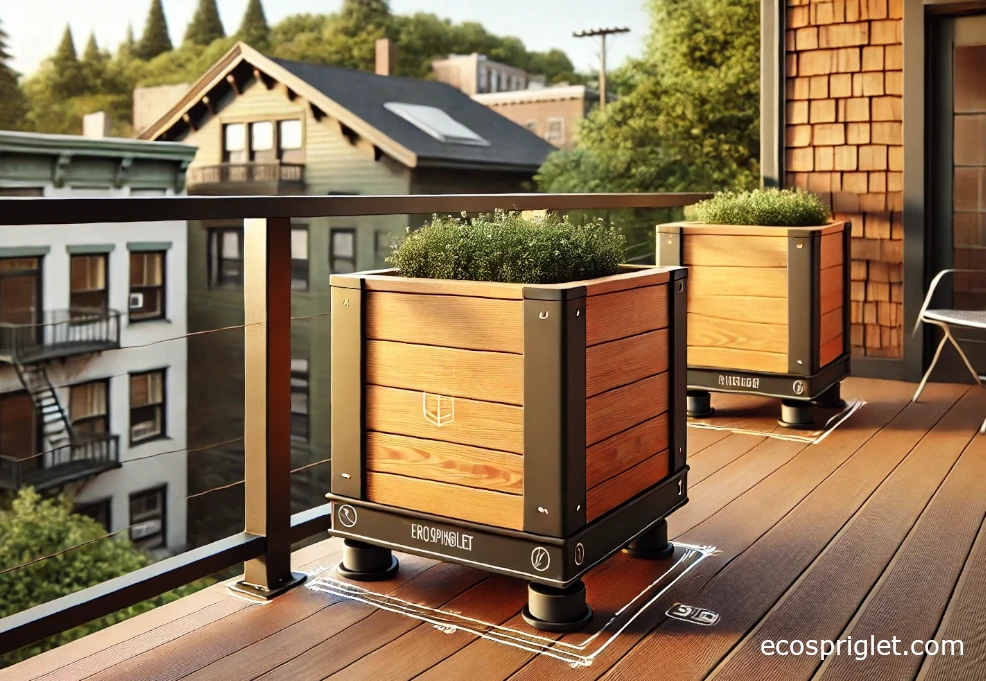
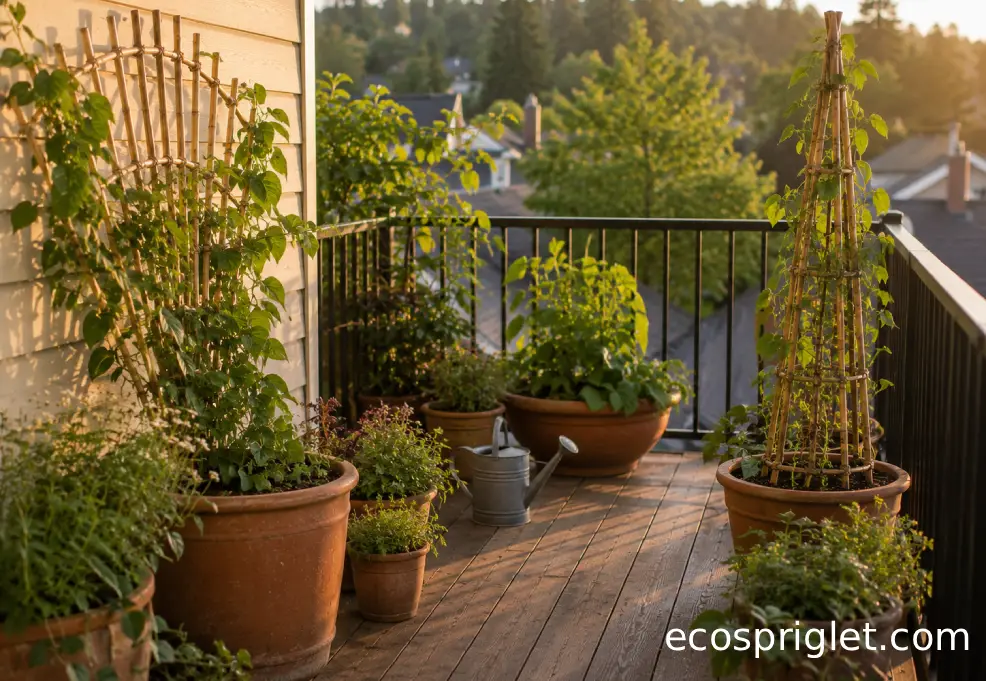
A container garden trellis can organize the whole balcony rather than simply hold one plant. Flat fan trellises preserve walking space along walls. Narrow obelisks create height in corners. A row of freestanding rectangular planters can support a light vertical screen without drilling into the building.
Keep the arrangement open enough for air, light, and maintenance. You should be able to reach the back of the pot, inspect both sides of the foliage, and lift the saucer without dragging vines across the floor. Leave a hand-width gap between dense foliage and a wall when practical so leaves do not remain pressed against a damp surface.
Place taller structures where they will not shade sun-loving plants for most of the day. On a south- or west-facing balcony, the trellis may create useful afternoon shade for lettuce or tender herbs. On a dim balcony, position it to the side rather than directly in front of smaller pots.
One combination I often use is a narrow bean teepee in the sunniest corner, a flat cucumber panel along the back, and low herbs near the balcony door. It gives each plant vertical room while keeping the center clear for watering.
Annual climbers are especially useful for temporary privacy because the layout can be changed each season. However, keep screens below any height restrictions, prevent stems from growing over the outside of the railing, and do not allow pots, tools, or plant material to create a falling-object hazard.
Build Up Without Making the Garden Complicated
A reliable trellis begins with three decisions: how the plant climbs, how much weight it will develop, and whether the pot can resist the leverage created by its height. Get those right and the rest is mostly routine training.
For a small houseplant, begin with a 12- to 24-inch fan or ladder. For peas and compact vegetables, use mesh or strings that give tendrils plenty of narrow grip points. Vigorous beans, cucumbers, tomatoes, and woody vines need a larger container, stronger joints, and a support that will remain steady after the plant is full of leaves.
Install the structure while planting, test it from several directions, and guide new growth every week. Use soft ties rather than wire, leave room for stems to thicken, and shorten growth that makes the setup top-heavy. On exposed balconies, stability matters more than squeezing another foot of height from the plant.
You do not need an elaborate system to create a productive vertical garden. Three bamboo canes and a spool of twine can be enough when the size and shape match the plant. Review our container gardening basics before choosing the pot and growing mix, then build the support around the conditions you actually have.