Growing peas in containers is one of the nicest ways to make a small balcony feel productive early in the season. Peas like cool weather, they climb instead of sprawling everywhere, and they do not need a deep raised bed to give you crisp pods or fragrant flowers. The trick is knowing which pea you are actually planting. Edible garden peas, sugar snap peas, and snow peas are usually forms of Pisum sativum. Ornamental sweet peas are usually Lathyrus, grown for flowers and scent, not food.
On an apartment balcony, that difference matters. You can tuck edible peas into a 4- to 6-gallon pot with a small trellis and harvest young pods right outside the kitchen door. Sweet peas in pots need similar cool conditions and climbing support, but their pods and seeds should never be treated like vegetables. I like peas because they reward simple habits: plant early, keep the roots evenly moist, and give the vines something to grab before they start flopping over the railing.
Start With the Right Pea for Your Balcony
Before buying seed, decide whether you want food, flowers, or both in separate pots. Garden peas are the classic shelling peas where you eat the round green seeds and discard the fibrous pod. Sugar snap peas are usually the easiest edible choice for balconies because the whole pod is sweet and crisp. Snow peas are picked flatter and younger. The USDA’s seasonal produce guide groups peas into garden, snap, and snow types, which is a helpful way to choose based on how you want to cook or snack from the plant.
For edible peas in containers, look for bush, dwarf, patio, or short-vine descriptions if your balcony is windy or your railing space is tight. Taller climbing peas can still work, but they need a stronger trellis and more attention to fastening. If you have only a sunny windowsill, peas may sprout and grow, but they usually crop better outdoors with cool air and stronger light.
Sweet peas are a different project. They are grown for fragrance and flowers, not dinner. The RHS notes that sweet peas prefer full sun, fertile soil that drains easily, and regular picking or deadheading to keep blooms coming. Use a separate pot, separate plant label, and a simple rule: edible peas go near the kitchen, sweet peas go where you enjoy the scent.
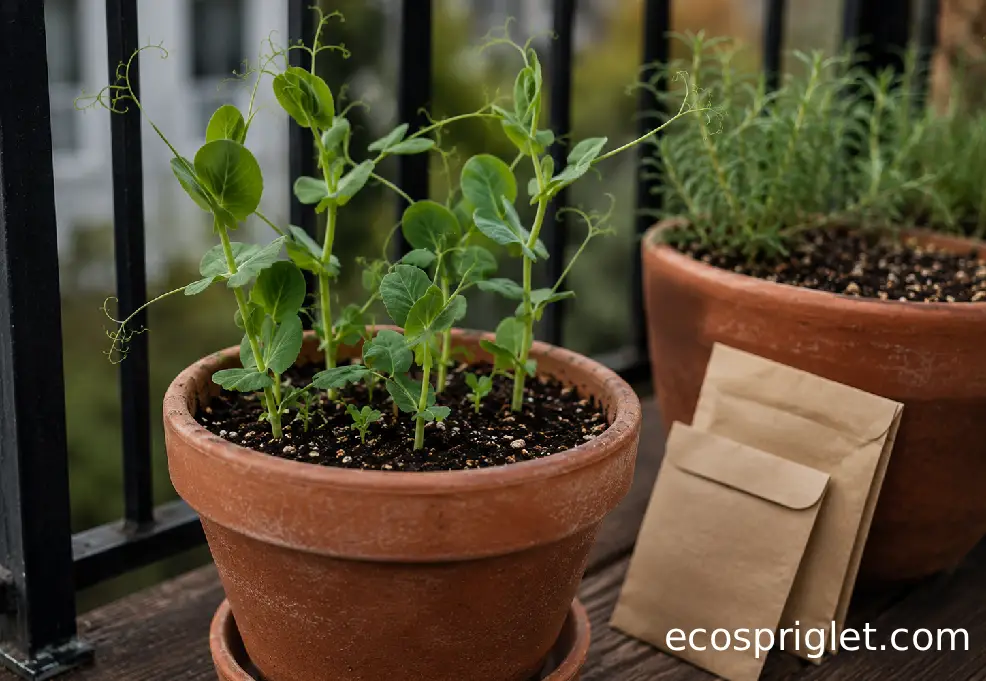
Choose a Container That Lets Roots Stay Cool
Peas are not huge plants, but containers dry out and heat up faster than garden beds. For most balcony setups, I would start with a pot that holds at least 4 to 6 gallons of potting mix and is about 8 to 12 inches deep. The University of Maryland Extension lists peas among medium container crops that fit this general volume and depth range. A wider window box can work too, as long as it has enough depth, drainage, and room for support.
Drainage holes are non-negotiable. A pot without holes turns one rainy week into root trouble, especially on a balcony where water may sit in saucers. Maryland Extension emphasizes that containers need adequate holes or slits so excess water can leave and roots do not drown or rot. I also raise pea pots slightly on pot feet, bricks, or scrap wood so water can escape instead of pooling under the pot.
- For one small pea planting, use a 10- to 12-inch-wide pot and keep the planting modest.
- For a better balcony harvest, choose a 4- to 6-gallon container or a long planter with at least 8 inches of depth.
- For climbing sweet peas in pots, choose a heavier container so the trellis does not tip in wind.
- Skip garden soil in containers; use a lightweight potting mix with perlite or similar material for air space.
One mistake I see often is adding gravel inside the bottom of the pot. Illinois Extension calls this a drainage myth because water can perch in the soil above the gravel instead of draining the way gardeners expect. Use drainage holes and a good potting mix instead.
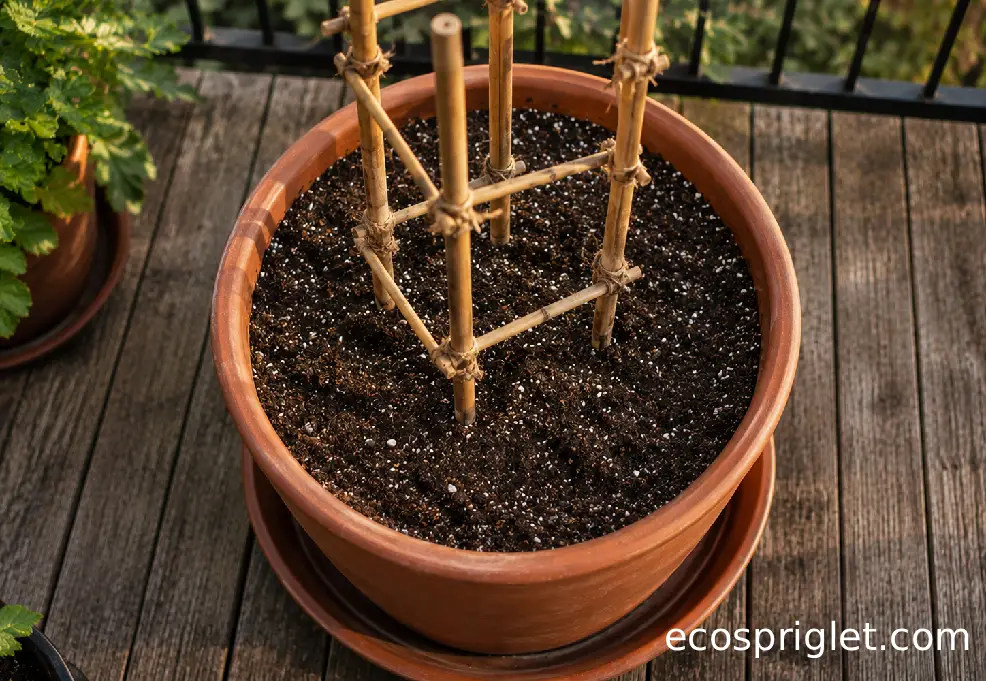
Plant Seeds at the Right Depth and Add Support Early
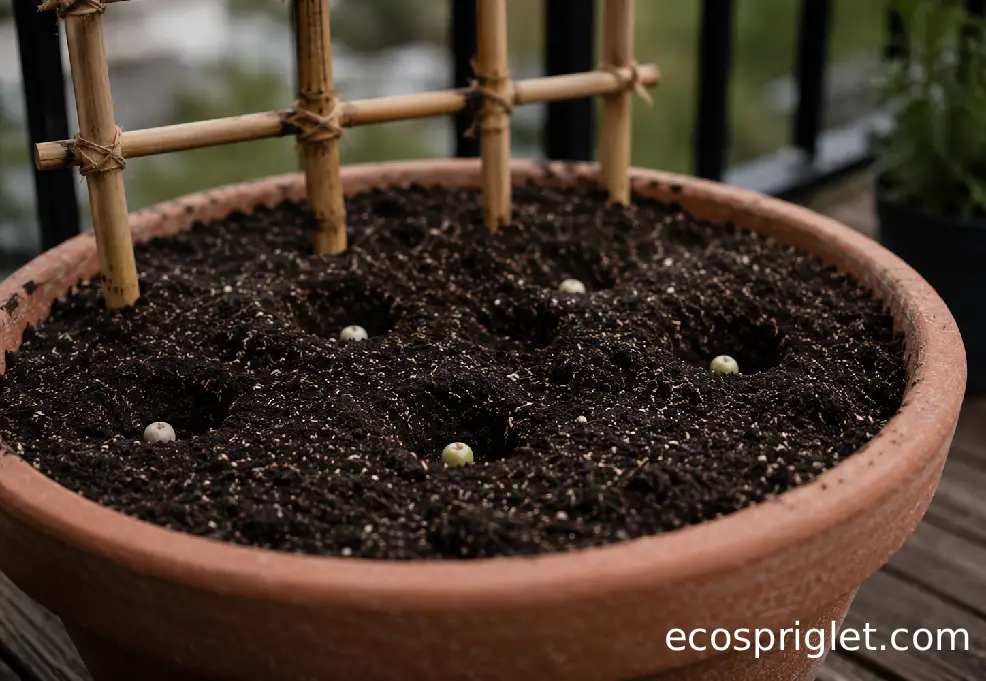
Peas are cool-season plants, so the first planting window often arrives earlier than new gardeners expect. Utah State University Extension recommends planting peas when soil is above 40°F and placing seeds 1/2 to 1 inch deep. In containers, I still check the seed packet, but 1 inch deep is a practical default for most edible peas. Water once after sowing so the mix settles around the seed without washing it into one corner.
Spacing depends on the pot shape. In a long container, plant peas about 2 inches apart in a row along the trellis, then thin only if the seedlings become crowded and airflow is poor. In a round pot, plant in a loose semicircle near the support rather than filling the whole surface. Peas need light and airflow more than they need a dense tangle of stems.
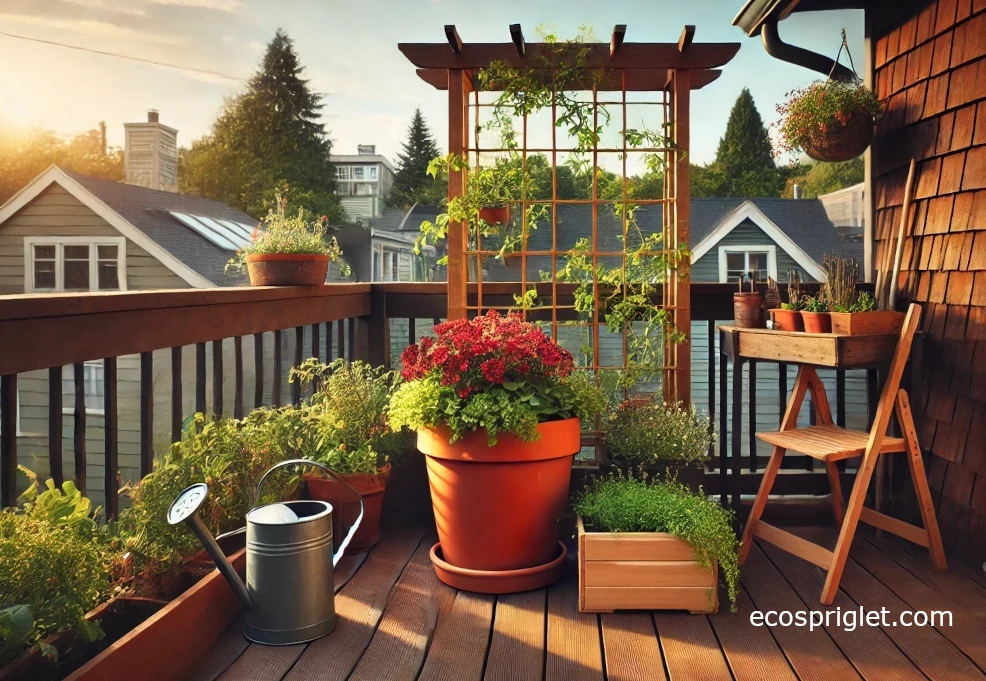
Add the trellis at planting time, not after the vines are already leaning. A few bamboo canes tied together, a small pea net, or a folding metal plant support can all work. University of Minnesota Extension recommends placing tall vining peas at the base of a trellis and notes that shorter bush types can support each other or grow near a trellis. On balconies, I prefer supports that sit inside the pot rather than tying vines to the railing, because building rules and wind gusts can turn a charming vine into a problem.
Keep Peas Watered Without Drowning the Roots
Container peas want steady moisture, especially once flowers and pods appear. The RHS notes that peas need plenty of water at flowering time for pods to set and again after flowering begins. That does not mean keeping the pot soggy. It means learning the rhythm of your specific balcony.
Use the finger test before watering: if the top 1 inch of potting mix feels dry, water slowly until moisture reaches the lower roots and a little drains from the bottom. On a cool spring balcony, that might be every two or three days. On a windy or sunny balcony, a smaller pot can need water daily. Oregon State University Extension gives the same basic container cue for watering: water when the top 1 to 2 inches of soil are dry, and water thoroughly enough that water exits the bottom.
I learned this the hard way with sugar snap peas on a west-facing balcony. The vines looked fine in the morning, but by late afternoon the top growth wilted because the pot was sitting in reflected heat from the wall. Moving the container 10 inches away from the wall and adding a shallow mulch of clean straw made the watering much more forgiving.
- If leaves wilt but the mix is dry, water deeply and check again in a few hours.
- If leaves yellow and the mix stays wet, empty the saucer and let the top inch dry before watering again.
- If flowers drop during warm weather, focus on shade during the hottest part of the afternoon rather than adding fertilizer.
- If the pot dries out every day before noon, move up to a larger container or add a self-watering planter with overflow drainage.
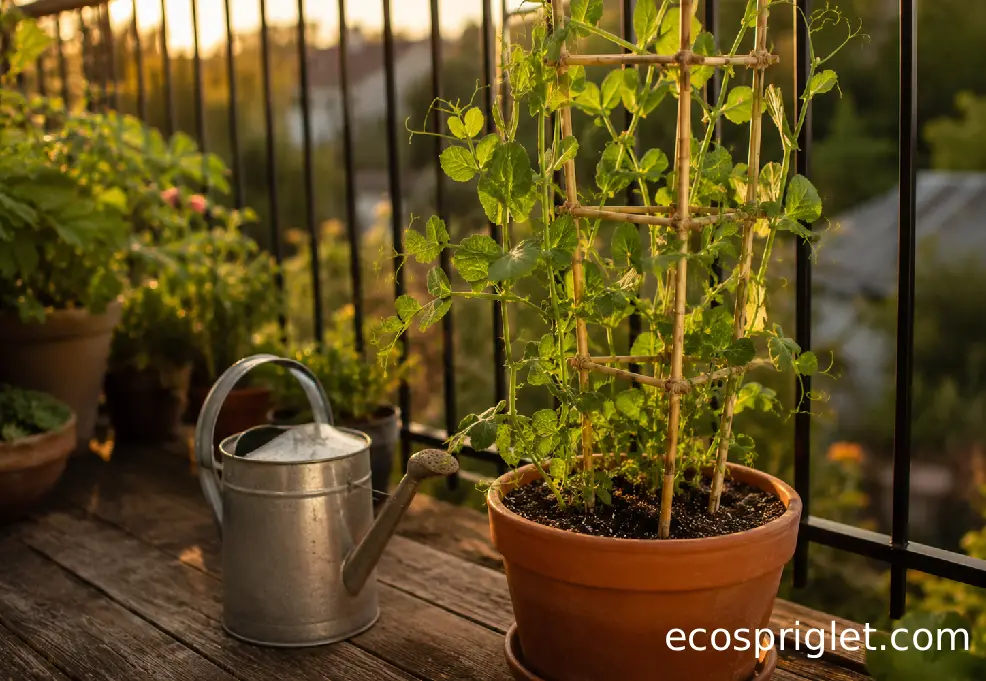
Grow Sweet Peas in Pots Without Mixing Them Up With Edible Peas
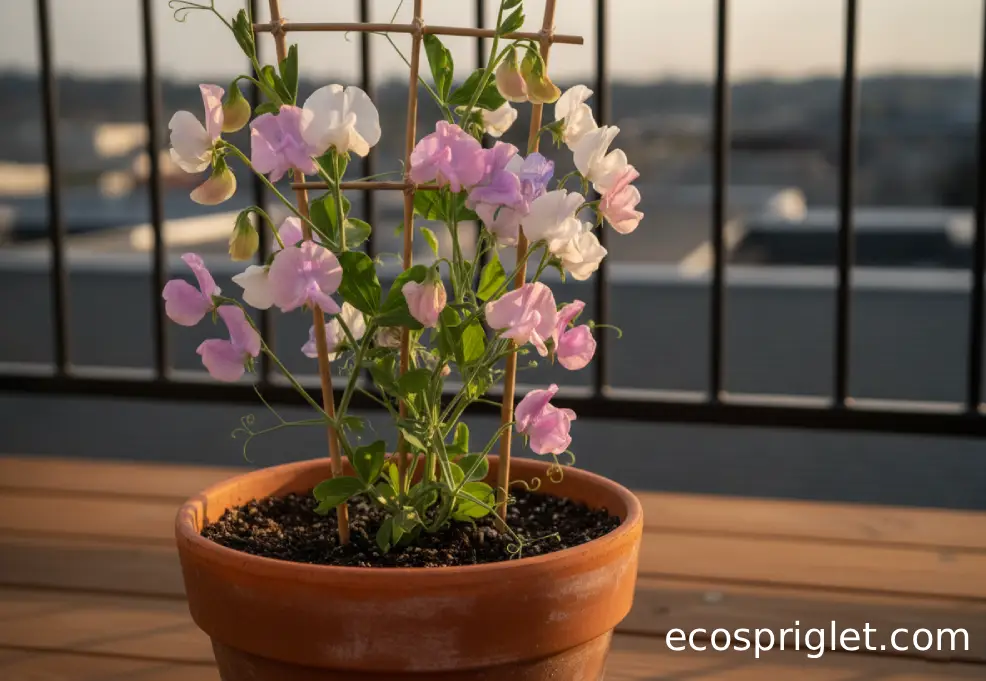
Many gardeners ask whether they can grow sweet peas in a pot, and the answer is yes, with one important safety note: ornamental sweet peas are not edible peas. Missouri Botanical Garden identifies Lathyrus odoratus as sweet pea and warns that its fruits are inedible and poisonous to humans, unlike edible vegetable peas. Keep sweet pea seed packets, pods, and plant labels away from children, curious pets, and anyone who might mistake them for sugar snap peas.
For planting sweet peas in containers, use a deep pot with drainage, full sun in cool weather, and a sturdy trellis. RHS describes many sweet peas as climbing plants that need support and notes that they generally prefer fertile, free-draining soil in full sun. On a balcony, a 12- to 16-inch-wide pot is a comfortable starting point for a small cluster, while a heavier 5-gallon container is steadier for taller vines.
Sweet peas flower better when you pick or deadhead regularly. Once pods form, the plant starts putting energy into seed instead of bloom. I like to keep a small pair of snips near the balcony door and cut a few stems every couple of days once flowering starts. It keeps the pot tidy, gives you a tiny vase for the table, and helps prevent confusing dry ornamental pods with edible peas later.
Common Mistakes to Avoid
The most common pea problems in pots are usually setup problems, not mysterious plant failures. Peas grow quickly once they are happy, so small mistakes show up fast in containers.
- Planting too late: Peas prefer cool conditions. Penn State Extension notes that peas grow best around 55°F to 65°F and can stop setting blossoms when conditions get too warm. Start early in spring or try a late-summer sowing for a fall crop where your climate allows.
- Using a tiny pot: A 6-inch decorative pot may sprout peas, but it dries out too quickly for steady pod production. Move to a deeper 4- to 6-gallon container if you want more than a novelty planting.
- Waiting too long to add support: Once tendrils grab each other, untangling vines often snaps stems. Put the trellis in before or immediately after sowing.
- Overfeeding with nitrogen: Too much leafy growth can mean fewer flowers. Start with fresh potting mix and use fertilizer lightly unless leaves look pale and growth stalls.
- Letting pods overmature: Snap and snow peas taste best when picked young and crisp. Check plants every day or two once pods start forming.
My quick fix for a struggling pea pot is simple: check drainage first, then moisture, then heat. If the container is sitting in water, empty the saucer. If the top inch is bone-dry, water deeply. If the balcony is baking above 80°F in afternoon sun, give the pot morning sun and afternoon shade until the weather cools.
Harvest Pods, Save Space, and Replant Smartly
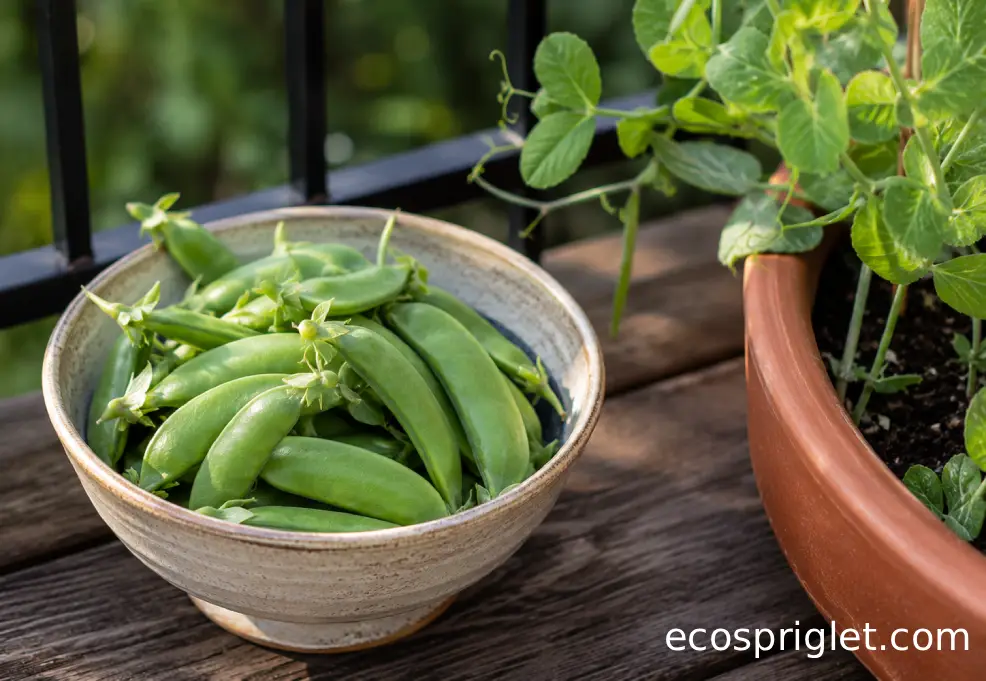
Harvesting peas is a little different depending on the type. Pick sugar snap peas when the pods are plump but still glossy and crisp. Pick snow peas while the pods are flat and tender. For shelling peas, wait until the peas inside are rounded, but do not leave them so long that the pods turn dull and tough.
Use two hands when picking from a container: hold the vine with one hand and pull or snip the pod with the other. This matters in pots because one rough tug can loosen the whole root ball or pull the trellis sideways. Morning is my favorite time to harvest because the pods are cool, crisp, and less stressed.
After the main flush slows down, you have options. If the weather is turning hot, cut edible pea vines at the soil line and leave the roots in the pot for a week before refreshing the top few inches of mix. Then switch to basil, compact beans, lettuce in partial shade, or another balcony-friendly crop. If your climate gives you cool fall weather, sow another round of edible peas 8 to 10 weeks before your usual first fall frost, using shade cloth or afternoon shade while seedlings establish.
For more small-space crop planning, pair peas with cool-season greens from our balcony vegetable garden guide.
Final Thoughts: A Small Pot Can Still Feel Generous
Peas are a good reminder that container gardening does not have to mean settling for tiny results. A deep pot, fresh potting mix, cool weather, and a simple trellis can give you real harvests from a balcony corner that might otherwise hold an empty chair. Start with sugar snap peas if you want the easiest edible crop, try shelling peas if you love the ritual of opening pods, and grow sweet peas in a separate flower pot when fragrance matters more than food.
The main habit is observation. Check the top inch of soil, watch how the vines react to wind and afternoon heat, and pick pods before they become tough. Keep sweet peas clearly labeled and away from edible pea harvests. Once you have one good pea season behind you, the timing becomes much easier the next year. Ready to keep building your small-space garden? Start with one sturdy pea pot this season, then use the same trellis-and-container system for beans, cucumbers, or flowering vines when warmer weather arrives.