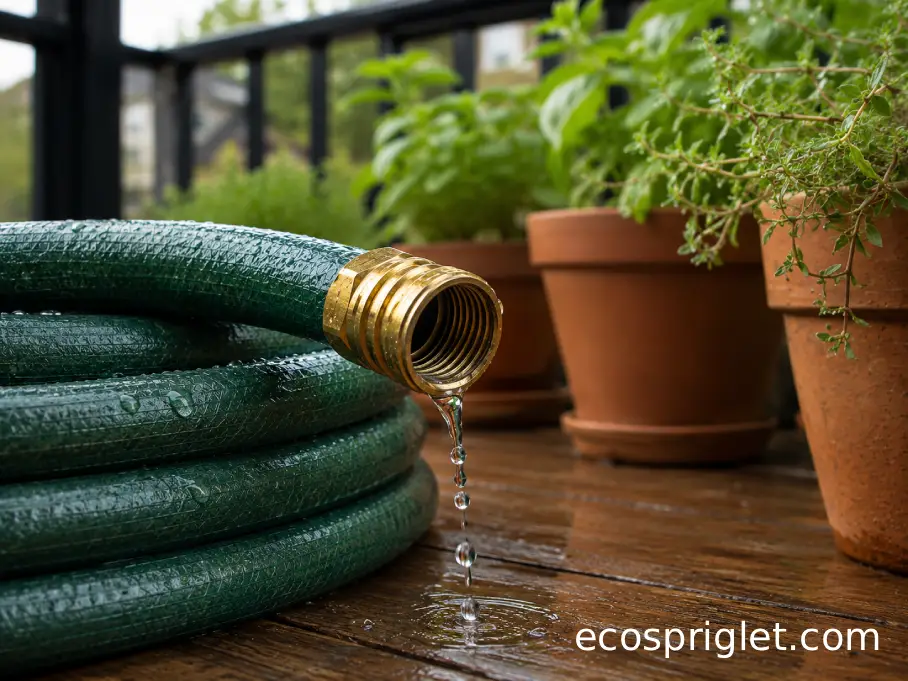
Garden hoses feel like they should be recyclable because they look like plastic, rubber, or metal. The frustrating answer is that most garden hoses should not go in your curbside recycling bin. They are long, flexible, and often made from mixed materials, which makes them a classic problem item at recycling facilities. In recycling language, hoses are often treated as tangling items because they can wrap around sorting equipment, slow down operations, and create safety issues for workers. The Recycling Partnership specifically tells residents not to put old garden hoses in recycling because hoses can tangle machinery, and Denver’s recycling guidance also lists garden hoses among tangling items that do not belong in the recycling cart.
That does not mean your only option is to feel guilty and toss it without thinking. A better garden hose disposal plan is simple: reuse the hose if it is still useful, remove recyclable metal fittings if your local scrap option accepts them, and put the remaining hose body in the trash unless your city gives different instructions. For apartment and balcony gardeners, the main win is avoiding wish-cycling while squeezing a little more use out of a worn hose before it leaves your home.
Why Garden Hoses Usually Do Not Belong in Recycling
The short answer to is a garden hose recyclable is usually no for curbside programs. It is not just about the material. Recycling systems are built around specific shapes and product categories, such as bottles, cans, paper, cardboard, and certain containers. A hose is a long, flexible product that behaves more like a rope or cord on sorting equipment.
Waste Management’s recycling guidance says tangling items like garden hoses, ropes, cords, and string should go in the trash rather than recycling because they can wrap around equipment. Recology’s local “What Goes Where?” guidance also lists garden hoses as garbage, describing them with other non-recyclable complex materials.
That point matters in apartment buildings, where one person’s bad item can contaminate a shared cart. I have seen this happen in Portland apartment recycling rooms: a hose gets tossed into the blue bin because it feels “too useful” for trash, then someone else adds Christmas lights or a broken cord. Pretty soon the bin is full of the exact items the recycling crew is trying to keep out.
Rubber garden hoses are not automatically better candidates than vinyl or plastic hoses. Many hoses include layers, reinforcement fibers, fittings, washers, and coatings. Even if one part has value, the hose body usually is not something a curbside recycling facility wants to process.
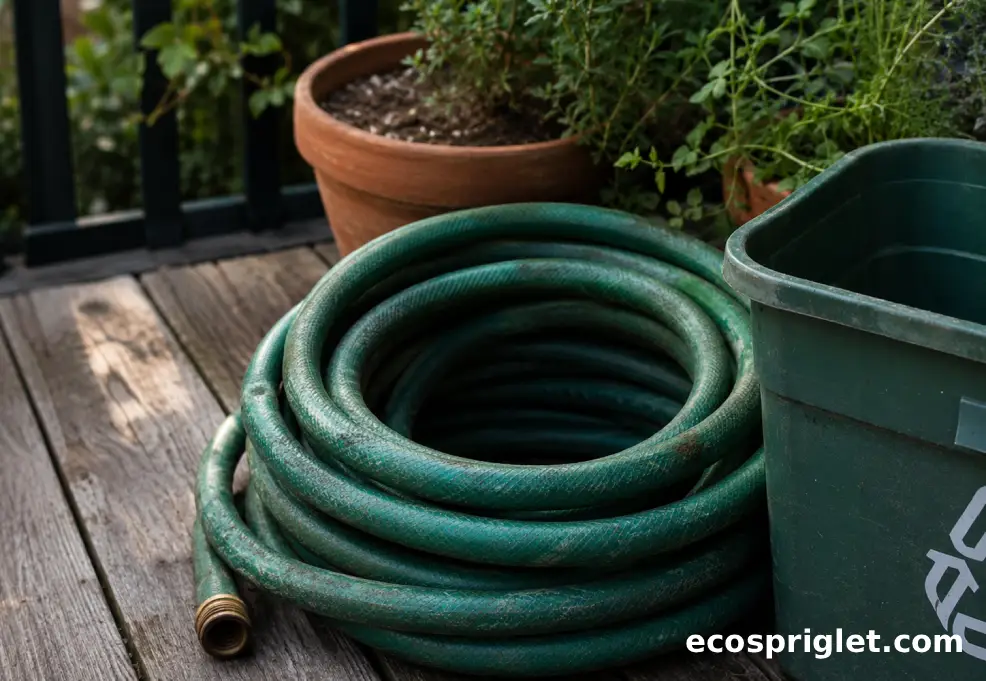
How to Dispose of an Old Garden Hose Without Making a Mess
For most households, the safest disposal route is trash for the hose body. Before you do that, take two minutes to separate anything that can reasonably be handled in a better way. Earth911 notes that metal hose ends may be recyclable through scrap metal options after they are cut off, while the hose body itself is difficult to recycle because of its material mix and shape.
- Check your city’s waste search tool first. Search for “garden hose,” “hose,” or “scrap metal.” In the Portland area, Metro’s Find a Recycler tool is built for checking local drop-off options by item.
- Remove the metal ends if it is easy and safe. Use a utility knife or heavy shears, wear gloves, and cut at least 1 inch away from the fitting so your tool is not scraping metal.
- Keep the hose out of the recycling cart. If the body has no local drop-off option, bag it or cut it into 2- to 3-foot sections so it fits cleanly in the trash.
- Do not put it in yard debris or compost. A hose is not organic material, even if it spent years sitting next to your pots.
For renters, I would also avoid leaving a dead hose in a shared building utility area unless it is clearly still usable and your building allows free-item sharing. Otherwise it becomes someone else’s disposal chore, which is not the neighborly version of sustainability.
Reuse Ideas That Actually Work on a Balcony
Reusing an old hose is not the same as recycling it, but for a small-space gardener it can be the most practical middle ground. The trick is to reuse only clean, sturdy sections. If the hose is sticky, crumbling, oily, moldy, or shedding bits, skip the craft project and dispose of it.
I learned this the hard way after saving a cracked hose under my balcony bench “for later.” Later turned into a damp, dusty coil that was not useful for anything. Now I give myself a simple rule: if I cannot name a real use for it in five minutes, it goes into the correct disposal stream.
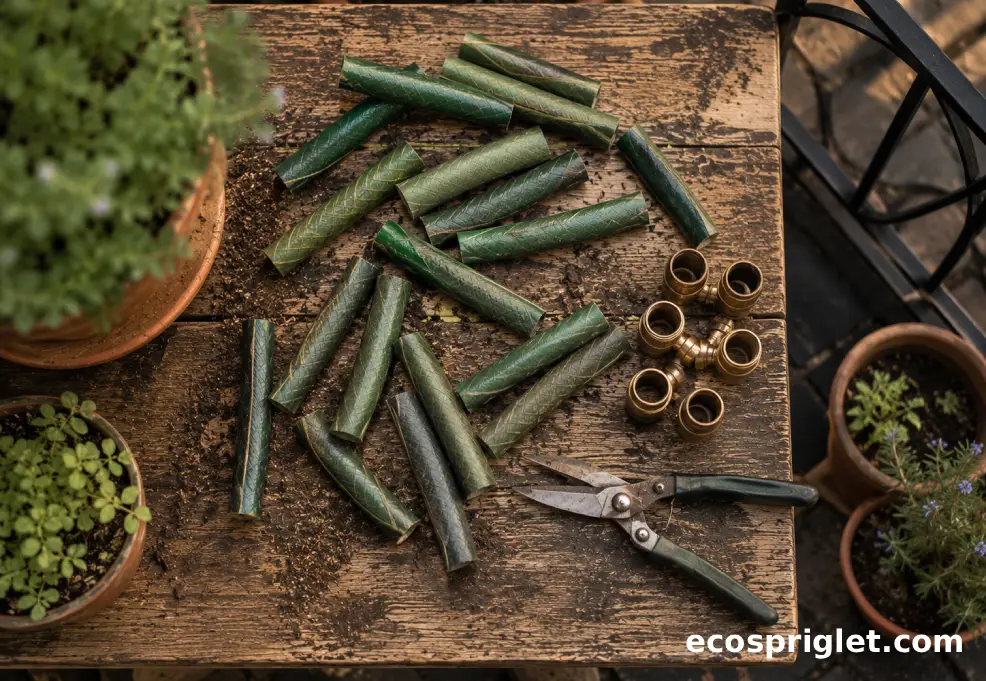
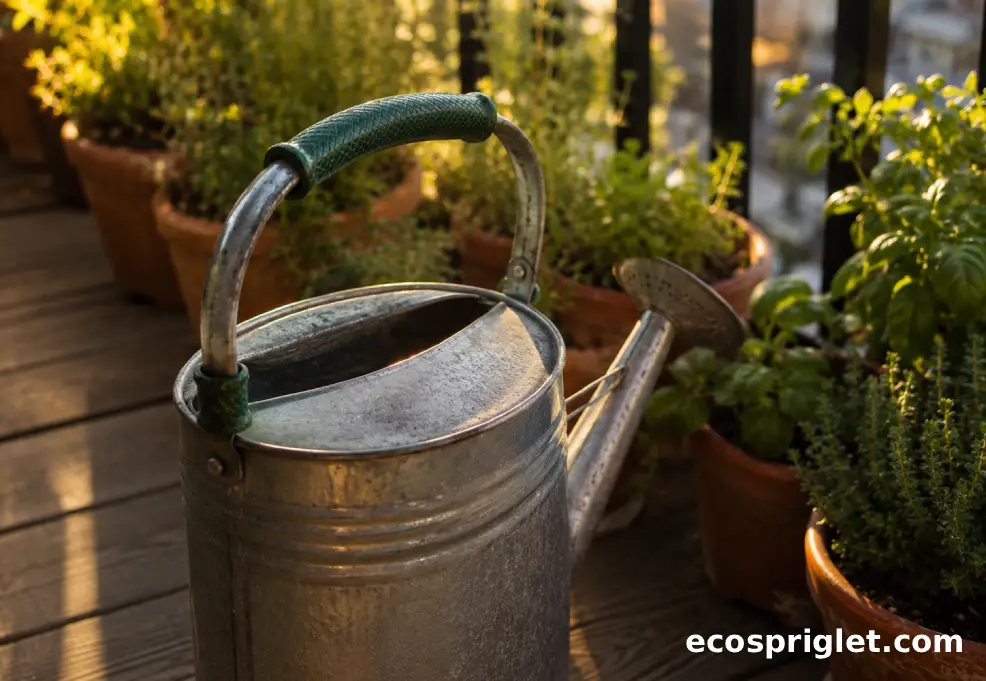
- Make handle grips. Cut 4- to 6-inch sections and slit them lengthwise to wrap around bucket handles, plant caddy handles, or wire basket handles.
- Protect surfaces from rubbing. A short hose sleeve can cushion a tie where a lightweight plant support rubs against a railing, but do not use it as a structural fastener.
- Create tool guards. A clean hose section can cover the edge of a small saw, trowel point, or sharp garden tool during storage.
- Use only sound sections near plants. Avoid using degraded hose pieces where flakes could fall into potting mix, saucers, or edible herb containers.
If you have a tiny balcony, do not save a full 50-foot coil just because it might become useful someday.
When Trash Is the Better Environmental Choice
Throwing something away can feel like failure, especially when you are trying to garden more sustainably. But with garden hoses, trash is often the lower-harm choice compared with wish-cycling. The Recycling Partnership explains that hoses are among the items that can disrupt recycling equipment, and Waste Management’s guidance gives the same basic instruction: keep hoses out of recycling.
That is the part many well-meaning gardeners miss. A curbside recycling cart is not a magic “materials” bin. It is a sorting system with limits. When a hose wraps around equipment, workers may need to stop the line and remove it. That wasted time and risk can make the recycling system less efficient for the bottles, cans, paper, and cardboard that really can be recovered.
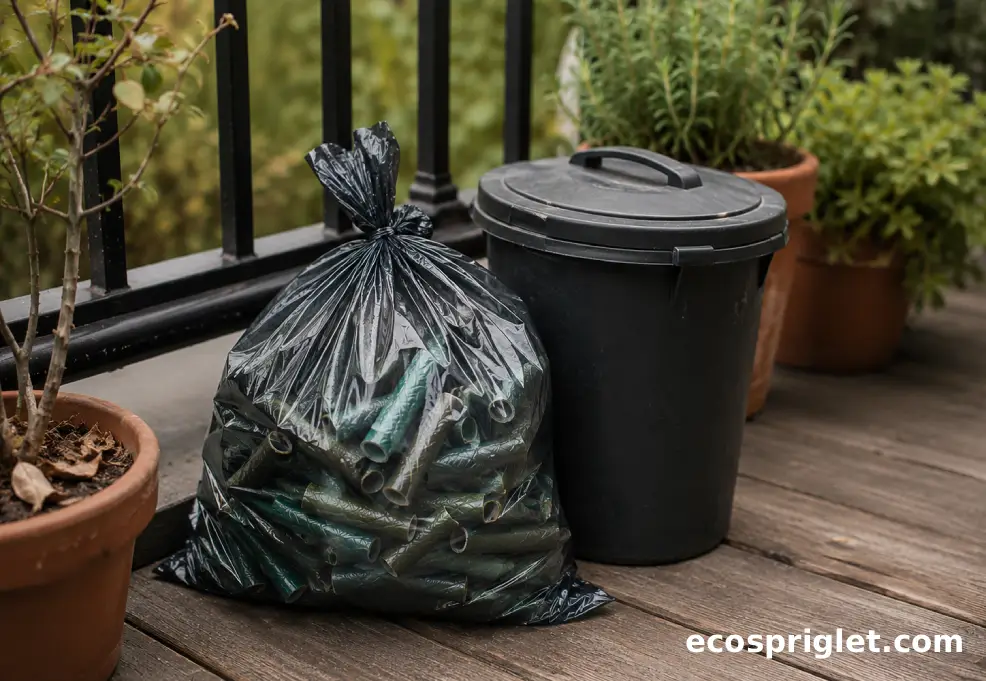
So if your old hose is beyond reuse, and your local search tool does not show a specific drop-off program, put the hose body in the trash. If it is long, cut it down or coil and tie it so it does not spring out of a bag. In a shared apartment building, follow the building’s trash rules and do not jam a full hose coil into a small chute if it could block the opening.
How to Buy a Replacement That Lasts Longer
A recycled garden hose label usually means the new product contains some recycled material, not that your worn-out hose belongs in the recycling bin. The better sustainability move is to buy only the hose you need, repair small leaks when practical, and store it so it does not fail early.
- Choose the shortest practical length. For many balconies and patios, 10 to 25 feet is easier to store than a 50-foot hose and is less likely to kink in a tight corner.
- Match the tool to the space. A 1- to 2-gallon watering can may be simpler than a hose for a windowsill, herb shelf, or five-pot balcony garden.
- Repair small leaks first. Replace a worn washer if the leak is at the faucet connection. If the hose has one clean split, a hose mender may extend its life.
- Store it out of harsh sun. Coil it loosely, drain it before winter freezes, and avoid sharp bends under heavy pots or furniture.
- Buy for your real use. If you water edible herbs, seedlings, pets, or children’s play areas with the same hose, look for product labeling that fits that use rather than choosing only by color or price.
For more small-space watering ideas, see our balcony watering guide. A hose is useful, but it is not always the best tool for a compact garden.
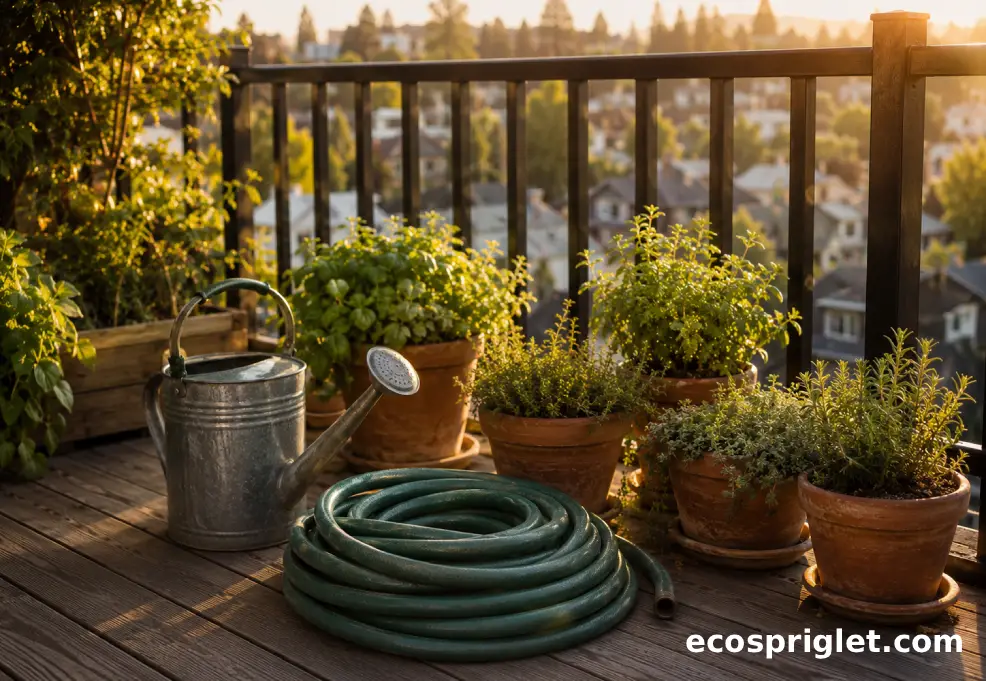
Common Mistakes to Avoid With Garden Hose Disposal
The most common mistake is assuming that anything plastic-like should go in recycling. Garden hoses are a good reminder that recycling depends on shape, sorting equipment, and local markets, not just what a product appears to be made from. Denver’s guidance calls out garden hoses as tangling items, and Recology lists garden hoses with accepted garbage rather than recycling.
Another mistake is putting hose pieces into yard debris because they were used in the garden. Yard debris and compost programs are meant for organic material such as leaves, prunings, and plant matter, not synthetic hose pieces, washers, or metal couplings.
I also see beginners keep broken hoses for too long. Saving useful materials is smart; building a balcony junk pile is not. If the hose is brittle, sticky, full of mystery residue, or cracked along most of its length, it is not a good candidate for reuse. Remove easy metal fittings if your local scrap option accepts them, then dispose of the rest properly.
Finally, do not donate a broken hose unless the receiving group specifically wants damaged hose for a project. A clean, working hose may be useful to a community garden, neighbor, or tool library. A leaking, crumbling hose is just trash with extra steps.
A Quick Decision Guide for Old Garden Hoses
| Hose Condition | Best Next Step | Small-Space Note |
|---|---|---|
| Still works but you no longer need it | Offer it to a neighbor, community garden, or local reuse group | Clean it first and coil it neatly so it is easy for someone to take |
| One small leak near the end | Try a washer replacement, end repair, or hose mender | Repair is usually worth trying if the hose is otherwise flexible |
| Cracked in many places | Remove easy metal fittings, then trash the hose body | Cut into short sections if it needs to fit in a small bag |
| Metal fittings only | Check local scrap metal drop-off rules | Keep small fittings in a jar until you have enough scrap to justify the trip |
| Dirty, sticky, moldy, or crumbling | Trash it rather than reuse it around plants | Do not store degrading hose pieces in a balcony bench or indoor closet |
This simple sort keeps the answer clear: reuse what still has real function, recover metal only where your local system accepts it, and keep the hose body out of curbside recycling unless your municipality says otherwise.
Final Thoughts on Garden Hose Disposal
So, can garden hoses be recycled? In most curbside programs, no. The hose body belongs out of the recycling bin because it can tangle equipment and is often made from mixed materials that standard sorting systems are not designed to process. That may feel disappointing, but it gives you a clean decision instead of a guilty guess.
For an old hose, start with reuse if the material is still clean and sturdy. Make handle grips, tool guards, or small protective sleeves. If the hose is too far gone, remove metal fittings only if it is safe and your local scrap option accepts them, then put the remaining hose in the trash. The greenest move is not always the one that says “recycle” on it. Sometimes it is buying less, repairing what you can, keeping contaminants out of the blue bin, and making your small garden easier to maintain.