The best grow lights for indoor plants are not always the biggest or brightest ones. In an apartment, the better choice is usually the light you can place at the right distance, run safely on a timer, and live with every day without turning your kitchen into a lab.
For most indoor gardeners, I would start with a full-spectrum white or balanced LED grow light. University of Minnesota Extension notes that white or mixed balanced lights are suitable for most plants at any stage, while blue or mixed light works well for seedlings and leafy greens and red or mixed light can help flowering plants. University of Maryland Extension also notes that red, far-red, and blue wavelengths matter for healthy plant development under artificial light.
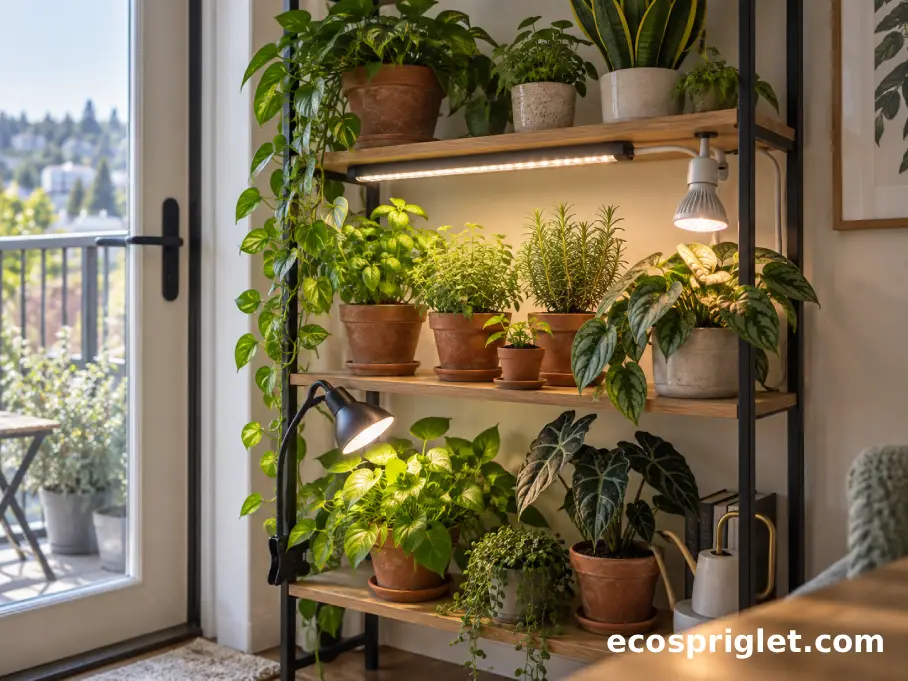
Quick Picks for Different Indoor Plant Setups
| Pick | Best For | Main Strength | Watch Out For |
|---|---|---|---|
| Barrina T5 2-Foot LED Grow Light Bars | Plant shelves, herbs, seedlings, and several small pots | Good coverage across a shelf with separate bars | Mounting, cords, and light spill need planning |
| SANSI 24W Full Spectrum LED Grow Light Bulb | A simple lamp-based setup for one or two plants | Uses a standard E26-style fixture and warm-white-looking light | Coverage is directional, so placement matters |
| Soltech Aspect Gen 2 LED Growlight | Design-conscious houseplant corners | Looks more like home lighting than garden equipment | Premium price tier and ceiling or wall placement |
| GooingTop 6000K Clip-On LED Grow Light | Desk plants, a small herb pot, or a beginner trial setup | Clip mount, dimming, and small footprint | Small coverage area and clip stability |
| Mars Hydro TS600 LED Grow Light | Stronger light for herbs, seedlings, and compact grow shelves | More intensity than most decorative lights | Too bright and exposed for many living-room setups |
| AC Infinity IONBEAM S16 Light Bars | Adjustable shelf or cabinet growers who want scheduling | Four bars with digital dimming and scheduling | Better for planned setups than casual windowsill plants |
| GE Grow BR30 or PAR38 LED Grow Bulb | Budget-friendly bulb replacement in a clamp or floor lamp | Easy to understand and easy to replace | Lower flexibility than a bar or adjustable panel |
How I Chose These Grow Lights
I chose these by thinking through how indoor plant people actually use grow lights in small homes: one pothos in a dark corner, basil on a kitchen shelf, seedlings in late winter, or a group of houseplants that stretch toward a weak window.
The main criteria were full-spectrum or balanced LED light, small-space fit, usable coverage, safe cord routing, timer or dimming usefulness, setup difficulty, and whether the light would be tolerable in a living area. I also favored products with clear manufacturer-listed specs over vague “sunlike” marketing.
I did not invent hands-on testing for these lights. Where I mention wattage, spectrum, coverage, dimensions, controls, or certification, I am relying on current manufacturer or retailer listings and phrasing those claims carefully.
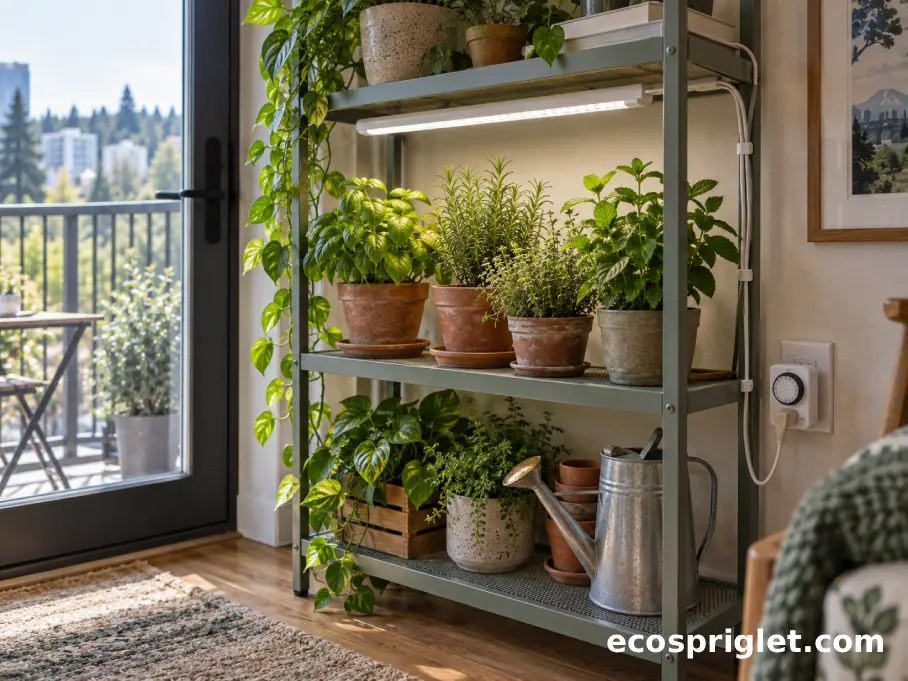
Best Overall for Plant Shelves: Barrina T5 2-Foot LED Grow Light Bars
Best for: Apartment gardeners with a plant shelf, herb shelf, seed-starting rack, or several small pots in one row.
Not best for: One single decorative plant in a living-room corner, unless you already have a shelf or cabinet where the bars can be hidden neatly.
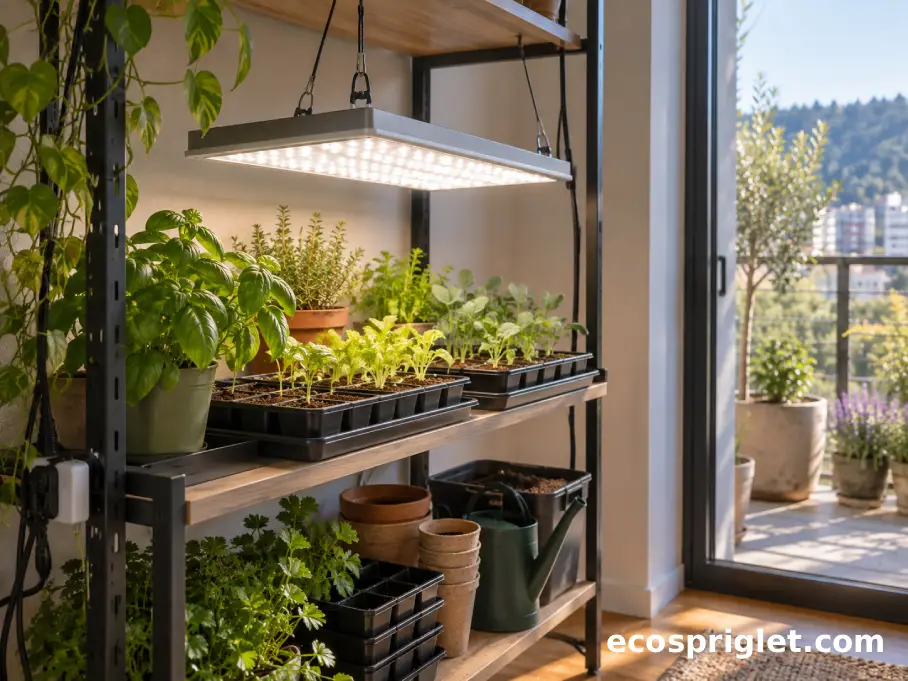
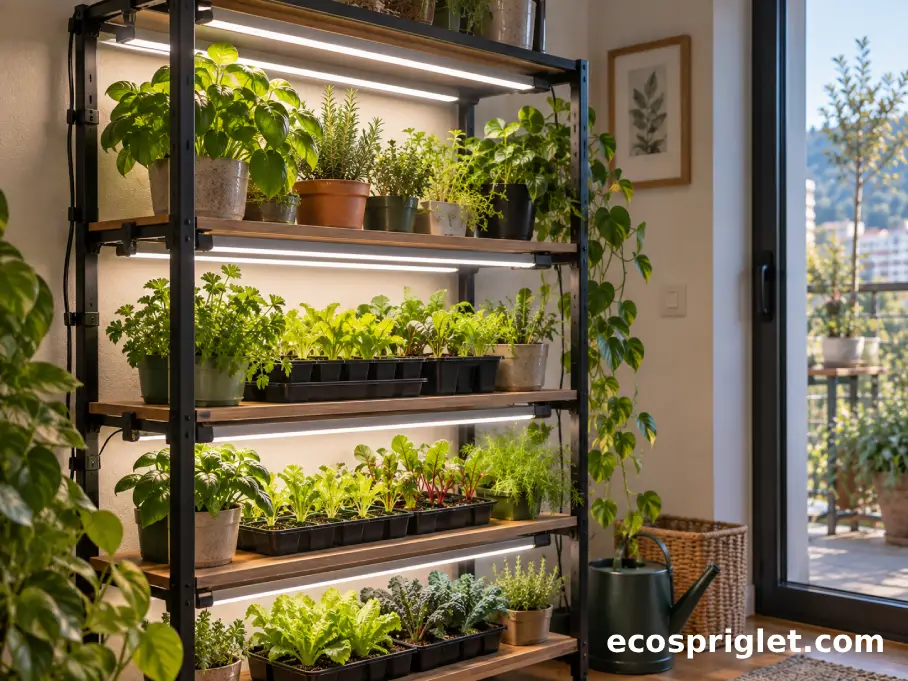
Why I would consider it: Bar lights solve one of the most common apartment grow-light problems: coverage. A bulb can create one bright circle, but a set of bars can spread light along a shelf so the edge plants are less neglected.
The manufacturer lists the Barrina T5 2-foot model as a full-spectrum, linkable LED grow light, with each bar rated at 10W, a 120-degree beam angle, 120V AC input, and plug-and-play installation. The 4-pack is listed as 40W total with separate on/off switches and included clips, tape, cable ties, power cords, and connectors.
- Key feature: Multiple 2-foot bars can be spaced across a shelf instead of relying on one central bulb.
- Practical benefit: Better for herbs, seedlings, microgreens, and grouped houseplants than a single narrow-beam lamp.
- Drawback: The setup can look cord-heavy if you do not plan the shelf, outlet, and cable path first.
- Check before buying: Shelf width, mounting surface, outlet location, cord length, and whether the included adhesive or clips make sense for your furniture.
Bottom line: This is the pick I would look at first for a practical indoor plant shelf. It is not the prettiest option, but it gives beginners a more forgiving light layout than a single bulb pointed at a crowd of plants.
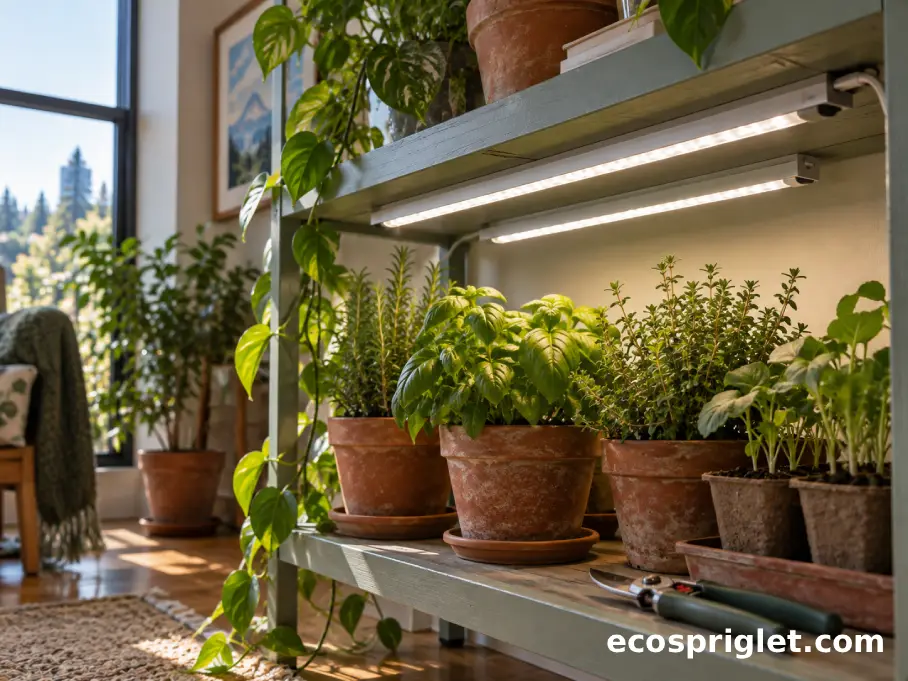
Best Grow Light Bulb: SANSI 24W Full Spectrum LED Grow Light Bulb
Best for: Someone who wants the simplest possible upgrade: buy a grow bulb, screw it into a suitable lamp, and aim it at one or two plants.
Not best for: Wide shelves, many pots, or seedlings spread across a tray.
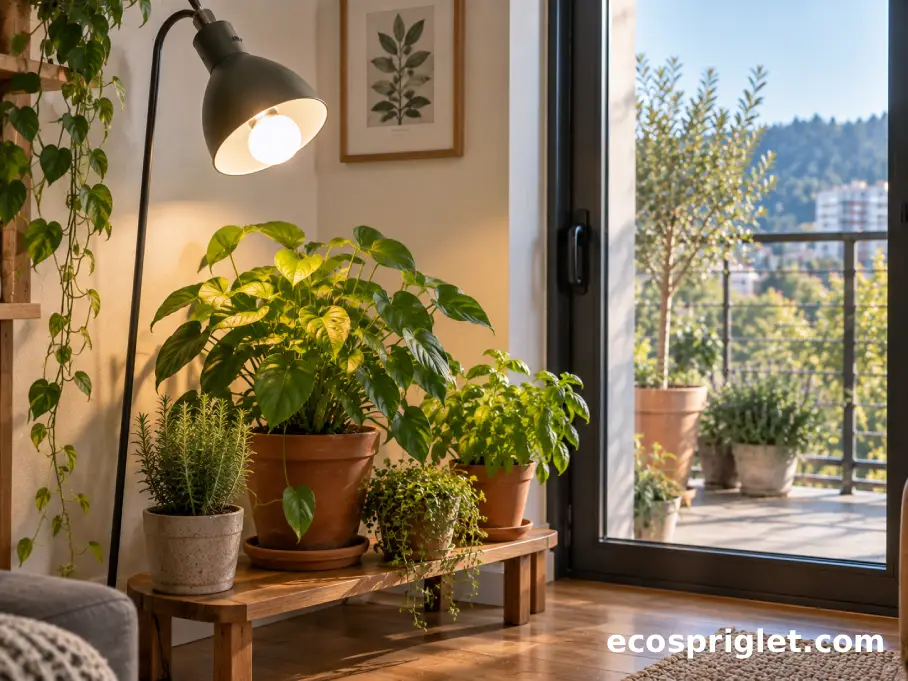
Why I would consider it: A grow light bulb is often the least intimidating way to start. You can use a clamp lamp, floor lamp, or pendant-style fixture, as long as the bulb fits safely, the fixture is rated for the wattage, and you can position it close enough to the plant.
SANSI lists this PAR25 24W bulb as a 4000K daylight, full-spectrum grow bulb covering 400nm to 780nm, with an E26/E27 socket, optical lens design, and a manufacturer-listed PPFD figure at 1 foot. The listing also describes the light as white-looking rather than purple or reddish, which matters if the lamp sits in a kitchen or living room.
- Key feature: Standard screw-in bulb format for a lamp-based setup.
- Practical benefit: Good for a small herb pot, a compact houseplant group, or a dark windowsill that needs backup light.
- Drawback: A bulb creates a cone of light, so plants outside the beam may still stretch.
- Check before buying: Fixture socket, wattage rating, shade clearance, ventilation around the bulb, and whether the lamp can be aimed downward without tipping.
Bottom line: This is the grow light I would consider for a renter who wants a useful, low-commitment setup without mounting bars or hanging a panel.
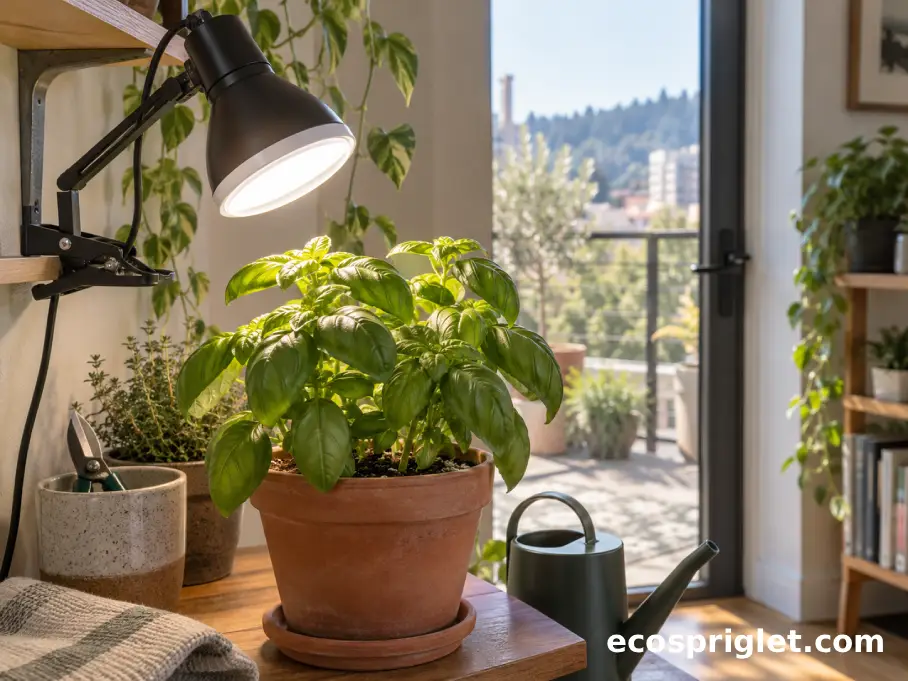
Best Decorative Grow Light: Soltech Aspect Gen 2 LED Growlight
Best for: Houseplant owners who care about how the grow light looks in a living room, dining nook, or bedroom corner.
Not best for: Budget-first shoppers, seed-starting racks, or renters who cannot safely hang or route a pendant-style fixture.
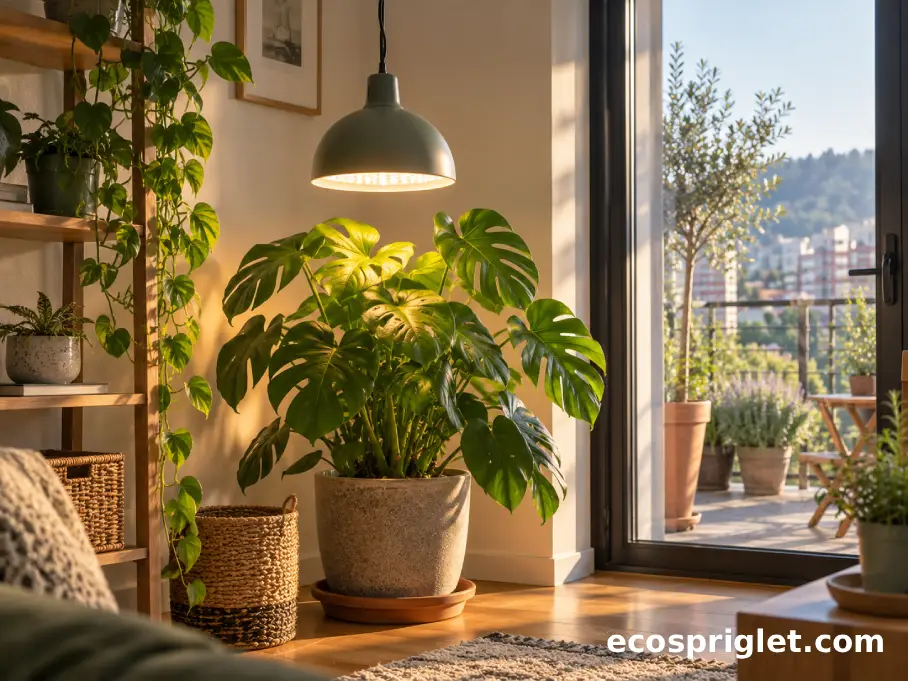
Why I would consider it: Some grow lights are technically fine but visually annoying. The Aspect is for the person who has a monstera, citrus tree, ficus, or plant corner that needs light but still sits in normal living space.
Soltech lists the Aspect Gen 2 as a 36W LED grow light with a built-in dimmer, an 18-foot fabric cord, upgraded cable-management hardware, a 50,000-hour rating, and a 5-year warranty. Those are manufacturer-listed details, so I would still check the current product page before buying.
- Key feature: Pendant-style design with dimming.
- Practical benefit: Easier to live with visually than many shop-light-style fixtures.
- Drawback: It costs more than basic bulbs and bars, and installation takes more thought.
- Check before buying: Hanging height, ceiling or wall attachment rules, cord path, outlet distance, and whether the plant can stay centered under the beam.
Bottom line: I would choose this for a visible plant corner, not for a utility shelf. It is more about making supplemental light livable than maximizing light per dollar.
Best Clip-On Light for One or Two Plants: GooingTop 6000K LED Grow Light
Best for: A desk plant, a small herb pot, or a beginner who wants to test whether supplemental light helps before buying a larger setup.
Not best for: Large plants, wide shelves, or anyone who needs even coverage across many pots.
Why I would consider it: Clip-on grow lights are not my favorite for serious growing, but they are useful when you have almost no surface space. The key is to treat them as small-plant lights, not as magic suns for a whole indoor garden.
The current retailer listing for the GooingTop model describes a corded clip-mount LED light with 6000K color temperature, 84 light sources, dimming, and a listed 10W light-source wattage. It is a compact format, so the practical limitation is coverage rather than whether it turns on and looks bright.
- Key feature: Clip mount with adjustable light direction.
- Practical benefit: Good for a single pot on a desk, shelf, or kitchen counter where a floor lamp would be too bulky.
- Drawback: Clip lights can slip, sag, or create uneven light if the mounting surface is thin, rounded, or wobbly.
- Check before buying: Clip opening size, gooseneck stability, cord path, timer controls, and whether the light can sit close enough without touching leaves.
Bottom line: This is a small-space convenience pick. I would use it for one or two modest plants, not for a tray of seedlings or a serious herb shelf.
Best Stronger Panel for Herbs and Seedlings: Mars Hydro TS600
Best for: Indoor herbs, seedlings, compact greens, and a small grow shelf where you want more intensity than a decorative bulb provides.
Not best for: A plant in the middle of your living room, unless you are comfortable with a bright exposed panel.
Why I would consider it: Some plants need more light than a cute lamp provides. Basil, peppers, tomatoes, and dense seedling trays can stretch badly under weak light. A small panel can make more sense than adding several weak clip lights.
Mars Hydro lists the TS600 as a 100W LED grow light with a 2-foot by 2-foot vegetative coverage area, 1.5-foot by 1.5-foot flowering coverage, PPF of 190 μmol/s, and a spectrum that includes 3000K, 5000K, 650-660nm, and 730-735nm. The manufacturer also notes a voltage alert, so buyers should verify the correct voltage before purchase.
- Key feature: Stronger compact panel format.
- Practical benefit: More realistic for seedlings, herbs, and compact edible plants than a low-output decorative lamp.
- Drawback: It can be visually harsh in a main living area and may need a shelf, hanging point, or small grow station.
- Check before buying: Hanging height, timer needs, outlet load, room brightness tolerance, and whether you can keep water trays away from cords.
Bottom line: Choose this when plant performance matters more than decor. For a seed-starting shelf or serious herb setup, a compact panel often beats a cluster of weak lamps.
Best Smart Bar Kit for a Planned Shelf: AC Infinity IONBEAM S16
Best for: A more planned shelf, cabinet, or compact indoor growing setup where dimming and scheduling are useful.
Not best for: A casual windowsill plant or anyone who wants a single plug-in bulb.
Why I would consider it: The IONBEAM S16 is more of a system than a single lamp. That can be helpful if you are building a shelf you will use through winter, but it may be unnecessary for one pothos or one pot of mint.
AC Infinity lists the IONBEAM S16 as a kit with four 16-inch full-spectrum LED bars, Samsung LM301H EVO diodes, ten light-intensity levels, daily schedule programming, and flexible mounting options. The manufacturer describes it as supplemental or primary lighting for smaller grow setups.
- Key feature: Four-bar kit with digital dimming and schedule control.
- Practical benefit: Lets you tune light more carefully than a simple on/off bulb.
- Drawback: More parts, more setup decisions, and more cost than a basic shelf light.
- Check before buying: Shelf dimensions, mounting surface, controller placement, cord routing, and whether you want app-style control or simple manual control.
Bottom line: This is a good fit for the apartment gardener who already knows they want a small indoor growing station, not just a one-plant rescue light.
Best Budget Bulb Option: GE Grow BR30 or PAR38 LED Grow Bulb
Best for: Trying a grow light without committing to a shelf system, pendant, or panel.
Not best for: Serious seed-starting trays, high-light vegetables, or wide plant collections.
Why I would consider it: A basic GE grow bulb can be a sensible first step if you already own a stable lamp. It is also easy to replace later if you outgrow it.
GE describes its LED grow bulb line as using balanced light spectrum options that appear white to the eye, with different bulbs aimed at different growth stages. Retail listings for the BR30 commonly show a 9W E26 indoor LED grow bulb format, while GE’s PAR38 page lists a larger grow-light flood bulb with a 5.12-inch length and grow-light category. Check the exact bulb model before buying, because output and beam spread vary by BR30, PAR38, seeds-and-greens, and flowers-and-fruit versions.
- Key feature: Familiar bulb format for standard lamps.
- Practical benefit: Low-friction way to help a small plant group in a dim apartment corner.
- Drawback: Less adjustable coverage than bars, and weaker bulbs can disappoint if placed too far from plants.
- Check before buying: Bulb base, fixture wattage rating, beam angle, growth-stage version, and whether your lamp can aim the light down at the plant canopy.
Bottom line: This is the sensible “start here” option if you want to spend carefully and learn how your plants respond before building a bigger indoor setup.
How to Choose the Best Light for Growing Plants Indoors
Start with the plant and the space, not the brightest listing. A snake plant in a dark bedroom corner, a tray of tomato seedlings, and basil on a kitchen shelf all need different grow-light setups.
For houseplants
Choose a full-spectrum white or balanced light that looks comfortable in your room. Most foliage houseplants do not need a heavy-duty grow tent panel. They need enough consistent light to stop stretching and maintain healthy leaves.
For herbs
Use more intensity than you would for a decorative pothos. Basil, cilantro, parsley, thyme, and chives usually do better when the light is close, consistent, and spread across the plant tops. A bar light or stronger bulb is often better than a tiny clip light.
For seedlings
Choose adjustable height and broad coverage. Seedlings stretch quickly when light is weak or too far away. A shelf with bars or a compact panel usually works better than a single desk lamp.
For one plant in a dark corner
A bulb or decorative pendant can be enough. The trick is keeping the beam centered on the plant and adjusting the distance as the plant grows.
What Color Grow Light Is Best for Indoor Plants?
For most apartments, the best grow light color is full-spectrum white or mixed balanced light. It supports useful wavelengths for plants while staying comfortable for people. That matters because an annoying purple light often gets unplugged, and an unplugged grow light helps nothing.
Blue or mixed light is useful for seedlings, leafy greens, and non-flowering houseplants. Red or mixed light can support bud formation and flowering. White or balanced lights are the most practical all-around choice for mixed indoor plants.
In plain English: choose white full-spectrum for most houseplants, herbs, and apartment shelves. Consider stronger red-and-blue-heavy or panel-style lights only when you are growing demanding edible plants, seedlings, or flowering crops indoors.
Common Mistakes That Make Grow Lights Disappointing
- Buying for wattage alone: Wattage tells you power draw, not the whole story of plant-useful light or coverage.
- Placing the light too far away: A bright bulb across the room is still weak at leaf level.
- Lighting only the center plant: Edge plants stretch when the beam is too narrow.
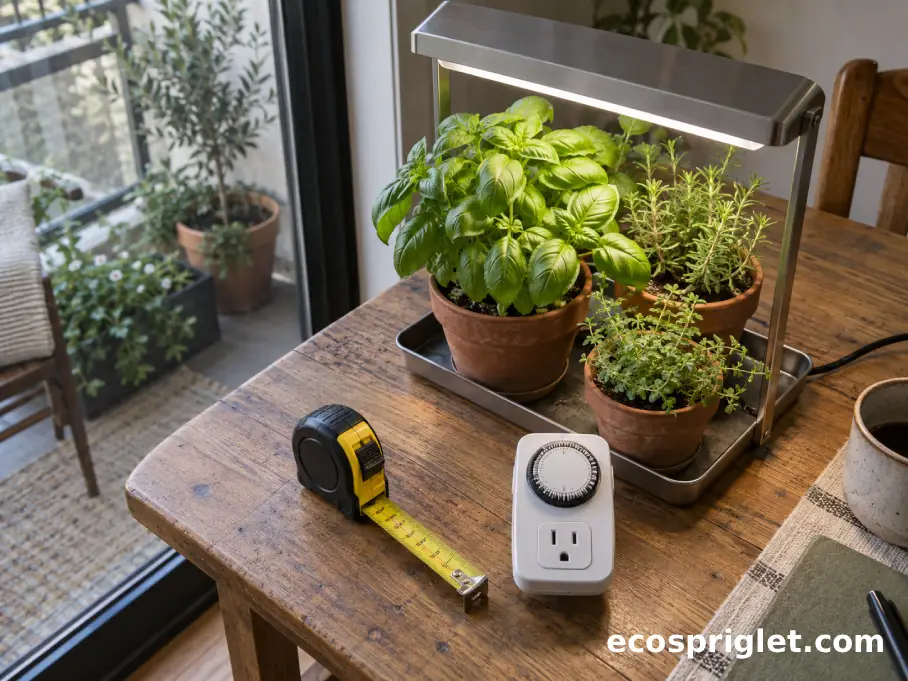
- Skipping a timer: Inconsistent light schedules are easy to create when you rely on memory.
- Choosing purple light for a living space: Some blurple lights can work for plants, but many apartment gardeners dislike living with them.
- Forgetting heat and airflow: LEDs run cooler than older lights, but fixtures still need breathing room.
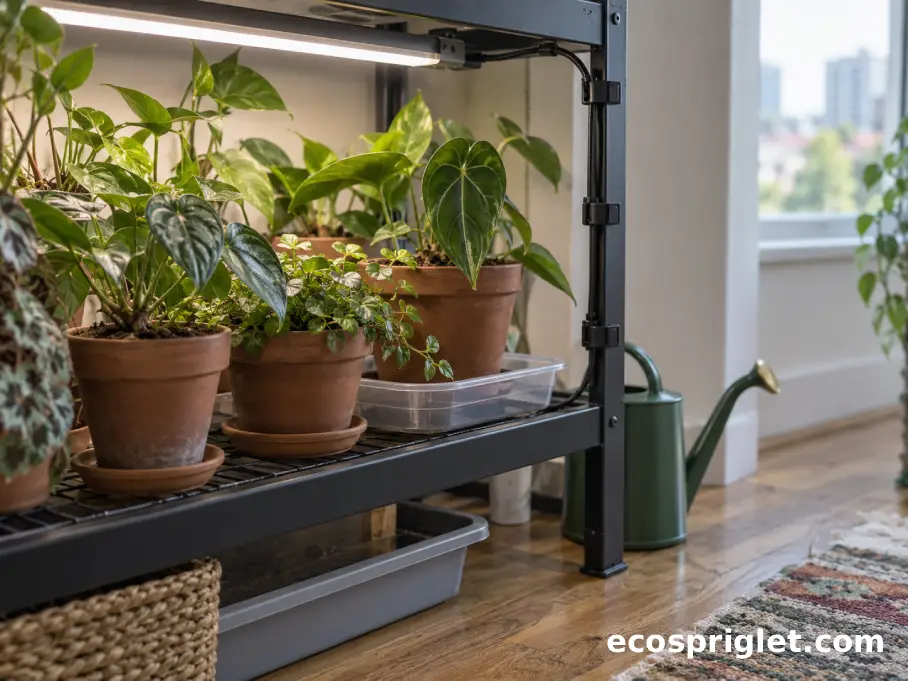
- Letting cords run near watering areas: A good light setup should be easy to water around safely.
Grow Light Safety and Maintenance for Apartments
Grow lights are electrical products sitting near water, soil, and metal shelves, so safety is not a side note. Keep cords away from standing water, avoid overloaded extension cords, and do not use extension cords as permanent wiring. The Electrical Safety Foundation International advises against overloading extension cords, running them through water, covering them where heat cannot escape, or using them as permanent wiring.
- Use a stable fixture that cannot tip into a pot or saucer.
- Keep drip trays, watering cans, and misting bottles away from plugs and power strips.
- Choose lights with safety certifications when possible, such as UL, ETL, or equivalent marks listed by the manufacturer.
- Use a timer rated for the light’s power draw.
- Leave airflow around bulbs and panels so heat can dissipate.
- Dust the light surface occasionally; dust reduces useful light and makes fixtures look worse.
- Check lease or building rules before drilling, ceiling-mounting, or running cords in shared spaces.
When You May Not Need a Grow Light
You may not need a grow light if your plants already grow compactly, produce healthy new leaves, and sit close to a bright window for much of the year. I would also skip a grow light if the real issue is overwatering, poor drainage, pests, or a pot with no drainage hole.
A grow light is most useful when you see stretched stems, pale new growth, herbs that thin out indoors, seedlings leaning hard toward the window, or winter light that is too weak for your plant goals.
For a tiny apartment, sometimes the better move is simpler: move the plant closer to the window, choose lower-light plants, reduce winter watering, or grow fewer herbs at once.
FAQ: Indoor Plant Grow Lights
What is the best grow light for indoor plants overall?
For most apartment plant owners, the best grow light is a full-spectrum white LED that fits your actual setup. For a shelf, I would look at LED bars. For one plant, a grow bulb may be enough. For seedlings or herbs, a stronger panel or well-spaced bar setup usually makes more sense.
Are LED grow lights better for indoor plants?
LED grow lights are usually the best fit for apartments because they are widely available, efficient, and available in bulbs, bars, panels, and decorative fixtures. They still need correct placement and safe cord management.
How long should grow lights be on for indoor plants?
Many indoor setups use roughly 12 to 16 hours of light per day, but plant type, light strength, window light, and season all matter. Use a timer and watch plant response. If leaves bleach, curl, or dry unusually fast, the light may be too intense, too close, or running too long.
What grow light setting is best for indoor plants?
Start with a moderate brightness setting and a consistent daily timer. For houseplants, full brightness is not always necessary. For herbs and seedlings, you may need more intensity and closer placement. Adjust based on stretching, leaf color, and soil drying speed.
Can a normal LED bulb grow plants?
A normal LED bulb may help a little if it is bright and close, but a purpose-made grow bulb is usually easier because it is designed around plant-useful spectrum and directional output. For herbs, seedlings, and darker rooms, I would choose a listed grow light instead of a household bulb.
Should grow lights be purple, red, blue, or white?
White full-spectrum or balanced mixed light is the most practical choice for most homes. Blue and red wavelengths matter to plants, but a white-looking grow light is usually easier to live with and still useful for mixed indoor plants.
How close should a grow light be to indoor plants?
Follow the manufacturer’s distance guidance first. As a practical rule, weak bulbs and bars usually need to sit closer than strong panels. Keep enough distance to avoid heat stress, leaf bleaching, or awkward watering.
Final Decision: Which Grow Light Should You Buy?
Choose the Barrina T5 bars if you have a shelf, several small plants, herbs, or seedlings. Choose the SANSI 24W bulb if you want the simplest lamp-based setup. Choose the Soltech Aspect if the light will be visible in your living space and you care about how it looks. Choose the GooingTop clip light only for one or two small plants. Choose the Mars Hydro TS600 if you need stronger light for herbs or seedlings and can manage a brighter, more utilitarian setup. Choose the AC Infinity IONBEAM S16 if you are building a more intentional shelf with dimming and scheduling.
My practical apartment-gardener answer: start with the smallest light that honestly covers your plants. A well-placed bar or bulb on a timer will do more than an oversized panel you hate looking at, unplug often, or cannot water around safely.