Learning how to harvest spinach is less about hitting one perfect date and more about reading the plant. You can start with tender baby leaves, wait for larger salad leaves, or take the whole plant when you need a bigger harvest. The method you choose also determines whether that spinach has a chance to keep producing.
For apartment and balcony gardeners, I usually favor the outer-leaf method. A single container may not look like much compared with a garden row, but picking a few mature leaves while leaving the center intact can turn that pot into several small harvests. University Extension guidance supports this approach: spinach can be picked once leaves are large enough to use, and removing the older outer leaves allows younger growth to continue.
The main things to watch are leaf size, the number of developed leaves, the condition of the center growth, and any sign that a seed stalk is forming. Once you can recognize those cues, harvesting takes only a minute or two and becomes one of the easiest parts of growing spinach in a small space.
Know When Your Spinach Is Ready to Pick
Spinach does not have to reach full size before you start harvesting. University of Illinois Extension advises that leaves can be used once they are large enough, with a plant typically showing a rosette of at least five or six leaves before a larger harvest. Individual outer leaves around 3 to 6 inches long are a useful practical target, especially if you want tender leaves rather than the biggest possible foliage.
If you are deciding when to harvest spinach, look at the plant before looking at the calendar. Many spring plantings reach usable size in roughly five to seven weeks, but variety, weather, light, and container conditions can shift that considerably. A seed packet gives you a useful estimate; a cluster of healthy leaves large enough for your kitchen tells you the plant is actually ready.
Baby spinach can come off earlier. Once individual leaves reach roughly 3 inches, you can begin taking a few of the outer ones. Letting additional leaves reach 4 to 6 inches gives you a larger harvest while they are still generally tender. Illinois Extension specifically notes that spinach quality is best while the leaves are young.
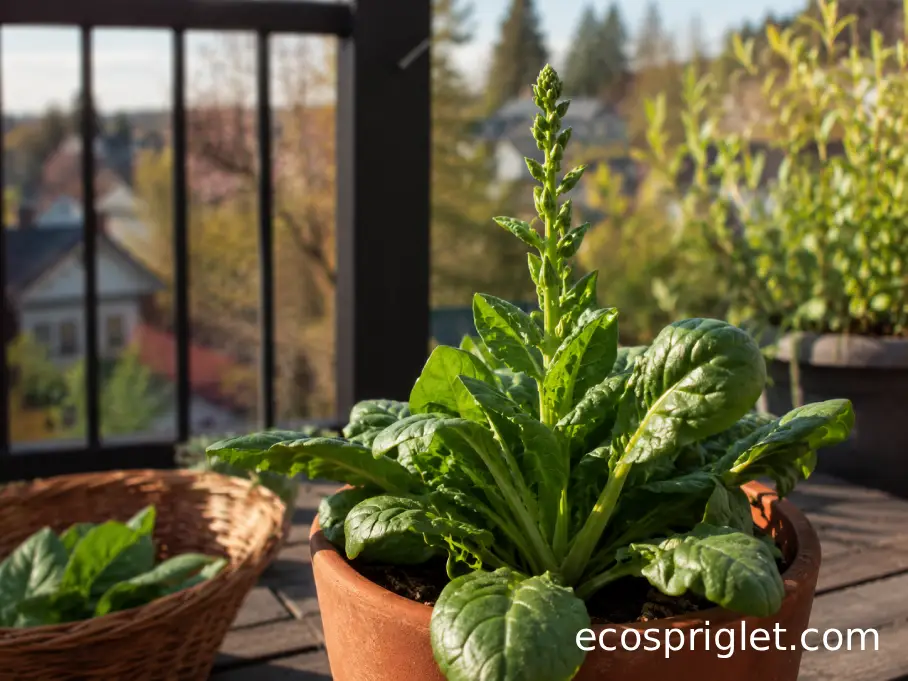
The other cue is urgency. If the middle of the plant suddenly begins stretching upward into a noticeable stalk, do not wait for larger leaves. That is the beginning of bolting, and it changes the harvest decision completely.
Pick Outer Leaves to Keep the Plant Producing
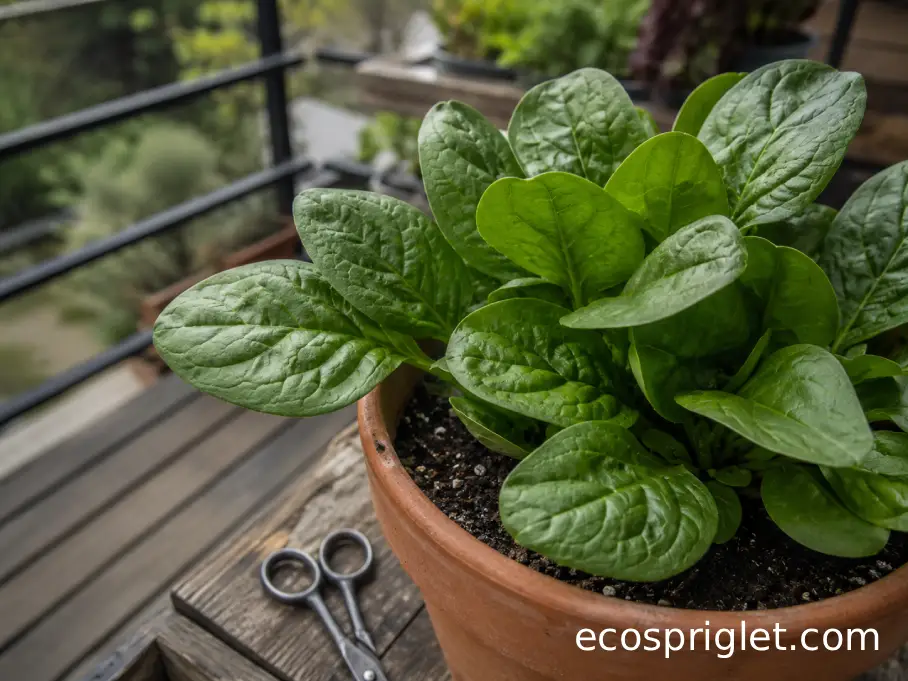
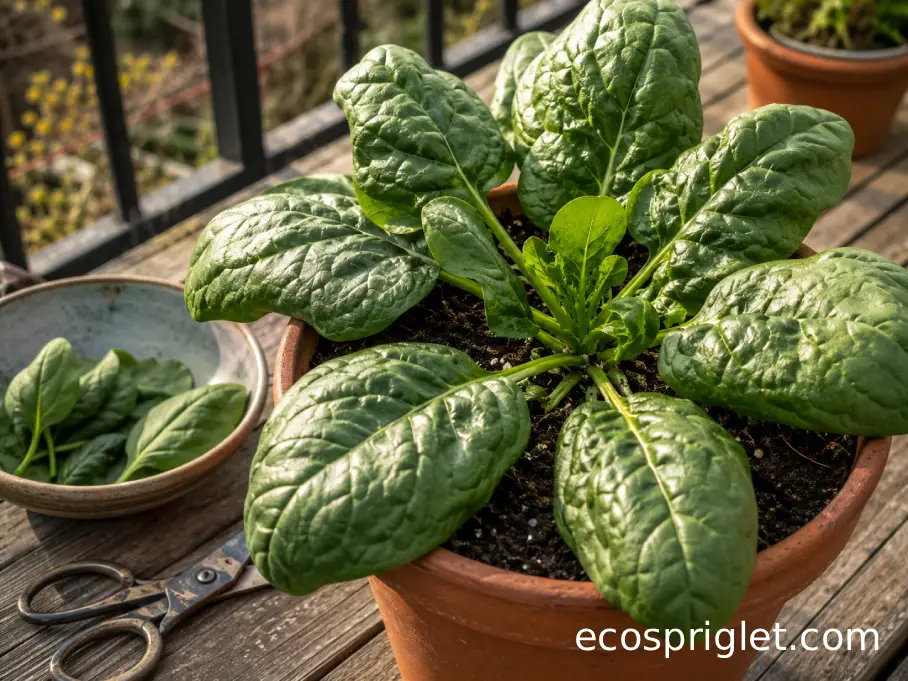
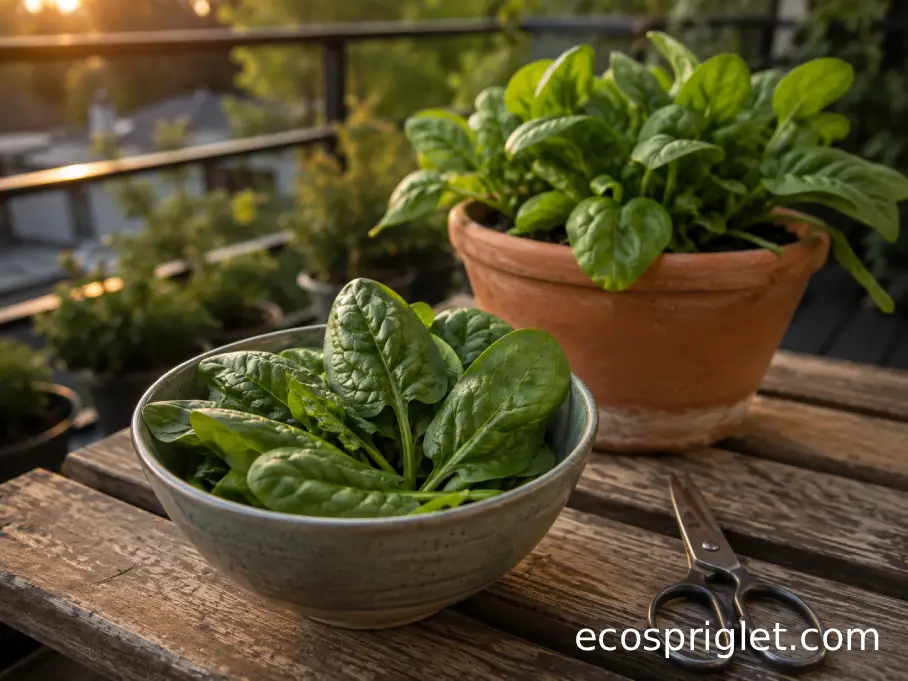
For a balcony pot, picking from the outside inward is the method I use most often. The larger leaves are already doing their job, while the smaller leaves in the center are your next harvest. University of Minnesota Extension notes that spinach can produce new leaves after harvesting, particularly when individual leaves are taken at the baby stage. Utah State University Extension similarly recommends taking the older leaves first so younger leaves can continue growing.
I learned the value of protecting that center growth with one of my early balcony spinach pots. I was too enthusiastic with scissors and gave the plant what amounted to a very short haircut. It survived, but recovery was much slower than the neighboring plant I had picked leaf by leaf.
- Choose the largest usable leaves around the outside of the rosette, usually once they are about 3 inches or longer.
- Snip or pinch each leaf stem near its base without tugging hard enough to loosen the plant from the potting mix.
- Leave the small central leaves and growing point untouched; that crown is where the next foliage develops.
- If you shear a larger batch rather than picking individually, Utah State advises that leaves can be cut to about 2 inches above the soil as long as the growing point is not damaged.
That last option is useful when you suddenly need a bowlful, but individual picking is the gentler choice if repeated harvests are your priority. Regrowth also depends on the season. A healthy cool-weather plant has a much better chance of replacing leaves than spinach that is already stretching toward flowering in warm, long days.
Take the Whole Plant When a Final Harvest Makes More Sense
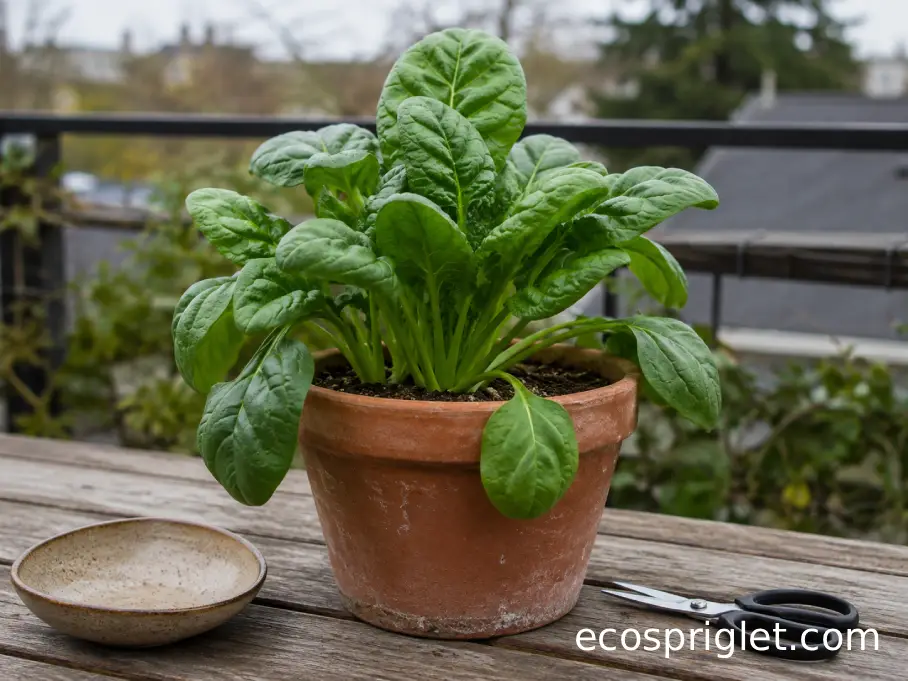
Sometimes the smartest harvest is the final one. If you need a larger quantity at once, are clearing the container for another crop, or see a seed stalk developing, you can take the entire spinach plant instead of protecting it for regrowth.
For a final harvest, University of Illinois Extension recommends cutting a mature plant at or just below the soil surface. Utah State University Extension gives similar guidance for mature plants and notes that a spinach plant is generally harvestable once it has around five or six developed leaves.
Do not confuse that method with a cut-and-come-again harvest. Cutting below the crown removes the plant. If you want another flush of leaves, leave the root system and growing point in place instead.
Whole-plant harvesting is also handy when you thin an overcrowded container. The removed seedlings or young plants can go straight to the kitchen rather than the compost bin, while the remaining spinach gets more space. In a small planter, that turns routine thinning into an early harvest.
If your spinach feels permanently cramped, pale, or difficult to water evenly, it may be worth adjusting the setup before the next sowing. Our guide to growing spinach in containers covers the potting and spacing side in more detail.
Harvest Early When Spinach Starts to Bolt
A spinach plant that suddenly changes from a flat rosette into a taller, more upright plant is telling you that the harvest window is closing. Bolting is the shift from leaf production toward flowering and seed production.
Long days and warm weather encourage spinach to bolt. University of Minnesota Extension notes that several days of temperatures above about 75°F can trigger flowering, while Utah State and Illinois Extension both identify warm conditions and increasing day length as important drivers.
Once you see a seed stalk forming, harvest promptly rather than trying to preserve the plant for several more rounds. Illinois Extension recommends taking the remaining crop when seed-stalk formation begins because leaf quality declines quickly. University of Minnesota Extension also warns that other spinach plants in the same planting may soon follow once one begins bolting.
This is especially useful on exposed balconies, where a sunny wall or dark railing can create warmer conditions than a backyard bed. If several afternoons have been warm and the center stems are stretching, I would take the usable leaves now rather than gamble on another week.
For future crops, shifting spinach toward the cooler parts of spring and fall usually gives you a longer leafy phase. If you grow several vegetables in the same small space, our balcony vegetable garden guide can help with seasonal rotation.
Common Mistakes to Avoid
Most harvesting problems come from taking too much from the wrong place or simply waiting too long. Spinach is tender, and a small container makes rough handling even more noticeable because there is less soil mass holding the roots in place.
- Do not cut through the center crown if you want regrowth. Keep the young center leaves and growing point intact, or leave roughly 2 inches of foliage when using a cut-back method.
- Do not wait for every leaf to become huge. Outer leaves around 3 to 6 inches are already harvestable, and younger spinach generally has better eating quality.
- Do not keep nursing a plant once the seed stalk is clearly forming. Harvest the remaining leaves before flowering advances and quality deteriorates.
- Do not yank repeatedly on stems in a lightweight container. Snip them instead if pulling begins to shift the root ball or move the entire plant.
- Do not pack a harvest tightly into a deep container. Leafy greens are fragile, so use a shallow bowl or basket and handle them as little as practical. Utah State Extension emphasizes gentle handling for harvested leafy greens.
One other mistake happens after the plant leaves the balcony: storing spinach wet. Excess surface moisture speeds quality loss. Unless the leaves are very dirty, keeping them unwashed until you are ready to use them is a simple way to avoid that problem.
Wash and Store Fresh-Picked Spinach Properly
Fresh spinach loses quality quickly, so the trip from planter to refrigerator should be short. Utah State University Extension recommends storing fresh spinach loosely in an open bag in the refrigerator crisper and, for best quality, waiting to rinse it until you are ready to use it. Its consumer guidance suggests roughly 3 to 5 days for fresh loose leaves under ordinary refrigerator conditions.
Keep your refrigerator at 40°F or below. That is the FDA recommendation for perishable fresh produce. Before eating spinach, rinse the leaves thoroughly under clean running water and remove any clinging soil or grit. Do not use soap, detergent, or household cleaners on produce.
If the harvest is muddy enough that you prefer to wash it immediately, dry the leaves well before refrigerating them. A salad spinner followed by a clean towel works well in a small apartment kitchen. The goal is not to make the spinach bone-dry; it is to avoid leaving droplets pooled between leaves inside the storage bag.
For everyday home storage, I would plan meals around using freshly picked spinach within about 3 to 5 days. Some Extension guidance reports longer life under colder, high-humidity storage conditions closer to commercial practice, but the ordinary home crisper is more variable.
Discard leaves that develop obvious decay, mold, or slime rather than trying to salvage them. Colorado State University Extension specifically advises throwing away produce showing spoilage such as mold or slime.
Make Small Harvests Useful Instead of Waiting for a Full Bowl
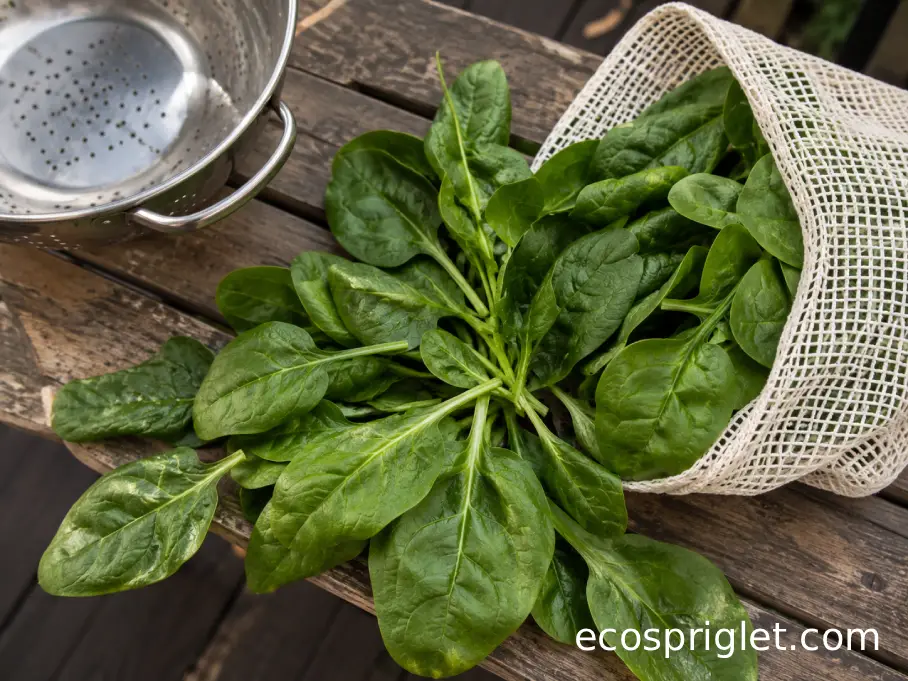
Small-space growing rarely gives you a supermarket-sized bag all at once, and that is actually useful. Instead of postponing the harvest until every leaf is large, take what is ready and build it into meals that work with modest quantities.
- Use a small handful of baby leaves in a sandwich, wrap, omelet, or grain bowl the same day you pick them.
- Save larger 4- to 6-inch leaves for sautéing, soups, pasta, or dishes where the spinach will wilt down.
- If several plants begin bolting together, make one larger final harvest and cook the leaves promptly rather than trying to stretch the crop.
- When a few leaves show cosmetic insect damage, inspect them closely and remove badly affected tissue rather than automatically discarding an otherwise healthy plant.
Spinach leafminers, for example, create winding or blotchy damaged areas inside leaves. University of Minnesota Extension notes that these mines damage the edible foliage even though they do not necessarily reduce the plant’s overall growth.
I like this harvest-as-you-need-it rhythm on a balcony because the plant stays productive and the kitchen gets genuinely fresh leaves. A few outer leaves today and another small batch later can be more useful than waiting for one oversized harvest that you then have to rush through before it wilts.
Build a Simple Harvest Rhythm You Can Repeat
Good spinach harvesting comes down to a few visible cues you can check in seconds. Start picking once usable leaves are around 3 inches long, expect a well-developed plant to have roughly five or six leaves before a bigger harvest, and take the older outside leaves first when you want the center to keep growing. If you need everything at once, cut the mature plant at soil level. If you want another flush instead, protect the crown and growing point.
Then keep one eye on the season. An elongating central stalk is your signal to stop waiting, particularly as days lengthen and temperatures climb. Harvesting a slightly smaller leaf is usually a better trade than leaving a cool-season spinach plant until flowering has reduced its quality.
For an apartment gardener, that makes spinach pleasantly flexible. You do not need a huge bed or a single dramatic harvest day. A pot near the kitchen door can provide a handful here, another handful later, and eventually a final cut when the plant is finished. Pick gently, refrigerate the leaves promptly at 40°F or below, rinse them under running water before eating, and enjoy them while they are still crisp.
Ready for the next crop? Keep the container in rotation and use what you learned from this harvest to make the following sowing even easier.