Tomato plants have a way of turning a tidy balcony into a green thicket almost overnight. One week the stems are easy to follow; the next, you are wondering which shoots belong there and whether cutting anything will cost you tomatoes. Learning how to prune tomatoes is mostly about knowing what not to remove.
The first rule is especially important: check whether your tomato is determinate or indeterminate before you start cutting. Bushy determinate varieties generally need little pruning because their branches carry much of their concentrated crop. Indeterminate tomatoes continue growing and flowering through the season, so selective pruning can keep them manageable, improve airflow, and make staking easier. Heavy pruning is not automatically better, and removing too many fruit-producing shoots can actually reduce the number of tomatoes you harvest. University of New Hampshire Extension and University of Minnesota Extension both emphasize adjusting pruning to the plant’s growth habit.
For apartment gardeners, that measured approach works particularly well. A few intentional cuts can turn a crowded container tomato into a plant you can support, inspect, water, and harvest without fighting through a wall of foliage.
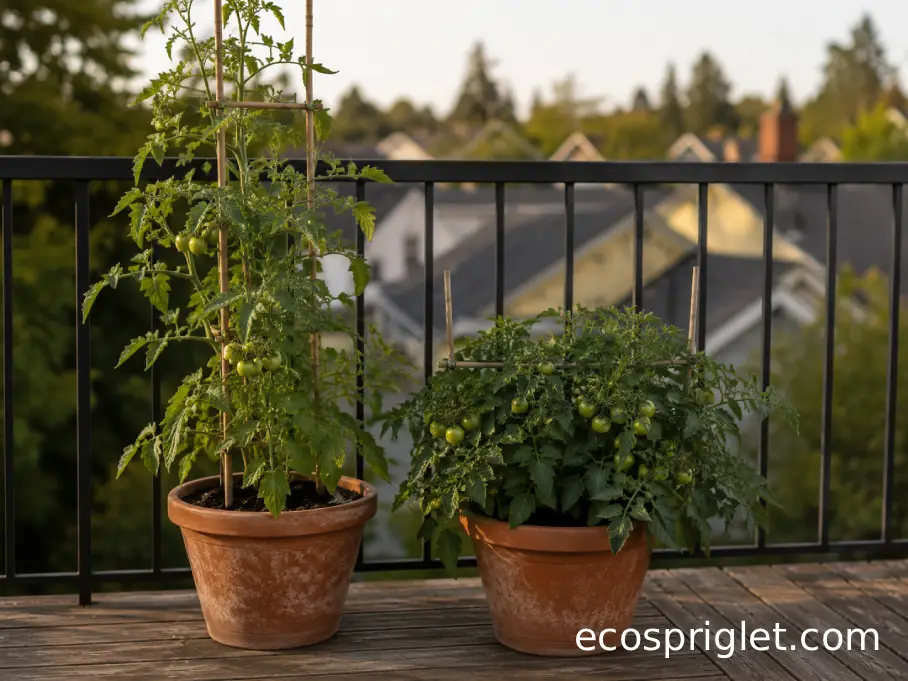
First, Find Out What Kind of Tomato You Have
Before pruning your tomato plants, look at the seed packet, plant tag, or cultivar description for the words determinate or indeterminate. That distinction matters more than plant height alone.
A determinate tomato has a bush-type growth habit. Its stems eventually terminate in flower clusters, and much of its crop develops during a relatively concentrated period. Removing lots of branches from one of these plants can mean removing future flowers and fruit along with them. University of Minnesota Extension advises that bush-type determinate tomatoes generally do not need pruning.
An indeterminate tomato keeps extending its stems, producing new leaves, flowers, and side shoots until cold weather ends the season. These are the lanky plants that can climb several feet beyond a cage if you let them. They are the best candidates for regular sucker removal, particularly when you are training them vertically in a tight space. Oregon State University Extension notes that indeterminate plants can be trained to one or more main stems and inspected every 7 to 10 days for new side shoots.
If the label has vanished, resist the urge to aggressively prune based on appearance alone. Support the plant, remove damaged or ground-touching foliage, and watch its growth pattern. You can always prune a vigorous indeterminate plant later; you cannot put a fruit-bearing branch back after cutting it off.
Learn to Recognize a Tomato Sucker Before Pinching It
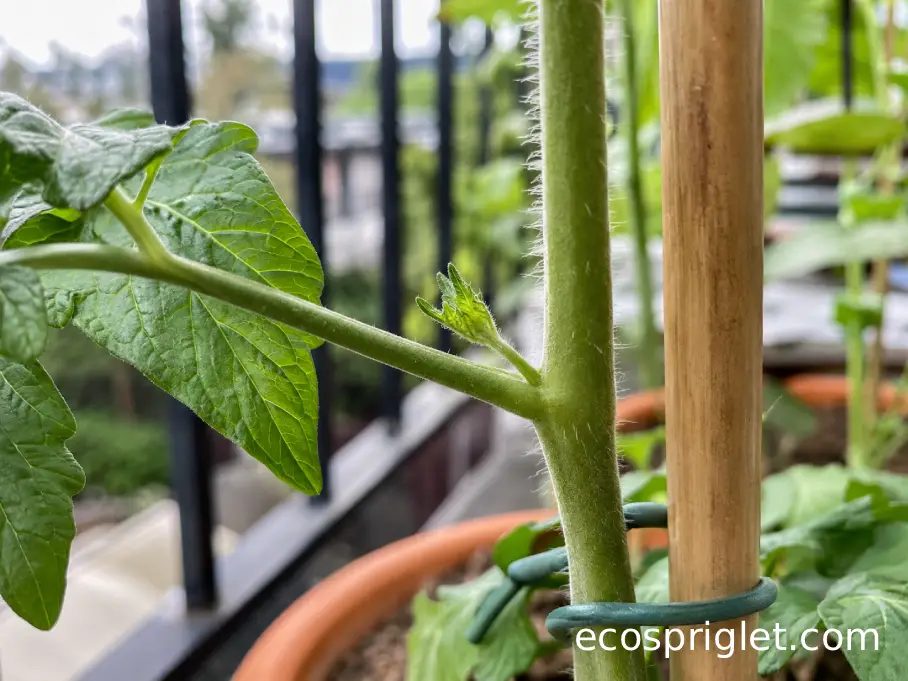
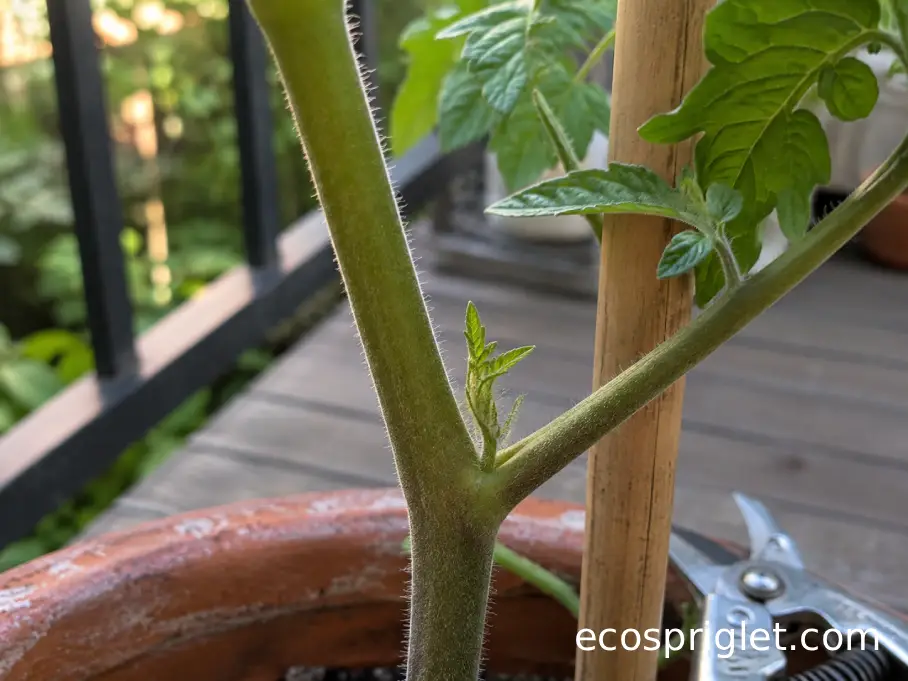
Most pruning confusion disappears once you can identify tomato suckers. Follow the main vertical stem until you reach a full leaf branch. Look into the angle where that leaf branch meets the main stem. A new shoot emerging from that junction is a sucker.
Botanically, that junction is a leaf axil. Given enough time, the small shoot growing from it can become another substantial stem with its own leaves, flowers, fruit, and more suckers. That is why an unpruned indeterminate tomato becomes wide and tangled surprisingly quickly. University of Maryland Extension describes suckers as shoots arising from these axils and recommends removing unwanted ones regularly when training staked plants.
Do not confuse a sucker with a flower cluster. Tomato flowers emerge as a separate cluster of buds rather than as a leafy shoot. Also avoid cutting off the growing tip of your main stem unless you deliberately intend to stop that stem from extending.
On my own container tomatoes, I use a simple three-point check before pinching anything: find the main stem, find the established leaf coming from it, then look for a third leafy shoot beginning between the two. If I cannot clearly identify all three, I leave it alone and check again in a few days.
How to Prune Tomatoes Step by Step
For a vertically trained indeterminate tomato, pruning is easiest when you make small decisions frequently rather than giving the plant a major haircut once a month. University of New Hampshire Extension recommends removing unwanted suckers while they are still small; in its single-leader trellising system, suckers are removed when they are less than about 2 inches long.
Here is the routine I use for a balcony plant:
- Choose your leader. Keep the main growing stem. For a fuller plant, you can also retain a strong sucker just below the first flower cluster and train the tomato with two leaders.
- Trace each leaf back to the main stem. Check its leaf axil for a new sucker.
- Pinch small unwanted suckers. When they are young and flexible, they can usually be snapped cleanly with your fingers rather than cut.
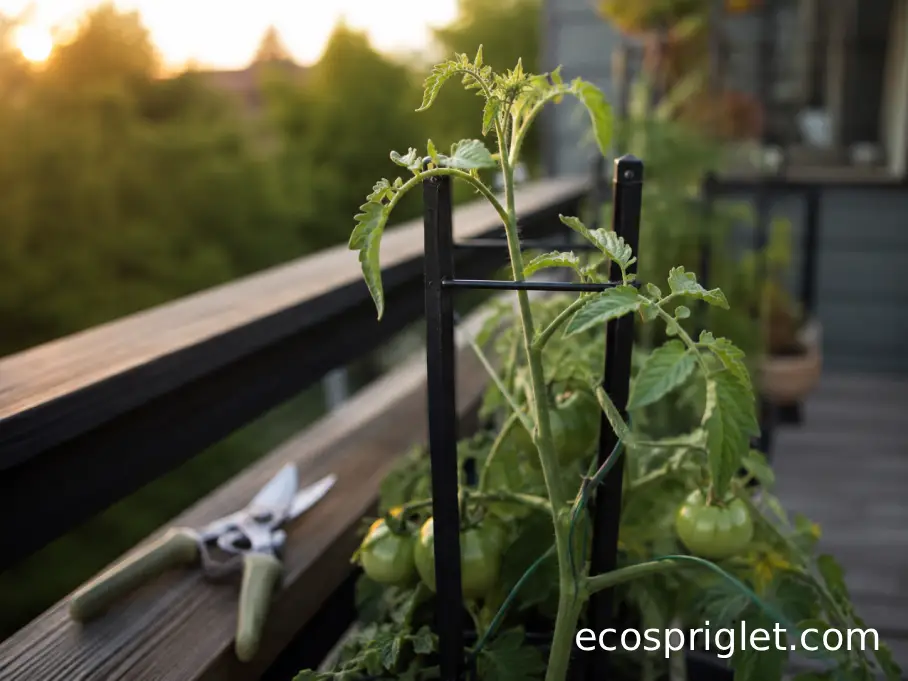
- Use clean pruners on thicker growth. Do not tear a large, woody sucker away from the main stem. Make a controlled cut instead.
- Secure the remaining stem. Loosely tie or clip it to its support so fruit weight does not pull the vine sideways.
I learned the value of frequent pruning from a cherry tomato that I ignored for about two weeks during a warm spell. A thumb-sized sucker had become a substantial second vine wedged through the balcony railing. Removing it would have created a large wound, so I changed plans and supported it as a second leader instead. That is often the better choice with an overlooked sucker: adapt the plant rather than making a dramatic cut simply to restore a textbook shape.
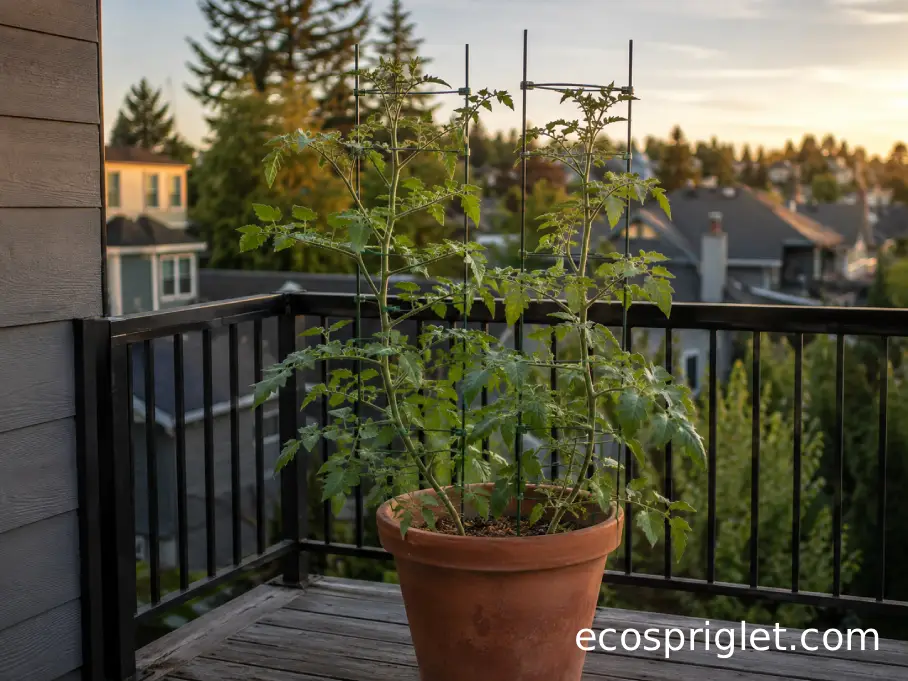
A perfectly pruned tomato plant does not need to be a single bare stem. One or two supported leaders are practical for containers because they keep the canopy narrow while retaining plenty of healthy foliage.
Prune Little and Often During Active Growth
There is no single calendar date for pruning tomatoes. Start once an indeterminate plant is established, actively growing, and producing the side shoots you want to manage. After that, a quick check about once a week is easier on both you and the plant than occasional heavy trimming. Oregon State University Extension suggests checking indeterminate tomatoes every 7 to 10 days and pinching emerging side shoots as part of a staked growing system.
I also avoid pruning wet plants when possible. Moist foliage increases the opportunity for some plant diseases to spread during handling. University of Maryland guidance for tomato production specifically cautions against pruning while plants are wet because of bacterial disease concerns.
For a balcony grower, the easiest routine is to combine pruning with your support check. Once every 7 days or so, rotate the container only if the support system allows it, inspect the main stems, pinch any clearly unwanted small suckers, and loosen ties that have begun pressing into expanding stems.
Five calm minutes each week usually produces a better plant than taking shears to an overgrown tomato and removing a large fraction of its canopy at once.
Clear the Lowest Leaves When Disease and Splash Are Concerns
Sucker removal is only one form of tomato pruning. Lower leaves deserve attention too, especially leaves touching potting mix, resting on a saucer, turning yellow, or showing suspicious spotting.
Many common tomato leaf diseases begin low on the plant. University of Minnesota Extension recommends staking plants and removing lower leaves as part of reducing splash from soil onto foliage and improving airflow around the plant. Its early blight guidance also notes that pruning bottom leaves can reduce the chance of spores splashing onto them.
In containers, I start conservatively. Remove leaves that touch the growing medium first. As the plant becomes established and taller, maintain an open lower zone without stripping the entire plant. If a leaf develops disease-like spots, remove it promptly and sanitize pruning tools after working with affected tissue before moving to healthy plants.
Keep healthy upper foliage unless you have a specific reason to thin it. Leaves manufacture the carbohydrates that support fruit growth, and they shade developing tomatoes from intense sun. An open canopy is useful; a nearly naked tomato plant is not the goal.
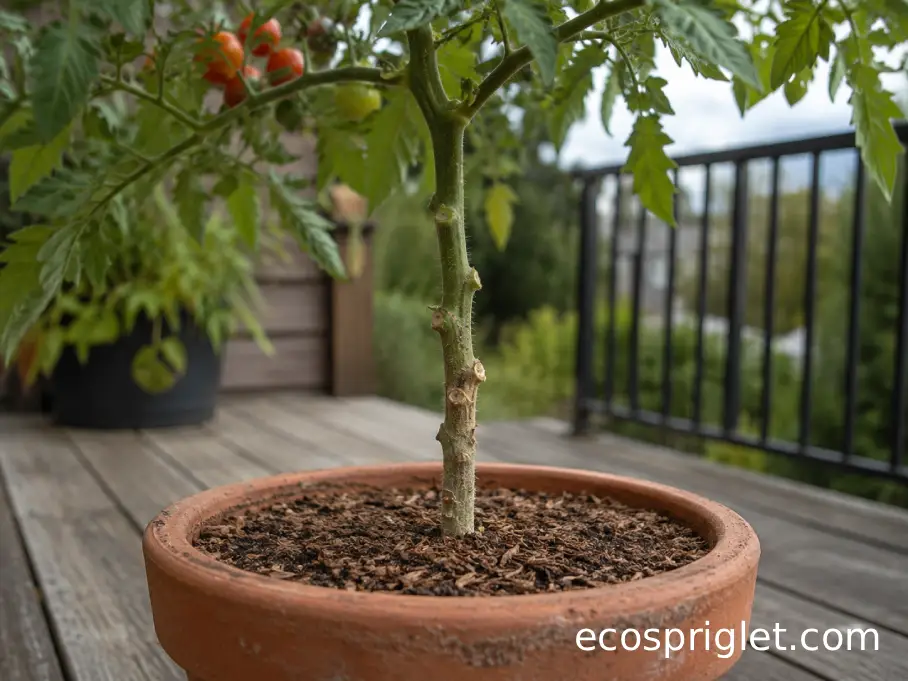
Keep Container Tomatoes Narrow Without Over-Pruning Them
Balcony gardeners have a legitimate reason to prune more deliberately than someone with a wide vegetable bed: space. An indeterminate tomato sprawling across a 4-foot-wide balcony can block a doorway, shade neighboring containers, and turn watering or harvesting into an awkward reach.
Training one or two leaders upward is a useful compromise. It reduces sideways growth without asking the plant to survive on a handful of leaves. It also makes it easier to inspect stems for pests and spot ripening tomatoes tucked inside the canopy.
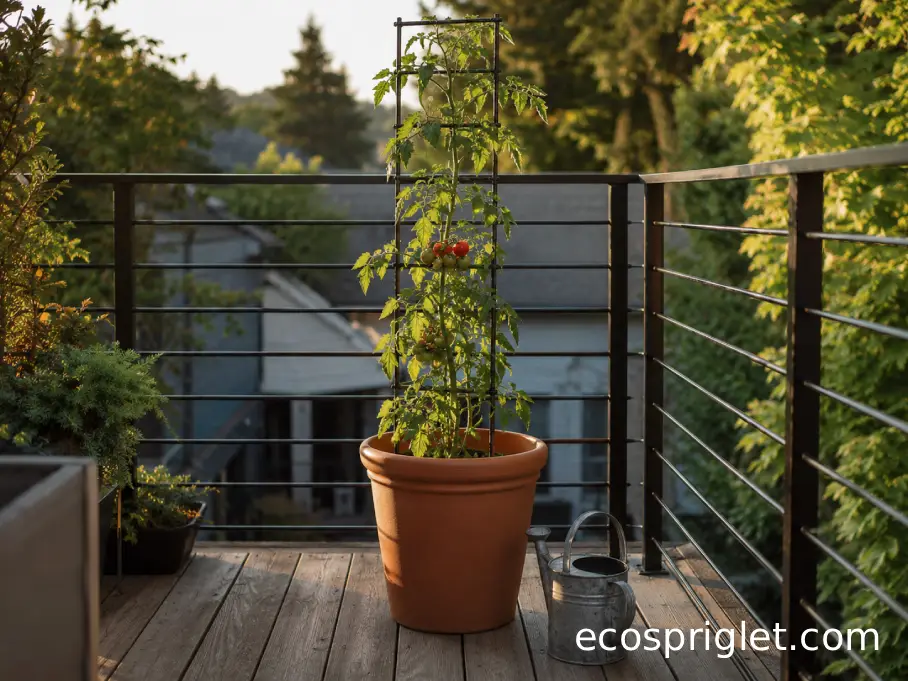
Pruning cannot compensate for an undersized container or weak support, though. Oregon State University Extension recommends at least a 5-gallon container for one tomato and notes that larger containers can support a larger harvest. The same guidance recommends sturdy cages or trellises for tomatoes that need support.
If you are growing on a balcony, pair pruning with these small-space habits:
- Give one tomato its own appropriately sized container rather than crowding several plants together.
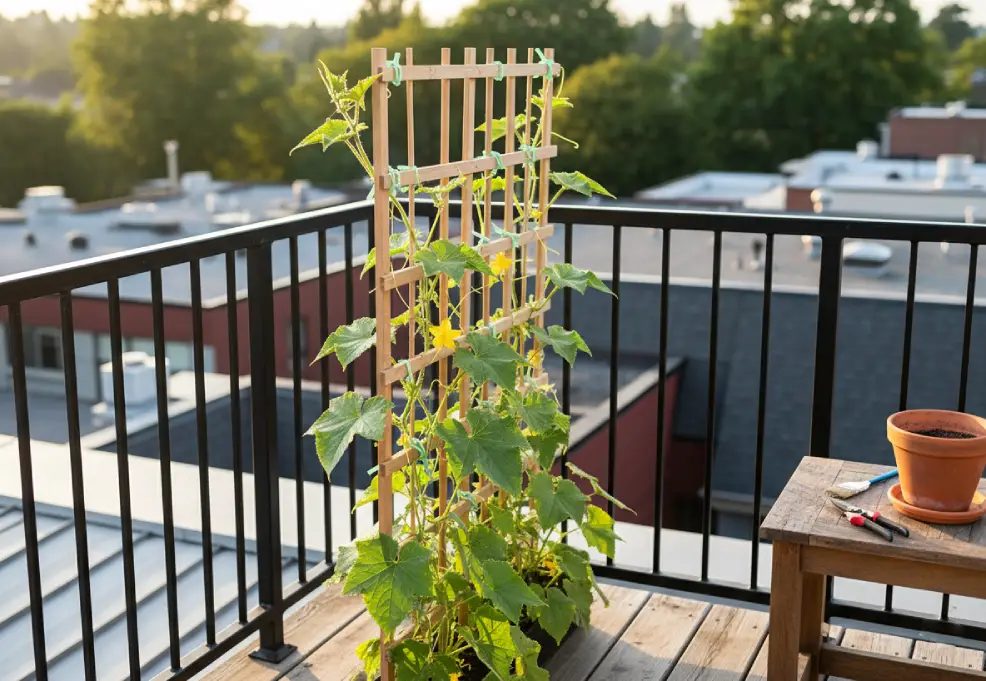
- Train long stems to a stable cage, stake, or freestanding trellis as they grow.
- Keep access to the potting mix clear enough that you can water without soaking the foliage.
- Check your building or lease rules before fastening a trellis or planter to a balcony railing.
For more container-specific setup advice, see our guide to growing tomatoes in pots and how often to water tomato plants.
Common Tomato Pruning Mistakes to Avoid
The biggest pruning mistake is assuming that fewer branches automatically mean more tomatoes. They do not. Removing suckers changes how a tomato allocates growth and can give a staked plant better airflow, larger individual fruit, or earlier ripening under some growing systems, but it can also reduce total fruit numbers. University of New Hampshire Extension explicitly notes that sucker removal can reduce potential yield even while improving airflow, while recent Illinois Extension field guidance says single-leader pruning may reduce overall yield.
- Pruning determinate plants like indeterminate vines: this can remove branches that would have carried a large portion of the crop. Keep pruning light unless you have a specific training reason.
- Removing big suckers by force: once a sucker has become a thick branch, tearing it away can create an unnecessarily large wound. Support it as an extra leader or use clean pruners.
- Stripping leaves around fruit: tomatoes still need a healthy canopy. Excessive leaf removal can expose fruit and reduce the plant’s photosynthetic capacity.
- Cutting without identifying the growing tip: accidentally topping the main leader stops that particular stem from extending.
- Pruning wet or visibly diseased plants and then moving between plants: work on dry plants when practical and clean tools after cutting diseased tissue.
I learned the over-pruning lesson early. A plant can look impressively tidy after a hard trim and still be worse off for it. These days I judge a pruning session by what remains: a supported stem, an airy but leafy canopy, intact flower clusters, and enough foliage to protect and feed the developing crop.
Top the Plant Only When You Have a Reason
Cutting the top from an indeterminate tomato is different from removing suckers. Topping removes the growing point of a leader, so that stem can no longer continue upward in the same way.
During summer, I usually top a balcony tomato only when it has physically reached the limit of its support and allowing more growth would create an unstable tangle. University of New Hampshire Extension similarly describes topping indeterminate tomatoes when they exceed the top of a staking system.
There is also a useful late-season reason to do it. Oregon State University Extension says gardeners can remove the main growing tip about one month before their expected first frost, redirecting the plant away from additional vegetative growth while existing fruit ripens.
That is a different goal from routine summer pruning. In midsummer, preserve enough growing points to maintain production. Near the end of the season, especially in a climate with a predictable frost, continuing to produce fresh flowers may offer little benefit because those late flowers may not have enough time to become ripe tomatoes.
What a Well-Pruned Tomato Should Look Like
Forget the idea that a perfectly pruned tomato plant should resemble a bare vine in a greenhouse photo. For a home container, the practical target is balance.
You should be able to identify one or two main supported stems without digging through a mass of tangled growth. Flower clusters should remain intact. Healthy foliage should still surround and shade developing fruit. Near the bottom, leaves should stay clear of the potting mix, and the center of the plant should be open enough that you can inspect it without snapping branches.
If your plant fits that description, there is no prize for removing another sucker simply because you found one. Pruning is a training tool, not a weekly quota.
The most useful rule I can give a beginner is this: remove growth when you can explain the benefit of that specific cut. Maybe you are keeping an indeterminate tomato to two leaders, clearing a diseased lower leaf, preventing a stem from crowding a doorway, or topping a vine that has reached its support. If your only reason is that tomato plants are supposed to be pruned, leave the branch and think again.
A Simple Pruning Routine for Better Balcony Tomatoes
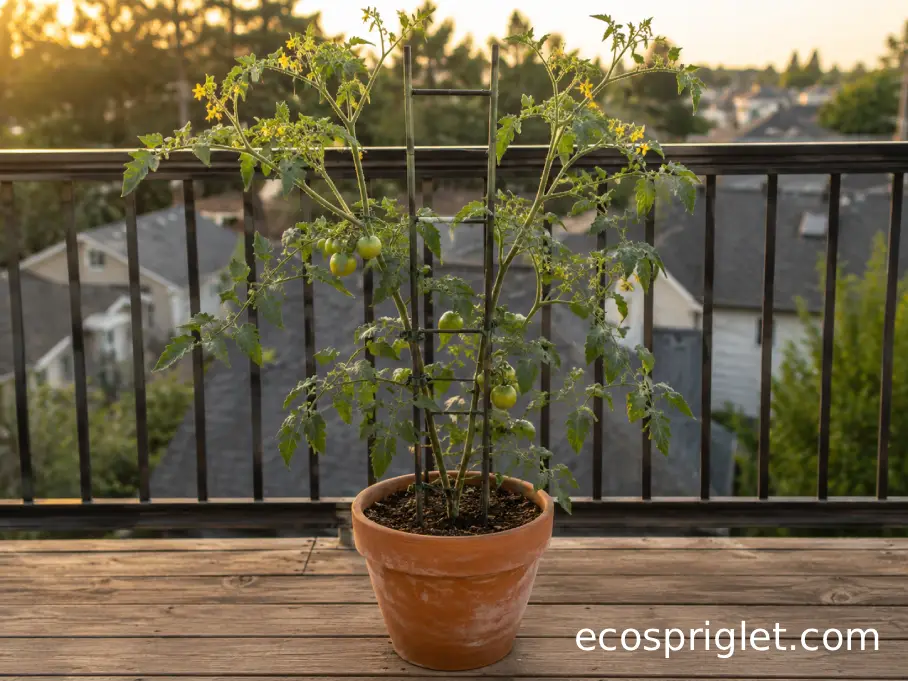
Good tomato pruning is surprisingly restrained. Identify the growth habit first. Leave determinate plants largely alone aside from sensible lower-leaf or disease cleanup. For an indeterminate plant, choose one or two supported leaders, inspect it roughly every 7 to 10 days, and remove unwanted suckers while they are still small. Keep foliage away from the growing medium, but preserve a healthy canopy around developing fruit.
Most importantly, do not chase maximum yield by cutting more. Pruning can make an indeterminate tomato easier to support, improve airflow, and encourage earlier or larger individual fruit under some systems, but every sucker has the potential to become a fruiting branch. Your job is to balance production with the amount of plant your balcony and support can realistically handle.
That is the approach I use in a small space: prune for a reason, make small cuts, and keep enough healthy green growth to power the crop. Once you can recognize a sucker at a glance, the whole job becomes a five-minute maintenance task rather than a stressful encounter with pruning shears.