Tomatoes are dramatic plants. Let the soil dry too far, and the leaves droop by lunch. Keep the pot soggy, and the roots sulk before you notice anything above the soil. For apartment and balcony gardeners, the real question is not just how often to water tomato plants, but how to read the pot, the weather, and the plant before reaching for the watering can.
Here is the practical answer: in the ground, tomatoes often do well with about 1 inch of water per week. In containers, that schedule changes fast. A tomato in a sunny 5-gallon bucket may need water every day during hot, windy weather, while a larger self-watering planter may go longer. Seedlings need a gentler routine: moist, never soggy soil.
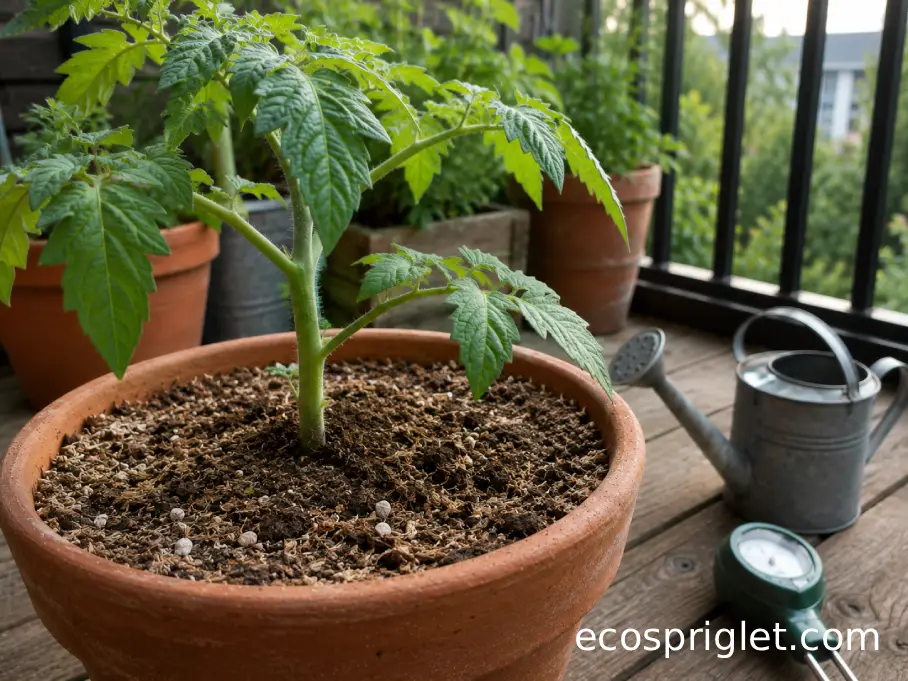
The best habit is simple. Check the top 1 to 2 inches of potting mix each morning. If it feels dry at that depth, water slowly at the base until excess water drains out. That one check will save more tomato plants than any fixed calendar.
The Simple Watering Rule That Actually Works
The most reliable watering rule for tomatoes is this: water when the top 1 to 2 inches of soil feel dry, then water deeply enough that the whole root zone is moistened. For in-ground tomatoes, University of Minnesota Extension lists 1 inch of rainfall or irrigation per week as a useful baseline and recommends soaking the soil thoroughly rather than giving light surface splashes. It also notes that inconsistent moisture can contribute to blossom-end rot during fruit development.
Containers need a more hands-on version of that rule because pots dry from every side: top, bottom, sun-facing wall, and sometimes wind-exposed railing edge. On my own Portland balcony, two tomato plants in identical pots can behave differently if one sits closer to the black metal railing. The warmer pot dries faster, even though both plants get the same sun.
| Tomato Stage | How Often to Check | Watering Trigger |
|---|---|---|
| Seedlings | Once daily | Surface begins to lighten, but mix is still slightly moist below |
| New Transplants | Every morning for 7 to 10 days | Top inch starts drying or leaves soften before evening |
| Established Potted Tomatoes | Every morning, twice daily in heat | Top 1 to 2 inches are dry |
| Fruiting Container Tomatoes | Daily in warm weather | Pot feels light, soil is dry below the surface, or leaves wilt slightly |
If you remember only one thing, skip the calendar and trust the soil check. Tomatoes like consistency, not guesswork.
How Often to Water Tomatoes in Pots, Containers, and Grow Bags
For potted tomatoes, expect to check water daily once the plant is growing strongly. In mild spring weather, you may water every 2 to 3 days. In summer heat, especially above 85°F, many container tomatoes need water every morning. On very hot, windy balconies, a second late-afternoon check is sensible.
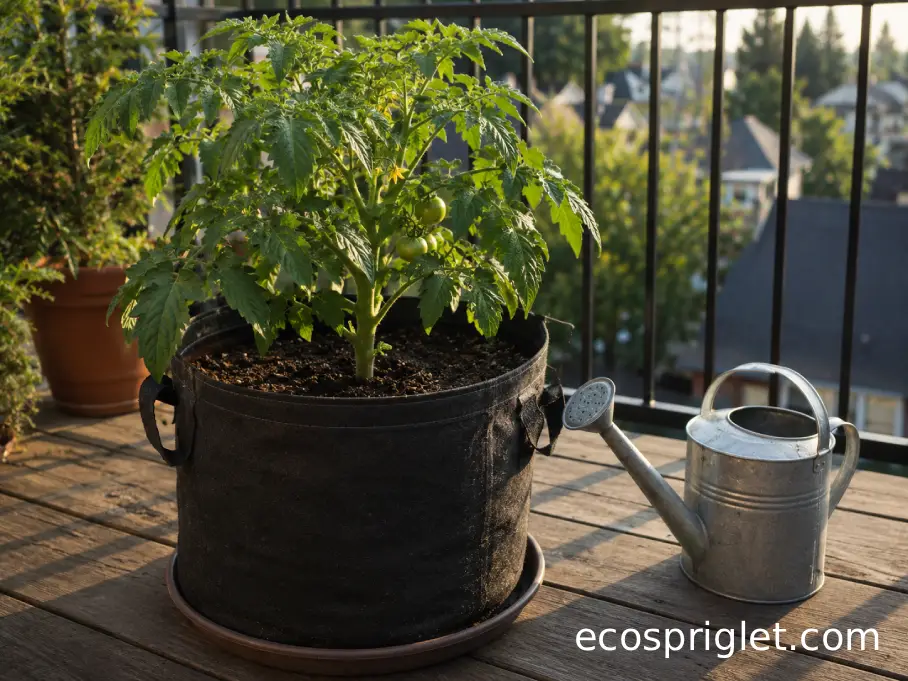
The pot size makes a huge difference. University of New Hampshire Extension notes that large 4- to 5-gallon containers are usually sufficient for individual tomato plants, while University of Maryland Extension gives a more generous 8- to 10-gallon minimum for large vegetables such as tomatoes. For balcony growers, I treat 5 gallons as the workable minimum for compact or determinate tomatoes and 8 to 10 gallons as the easier, more forgiving choice for full-size plants.
- Use at least a 5-gallon container for compact tomatoes; go larger if space and balcony weight limits allow.
- Expect fabric grow bags and terracotta pots to dry faster than plastic or resin containers.
- Water slowly until liquid drains from the bottom, then empty saucers after 20 to 30 minutes if water remains.
- Group containers together to slow evaporation, but leave enough airflow around leaves to reduce disease pressure.
Maryland Extension also warns that all containers need adequate drainage and that adding rocks, gravel, or broken pot shards to the bottom does not improve drainage. It can actually raise the perched water table and leave roots sitting too wet. That is one of those old tips I still hear from neighbors, and it is worth retiring.
Watering Seedlings and New Tomato Plants
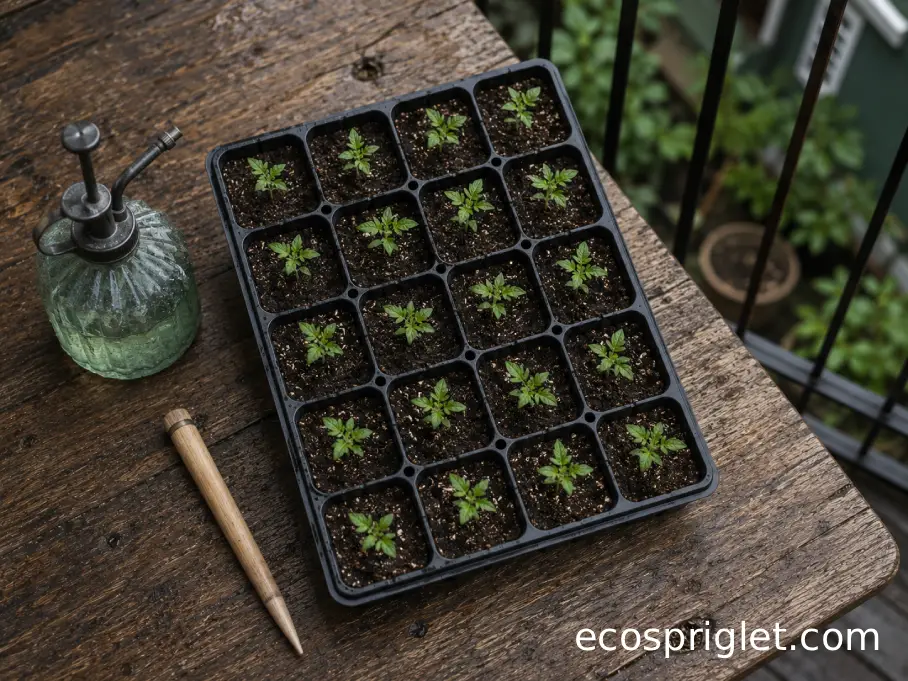
Tomato seedlings need more frequent attention than mature plants, but less water at one time. The goal is evenly moist mix, not a wet tray. University of Minnesota Extension recommends using a well-drained potting mix, keeping seedlings moist but not soggy, using containers with drainage holes, and watering young seedlings with clean warm water around 68°F to 77°F.
For indoor seedlings, check once a day. If the surface is still dark and damp, wait. If it looks pale and dry but the tray still feels slightly moist below, mist or bottom-water lightly. Bottom-watering works well in apartments because it reduces splashing and helps roots grow downward. Set the tray in about 1/4 inch of water for 10 to 15 minutes, then remove it before the cells become saturated.
New tomato transplants are different. Water them well before planting, then water again after they go into the container. Minnesota Extension recommends watering tomato plants well before transplanting and watering transplants after firming soil around the roots.
For the first 7 to 10 days after transplanting, check every morning. The root ball can dry out faster than the surrounding potting mix, especially if it came from a small nursery cell. If the plant wilts hard in the afternoon but perks up after sunset, it may be adjusting. If it stays limp in the morning, check the soil immediately.
What Changes the Schedule: Heat, Wind, Pot Size, and Fruit
There is no single perfect answer to how often to water tomatoes because your balcony creates its own tiny climate. A south-facing railing, reflective wall, or dark deck surface can push a pot into “hot summer” conditions even when the weather app looks mild.
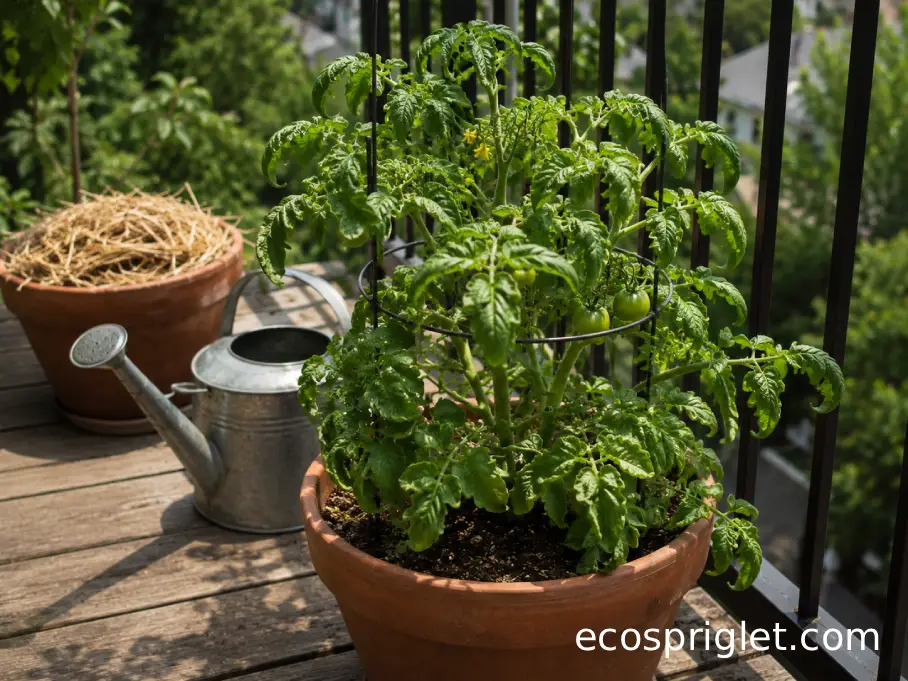
Four factors matter most. Heat increases evaporation. Wind pulls moisture from leaves and potting mix. Small containers dry quickly because they hold less soil volume. Fruiting plants drink more steadily because they are supporting leaves, flowers, and developing tomatoes at the same time.
University of Georgia Extension advises keeping soil evenly moist and watering deeply rather than applying little splashes. It also notes that during hot summers, tomatoes may need watering two to three times a week in garden soil, while containers and well-drained raised beds can dry differently.
- If temperatures reach 85°F to 90°F, check container tomatoes every morning.
- If the pot is under 5 gallons, expect faster drying and more stress during fruiting.
- If wind hits the balcony directly, check again in late afternoon.
- If leaves wilt before noon and the soil is dry 2 inches down, water more deeply or move the pot into light afternoon shade.
- If the soil is still wet and leaves are yellowing, pause watering and improve drainage.
I like to lift one side of the pot slightly after watering so I learn its “full” weight. A thirsty tomato pot feels surprisingly light, and that weight check becomes faster than poking every container with a finger.
How to Water Deeply Without Making a Balcony Mess
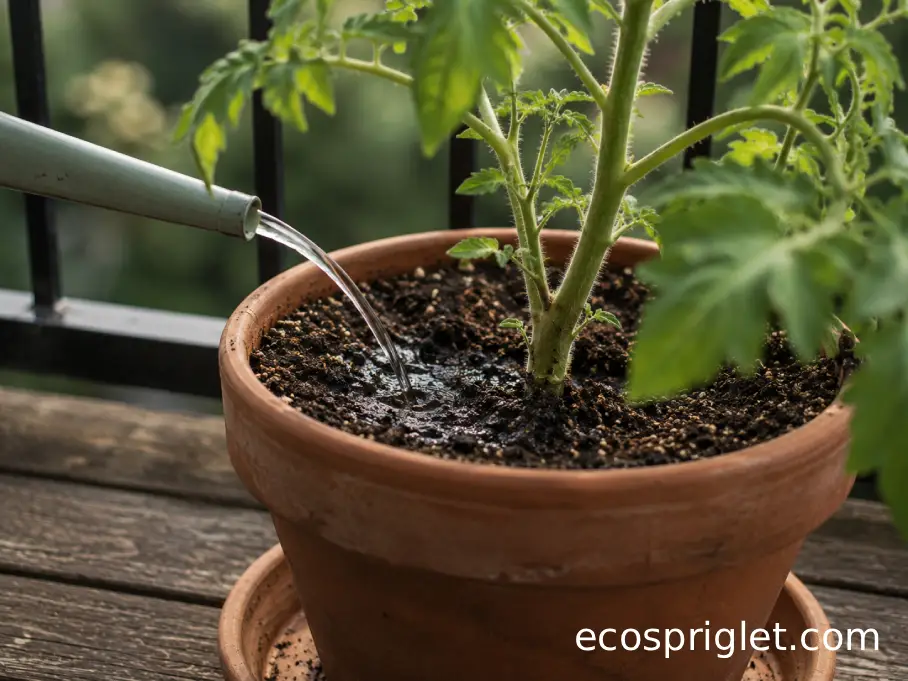
Deep watering sounds messy when you garden over a neighbor’s balcony, but it does not have to be. The trick is to water slowly in two passes. Pour a little water at the base, pause for 30 to 60 seconds, then water again until you see the first steady drips from the drainage holes. That pause lets dry potting mix absorb water instead of sending it straight down the sides of the pot.
Water at soil level, not over the leaves. Minnesota Extension recommends avoiding overhead sprinkling because wet tomato leaves are more disease-prone and splashed soil can carry disease spores. Georgia Extension gives the same practical advice: keep foliage dry by watering at the base or using drip irrigation.
Apartment gardeners also have to think about floors, stains, and runoff. Maryland Extension notes that saucers can help protect decks and balconies, but they should be emptied regularly so collected water does not encourage root rot or mosquitoes. It also points out that a 20-inch container filled with moist potting mix and plants can weigh about 100 pounds, so balcony load limits and pot placement matter.
For a cleaner setup, place tomatoes on pot feet, a plant caddy with a tray, or a sturdy saucer you can easily empty. If your building has strict balcony rules, a self-watering container may be worth the upgrade.
Self-Watering Containers Can Help, but They Still Need Checking
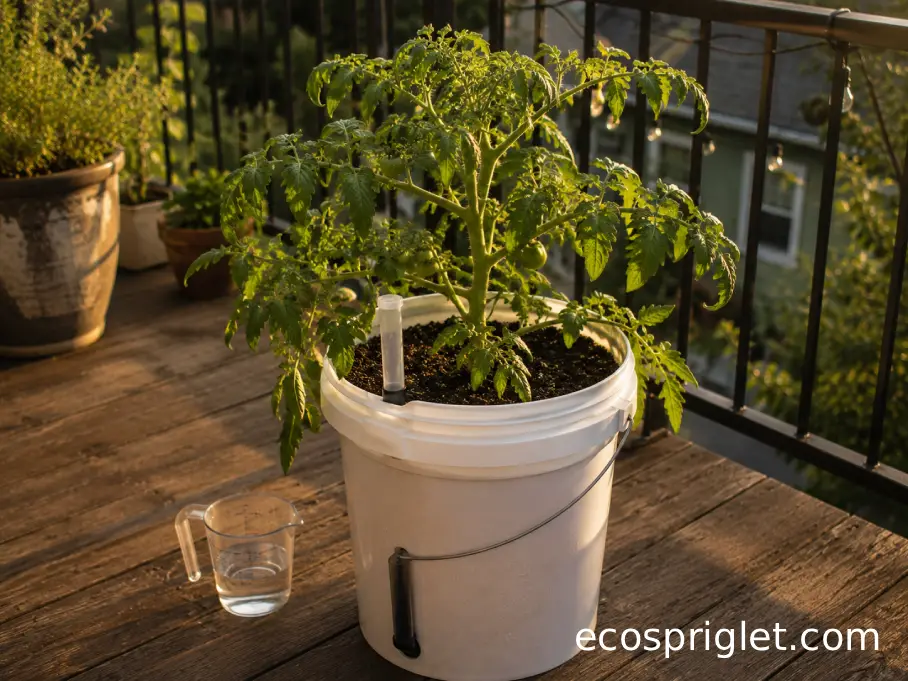
Self-watering planters are useful for container tomatoes because they even out moisture swings. They are not magic, though. The reservoir still has to be filled, and in hot weather a thirsty tomato can empty it quickly.
University of Maryland Extension describes self-watering containers as planters with a water reservoir below the growing medium, where moisture is wicked upward. Its 5-gallon bucket garden example notes that in full sun during July and August, the bucket may need water every day, often 1 to 2 quarts to refill the reservoir.
That lines up with what I see on balconies. A self-watering planter buys you steadier moisture and less runoff, not a week of neglect in a heat wave. I still check the reservoir daily when fruit is forming.
- Use the overflow hole as your safety check; never seal it shut.
- Top-water lightly for the first week after transplanting until roots reach the moist lower zone.
- Flush the pot from the top occasionally if fertilizer salts build up on the surface.
- Do not let the reservoir stay dry for days, then refill suddenly and expect stressed fruit to recover instantly.
A self-watering system is especially helpful for renters because it reduces deck staining and neighbor-drip problems.
Signs Your Tomato Needs More or Less Water
A thirsty tomato usually tells you, but the signs can be confusing because overwatering and underwatering both cause stress. Always check the soil before you react to the leaves.
If the soil is dry 2 inches down and the plant is wilting, water deeply. If the soil is wet and the leaves are yellowing from the bottom, wait and let the pot breathe. If the plant wilts only during the hottest part of the afternoon but looks normal by evening, that may be temporary heat stress rather than a true water shortage.
| What You See | Likely Cause | What to Do |
|---|---|---|
| Leaves droop, soil dry, pot feels light | Underwatering | Water slowly at the base until drainage begins |
| Yellow lower leaves, wet soil, sour smell | Too much water or poor drainage | Pause watering, empty saucers, check drainage holes |
| Fruit has dark sunken bottoms | Moisture swings linked to blossom-end rot | Keep moisture steadier and avoid drying-rewetting cycles |
| Leaves curl upward in hot afternoon | Heat, wind, or water stress | Check soil depth before watering; add mulch or afternoon shade if needed |
Blossom-end rot is often blamed on a lack of calcium, but Georgia Extension explains that water management is key because calcium movement into fruit depends on consistent moisture. Before adding products, stabilize your watering routine first.
Common Mistakes to Avoid
I learned the overwatering lesson the hard way with one of my first balcony tomatoes. I was so worried the plant would dry out in July that I watered every morning without checking the pot. The leaves yellowed, the mix smelled stale, and the plant never really bounced back. More attention would have helped; more water did not.
- Watering by habit instead of checking soil: Stick your finger 1 to 2 inches into the mix before watering.
- Giving tiny daily splashes: Water deeply enough to reach the root zone, not just darken the surface.
- Leaving saucers full: Empty standing water after 20 to 30 minutes unless the plant quickly absorbs it.
- Using garden soil in pots: Choose a container potting mix so roots get both moisture and air.
- Adding gravel to the bottom: Use drainage holes and pot feet instead; gravel does not fix poor drainage.
Another beginner mistake is treating all tomato plants the same. A compact patio tomato in an 8-gallon self-watering planter is easier to keep steady than a full-size tomato in a small black nursery pot. When a plant struggles, check the container first. Often the watering problem is really a pot-size problem.
If you are still setting up your first small-space crop, our container gardening guide can help you choose containers, supports, and practical layouts before watering becomes a daily puzzle.
A Small-Space Tomato Watering Routine You Can Trust
A good tomato watering routine should take less than five minutes per plant. Start in the morning. Touch the soil, lift the pot slightly if you can do so safely, and look at the lower leaves. If the top 1 to 2 inches are dry, water at the base in two slow passes. If the soil is still moist, skip it and check again the next morning.
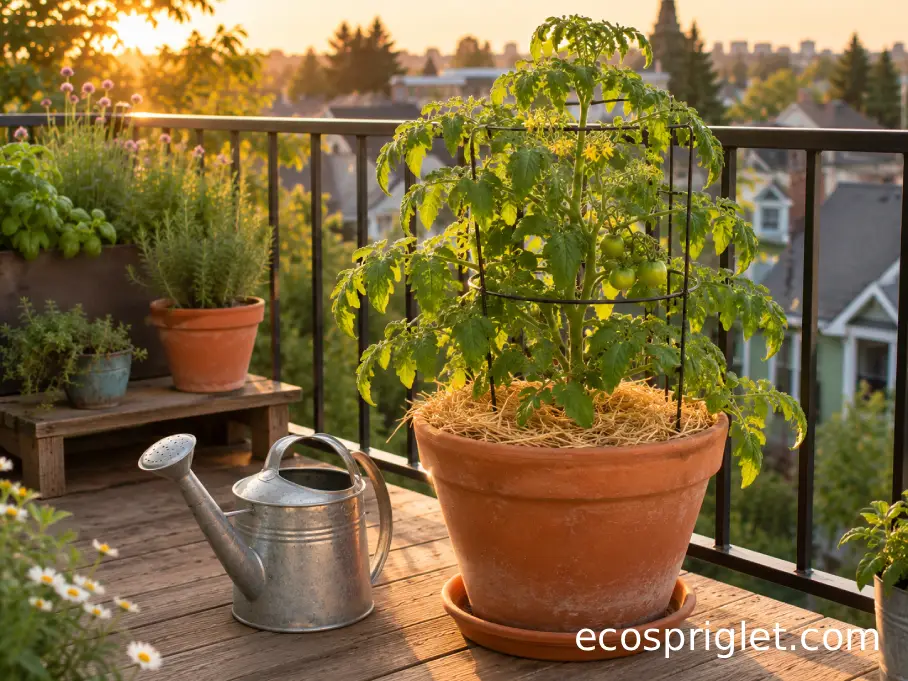
Add a 1- to 2-inch layer of clean straw, shredded leaves, or fine bark mulch once the soil has warmed. Keep mulch about 1 inch away from the stem. Mulch reduces evaporation, cushions the soil from splashing, and helps the pot stay more even between waterings. Georgia Extension also recommends mulch for reducing water lost to evaporation and keeping soil temperatures cooler.
For most balcony tomato growers, this rhythm works well:
- Spring after transplanting: check daily, water when the top inch dries.
- Early summer growth: check each morning, water every 1 to 3 days depending on pot size and weather.
- Hot fruiting season: check every morning and again late afternoon during heat or wind.
- Cool or rainy stretches: pause watering until the potting mix actually dries near the surface.
That routine answers the practical question of how often to water tomatoes in pots without pretending every balcony behaves the same. The plant, the pot, and your finger in the soil make the final call.
Conclusion: Let the Soil Set the Schedule
The best tomato watering schedule is steady, observant, and flexible. In garden soil, tomatoes often use about 1 inch of water per week. In containers, especially on sunny balconies, they may need water much more often. A small pot in hot wind can dry in a day; a larger self-watering planter may stay evenly moist longer. Seedlings need the gentlest care of all: moist mix, good drainage, and no soggy trays.
So, how often do you need to water a tomato plant? Check it every morning, water when the top 1 to 2 inches of soil are dry, and soak the pot slowly enough that moisture reaches the roots. Keep leaves dry, avoid standing water, and use a container that gives the roots enough room.
Once you build that habit, tomatoes become much less mysterious. You will start noticing the weight of the pot, the look of the leaves, and the way heat changes the day’s routine.