A grape vine in a pot can become a handsome small-space fruit plant rather than an unruly mass of stems. The key is to treat it as a permanent woody vine, not a temporary patio annual. Give it a generous container, strong support, direct sun, and a simple pruning routine, and one vine can provide shade, attractive foliage, and eventually homegrown grapes.
Container growing does involve tradeoffs. A potted vine dries faster than one planted in the ground, its roots are more exposed to winter cold, and its size must be controlled every year. Fruit production also depends on climate. Grapes need enough summer warmth and sunlight to ripen, so a bright south- or west-facing balcony usually performs better than a shaded courtyard.
Patience matters, too. Oregon State University Extension notes that grapevines generally require several years to produce a meaningful harvest. Your first goal should be a healthy root system and one straight trunk, not a bowlful of fruit during the first summer.
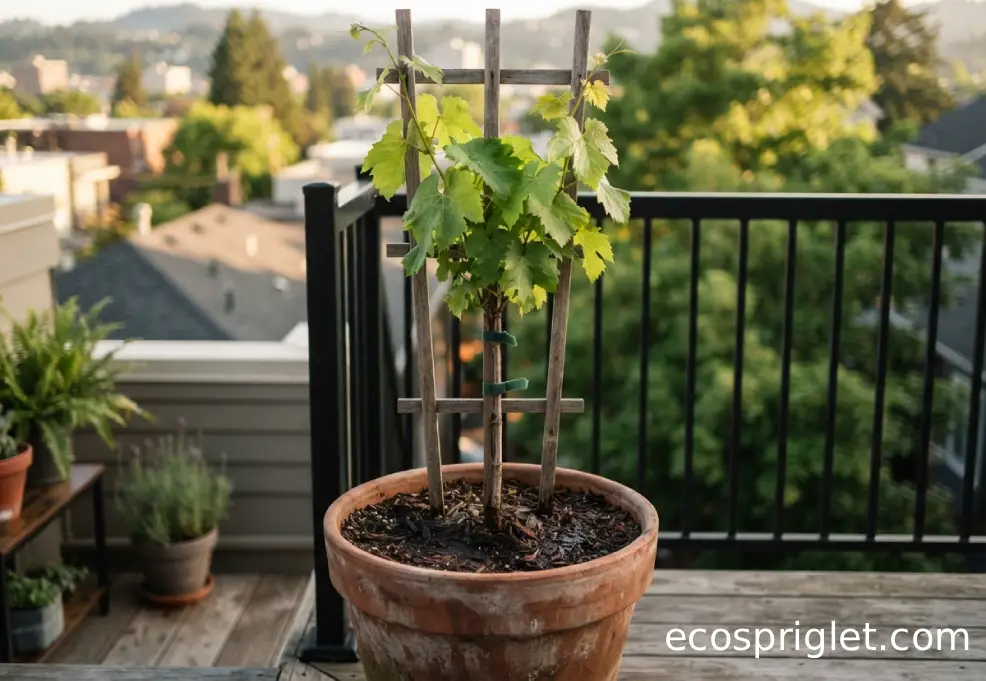
What Success Looks Like in a Container
A container does not turn a grapevine into a naturally dwarf plant. The roots are restricted, but the shoots can still grow several feet in a season. Success comes from directing that energy into a compact framework: one trunk, one or two short horizontal arms, and a limited number of fruiting shoots.
Start with one locally suitable table-grape cultivar from a reputable nursery. Ask whether it ripens reliably in your region, tolerates local winter temperatures, and has useful disease resistance. One vine is usually enough because grapes are self-fertile, although insects and moving air help distribute pollen among the flowers.
Manage expectations during establishment. Remove flower clusters in the planting year so the vine can build roots and a trunk. A few clusters may be reasonable once the framework is strong, but a young container vine should not carry every bunch it produces. Too much fruit delays ripening and weakens growth.
The best balcony position receives at least 6 hours of direct sun, with 8 hours preferable in cooler climates. Full sunlight is important for sweet, properly ripened table grapes, while early morning sun helps foliage dry after rain or dew. A site with fewer than 5 or 6 hours may produce decorative leaves but unreliable fruit.
Choose the Pot, Vine, and Sunniest Position
The Royal Horticultural Society lists 12 inches wide and deep as a workable minimum for a compact container-trained grapevine. For a long-term balcony plant, I prefer an 18- to 20-inch container with similar depth. The extra mix holds moisture longer, gives the roots more insulation, and creates a wider base for the trellis.
- Choose a container at least 18 inches wide for easier long-term care. A smaller 12- to 15-inch pot can work initially, but expect faster drying and earlier repotting.
- Use a pot with several open drainage holes. Raise it about 1 inch on pot feet so water can escape instead of collecting beneath the base.
- Select a soil-based or loam-based container mix rather than dense garden soil. Garden soil can compact in a pot and restrict both drainage and oxygen.
- Favor a broad, heavy container in windy locations. Lightweight pots may need a low, stable plant caddy rather than loose bricks or a tall decorative stand.
- Confirm your balcony’s load rules before installing the filled pot. Wet mix, the container, trellis, and mature vine create a substantial concentrated load.
Position the pot before filling it because the finished setup may be difficult to move. Leave at least 12 inches between the foliage and a solid wall where possible. That small gap improves airflow and gives you space to tie, inspect, and prune the shoots.
Do not depend on gravel in the bottom to correct poor drainage. What matters is an open drain hole and a suitable container mix. Use a saucer where runoff could disturb a downstairs neighbor, but empty it after watering so the root ball does not remain in standing water. Oregon State University Extension recommends watering thoroughly and clearing excess water from saucers.
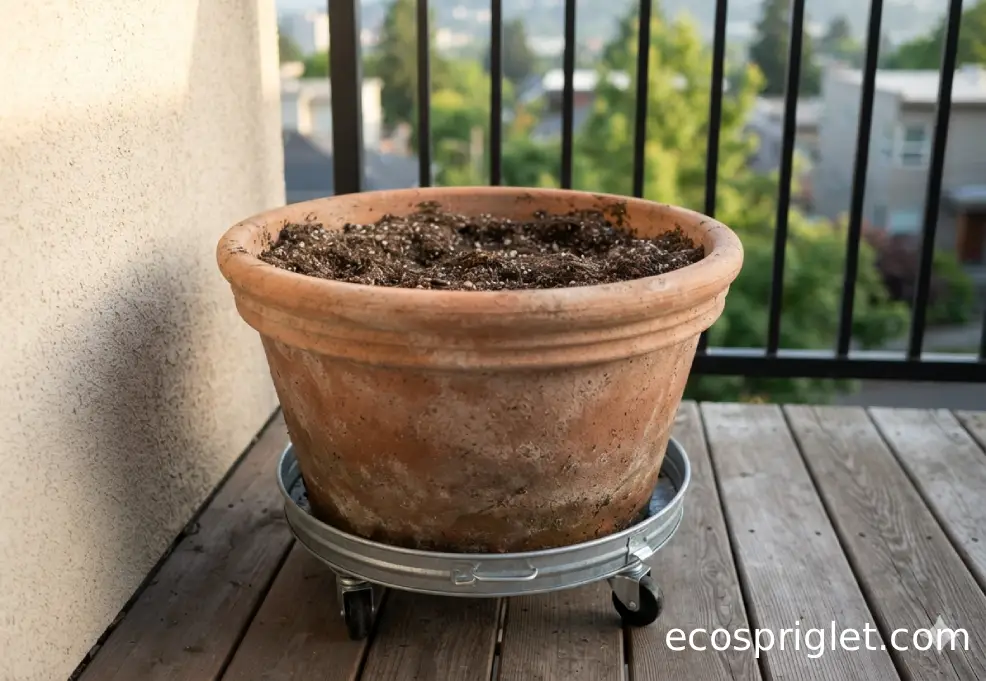
Plant and Support the Vine Correctly
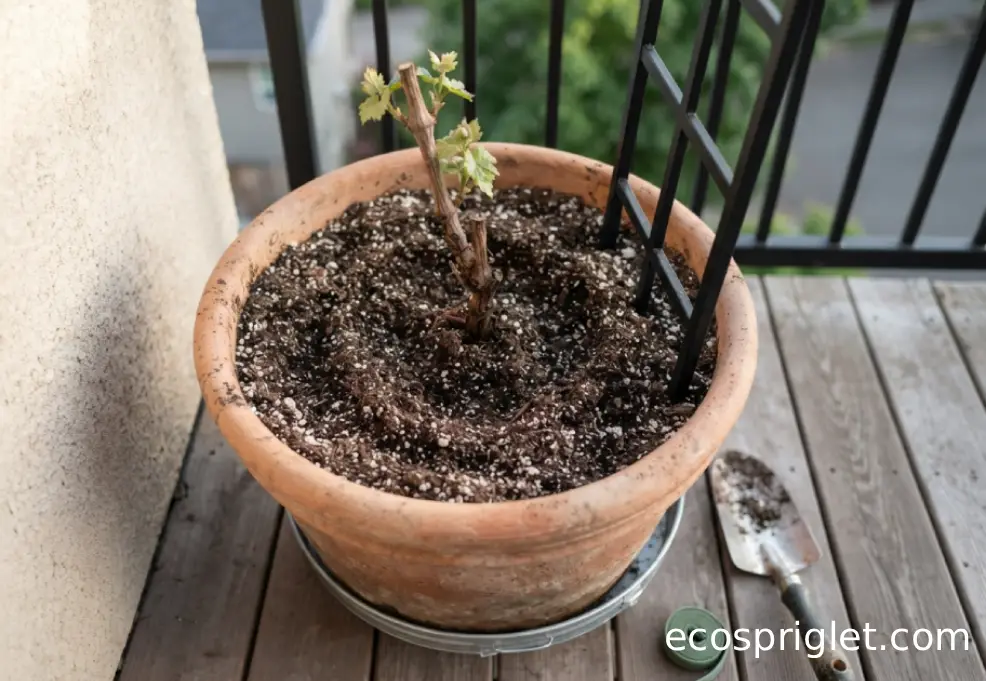
I learned the value of installing the support first after trying to push an obelisk into a well-rooted patio vine. I damaged roots, loosened the trunk, and still ended up with a crooked frame. A grape support should be in place before planting or mounted independently behind the container.
For a small balcony, use a rigid trellis about 5 to 6 feet tall, or run two horizontal wires across an approved wall-mounted frame. Do not tie a heavy vine to a railing, fire escape, drainpipe, or shared building fixture without permission. The mature framework must remain stable during wind and while carrying wet foliage and fruit.
- Moisten the container mix before planting so dry material does not pull water away from the root ball.
- Remove the nursery pot and loosen only circling outer roots. Set the vine at the same depth it grew in its original container.
- Keep about 1 inch of empty space below the pot rim so water can soak in instead of spilling immediately over the edge.
- Water slowly until excess emerges from the drainage holes, then add mix if settling exposes the upper roots.
- Select the strongest upright shoot as the future trunk and attach it loosely to the support every 8 to 12 inches.
Use flexible plant tape or soft reusable ties rather than wire. Check each tie monthly during active growth; a rapidly thickening stem can be girdled by a tie that looked loose in spring. Oregon State University Extension similarly recommends flexible tie material for training grape canes.
During the first summer, remove competing shoots near the base while they are still short. Keep healthy leaves on the selected trunk, but remove flower clusters. This concentrates the plant’s limited container resources on root and framework development.
For more ways to secure tall plants without drilling into shared structures, see our balcony trellis guide.
Water, Feed, and Mulch for Steady Growth
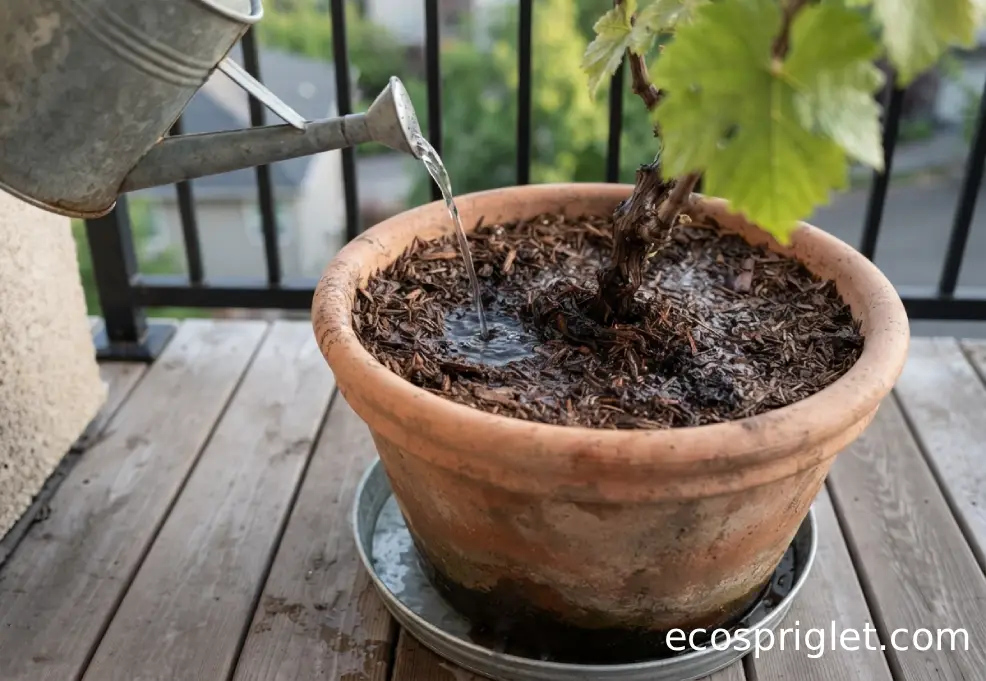
Water according to the mix, not a fixed calendar. Push a finger 1 to 2 inches into the pot. When that layer feels dry, water slowly until liquid runs from the bottom. Oregon State University Extension uses the same 1- to 2-inch dryness cue for container plants.
A large vine may need water every day during a hot, windy spell, yet go several days between waterings in mild spring weather. Check the pot each morning when temperatures are high. Wilted shoot tips, curled leaves, and mix pulling away from the pot wall mean you have waited too long. Rehydrate dry mix in two passes about 10 minutes apart so the first application can begin moistening the root ball.
Water the mix rather than showering the foliage. Keeping leaves and developing clusters drier helps reduce disease pressure, particularly where balconies have poor airflow. Never leave the pot permanently submerged in a full saucer.
Grapes need less fertilizer than their vigorous appearance suggests. Oregon State University Extension cautions that overfeeding causes more problems than underfeeding. Apply a balanced slow-release container fertilizer at the label rate around bud break, keeping granules away from the trunk. If growth remains pale and weak, a half-strength liquid feed every 3 to 4 weeks during spring and early summer is safer than one heavy dose. Stop routine feeding by late summer so new stems can mature before winter.
Dark green leaves, very long gaps between leaves, few flowers, and shoots racing beyond the trellis usually point to excess nitrogen. Skip the next feeding and shorten soft side growth rather than adding a bloom booster.
A 1-inch surface layer of fine bark can slow evaporation, but leave a 2-inch bare circle around the trunk. Thick, wet mulch packed against woody stems encourages lingering moisture and makes it harder to judge when the pot needs water.
Train and Prune a Compact Fruiting Framework
Pruning is what keeps grape vines in pots productive and physically manageable. Fruit appears on new shoots, but those shoots arise from buds retained on the previous season’s canes. Remove all last year’s growth and you remove the crop; retain everything and the vine becomes crowded, shaded, and difficult to ripen.
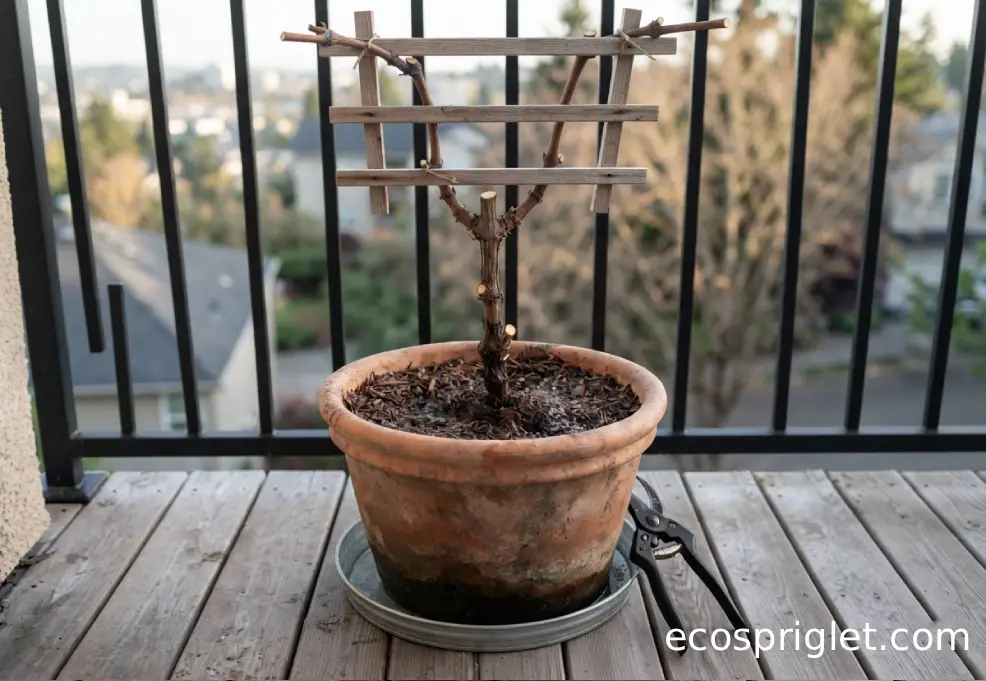
During the first year, develop one vertical trunk. Once it reaches the desired height, usually 4 to 5 feet on a balcony, allow two well-positioned shoots near the top to become short arms. Tie one left and one right. Keep the overall spread within the width of your approved trellis rather than sending stems across neighboring spaces.
During summer, guide new shoots upward or outward before they tangle. Tie them every 12 to 18 inches and pinch excessively long side shoots after several healthy leaves. Remove weak shoots growing inward through the canopy. You should still be able to see small openings between leaves when viewing the vine from the front.
Do the structural pruning while the vine is dormant, generally in late winter before leaves appear. Keep healthy, well-ripened, pencil-thick wood near the main framework and remove thin, damaged, badly placed, or tangled canes. Mature grapevines commonly lose most of the previous season’s growth during dormant pruning; University of Maryland Extension notes that roughly 90 percent may be removed from established vines.
That percentage should not become a rigid formula for a young potted vine. In the first two winters, prioritize a strong trunk and two arms. Once the plant is established, keep a small number of short fruiting canes or spurs appropriate to the cultivar. The nursery or your local Extension service can tell you whether the particular grape responds better to cane pruning or spur pruning.
Clean pruners before use and disinfect them before moving from a diseased plant to a healthy one. Remove shriveled fruit, fallen leaves, and pruned material from around the pot rather than leaving debris beneath the vine.
Troubleshoot Problems Before They Spread
A grapevine often signals trouble before it seriously declines. The useful skill is separating an isolated old leaf from a pattern affecting new growth, several canes, or developing fruit.
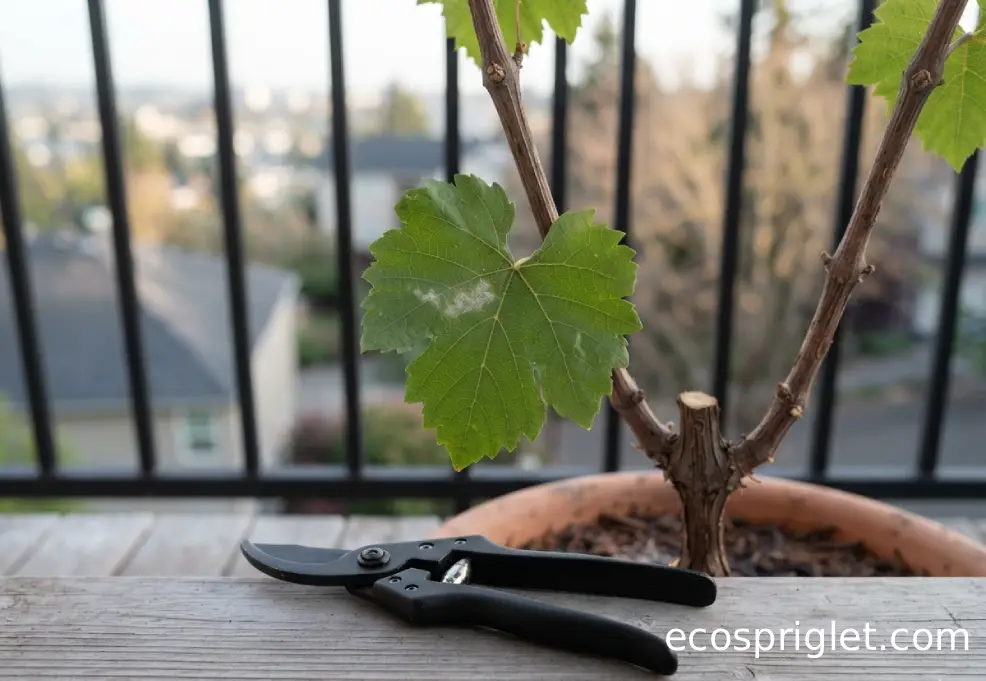
White Coating on Leaves
Powdery mildew commonly appears as pale, dusty patches that spread across leaves or young fruit. Improve airflow by removing crowded side shoots, keep irrigation off the foliage, and remove badly affected tissue. University of Minnesota Extension notes that humidity favors mildew and that dormant pruning, sanitation, and removal of infected shoots help reduce future infection.
Do not apply a random kitchen spray to edible grapes. If cultural control is insufficient, identify the disease through your local Extension service and use only a product labeled for grapes, following its harvest interval and application directions.
Leaves Turning Yellow
Check moisture before reaching for fertilizer. Yellow lower leaves combined with persistently wet mix often indicate poor drainage or excessive watering. Yellow new leaves with green veins may relate to nutrient availability or unsuitable pH, but a soil or container-mix test is more useful than adding several products at once.
Lift the edge of the pot slightly or examine the drainage holes. A sour smell, slow drainage, or water remaining on the surface for more than a few minutes suggests compacted mix. Repot during dormancy if the problem persists.
Flowers but Few Grapes
Because one grapevine can generally set fruit on its own, poor cropping is more likely to involve inadequate sun, frost injury, weak growth, excessive nitrogen, harsh weather during flowering, or incorrect pruning than a missing pollination partner.
Record the balcony’s actual sunlight for one clear day. A vine receiving only 3 or 4 hours should be moved if possible. If light is adequate, review the pruning: removing every 1-year-old cane eliminates the buds that would have produced fruiting shoots.
Shriveled or Split Berries
Keep moisture reasonably even while fruit is developing. A severely dry root ball followed by heavy watering or rain can contribute to berry splitting. Remove damaged fruit promptly because broken skins attract insects and rot organisms. Protect ripening clusters with properly secured bird netting only where it cannot trap wildlife or hang beyond the balcony.
Common Mistakes to Avoid
- Using a decorative pot with no drainage: Move the vine into a container with several open holes rather than trying to compensate with less water.
- Starting with a tiny pot: A 10-inch pot may hold a nursery vine temporarily, but it dries quickly and offers poor stability. Move toward an 18- to 20-inch permanent container.
- Expecting fruit in deep shade: Grapes need full sun for reliable ripening. For a shaded balcony, choose a shade-tolerant ornamental climber instead of forcing an edible grape to struggle.
- Letting the vine climb shared structures: Tendrils can enter gutters, screens, neighboring spaces, or roof edges. Redirect shoots weekly while they are still flexible.
- Feeding every time growth slows: First check light, temperature, moisture, drainage, and root space. More fertilizer will not correct a dark location or saturated mix.
- Skipping dormant pruning: An unpruned vine produces a dense canopy with poorer airflow and fruit quality. Mark the task on your calendar for late winter.
- Removing every cane: Retain suitable 1-year-old wood because its buds produce the coming season’s fruiting shoots.
- Ignoring pet access: Grapes and raisins can cause kidney damage in dogs. Prevent pets from reaching fallen fruit and contact a veterinarian promptly after suspected ingestion.
- Moving a wet container without help: Use a locking plant caddy from the beginning. Do not drag a heavy pot across waterproof balcony membranes.
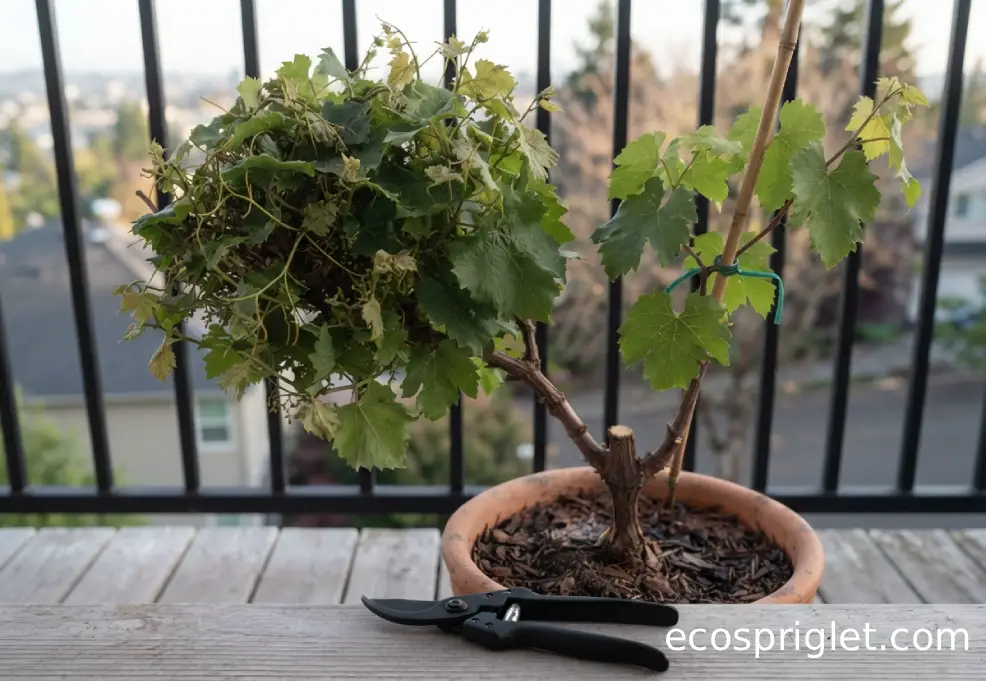
The mistake I see most often is allowing five or six trunks to develop because the young plant looks impressively full. It does for a season. By the following year, the center is shaded and every stem competes for the same small root system. Choosing one trunk early feels severe, but it creates a vine that is much easier to support and prune.
Grapes Versus Other Climbing Plants for Pots
Grapes are only one option among climbing plants for pots and containers. They make sense when you have strong sun, a permanent support, room for an 18-inch or larger pot, and the willingness to prune every winter. A different vine may suit a shaded, temporary, or flower-focused balcony better.
| Plant | Best Use in a Pot | Light | Small-Space Caution |
|---|---|---|---|
| Grapevine | Permanent edible vine with seasonal shade | Full sun | Needs annual pruning, winter dormancy, and strong support |
| Mandevilla | Warm-season flowers on a compact trellis | Bright light, sun, or light shade depending on climate | Tender and usually needs protected winter conditions |
| Sweet Potato Vine | Trailing foliage over a pot edge | Sun or partial shade | Usually grown for one season and is not a woody climber |
| Passionflower | Fast summer coverage and unusual flowers | Bright light | Some types are tender and can quickly outgrow a small support |
| Compact Clematis | Flowering climber for a wall trellis or obelisk | Varies by type | Choose a moderate-vigor selection bred or recommended for containers |
| Wisteria | Long-term flowering specimen in a very large pot | Sun | Vigorous, heavy, and demanding to prune; rarely my first balcony choice |
| Trumpet Vine | Large, warm-wall climber | Full sun | Strong, self-clinging growth can be unsuitable for rented structures |
A mandevilla vine in pots provides faster summer color than a grape and can be moved under protection before cold weather. The RHS describes mandevilla as a tender climber requiring warmth, bright light, and sturdy support.
A sweet potato vine in pots is a trailing foliage plant rather than a permanent woody framework. It can grow in sun or partial shade and works well where stems can spill over the container edge. Passionflowers can also begin in 12-inch pots, although their eventual size and winter needs vary by species.
Wisteria can technically grow in a container at least 18 inches wide, but its vigorous growth and twice-yearly pruning needs make it a demanding apartment plant. Trumpet vine is similarly vigorous and can grip surfaces using aerial roots. I would avoid either where attachment to the building could create damage or a dispute with the property manager.
For climbing plants for shade in pots, consider a container-suitable clematis or a locally recommended jasmine instead of a grape. Match the exact selection to your winter climate and available light; even shade-tolerant climbers generally flower poorly in a completely dark corner. The RHS specifically recommends moderate-vigor clematis for container use.
Protect the Vine Through Winter and Refresh the Container
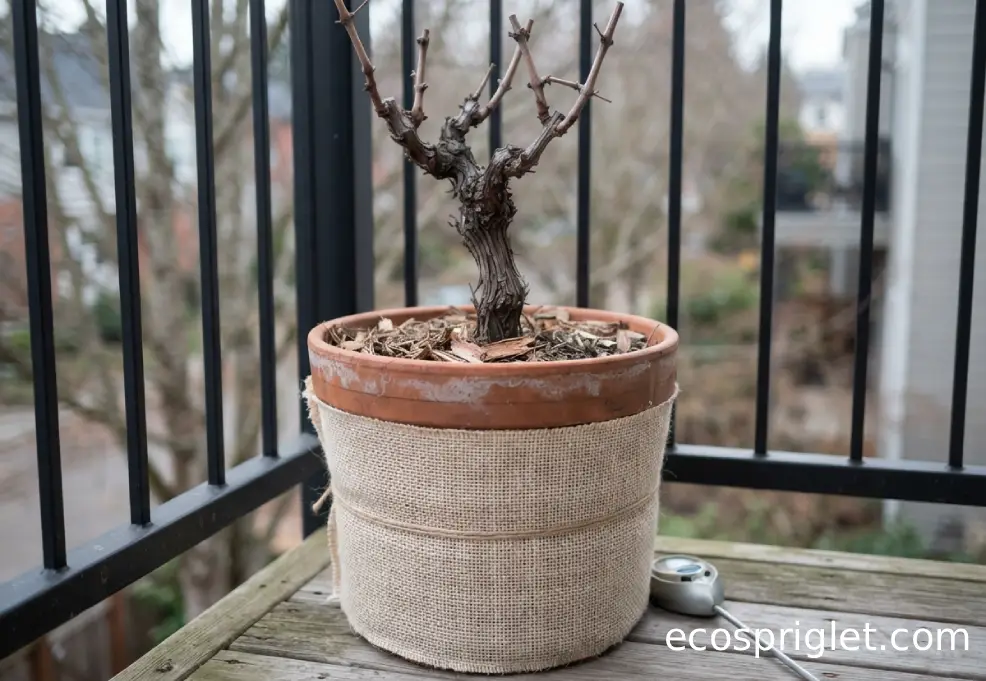
Grapevines are deciduous, so bare stems in winter are normal. Do not move the pot into a warm living room to keep it leafy. Grapes need a cool dormant period to fruit normally. The RHS advises giving container vines several weeks outdoors during winter when they are otherwise kept in a heated greenhouse or conservatory.
The roots in a pot experience colder temperatures than roots in the ground. Before hard freezes, move the container against a sheltered wall and insulate the sides with suitable outdoor pot wrap. Keep the drainage holes open. A garage or shed can work in colder regions if it remains cold but the root ball does not freeze solid for prolonged periods. Choose winter protection based on the cultivar’s hardiness and your local climate rather than assuming every grape tolerates the same conditions.
Water sparingly during dormancy. Check the mix every 2 to 3 weeks and add enough water to prevent it from becoming completely dusty and separated from the pot, but do not keep a leafless vine wet. Resume regular checks when buds begin swelling in spring.
Repot young vines when roots circle densely around the outside of the root ball, water races straight through, or the plant dries within hours in ordinary weather. Move up only a few inches at a time until reaching the permanent container. Once the vine is too large to repot easily, remove and replace the upper 2 to 3 inches of mix each spring without cutting into major roots.
Every few years during dormancy, a badly root-bound vine may need to come out for careful root pruning and fresh mix. This is a two-person job with a large specimen. Protect the trunk, lay the pot on a padded surface, and return the vine to its support before spring growth begins.
For broader seasonal routines, drainage ideas, and renter-friendly mess control, visit our balcony container gardening guide.
Grow One Vine Well
Growing grape vines in pots is less about finding a magical dwarf plant and more about making a few sound decisions early. Place one regionally suitable vine in the sunniest available position, give it an 18- to 20-inch container with reliable drainage, install a sturdy support before planting, and train one clear trunk. Check moisture 1 to 2 inches below the surface, feed lightly, and keep the canopy open enough for sunlight and moving air.
The yearly pruning may look intimidating the first time, but the framework becomes easier to read once the leaves fall. Keep healthy fruiting wood close to the trunk and remove the tangled growth that no longer serves the compact shape. A well-pruned vine is easier to water, inspect, protect from disease, and keep inside your balcony boundary.
Most importantly, give the plant time. The first season builds roots, the next develops structure, and later seasons bring more dependable fruit. One carefully managed grapevine will usually be more rewarding than several crowded climbers competing for light, water, and support.
Start with the pot and trellis, then choose the vine. That order prevents most of the problems beginners face and gives your balcony grape a stable home for years.