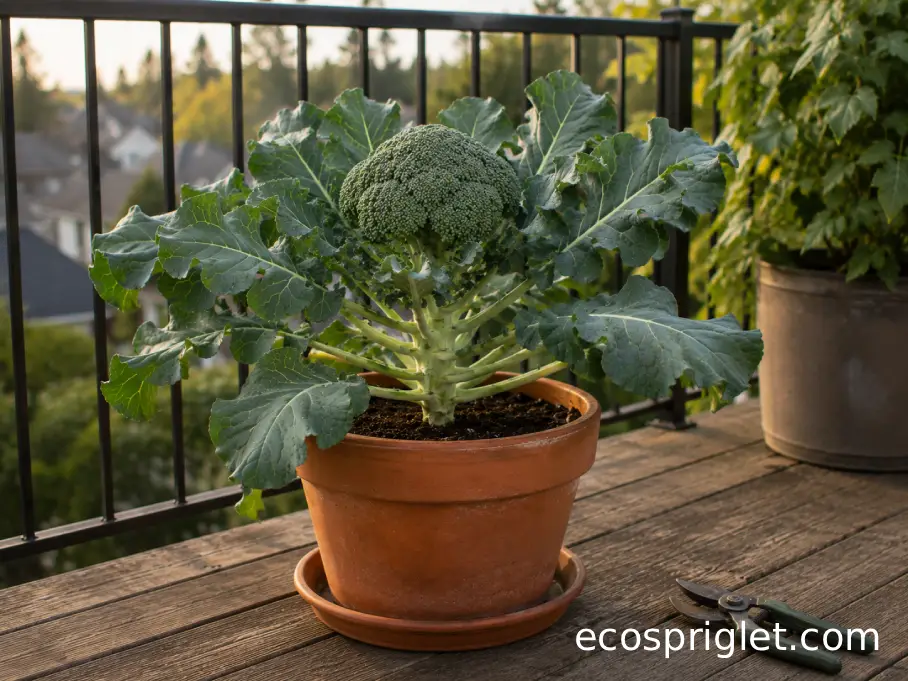
Knowing how to harvest broccoli is mostly a matter of watching the flower buds rather than waiting for a particular date or an impressively large head. Broccoli is ready when the central head looks compact, the individual buds are small and tightly closed, and the color is still an even green. Once those buds begin separating or showing yellow petals, the plant is moving into flowering and you’ve waited longer than ideal. Oregon State University Extension and Utah State University Extension both emphasize tight, closed buds as a key harvest signal.
That’s especially useful for balcony and container growers, because a perfectly good head may never reach the size you pictured from grocery-store broccoli. Pot size, temperature, variety, and growing conditions all influence the final crown. Instead of waiting for a magic diameter, use the head’s texture and bud development to make the call.
Once the main crown is ready, cut it cleanly while leaving the rest of the plant in place. With many broccoli varieties, that first cut is only the beginning: smaller side shoots can keep appearing for several weeks.
Spot the Right Moment Before the Buds Open
The best broccoli harvest time arrives while the head still looks dense and almost beaded. Look closely at the surface: each little bump is a flower bud. You want those buds packed together rather than lengthening, spreading apart, or starting to show yellow. University of Minnesota Extension recommends harvesting broccoli while the flower buds are still tight and green, while Utah State describes mature heads as compact, tight, uniformly colored, and free of yellowing or flowering.
Head diameter is a secondary clue, not the deciding one. Utah State notes that many mature heads may reach roughly 6–12 inches across, but Oregon State’s home-garden guidance simply recommends cutting when the head reaches a usable size and the buds remain small and tightly closed. That distinction matters in containers: if your 5-inch crown has firm, tight buds today but those buds are beginning to loosen, harvest it rather than waiting for another inch or two.
I learned this the hard way with one of my early balcony crops. I kept admiring a head that looked a little small and decided to give it just a few more days. By the time I checked closely again, tiny yellow flowers were starting to open. The broccoli was still usable, but I’d missed the crisp stage I actually wanted.
- Harvest now if the head is compact, green, and the individual buds are tightly closed.
- Check again within a day if the buds are beginning to swell or separate.
- Don’t wait for a supermarket-size crown when bud development says the plant is ready.
- If yellow petals are appearing, cut the head promptly rather than leaving it to flower further.
On a small balcony, I like to inspect the head every day once it starts filling out. That 20-second check is far more useful than counting days on a calendar.
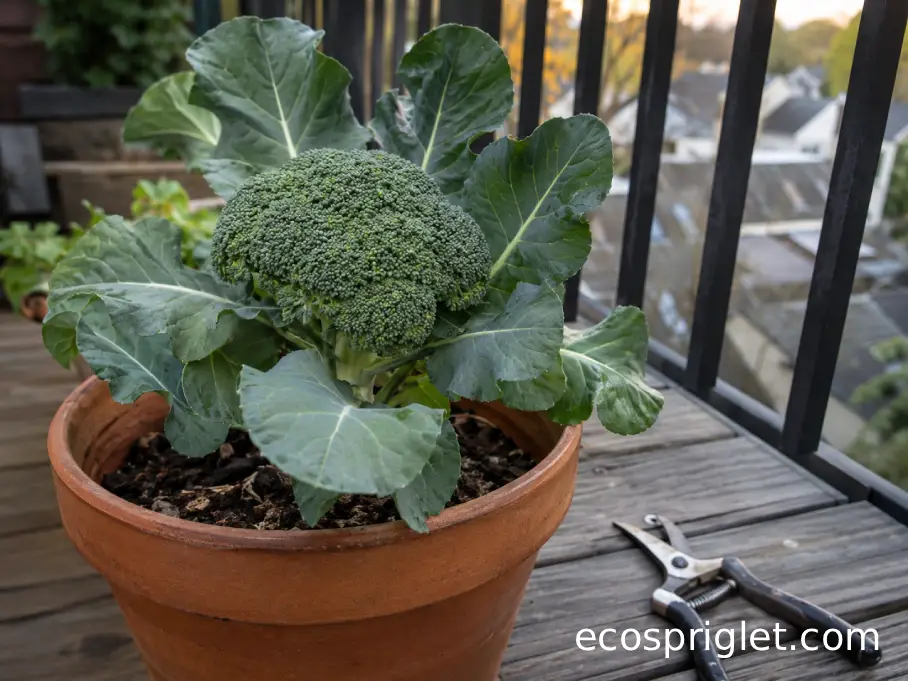
Cut the Main Head Without Ending the Harvest
Once the crown is ready, use a clean, sharp knife or pruning tool rather than twisting or snapping it from the plant. Support the head so it doesn’t tear the stalk, then make one clean cut below the crown. Utah State’s production guidance recommends cutting the central head with about 3–4 inches of stem attached.
You don’t need to cut the broccoli plant at soil level. In fact, leaving the lower stalk and healthy leaves intact gives side buds a chance to grow broccoli after the central head is gone. Minnesota Extension specifically recommends removing the main head with a short stalk and leaving the lower portion of the plant in place.
For a balcony plant, space can make the cutting angle awkward. I usually move neighboring pots temporarily rather than reaching through foliage with a blade. If your broccoli is tucked against a railing, rotate the container first so you can see the stalk clearly. That makes a controlled cut easier and reduces the chance of slicing leaves or accidentally knocking the entire container.
A clean blade also matters more than brute force. Wipe soil or plant debris from your knife or shears before cutting, and sharpen a dull tool rather than sawing through the stalk. Broccoli stems are substantial but tender enough that a sharp tool should cut through without crushing them.
If you’re cooking the broccoli the same day, keep the attached stem. Peeled broccoli stems are edible and useful in stir-fries, soups, slaws, or roasting, so there’s little reason to leave all of that crisp tissue behind.
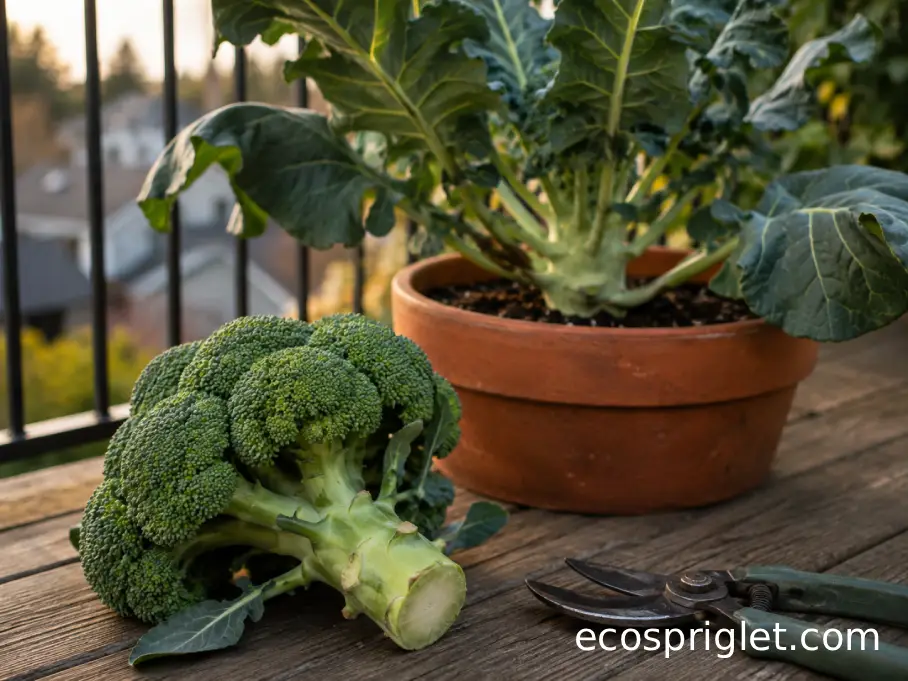
Keep the Plant Going for Side Shoots
One of the nicest surprises for beginners is that a broccoli harvest doesn’t necessarily end with the big central crown. After that crown is removed, buds lower on the plant can develop into smaller heads called side shoots. Oregon State says some varieties can continue producing these shoots for a few more weeks, and Utah State notes that side shoots may be harvested over several weeks when the plants continue receiving water and nutrients.
So, how many times can you harvest broccoli? There isn’t a useful fixed number. Think in terms of one main harvest followed by repeated smaller cuts whenever usable side heads develop. One plant might give you only a few shoots; another may keep supplying small crowns for weeks. Variety, weather, plant health, and care all influence the result.
Keep the container in its normal growing position after the main head is cut. Don’t uproot the plant just because the center looks bare. Continue checking the junctions where leaves meet the main stem, because that’s where you’ll often notice the next small crowns forming.
Harvest each side shoot by the same visual rule you used for the main head: compact green buds beat maximum size. Cut the shoot while the buds are still closed. Removing usable shoots regularly also keeps you from discovering three flowering branches all at once after forgetting the pot for a week. Oregon State specifically recommends cutting side shoots regularly as they develop.
For apartment gardeners, this second harvest stage is worth the space. Instead of replacing the pot immediately, give a healthy plant time to show what it can still produce.
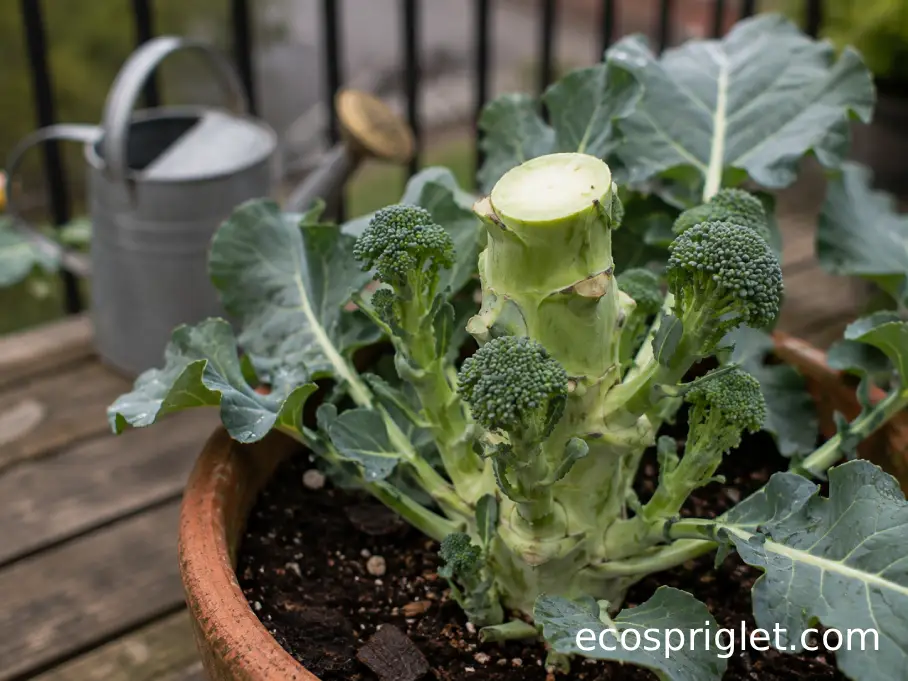
Use the Calendar as a Clue, Not the Final Test
Broccoli timing varies enough that the calendar should tell you when to start watching closely, not exactly when to cut. Utah State Extension says broccoli often reaches harvest roughly 50–70 days after transplanting, depending on the variety. Your seed packet’s days-to-maturity information is useful for narrowing that window, but the plant’s compact head and closed buds remain the final test.
This is also why broccoli seed-to-harvest time doesn’t have one dependable number that applies to every packet. Starting method, cultivar, season, and growing conditions all matter. If you started your own seedlings, use the variety information supplied with the seed rather than adding a generic number of weeks and assuming the crop must be ready on that date.
Broccoli Readiness at a Glance
| What You See | What It Means | What to Do |
|---|---|---|
| Small head still developing | Usually immature | Leave it and check regularly |
| Compact green head with tightly closed buds | Prime harvest stage | Cut the main crown |
| Buds swelling and beginning to separate | Flowering is approaching | Harvest promptly |
| Yellow petals appearing | The head is flowering | Cut now if you still want to use it |
| Small heads forming below the cut stalk | Side-shoot production | Let them size up, then harvest while buds stay tight |
Broccoli also doesn’t hold peak quality indefinitely once mature. Minnesota Extension advises harvesting promptly when the plant reaches maturity because quality declines if the head is left standing too long.
That makes daily observation particularly useful when warm weather arrives or you’re growing on a heat-reflective balcony. Put a reminder on your phone if necessary. Once the central crown starts looking close, checking it each morning takes less time than making coffee and can prevent an otherwise good harvest from turning into a flower display.
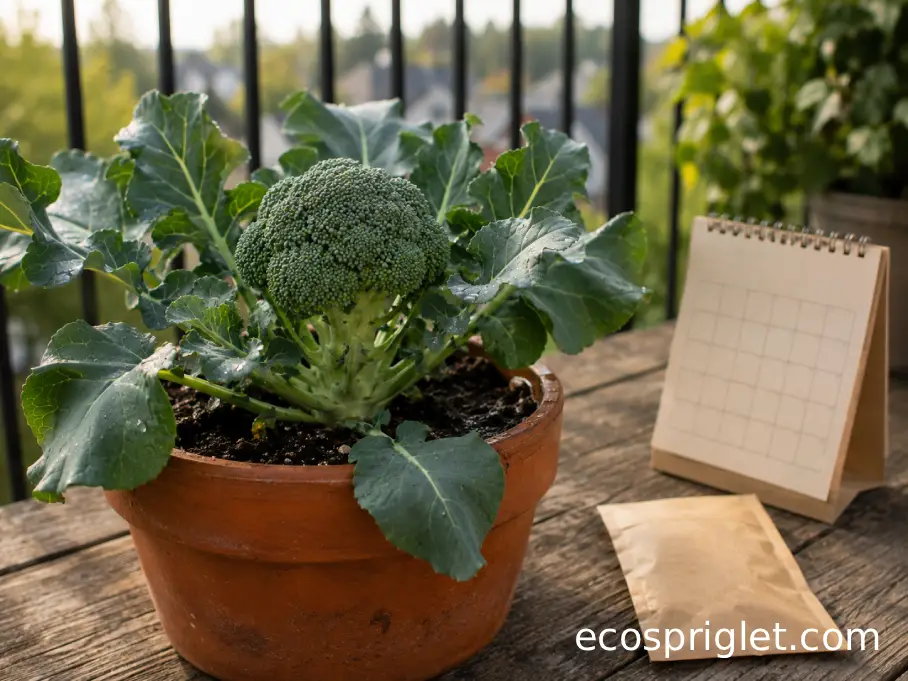
Make Container Harvesting Easier in Small Spaces
Harvesting broccoli from a container is botanically the same as harvesting it from a garden bed, but the working space is different. The plant may be wedged between railings, herbs, furniture, or other vegetables, and a mature broccoli plant can have a surprisingly wide spread of leaves.
Before cutting, give yourself room. Move lightweight neighboring pots at least a few inches away and turn the broccoli container until the central stem faces you. If the pot is heavy, don’t drag or lift it from an awkward position just to get a better camera-worthy angle. Instead, work from the side where you can see the stalk clearly and keep your cutting hand away from the railing.
Wind is another small-space issue. If the plant is swaying enough that you can’t make a controlled cut, wait for a calmer moment rather than trying to hold the container, crown, and knife at once. On my own small terrace, I’ve found that simple access makes harvest day much less dramatic: the container stays put, one hand steadies the crown, and the other handles the cut.
Afterward, remove only the crop you’re taking and leave healthy foliage attached. Those remaining leaves support the plant while side shoots develop. Minnesota Extension advises leaving the lower portion of the plant in place after removing the central head, rather than treating the first harvest as a signal to pull the whole plant.
If you’re organizing several edible containers in a tight space, our balcony gardening guide for beginners covers layout, watering access, and other practical constraints that become obvious once plants reach full size.
Common Broccoli Harvest Mistakes to Avoid
Most harvesting mistakes come from waiting too long or treating the first crown as the entire crop. I learned both lessons early. The big temptation is to think a little more time must mean a little more broccoli, but once the flower buds start opening, extra time isn’t improving the head.
- Waiting for a giant head: Size varies. If the buds are tight and the head has reached a usable size, harvest it instead of waiting for supermarket proportions. Oregon State bases harvest on usable size and tightly closed buds.
- Ignoring loosening buds: A head whose buds are spreading apart is moving toward flowering. Harvest promptly rather than hoping it will tighten again. Utah State lists compactness, uniform color, and absence of flowering among the maturity signs.
- Pulling out the plant after one cut: Leave the lower stalk and leaves in place so side shoots have a chance to form.
- Forgetting the plant after the main harvest: Inspect developing side shoots regularly and cut them while their buds remain closed. Oregon State notes that regular side-shoot harvesting may continue for several more weeks.
- Using a dull cutting tool: A clean, controlled cut is easier on both you and the plant than repeatedly bending or sawing at the stalk.
Another common mistake is relying entirely on the seed packet date. Treat that number as a reminder to start observing the plant. If your calendar says harvest week but the central crown is still obviously small and developing, give it time. If the calendar says you have another week but the buds are beginning to loosen today, believe the broccoli.
The good news is that harvest timing becomes easy after you’ve seen the transition once. Tight buds have a dense, uniform look. A head that’s preparing to flower looks more open and uneven. After a season or two, you’ll notice the difference from across the balcony.
Store Fresh Broccoli Without Losing Quality
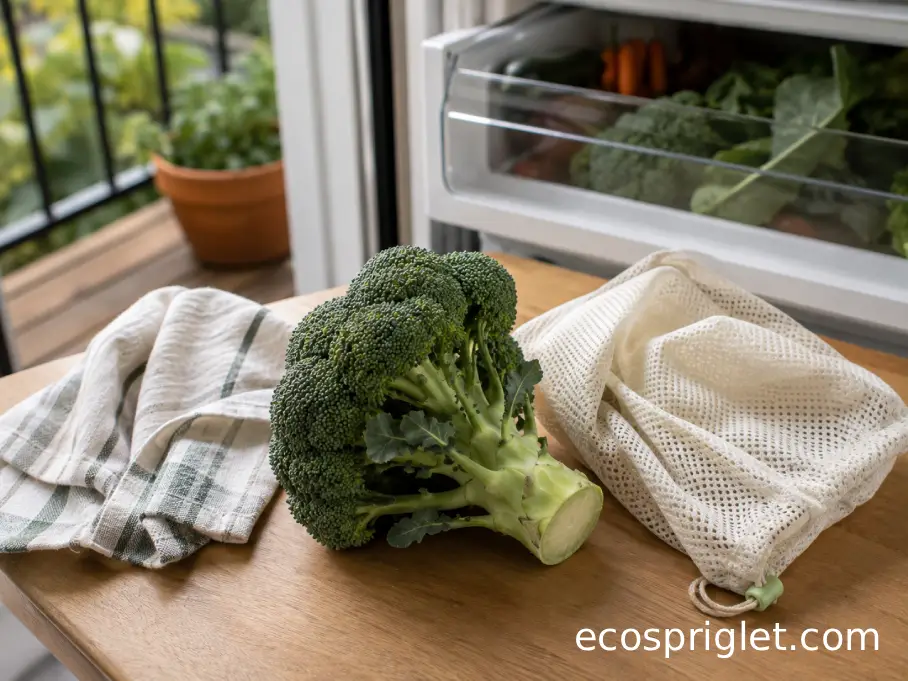
Broccoli starts losing quality after harvest, so getting it cool reasonably soon is worthwhile. USDA food-safety guidance recommends keeping refrigerators at 40°F or below. For vegetable quality, University of Minnesota Extension describes broccoli as a crop that prefers cold, moist storage and notes that perforated plastic bags can help home refrigerators provide a more suitable humid environment.
- Refrigerate harvested broccoli rather than leaving it on a warm counter for extended periods.
- Use a perforated produce bag or other setup that limits moisture loss without trapping heavy condensation; Minnesota Extension warns that sealed, unperforated bags can accumulate enough condensation to encourage mold or bacterial growth.
- For practical home storage, Utah State suggests about 7–10 days in a refrigerator, while Minnesota Extension lists an expected shelf life of up to roughly two weeks under suitably cold, moist conditions. Quality in an ordinary home refrigerator will vary.
- Before preparing or eating the broccoli, rinse it thoroughly under running water. The FDA advises washing produce with plain running water and does not recommend soap, detergent, or commercial produce wash.
Check stored broccoli rather than relying only on the date. Yellowing, substantial softening, an unusual odor, mold, or slimy deterioration are reasons to discard deteriorated portions or the head as appropriate rather than trying to stretch storage another few days. USDA notes that spoilage can show up through unusual odors, color changes, sticky or slimy texture, and visible mold.
If you know you won’t use a large crop while it’s fresh, freezing is another option. Penn State Extension recommends freezing vegetables quickly and maintaining a freezer temperature of 0°F or lower for best frozen-food quality.
A Simple Harvest Routine You Can Reuse
Once you’ve harvested broccoli a couple of times, the whole decision can be reduced to a simple routine: look at the buds, make a clean cut, then leave the plant standing and watch for side shoots. A mature main head should be compact and green with tightly closed flower buds; if those buds are separating or showing yellow, don’t keep postponing the cut. Oregon State, Utah State, and Minnesota Extension all put bud development at the center of harvest timing.
For container growers, I’d rather harvest a slightly smaller crown at the right stage than wait for a bigger one that has started flowering. The same rule applies to the smaller heads that follow. You may get one main crown and then several rounds of side shoots over the next few weeks, so keep the pot productive until new growth slows or the plant is genuinely finished.
Then get your harvest into the refrigerator, rinse it under running water before preparation, and enjoy the part that makes all those weeks of balcony growing worthwhile.
The two reminders I keep coming back to are simple: trust tight buds more than a calendar, and don’t pull a healthy broccoli plant immediately after the first cut. Those habits give you a better shot at both a good central crown and the bonus harvest hiding farther down the stalk.