
Use this container size calculator to estimate what size pot, grow bag, or planter you need for common balcony and patio plants. Choose a plant, your growing goal, and the number of plants, and the calculator will suggest a practical container volume, minimum depth, spacing, and estimated soil volume.
The result is a practical starting point rather than a strict rule. Container size depends on the variety, climate, watering habits, sunlight, and how much yield you expect. When in doubt, choose the larger container, especially for tomatoes, peppers, cucumbers, zucchini, and hot balconies.
Free garden tool
Container Size Calculator
Choose a plant, growing goal, and number of plants to estimate the container size, soil volume, depth, and spacing you need.
Results are practical estimates for container gardening. Choose the larger option when your balcony or patio is hot, windy, or difficult to water every day.
How to Use This Container Size Calculator
- Choose the plant you want to grow.
- Select whether you want the minimum workable size, a comfortable size, or the best size for easier care and better yield.
- Enter how many plants you want to grow.
- Choose separate pots or a shared long planter if the plant can be grouped.
- Optionally enter a container size you already have to see if it is likely large enough.
What the Result Means
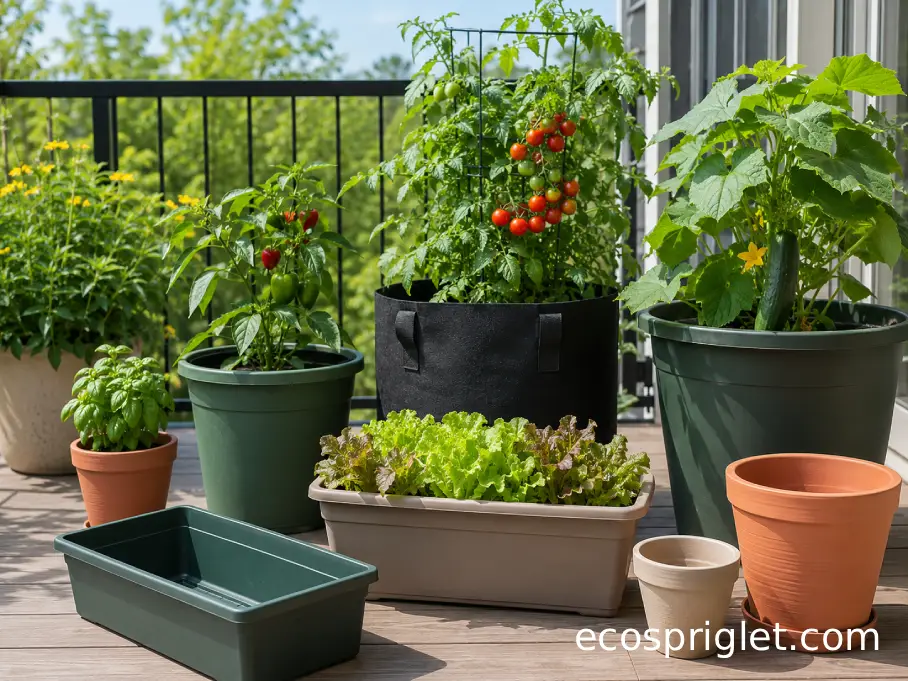
The calculator gives a recommended container volume per plant. For large fruiting vegetables, such as tomatoes, cucumbers, zucchini, and sunflowers, one plant per container is usually the safest default. For herbs, leafy greens, strawberries, and small root crops, a shared planter can work if it has enough soil volume and spacing.
The estimated soil volume helps you plan the next step, but bag estimates are more accurate when you know the actual pot dimensions. After choosing a container size, use the Potting Soil Calculator to estimate how many quarts, liters, cubic feet, or bags of potting mix to buy.
Quick Container Size Chart
Use this chart for a fast estimate before using the calculator. Choose the larger end of the range for hot, sunny, windy balconies or if you cannot water every day.
| Plant | Minimum container | Better container | Notes |
|---|---|---|---|
| Full-size tomato | 10 gallons | 15–20 gallons | One plant per pot; use a cage or stake. |
| Patio tomato | 5 gallons | 10–15 gallons | Compact varieties are better for small balconies. |
| Pepper | 3 gallons | 5–7 gallons | Larger pots reduce drought stress. |
| Cucumber | 5 gallons | 7–10 gallons | Use a trellis and compact varieties. |
| Zucchini | 10 gallons | 15–20 gallons | Needs a large pot and regular feeding. |
| Basil | 1 gallon | 2–3 gallons | Can grow alone or in a wider herb planter. |
| Mint | 2 gallons | 3–5 gallons | Best kept in its own container. |
| Lettuce | 0.5–1 gallon per plant | 1–2 gallons per plant | Good for window boxes and shallow planters. |
| Carrots or radishes | 1 gallon per group | 2–3 gallons per group | Depth matters more than total volume. |
| Strawberry | 1 gallon | 2–3 gallons | Works in pots, hanging baskets, or long planters. |
| Sunflower | 3 gallons | 5–10 gallons | Choose dwarf varieties for containers. |
| Lavender | 2 gallons | 3–5 gallons | Needs excellent drainage. |
Minimum Size vs. Comfortable Size
The minimum size is the smallest container that can work if the plant is compact and care is consistent. It is not always the best choice. Small containers dry out faster, heat up faster, and leave less room for roots.
The comfortable size is usually the better choice for beginners. It gives the plant more stable moisture and reduces the risk of daily watering problems. The best-yield size is useful for heavy feeders and fruiting crops, especially tomatoes, peppers, cucumbers, and zucchini.
Can Several Plants Share One Container?
Some plants can share a long planter. Herbs, lettuce, strawberries, radishes, and compact greens often do well in shared containers if they have enough spacing. Large fruiting crops usually perform better in separate pots or grow bags.
- Usually separate: full-size tomatoes, zucchini, cucumbers, sunflowers, lavender.
- Sometimes shared: peppers, patio tomatoes, compact flowers.
- Often shared: basil, parsley, cilantro, lettuce, strawberries, radishes.
Common Mistakes When Choosing Pot Size
Choosing only by diameter
Two pots can have the same diameter but very different depths. For vegetables and herbs, soil volume and usable depth usually matter more than the outside decorative size.
Planting too many vegetables in one pot
Overcrowding is one of the fastest ways to create weak growth, fast drying, nutrient stress, and poor airflow. If a crop is described as “one plant per container,” do not squeeze several plants into one small pot.
Using a tiny pot on a hot balcony
Balconies, patios, and roof terraces can dry containers quickly. A slightly larger pot is often easier to care for than the smallest possible pot.
Forgetting the mature plant size
A seedling may look tiny in spring, but tomatoes, cucumbers, zucchini, sunflowers, and mint can quickly outgrow small containers.
FAQ
What size pot do I need for tomatoes?
For full-size tomatoes, use at least a 10-gallon container, with 15–20 gallons being easier for watering and fruiting. For compact patio tomatoes, 5 gallons can work, but 10 gallons is usually more comfortable.
What size grow bag is best for peppers?
A 3-gallon grow bag can work for one pepper plant, but a 5-gallon grow bag is a better default. Larger 7-gallon bags can help in hot weather or for bigger pepper varieties.
Can I grow herbs together in one container?
Yes, many herbs can share a wider container if they have similar water needs. Mint is the main exception because it spreads aggressively and is usually better in its own pot.
Is a bigger pot always better?
Not always. Very large pots can hold too much moisture for small plants, especially indoors. For outdoor vegetables, however, going one size larger is often helpful because it gives roots more space and keeps moisture more stable.
How deep should a container be for vegetables?
Many herbs and leafy greens can grow in 6–10 inches of soil. Fruiting vegetables such as tomatoes, peppers, cucumbers, and zucchini usually do better with 12–18 inches of usable depth.
Should I use the container size or soil calculator first?
Use this pot size calculator first if you do not know what size pot to buy. Then use the potting soil calculator to estimate how much potting mix you need for the actual container dimensions.