
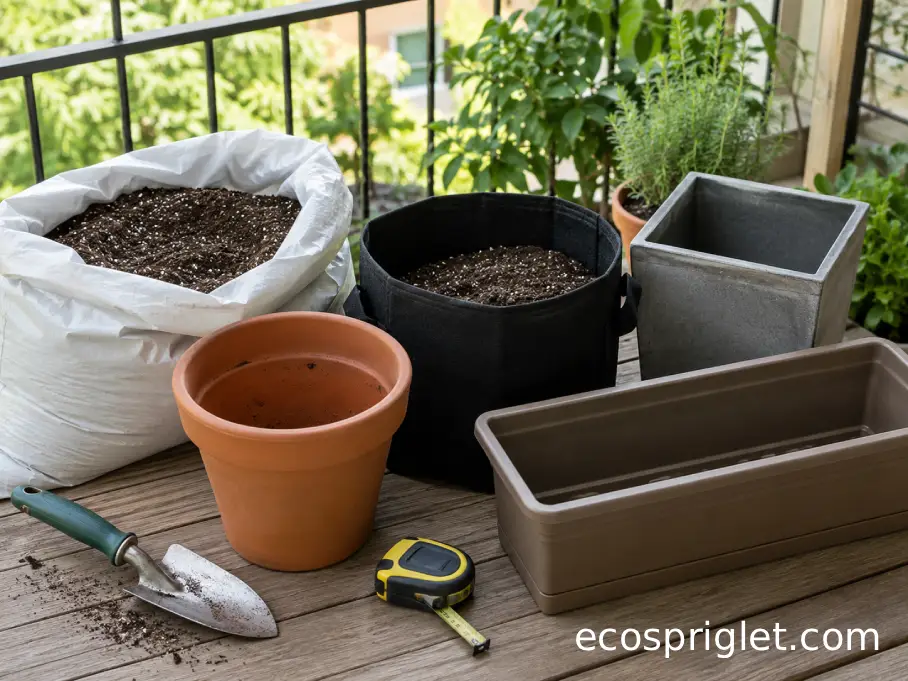
Use this potting soil calculator to estimate how much potting mix you need for flower pots, grow bags, window boxes, and small balcony planters. Enter your container shape, dimensions, number of pots, and bag size to get an estimate in quarts, liters, cubic feet, and bags.
The result is an estimate, because real containers are not always perfectly shaped and soil can settle after watering. For most container gardens, buying about 10% extra potting mix is a practical safety margin.
Free garden tool
Potting Soil Calculator
Estimate how much potting mix you need for round pots, tapered pots, square planters, and rectangular containers.
Results are estimates. Real soil volume can vary because pot shapes, drainage layers, root balls, and soil compaction are not always exact.
How to Use This Potting Soil Calculator
- Choose your container shape: round, tapered round, square, or rectangular.
- Enter the inside dimensions of the pot or planter, not the outside decorative size.
- Use soil depth rather than total pot height if you plan to leave space at the top.
- Select how full you want the container to be. For most pots, 85–90% is more realistic than filling to the rim.
- Choose your bag size to estimate how many bags of potting mix to buy.
What the Result Means
The soil volume calculator estimates the volume of soil needed to fill your container. It then converts that volume into common gardening units, including quarts, liters, cubic feet, and US gallons.
If you choose a 10% or 15% buffer, the estimate includes extra potting mix for settling, small spills, uneven pot shapes, and minor measuring differences. This is usually better than buying exactly the calculated amount and running short halfway through planting.
Pot Size to Soil Volume Chart
Use this quick chart when you only need a rough estimate. Exact amounts vary by pot shape and how high you fill the container.
| Container size | Approx. soil needed | Best for |
|---|---|---|
| 6-inch round pot | 1–2 quarts | Small herbs, starter plants, compact houseplants |
| 8-inch round pot | 3–4 quarts | Herbs, small annuals, small indoor plants |
| 10-inch round pot | 5–6 quarts | Medium houseplants, basil, compact flowers |
| 12-inch round pot | 8–10 quarts | Lavender, peppers, larger herbs, mixed flowers |
| 14-inch round pot | 12–14 quarts | Small vegetables, patio flowers, larger houseplants |
| 16-inch round pot | 16–20 quarts | Tomatoes, dwarf fruiting plants, large patio containers |
| 24-inch window box | 10–16 quarts | Herbs, lettuce, annual flowers |
| 36-inch window box | 18–28 quarts | Mixed herbs, flowers, shallow greens |
Should You Fill the Whole Pot With Soil?
Most containers should not be filled all the way to the rim. Leave about 1–2 inches of space at the top so water can soak in instead of running over the edge. For very small pots, a little less space is fine. For large outdoor containers, leaving a deeper watering space can make daily care easier.
Avoid filling the bottom of a pot with rocks just to “save soil.” It can reduce the useful root zone and may create a perched water layer. A better approach is to choose a pot size that fits the plant and use a well-draining potting mix.
How Much Extra Potting Mix Should You Buy?
For most container projects, buy 10–15% more potting mix than the exact calculation. Fresh potting mix often settles after the first few waterings, especially in deep pots and large planters.
- Small indoor pots: 5–10% extra is usually enough.
- Balcony planters and window boxes: 10% extra is a good default.
- Large patio containers: 15–20% extra is safer.
- Repotting plants with root balls: you may need less soil than the full container volume.
Common Mistakes When Estimating Potting Soil
Measuring the outside of the pot
Decorative pots can be thick, tapered, or raised at the bottom. For the best estimate, measure the inside diameter, width, and soil depth.
Forgetting that tapered pots hold less soil
A pot that is wide at the top and narrow at the bottom holds less soil than a straight cylinder with the same top diameter. Use the tapered round option when your pot narrows strongly toward the base.
Buying exactly one calculated amount
Soil settles, spills happen, and bag volumes are not always convenient. A small buffer usually prevents an extra store trip.
Using garden soil instead of potting mix
For containers, use potting mix rather than dense garden soil. Potting mix is usually lighter and drains better, which is important for roots in pots.
FAQ
How much potting soil do I need for a 12-inch pot?
A typical 12-inch round pot often needs about 8–10 quarts of potting mix, depending on its depth and shape. A deeper or straight-sided pot may need more, while a tapered pot may need less.
How many quarts are in 1 cubic foot of potting soil?
One cubic foot is about 29.9 US quarts. In gardening, many bags are labeled as 1 cu ft, 1.5 cu ft, or 2 cu ft, so converting to quarts makes it easier to compare bag sizes.
How many liters are in 1 quart of potting soil?
One US quart is about 0.95 liters. A 25-quart bag is roughly 23.7 liters.
Do I need extra soil when repotting a plant?
Usually, yes, but not as much as when filling an empty pot. The plant’s existing root ball takes up space, so the calculator may slightly overestimate if you are repotting into a larger container.
Can I use this calculator for grow bags?
Yes, if you know the grow bag’s approximate diameter and soil depth. For soft-sided grow bags, treat the result as an estimate because the bag shape can change after filling.
Can I use this calculator for raised beds?
You can use the rectangular planter option for small raised beds, but for larger beds it is usually better to use a dedicated raised bed soil calculator that works directly in cubic feet or cubic yards.