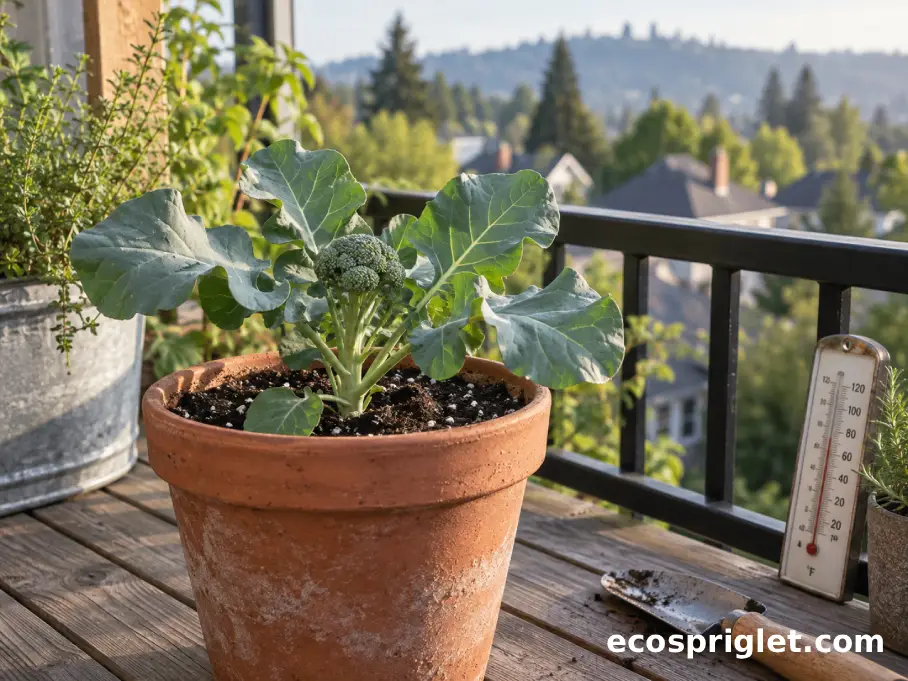
Broccoli looks like a vegetable that belongs in a big backyard plot, but one healthy plant can fit surprisingly well on a sunny balcony or patio. The trick is giving it enough root room, cool growing weather, steady moisture, and more space above the pot than its small seedling suggests it will need.
If you are learning how to grow broccoli, start by thinking of it as a cool-season crop rather than a summer vegetable. Utah State University Extension notes that broccoli performs best in sunny, fertile, well-drained conditions and produces its best growth when temperatures stay below about 75°F. Mature plants can tolerate some frost, making spring and fall the useful growing windows in many regions.
For an apartment gardener, one broccoli plant in a roomy container is a much better plan than squeezing several seedlings into a decorative pot. Expect an upright plant around 2 1/2 feet tall, broad leaves, and one central head followed, in many cases, by smaller side shoots. Illinois Extension confirms that mature broccoli commonly reaches about that height.
This guide covers the whole process, from broccoli seeds to harvest, with container-specific adjustments for limited space, wind, drainage, and balcony watering.
Choose Cool Weather and a Sunny Growing Spot
Broccoli’s calendar matters almost as much as its care. It grows leaves and develops tight heads most reliably during cool weather. Utah State University Extension reports that quality tends to decline as temperatures climb above 75°F, while Penn State Extension notes that heads developing in summer heat can move rapidly toward flowering.
That makes spring and fall the most practical seasons. For a spring crop, aim to establish plants early enough that the head develops before sustained hot weather arrives. Depending on local climate, Extension recommendations place hardy transplants outdoors several weeks before the average last frost once seedlings have been hardened gradually. For fall broccoli, count backward from your expected cool autumn weather using the maturity information on your seed packet.
Give the plant at least six hours of direct sun when possible. Illinois Extension uses six hours as the starting point for full-sun container vegetables. On a balcony that becomes intensely hot in the afternoon, however, a spot receiving morning and early-afternoon sun can sometimes be easier to manage than a heat-reflecting west-facing wall.
Watch the microclimate, not just the forecast. A balcony surrounded by glass, brick, or dark railings may feel considerably hotter than a nearby garden. If the leaves repeatedly wilt despite moist potting mix or a developing head begins loosening quickly during warm weather, heat is probably becoming part of the problem.
Start Broccoli Seeds Without Raising Weak Seedlings
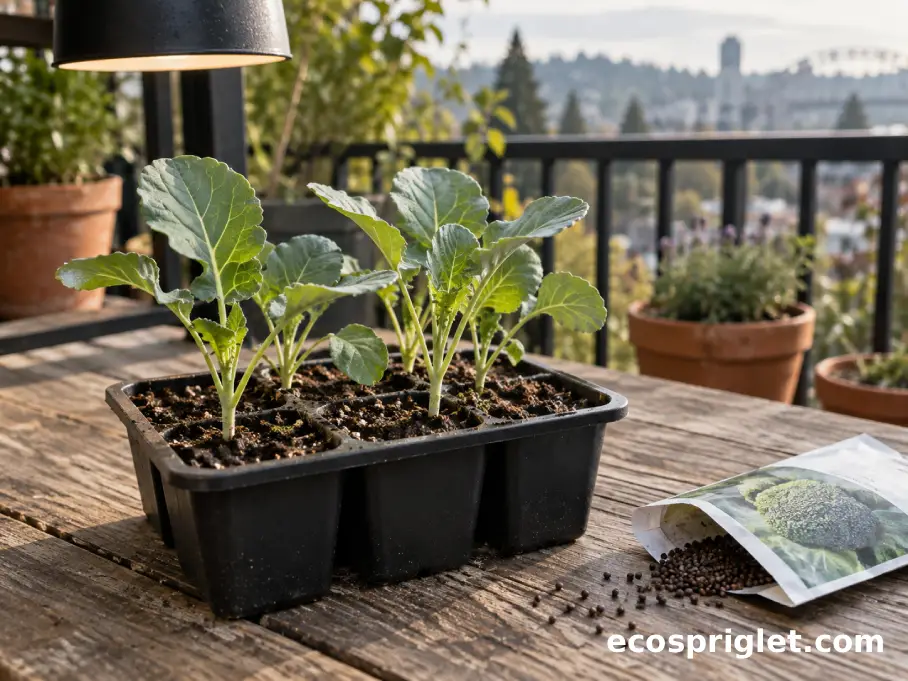
Growing broccoli from seed is inexpensive and gives you more control over timing. Sow seeds about 1/4 to 1/2 inch deep in clean, soilless seed-starting mix. Utah State University Extension recommends producing broccoli transplants roughly five to seven weeks before they are needed outdoors, while its seedling guidance favors cool growing temperatures once germination has occurred.
A warm apartment can create a common problem: broccoli seedlings stretch rapidly toward the light and become thin instead of sturdy. Once they emerge, put them beneath a bright grow light rather than relying on a distant window. Utah State recommends roughly 12 to 14 or more hours of supplemental light for actively growing vegetable seedlings and notes that cool-season seedlings favor approximately 55°F nights and 65°F days.
- Sow each seed 1/4 to 1/2 inch deep and keep the mix evenly moist during germination.
- Move emerged seedlings under strong light promptly so stems remain compact.
- Start hardening plants about a week before transplanting by gradually increasing outdoor sun and wind exposure.
- Transplant sturdy seedlings with roughly four to six mature leaves rather than keeping oversized plants indoors indefinitely.
Oversized broccoli starts are not necessarily better. Utah State warns that older, overgrown transplants are more prone to producing premature small heads, sometimes called buttoning.
If you prefer direct seeding, you can sow into the final container at the same 1/4- to 1/2-inch depth. Keep the surface consistently moist until seedlings emerge, then thin rather than trying to preserve every seedling. One strong plant usually gives a balcony gardener a better result than several crowded ones.
Give One Broccoli Plant Enough Container Space
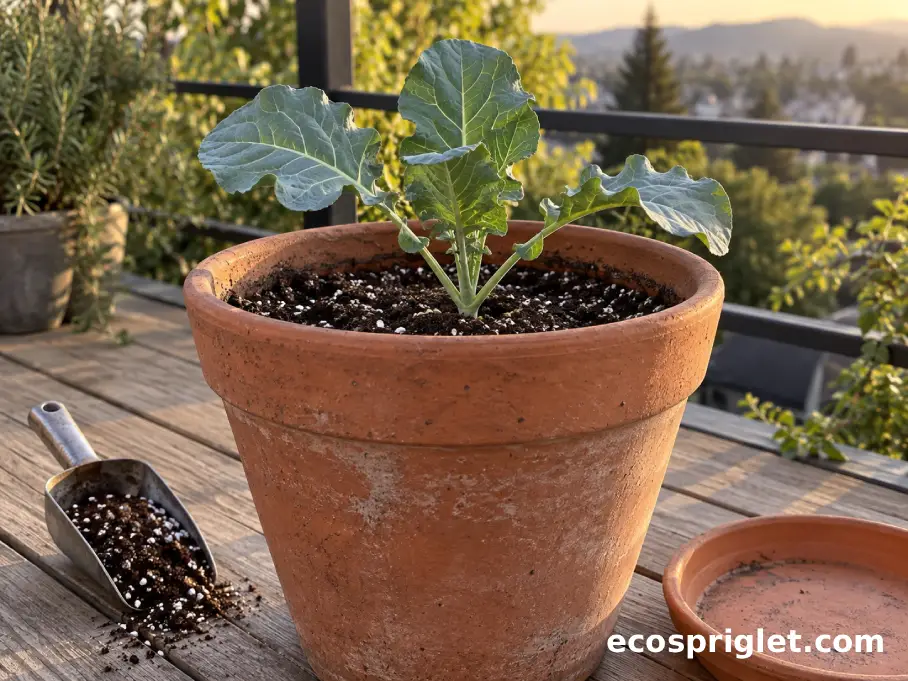
A broccoli seedling can look absurdly small in its final pot. Resist the temptation to fill the empty space with three more plants. The mature broccoli plant develops a substantial crown of leaves, and crowding usually means stronger competition for water, nutrients, and light.
Purdue Extension’s container guidance lists an 8-inch-diameter container as a minimum per broccoli plant. For an apartment balcony, I prefer giving a single full-size plant closer to a 12-inch-wide container when space allows. Illinois Extension equates a typical 12-inch pot with roughly 5 gallons of soil volume, and the extra mix gives you a useful moisture buffer on sunny or windy days.
Fill the container with a quality potting mix rather than soil dug from a yard. Garden soil can become dense and poorly aerated in a pot; Illinois Extension specifically recommends well-aerated container media instead. Leave about 1 inch below the rim so you can water thoroughly without washing mix over the edge.
The pot must have drainage holes. Do not put a layer of gravel beneath the potting mix in an attempt to improve drainage. Illinois Extension and Penn State Extension both explain that coarse material at the bottom can leave water perched in the finer potting medium above it rather than solving the drainage problem.
If you are planting broccoli in a bed or long planter rather than individual pots, conventional recommendations range roughly from 12 to 24 inches between plants depending on the production system and desired head size. Utah State notes that tighter spacing can reduce main-head size and side-shoot production.
For more ways to fit edible plants into limited space, see our container gardening guide.
Keep Growth Steady With Water and Sensible Feeding
A broccoli plant grows best when it does not repeatedly swing between bone-dry and waterlogged. That balance is especially important once the central head begins forming.
In a container, forget rigid watering schedules. Push a finger about 1 inch into the mix. When that upper layer feels dry, water thoroughly until some moisture exits the drainage holes. Purdue Extension recommends this same top-inch test for container plants.
On my own balcony, wind is often the variable that ruins a neat watering calendar. A pot that stays moist for two days during mild weather can need attention the next afternoon when dry wind arrives. I check the soil rather than assuming yesterday’s routine still applies.
Feeding should be equally measured. Broccoli is a fairly substantial vegetable, but excessive fertilizer is not a shortcut to a bigger head. Start with a potting mix formulated for container vegetables. If it contains no fertilizer, add a complete vegetable fertilizer according to the product’s container directions. If it already contains controlled-release fertilizer, account for that before adding more.
Three useful cues are:
- If the top inch is dry, water deeply rather than giving the surface a small splash.
- If water races down the sides of a severely dry pot, apply it slowly in two passes so the mix can rehydrate.
- If a detachable saucer remains full after watering, empty it rather than leaving roots standing in water.
Illinois Extension emphasizes that proper drainage is as important as the water itself and that containers may need increasingly frequent checks as weather gets hotter.
Protect Developing Heads From Heat, Wind, and Pests
Broad broccoli leaves attract the same insects that find cabbage, kale, and other brassicas. Chewed holes often point to caterpillars such as imported cabbageworms or loopers, while clusters of small soft-bodied insects tucked into young leaves may be aphids.
An apartment balcony gives you one advantage: there are only a few plants to inspect. Look under leaves every couple of days, particularly while the plant is young. Catching a handful of eggs or caterpillars early is much simpler than cleaning pests out of a nearly finished head.
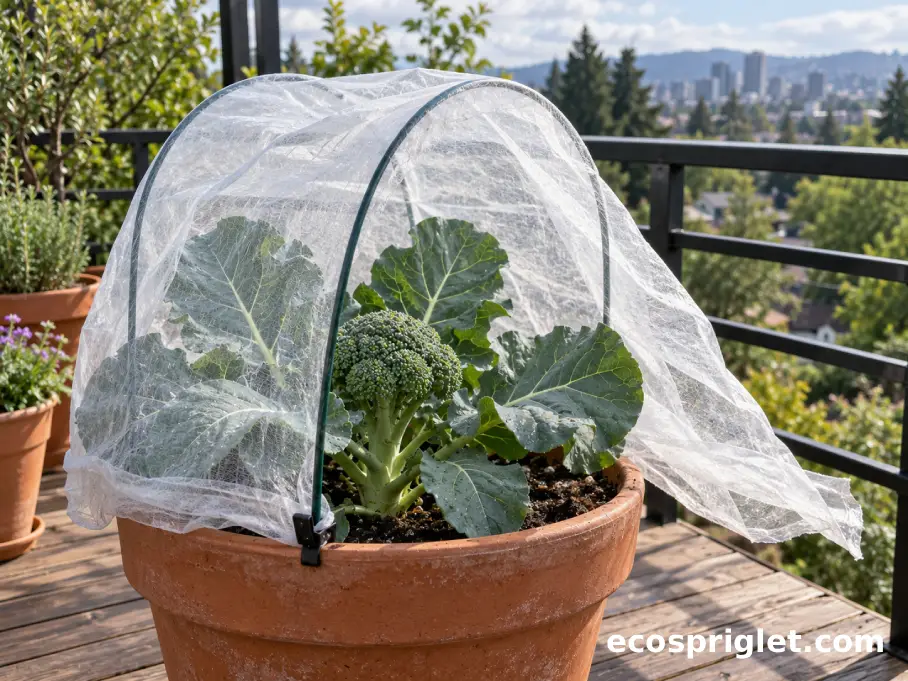
Lightweight row cover can prevent adult moths and butterflies from laying eggs on the foliage. Utah State University Extension recommends covering brassicas soon after planting or transplanting, while University of Minnesota Extension notes that covers should be anchored securely because loose fabric can whip around in strong wind.
Heat needs attention too. A cover that is useful against insects should not turn the plant into a miniature greenhouse during warm weather. Choose lightweight fabric, monitor the temperature around the plant, and remove or vent protection if it begins trapping excessive heat.
Wind deserves its own apartment-gardening rule. A mature broccoli plant can reach roughly 2 1/2 feet tall, and those wide leaves catch gusts surprisingly well. Keep the pot on the balcony floor rather than balancing it on a railing, and use a stable container. Illinois Extension specifically warns that exposed balconies and rooftops can make containers top-heavy and advises checking building weight limitations when large, heavy pots are involved.
Understand How Broccoli Builds the Head You Harvest
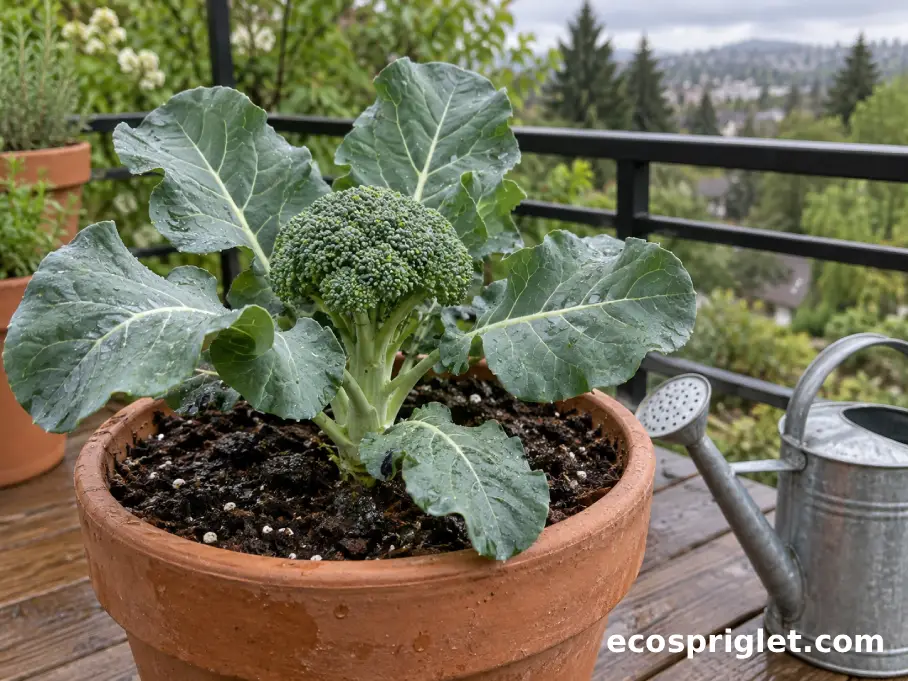
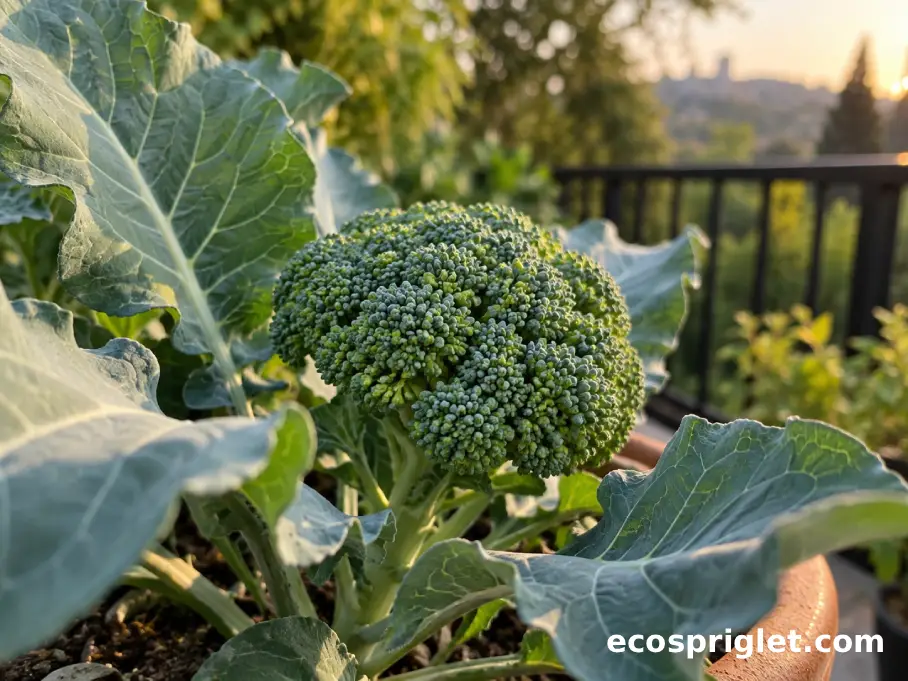
Understanding how broccoli grows makes the plant much easier to read. It first builds a rosette of large leaves. Later, a thick central stem produces the familiar green head. That head is actually a tightly packed mass of immature flower buds.
If you leave the head on the plant too long, those buds loosen and eventually open into small yellow flowers. At that stage you are looking at the broccoli flower plant rather than the tight vegetable head you intended to harvest. Penn State Extension recommends harvesting while the buds remain closed and compact, before yellow petals appear.
How long does broccoli take to grow? There is no single number that fits every seed packet. Extension references place many broccoli varieties broadly around 55 to 95 days to maturity, but the starting point used for that number can differ between seed suppliers and varieties. Weather also changes the pace considerably.
For planning, use the days-to-maturity number printed on your own packet and check whether it is counted from sowing or transplanting. Then treat that figure as an estimate rather than a deadline. A cold spring may slow the plant, while sudden warm weather can push a nearly mature head toward flowering quickly.
Height is easier to visualize. Illinois Extension says broccoli often reaches about 2 1/2 feet, so leave vertical room for the mature foliage rather than judging space from the compact transplant you bring home.
Common Mistakes to Avoid
I learned one of broccoli’s less charming habits after keeping a batch of spring starts indoors longer than planned. The seedlings looked impressively large, so I assumed I was ahead. A couple produced disappointingly small heads soon after transplanting. Bigger transplants had not bought me extra time; they had spent too long under stressful conditions.
That experience matches Utah State Extension’s warning that overly mature broccoli transplants are prone to premature small heads.
- Starting too late: If the main head will mature during sustained summer heat, shift the crop earlier or wait for a fall planting window.
- Crowding the pot: Keep one full-size broccoli plant in a suitably roomy container rather than preserving every seedling.
- Using dense garden soil: Replace it with an aerated container mix so roots receive both moisture and oxygen.
- Watering by calendar: Test the upper inch of mix, then water thoroughly when it feels dry.
- Waiting for a giant head: Harvest while buds are tight. Size varies with variety, weather, root space, and spacing.
Another mistake is reacting to a disappointing plant with more fertilizer. Loose heads during a hot spell are not necessarily a nutrient problem. Neither is a plant repeatedly wilting because its container dries in wind. Match the fix to the symptom before adding anything to the pot.
For balcony vegetables generally, I use the simplest diagnosis first: check soil moisture, recent temperatures, wind exposure, visible insects, and drainage. Those five observations solve more mysteries than reaching automatically for a fertilizer bottle.
Harvest the Main Head and Keep the Plant Producing
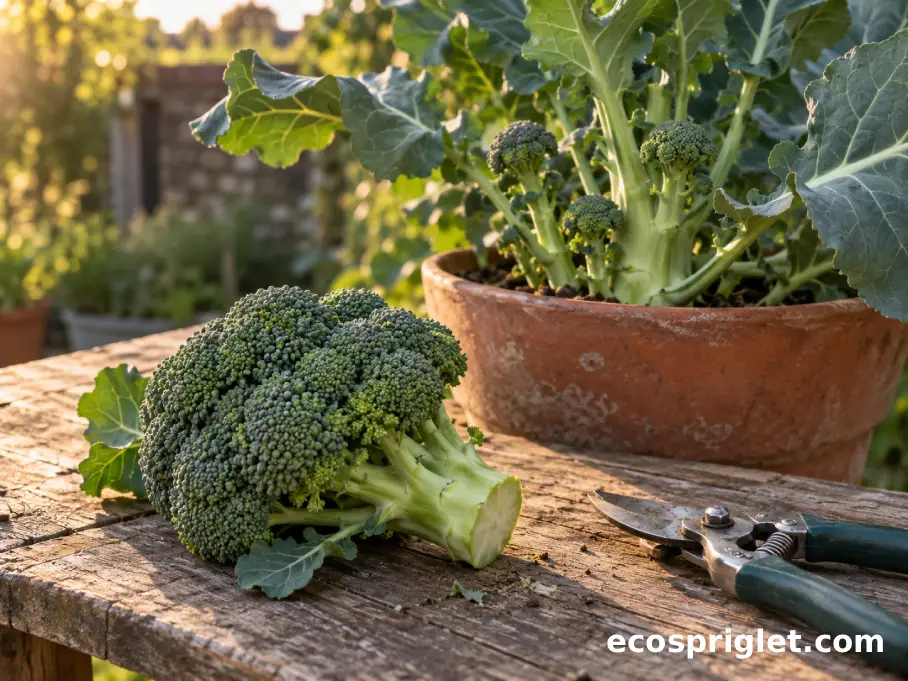
Do not wait for the broccoli head to look like the largest one in a supermarket display. Your better signal is structure: the buds should still be firm, green, and tightly packed. Harvest before they loosen noticeably or reveal yellow petals. Utah State University Extension gives the same basic harvest cue: cut the head while it is compact and before the flower buds open.
Use a clean knife or pruning tool and cut the central head with several inches of stem attached. Leave the lower plant and healthy leaves in place. Many broccoli plants then develop smaller shoots from leaf joints below the original cut.
Those side shoots are one reason I rarely pull a container-grown broccoli plant immediately after its first harvest. Give it continued moisture, keep inspecting for caterpillars and aphids, and watch for new shoots. Utah State notes that side shoots can continue developing after the main head is removed.
The follow-up harvests are generally smaller, which is actually useful in an apartment kitchen. A handful of fresh shoots can go directly into dinner without leaving half a giant head in the refrigerator.
Eventually production will slow, temperatures will become unsuitable, or the plant will begin flowering heavily. At that point, clear the container and refresh the potting mix as appropriate before the next crop. A cool-season pot can then move into lettuce, spinach, radishes, or another compact vegetable suited to your available light. Our vertical gardening guide has more ideas for rotating limited container space.
A Small Balcony Can Produce Good Broccoli
Broccoli is not the smallest vegetable you can grow in an apartment, but it is entirely workable when one plant gets a proper share of the balcony. Give it cool weather, six or more hours of useful sunlight where possible, a roomy container with real drainage, and steady moisture. Start broccoli seeds about five to seven weeks before transplanting or buy compact, vigorous starts, then resist crowding them together.
The most important skill is learning to read the plant. A dry upper inch of potting mix means it is time to water. Ragged holes mean it is time to inspect for caterpillars. A rapidly loosening head during warm weather means harvest should move up your schedule. Tight green flower buds mean dinner is close.
And remember that the first head does not always end the crop. Leave a healthy plant in place and smaller side shoots may reward you for the space it occupied.
For a beginner, I would start with one broccoli plant rather than a whole row of pots. One plant teaches you the timing, watering rhythm, pest pressure, and amount of space broccoli really needs without taking over the balcony. Once you know how it behaves in your particular microclimate, adding a second spring or fall plant becomes a much easier decision.