Zucchini can make a balcony feel crowded surprisingly fast. One healthy plant may spread several feet across, throw large leaves over neighboring pots, and demand plenty of water just as summer heat arrives. That makes choosing zucchini companion plants less about squeezing as many species as possible into one container and more about giving each plant a useful job.
For apartment gardeners, the most useful companions tend to do one of four things: provide flowers for pollinators and beneficial insects, help disrupt or divert certain pests, cover otherwise unused space early in the season, or add another edible crop without smothering the squash. Research summarized by University of Minnesota Extension supports several of these functions, including flowering habitat around squash and the use of nasturtiums and certain trap crops in pest management.
If you know zucchini as courgette, the same principles apply. Yellow summer squash behaves similarly, while sprawling winter squash and butternut need a little more breathing room. Below, I’ll focus on combinations that make sense on balconies, patios, and other container gardens rather than repeating old companion-planting charts without explaining why the pairings might work.
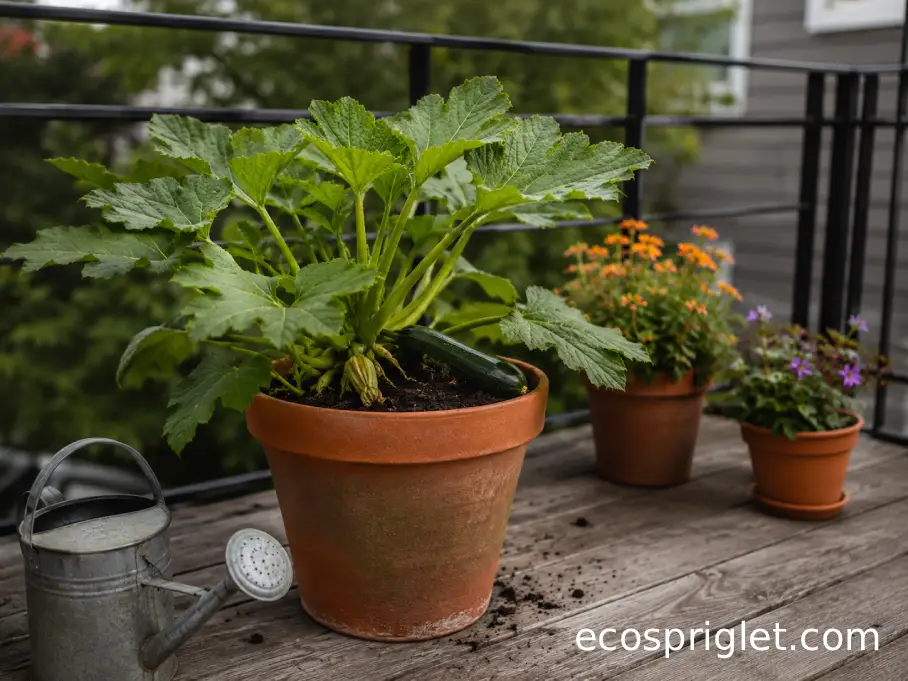
Think of Companion Planting as Giving Each Plant a Job
Companion planting is most useful when you stop expecting plants to have mysterious likes and dislikes. A neighboring flower will not make up for a zucchini plant sitting in deep shade, and an aromatic herb is not an invisible force field against insects. The stronger evidence centers on physical and ecological effects such as attracting pollinators, providing habitat for predators and parasitoids, interrupting pest movement, or using a trap crop to draw insects toward a different plant. University of Minnesota Extension specifically describes these mechanisms when discussing companion planting in home gardens.
That distinction matters even more in containers. Your zucchini already needs substantial root room, moisture, sunlight, and airflow. Colorado State University Extension lists about 5 gallons per summer squash plant as a minimum container volume and notes that compact forms are better suited to container culture. Wisconsin Extension likewise recommends at least 5 gallons and roughly 12 to 18 inches of container depth for large vegetables such as squash.
So my first rule is simple: do not judge a companion by whether it can physically fit beside the zucchini seedling in May. Judge it by whether both plants will still fit when the squash is mature in July.
For more help setting up large vegetable pots, see our container vegetable gardening guide.
The Most Useful Companions for Zucchini
The best companion plants for zucchini are usually modest plants that earn their space without competing heavily with the squash. In a small garden, I favor flowers and quick crops over another large vegetable.
| Companion | What It Can Do | Small-Space Placement | Main Caution |
|---|---|---|---|
| Nasturtium | May help reduce squash bug pressure and adds flowers for insects | Separate pot beside zucchini | Trailing stems can spread farther than expected |
| Sweet Alyssum | Provides flowers and habitat for beneficial insects | Small pot or nearby window box | Do not let it disappear beneath squash leaves |
| Marigold | Flowering companion associated with increased beneficial-insect activity in squash plantings | One small neighboring pot | It is not a substitute for pest inspection |
| Dill or Cilantro | Flowers can supply nectar and pollen to beneficial insects | Separate herb pot within a few feet | Let at least part of the plant flower |
| Radish or Leaf Lettuce | Uses space early while zucchini is still small | Outer edge of a large planter or its own shallow box | Harvest before squash foliage overwhelms it |
Nasturtium deserves special attention. University of Minnesota Extension reports research in which nasturtium helped reduce squash bug populations, while another study found reduced damage from squash bugs and cucumber beetles when nasturtiums or marigolds were included. Utah State University Extension also recommends nasturtium alongside summer squash as a way of making the crop less obvious to squash bugs.
Sweet alyssum is another useful option rather than just decoration. University of Minnesota Extension notes a Florida squash study in which African marigolds and sweet alyssum increased natural enemies of aphids and produced a small positive yield effect. That does not mean two alyssum plants guarantee more zucchini, but it gives the pairing a much stronger basis than garden folklore alone.
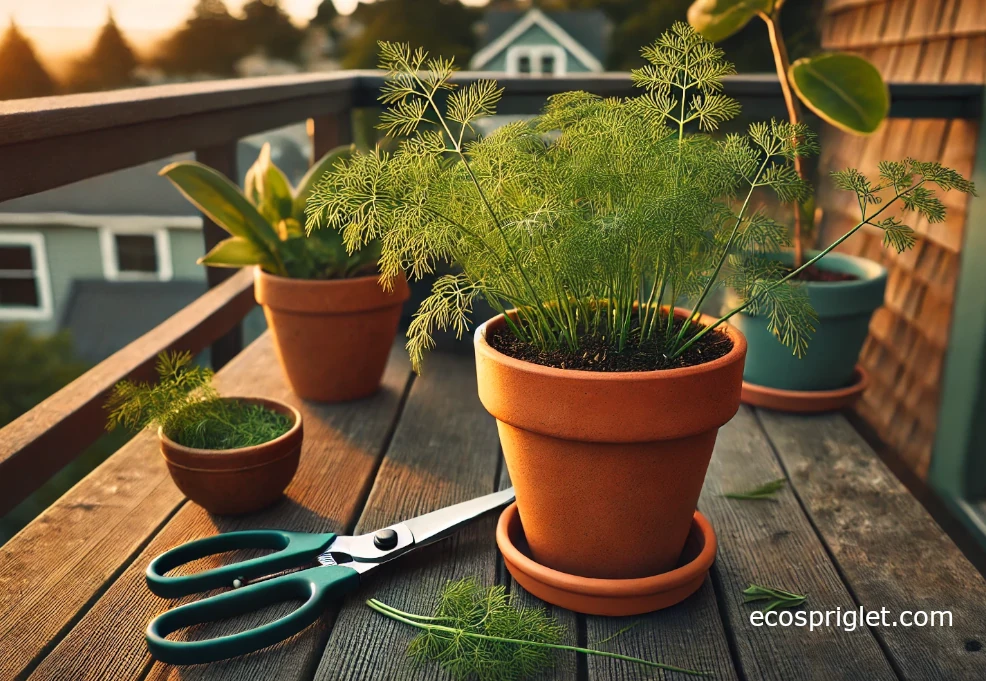
Flowering dill and cilantro are more general-purpose insect plants. Utah State University Extension notes that nectar- and pollen-producing plants can attract beneficial insects, so I like keeping one flowering herb container near vegetable pots rather than cramming herbs into the zucchini’s root zone.
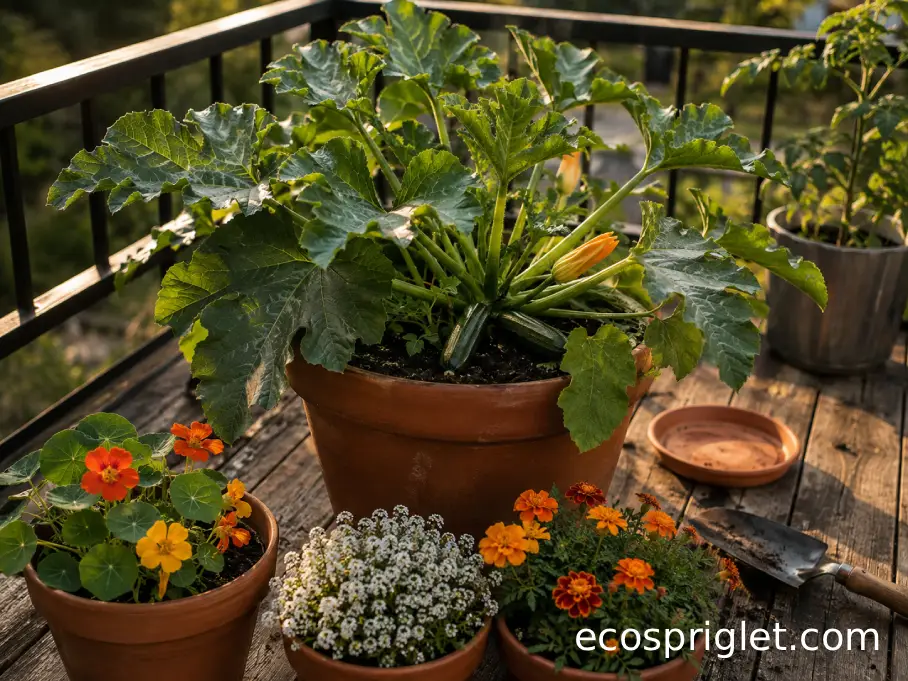
Give the Zucchini Its Own Root Space
A young zucchini makes a shared planter look temptingly empty. Give it a few weeks and that empty space disappears. Colorado State University Extension lists summer squash at roughly a 36-by-36-inch growing footprint and a minimum of about 5 gallons of growing medium per plant.
For that reason, I usually treat 5 gallons as the floor, not a target, and use a wider 7- to 10-gallon container when balcony space and weight limits allow. The extra soil gives you more moisture reserve on a hot or windy terrace, but remember that larger wet containers are substantially heavier. Check your lease, building rules, railing restrictions, and any structural guidance before adding oversized planters.
Put vigorous companions in their own containers instead of dividing the zucchini’s root space. A 1- to 2-gallon pot beside the squash is plenty of room for a modest nasturtium or flowering herb, while alyssum works nicely in a small window box. Separate containers also let you move companions if they begin shading the squash.
Water needs deserve the same practical approach. Utah State University Extension gives summer squash a garden baseline of roughly 1 to 2 inches of irrigation per week, but containers can dry considerably faster. University of Minnesota Extension notes that container plants may require watering more than once a day depending on container size and temperature. Check the potting mix daily during hot weather rather than watering by calendar alone, and aim for evenly moist rather than constantly soggy media.
Leave enough room to reach the soil, inspect leaf undersides, and harvest without crawling under a wall of foliage. On my own small setups, that access space has been more useful than squeezing in one extra plant.
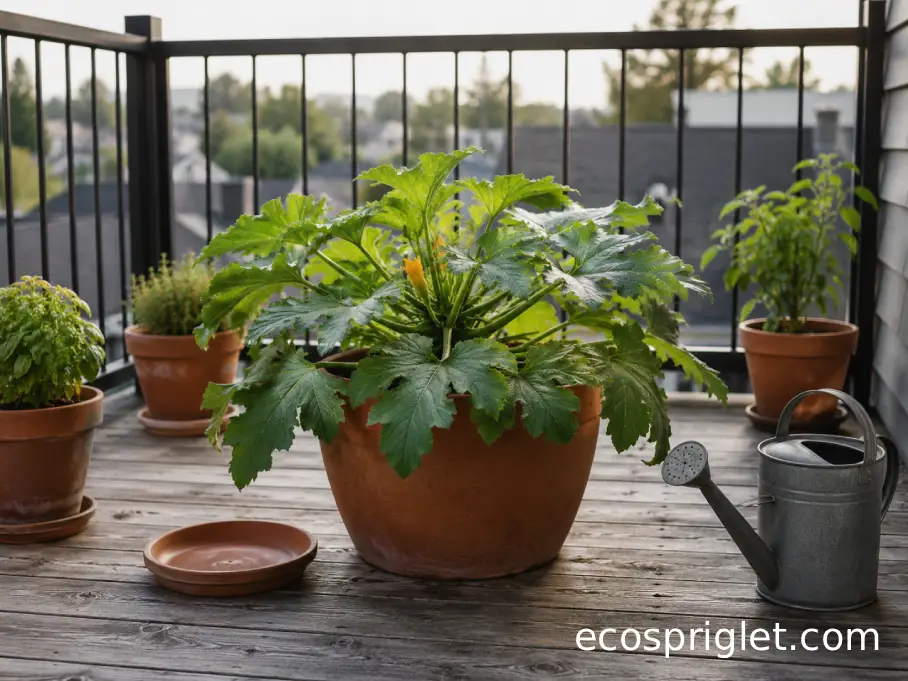
Use Flowers to Help Pollinators Find the Squash
Zucchini has separate male and female flowers, and pollen must be transferred between them for fruit to develop normally. Bees are common squash pollinators, which is why a few continuously flowering plants nearby can be more valuable than another leafy vegetable. University of Minnesota Extension specifically recommends providing flowering habitat around squash and pumpkins to support bumblebees and other pollinators.
This is especially relevant several floors above street level, where your zucchini may be isolated from a larger garden. Try to keep at least one flowering container near the squash while it is blooming. Alyssum, nasturtium, marigolds, or an herb allowed to flower can all contribute to a more insect-friendly little terrace.
Also watch how you use pest barriers. Row cover is useful earlier in the season, but it becomes counterproductive once squash flowers open because it blocks pollinators along with pests. University of Minnesota Extension advises removing covers when flowering begins.
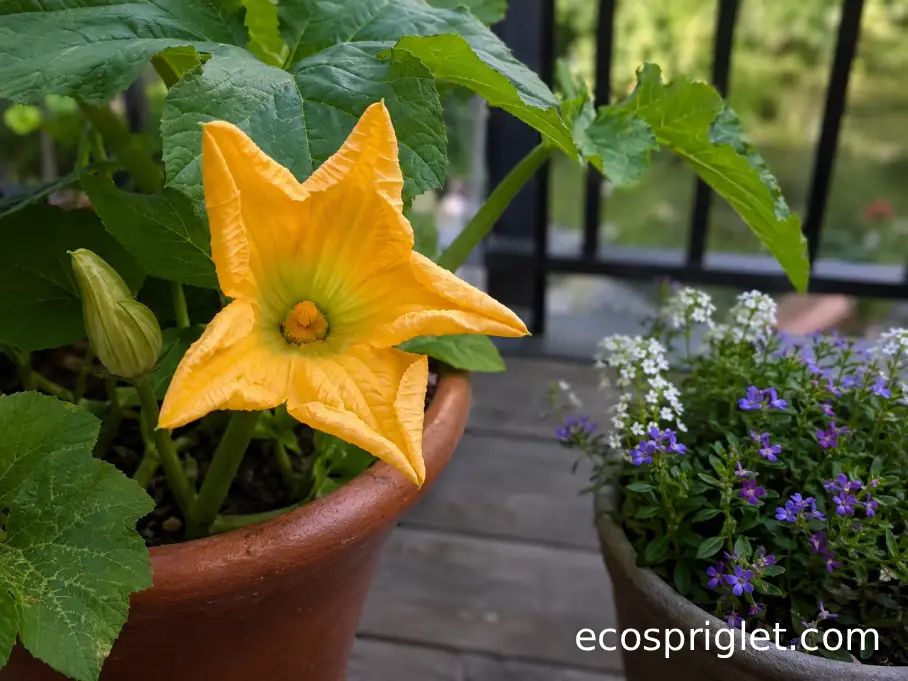
Manage Squash Bugs Without Expecting a Miracle Plant
Nasturtiums are among the more defensible companion plants for squash bugs, but I would still treat them as one layer of pest management rather than the whole plan. Research summarized by University of Minnesota Extension supports reduced squash bug pressure around nasturtiums, yet the same Extension guidance recommends direct monitoring and removal when insects appear.
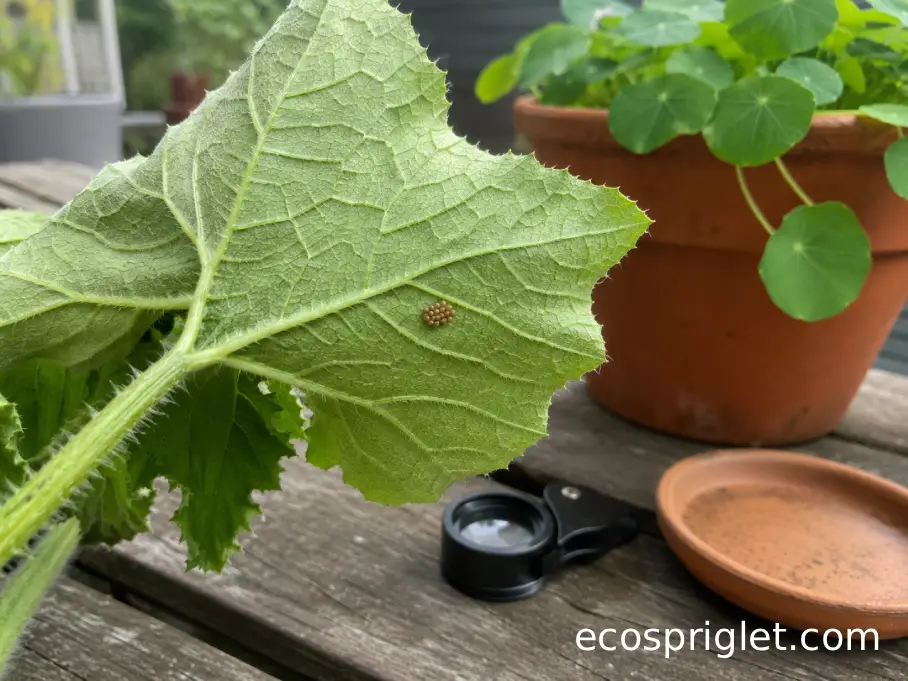
I learned this distinction the annoying way with a squash pot years ago: the flowers looked great, so I assumed the planting was taking care of itself. A week later I found egg clusters tucked beneath leaves I had not been checking. The useful companion was still useful; I had simply expected it to do a gardener’s job.
- Inspect the undersides and stems of leaves at least once or twice a week once pest activity begins.
- Crush or remove egg masses when you find them; University of Minnesota Extension recommends physical removal in home gardens.
- Remove dead leaves and plant debris that give adult squash bugs sheltered hiding places.
- Keep plants adequately watered and fertilized so they are better able to tolerate feeding damage.
- Use flowers as support for your pest plan, not as permission to stop scouting.
University of Minnesota Extension also discusses Blue Hubbard squash as a trap crop that attracts cucumber beetles, squash bugs, and squash vine borers. That can be useful in a larger garden, but a sprawling Hubbard squash is rarely sensible on a compact apartment balcony. It can take more space than the crop you were trying to protect, and the trap plant still has to be monitored and managed.
Some Bad Companions Are Really Just Bad Roommates
Lists of bad companion plants for zucchini often sound more certain than the evidence allows. I would worry less about supposed botanical feuds and more about visible conflicts you can actually manage: shade, root competition, restricted airflow, shared pests, and plants that make harvesting difficult.
Another large zucchini, cucumber, pumpkin, melon, or sprawling squash is usually a poor choice for the same container. The problem is not that the plants poison one another. They are simply large cucurbits demanding similar resources and, in some cases, attracting some of the same pests. Squash bugs, for example, feed primarily on squash and pumpkins but can also attack other cucurbits.
Tall plants can also become awkward companions if they sit between your zucchini and the sun. A sunflower or climbing bean may work perfectly well on the north side of a sunny patio, yet create an unnecessary shade problem on the south-facing edge of the same arrangement. Move the pot rather than declaring the species incompatible.
I also avoid planting mint directly with zucchini. Mint’s spreading growth makes it far easier to manage in a dedicated container. And although low flowers are useful, a dense carpet of companion plants stuffed beneath squash leaves can reduce access and keep foliage packed together. Leave visible gaps so air moves around the crown and you can spot problems early.
Yellow Squash and Courgettes Follow the Same Basic Plan
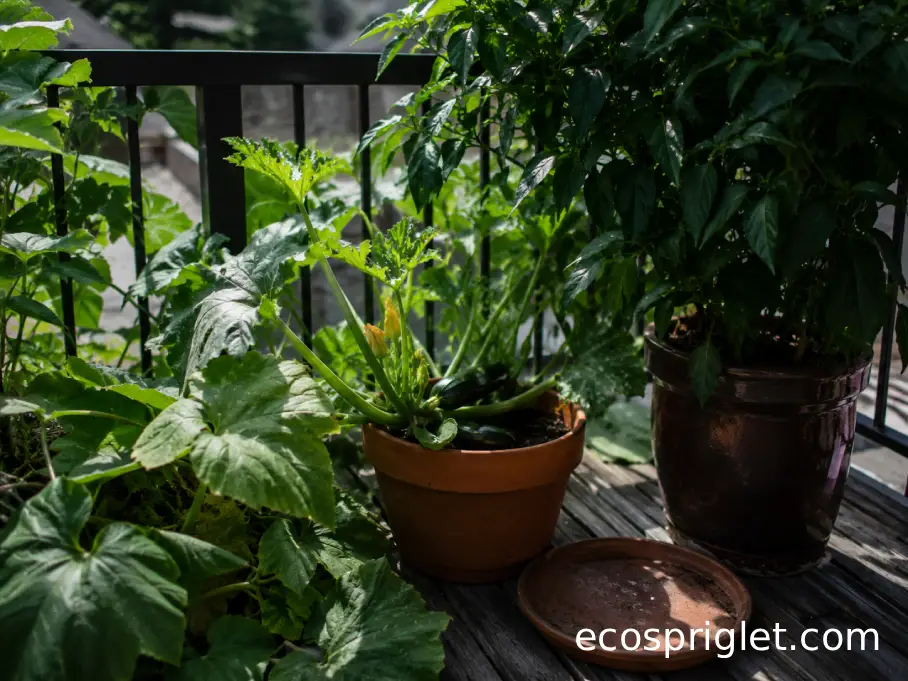
Yellow straightneck, crookneck, pattypan, and zucchini are all summer squash, so companion plants for yellow squash do not require a completely different strategy. University of Minnesota Extension groups these crops together as Cucurbita pepo summer squash and notes that bush forms are particularly useful where space is limited.
That means summer squash companion planting can stay pleasantly simple: give the squash ample sun and root space, keep a low flowering plant nearby, and use short-lived crops only while there is genuine room for them. If you call the crop courgette, companion planting works on exactly the same ecological principles rather than needing a separate courgette-specific chart.
One practical detail beginners sometimes miss is pollination. All of these summer squash produce separate male and female flowers, so seeing plenty of blossoms does not automatically mean every tiny squash will mature. Bees commonly move the pollen between the flowers.
Keep that in mind before blaming a companion plant for poor fruit set. A balcony with abundant foliage but very little insect activity may have a pollination problem rather than an incompatible-neighbor problem.
Winter Squash and Butternut Need More Space Around Their Companions
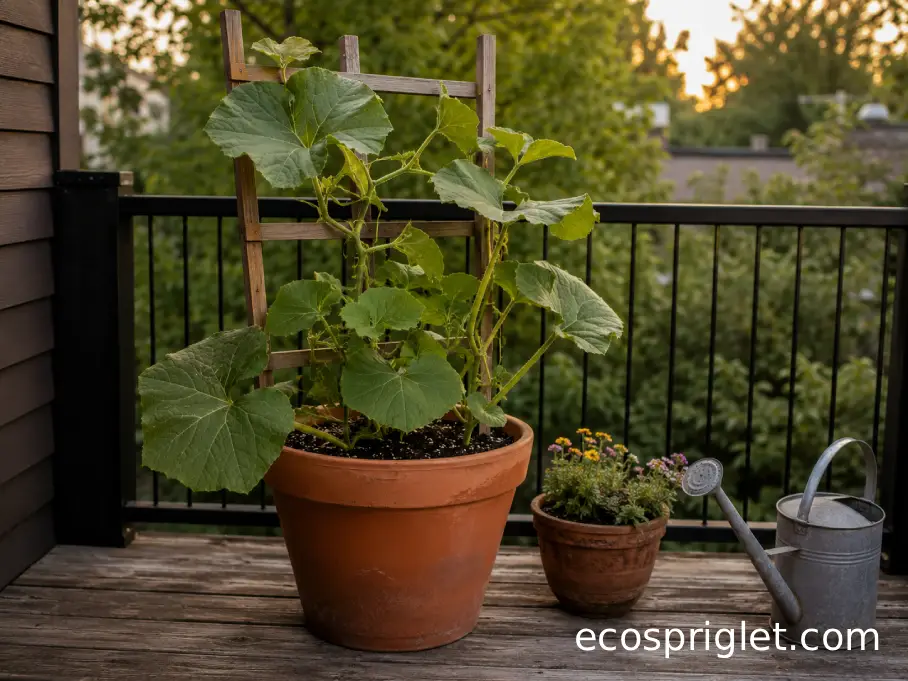
Companion plants for winter squash can perform the same jobs as companions around zucchini, but the squash itself changes the geometry of the garden. Winter squash generally needs more growing medium and more room for vines. University of Maryland Extension places winter squash among large container vegetables requiring at least about 8 to 10 gallons of growing medium and 12 to 16 inches of depth.
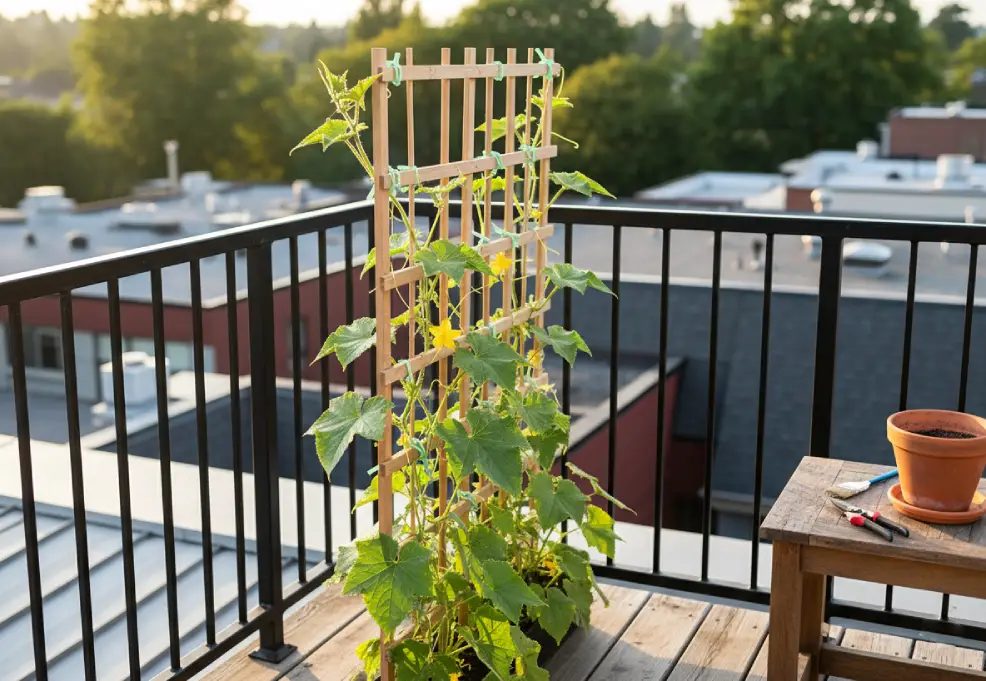
On a balcony, that usually pushes me toward separate companion pots. A trailing nasturtium beside the container can be useful; a nasturtium fighting a butternut vine for the same root space is less appealing. Give vines a planned direction, and use only freestanding supports or fastening methods permitted by your building. Never assume a railing is designed to carry a heavily loaded planter or trellis.
Butternut squash also illustrates why companion planting should not replace plant selection. University of Minnesota Extension notes that butternut and some other squash types tolerate squash bug feeding better than certain alternatives, and Cucurbita moschata squash can also be comparatively tolerant of squash vine borer. Tolerance does not mean immunity, but choosing a suitable squash can sometimes matter more than adding another companion.
For large winter squash, think of companions as neighboring support plants, not occupants of the same crowded pot.
Common Mistakes to Avoid
I learned the biggest companion-planting lesson the hard way: a planting can look wonderfully efficient at the beginning of the season and become almost impossible to water, inspect, and harvest six weeks later. Zucchini is particularly good at exposing optimistic spacing.
- Do not fill a 5-gallon zucchini pot with several permanent companions. Give the squash its minimum root volume first, then place most companions nearby.
- Do not assume flowers eliminate squash bugs. Nasturtiums may help, but inspect leaves regularly and remove eggs when you see them.
- Do not leave protective row covers over flowering plants. Squash needs insect access for pollination.
- Do not let tall companions block the strongest sun. Move separate pots as the season changes and shadows shift.
- Do not water every companion automatically just because the zucchini is thirsty. Separate containers let you match watering to each plant instead of saturating everything equally.
The fix for most of these mistakes is not complicated: use fewer plants, more deliberate spacing, and containers you can reposition. A balcony garden benefits from editing. If one companion is creating shade, blocking airflow, or preventing you from checking the squash, moving it three feet away is usually more sensible than insisting the original planting plan must stay intact.
Try This Simple Three-Pot Balcony Combination
If you are staring at a small balcony and wondering what I would actually plant, I would keep the arrangement uncomplicated.
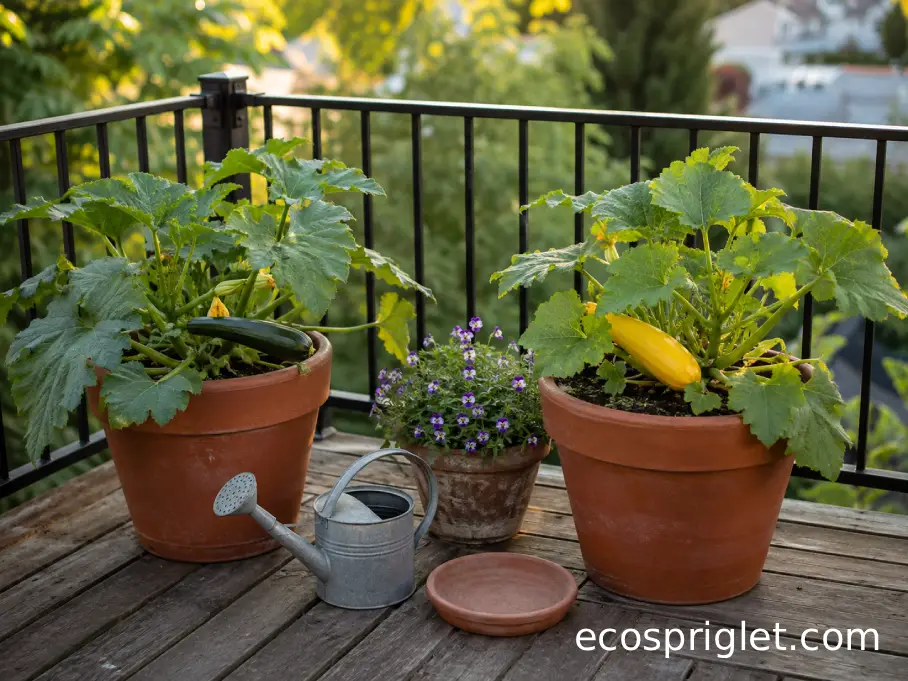
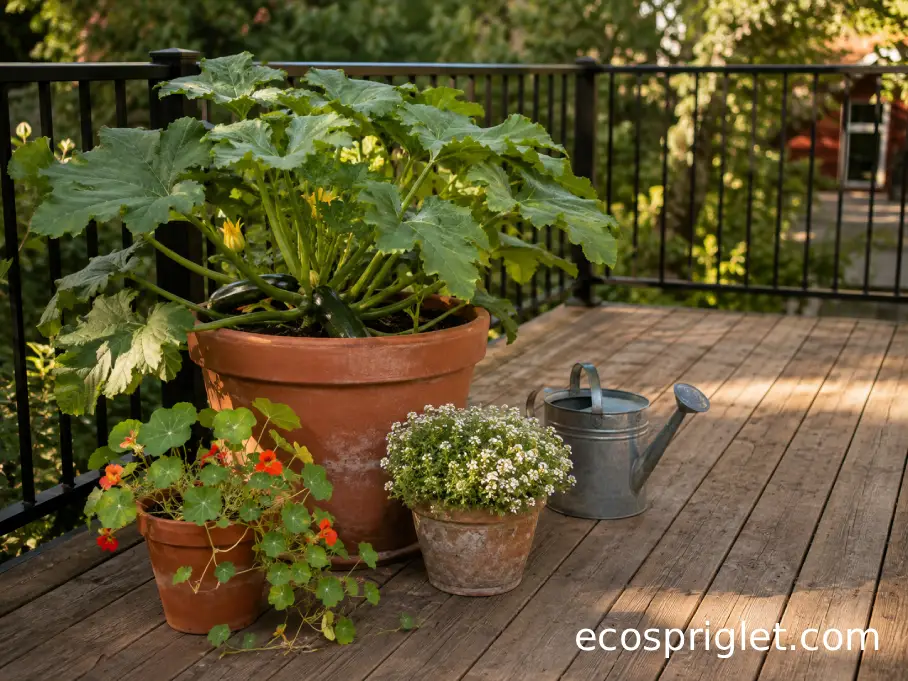
- Pot 1: one compact zucchini plant in at least a 5-gallon container, preferably wider and larger where space and safe weight capacity allow.
- Pot 2: one nasturtium positioned close enough to mingle visually with the squash without sharing its root zone.
- Pot 3: sweet alyssum or an herb such as dill or cilantro that you are willing to let flower.
Give the zucchini the sunniest position and keep the smaller flower pots movable. If the nasturtium starts climbing into the squash crown, redirect or trim it. If the alyssum gets buried behind summer foliage, move it toward the light. And during periods of hot, drying weather, check the zucchini container every day because large vegetables in pots can consume moisture quickly.
This arrangement gives you three useful functions without trying to create a miniature ecosystem inside one pot: the zucchini gets protected root space, the nasturtium adds a research-supported pest-management element, and the flowers add habitat and food resources for visiting insects.
If you have room for only two containers, keep the zucchini and one flowering companion. I would rather see two healthy pots than six plants struggling in an overcrowded trough.
Choose Function Over Companion-Planting Folklore
Good companion planting for zucchini is less about finding a single perfect neighbor and more about creating a useful plant community without sacrificing the squash’s basic needs. Nasturtium has some of the strongest squash-specific support for reducing pest pressure, while sweet alyssum, marigolds, and flowering plants can make the surrounding space more useful to pollinators and beneficial insects.
On a balcony, though, spacing usually decides whether the idea succeeds. Start with at least the recommended root volume for the squash, give it plenty of light, and place most companions in separate movable pots. That lets you adapt when foliage expands, summer shadows change, or one plant suddenly begins drinking much faster than another.
Most importantly, keep looking at the plants themselves. If a companion attracts flowers and insects without creating shade or crowding, it is doing useful work. If it blocks access, competes heavily for water, or turns the container into a tangled mass, move it. A small garden should become easier to manage because of companion planting, not harder.
Start with one zucchini, one flowering companion, and enough open space to care for both well. You can always add another pot once you see how much room your squash actually takes.