Yes, you can grow zucchini in a pot, and it can be surprisingly satisfying on a sunny balcony, patio, or small terrace. The catch is that zucchini is not a polite little herb. It is a fast-growing summer squash with big leaves, thirsty roots, and flowers that need pollination before fruit forms. Give it a cramped pot, weak light, or soggy soil, and it will sulk fast.
The good news is that container growing gives you control. You can choose a bush-type plant, use fresh potting mix, move the container into stronger sun, and check moisture without crawling through a garden bed. For apartment growers, one well-planned zucchini plant in a pot is usually better than three stressed plants fighting for space.
Think of this as a practical setup: one large container, one healthy plant, 6–8 hours of direct sun, steady water, and a little pollination awareness. University of Maryland Extension lists squash among common container crops and recommends 6–8 hours of direct sun for warm-season vegetables such as squash.
Can You Grow Zucchini in a Pot? Yes, With the Right Expectations
The honest answer is yes, but one plant per pot is the realistic apartment-gardener version. Zucchini leaves can spread wider than beginners expect, and the plant needs enough root room to support flowers and fruit. If you are working with a narrow balcony, choose a bush or compact habit rather than a long-vining squash.
I like to tell new growers to treat zucchini as the tomato of the squash world: possible in a container, productive when happy, and quick to complain when the setup is too small. A railing planter or 10-inch decorative pot is not enough. A wide patio pot, grow bag, or food-safe bucket-style container is much more realistic.
Start with one plant the first season. That gives you room to learn its watering pattern, spot pests, and still use the rest of your balcony for herbs, salad greens, or flowers that attract pollinators. University of Maryland Extension also reminds container gardeners to start small in the first year and look for bush or dwarf types when growing in limited space.
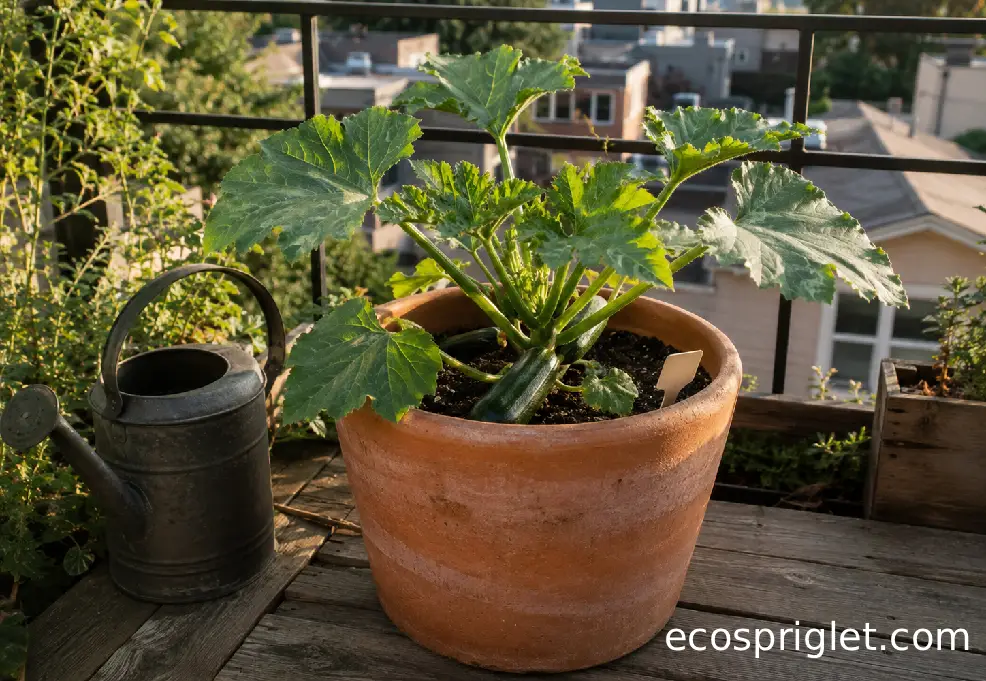
Choose a Pot Big Enough for a Hungry Squash Plant
For a compact zucchini, use at least 4–6 gallons of growing mix as a bare minimum, and go larger when your balcony can safely handle it. I prefer an 8–10 gallon container for a stronger plant because it dries out less dramatically in July heat. University of Maryland Extension lists summer squash among medium vegetables suited to 4–6 gallons and notes that larger vegetables need 8–10 gallons with 12–16 inches of depth.
A good zucchini container should have:
- At least 12 inches of depth, with more room if possible.
- Drainage holes or slits in the bottom.
- A detachable saucer if you need to protect a deck or downstairs neighbor.
- Enough width that leaves can spread without blocking a doorway.
- A stable base so wind does not tip the plant when it gets top-heavy.
Skip the gravel layer inside the bottom of the pot. It sounds helpful, but Illinois Extension explains that gravel inside a pot does not improve drainage and can leave water perched in the soil above it. Use a quality potting mix instead, and lift the container slightly on pot feet or small blocks if water needs room to escape.
One apartment note: a big wet container gets heavy fast. University of Maryland Extension cautions that a 20-inch container filled with moist growing medium and plants can weigh about 100 pounds. On a balcony, check your building rules, avoid crowding too many large pots in one corner, and place heavy containers near structural walls when possible.
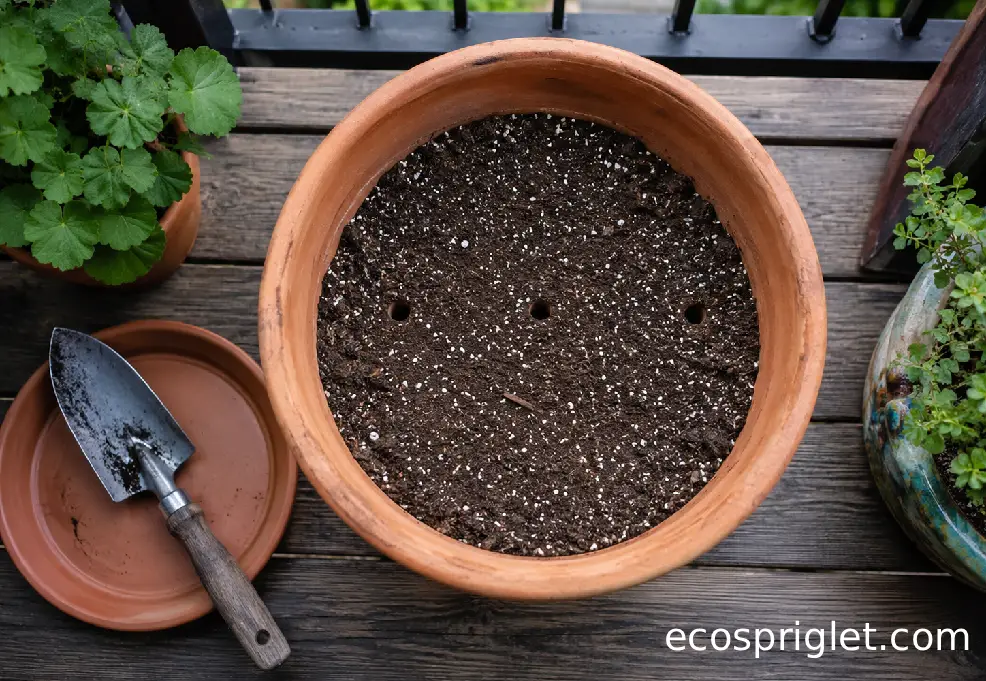
Plant Seeds or Transplants When the Balcony Is Warm
Zucchini is a warm-season crop, so do not rush it onto a cold balcony. Sow seeds or set out a transplant after your last frost period has passed and the potting mix has warmed. University of Minnesota Extension recommends sowing zucchini after the last frost once soil temperatures are at least 70°F at a 2-inch depth.
For seeds, plant two seeds about 1 inch deep near the center of the container, then thin to the strongest seedling once both are up and growing. For a transplant, choose a stocky young plant with 2–4 true leaves, not a lanky, root-bound one already flowering in a nursery pot. Zucchini grows quickly, and a stressed transplant can stall while a direct-sown seedling catches up.
Water the potting mix before planting so it is evenly moist, not dusty. After sowing, keep the top inch from drying out completely until germination. Once the plant is established, switch from babying the surface to watering deeply enough that moisture reaches the lower root zone.
If your balcony gets strong spring wind, protect the seedling for the first week with a low windbreak, such as a clear storage bin set beside the pot rather than over it. Remove any cover before heat builds up. I learned this the hard way with a squash seedling that looked perfect in the morning and cooked under plastic by midafternoon.
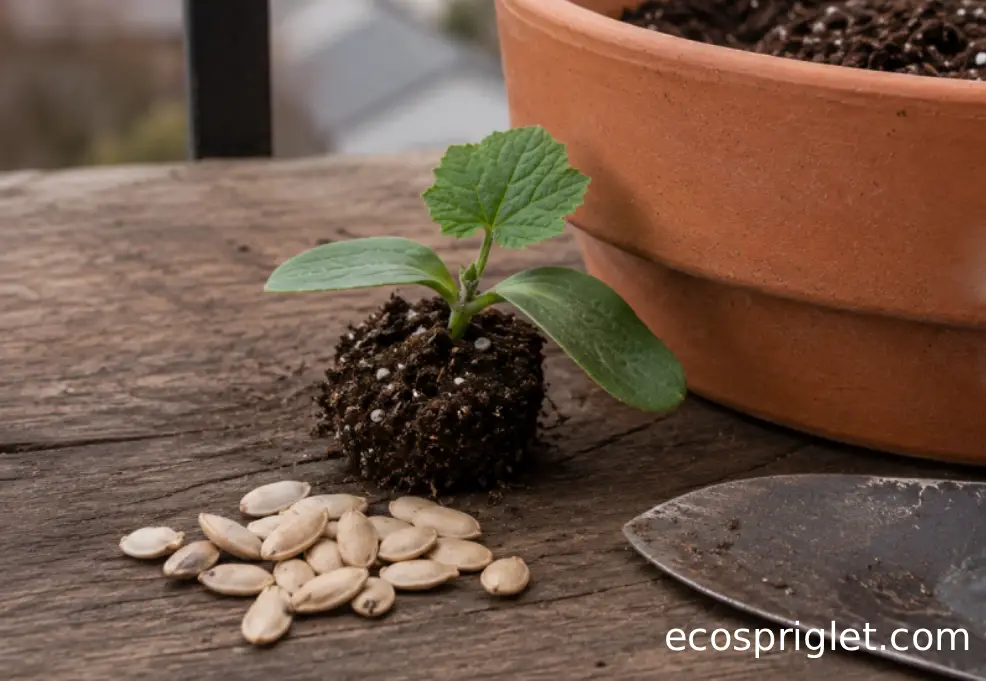
Give Zucchini Full Sun, Steady Water, and Real Food
A potted zucchini needs direct sun, even moisture, and steady nutrition. Aim for 6–8 hours of direct sun. South- and west-facing balconies are usually strongest, while north-facing balconies often struggle unless they have open sky and reflected light. Weak light usually means big leaves, few flowers, and disappointing fruit.
Water when the top 1–2 inches of potting mix feel dry, then water until excess drains from the bottom. During hot, dry, windy weather, a zucchini plant in pot culture may need water every day, and sometimes twice in a heat wave. University of Minnesota Extension notes that container plants may need watering more than once per day depending on container size and temperature, and that most container plants prefer moist, not soggy soil.
Feed gently but consistently. A slow-release vegetable fertilizer mixed into the potting mix can get the plant started, but repeated watering leaches nutrients. Once the plant is growing strongly, use a balanced or vegetable-labeled fertilizer according to the package directions. More is not better; overfertilizing can push lush leaves at the expense of flowers and can damage roots.
Two small-space habits help a lot:
- Turn the pot a quarter turn every few days if one side leans toward the light.
- Mulch the soil surface with straw, shredded leaves, or coconut coir to slow evaporation.
- Empty saucers after watering so roots are not sitting in stale water.
- Keep leaves as dry as practical by watering at soil level.
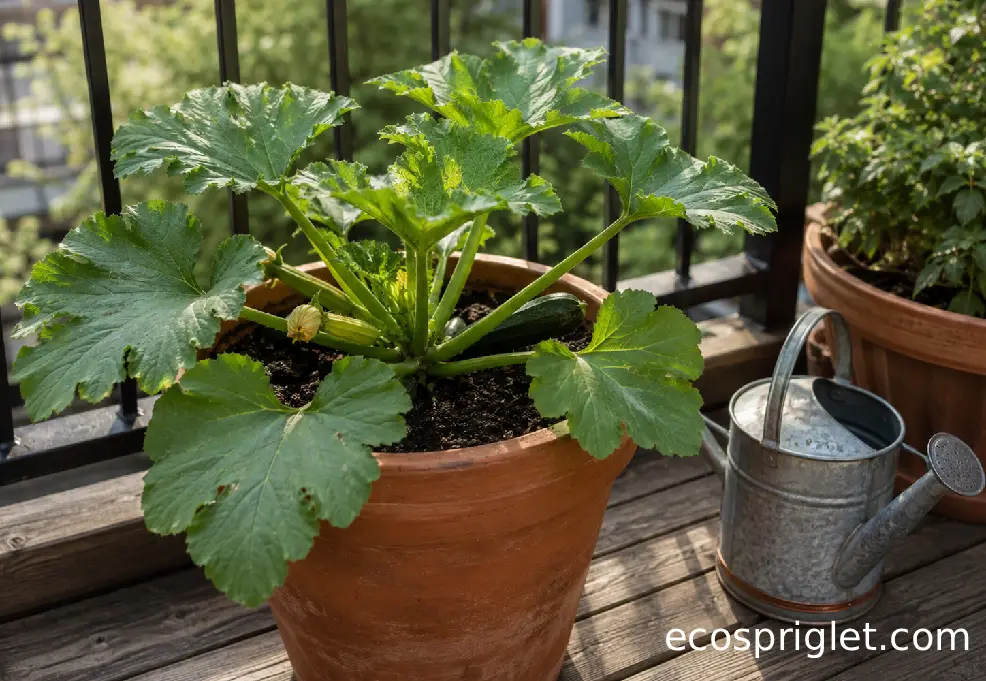
Help Flowers Turn Into Fruit on a Small Balcony
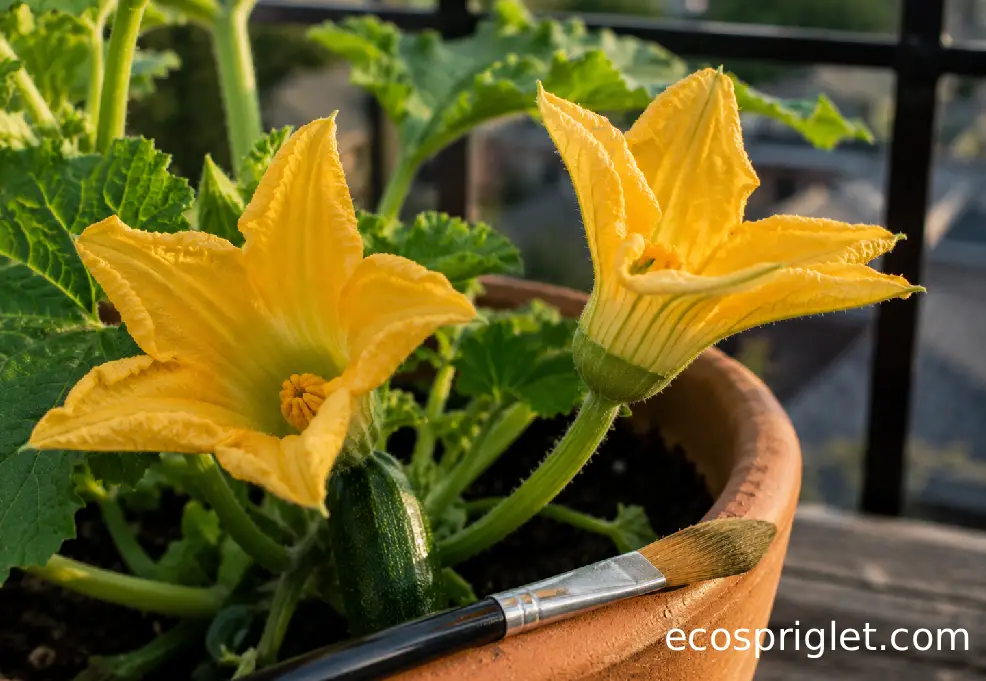
Zucchini plants produce separate male and female flowers. The female flower has a tiny squash-shaped swelling behind it; the male flower sits on a slimmer stem. Early in the season, it is normal to see male flowers first and wonder where the zucchini are. University of Maryland Extension notes that squash family plants often produce male flowers for 1–2 weeks before female flowers appear.
On a balcony, pollination can be hit or miss because bees may not find a single plant tucked between buildings. If flowers open and baby zucchini shrivel instead of growing, hand pollination is worth trying. Do it in the morning while flowers are fresh. Touch a small soft brush to the pollen inside a male flower, then dab it onto the center of a female flower.
I keep a cheap children’s paintbrush in my balcony tool cup for this exact job. It feels fussy the first time, but it takes less than a minute. The main trick is timing: both flower types need to be open on the same morning.
To make your balcony more inviting to pollinators, add a few compact flowers near the zucchini. Calendula, nasturtium, alyssum, and dwarf zinnias fit well in separate pots. Avoid spraying insecticides during bloom, especially when flowers are open. University of Maryland Extension recommends reducing or eliminating insecticide use and avoiding pesticides during squash bloom to lower risk to pollinators.
Keep Potted Zucchini Healthy Through Heat, Wind, and Pests
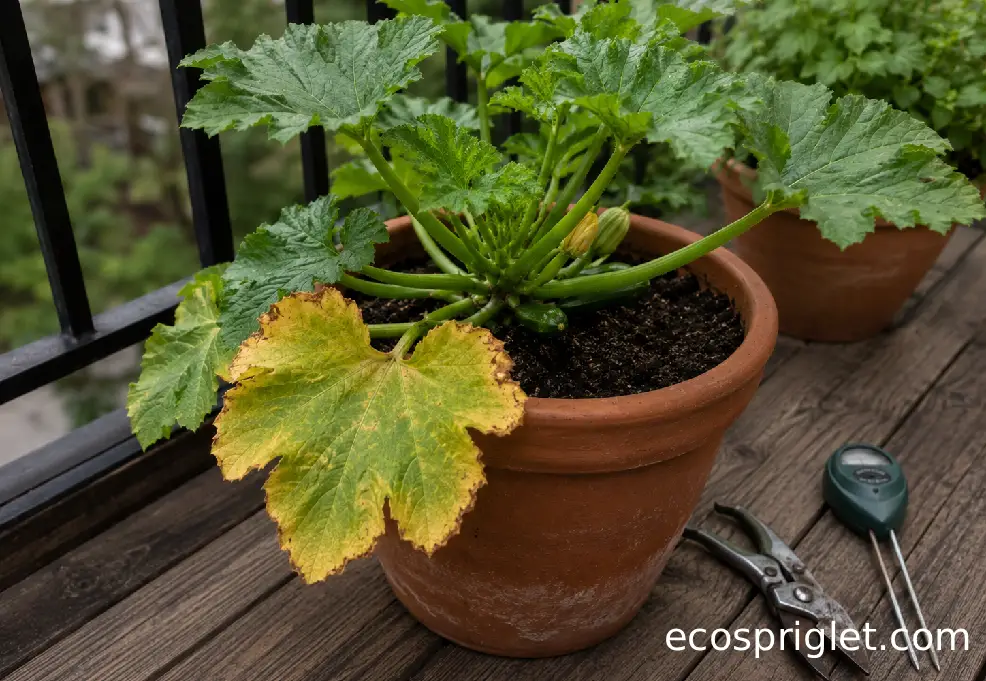
Containers exaggerate weather. A balcony that feels pleasantly warm to you can bake a dark plastic pot, while wind can pull moisture from big zucchini leaves by lunchtime. Watch the plant rather than the calendar. Wilting at 3 p.m. with moist soil may be temporary heat stress; wilting in the morning with dry soil means water is overdue.
If temperatures climb above 90°F, check the pot early in the day. Move black nursery pots into decorative outer containers, use mulch, or shift the plant where it gets morning sun and slight afternoon relief. Do not move it into shade all day; zucchini still needs strong light to flower and fruit.
Common container zucchini problems include powdery-looking leaves, cucumber beetles, squash bugs, aphids, and sudden wilting. University of Minnesota Extension lists cucumber beetles, squash vine borers, and squash bugs as pests that can affect summer squash and zucchini.
Use a simple weekly check:
- Look under leaves for eggs, clusters of insects, or sticky residue.
- Remove badly yellowed lower leaves with clean pruners if they are shading soil and staying damp.
- Keep the pot spaced away from walls so air can move around the leaves.
- Do not work around the plant when leaves are wet, because wet foliage can spread disease more easily.
For renters, pest control should stay low-risk and targeted. Hand-pick visible pests, prune only what is necessary, and use row cover only before flowering unless you are growing a type that does not need pollination. Once flowers open, pollinators need access unless you plan to hand-pollinate consistently.
Common Mistakes to Avoid
The biggest mistake is trying to grow a full-size zucchini in a cute little pot. I understand the temptation; small pots are cheaper, lighter, and easier to tuck into a corner. But zucchini roots need volume, and the leaves need breathing room. If your plant dries out twice a day before it even flowers, the container is probably too small.
Another beginner trap is confusing drainage with dryness. A pot can have holes and still stay too wet if it sits in a full saucer. Empty the saucer after watering, especially in cool weather or after rain blows onto the balcony. University of Maryland Extension emphasizes that drainage is critical for containers and that extra water must be able to drain so roots do not drown or rot.
A few fixes prevent most trouble:
- Plant one zucchini per container, not two or three.
- Use potting mix, not heavy garden soil from a yard bed.
- Do not add gravel inside the pot as a drainage layer.
- Wait for warm weather instead of planting into cold spring conditions.
- Check flowers before assuming the plant is failing; male-only bloom comes first.
The mistake I learned the hard way was overfeeding. My first balcony zucchini grew enormous leaves and very few fruits because I kept giving it high-nitrogen fertilizer. Now I feed more moderately, watch for flowers, and let the plant tell me whether it needs more support.
Harvest Small, Cook Fast, and Store It Safely
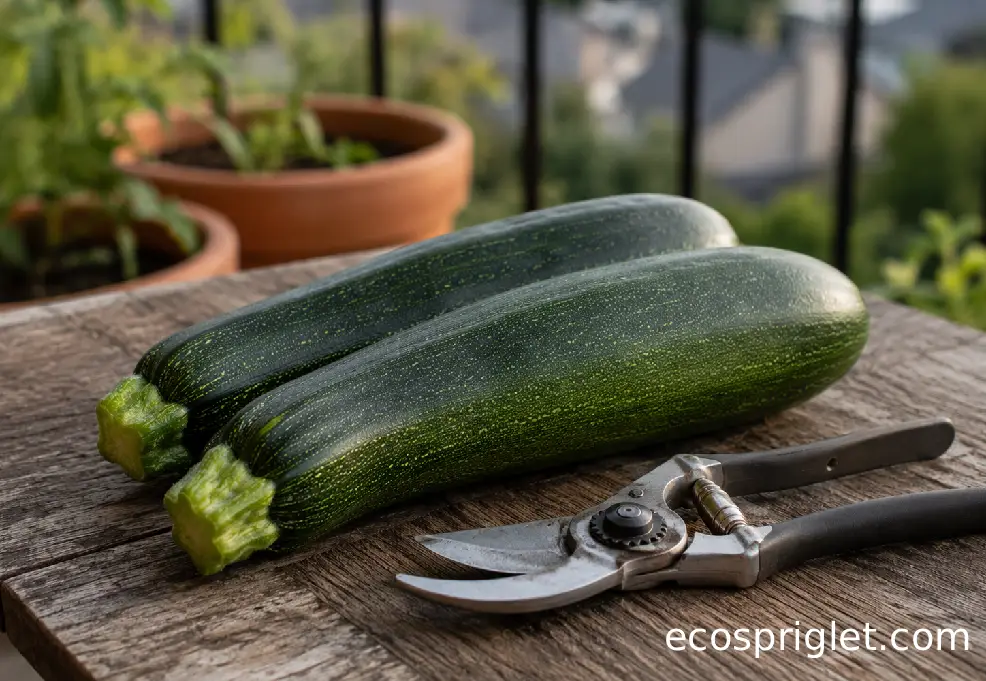
Pick zucchini while the skin is tender and the fruit is still manageable. For elongated zucchini, 6–8 inches long is a good target. University of Maryland Extension recommends harvesting elongated summer squash at about 6–8 inches long and checking plants daily once they begin to bear fruit.
Use pruners or a sharp knife instead of twisting hard on the plant. Leave a short stem attached to the fruit. Frequent harvesting keeps the plant moving; oversized squash left on the plant can slow new fruit production. University of Minnesota Extension also notes that leaving very large squash on the vine can reduce yield, so remove overgrown fruit even if you do not plan to eat it.
For kitchen handling, rinse zucchini under running water before cutting or cooking, and skip soap, bleach, or produce wash. FoodSafety.gov and the FDA recommend washing produce under running water and not using soap or commercial produce washes.
Store unwashed zucchini in the refrigerator if you are not using it right away. USDA SNAP-Ed says unwashed zucchini can be refrigerated for 1–2 weeks, while University of Minnesota Extension gives a shorter best-quality window of up to four days for summer squash. My practical rule is to cook small balcony harvests within a few days when texture matters, and grate extras for fritters, muffins, or quick sautés.
Simple Small-Space Ideas for One Productive Pot
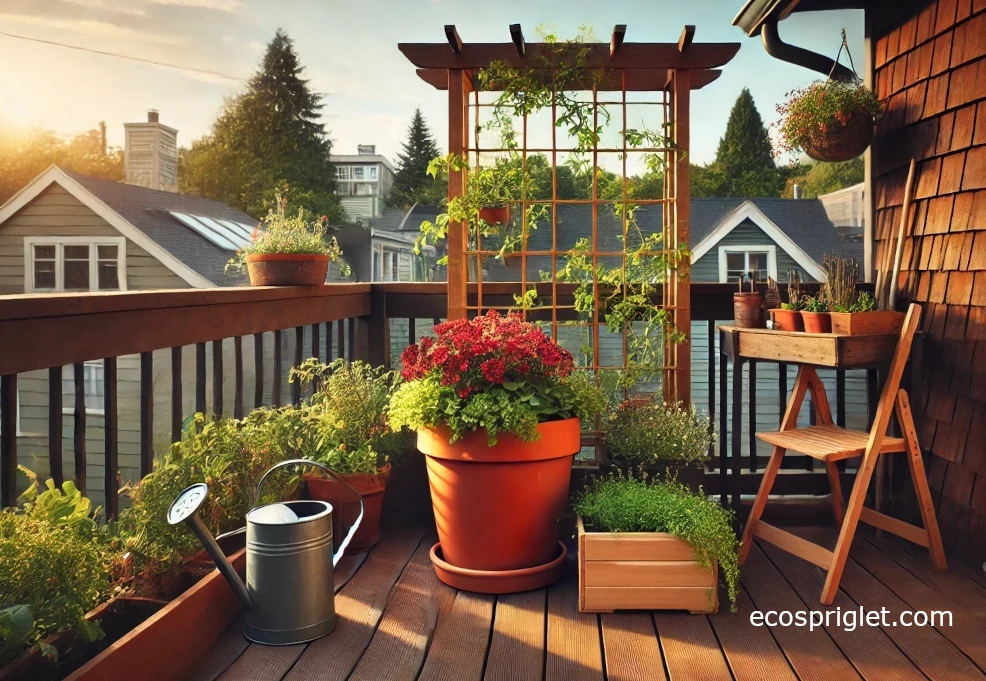
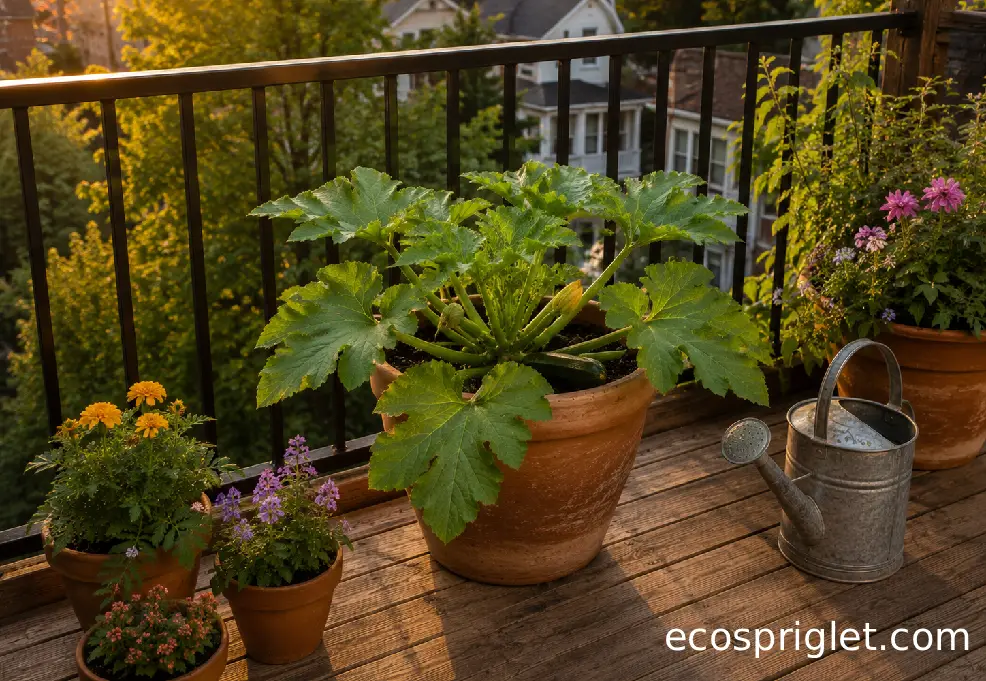
A single zucchini pot can anchor a small edible balcony. Put the zucchini in the sunniest, most open spot, then place smaller companion pots around it rather than planting companions in the same container. This keeps the zucchini roots from competing and makes watering easier.
Good nearby pots include basil, calendula, nasturtium, alyssum, parsley, or compact marigolds. Keep them separate so you can move them if the zucchini leaves start shading everything. If your balcony is narrow, arrange the zucchini at one end instead of the center, where the leaves can spill slightly without blocking your path.
For a tidy setup, try this layout:
- One 8–10 gallon zucchini pot in the brightest corner.
- Two 1–2 gallon flower pots nearby for pollinator interest.
- One saucer or tray that is emptied after watering.
- A small caddy only if the loaded pot is within the caddy’s safe weight rating.
For more small-space planning, pair this project with our Balcony Vegetable Garden Guide. If you are still dialing in soil and drainage, our Container Gardening Soil Mix Guide is a helpful next read.
One last design note from my own terrace: leave yourself room to turn the pot, inspect the back leaves, and harvest without leaning over the railing. A productive balcony garden should feel generous, not like an obstacle course.
Start With One Pot This Season
Growing zucchini in pots works best when you keep the project simple: one plant, one generous container, warm weather, full sun, steady water, and regular harvesting. You do not need a backyard or raised bed to enjoy fresh zucchini, but you do need to respect the plant’s size and appetite.
Start with the largest practical pot your balcony can safely hold, choose a compact plant, and give it a daily look once summer heat arrives. Check the soil, scan under the leaves, notice which flowers are opening, and harvest before fruits turn bulky. Those small habits matter more than fancy gear.
The real reward is not just the first zucchini. It is learning how a big edible plant behaves in a small space. After one season, you will know whether your balcony has enough sun, whether you prefer a grow bag or terracotta pot, and how much water your setup needs in hot weather.