This roundup may contain affiliate links. EcoSpriglet may earn a small commission if you buy through a link, at no extra cost to you. Recommendations are based on product labels, official specs, ingredient transparency, and small-space gardening fit, not commission rates.
The best organic weed killers are not all trying to do the same job. That matters a lot when you garden from a patio, balcony, shared walkway, small lawn strip, or townhouse bed. A weed and grass killer natural enough for patio cracks can still scorch turf, stain hard surfaces, or drift onto your basil if you spray too casually. A good natural weed killer for flower beds may be a poor fit for a lawn. And the best organic weed killer that won’t kill grass is usually not vinegar-based at all.
For this guide, I looked for practical, small-space-friendly products: ready-to-use sprays that do not require a garage full of gear, lawn-safe options for dandelions and clover, and preventative choices for renters or homeowners who would rather stop weeds before they become a weekend project. University of Maryland Extension notes that vinegar herbicides work best on young weeds and may only top-kill mature taproot weeds, which is the key trade-off behind most natural weed killer sprays.
Quick Picks
- Best overall weed killer all natural pick: Green Gobbler Total Control Weed & Grass Killer
- Best for patio cracks and pavers: Earth’s Ally Weed & Grass Killer
- Best natural weed killer for flower beds: Captain Jack’s Deadweed Brew Ready-to-Use
- Best natural weed killer that won’t kill grass: Sunday Dandelion Doom
- Best organic lawn weed prevention: Espoma Organic Weed Preventer Plus Lawn Food
- Best large-area vinegar option: Eco Garden Pro Organic Vinegar Weed Killer
- Best widely available non-selective spray: Natria Grass and Weed Control with Root Kill
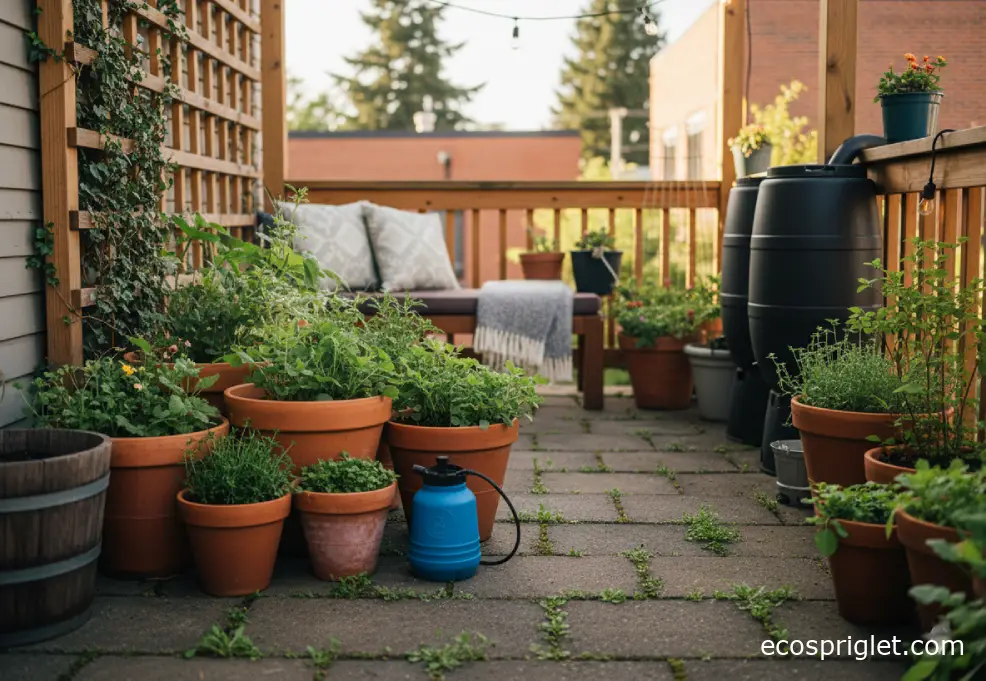
If you only remember one thing, make it this: most natural weed and grass killer sprays are non-selective. That means they can damage grass, herbs, flowers, seedlings, and ornamentals if the spray lands on them. For balcony gardeners, the safest use case is usually a calm, dry day, a close-range spot spray, and a piece of cardboard held behind the weed to block drift.
Comparison Table
| Product | Best For | Main Ingredient Type | Lawn Safe? | Small-Space Fit |
|---|---|---|---|---|
| Green Gobbler Total Control Weed & Grass Killer | Best overall natural weed and grass killer | Salt, vinegar, and water formula | No | Good for walkways, edging, pavers, and container-adjacent weeds |
| Earth’s Ally Weed & Grass Killer | Patios, pavers, and dry sunny cracks | 10% sodium chloride with water, vinegar, and soap | No | Ready-to-use sizes work well for small patios |
| Captain Jack’s Deadweed Brew Ready-to-Use | Flower beds, borders, and garden edges | Caprylic and capric fatty acids | No | Useful when you want organic-gardening approval without mixing |
| Sunday Dandelion Doom | Broadleaf weeds in lawns | Iron chelate, FeHEDTA | Yes, for listed lawn uses | Better for small lawns than whole-yard blanket spraying |
| Espoma Organic Weed Preventer Plus Lawn Food | Preventing new weeds in established lawns | 100% corn gluten meal | Yes, on established lawns | Bulkier bag, but useful for small shared lawn strips |
| Eco Garden Pro Organic Vinegar Weed Killer | Large patios, gravel, and driveway edges | Acetic acid, sodium chloride, and wetting agent | No | Better if you have storage space for larger jugs |
| Natria Grass and Weed Control with Root Kill | Fast spot control on hardscape weeds | Ammoniated soap of fatty acids and maleic hydrazide | No | Easy to find, but not the cleanest organic-positioned pick |
The table leans on official product pages and labels where available. Green Gobbler is OMRI-listed and made with familiar salt, vinegar, and water ingredients; Earth’s Ally lists 10% sodium chloride as the active ingredient; Sunday Dandelion Doom uses FeHEDTA; and Espoma’s weed preventer is made from 100% corn gluten meal.
How We Evaluated These Natural Weed Killers
This is a research-based roundup, not a hands-on test. I evaluated each product by reading official product pages, label directions where available, ingredient disclosures, use-site claims, and extension guidance on how natural herbicides behave in real gardens. OMRI explains that OMRI Listed products are inputs reviewed for compliance with organic standards, which is useful, but it does not automatically mean a product is gentle, lawn-safe, or risk-free around every plant.
For EcoSpriglet readers, the main question is not “what kills the fastest?” It is “what creates the least trouble in a small space?” A gallon jug that makes sense for a driveway can be annoying in a studio apartment. A salty formula can be fine in patio cracks but a poor habit in a raised bed. A strong vinegar spray can be a smart tool, but only if you respect drift, splashback, and the smell.
- Small-space fit: bottle size, storage, spray control, and clutter.
- Apartment friendliness: odor, overspray risk, pet re-entry caution, and shared-walkway practicality.
- Plant selectivity: whether it can be used near lawns, flowers, herbs, or only where no plants are wanted.
- Eco logic: organic listing, ingredient transparency, refill potential, and whether it avoids unnecessary synthetic herbicides.
- Maintenance burden: repeat applications, timing rules, mixing, rinsing, and cleanup.
A Plain-English Note on Organic, Natural, and Pet-Safe Weed Killer
“Natural” is not a magic safety blanket. Vinegar, salt, soaps, fatty acids, and iron-based herbicides can all irritate eyes, skin, paws, or lungs when misused. The EPA notes that vinegar above 8% acetic acid is no longer treated the same as household vinegar for minimum-risk ingredient purposes, and higher acetic acid can cause severe burns and eye damage. That is why I treat “best non toxic weed killer” as a careful shopping phrase, not a promise that you can spray casually in sandals while your dog sniffs the area.
For pets, the calm rule is simple: keep animals and kids away during application, let the spray dry fully, and follow the label. For balconies, I’d add one more step: move pet bowls, doormats, edible planters, and fabric cushions before spraying. Small spaces concentrate the little annoyances that big yards can absorb: vinegar odor, mist drift, wet paws, and sticky residue on pavers.
For lawns, look for selective iron-based products or preventative corn gluten products. Most vinegar, salt, soap, and fatty-acid weed grass killer natural sprays are non-selective, so they are best saved for cracks, gravel, edging, and places where you truly do not want vegetation.
Best Overall: Green Gobbler Total Control Weed & Grass Killer
Green Gobbler Total Control is the one I’d put at the top for most small-space gardeners who want a ready-to-use, eco friendly weed killer for patio cracks, fence lines, edging, and the odd weed that pops up beside containers. Its official product page describes a non-selective formula made with salt, vinegar, and water, with OMRI listing and visible-results claims within 3 hours.
The apartment-garden appeal is straightforward: no mixing, no measuring concentrate in a tiny utility sink, and no need for a separate pump sprayer. That matters if your “garden shed” is one shelf near the laundry basket. It also has the right use profile for urban gardeners: hardscape weeds, walkway edges, pavers, and mulch beds.
What Stands Out
- Ready-to-use format keeps setup simple.
- OMRI listing gives it stronger organic credibility than vague “green” claims.
- Salt-vinegar formula makes sense for cracks and non-growing zones.
- Good fit for renters who need spot control, not whole-yard treatment.
Real Limitations
The trade-off is pretty clear here: this is not the best organic weed killer for lawns. It is non-selective, so overspray can brown desirable grass, flowers, and herbs. I would also avoid making salt-based sprays a regular habit in raised beds or containers, because container soil does not flush and buffer mistakes the way open ground can.
Who Should Buy It
Choose Green Gobbler if you want the best natural weed and grass killer for tidy spot work around pavers, gravel strips, sidewalk seams, and container garden edges.
Who Should Skip It
Skip it if your main problem is dandelions in turf. For that, Sunday Dandelion Doom or a similar iron-based lawn product makes more sense.
Best for Patios and Paver Cracks: Earth’s Ally Weed & Grass Killer
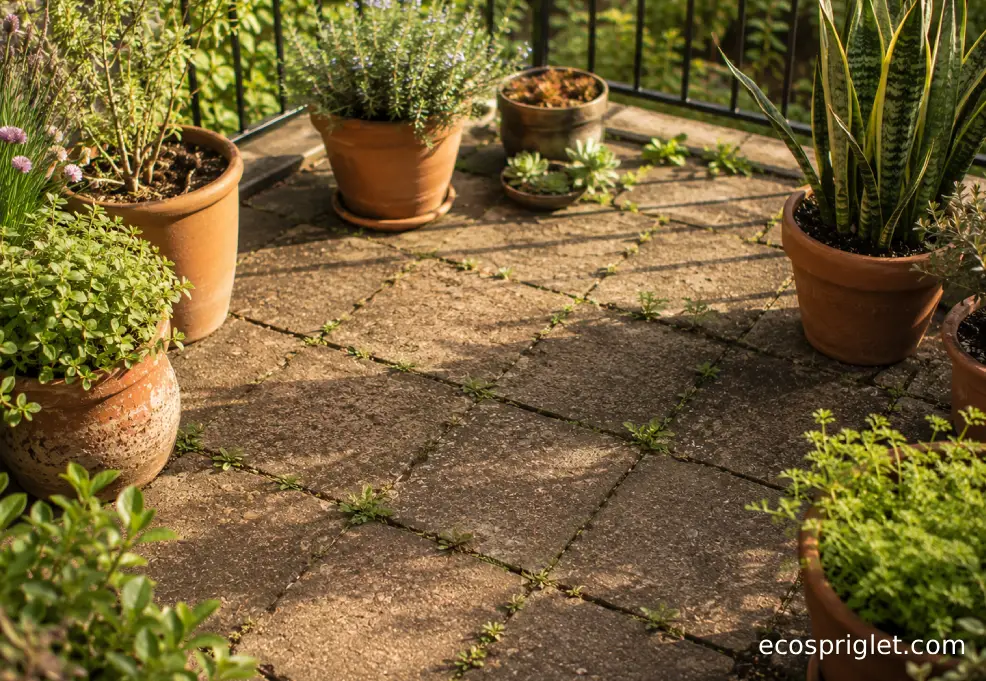
Earth’s Ally Weed & Grass Killer is the patio-crack pick because its product page is unusually clear about use conditions: dry, sunny day; shake the bottle; use the stream setting rather than mist; saturate the weed; and avoid overspray on desirable plants. It lists 10% sodium chloride as the active ingredient, with water, vinegar, and soap as inert ingredients.
That stream-setting detail is small, but I like it for apartment life. A mist can wander across a balcony quickly, especially between buildings where air moves strangely. A stream gives you a better chance of hitting the weed instead of your thyme pot, neighbor’s railing planter, or the grass strip below.
What Stands Out
- Good label clarity for sunny, dry-day patio use.
- Available in 24 fl. oz., 1 gal., 2.5 gal., and concentrate formats.
- Useful for pavers, driveways, edging, and other non-selective zones.
Real Limitations
Because it is salt-powered, I would be careful near containers, raised beds, or soil you plan to grow in soon. It is a good natural weed killer for cracks; it is not something I would spray repeatedly into a vegetable planter. Also, like most contact-style products, it is better on small weeds than established perennial roots.
Apartment-Fit Note
The 24 fl. oz. size is the friendliest version for balcony gardeners. The 2.5-gallon jug makes more sense if you have a townhouse patio, long driveway edge, or shared garden path.
Best for Flower Beds: Captain Jack’s Deadweed Brew Ready-to-Use
Captain Jack’s Deadweed Brew Ready-to-Use is a good natural weed killer for flower beds when you want an organic-gardening-approved non-selective spray, but you do not want to handle concentrate. Bonide says it is approved for organic gardening, works on visible weeds in vegetable and flower gardens, landscaped areas, lawns, sidewalks, driveways, patios, and gravel, and is rainfast in three hours.
The phrase “lawns” on a non-selective product can be confusing, so I’d read that as spot treatment only, not a lawn-safe dandelion solution. Around flower beds, the better use is edging: weeds along the bed border, mulch edge, fence line, or between stepping stones. I would not spray it over a mixed planting where seedlings, annuals, and herbs are close together.
What Stands Out
- Organic-gardening approval is helpful for edible-garden-adjacent areas.
- Ready-to-use bottle avoids mixing in an apartment sink.
- Fatty-acid chemistry gives an alternative to vinegar-and-salt formulas.
- Can be used in cooler conditions than some vinegar-focused products, according to Bonide’s 40°F use claim.
Real Limitations
This is still a weed and grass killer natural product, not a selective flower-bed helper. It can damage desirable foliage. I’d use a cardboard shield and spray close to the weed, especially in a narrow balcony trough or small raised bed where plants sit close together.
Buying Tip
Pick the ready-to-use version if you only treat a small bed or walkway. Concentrates can be cheaper over time, but they add measuring, storage, and cleanup steps that small-space gardeners often do not need.
Best Natural Weed Killer for Lawns: Sunday Dandelion Doom
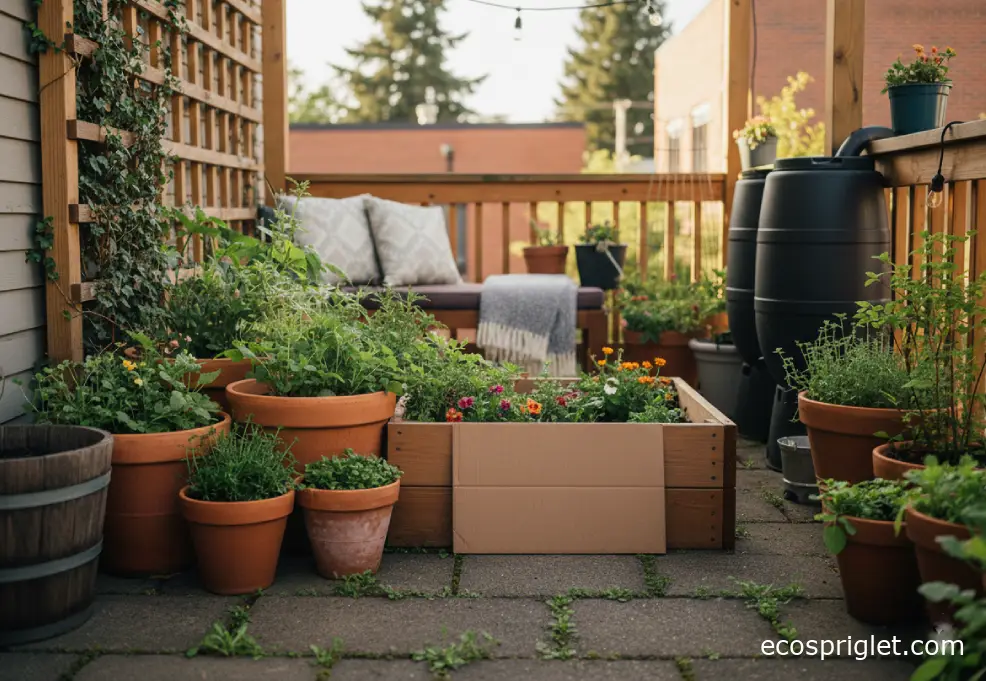
Sunday Dandelion Doom is the best natural weed killer for lawn use in this roundup because it is designed for broadleaf weeds in turf rather than total vegetation kill. Sunday lists it as an iron chelated FeHEDTA concentrate that targets broadleaf weeds, mosses, and algae in lawns, with a starter kit that includes two 5 oz. concentrate bottles, a reusable gallon pouch, and a battery-powered wand sprayer.
This makes more sense if your problem is clover, dandelions, chickweed, or plantain in a small lawn patch. It is not the same job as vinegar weed killer spray natural products. Iron-based herbicides are selective because grass and broadleaf weeds handle iron differently, but they still need label-following and sensible timing.
What Stands Out
- Better fit for “natural weed killer that won’t kill grass” searches.
- Reusable pouch and wand reduce throwaway sprayer clutter over time.
- Spot-spraying is practical for small urban lawns.
- Sunday recommends applying between 50°F and 85°F when no rain is expected for more than 3 hours.
Real Limitations
Iron-based herbicides are not a magic one-and-done lawn reset. SDSU Extension notes that organic iron HEDTA products may require repeated applications for perennial weeds and are better suited to practical spot-spraying than large whole-yard treatment from a cost standpoint. University of Maryland Extension also warns about re-entry after treated areas dry, staining risk, temperature limits, and eye or skin irritation precautions.
Who Should Buy It
Buy this if you need the best organic weed killer that won’t kill grass for a small lawn strip, townhouse patch, or shared front verge where broadleaf weeds are the main issue.
Who Should Skip It
Skip it for weeds in patio cracks, gravel, or driveway seams. A non-selective weed and grass killer is simpler and usually more appropriate there.
Best Organic Weed Prevention for Lawns: Espoma Organic Weed Preventer Plus Lawn Food
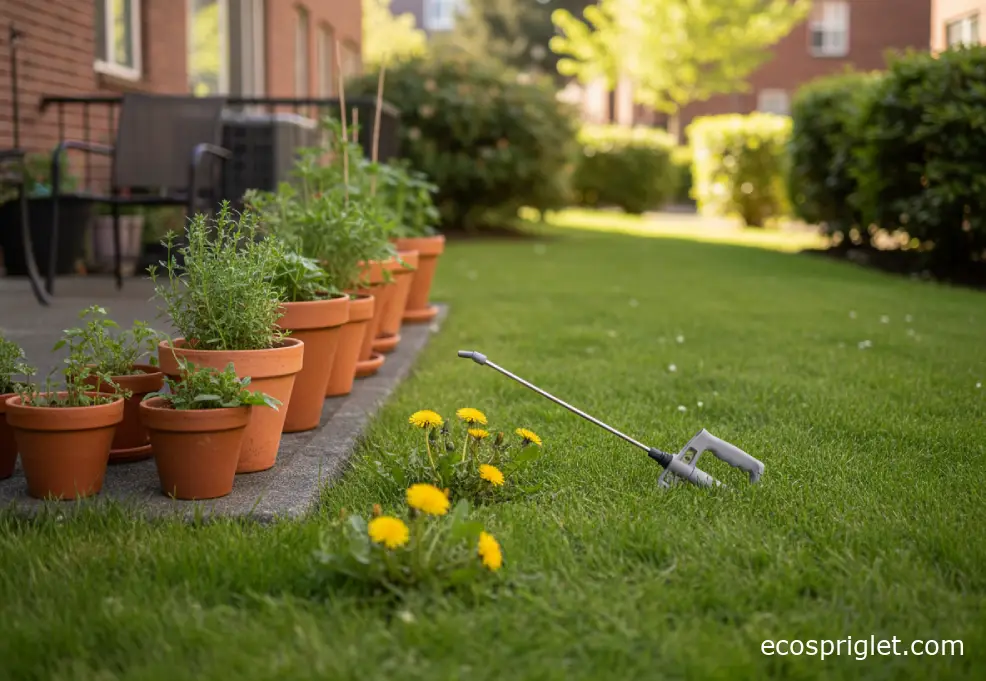
Espoma Organic Weed Preventer Plus Lawn Food is not a post-emergent weed killer. It is the pick for gardeners who want an all natural lawn weed killer strategy built around prevention. Espoma says it is made from 100% corn gluten meal, helps prevent weed seed establishment, provides organic nitrogen, and is for established lawns rather than newly seeded or overseeded areas.
For small lawns, this is often the more peaceful route. Instead of chasing every new sprout with a bottle, you apply before weed seeds germinate. Espoma recommends early spring before germination and early fall, and lists a weed-preventer lawn rate of 20 lbs. per 1,000 sq. ft., with a 25 lb. bag covering up to 1,250 sq. ft.
What Stands Out
- Good fit for established lawns where you want prevention, not burn-down.
- 100% corn gluten meal is easy to understand.
- Also provides nitrogen, so it behaves partly like lawn food.
- Children and pets can play on the lawn after application, according to Espoma.
Real Limitations
Do not buy this expecting it to kill visible weeds. Corn gluten is preventative, so it belongs before the weed problem shows up. It is also bulky for apartment storage. If you only have a postage-stamp lawn, you may want to split a bag with a neighbor or choose a smaller package if available locally.
Small-Space Tip
Because it can interfere with seed establishment, avoid using it when seeding or overseeding a lawn. That one mistake can turn a helpful organic product into a frustrating lawn project.
Best Large-Area Vinegar Option: Eco Garden Pro Organic Vinegar Weed Killer
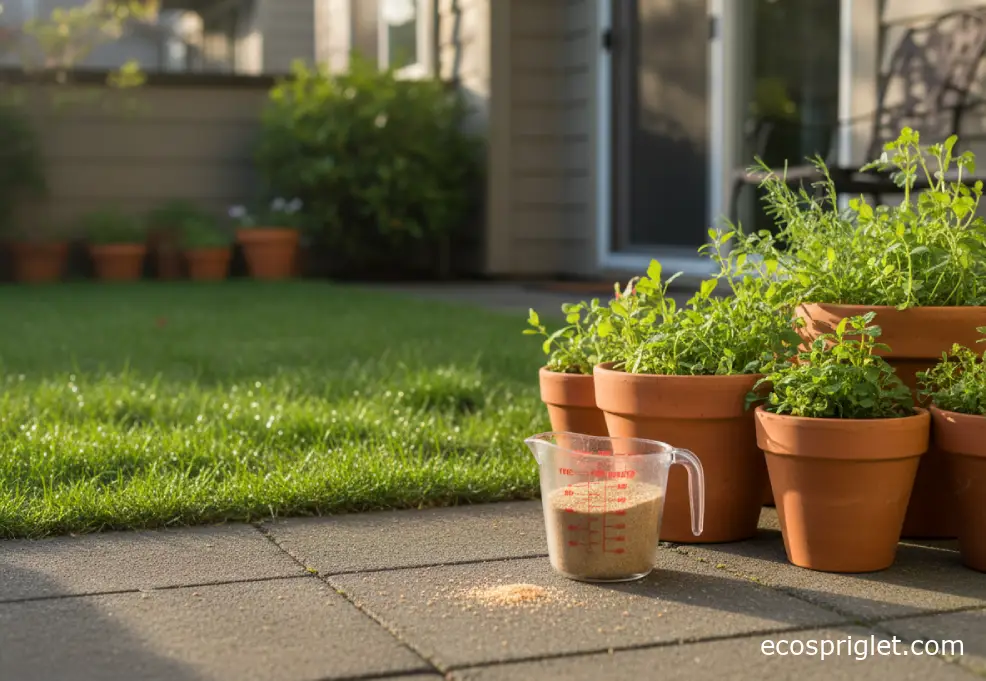
Eco Garden Pro Organic Vinegar Weed Killer is worth including because many shoppers specifically look for it when comparing the best organic weed and grass killer options. The brand describes its ready-to-use 4-gallon product as a vinegar and sodium chloride contact herbicide with a wetting agent, no dilution required, and about 1,000 sq. ft. of coverage per gallon. The same FAQ clearly says it will kill lawn grass because it is non-selective.
I would not make this my first pick for a tiny balcony. Four gallons is a lot to store in an apartment, and vinegar odor can feel bigger in enclosed outdoor spaces. But if you have a driveway edge, gravel strip, side yard, or larger paved patio, the ready-to-use format can be convenient.
What Stands Out
- Good for larger hardscape or gravel areas where no vegetation is wanted.
- Ready-to-use formula avoids dilution.
- Brand guidance is direct about not using it as a selective lawn product.
- Works best, according to the brand, in bright sun and temperatures above 70°F.
Real Limitations
Eco Garden Pro is less appealing for small-space gardeners who want maximum ingredient-label transparency and compact storage. It also shares the usual vinegar-product limitation: established perennial weeds may regrow from roots, especially if you only burn the leaves. University of Maryland Extension makes the same point about acetic acid products: larger weeds and taproot weeds often survive unless young or treated repeatedly.
Who Should Buy It
Choose it if you have enough storage space and want a large-format weed killer with natural ingredients for patios, gravel, and driveway edges.
Who Should Skip It
Skip it for lawns, tight balconies, and vegetable beds where overspray or salt buildup would be hard to manage.
Best Widely Available Non-Selective Spray: Natria Grass and Weed Control with Root Kill
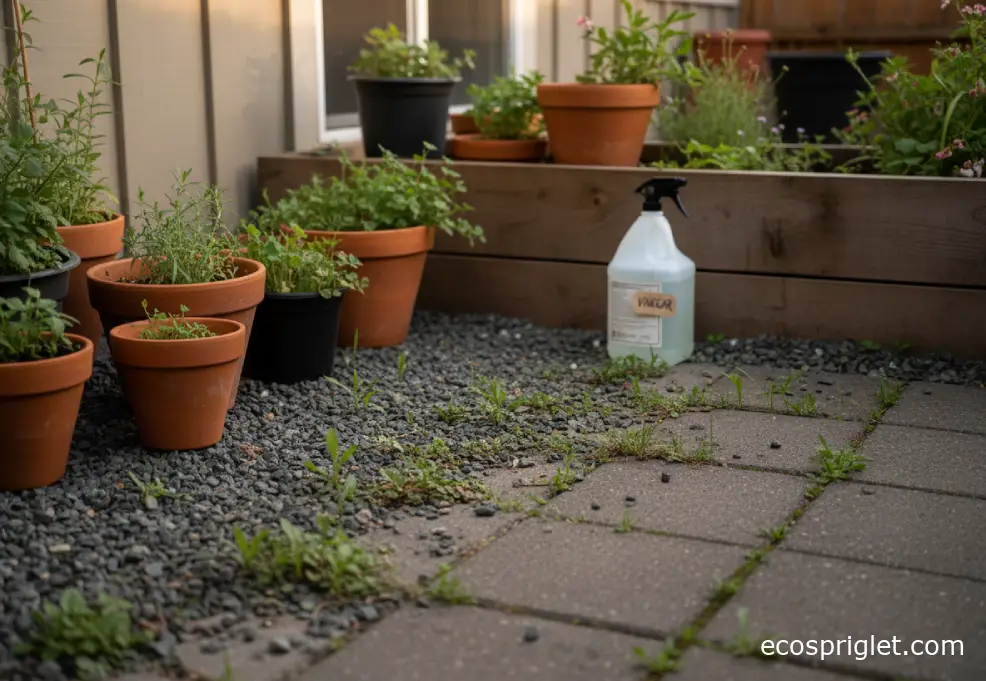
Natria Grass and Weed Control with Root Kill is the practical, widely available pick rather than the purest organic-positioned one. BioAdvanced lists it under Natria grass and weed killers and organic gardening categories, and the product information identifies ammoniated soap of fatty acids and maleic hydrazide as active ingredients.
The reason to consider it is convenience. If you need a weed killer spray natural-leaning option from a local home center rather than a specialty organic brand, Natria is easier to find than some niche products. It is useful for patios, sidewalks, flower-bed edges, and other places where non-selective control is acceptable.
What Stands Out
- Easy to find in many garden retail channels.
- Ready-to-use versions reduce setup effort.
- Good for spot-treating hardscape weeds.
Real Limitations
This is not my top eco pick because the ingredient story is less simple than salt, vinegar, corn gluten, or iron. It is also not the best weed killer safe for lawns, because it is a non-selective grass and weed control product. Use it where you would be comfortable seeing any contacted greenery die back.
Apartment-Fit Note
For a small patio, choose the smallest ready-to-use bottle that fits the job. Oversized jugs often look economical, then spend two years taking up space under the sink.
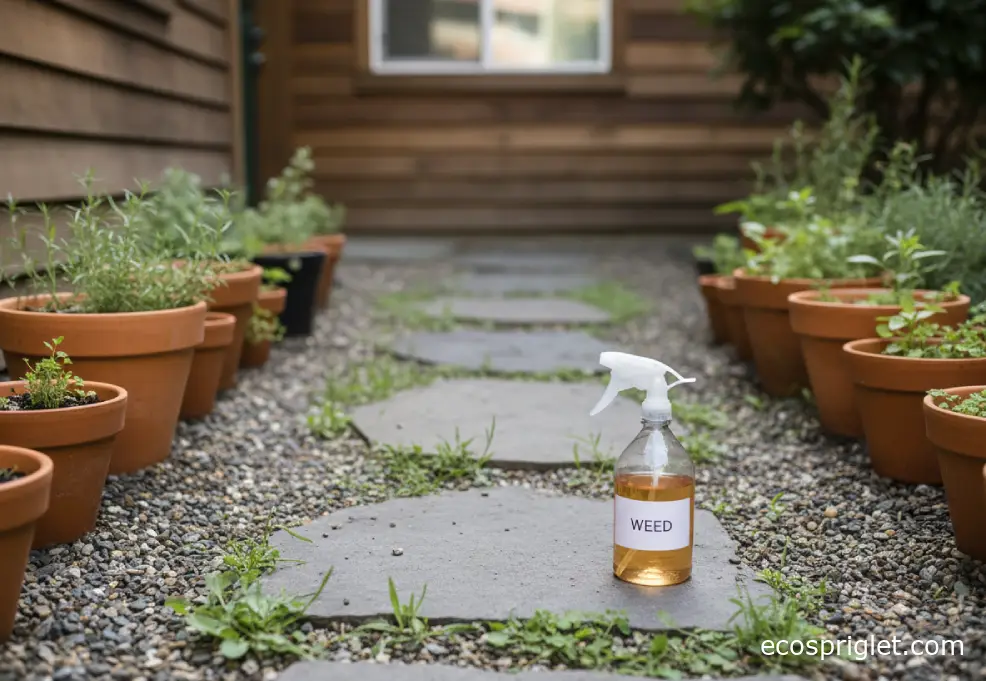
What to Look for Before Buying
Start with selectivity. If the label says weed and grass killer, assume it can harm grass. For cracks, gravel, bare patio edges, and fence lines, that may be exactly what you want. For turf, look for a lawn-labeled iron product or a prevention product made for established lawns.
Then look at the active ingredient. Vinegar and acetic acid burn foliage. Salt can help desiccate plants but is not something to casually add to productive soil. Fatty-acid herbicides are contact products. Iron-based herbicides are the better bet for broadleaf weeds in lawns. Corn gluten meal is preventative, not a cure for weeds you can already see.
- For patios and pavers: choose a ready-to-use non-selective spray with a controllable nozzle.
- For flower beds: choose precise spot treatment and use a cardboard shield.
- For lawns: choose iron-based broadleaf control or corn gluten prevention.
- For pets: keep pets off the area until the product is dry and the label allows re-entry.
- For apartments: avoid bulk jugs unless you truly have storage space.
For more small-space gear decisions, EcoSpriglet’s guides to repotting plants, and balcony composting without smell are good next reads.
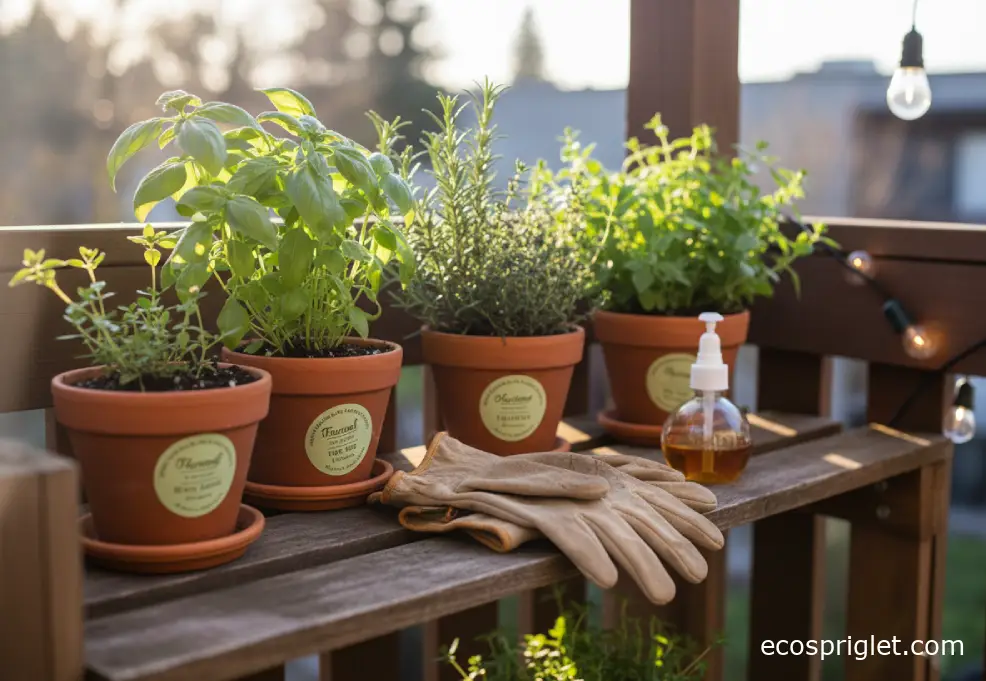
Common Mistakes to Avoid
The first mistake is using a non-selective weed killer on a lawn and expecting it to spare the grass. This is how you get brown polka dots instead of a cleaner lawn. If the goal is a natural weed killer for lawn dandelions, use an iron-based broadleaf product or hand-pull with a weeding tool after rain.
The second mistake is spraying too late. Natural contact herbicides are generally more persuasive on young, small weeds. University of Maryland Extension reports that 5% to 10% acetic acid products can control very small young weeds, while larger weeds are more likely to survive; even 20% acetic acid may only top-kill taproot weeds such as dandelions unless they are young.
- Do not spray on windy balconies.
- Do not use salt-heavy products repeatedly in containers or productive beds.
- Do not assume “pet safe” means pets can walk through wet spray.
- Do not spray before rain unless the label allows it.
- Do not store large jugs where kids or pets can reach them.
My own small-space rule is simple: spray less area than you think, wait, and reassess. It is easier to make a second careful pass than to undo a scorched parsley pot.
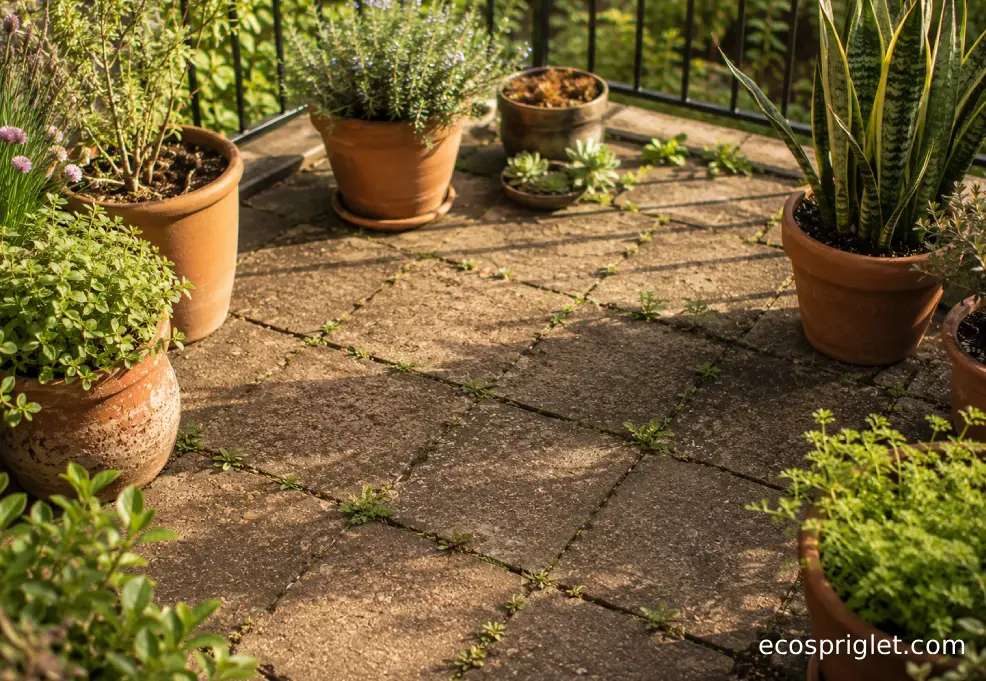
FAQ
What is the best organic weed killer overall?
For most small-space gardeners, Green Gobbler Total Control is the best organic weed killer overall because it is ready to use, OMRI-listed, and well suited to patio cracks, edging, pavers, and other places where no vegetation is wanted. It is not lawn-safe.
What is the best natural weed killer for lawns?
Sunday Dandelion Doom is the best natural weed killer for lawn use in this roundup because it uses iron chelated FeHEDTA and is designed for broadleaf weeds in turf. It is still best used as a spot treatment, not as a casual blanket spray.
Is there a natural weed killer that won’t kill grass?
Yes, but it is usually iron-based, not vinegar-based. If you want the best organic weed killer that won’t kill grass, look for a lawn-labeled FeHEDTA broadleaf weed killer and follow the temperature, drying, and turf-type directions carefully.
What is the best weed killer safe for pets?
The safer framing is “best weed killer for pet-aware households.” Earth’s Ally and Green Gobbler both market people-and-pet-safe use when used as directed, but pets should stay away during application and until treated areas are dry. Always read the label before letting animals back onto a patio, walkway, or lawn.
Is vinegar a good organic weed killer?
Vinegar can be a good organic or natural herbicide for young weeds on hard surfaces, especially in dry, sunny weather. It is less reliable on mature perennial weeds with deep roots, and stronger acetic acid products require more care than household vinegar.
What is the best natural weed killer for flower beds?
Captain Jack’s Deadweed Brew Ready-to-Use is the flower-bed pick here, mainly for careful edge and spot use. It is approved for organic gardening, but it is still non-selective, so protect nearby flowers and vegetables from overspray.
Are organic weed killers better for the environment?
Sometimes, but not automatically. A good organic weed killer should have transparent ingredients, clear directions, practical application rates, and lower unnecessary chemical load. Still, overusing salt, spraying near waterways, or damaging desirable plants is not especially eco-friendly. The best natural herbicide is the one matched to the smallest reasonable job.
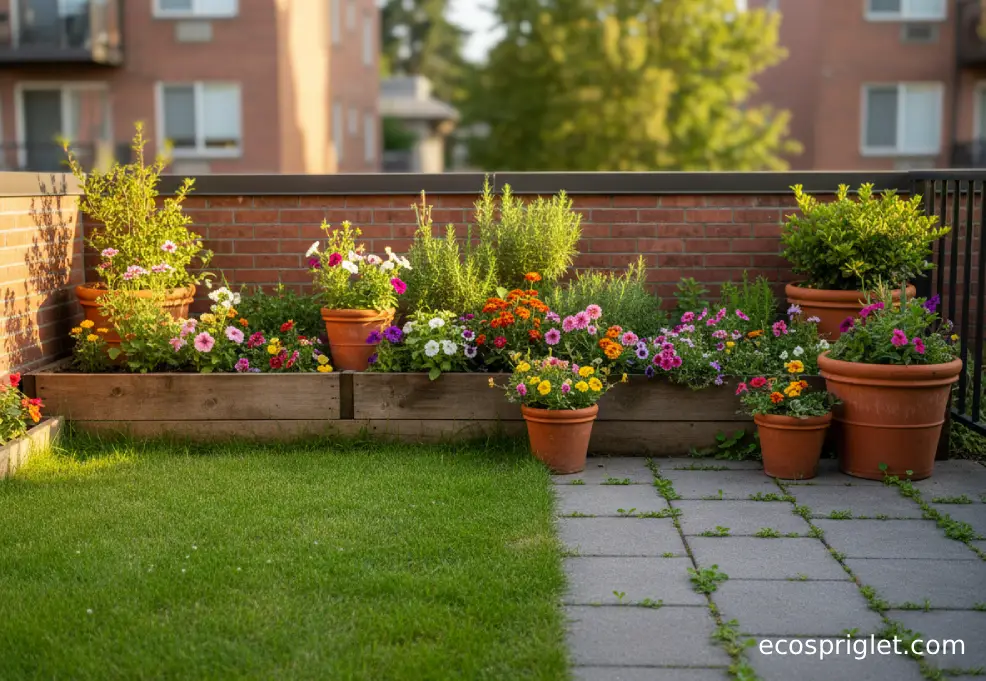
Final Verdict
For most urban gardeners, Green Gobbler Total Control is the best organic weed killer to start with because it is simple, OMRI-listed, and well matched to the real weed problems small spaces tend to have: paver cracks, edging, gravel, and container-adjacent sprouts. Earth’s Ally is close behind for patio cracks, especially if you like its clear stream-spray directions. Captain Jack’s Deadweed Brew is the one I’d lean toward around flower-bed edges where an organic-gardening-approved fatty-acid formula feels more appropriate than repeated salt use.
Lawns need a different answer. Sunday Dandelion Doom is the best natural weed killer for lawn spot treatment because it is iron-based and lawn-focused, while Espoma Organic Weed Preventer is better if you want to prevent new weeds in an established lawn before they sprout. Eco Garden Pro and Natria can both make sense for specific hardscape jobs, but I would not put either on a tiny balcony shelf unless you have the space and a clear use case.
The calmest approach is still the most sustainable one: pull what you can, prevent what you can, and spray only where the right product truly fits.