
Most indoor snake plants need water about every 2 to 4 weeks during brighter, warmer months and every 4 to 8 weeks in winter. Treat those ranges as reminders to check the plant, not fixed appointments. The practical answer to how often to water a snake plant depends on whether the potting mix has dried, how much light the plant receives, and how quickly its container releases moisture.
Snake plants, now commonly classified as Dracaena trifasciata and formerly known as Sansevieria trifasciata, store water in their thick leaves. They tolerate a dry spell far better than constantly damp soil. Before watering, check at least the top 2 inches of potting mix and lift the pot. If the soil feels dry and the container is noticeably lighter, water thoroughly. If it still feels cool, damp, or heavy, wait several more days.
In an apartment, light levels, heating vents, decorative cachepots, and limited drainage can all change the timing. A simple wet-and-dry routine will keep your plant healthier than following the same schedule year-round.
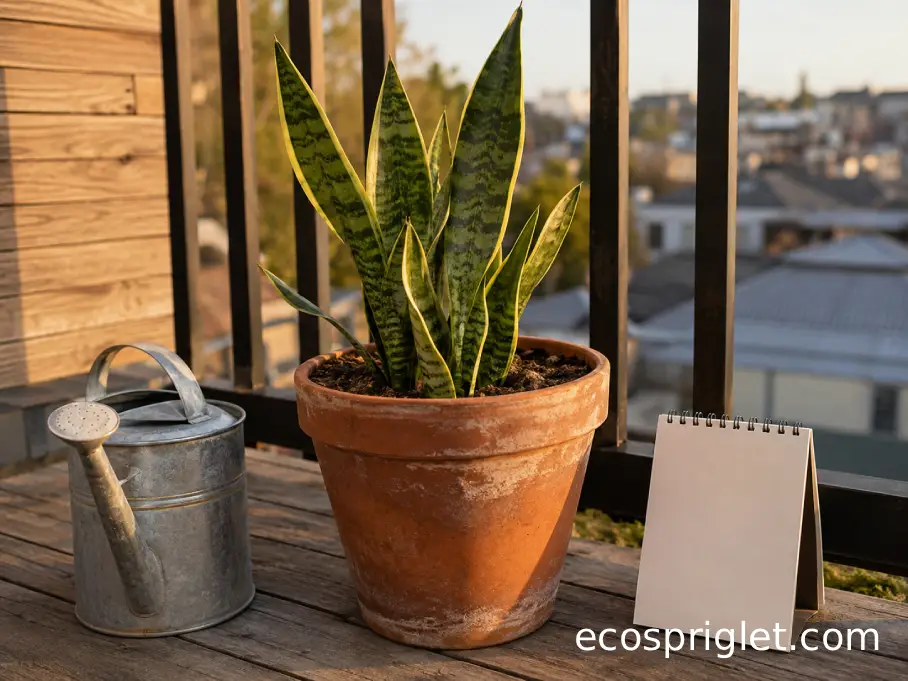
Quick Answer: Use the Calendar Only as a Reminder
For a typical snake plant growing indoors in a well-drained pot, start by checking the soil every two weeks. In bright indirect light during spring and summer, the plant may be ready for water every 2 to 4 weeks. A plant in lower light may remain damp longer and need watering less frequently.
During winter, a 4-to-8-week interval is common. NC State Extension advises that snake plants may need water only every one to two months in winter, while Clemson Cooperative Extension notes that watering frequency changes with light, pot size, soil, and room conditions.
| Indoor Condition | When to Start Checking | Water Only When |
|---|---|---|
| Bright indirect light, warm room | Every 2 weeks | Most of the potting mix is dry |
| Moderate or low light | Every 3 to 4 weeks | The soil is dry and the pot feels light |
| Winter or cool room | Every 4 to 8 weeks | The root zone has dried and leaves remain firm |
| Recently repotted plant | Check after 2 weeks | The new mix is no longer damp around the roots |
These are checking intervals rather than promises that the plant will need water. I keep a reminder on my phone, but the reminder says “check snake plant,” not “water snake plant.” That one-word difference prevents a surprising number of soggy pots.
Check the Soil and Pot Before You Water
The top of a pot can look dry while moisture remains around the roots. That is especially common in tall plastic pots and decorative containers with little airflow. Check more than the surface before reaching for the watering can.
- Push a finger about 2 inches into the mix. If you feel moisture or cool soil, wait.
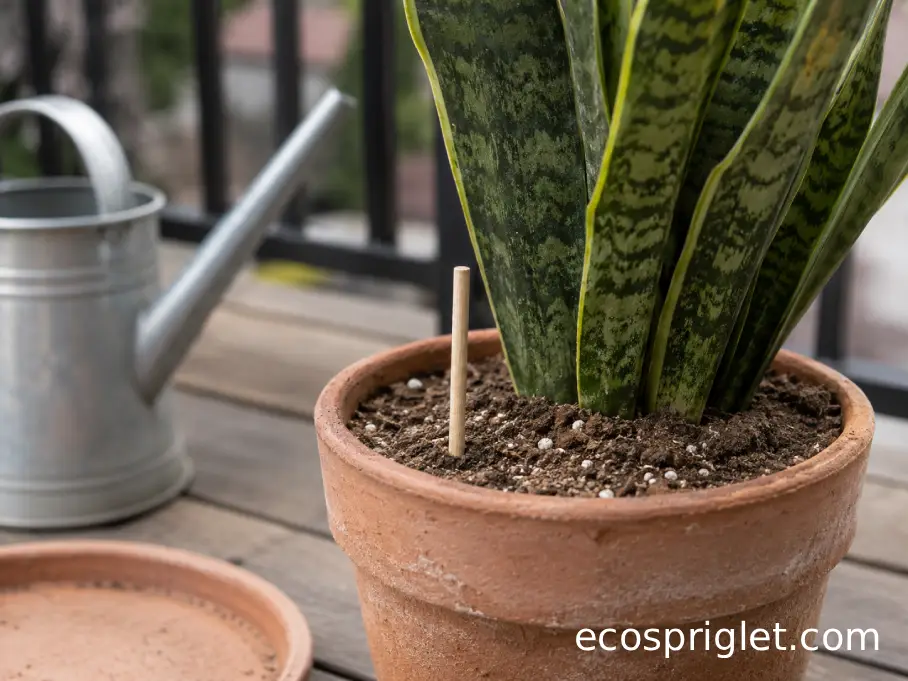
- For a deep pot, insert a clean wooden skewer 3 to 4 inches. Damp soil will darken the wood or cling to it.
- Lift the container after watering and again when dry. The difference in weight becomes easy to recognize after two or three cycles.
- Check through a drainage hole when possible. Damp soil at the bottom means the roots are not ready for more water.
The University of Maryland Extension recommends testing houseplant soil to a depth of about 2 inches and notes that a dry pot weighs considerably less than one that still contains ample moisture.
For snake plants, I prefer the finger test plus the lift test. Moisture meters can be useful, but readings sometimes change around dense roots, mineral deposits, or different ingredients in the potting mix. Use the meter as another clue rather than the only decision-maker.
If the soil has become so dry that water immediately runs down the sides, apply a small amount first. Wait about 20 to 30 minutes, then water again slowly. This gives a shrunken root ball time to absorb moisture instead of sending everything straight into the saucer.
How Light, Pot Size, and Room Conditions Change Timing
A snake plant beside a bright east-facing window usually dries faster than the same plant in the back of a dim living room. Greater light supports more active growth and water use. In lower light, growth slows and moisture can remain in the pot much longer, even when the room feels warm.
Container material also matters. Unglazed terracotta allows moisture to escape through its porous sides, while plastic and glazed ceramic retain it longer. A small root-bound plant may dry quickly because roots occupy much of the pot. An oversized container can hold a large volume of damp mix around a comparatively small root system.
Use these adjustments as practical starting points:
- Check 3 to 5 days earlier after moving the plant into brighter light.
- Check later if the plant moves farther from a window or into a cooler room.
- Expect terracotta to dry sooner than plastic under otherwise similar conditions.
- After repotting into a larger container, monitor the deeper mix carefully for the first month.
Heating and air-conditioning complicate the picture. A plant near a warm vent may lose moisture faster at the surface, while the lower root zone remains damp. Avoid placing the pot directly against a radiator or cold winter window. The RHS lists roughly 60 to 75°F as a suitable growing range and describes snake plants as adaptable to bright light or light shade.
Rather than adjusting your schedule by an exact number of days, adjust how frequently you inspect the pot. The soil should make the final decision.
Water Less Often in Winter
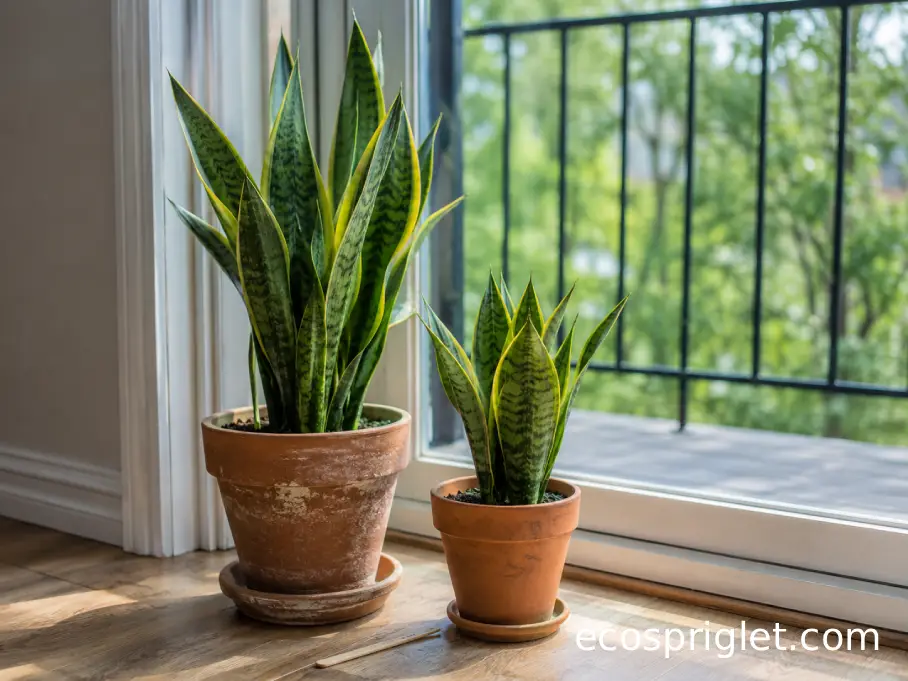
Winter is when many otherwise healthy snake plants develop problems. Shorter days reduce growth, so the plant uses water more slowly. At the same time, a cool windowsill can keep the lower potting mix damp for weeks.
Begin with a monthly soil check rather than weekly watering. In many apartments, the plant will need water only every 4 to 8 weeks. NC State Extension specifically recommends watering snake plants every one to two months in winter, while the RHS notes that they may need barely any water during their winter slowdown unless they are kept in a particularly warm location.
Do not give small splashes every few days in an attempt to be cautious. Frequent sips can keep the upper root zone continuously damp without wetting the entire root ball evenly. Wait until the pot is genuinely dry, then water it properly and let it drain.
A heated apartment with bright grow lights may not behave like a typical winter room. If the plant is actively producing new leaves and the soil dries quickly, it may still need water every 3 to 4 weeks. Conversely, a plant in low light beside a cool exterior wall may go longer than eight weeks. Firm leaves and dry soil are usually safer cues than the date.
Water Thoroughly Without Flooding the Apartment
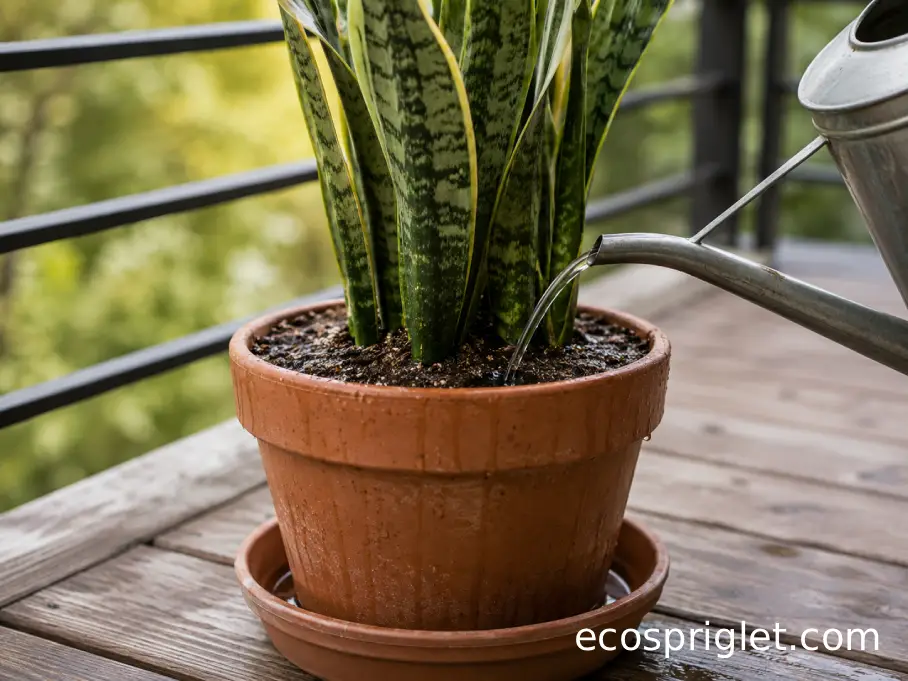
Once the soil is dry enough, move the plant to a sink, bathtub, or waterproof tray. Pour room-temperature water slowly across the soil surface until excess begins leaving the drainage hole. Rotate the pot as you work so the entire root ball becomes evenly moist.
Avoid pouring water into the central rosette where the leaves emerge. The RHS recommends watering the compost from above while keeping the center dry, then emptying any water that collects in the saucer or outer pot.
Let the pot drain for at least 10 to 20 minutes before returning it to a shelf. University of Wisconsin Extension advises removing excess water from a saucer after this drainage period rather than allowing ordinary houseplants to stand in it.
For a heavy floor plant, place a sturdy saucer or waterproof boot tray underneath it. A turkey baster or small siphon can remove runoff from a saucer that is difficult to lift. Just remember that the saucer protects the floor; it should not function as a permanent reservoir.
There is no useful fixed measurement such as one cup per plant. A 4-inch nursery pot and a 12-inch floor container hold very different quantities of mix. Watering until drainage gives you a clearer endpoint, provided the container has a functioning drainage hole.
Read the Plant Before Adding More Water
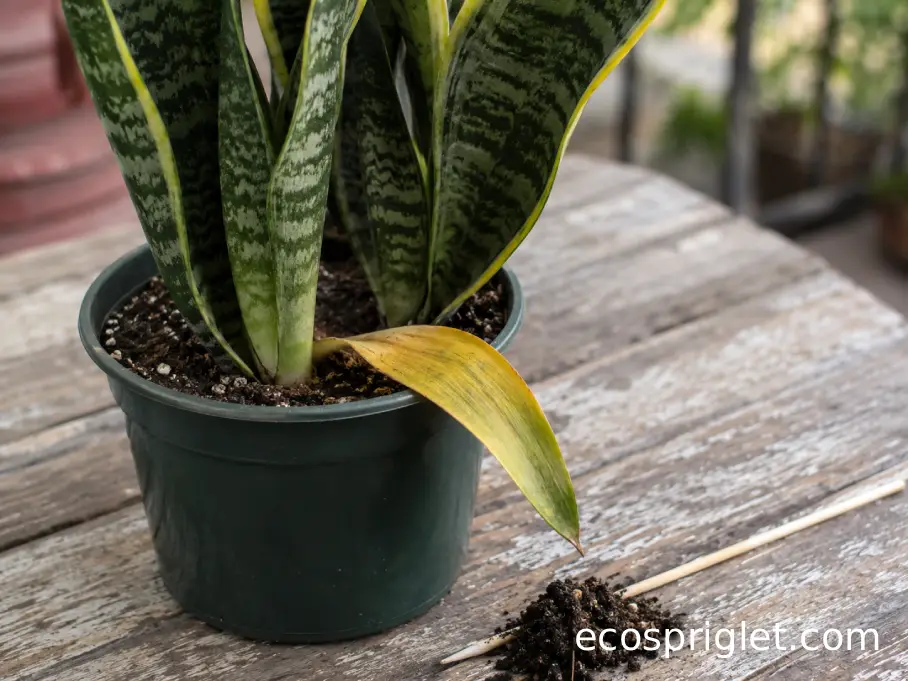
Yellow leaves do not automatically mean a plant needs water. Both excessively dry roots and damaged, waterlogged roots can prevent leaves from receiving enough moisture. Check the soil before diagnosing the symptom.
Likely Signs of Too Much Water
- Soil remains damp for more than two or three weeks.
- Lower leaves turn yellow while the mix is still wet.
- Leaf bases feel soft, translucent, or mushy.
- The crown or roots look brown to black and feel soft.
- Fungus gnats repeatedly appear around the pot.
University of Maryland Extension identifies yellowing lower leaves as a common sign of excess moisture. Virginia Cooperative Extension notes that overwatered plants can develop soft leaves and brown or black mushy roots.
Likely Signs of Prolonged Dryness
- The pot feels extremely light.
- The mix has pulled away from the container wall.
- Leaves look thinner, wrinkled, folded, or less rigid.
- Brown, dry damage develops after a long period without water.
A slightly thirsty snake plant usually recovers after one thorough watering. Do not compensate with several waterings on consecutive days. Saturate the dry root ball once, allow it to drain, and reassess the leaves over the following week.
If the plant is drooping while the soil is wet, remove it from its decorative pot and inspect the roots. Trim clearly rotten tissue with clean tools, discard waterlogged mix, and repot into a clean container with a drainage hole and fresh, free-draining medium.
Common Watering Mistakes to Avoid
The mistake I made with my first apartment snake plant was giving it a little water every Sunday. The plant looked fine for months, so I assumed the routine worked. Then two outer leaves softened almost overnight. When I lifted the nursery pot from its decorative cover, I found an inch of stale water underneath it. The plant had not been thirsty for weeks.
These are the habits I would correct first:
- Watering by weekday: Set a reminder to inspect the soil, not automatically water it.
- Leaving runoff in a cachepot: Empty collected water within about an hour.
- Using a pot without drainage: Keep the plant in a removable nursery pot or move it to a container with a hole.
- Adding gravel beneath the soil: Gravel does not replace a drainage hole and can leave the soil above it saturated.
- Moving to a much larger pot: Choose a container only modestly wider than the root ball so unused mix does not stay wet for long periods.
Illinois Extension describes a bottom drainage hole as critical for allowing excess water to escape. NC State Extension also explains that a gravel layer beneath potting soil does not improve drainage and can keep the soil above it saturated.
Another common error is repotting into moisture-retentive garden soil. Use a loose houseplant or cactus-style potting mix that drains readily.
Build an Easy Apartment Watering Routine
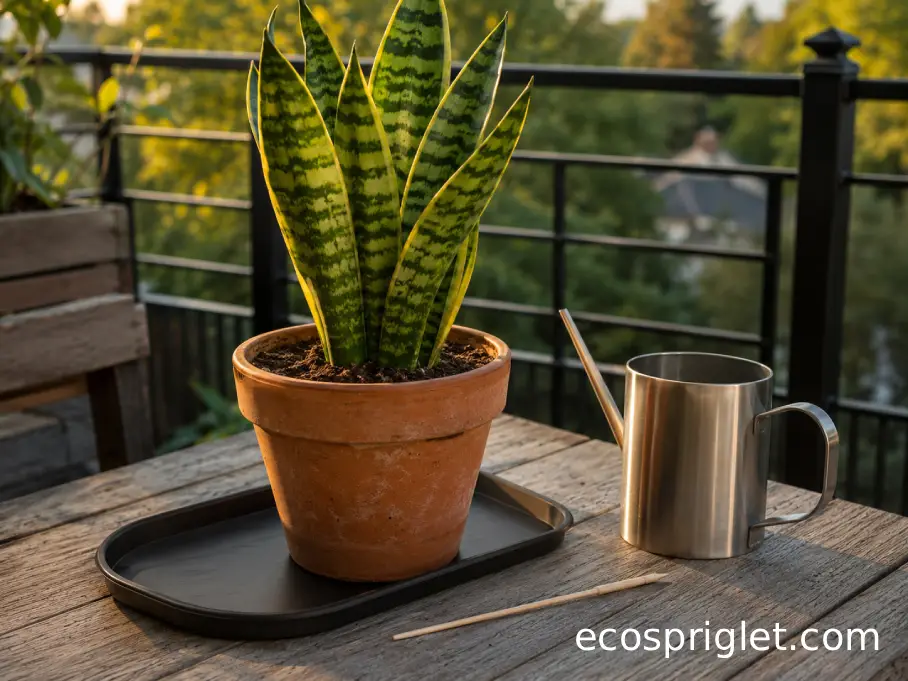
A good routine should be simple enough to follow without turning plant care into another weekly chore. Keep a wooden skewer near the pot, use a waterproof tray when watering, and record the date only after the plant actually receives water.
For the first three watering cycles, note how long the pot takes to dry. You may discover that it dries in 18 days during summer but needs 40 days during winter. That history gives you a useful inspection window while still allowing for changes in weather, light, and indoor heating.
Check the plant sooner after any major change, including:
- Moving it closer to a bright window.
- Repotting into fresh soil or a different container material.
- Turning on heat or air conditioning for the season.
- Moving it outdoors to a sheltered balcony during warm weather.
Inspecting every two weeks takes less than a minute. Push in the skewer, lift the pot, and look for water trapped inside the cachepot. When the soil is still damp, doing nothing is proper plant care.
For a broader routine covering pothos, palms, succulents, and other apartment plants, visit our house plant watering guide.
Protect Pets, Floors, and Small Living Spaces
Watering indoors should not leave standing water on wood floors, shelving, or windowsills. Use a waterproof saucer that extends beyond the pot base, and add cork or rubber feet beneath it so condensation cannot remain trapped against the surface. Check decorative baskets after watering because fabric liners can conceal leaks.
Place tall snake plants where they will not be knocked over in a narrow walkway. A heavy, stable pot is useful, but it still needs drainage. The simplest arrangement is often a plastic nursery pot inside a weighted decorative cover that can be emptied after each watering.
Snake plant leaves contain saponins and are considered toxic to cats and dogs. The ASPCA lists possible signs after ingestion as nausea, vomiting, and diarrhea. Keep the plant beyond a pet’s reach and contact a veterinarian promptly if chewing or ingestion occurs.
Do not confuse a snake plant with a rattlesnake plant, a completely different houseplant commonly classified among the calatheas. Their watering requirements and pet-safety profiles are not the same.
For homes with curious pets or young children, a raised stand can help, provided it has a broad base and cannot tip. Avoid balancing a tall plant on a narrow stool simply to move it out of reach.
The Reliable Rule for Healthy Snake Plants
Most indoor snake plants settle into a rhythm of roughly every 2 to 4 weeks during brighter months and every 4 to 8 weeks in winter. The reliable rule, however, is to water only after the potting mix has dried through most of the container and the pot feels light.
When the plant is ready, soak the root ball evenly, let excess water escape, and empty the saucer or decorative cover. Then leave the plant alone until the next dry cycle. That deep-but-infrequent approach matches the plant’s drought-tolerant leaves far better than weekly splashes.
Pay closer attention after seasonal changes, repotting, or moving the plant. Bright light, warm rooms, small containers, and terracotta can shorten the interval. Low light, cool rooms, oversized pots, and glazed containers usually lengthen it. In winter, waiting is often the most helpful thing you can do.
Once you learn the feel of a dry pot, the routine becomes pleasantly simple: check, lift, water thoroughly when needed, and drain completely. Your snake plant does not need perfect timing. It needs enough dry time between waterings for its roots to breathe.

Pls share indoor plants nourishment for all seasons