Basil is one of those herbs that tells on you quickly. Skip water too long and the leaves droop like wet paper. Keep the soil constantly soggy and the stems get weak, the lower leaves yellow, and the roots can start to struggle. The best answer to how often to water basil is simple: water when the top 1 inch of potting mix feels dry, then water deeply until a little drains from the bottom of the pot.
For most apartment growers, that means indoor basil often needs water every 3 to 5 days, while basil in pots outdoors may need water every 1 to 3 days in warm, sunny, or windy weather. Seeds and tiny seedlings need lighter, more frequent moisture because their shallow roots dry out fast.
I grow basil on a Portland balcony and on a bright kitchen shelf, and the biggest lesson I’ve learned is that basil dislikes both panic-watering and neglect. A steady check-the-soil routine beats any fixed calendar. Sources such as University of Minnesota Extension and Illinois Extension emphasize bright light, well-drained soil, drainage holes, and more frequent watering for containers.
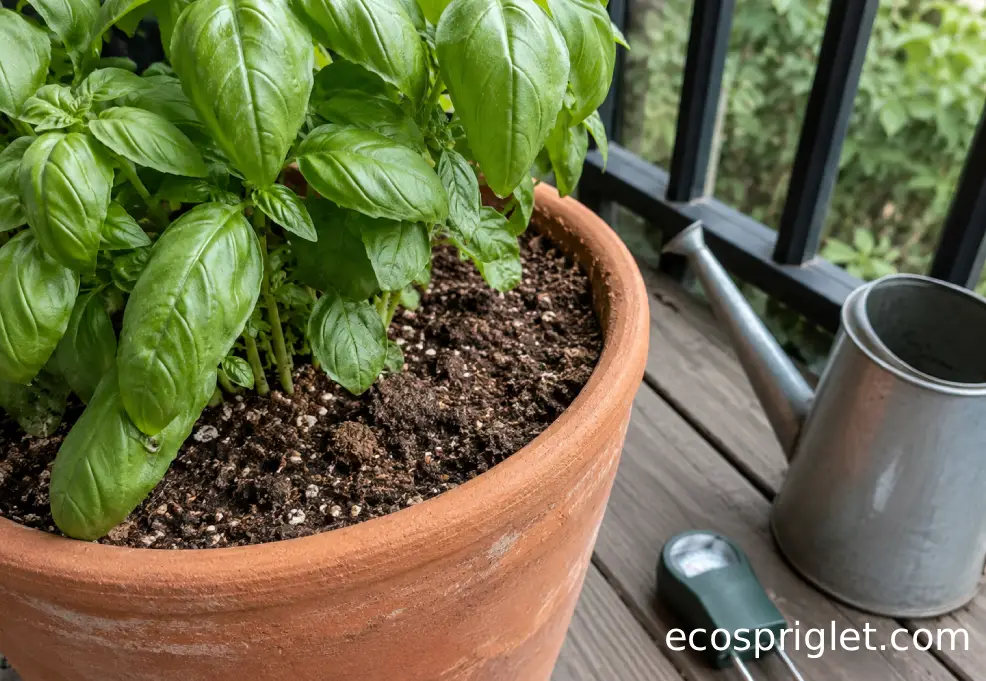
Start With the Finger Test, Not the Calendar
The most reliable basil watering schedule is not a schedule at all. It is a soil check. Press your finger about 1 inch into the potting mix. If it feels dry at that depth, water. If it still feels cool and damp, wait and check again the next day. For indoor herbs, University of Minnesota Extension gives a similar cue: water when soil feels dry about a half inch below the surface.
When you do water, give the plant enough so moisture reaches the root zone instead of only wetting the surface. In a pot with drainage holes, water slowly until a small amount drips from the bottom, then empty the saucer after 10 to 15 minutes. Illinois Extension recommends watering container herbs until water starts dripping from the drainage holes.
- If the top 1 inch is dry: water thoroughly.
- If the top is dry but the lower mix feels wet: wait one more day.
- If leaves droop and soil is dry: water now, then check again later that day.
- If leaves droop and soil is wet: do not add more water; improve drainage and airflow.
This small habit prevents the two classic basil problems: shallow daily sips that create weak roots, and heavy watering that leaves the pot soggy for days.
Indoor Basil Needs a Slower, Steadier Routine
Indoor basil usually needs water every 3 to 5 days, but that range shifts with light, pot size, indoor heat, and airflow. A basil plant in a 4-inch nursery pot on a hot windowsill may dry out in 2 days. A larger 8- to 10-inch pot in moderate light may go closer to 5 or 6 days between waterings.
Light matters because basil grows best with plenty of brightness. University of Minnesota Extension notes that basil prefers at least 6 to 8 hours of bright light per day, and Penn State Extension recommends herbs indoors be grown in containers with drainage holes and a potting mix that drains well.
On a kitchen shelf, I check indoor basil in the morning before the room warms up. If the pot feels surprisingly light and the top inch is dry, I water at the sink, let it drain, and put it back after the dripping stops. That one extra minute keeps water from sitting in the saucer, which is where many apartment basil problems begin.
Avoid misting mature basil as a substitute for watering. A light mist may freshen the leaves briefly, but it does not hydrate the roots. It can also keep foliage damp indoors, especially where airflow is limited. Aim water at the potting mix, not over the leaves.
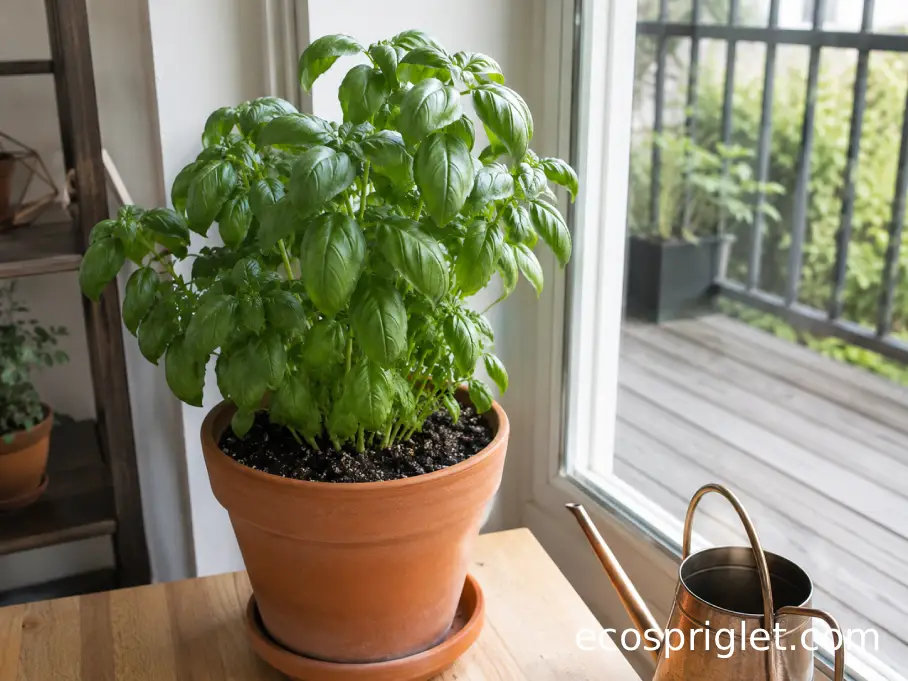
Potted Basil on Balconies Dries Out Faster
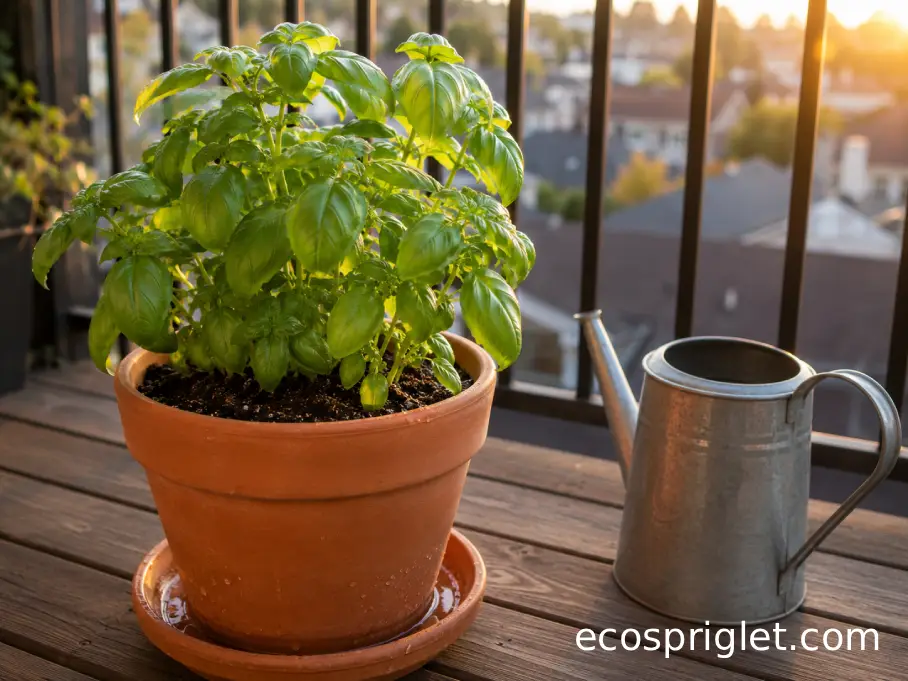
Basil in pots outdoors dries faster than basil in the ground because sun, wind, and warm air pull moisture from all sides of the container. In mild weather, outdoor potted basil may need water every 2 to 3 days. During hot spells, small pots, railing planters, and exposed balconies may need daily checks, and sometimes daily watering.
University of Minnesota Extension notes that container plants dry out faster than garden beds and may need more frequent watering, especially as temperatures rise. Illinois Extension also advises that container-grown basil dries faster than in-ground basil and should be watered more often in hot weather.
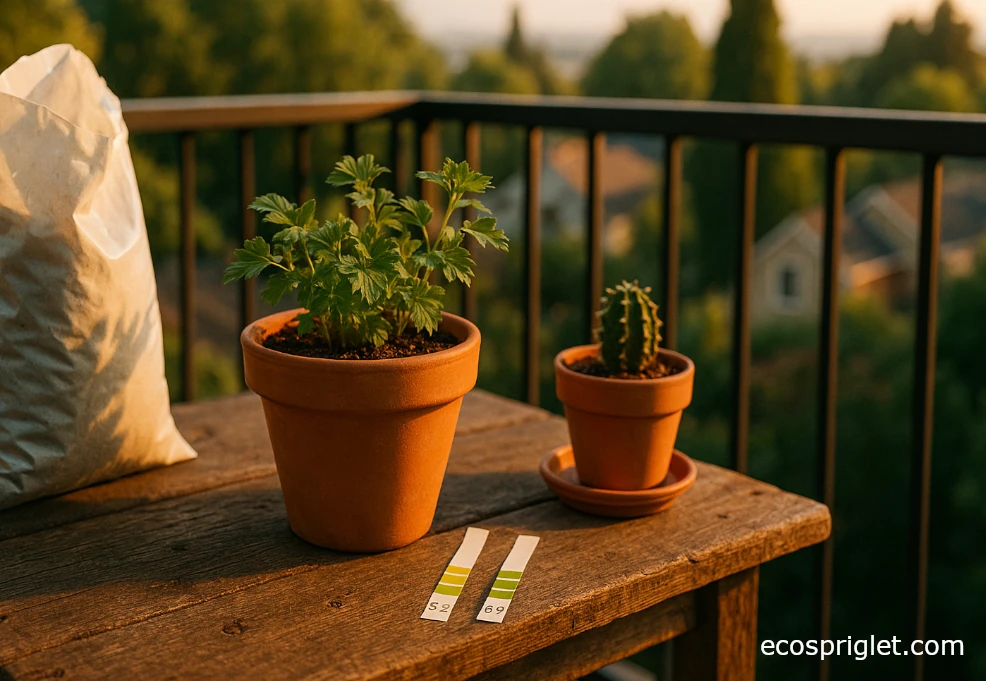
For one sweet basil plant, I prefer a pot at least 8 to 10 inches wide with drainage holes. Illinois Extension recommends herb containers with drainage holes and notes that basil quickly outgrows very small 3-inch pots. A pot of at least 6 inches can work, but a slightly larger container is more forgiving on a balcony.
- Small 4- to 6-inch pot: check daily in warm weather.
- Medium 8- to 10-inch pot: check every 1 to 2 days outdoors.
- Railing planter: check daily because wind dries the mix quickly.
- Self-watering pot: check the reservoir every 2 to 4 days in summer heat.
If your balcony gets afternoon sun and strong wind, move basil slightly inward from the railing during heat waves. It can still get bright light without being blasted by dry air all day.
Watering Basil Seeds and Young Seedlings
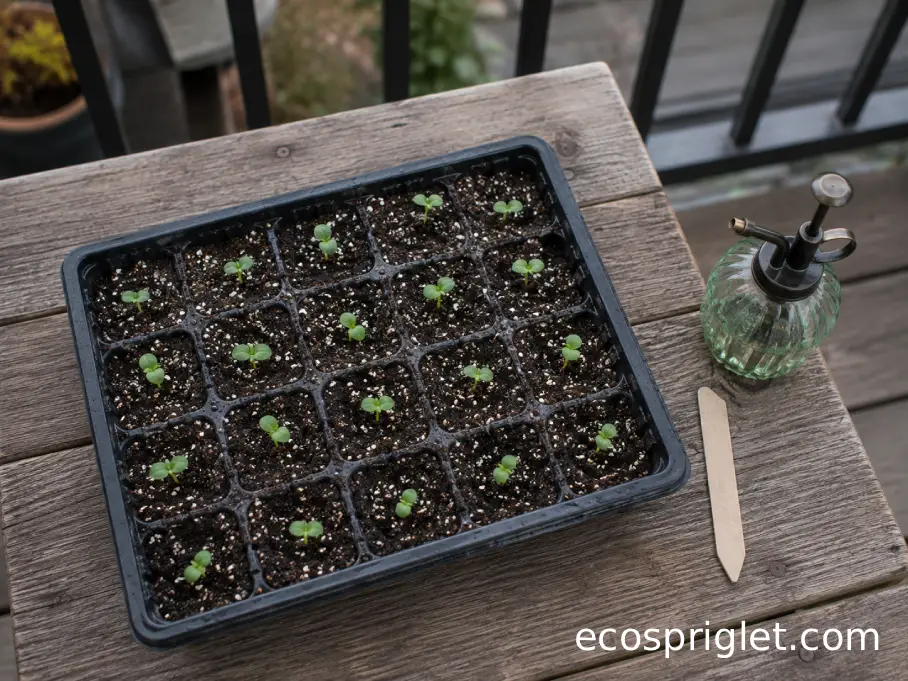
Basil seeds need consistent surface moisture, not heavy soaking. Before germination, check the seed tray once or twice a day. The mix should look evenly damp, like a wrung-out sponge, but never glossy with standing water. University of Minnesota Extension recommends keeping potting mix moist while seeds germinate and watering gently with a spray bottle so the mix is not washed out.
For basil seeds, a fine mist or bottom watering works better than a hard stream from a watering can. If the surface dries into a crust, tiny roots struggle. If the tray stays wet and cold, seedlings are more likely to collapse. USU Extension notes that basil is among the small-seeded plants that may need light for germination, so use little to no covering mix unless the seed packet says otherwise.
Once seedlings have true leaves, shift from constant surface moisture to a gentle wet-dry rhythm. Let the very top of the mix begin to lighten before watering again. Keep grow lights close enough for sturdy growth, but not so close that the surface dries within a few hours. University of Minnesota Extension recommends 14 to 16 hours of light for indoor herb seedlings under fluorescent lights.
The beginner mistake I see most is loving the seedlings to death with too much water. If green seedlings suddenly pinch at the soil line and fall over, reduce watering, improve airflow, and avoid reusing old, soggy seed-starting mix.
Fixing Droop, Yellow Leaves, and Soggy Soil
Basil droop can mean two opposite things: too dry or too wet. That is why the soil check comes first. If the leaves are limp, the pot feels light, and the top inch is dry, water deeply and give the plant a few hours to recover. Basil often perks up quickly after a real drink.
If the leaves are limp but the mix is wet, watering again will make things worse. Check the drainage hole, lift the pot out of any decorative cachepot, and make sure water is not trapped at the bottom. Illinois Extension is direct about container drainage: a hole at the bottom is critical because it allows water to drain and air to reach the roots.
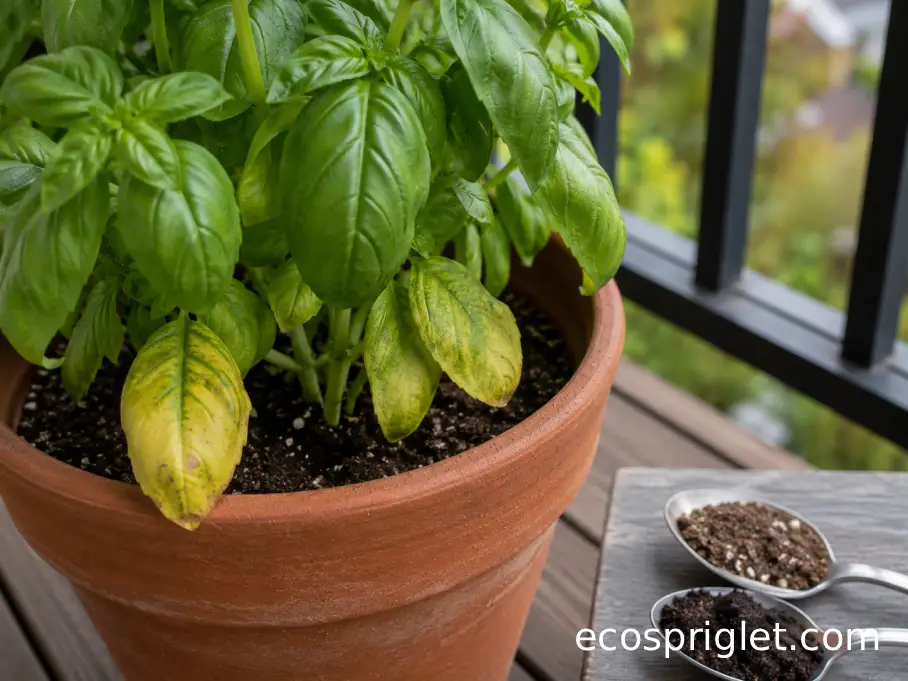
Yellow lower leaves usually point to one of three things: the pot stayed too wet, the plant is hungry after weeks in the same container, or lower leaves are shaded by dense top growth. Fix the water issue first. Then pinch the upper stems to keep the plant bushy, and consider a gentle, diluted fertilizer if the plant has been in the same pot for more than a month.
Cold can also make basil look unhappy. Illinois Extension notes that cold soil and air can stunt basil and cause blackened leaves around 50°F, so bring balcony basil indoors before chilly nights settle in.
Common Mistakes to Avoid
I learned the hard way that basil does not forgive lazy drainage. Years ago, I tucked a grocery-store basil plant into a pretty ceramic pot with no hole because it looked nice on the table. It lasted about two weeks. The leaves yellowed, the stems softened, and the soil smelled stale. The plant did not need more attention; it needed a way for extra water to leave.
Here are the mistakes worth avoiding:
- Watering on a fixed calendar: check the top 1 inch of soil instead.
- Leaving water in the saucer: empty it after 10 to 15 minutes.
- Using a pot without drainage holes: choose a real planter, not a sealed decorative container.
- Adding gravel under the soil: use quality potting mix and drainage holes instead.
- Watering the leaves indoors: aim for the soil to reduce damp foliage and mess.
Another common issue is keeping basil in the tiny nursery sleeve it came in. Those crowded plants dry quickly, compete for space, and wilt dramatically on a sunny sill. If the pot is packed with stems, divide a few clumps into separate containers or move the strongest plant into an 8- to 10-inch pot.
For homes with pets, basil is a friendly choice compared with many houseplants. The ASPCA lists basil, including sweet basil, as non-toxic to dogs and cats, though I still keep edible plants where pets cannot dig in the soil or knock pots from a windowsill.
A Small-Space Watering Routine You Can Actually Keep
A good basil routine should take less than a minute. In the morning, touch the soil, lift the pot, and glance at the leaves. If the top inch is dry, water at the soil line until the pot drains. If the pot still feels heavy and cool, leave it alone. That rhythm is easy to keep even in a busy apartment kitchen.
For indoor basil, pair your soil check with something you already do, like making coffee or opening the blinds. For balcony basil, check before the day heats up. Morning watering gives the plant moisture before sun and wind increase drying, and it reduces the chance of damp leaves sitting overnight.
| Growing Situation | Check Soil | Likely Watering Rhythm | Best Trigger |
|---|---|---|---|
| Indoor Basil in Bright Window | Every 1 to 2 days | About every 3 to 5 days | Top 1 inch feels dry |
| Small Nursery Pot | Daily | About every 1 to 3 days | Pot feels light and surface is dry |
| Outdoor Balcony Pot | Daily in warm weather | About every 1 to 3 days | Top inch dries after sun or wind |
| Basil Seeds | Once or twice daily | Light misting as needed | Surface begins to lighten |
| Seedlings With True Leaves | Daily | Gentle watering every 1 to 3 days | Top surface starts to dry |
For more small-space herb setup ideas, pair this routine with our container gardening guide and our indoor herb garden for beginners.
Bring Your Basil Into a Better Watering Rhythm
Watering basil gets easier once you stop trying to follow one perfect timetable. Indoors, expect to check often and water every few days when the top inch dries. Outdoors in pots, check daily during warm, bright, or windy weather because containers dry faster than garden beds. Seeds need gentle, even surface moisture, while mature plants prefer a deeper drink followed by a short drying period near the top of the pot.
The sweet spot is moist, well-drained soil. Not dusty dry. Not swampy. Use a pot with drainage holes, water at the soil line, empty the saucer, and let the plant’s leaves and pot weight teach you the pattern. If basil droops, check the soil before reacting. If it yellows, look first for soggy roots, cramped pots, or low light.
Small-space gardening rewards observation more than perfection. A bright windowsill, an 8- to 10-inch pot, and a one-minute morning check can keep basil useful for weeks of snipping.