Lettuce is one of those crops that makes a small balcony feel surprisingly productive. It grows quickly, fits into shallow planters, and can share space with several other vegetables instead of demanding a pot all to itself. The trick is choosing lettuce companion plants for practical reasons rather than relying on old charts that promise one plant will magically protect another.
Good companion planting is mostly about matching growth habits. Lettuce has relatively shallow roots, prefers cool conditions and steady moisture, and does not cast much shade. That makes it useful beside carrots, radishes, green onions, spinach, young tomatoes, and several other compact crops. On a balcony, those combinations can help you harvest more food from the same square foot of container space.
There are limits, though. A vigorous tomato or cucumber can eventually overwhelm a lettuce plant, and claims that garlic, marigolds, or herbs automatically repel every lettuce pest are usually stronger than the evidence. University of Minnesota Extension specifically cautions that many traditional companion-planting lists are not well supported by research.
Here is how I would choose and arrange companions when container space is genuinely tight.
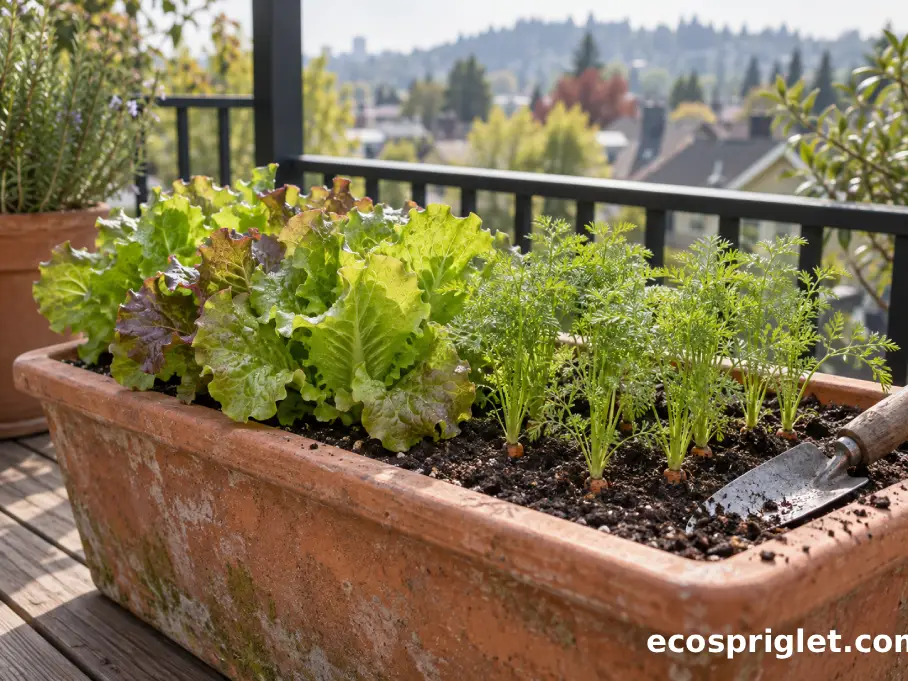
What Companion Planting Can—and Cannot—Do for Lettuce
Companion planting works best when you think of it as garden design rather than plant matchmaking. Two crops are useful companions when they make better use of light, root space, growing time, or beneficial-insect habitat without competing excessively for water and nutrients.
Lettuce is particularly handy because it is a cool-season, relatively compact crop. University of Minnesota Extension recommends interplanting short-season crops such as lettuce and spinach before larger warm-season plants such as tomatoes or peppers fill their space. By the time the larger crop develops a broad canopy, much of the lettuce can already have been harvested.
This distinction matters on a balcony. You are not trying to discover a mysterious plant that makes lettuce grow twice as fast. You are trying to make a 24-inch planter produce more useful food without creating overcrowding.
Lettuce itself prefers cool growing conditions. Utah State University Extension notes that lettuce performs best when temperatures remain below about 75°F, while hotter conditions can reduce quality and encourage bitter flavor or bolting. That is one reason taller companions can become useful later in spring: a little afternoon shade can extend the useful life of your greens.
If you are starting lettuce from scratch, my container lettuce guide is a useful companion reference for pot size, watering, and succession planting.
The Best Companion Plants for Lettuce in Small Spaces
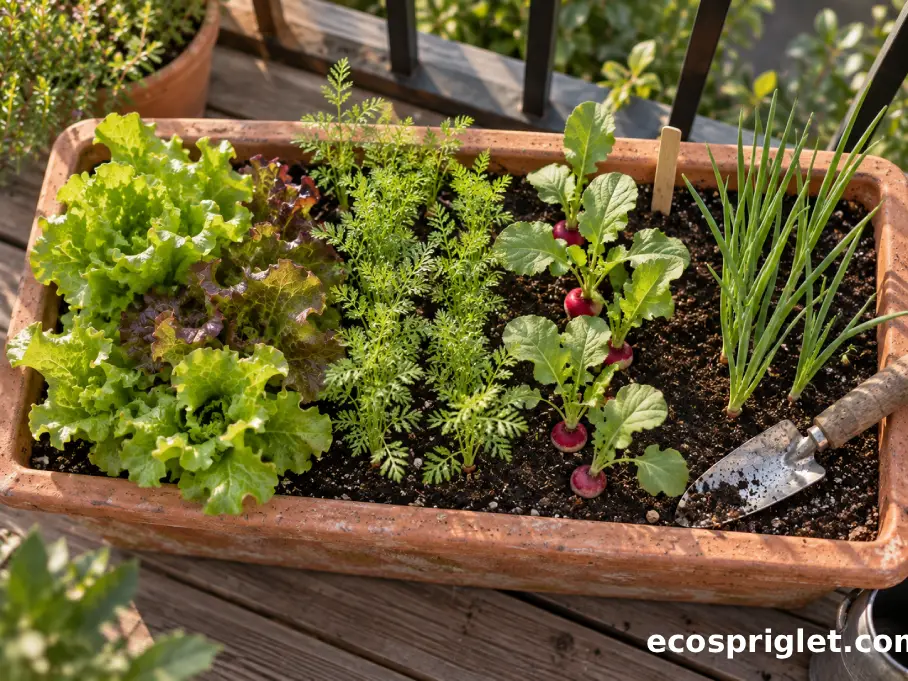
The most useful companion plants for lettuce tend to be crops that stay narrow, mature at a different pace, or use a different part of the container. For apartment gardeners, I would put carrots, radishes, green onions, spinach, and carefully positioned tomatoes near the top of the list.
| Plant | Small-Space Verdict | Why It Works | Best Setup |
|---|---|---|---|
| Carrots | Excellent | Upright foliage and deeper roots use space differently from lettuce. | Use a planter deep enough for the carrot type and keep lettuce around the outer area. |
| Radishes | Excellent | Quick growth makes them useful between slower or wider plants. | Sow between young lettuce plants and harvest before the planter becomes crowded. |
| Green onions | Very good | Narrow leaves take little horizontal space. | Plant along a rear or side edge where they will not shade seedlings. |
| Spinach | Good | Both crops favor cool growing conditions and similar moisture. | Give each plant enough room for airflow rather than creating a dense mat. |
| Tomatoes | Good seasonally | Young tomatoes leave open space, while older plants can provide useful summer shade. | Use lettuce around the edge of a large tomato planter or in an adjacent pot. |
| Garlic | Good | Its narrow upright growth leaves useful surface space around it. | Combine only where the container is deep and wide enough for both crops. |
Carrots are especially practical because the two crops occupy the planter differently. University of Minnesota Extension notes that combining crops with different root structures can improve use of the soil profile rather than concentrating every root in exactly the same zone. In containers, the important part is still adequate depth: Illinois Extension recommends containers at least about 12 inches across for carrots, while leafy greens can grow in smaller containers.
Radishes and green onions are even easier to fit around lettuce because their foliage stays relatively narrow. They work particularly well with loose-leaf lettuce that you harvest gradually rather than allowing every plant to develop into a full-size head.
Tomatoes, Carrots, Spinach, and Garlic: Pair by Pair
Can You Plant Lettuce With Tomatoes?
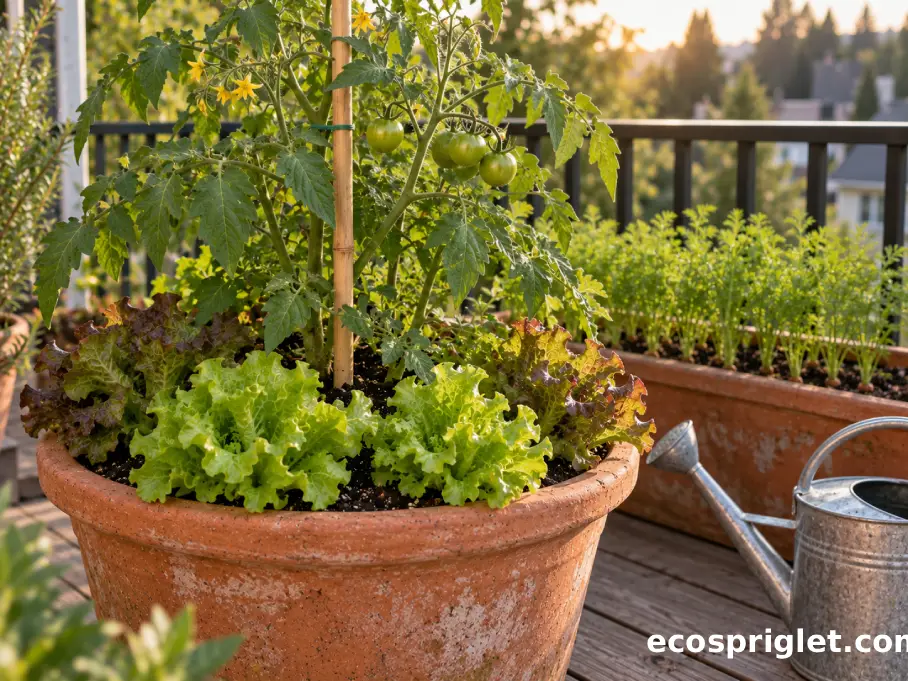
Yes, lettuce and tomatoes can be grown together, and this is one of the more practical forms of companion planting for lettuce. Oregon State University Extension specifically recommends lettuce with tomatoes because the taller crop can provide shade as weather warms, while University of Minnesota Extension describes lettuce and tomatoes as useful succession partners.
The timing is what makes the combination work. Plant lettuce while the tomato is still small. Harvest outer lettuce leaves or entire plants as the tomato canopy and root system expand.
I would not squeeze a tomato and several mature lettuce heads into an undersized pot. Container tomatoes need substantial root space. Recent University of Minnesota Extension guidance recommends at least a 5-gallon pot for a container tomato, and Oregon State gives the same minimum for container-grown tomatoes. On a balcony, I usually prefer lettuce around the outer rim of a large tomato container or in a neighboring window box where the tomato supplies afternoon shade without monopolizing the root zone.
Carrots and Lettuce
Carrots and lettuce are an efficient pair because carrot foliage grows upward while lettuce spreads closer to the surface. Give head or romaine lettuce more room than baby leaf lettuce. Utah State recommends roughly 8–12 inches between mature heading lettuce plants, although leaf lettuce harvested young can be grown more closely.
In a container, sowing a narrow line of carrots behind loose-leaf lettuce is usually easier than mixing every seed randomly. You will know exactly what needs thinning, and harvesting lettuce will not disturb developing carrot roots.
Lettuce and Spinach
Companion planting for lettuce and spinach is straightforward because both are cool-season leafy crops. The drawback is that their roots and leaves occupy similar territory, so the pairing saves less space than lettuce with carrots or onions.
Use a wide planter and leave enough openings for air circulation. Utah State warns that overly tight spacing among leafy greens can increase the humid conditions associated with several foliar and crown diseases. I like alternating small groups rather than planting one solid carpet of greens.
Are Garlic and Lettuce Companion Plants?
Garlic and lettuce can share growing space, especially because garlic leaves remain narrow and upright. What I would not promise is that the garlic will reliably keep aphids, slugs, or every other lettuce pest away. Those claims are common in companion-planting charts, but research support for many scent-based pairings remains inconsistent. University of Minnesota Extension advises gardeners to be skeptical of long lists claiming particular herbs or vegetables repel pests without supporting research.
Think of garlic as a space-compatible neighbor rather than a pesticide. Maintain enough room for both root systems and keep the potting mix evenly moist without leaving the container waterlogged.
What to Plant With Lettuce to Reduce Pest Pressure
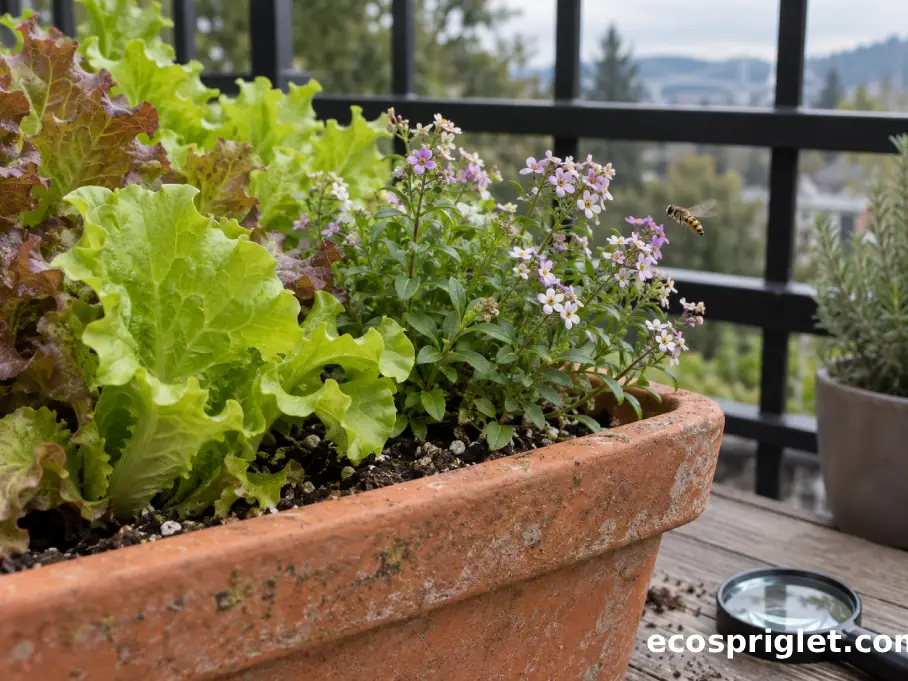
If pests are the reason you are exploring companion plants with lettuce, diversity is more useful than assuming one strongly scented herb creates an invisible force field.
University of Minnesota Extension explains that mixed plantings can affect insects in several ways: odors may alter how pests locate crops, different leaf shapes and colors can make a planting less visually uniform, and flowers can provide food or habitat for predatory and parasitic insects. The same source also warns that many popular companion-planting claims have little research behind them.
- Add a compact flowering plant nearby rather than packing it directly into the lettuce root zone; flowers can support adult beneficial insects that need nectar or pollen.
- Inspect the undersides of lettuce leaves at least every few days when aphids are active; early colonies are far easier to manage than heavily infested heads.
- If aphids appear, a firm stream of water can physically dislodge them; Utah State Extension includes this as a lettuce aphid management option.
- For flea beetles or other pests that must be excluded, a lightweight floating row cover is more dependable than relying entirely on a companion plant. Utah State also recommends row covers as an exclusion tool for flea beetles.
On a balcony, prevention also means keeping stressed plants to a minimum. Lettuce that repeatedly wilts between waterings becomes tougher and poorer in quality. Utah State recommends consistent moisture and notes that fluctuations between wet and dry conditions can cause quality problems.
In other words, plant diversity can be part of pest management, but watering, inspection, sanitation, and physical exclusion still do most of the dependable work.
Poor Pairings and What Not to Plant With Lettuce
Most so-called bad companion plants for lettuce are not dangerous chemical enemies. In a small container, they are simply plants whose size, water use, temperature preference, or root system makes them awkward roommates.
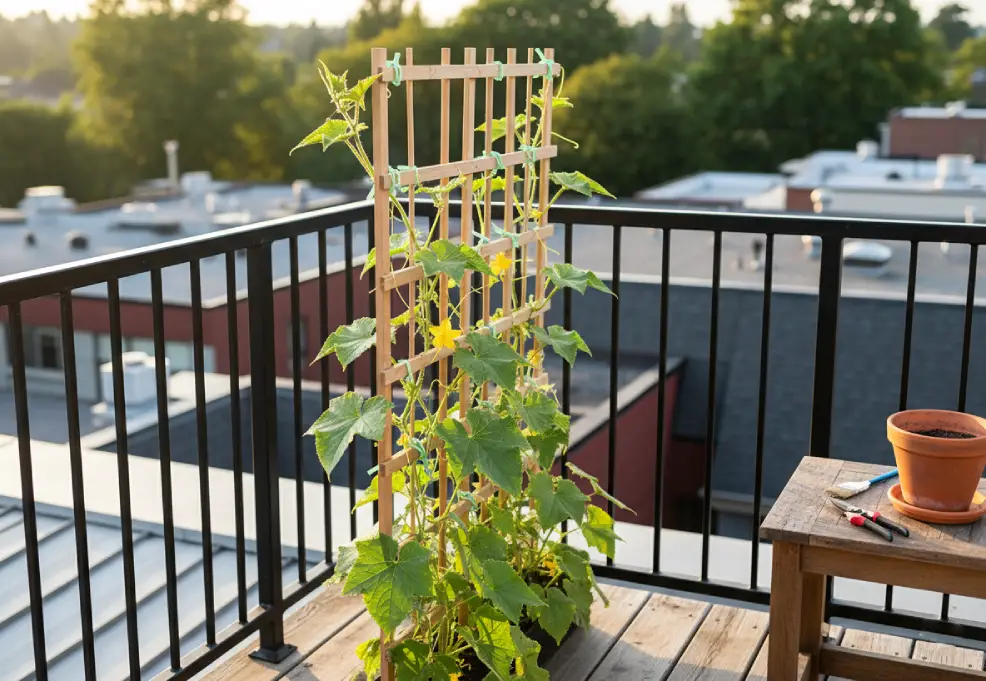
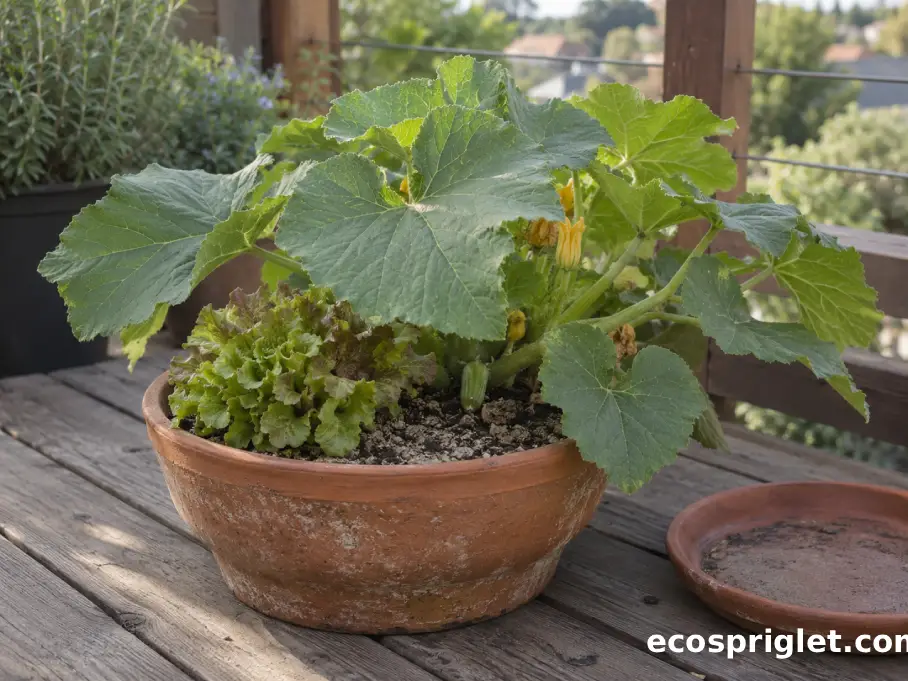
A mature tomato can become a poor companion if the container is too small. The same pairing can be excellent in spring and overcrowded six weeks later. Large cucumbers and squash create an even bigger problem because vigorous foliage and roots can quickly dominate a compact planter. Oregon State Extension notes that large or vining vegetables need considerably more container space than leafy crops.
Woody Mediterranean herbs are another combination I usually separate. Rosemary, for example, is generally grown under conditions where the potting mix can drain and dry more readily, while lettuce benefits from consistent moisture. You can place their pots next to one another, but forcing them to share a small root zone makes watering harder to manage.
Dense stands of full-size brassicas can create similar issues. Kale, cabbage, and broccoli are not inherently poisonous to lettuce, but a mature plant can consume most of the available container space and block light. That is a resource problem, not evidence of a mysterious incompatibility.
The rule I use is simple: if one crop will eventually fill most of the pot, give it its own container and let the lettuce occupy an adjacent planter instead. You still gain shade and spatial diversity without forcing two root systems to fight over a few gallons of mix.
How to Arrange Companion Planting in Lettuce Containers
A mixed planter works much better when you organize it deliberately. Randomly scattering six kinds of seed into a pot may look charming on the packet, but thinning and harvesting becomes frustrating once every seedling overlaps.
I learned that on one of my early balcony salad planters. I had lettuce, radishes, and carrots filling every visible inch. It looked wonderfully productive for about two weeks. Then the lettuce leaves covered the carrot seedlings, the radishes became hard to pull without disturbing nearby roots, and watering the middle of the container turned into an awkward exercise. Rows and zones are less romantic, but much easier to manage.
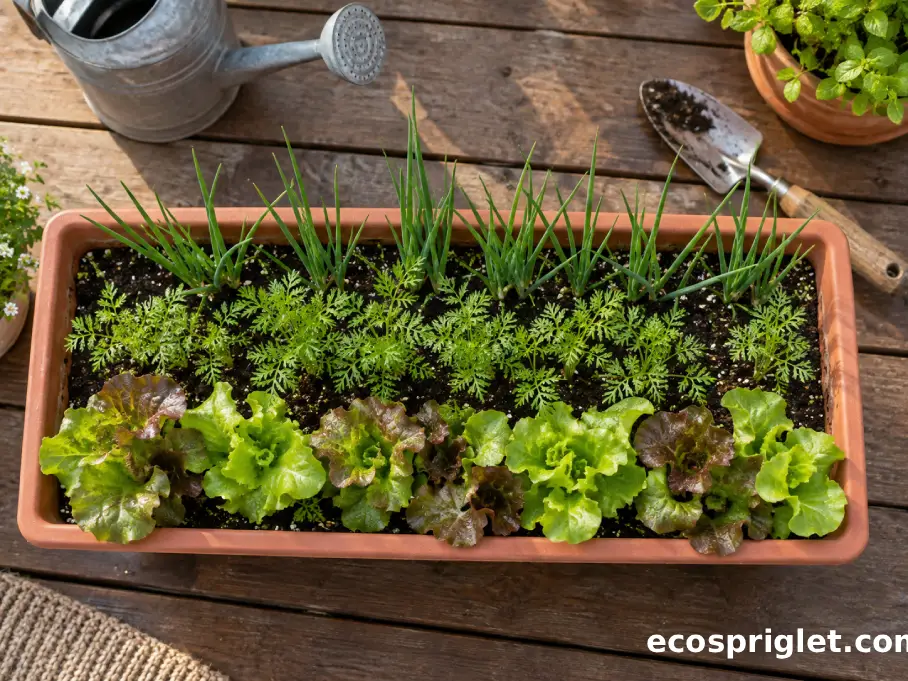
- Put shorter lettuce along the front or sunward edge so taller plants do not shade it too early.
- Place narrow crops such as green onions toward the back edge of the planter.
- Keep heading or romaine lettuce roughly 8–12 inches apart when you intend to grow full plants; harvest baby leaf types sooner if growing more densely.
- Leave an open strip or small gaps for a second sowing 10–14 days later if you want a steadier lettuce harvest. Illinois Extension recommends successive lettuce plantings at roughly 10–14 day intervals.
For leafy greens, width is often more valuable than excessive depth. Oregon State Extension notes that lettuce and other greens can grow in relatively low, wide containers, while tomatoes require much larger and deeper pots.
Whatever shape you choose, drainage holes are essential. Use potting mix rather than filling balcony containers with dense garden soil. Penn State Extension recommends soilless mixes for container vegetables because they combine drainage, aeration, and water retention more effectively than straight garden soil.
Common Mistakes to Avoid
Companion planting usually goes wrong because gardeners try to fit too many plants into too little soil. I learned this the hard way: the empty spaces between seedlings in April look enormous, but they disappear quickly once lettuce develops a full rosette.
- Overcrowding the container: Plan around mature plant size rather than seedling size. Thin lettuce once seedlings are established instead of keeping every successful germination.
- Treating companions as pest control: Garlic, herbs, and flowers may contribute to a diverse planting, but they do not replace inspection, row covers, or other proven pest-management methods.
- Ignoring future shade: A tomato that is 10 inches tall today may eventually cast shade over most of the planter. Position lettuce where later shade will be helpful rather than complete.
- Letting containers repeatedly dry out: Lettuce has shallow roots and benefits from consistent moisture. Utah State recommends approximately 1–2 inches of water per week for garden-grown lettuce, adjusted for weather and soil; containers should instead be checked frequently and watered thoroughly when the mix begins drying.
- Pairing plants only because a chart says so: Look first at light, root space, water, temperature, and mature size. Those factors are usually much more useful on a balcony.
Containers exposed to wind and sun can dry much faster than garden soil. Oregon State Extension recommends checking container moisture and watering until excess water drains from the bottom rather than relying on a fixed calendar.
A Simple Balcony Lettuce Companion Planting Plan
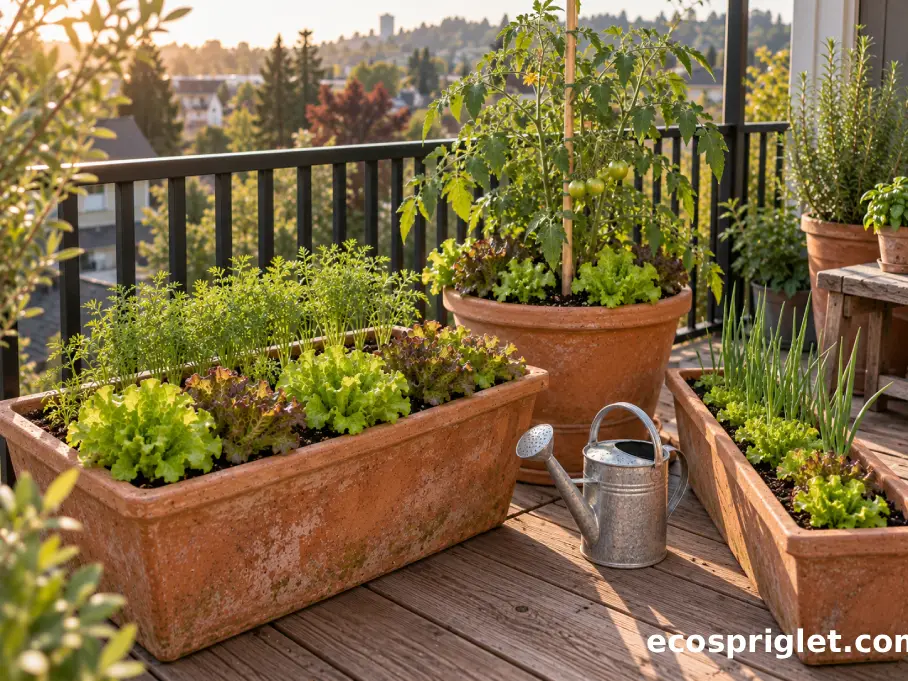
If you have room for three containers, you do not need to cram every companion into a single pot. Separating combinations often produces a healthier and easier-to-water garden.
| Container | Planting Idea | How to Use It |
|---|---|---|
| Wide salad planter | Loose-leaf lettuce plus carrots | Place lettuce toward the front and carrots behind it; harvest lettuce leaves gradually. |
| Narrow window box | Lettuce plus green onions | Keep onions along the rear edge and lettuce toward the light. |
| Large tomato pot | One tomato plus early lettuce | Harvest lettuce as the tomato canopy expands; do not keep adding plants once roots fill the pot. |
This layout gives you three different kinds of companion planting at once: different root structures, different growth shapes, and succession through the season. It also makes troubleshooting easier because a thirsty tomato does not dictate the watering schedule for every lettuce plant you own.
If your balcony receives harsh afternoon sun, move the lettuce planter so a tomato or railing casts partial late-day shade once temperatures rise. Lettuce is a cool-season crop, and Illinois Extension notes that some shade can help summer plantings when heat becomes a problem.
For a very small balcony, simplify further. A single 10–12-inch or wider container of loose-leaf lettuce with a few green onions can be more satisfying than a crowded collection of five supposed companions. Illinois Extension lists leafy greens among crops suitable for relatively compact containers, while larger fruiting crops need substantially more soil volume.
Final Thoughts on Choosing Lettuce Companions
The best companion plants for lettuce are the ones that make your limited space easier to use. Carrots and radishes fit neatly around leafy growth, green onions take little horizontal room, spinach shares lettuce’s preference for cool weather, and tomatoes can become useful seasonal partners when you plan for their eventual size. Garlic can coexist with lettuce too, but it should be treated as another crop rather than guaranteed pest protection.
The bigger lesson is that successful companion planting is less about memorizing good and bad plant lists and more about matching roots, mature size, moisture, shade, and timing. That approach is especially useful in containers, where every gallon of potting mix counts.
Start with one simple pairing and leave more space than seems necessary. Watch where the afternoon shade falls, check moisture with your fingers, and harvest quick crops before they begin crowding their neighbors. A well-planned planter with two compatible crops will usually outperform a miniature jungle containing six.
Sources consulted for horticultural guidance include University of Minnesota Extension, Oregon State University Extension, Utah State University Extension, University of Illinois Extension, and Penn State Extension.