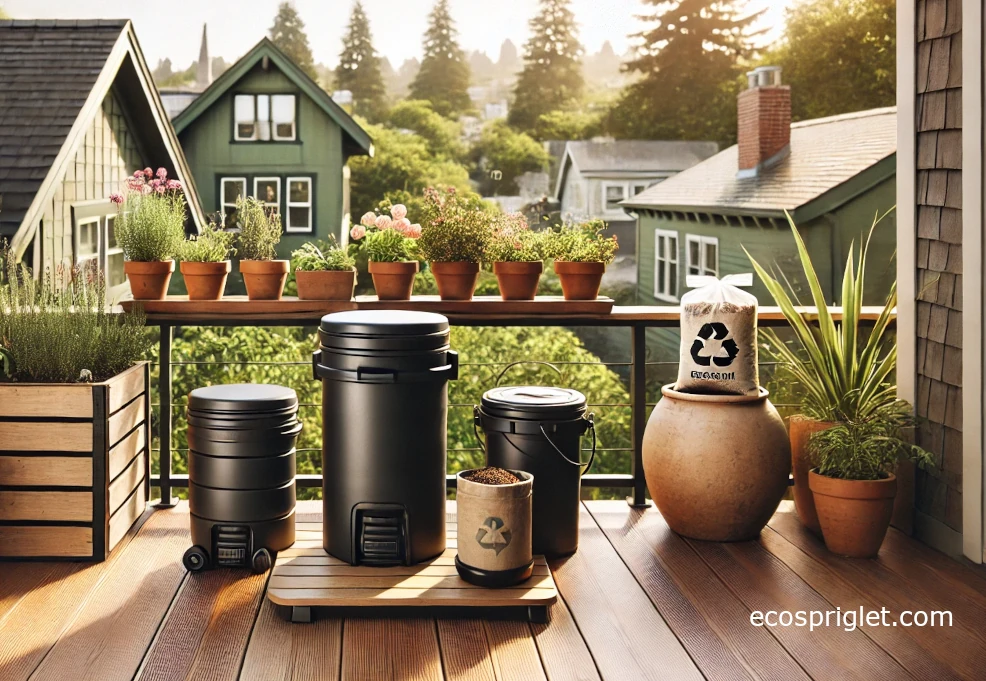
The best compost bin depends on what you are actually trying to do. A kitchen counter bin only stores scraps until pickup or drop-off. A worm bin can turn fruit and vegetable scraps into castings indoors. A bokashi bucket ferments food waste but still needs a second step. A tumbler needs outdoor space. An electric food recycler reduces messy scraps, but most models should not be treated as a true finished-compost maker.
That distinction matters in an apartment. I would rather see a beginner buy a simple, easy-to-clean kitchen caddy they will empty twice a week than a complicated “best composter” that sits unused because it smells, leaks, or has nowhere to finish the material.
Composting can reduce waste and recycle organic material into a useful soil amendment, and EPA notes that food in landfills generates methane, which is one reason diverting scraps matters. For home composting, EPA also recommends keeping meat, dairy, and greasy foods out of standard compost piles and using a balance of browns and greens.
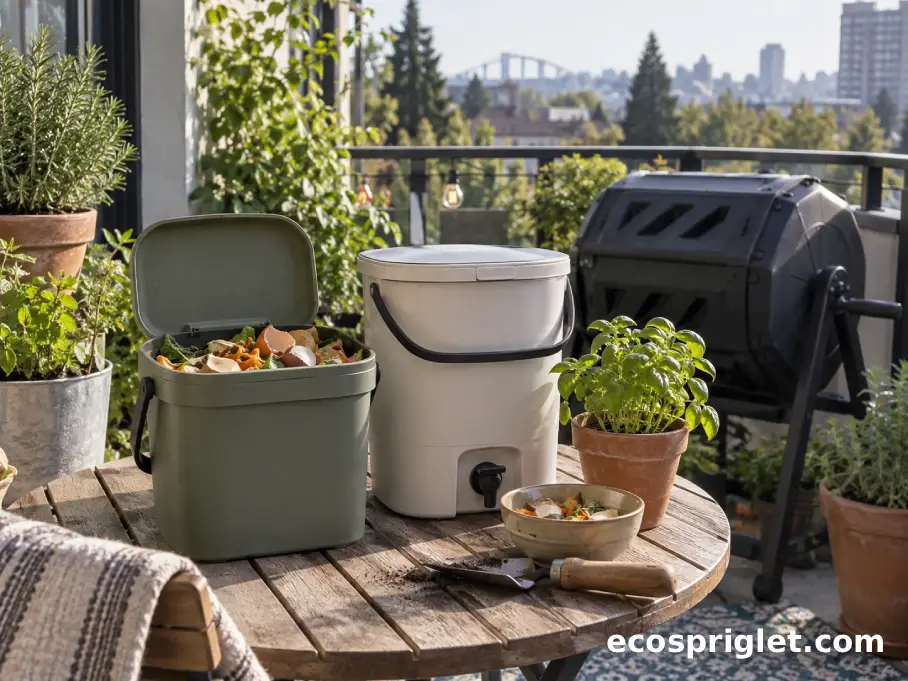
Quick Picks for Different Small-Space Composting Setups
- Best kitchen counter compost bin for most apartments: OXO Good Grips Easy-Clean Compost Bin, especially the 0.75-gallon size for tight counters or the 1.75-gallon size for heavier cooking.
- Best stainless steel countertop bin: EPICA 1.3-Gallon Stainless Steel Compost Bin, a simple lidded caddy with replaceable charcoal filters.
- Best design-friendly kitchen caddy: simplehuman 4L Compost Caddy, especially if you already use a compatible simplehuman trash can.
- Best no-yard apartment system: All Seasons Indoor Composter, a bokashi bucket for fermenting scraps before finishing them elsewhere.
- Best worm composter for indoor gardeners: Worm Factory 360, a stackable tray worm bin for people willing to manage living worms.
- Best outdoor compost tumbler for a patio or shared garden: FCMP Outdoor IM4000, a dual-chamber tumbler with a compact raised footprint.
- Best budget patio tumbler to compare: VIVOSUN 43-Gallon Dual Rotating Composter, a popular two-chamber style for outdoor batch composting.
- Best electric alternative, not true compost: Vitamix FoodCycler FC-50, useful for reducing scrap volume when you understand the output still needs responsible handling.
Comparison Table: Which Compost Bin Fits Your Apartment?
| Pick | Best For | Main Advantage | Watch Out For |
|---|---|---|---|
| OXO Easy-Clean Compost Bin | Most apartment kitchens | Simple, light, easy to rinse | It stores scraps; it does not compost them |
| EPICA Stainless Steel Compost Bin | People who want a classic metal caddy | Durable feel and charcoal-filter lid | Filters are an ongoing replacement item |
| simplehuman Compost Caddy | Design-conscious kitchens | Magnetic dock and removable inner bucket | Premium price for a small capacity |
| All Seasons Indoor Composter | No-yard apartments with a finishing plan | Airtight bokashi fermentation | Pre-compost still needs soil, compost, or pickup |
| Worm Factory 360 | Indoor gardeners who want usable castings | Real vermicomposting in a vertical footprint | Worms need temperature, moisture, and careful feeding |
| FCMP Outdoor IM4000 | Patios, yards, and shared garden spaces | Dual chambers for batch composting | Needs outdoor space and browns |
| VIVOSUN 43-Gallon Tumbler | Budget outdoor composting | Large dual-chamber capacity | Assembly and door size can matter |
| Vitamix FoodCycler FC-50 | Convenience-focused kitchens | Reduces wet food scrap volume | Electric food recyclers are not the same as finished compost |
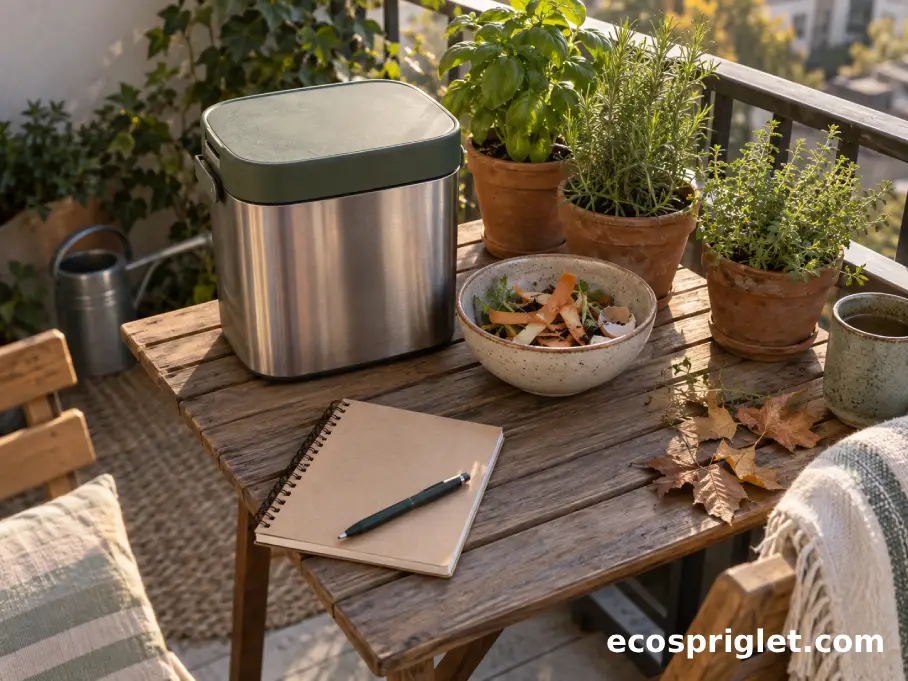
How We Chose These Compost Bins
I looked for compost bins that make sense for apartment dwellers, balcony gardeners, container growers, and beginner-to-intermediate home composters. The big criteria were simple: small-space fit, odor control, realistic maintenance, ease of cleaning, where the scraps go after the bin fills, and whether the product solves a real problem rather than just looking tidy on a counter.
For kitchen counter compost bins, I favored smooth interiors, manageable capacity, easy carrying, and lids that discourage fruit flies without turning the container into a science project. For worm bins and bokashi systems, I looked at whether a beginner can realistically keep up with the process. For outdoor tumblers, I cared more about footprint, dual chambers, pest resistance, and ease of turning than raw size.
I did not treat “top rated compost bins” or “top rated composters” as enough by itself. Ratings can help with screening, but they do not tell you whether a bin fits a rental kitchen, a second-floor balcony, a shared courtyard, or a household that cooks three nights a week.
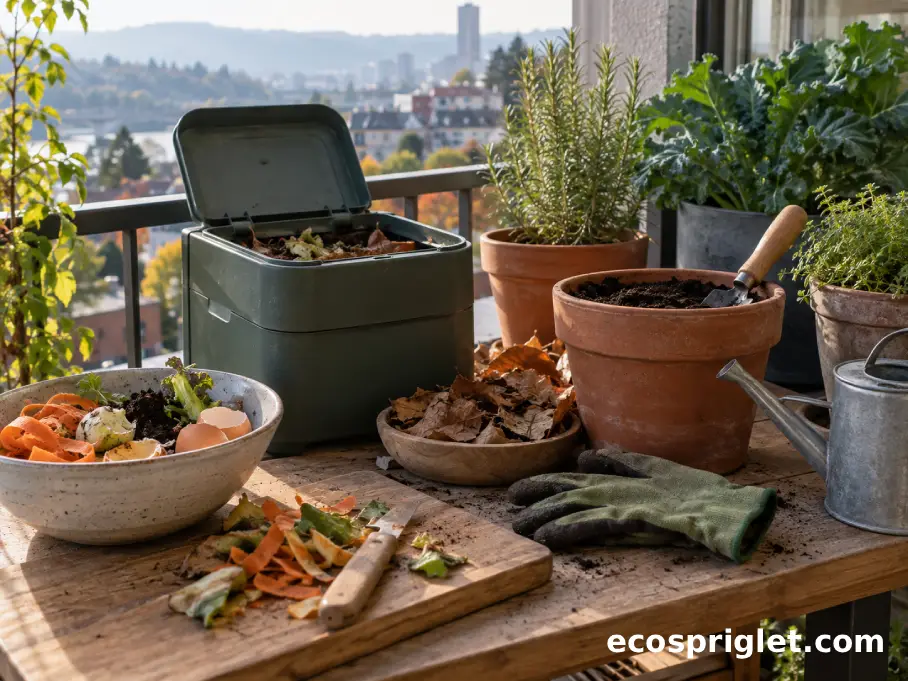
Recommended Compost Bins
Best Kitchen Counter Compost Bin for Most Apartments: OXO Good Grips Easy-Clean Compost Bin
Best for: renters, small kitchens, beginner composters, and anyone using curbside compost pickup or a weekly drop-off bucket.
Not best for: people who want one product that turns scraps into finished compost.
Why I’d consider it: The OXO Easy-Clean Compost Bin is a practical scrap collector, which is exactly what most apartment composting routines need first. OXO lists a 0.75-gallon version with a compact 6.6 by 6.4 by 7.5 inch footprint, and a larger 1.75-gallon version with a 6.62-liter capacity. The larger version has a dishwasher-safe body, while OXO says other parts should be hand washed.
- Key feature: Flip-up lid, carry handle, smooth interior, and two useful size options.
- Practical benefit: Easy to keep near the cutting board and empty before scraps get unpleasant.
- Drawback: Plastic can hold odors if neglected, and this is a collector, not a composter.
- Check before buying: Choose 0.75 gallon for tight counters or 1.75 gallon if you cook often and empty frequently.
Bottom line: For most apartment gardeners, this is the easiest first step. Pair it with curbside compost, a community drop-off, a worm bin, bokashi, or an outdoor tumbler.
Best Stainless Steel Countertop Bin: EPICA 1.3-Gallon Stainless Steel Compost Bin
Best for: people who want a simple metal kitchen compost bin with a classic filtered lid.
Not best for: households that dislike buying replacement charcoal filters.
Why I’d consider it: The EPICA bin is a straightforward countertop caddy. Target lists it at 1.3 gallons with stainless steel construction, and EPICA describes the bin as using a dual-filter charcoal system. That makes it a sensible choice for someone who wants a metal body and filter-based odor control without moving into electric composter territory.
- Key feature: Stainless steel body with a charcoal-filter lid.
- Practical benefit: Feels more durable than many lightweight plastic caddies and looks neutral on a counter.
- Drawback: Charcoal filters need replacing, and the lid should still be cleaned regularly.
- Check before buying: Confirm filter availability and whether the lid design is easy for you to clean.
Bottom line: A good kitchen-counter compost bin if you want metal, a modest capacity, and a familiar charcoal-filter setup.
Best Design-Friendly Kitchen Caddy: simplehuman 4L Compost Caddy
Best for: small kitchens where the compost caddy needs to live visibly beside the trash can.
Not best for: budget shoppers or heavy cooks who want a larger scrap container.
Why I’d consider it: The simplehuman Compost Caddy is a 4-liter kitchen caddy with a magnetic dock that can attach to compatible simplehuman trash cans, and it can detach for food prep at the counter. The manufacturer lists a 5-year warranty and describes a removable inner bucket for emptying and rinsing.
- Key feature: Magnetic docking system, soft-seal lid, and removable inner bucket.
- Practical benefit: Keeps compost collection close to the main trash zone, which helps build the habit.
- Drawback: It costs more than simpler caddies and makes the most sense if the dock works with your kitchen setup.
- Check before buying: Confirm compatibility with your trash can, counter clearance, and liner preference.
Bottom line: A polished kitchen caddy for people who value habit-building and clean design, not the best value if you only need a basic scrap bucket.
Best No-Yard Apartment System: All Seasons Indoor Composter Bokashi Kit
Best for: apartment dwellers who want to ferment scraps indoors and have a plan for the finished pre-compost.
Not best for: anyone who has nowhere to bury, compost, donate, or otherwise finish the fermented material.
Why I’d consider it: The All Seasons Indoor Composter kit includes a 5-gallon bokashi bucket and bokashi bran, with the manufacturer listing bin dimensions of 16 inches high by 10 inches wide by 10 inches deep and an airtight locking lid. Bokashi is an anaerobic fermentation method, and WSU Extension explains that bokashi creates a pre-compost that still needs to be buried in soil or finished in another compost system.
- Key feature: Airtight bucket, bokashi bran, and indoor-friendly fermentation process.
- Practical benefit: A realistic option for renters who cannot keep worms and do not have a patio tumbler.
- Drawback: It is not a one-bin miracle. You still need a second step after fermentation.
- Check before buying: Make sure you have a community garden, outdoor compost bin, soil factory, municipal organics bin, or other place to finish the pre-compost.
Bottom line: Bokashi can be excellent for apartments, but only when the finishing plan is solved before the bucket fills.
Best Worm Composter for Indoor Gardeners: Worm Factory 360
Best for: indoor gardeners who want to make worm castings from fruit and vegetable scraps.
Not best for: anyone who travels often, overheats their apartment, or dislikes managing living organisms.
Why I’d consider it: The Worm Factory 360 is a stackable tray vermicomposting system. Nature’s Footprint describes it as vertically expandable up to six trays, with each full tray weighing about 12.5 pounds. The manufacturer also cautions that worms are living creatures and recommends keeping bedding roughly between 40°F and 80°F, while Oregon State University Extension says red wigglers do best between 55°F and 77°F. {index=10}
- Key feature: Vertical tray design that keeps the footprint small.
- Practical benefit: Produces vermicompost that is useful for container gardening when managed well.
- Drawback: Worm bins need moisture, airflow, bedding, careful feeding, and temperature control.
- Check before buying: Confirm where it will live year-round. A hot balcony in summer is usually a poor place for worms.
Bottom line: The best household composter here for gardeners who want actual composting indoors, as long as you are ready to care for the worms.
Best Outdoor Compost Tumbler for Small Patios: FCMP Outdoor IM4000
Best for: small patios, shared side yards, community garden plots, and gardeners who want batch composting without a loose pile.
Not best for: balconies with unclear load limits, indoor use, or households with no supply of dry browns.
Why I’d consider it: FCMP lists the IM4000 as a dual-chamber tumbler with about 43 gallons of total volume and assembled dimensions of 28 inches deep by 30 inches wide by 36 inches high. The dual-chamber design lets one side sit while the other side receives new scraps, which is useful when you do not have space for multiple bins.
- Key feature: Dual chambers in a raised tumbler format.
- Practical benefit: Easier to turn than a ground pile and more contained than an open compost heap.
- Drawback: It still needs a good mix of greens and browns, and it is too large for many apartment balconies.
- Check before buying: Measure the outdoor footprint, check building rules, and make sure you can store dry leaves, shredded paper, or other browns nearby.
Bottom line: A strong small-yard or patio choice, but not a casual kitchen-counter solution.
Best Budget Patio Tumbler to Compare: VIVOSUN 43-Gallon Dual Rotating Composter
Best for: outdoor composters who want a lower-cost dual-chamber tumbler style.
Not best for: people who dislike assembly or need a very large door opening for bulky garden waste.
Why I’d consider it: VIVOSUN lists its dual rotating composter at 43 gallons with dimensions of 26.25 inches long by 23.6 inches wide by 36.5 inches high, using galvanized steel and plastic. That makes it worth comparing against the FCMP if you want a similar patio-scale composter and current pricing favors the VIVOSUN.
- Key feature: Dual chambers and a raised rotating frame.
- Practical benefit: Lets you fill one side while the other breaks down.
- Drawback: Assembly, door size, and long-term hardware durability are worth checking closely in current reviews.
- Check before buying: Look at the door dimensions, spare hardware availability, and whether the frame feels stable for your outdoor surface.
Bottom line: A practical comparison pick for budget-focused outdoor composting, especially when you have a patio rather than a tiny balcony.
Best Electric Food Recycler Alternative: Vitamix FoodCycler FC-50
Best for: people who want to reduce wet, smelly kitchen scraps before taking them to another composting route.
Not best for: gardeners expecting finished compost they can scoop directly onto houseplants.
Why I’d consider it: Vitamix lists the FoodCycler FC-50 with a 2.5-liter capacity, 120V household use, and a 500-watt electrical rating. I would treat this as a food-waste volume reducer rather than a true compost bin. EPA defines composting as managed aerobic biological decomposition by microorganisms, and food recyclers that heat, dry, and grind scraps should be handled differently from finished compost.
- Key feature: Electric drying and grinding of food scraps.
- Practical benefit: Can make wet scraps less messy before transfer to a compost pile, pickup program, or appropriate disposal route.
- Drawback: Uses electricity, has a small bucket, needs filter/maintenance checks, and does not replace biological composting.
- Check before buying: Confirm what foods are allowed, how filters are replaced, where the output goes, and whether the appliance noise and counter footprint fit your kitchen.
Bottom line: Useful for convenience, not the first thing I would buy if your real goal is finished compost for balcony herbs.
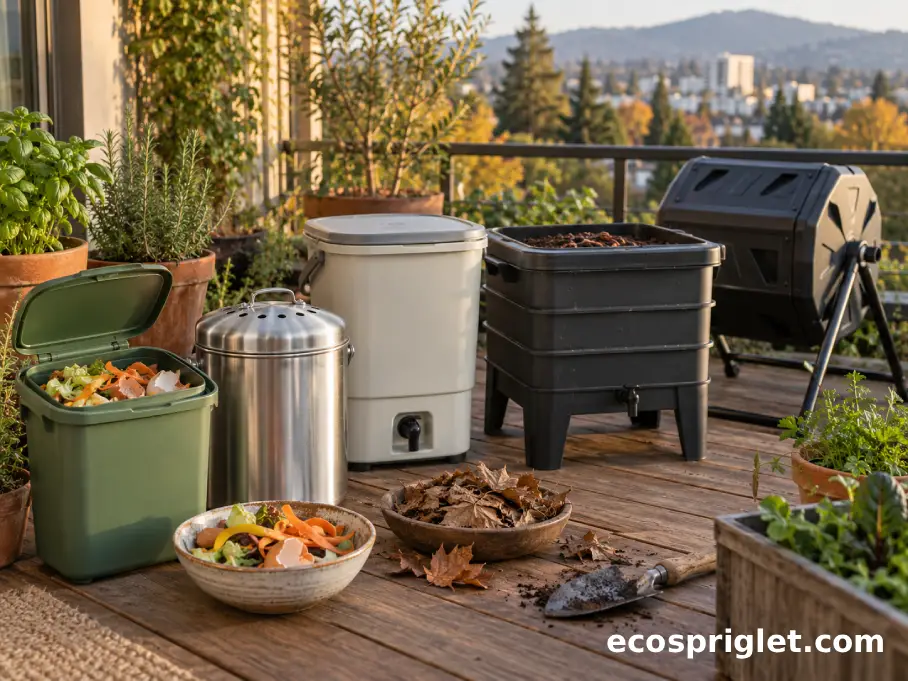
How to Choose the Right Compost Bin for Your Space
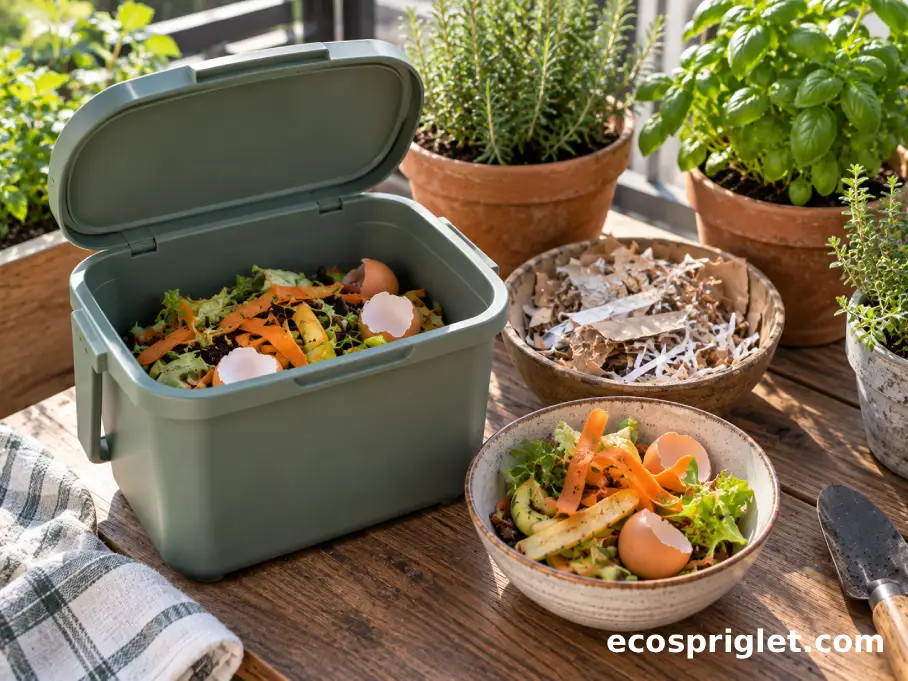
Choose a kitchen counter bin if you already have somewhere else to send scraps. This is the best choice for most renters with municipal compost pickup, a farmers market drop-off, a community garden, or a shared outdoor composter. A 0.75- to 1.75-gallon caddy is usually more practical than a huge bin because it encourages frequent emptying.
Choose bokashi if you need an indoor system and can finish the fermented scraps later. Bokashi is helpful when odor control matters and you want to handle a wider range of food waste, but the pre-compost is not ready to use around container plants immediately. WSU Extension describes bokashi as fermentation that creates pre-compost needing burial or another finishing system.
Choose a worm bin if you want a living indoor composting system. Worm bins are best for vegetable scraps, coffee grounds, crushed eggshells, and shredded paper bedding. Cornell notes that worms need moisture, air, food, darkness, and warm but not hot temperatures.
Choose a tumbler if you have real outdoor space. A tumbler needs browns, airflow, moisture, and enough room to spin. It is more contained than a pile, but it is not maintenance-free. EPA recommends two to three parts carbon-rich browns to one part nitrogen-rich greens for a home compost pile.
Choose an electric food recycler only when convenience is the main problem. It may reduce the smell and mess of scraps, but it should not be your only composting plan unless your local program or product instructions clearly explain how to use or dispose of the output.
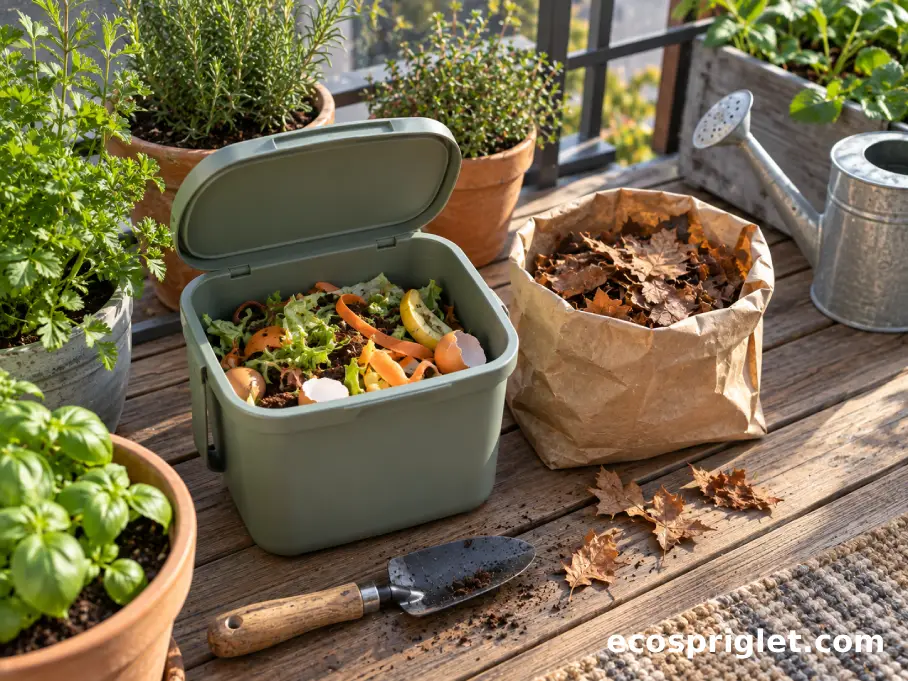
Mistakes to Avoid When Buying Compost Bins
- Buying a countertop bin and expecting finished compost. Kitchen caddies collect scraps; they do not compost.
- Ignoring where the scraps go next. Before buying, decide between curbside pickup, drop-off, worm bin, bokashi finishing, tumbler, or shared garden compost.
- Choosing too much capacity. Big kitchen bins encourage scraps to sit too long, which can mean odor, liquid, mold, and fruit flies.
- Buying a tumbler without browns. Food scraps alone get wet and sour. Dry leaves, shredded paper, torn cardboard, and plant trimmings matter.
- Putting a worm bin on a hot balcony. Red wigglers prefer moderate temperatures; Oregon State University Extension says they do best between 55°F and 77°F.
- Trusting “top rated” labels without checking dimensions. Compost bins on Amazon and compost bins at Home Depot can look compact in photos but still be too tall, wide, or heavy for a rental setup.
- Forgetting cleaning. Any kitchen compost bin that is hard to rinse will eventually become the bin you avoid using.
Compost Bin Safety, Odor, and Maintenance Notes
For standard home composting, keep meat, dairy, oils, and greasy foods out unless your local program or specific bokashi system says otherwise. EPA cautions that meat, dairy, and greasy foods should not go into home compost piles because they can create odor and pest problems.
For kitchen caddies, empty often. In a small apartment, every two or three days is usually more realistic than waiting for the bin to fill completely. Add a scrap of paper towel, torn egg carton, or dry leaf layer if the bottom gets wet, but avoid using glossy paper or plastic-coated packaging.
For bokashi, keep the lid sealed and drain liquid as directed by the manufacturer. The main smell should be fermented or pickled, not rotten. If it smells foul, the bucket may be too wet, under-branned, or exposed to too much air.
For worm bins, start slowly. Worms are not garbage disposals. Bury small amounts of food under bedding, avoid overfeeding, and keep the bedding damp like a wrung-out sponge rather than soggy. Cornell’s worm composting guidance emphasizes moisture, air, food, darkness, and warm but not hot conditions.
For outdoor tumblers, check your lease, building rules, HOA rules, or shared garden policies before placing one on a balcony or common patio. A full tumbler can become heavy, and balcony load limits are not something to guess about.
FAQ
What is the best kitchen compost bin for beginners?
For most beginners, I would start with a small OXO Easy-Clean Compost Bin or a similar smooth-sided kitchen caddy. It is simple, easy to empty, and does not ask you to learn the whole composting process on day one.
What is the best countertop composter?
If you mean a scrap collector, the OXO, EPICA, and simplehuman options are all sensible depending on whether you value low cost, stainless steel, or design. If you mean a machine that processes scraps, remember that electric food recyclers are not the same as finished compost.
Can I compost in an apartment without a balcony?
Yes, but your best options are usually curbside compost pickup, a drop-off program, bokashi with a finishing plan, or a worm bin kept in a stable indoor location. A tumbler is rarely practical without outdoor space.
Are compost tumblers good for balconies?
Sometimes, but only for large, sturdy balconies where building rules allow it. Measure the footprint, consider the full weight, check drainage and odor risk, and avoid placing a tumbler where wind could move it.
Do compost bins smell?
A well-managed bin should not smell rotten. Odor usually means too much wet food, not enough browns, poor airflow in an aerobic system, overfeeding worms, or waiting too long to empty a kitchen caddy.
What should I not put in a home compost bin?
For standard home composting, avoid meat, dairy, greasy foods, oils, diseased plants, pet waste, and anything treated with questionable chemicals. EPA specifically cautions against meat, dairy, and greasy foods in home piles.
Is bokashi better than a worm bin?
Neither is universally better. Bokashi is sealed and compact but creates pre-compost that needs finishing. A worm bin can create castings indoors but needs living-worm care. For a beginner in an apartment, the better choice is the one you can maintain every week.
Should I buy compost bins from Amazon or Home Depot?
Both can be fine places to compare compost bins, but check the actual dimensions, capacity, replacement filters, assembly notes, return policy, and recent buyer photos. I would not choose based only on a “top rated compost tumbler” or “best rated compost bin” label.
Final Recommendation
For most urban apartment dwellers, the best compost bin is not the fanciest composter. It is the one that fits your actual disposal route. Start with the OXO Easy-Clean Compost Bin if you need a simple kitchen counter scrap caddy. Choose EPICA if you prefer stainless steel. Choose simplehuman if design and docking matter more than price.
If you want to make compost at home without a yard, the Worm Factory 360 is the most garden-useful option here, but only if you are ready to manage worms. If you want a sealed indoor system and have somewhere to finish the material, choose the All Seasons bokashi bucket. If you have a patio or shared outdoor space, compare the FCMP Outdoor IM4000 and VIVOSUN dual-chamber tumblers.
And if you are drawn to an electric kitchen composter, buy it with clear expectations. A food recycler can make scraps easier to handle, but it should not be treated as a shortcut to finished compost for your balcony basil.