Spinach is one of those crops that makes companion planting genuinely useful in a small garden—not because another plant magically protects it, but because spinach is compact, quick-growing, and happiest during the cool parts of spring and fall. That gives apartment gardeners plenty of ways to share a planter or raised bed with crops that use space differently.
The most useful companions are usually lettuce, radishes, scallions, peas, cilantro, dill, and a few compact flowering plants. They work because their growing seasons overlap, their shapes fit together, or they help you keep a small planting area productive. Utah State University Extension describes spinach as a cool-season crop that grows best before hot summer weather arrives, while University of Minnesota Extension cautions that many traditional companion-planting charts make pest-control claims that are not well supported by research.
So rather than memorizing a list of supposedly friendly and unfriendly vegetables, I prefer to plan around four things: temperature, mature size, root competition, and shared pests. That approach works especially well on balconies, where every inch of potting mix has to earn its keep.
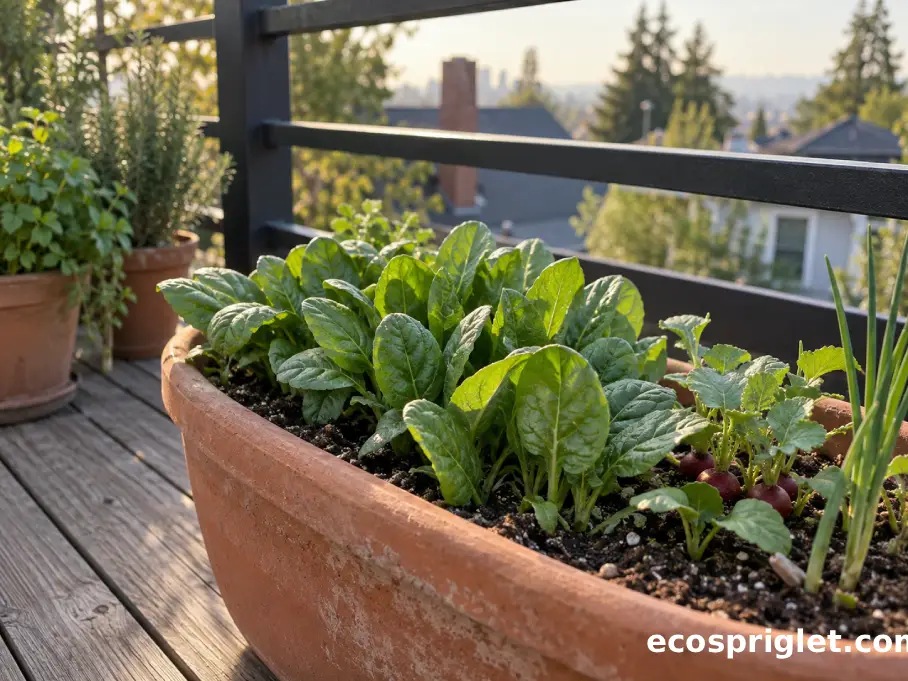
What Companion Planting Can—and Can’t—Do for Spinach
Good companion planting starts with compatibility rather than folklore. Spinach prefers cool conditions, fertile well-drained soil, and steady moisture. Utah State University Extension reports that spinach seed can germinate once soil reaches about 40°F, performs best before temperatures climb much above 75°F, and is commonly thinned to about 3 inches between plants. Illinois Extension gives a practical range of 2 to 4 inches for garden spinach, with 4 to 6 inches in all directions when plants are grown larger in beds.
That means the easiest companions are plants that enjoy roughly the same spring or fall window and do not quickly smother the spinach. Radishes fit below and between leafy crops. Scallions stay narrow and upright. Leaf lettuce occupies a similar cool-season niche. Peas can use vertical space instead of spreading across the soil.
The pest-control side deserves more caution. University of Minnesota Extension notes that research supports some forms of companion planting, particularly greater plant diversity and habitat for beneficial insects, but many popular claims about one plant repelling a specific pest have little or conflicting evidence.
My rule on a balcony is simple: use companions first to improve space, timing, and diversity. Treat any pest benefit as a bonus rather than the reason the planting succeeds.
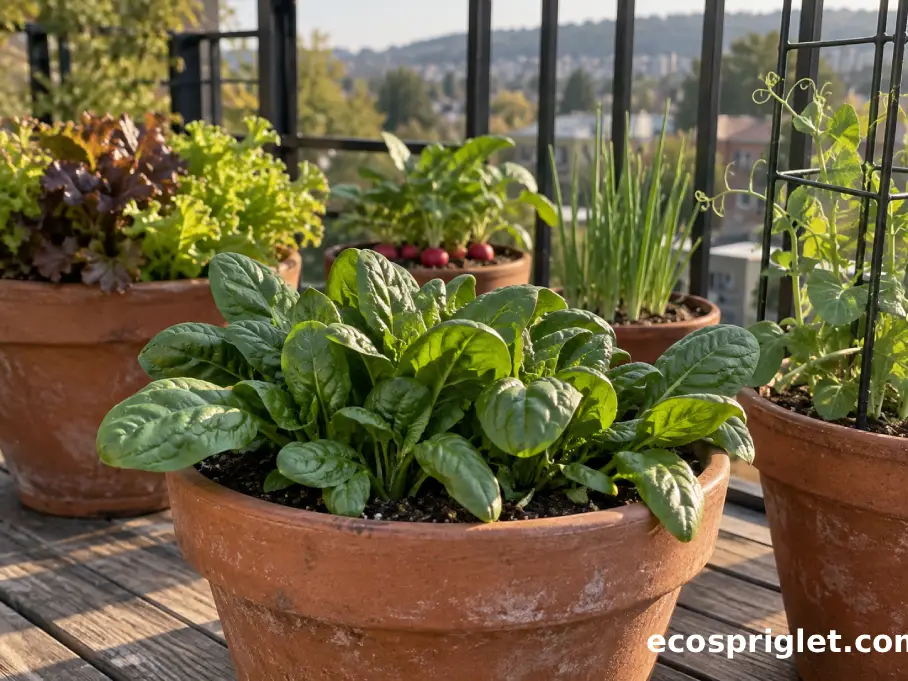
Best Spinach Companion Plants for Small-Space Gardens
If you are deciding what grows well with spinach, start with crops that share its cool-season timing without demanding exactly the same physical space. Extension planting guides routinely group spinach with lettuce, radishes, peas, onions, kale, and other cool-weather vegetables for spring and fall growing.
| Companion | Why It Fits | Small-Space Strategy |
|---|---|---|
| Leaf lettuce | Shares spinach’s cool-season growing window | Alternate small patches rather than crowding both into one dense mat |
| Radishes | Compact foliage and a root crop use space differently from spinach | Sow along planter edges and harvest promptly as roots size up |
| Scallions | Narrow, upright growth leaves more light around spinach leaves | Use along borders or between wider-spaced spinach plants |
| Peas | Cool-season crop that can use vertical space | Give peas their own trellis and keep vines from lying across spinach |
| Cilantro | Enjoys cool weather and remains fairly compact when young | Harvest regularly before either crop becomes crowded |
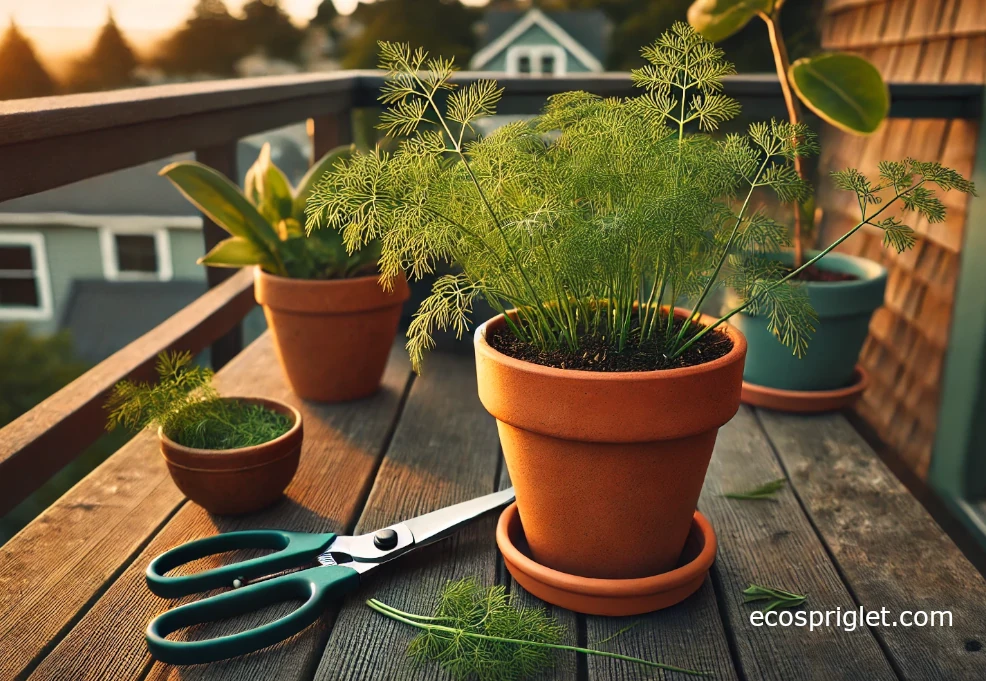
| Dill | Flowers can provide resources for beneficial insects | Keep one plant near the bed rather than filling the spinach container with dill |
| Sweet alyssum | Compact flowers add insect-friendly diversity | Place at a bed edge or in a neighboring pot instead of between every spinach plant |
| Strawberries | Spinach can temporarily occupy open soil early in the season | Use only while strawberry foliage still leaves enough light and root space |
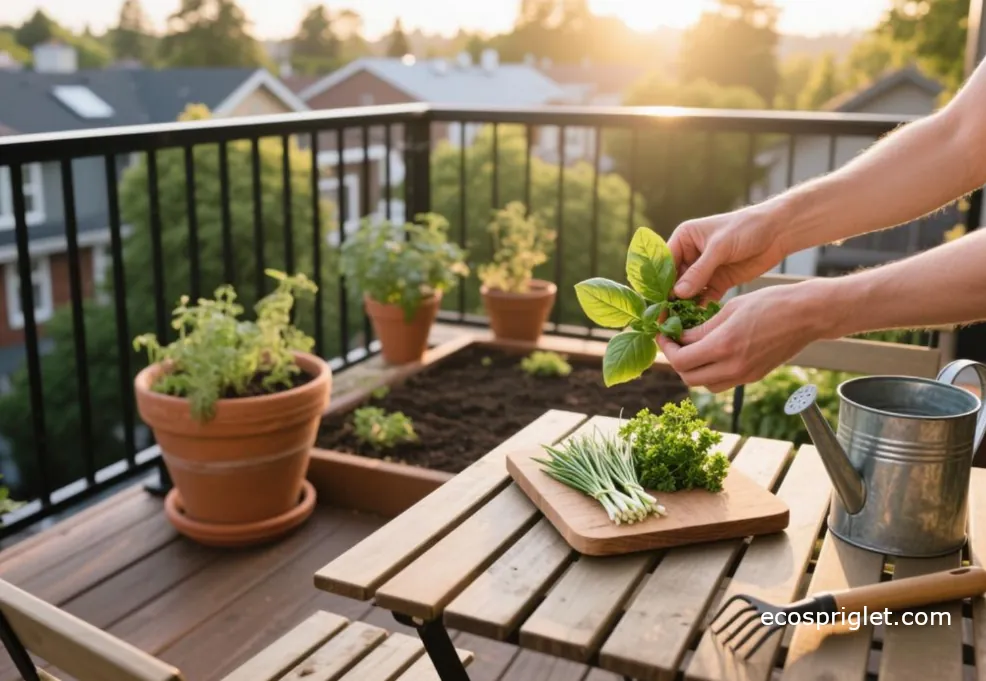
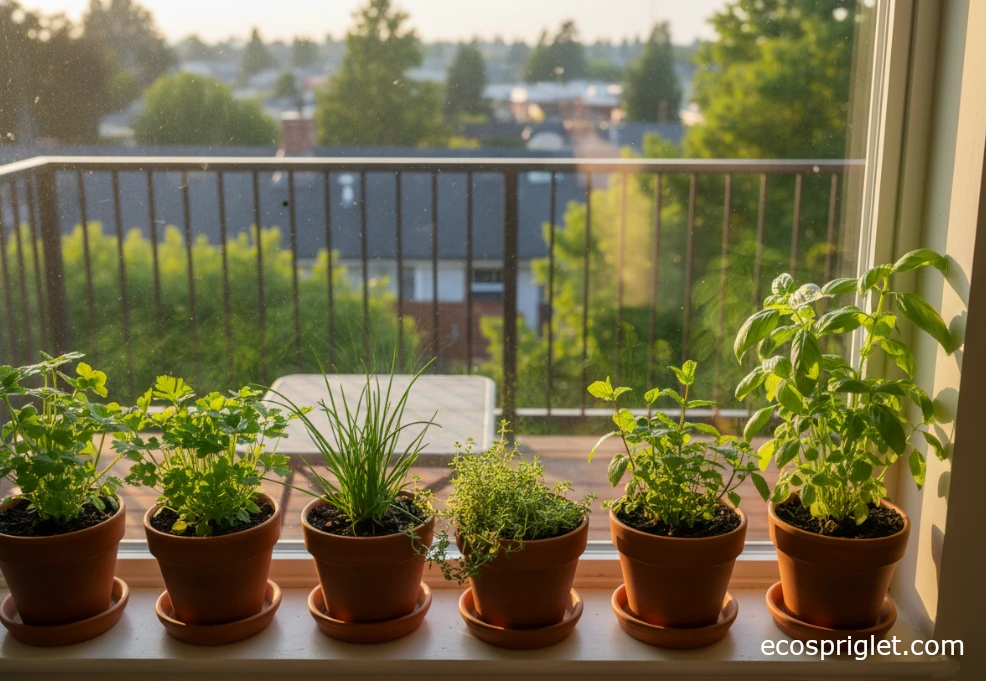
For balcony growing, I would choose two or three of these combinations rather than trying to squeeze the whole table into one planter. A broad container of spinach with a line of scallions, or spinach beside a separate pot of peas, is easier to water and much easier to troubleshoot.
If you are building your first edible container setup, the same spacing and drainage principles apply across most leafy crops. Our container gardening guide is a useful next step.
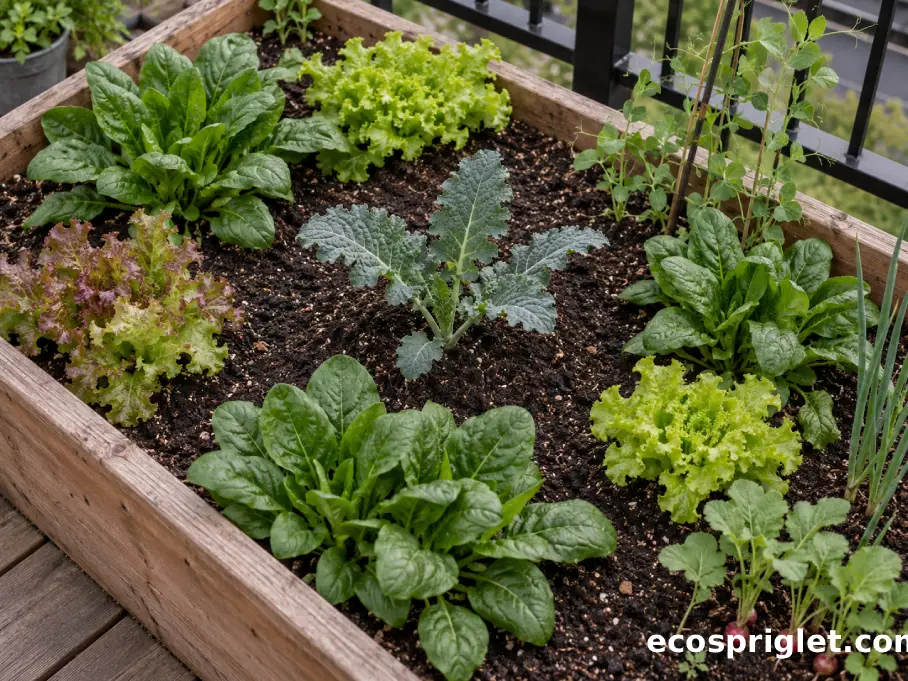
Pair Spinach With Lettuce and Kale Without Creating a Leafy Traffic Jam
Lettuce and spinach make an easy seasonal match because both are cool-weather leafy crops. Instead of mixing every seed together, give each crop a small patch. That makes thinning easier and prevents fast-germinating seedlings from turning into an indistinguishable green carpet. Illinois Extension specifically recommends succession planting leafy vegetables such as spinach and lettuce in containers, leaving room for later sowings rather than filling every inch on day one.
Spinach and kale require a little more planning. Young kale looks compact, but full-size plants need considerably more room. Utah State University’s leafy-green spacing guidance places kale much farther apart than spinach, with kale commonly given 12 to 18 inches within the row compared with much tighter spinach spacing.
In a raised bed, put kale where its eventual size will not block the lower spinach canopy. On a balcony, I usually find it simpler to keep kale in its own larger container and set a spinach planter beside it. You still get the visual and ecological diversity of mixed crops without forcing two very different mature plant sizes to fight over one root zone.
With lettuce, you can be more flexible. Keep full-size spinach roughly 4 to 6 inches apart, then leave enough room around lettuce for its mature head or leaf spread. If neighboring leaves overlap lightly, that is fine; if the center of the planting stays damp all day and you can barely see the potting mix, thin it.
What Not to Plant Too Close to Spinach
There is no strong scientific basis for treating most vegetables as universally bad companions for spinach. The more useful question is whether another plant creates competition, shade, or a shared pest problem in your particular setup.
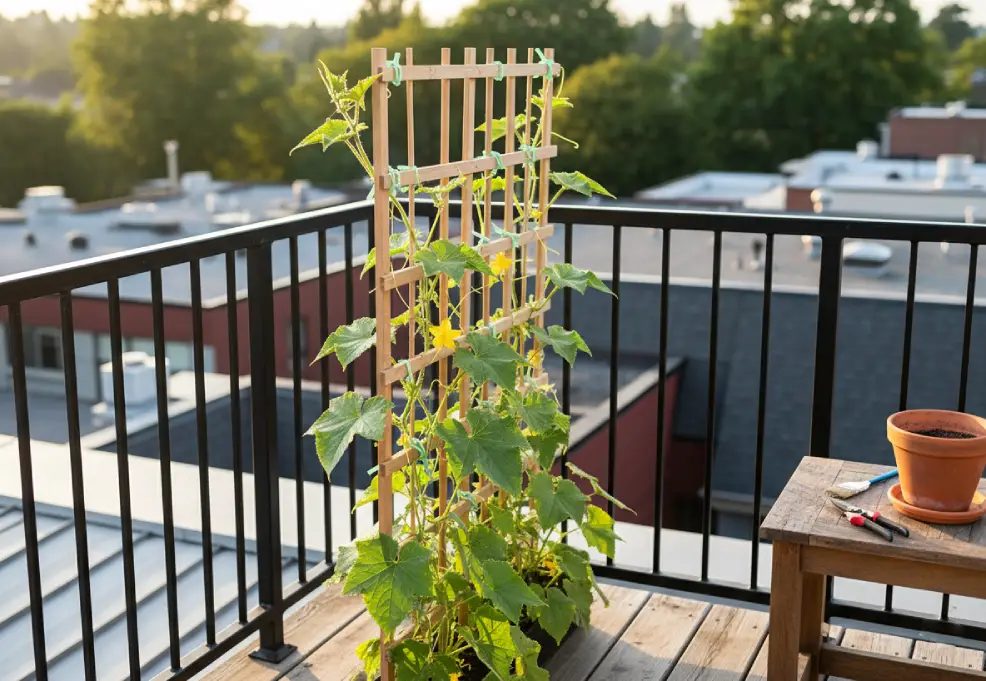
- Large squash and cucumber vines: These are poor partners inside a small spinach container because their roots and foliage quickly demand much more room. Grow them separately rather than expecting spinach to hold its ground underneath.
- Large mature brassicas: Cabbage, broccoli, and full-size kale can eventually shade and crowd spinach. They can share a raised bed if each crop receives its mature spacing, but they are awkward roommates in a modest balcony pot.
- Beets and Swiss chard in a leafminer-prone garden: These are not inherently incompatible with spinach. The concern is that spinach leafminer can use spinach, beets, and chard as hosts. Colorado State University Extension notes that problems are especially common where spinach and beets are continuously grown, while University of Minnesota Extension also identifies spinach, beet, and chard as hosts.
- Anything that permanently buries spinach in shade: Spinach tolerates cool conditions, but a dense canopy that keeps leaves wet and blocks most light is not a useful companion arrangement.
If leafminers or recurring leaf diseases have already been a problem, separating spinach from chard and beet plantings is more sensible than following a generic companion chart. Colorado State University Extension specifically advises separating chard from spinach and beets when managing leafminer problems.
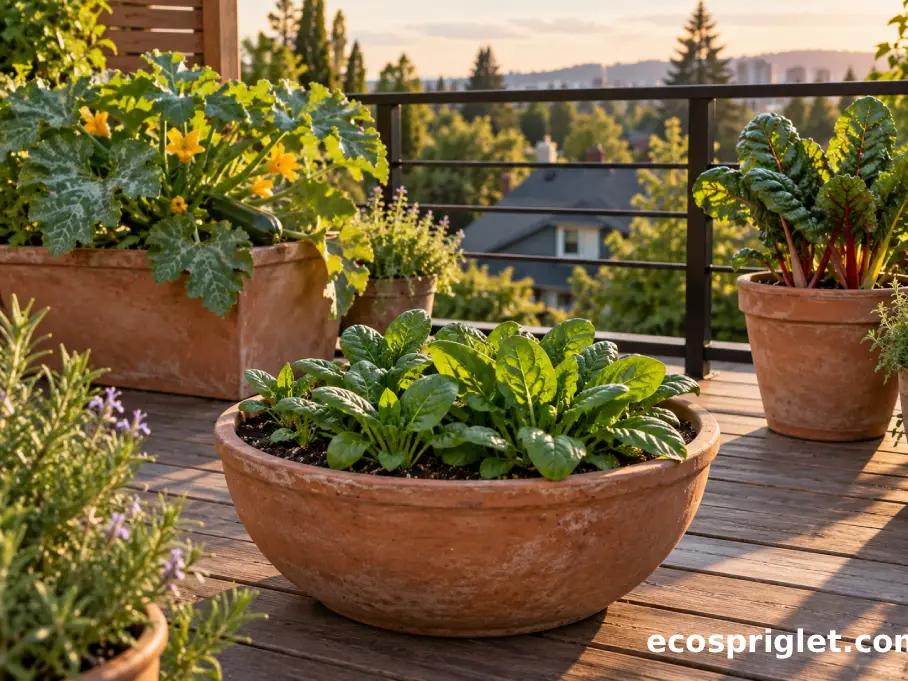
Use Flowers and Herbs for Pest Pressure, Not Pest-Control Promises
If your goal is figuring out what to plant with spinach to keep bugs away, resist the temptation to rely on one supposedly repellent herb. A more dependable approach combines plant diversity with monitoring and physical exclusion.
Spinach can be attacked by aphids, flea beetles, slugs, and leafminers. Utah State University Extension recommends row covers as a useful protection for leafy greens, including spinach, and notes that covers can remain over leafy crops because you do not need pollinating insects to produce the leaves you harvest.
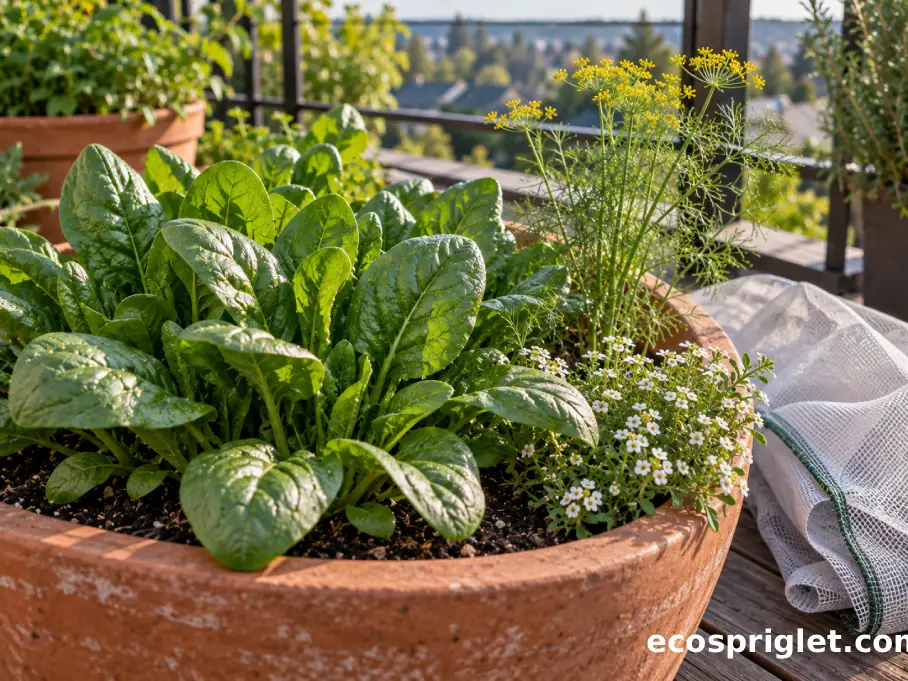
- Add a little flowering habitat. Let one dill plant flower nearby, or use a compact flowering edge plant such as sweet alyssum. University of Minnesota Extension recommends maintaining diverse flowers to provide food and habitat for generalist predators and parasitoids.
- Scout the leaves twice a week. Look underneath young foliage for eggs, aphid colonies, and the pale tunnels left by leafminer larvae. Removing an affected leaf early is much easier than dealing with damage throughout the container.
- Cover spinach early if leafminers return every year. Install lightweight row cover or insect mesh immediately after sowing and secure the edges. Utah State University Extension lists floating row covers and removal of infested leaves among useful leafminer-management tools.
The flowers are there to make the planting more diverse and supportive of beneficial insects—not to guarantee a pest-free crop. That distinction has saved me quite a few disappointing experiments with companion-planting folklore.
Build a Raised-Bed or Container Layout That Leaves Room to Grow
Spinach does not need a huge container, but mixed planting becomes easier when the planter has enough soil volume to buffer moisture and give each crop a distinct zone. Oregon State University Extension lists spinach among shallow-rooted vegetables that can use roughly 6 to 12 inches of soil depth, while its beginner container guidance recommends a 12-inch-deep pot for fully growing spinach. Illinois Extension also stresses that vegetable containers need drainage holes and sufficient root volume.
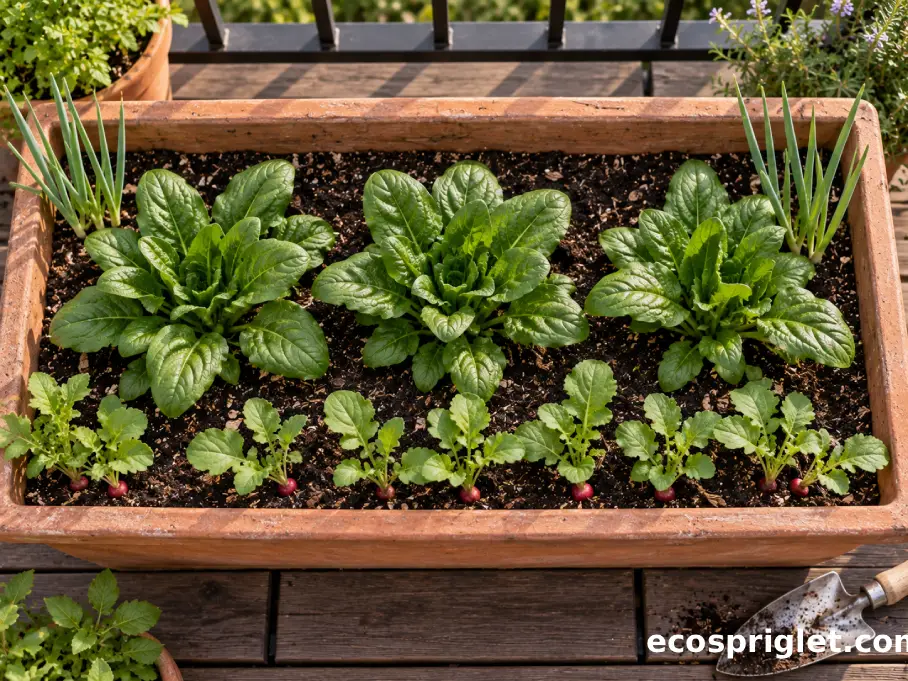
For a balcony combination, I like a container around 12 inches deep rather than a tiny window box. Put spinach through the center at roughly 4-inch spacing if you want useful individual plants. Use the outer edge for a narrow crop such as scallions or quick radishes, following the seed packet spacing for that variety. Leave at least a few open inches somewhere in the planter so you can make a second sowing rather than harvesting everything at once.
In a raised bed, the same principle scales up. Illinois Extension notes that spinach in beds can be spaced about 4 to 6 inches apart in all directions. Keep trellised peas toward an edge where their support will not permanently shade the spinach, and give mature kale or other large greens their full footprint rather than squeezing them into the spinach grid.
Container weight matters too. Wet potting mix is much heavier than dry mix, and Illinois Extension recommends checking building weight limitations when placing substantial containers on balconies or rooftops. It also advises using stable pots and paying particular attention to wind on exposed balconies.
Common Mistakes to Avoid
I learned this one the hard way: a newly planted balcony box can look almost empty, which makes it very tempting to add more seeds. Three weeks later, every leaf is touching another leaf, the soil stays damp under the canopy, and harvesting anything without damaging its neighbor becomes awkward.
- Planting for seedling size instead of mature size. Thin spinach once seedlings establish. For plants you want to harvest repeatedly, aim for roughly 3 to 4 inches between them rather than leaving every seedling in place. Utah State University and Illinois Extension both recommend thinning spinach rather than allowing dense stands indefinitely.
- Trying to make every plant a companion. Two or three crop types are usually plenty in one container. More species often make watering, spacing, and pest diagnosis harder rather than easier.
- Assuming flowers replace pest monitoring. Beneficial-insect habitat helps, but inspect spinach regularly and use row cover when a predictable pest such as leafminer causes repeated damage.
- Keeping spring spinach too long. Spinach quality declines as warm weather and long days push plants toward bolting. Utah State University reports that growth and flavor suffer in high summer temperatures and that spinach performs best when temperatures remain below about 75°F.
- Forgetting airflow. If overlapping leaves form a permanently damp mat, harvest or thin a few plants. Utah State University’s leafy-green guidance emphasizes enough spacing for air movement because dense plantings can favor several foliar diseases.
On my own small-space plantings, removing one extra plant often feels wasteful for about ten seconds. Then the remaining spinach expands into the opening, and the whole container becomes easier to water and harvest.
Use Companion Crops as a Seasonal Relay
One of the best uses of companion planting spinach is actually temporary. Spinach is a shoulder-season crop, so it can occupy valuable soil in early spring and fall without needing to own that space all summer.
University of Minnesota Extension describes spinach, leaf lettuce, radishes, and peas as short-season, cold-tolerant crops that work well before or after longer-season vegetables. Oregon State University Extension similarly recommends double cropping and companion cropping when space is limited, while warning that the larger crop should not inhibit the smaller one.
For a small raised bed, you might start spring with spinach, radishes, scallions, and leaf lettuce. Harvest the radishes first. Remove spinach once it begins bolting, then give that space to a warm-season vegetable suited to your light and container size. In late summer, clear enough soil for another spinach sowing as temperatures begin to moderate.
A similar trick works in a large planter that will eventually hold a bigger summer crop: use the open soil around a young plant for a small early spinach crop only if there is enough root volume and light. Harvest the spinach before the summer plant’s canopy and root system take over. Think of it as a short-term tenant rather than a permanent companion.
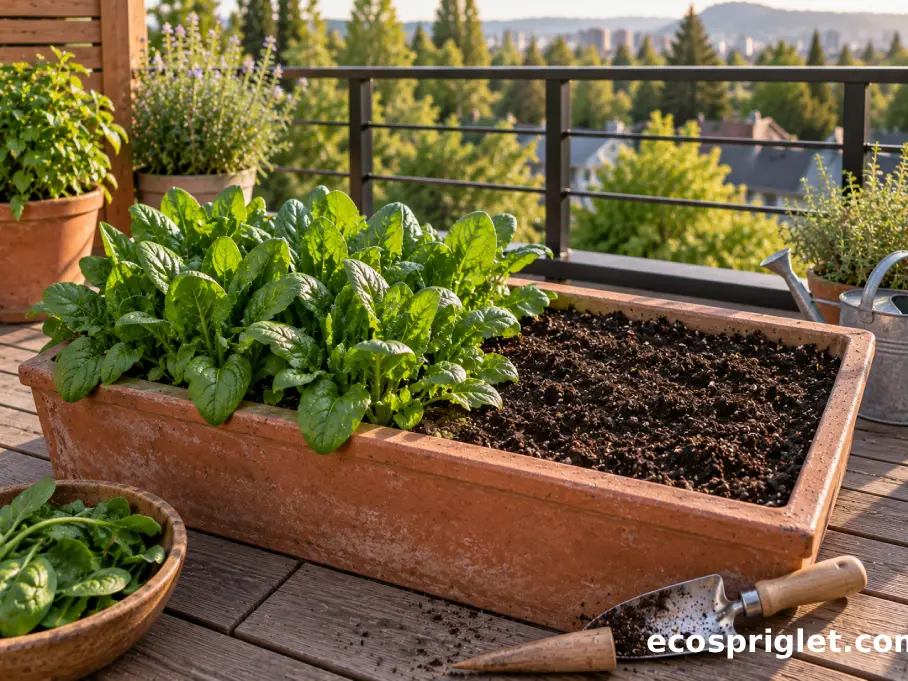
For a longer harvest from a dedicated spinach container, sow a small section every one to two weeks instead of planting the whole box at once. Illinois Extension recommends this kind of staggered planting for leafy vegetables in containers, and its succession guidance specifically includes spinach and lettuce.
Choose Companions by Timing, Space, and Pest Risk
The best companion plant for spinach is not one magical species. It is a plant that fits the same season, leaves enough light and root room, and does not create a pest problem you already struggle with.
For most small-space gardeners, lettuce, radishes, scallions, peas, and cilantro are easy places to start. Dill or a compact flowering plant can add habitat for beneficial insects, while row cover is a much more dependable choice when you need actual physical protection from leafminers and other insects. If beets or Swiss chard repeatedly share leafminer problems with your spinach, separate those crops and rotate the planting area rather than assuming another herb will repel the pest.
Keep the practical numbers in mind: sow spinach about 1/2 inch deep, thin most full-size plants to roughly 3 to 4 inches apart, give mixed containers dependable drainage, and use a planter around 12 inches deep when you want enough root volume for a useful balcony crop. As hot weather approaches, harvest aggressively rather than trying to force a cool-season vegetable through conditions it dislikes.
That simple approach makes companion planting far more useful. You are not trying to create a mysterious network of plants that somehow protect one another. You are building a small garden in which every crop has enough space, arrives at the right time, and earns its place.