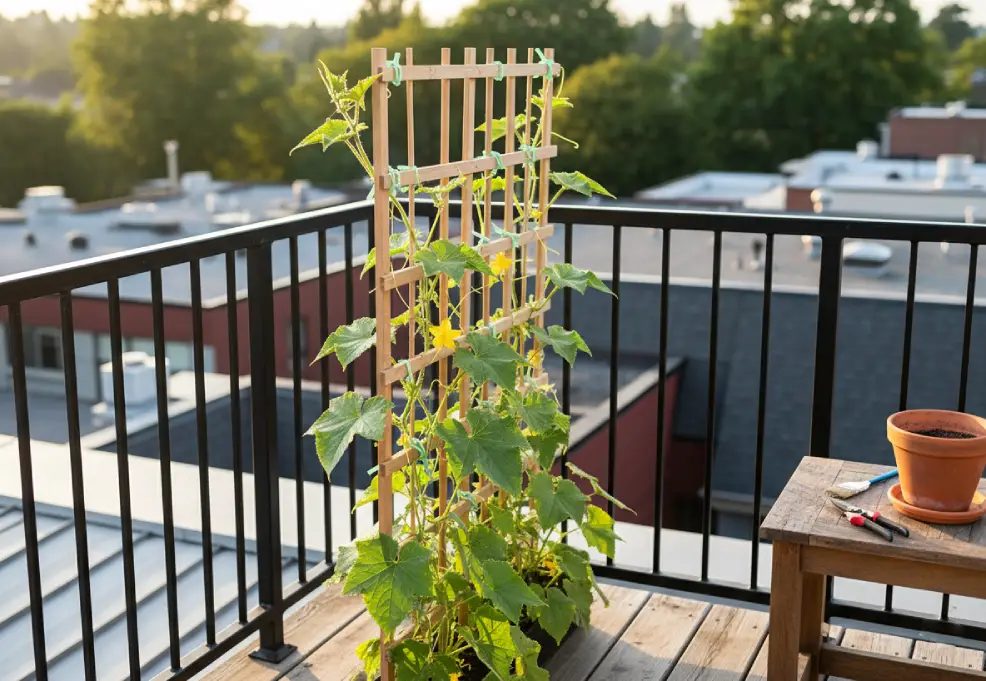
A cucumber plant can cover a surprising amount of balcony floor before you realize what happened. Give a vining plant a sturdy cucumber trellis, though, and that same growth can head upward instead of across your chairs, herbs, and walking space.
For apartment gardeners, that is the main reason I like growing cucumbers vertically. A support keeps long vines more manageable, makes the fruit easier to spot, and can improve air movement around the foliage. University of Minnesota Extension notes that vining cucumbers can be trained onto a 3- to 4-foot trellis, while Oregon State University Extension specifically recommends vertical growing as an option when garden space is limited.
You do not need an elaborate structure. A simple mesh panel, an A-frame, a pot-mounted support, or a basic DIY frame can work. What matters most is matching the support to the cucumber’s growth habit, giving the roots enough soil, and making sure the whole setup stays stable once leaves and fruit add weight. This guide covers those choices for balconies, containers, and raised beds without turning a small garden into a construction project.
Do Cucumbers Need a Trellis?
Cucumbers do not have to grow on a trellis. Vines can sprawl across the ground, and bush-type cucumbers are specifically useful where space is tight. For a balcony or compact patio, however, training a long-vined cucumber upward usually makes much better use of the available square footage. University of Minnesota Extension notes that long-vined types can be grown successfully in small spaces on supports, while Oregon State University suggests either vertical growing, bush varieties, or containers for gardeners short on room.
The variety name alone does not tell you whether support is essential. Pickling, slicing, burpless, and novelty cucumbers describe fruit characteristics or use more than the plant’s final footprint. Check the seed packet for words such as vine, long-vined, bush, compact, patio, or container. If it produces long runners, I would plan on support in a small garden rather than trying to redirect six feet of vine around other pots later.
Bush cucumbers can often grow without a tall support. A short cage, stake, or small trellis can still keep foliage from flopping into a walkway. Oregon State University’s container guidance specifically notes that a pole or trellis can support cucumbers and help air move around their leaves.
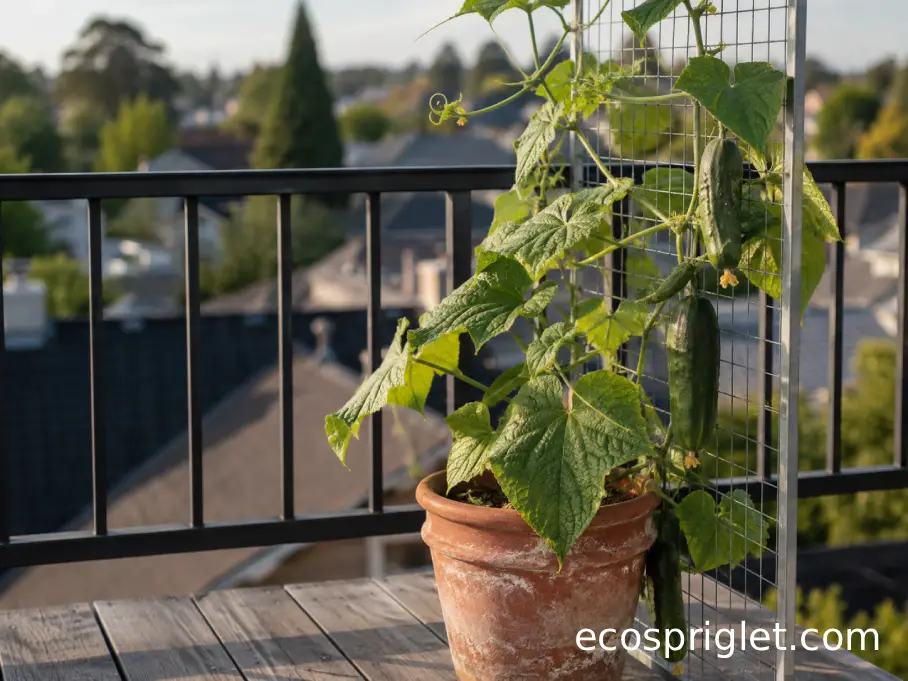
Choose the Right Cucumber Trellis for Your Space
The best trellis for cucumbers is not necessarily the tallest or most expensive one. I look for three things: enough height to redirect the vine, openings the tendrils can reach, and a frame that will not lean once the canopy fills in. University of Minnesota Extension describes trellises as vertical supports with mesh between them and lists plastic netting, chicken wire, and galvanized fencing among suitable materials. Heavier mesh is recommended for more vigorous crops.
- Mesh panel: My easiest all-purpose option for pots and raised beds. The plant can grab it from several directions, and you can guide wandering stems back through the openings.
- A-frame: Useful when you have a wider planter or raised bed and want a structure that supports itself from both sides.
- Twine grid: Light and inexpensive, especially when you already have a secure frame above and below it. University of Minnesota Extension notes that sisal, cotton, or hemp twine can also be composted with spent vines.
- Chicken wire: A workable DIY choice, but fold or cover cut edges and check developing cucumbers so fruit does not become trapped in the mesh. Extension guidance specifically recommends checking trellised vine crops for fruit wedging between wires.
On my own small setups, I would rather have a sturdy 4-foot structure than a wobbly 7-foot one. A tall trellis catches more wind and creates more leverage at the base. University of Minnesota Extension stresses anchoring stakes deeply enough that a support cannot tip in strong wind, and Oregon State similarly advises making cucumber supports sturdy enough for mature plants and fruit.
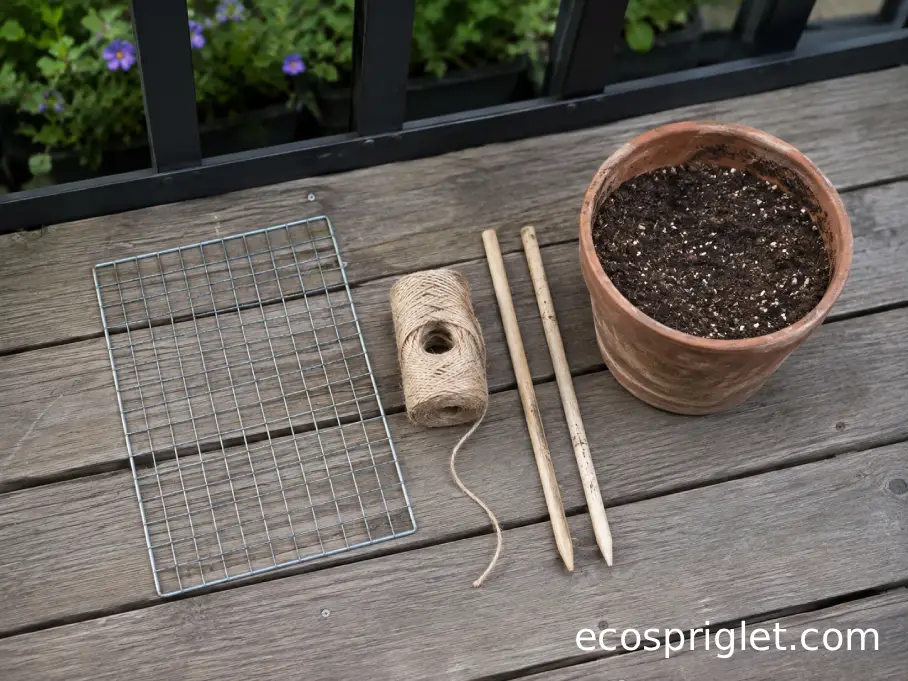
How to Build an Easy DIY Trellis
A basic DIY cucumber trellis can be nothing more than two rigid uprights with mesh stretched between them. University of Minnesota Extension describes essentially this arrangement and recommends fastening the mesh securely to the supports. For an in-ground or raised-bed version, it gives the example of a 6-foot stake driven about 1 foot into the ground, leaving roughly 5 feet above ground.
- Set two supports. In a raised bed, drive sturdy wood or metal uprights securely into the soil. For a container, use a frame with its own broad base whenever possible rather than asking loose potting mix to anchor a very tall panel.
- Attach mesh between them. Galvanized fencing, trellis netting, or chicken wire can all work. Keep the material reasonably taut so the vine does not pull it into the foliage.
- Remove sharp ends. Fold cut wire inward or cover exposed points before the plant fills the frame. This matters even more on a balcony where you regularly brush past the trellis.
- Test it before planting. Push gently from several directions. If the empty structure rocks noticeably, strengthen it now rather than after it carries a mature vine.
I learned the last point after building a lightweight frame that looked perfectly solid in May. By midsummer, the leaves had turned it into a much larger wind-catching surface. Since then, I test balcony supports with more force than I think they will receive and keep tall structures independent of the railing whenever the building rules do not allow attachments.
For renters, removable ties and freestanding frames are usually the least troublesome approach. Do not drill into, suspend weight from, or alter a balcony railing unless your lease, building rules, and the structure itself permit it.
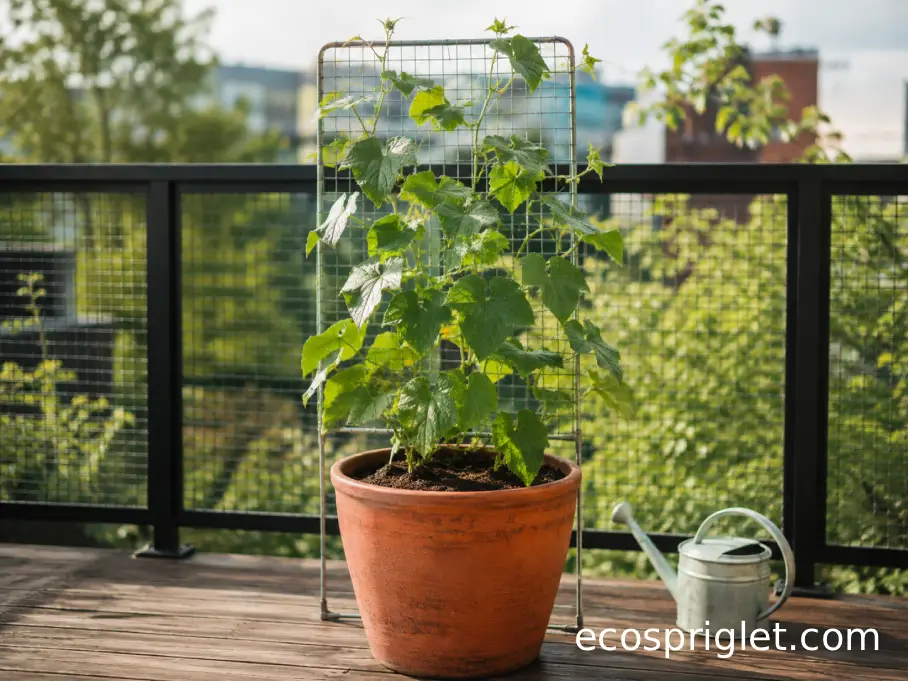
Set Up a Trellis for Cucumbers in Pots
A trellis for cucumbers in containers has two jobs: hold the vine and stay upright without tipping the pot. That second requirement is where many otherwise good cucumber trellis ideas fail.
For a vigorous vining cucumber, I like to err toward a large container rather than the smallest pot the plant might tolerate. University of Georgia Extension lists about 10 gallons of container volume for cucumbers and squash. Oregon State University’s broader container guide says many vegetables can grow in 2- to 5-gallon containers but also notes that larger containers are easier to manage and specifically recommends bush cucumbers for container culture. Taken together, about 10 gallons per vigorous plant is a sensible, forgiving target when space allows.
Whatever size you choose, the pot needs drainage holes and container potting mix rather than dense garden soil. Oregon State recommends commercial potting soil and drainage openings for balcony and patio containers.
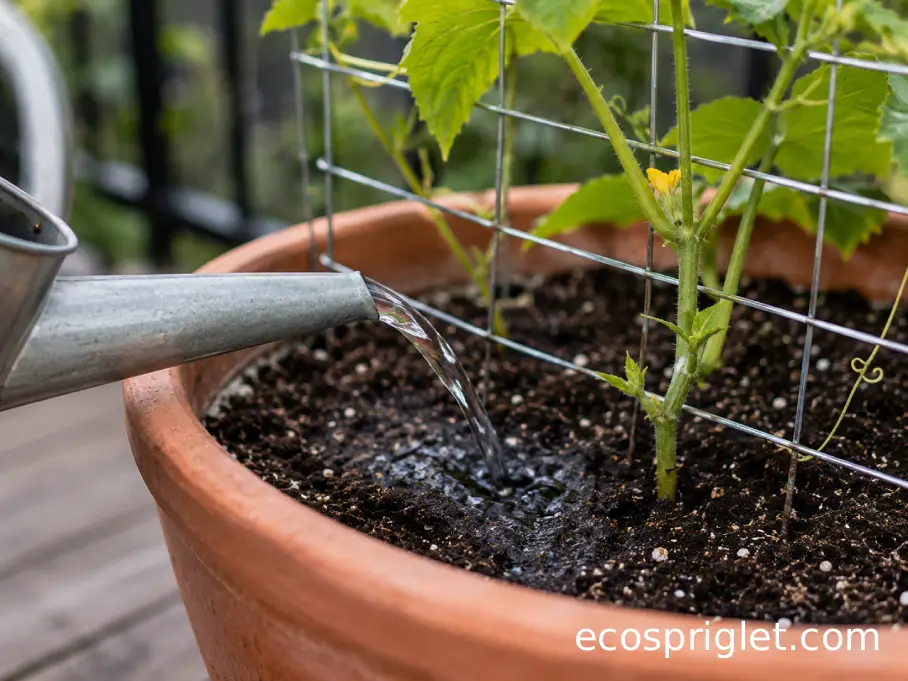
Container watering also deserves more attention once vines climb. Check the mix daily during warm weather instead of watering on a fixed calendar. Oregon State recommends watering when the mix is dry and continuing until water exits the drainage holes; University of Georgia Extension suggests checking about 1.5 inches below the surface.
If containers are your main growing method, our container gardening guide can help with potting mix, drainage, and root-space decisions.
Place a Trellis in a Raised Bed Without Wasting Space
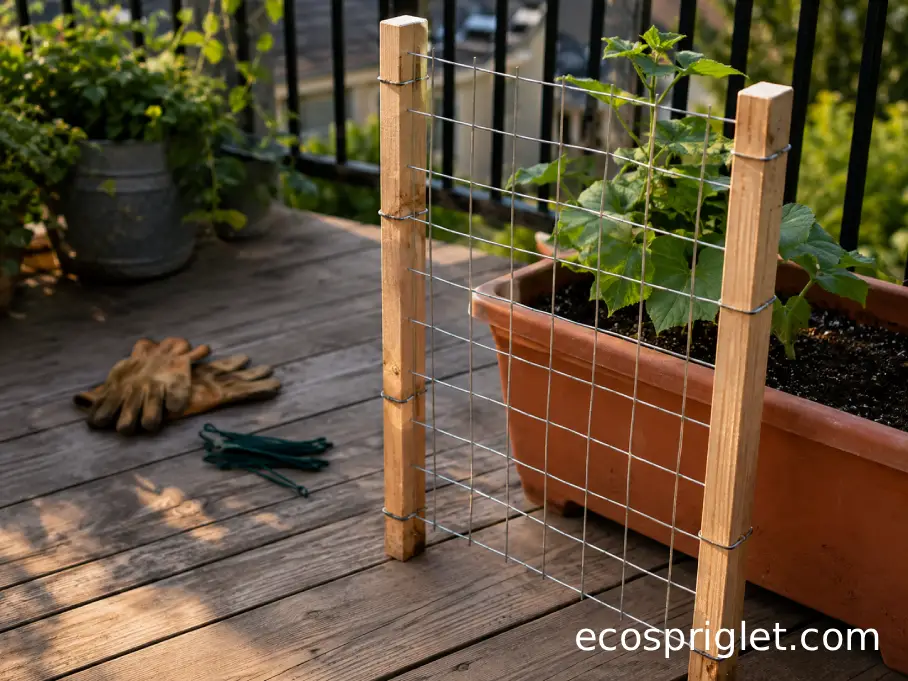
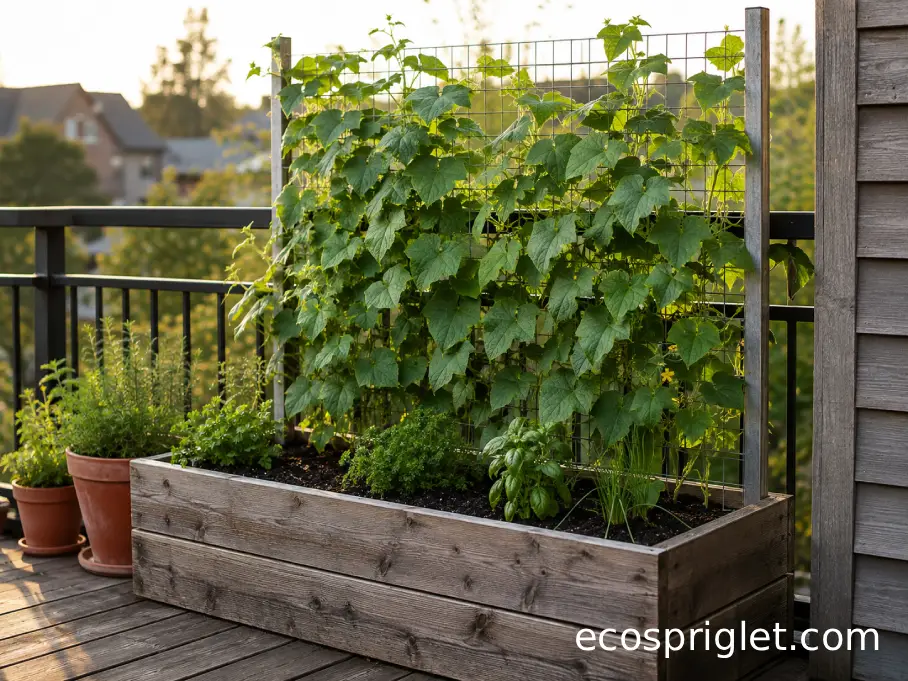
A cucumber trellis for a raised bed can turn the edge of the bed into productive vertical space instead of letting vines cover neighboring lettuce, peppers, or herbs. Oregon State University Extension identifies cucumbers as well suited to vertical gardening, and its vegetable-garden guidance recommends positioning tall and trellised crops on the north side when possible so they do not shade shorter crops.
For a typical rectangular bed, I would put the support along a long edge rather than through the center. That keeps the root zone accessible for watering and makes it easier to reach both sides of the vines. If your sun comes from an unusual direction because of neighboring buildings, watch the actual shadow pattern for a day instead of following a compass rule blindly.
Install the frame before the vines become long and tangled. University of Minnesota Extension recommends guiding growing tips through trellis openings every few days as vines lengthen. Young flexible stems are much easier to redirect than a mature vine already hooked around three neighboring plants.
A raised-bed trellis also needs genuine anchoring. University of Minnesota Extension recommends stakes deep enough to resist strong wind and notes that wider structures may benefit from a center support.
Train Cucumber Vines Gently as They Grow
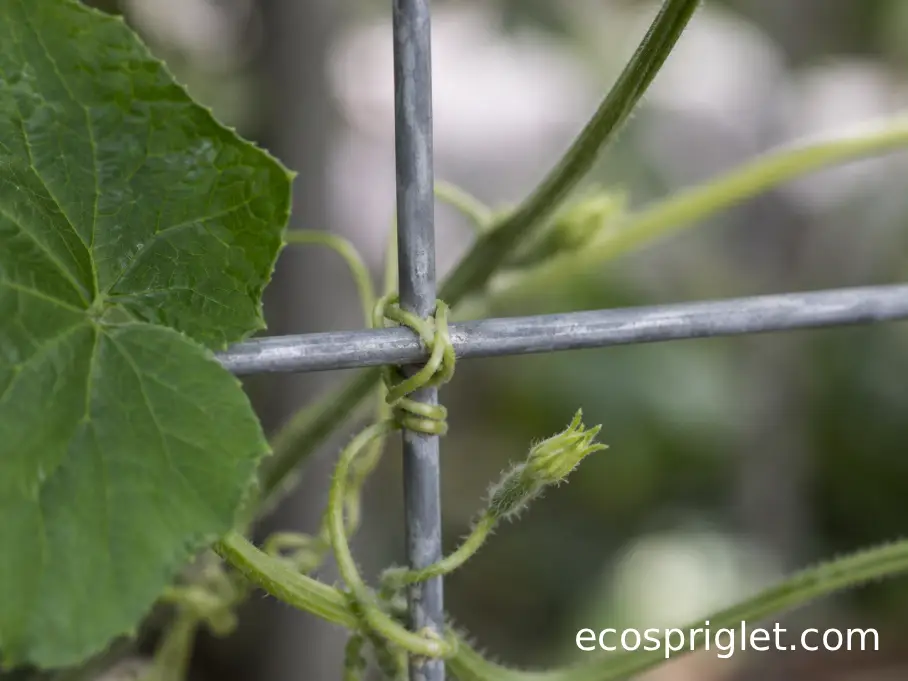
The trellis does not do all the work on its own. Cucumbers produce tendrils that grab nearby supports, but young vines often head toward a railing, tomato cage, or neighboring plant instead of the structure you built for them.
Check the growing tips every two or three days while growth is active. University of Minnesota Extension recommends gently weaving lengthening vines through the mesh every few days. I prefer to redirect only the flexible tip and let the tendrils attach naturally rather than wrapping the main stem tightly around wire.
If a section will not stay in place, use a loose reusable plant tie. Leave enough room for the stem to thicken. A tight knot can become a pinch point later in the season.
You normally do not need slings beneath ordinary cucumber fruit. University of Minnesota Extension distinguishes cucumbers from trellised melons, noting that cucumbers do not normally slip from the vine and therefore do not need fruit supports. The more useful job is checking that a developing cucumber has not grown through a narrow mesh opening and become wedged.
That little inspection is something I do whenever I water. It takes ten seconds, and it is much easier than trying to free a nearly full-size cucumber from a wire square without damaging either the fruit or the vine.
Keep Trellised Cucumbers Watered and Healthy
Vertical growth does not reduce a cucumber’s need for moisture. University of Minnesota Extension recommends roughly 1 inch of water per week for garden-grown cucumbers and notes that trellised plants may need more frequent watering. Containers can dry considerably faster, so Oregon State advises checking container soil every day and watering when it is dry.
Water the soil rather than spraying the leaves. University of Minnesota Extension recommends drip irrigation, a soaker hose, or careful soil-level watering to keep foliage dry. It also recommends trellising as one way to increase airflow when managing cucumber downy mildew.
On a hot balcony, I check pots in the morning by pushing a finger below the surface rather than judging by wilt alone. If the root zone feels dry, water thoroughly until excess leaves the drainage holes. If it still feels moist, give it more time. Wilting in afternoon heat does not automatically mean a waterlogged pot needs another gallon.
Common Mistakes to Avoid
Most trellis problems start before the cucumber gets big enough to reveal them. A support that feels slightly flimsy at planting time will not become stronger after it is covered with leaves.
- Building too late: Install the structure at planting time or while the cucumber is still small. Redirecting a tangled mature vine risks damaging stems and tendrils.
- Using a tiny pot for a tall frame: A top-heavy container is frustrating on a patio and potentially hazardous on an exposed balcony. Give the roots generous volume and use a support with a secure base. Oregon State and University of Georgia Extension both emphasize adequate container size and drainage for healthy container crops.
- Ignoring wind: A full cucumber canopy increases the area exposed to wind. Anchor stakes and frames securely; Extension guidance specifically warns against trellises tipping in strong winds.
- Forcing stems through mesh: Guide flexible growing tips instead. Check frequently so developing fruit is not trapped between wires.
- Watering the leaves instead of the roots: Direct irrigation toward the soil. Keeping foliage drier and improving air circulation are among the cultural practices University of Minnesota Extension recommends for cucumber disease management.
The mistake I learned the hard way was making the frame exactly large enough for the seedling I could see. Cucumbers are much easier to manage when you build for the plant it will become, not the four-leaf plant sitting in front of you in spring.
Cucumber Trellis Ideas for Very Small Spaces
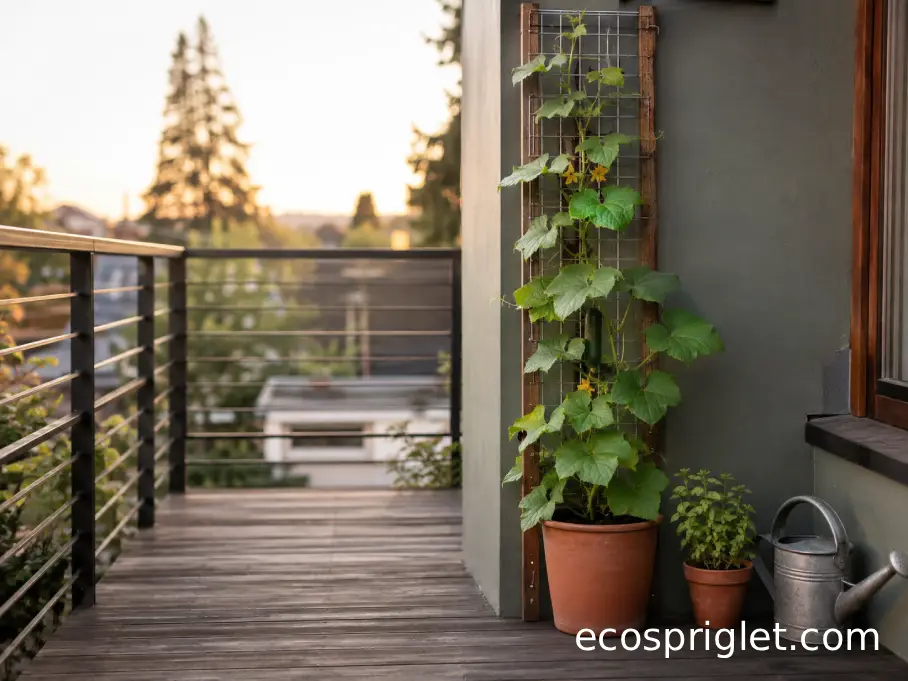
When every square foot matters, think narrow rather than complicated. A flat mesh panel directly behind a pot uses almost no additional floor area. An A-frame needs more footprint but can support vines on both sides. A corner frame can turn an awkward balcony edge into growing space without blocking the main path.
A wall-adjacent freestanding panel is often my first choice for renters because it can be removed at the end of the season without modifying the building. Keep enough space behind the leaves for air to move rather than pressing the entire canopy flat against a hot wall. Trellising itself can improve airflow around cucumber foliage, an advantage noted by University of Minnesota Extension.
If your balcony receives strong gusts, choose a lower, rigid support rather than tall loose netting. Oregon State University Extension advises that cucumber structures should be sturdy enough for mature plants, while University of Minnesota Extension specifically calls for supports that will not tip in strong wind.
And if you truly have no room for a vigorous vine, switch the plant instead of overengineering the trellis. A compact bush cucumber in a generous pot may be a better small-space choice. Oregon State recommends bush varieties for container growing and identifies them as an option for gardeners with limited space.
Build the Support Before the Vine Needs It
A good trellis for cucumbers does not need clever hardware. It needs to be sturdy, reachable, and installed early enough that the vine can use it naturally. For most small-space gardeners, I would start with a rigid mesh panel or simple two-post frame, then scale the height and width to the container or raised bed instead of trying to grow the biggest possible structure.
Give a vigorous container plant generous root space, keep drainage open, and check moisture frequently. Guide new growth every few days rather than wrestling with mature stems. If you use wire mesh, watch developing fruit so it does not become trapped. Those small habits matter more than whether the frame came from a garden center or from leftover fencing in the garage. University of Minnesota and Oregon State Extension both support vertical cucumber growing as a practical way to manage vines in limited space.
On a balcony, keep safety ahead of ambition: stabilize freestanding structures, respect building rules, and avoid attaching trellises to railings unless that use is specifically permitted. Once the frame is secure, cucumbers are remarkably good at doing the climbing themselves.