Knowing how to store cucumbers is one of those small kitchen skills that saves more produce than you expect. Cucumbers look sturdy, but they are mostly water, and they can turn rubbery, pitted, or slimy fast when they sit in the wrong part of the fridge. I learned this the annoying way after harvesting two balcony-grown cucumbers in Portland, tucking them beside apples, and finding one yellowing at the end of the week.
The best way to store cucumbers is to keep them cool, lightly humid, and protected from excess condensation. Whole cucumbers usually keep best unwashed in a loose plastic bag, produce bag, or paper-towel wrap in the refrigerator, ideally away from ethylene-producing fruits such as apples and tomatoes. Cut cucumbers need a tighter plan: a sealed container, a dry paper towel, and a short use-by window.
Below, I’ll walk you through whole, fresh-picked, mini, cut, and sliced cucumber storage with practical timing, apartment-fridge tricks, and food-safety cues from FDA, CDC, UC Davis Postharvest Center, Purdue Extension, University of Minnesota Extension, and Mississippi State University Extension.
The Quick Answer for Whole Cucumbers
For most home kitchens, the best way to store fresh cucumbers is simple: leave them whole, do not wash them before storage, wrap them loosely to reduce moisture loss, and keep them in the refrigerator where they will not freeze or sit in icy airflow. Purdue Extension says cucumbers can be refrigerated in a plastic bag for up to one week, while University of Minnesota Extension gives a one-week expected shelf life and notes that a 55°F cool spot is ideal when available.
That 55°F detail matters because cucumbers are chill-sensitive. UC Davis Postharvest Center notes that cucumbers can develop chilling injury below 50°F if held there for more than one to three days, depending on the cultivar; symptoms include water-soaked areas, pitting, and faster decay. A home refrigerator still matters for food quality and safety, but this is why cucumbers often do better near the front of the crisper or upper shelf than against the back wall where cold air can blast them.
- Use whole cucumbers within about 4–7 days for best crunch.
- Keep them in a loose plastic bag, produce bag, or paper towel wrap.
- Avoid washing until you are ready to slice or eat.
- Keep them away from apples, tomatoes, and raw meat.
How to Store Cucumbers in the Fridge Without Making Them Slimy
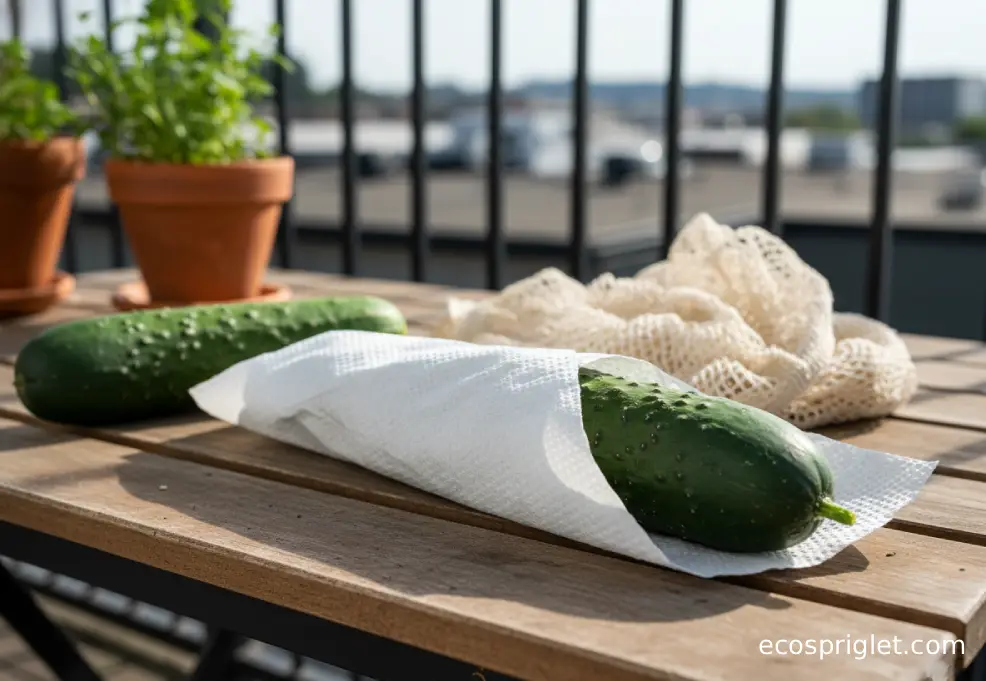
Fridge storage is a balancing act. Cucumbers need moisture protection because they lose water and shrivel, but trapped condensation can speed softness and slime. My go-to apartment method is to pat the cucumber dry if it has surface moisture, wrap it in a dry paper towel or thin cloth, and place it in a loose or partly open plastic bag. That setup gives the cucumber a little humidity buffer without sealing it in a wet pocket.
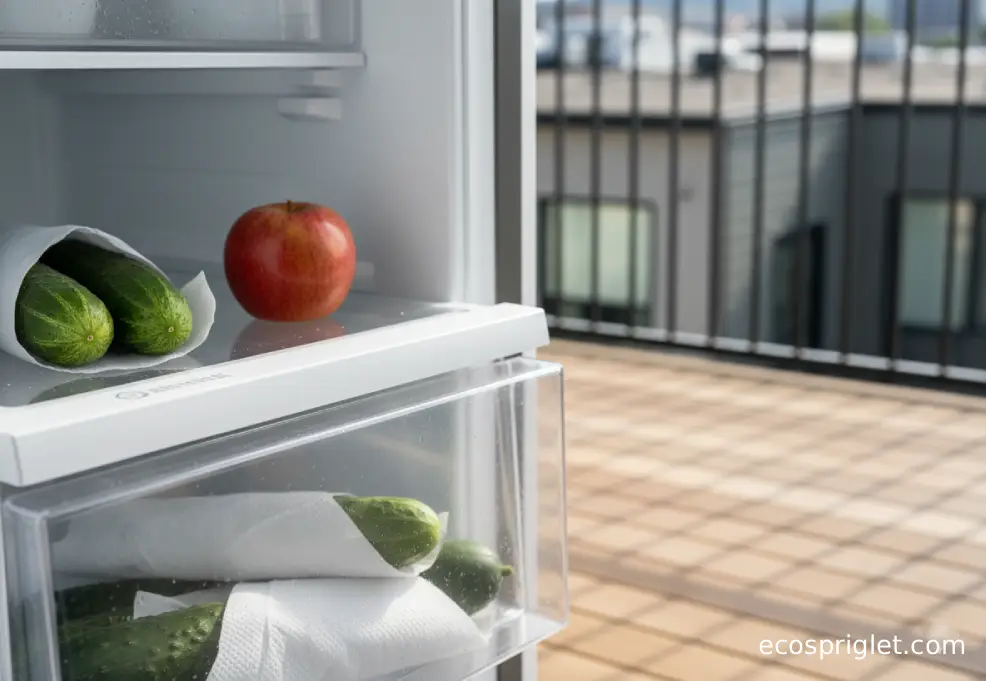
Place the bag near the front of the crisper drawer or on an upper shelf where it is less likely to freeze. If your fridge has a habit of icing lettuce or freezing berries, do not put cucumbers along the back wall. Keep a small refrigerator thermometer inside and aim for 40°F or below for general food safety, as CDC recommends, but use the warmer zones of that safe refrigerator environment for chill-sensitive produce.
For a tiny apartment fridge, I also like a shallow produce bin. It keeps cucumbers from being crushed by jars and helps you see them before they get forgotten. If the paper towel feels wet after a day or two, swap it for a dry one. That one-minute reset can buy you another crisp salad instead of a compost-bin cucumber.
Fresh-Picked Cucumbers Need a Gentle First Hour
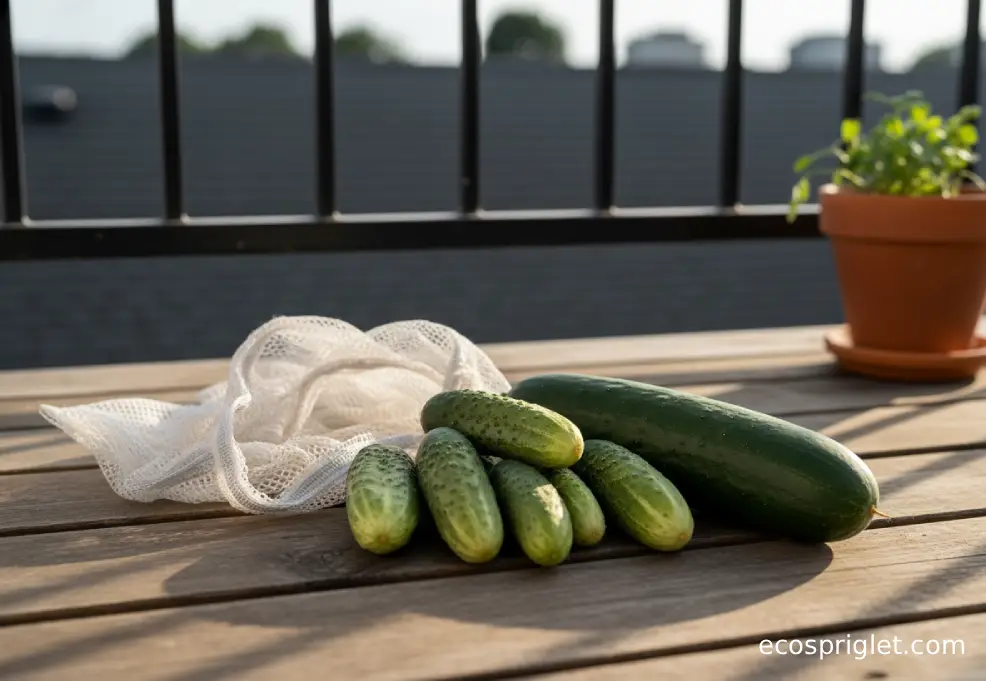
Fresh-picked cucumbers from a balcony pot or community garden are often warmer than grocery cucumbers and may have field dust, flower bits, or a little moisture on the skin. Resist the urge to give them a big sink wash before storing. Michigan State University Extension advises not washing fresh cucumbers before refrigerator storage, and Mississippi State University Extension recommends storing cucumbers away from fruit and meat.
Instead, brush off loose debris with a dry towel, let the cucumbers sit at room temperature for 15–30 minutes if they are damp from watering or rain, and then refrigerate them in a loose bag. If a cucumber has a bruised area, use that one first. The FDA advises cutting away damaged or bruised areas before preparing produce and discarding produce that looks rotten.
A small harvest note from my own terrace: I get the best storage life when I cut cucumbers from the vine instead of tugging them. UC Davis also notes that cucumbers should be cut free rather than torn, because pulled ends can become a quality defect. Use clean snips, leave the fruit dry, and save the washing for the moment you are ready to eat.

How Long Do Cucumbers Last in the Fridge?
So, how long do cucumbers last in the fridge? Whole cucumbers are usually at their best within about one week. Purdue Extension and Mississippi State University Extension both give refrigerator guidance around one week for whole cucumbers, while University of Minnesota Extension also lists an expected shelf life of one week.
| Cucumber Form | Best Storage Method | Best-Quality Timing |
|---|---|---|
| Whole Grocery Cucumbers | Unwashed, dry, loosely wrapped, refrigerated away from fruit | About 4–7 days |
| Fresh-Picked Cucumbers | Dry-brushed, unwashed, loose bag in the fridge | About 5–7 days, sometimes longer if very fresh |
| Mini Cucumbers | Unwashed, dry, in original breathable pack or loose bag | About 4–7 days |
| Cut or Peeled Cucumbers | Sealed container or plastic bag in the refrigerator | Use within 2 days |
| Sliced Cucumbers | Airtight container lined with a dry paper towel | Best within 1–2 days |
These are quality windows, not magic expiration dates. A cucumber that is still firm, green, clean-smelling, and free of slime may be usable; one that is mushy, moldy, sour-smelling, or leaking should go. When in doubt, composting one questionable cucumber is cheaper than risking a bad meal.
The Best Way to Store Cut Cucumbers
Once a cucumber is cut, the clock speeds up. The exposed flesh loses moisture, absorbs fridge odors, and becomes more vulnerable to handling contamination. Mississippi State University Extension says peeled or cut cucumbers should be stored in a plastic bag or sealed container and used within 2 days.
For a half cucumber, cover the cut end tightly with beeswax wrap, plastic wrap, or the lid of a snug container. Then place it in a sealed container or bag with a small piece of dry paper towel. Store it in the fridge, not on the counter. CDC recommends refrigerating perishable foods, including cut fruit and some vegetables, within 2 hours, or within 1 hour if they have been exposed to temperatures above 90°F.
- Use a clean knife and cutting board every time.
- Store the cut side covered, not exposed to fridge air.
- Use cut cucumbers within 2 days for best texture.
- Discard pieces that turn slimy, sour, moldy, or mushy.
This is also where an apartment meal-prep habit helps: cut only what you need for the next day or two. Whole cucumbers almost always hold better than pre-cut ones.
Keeping Sliced Cucumbers Fresh for Snacks and Lunches
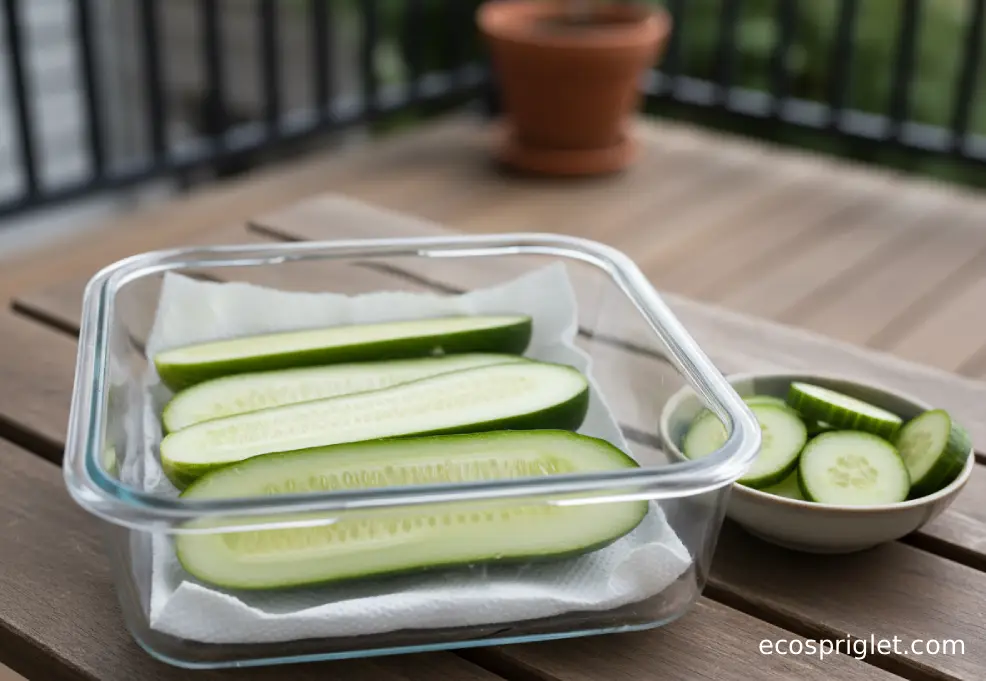
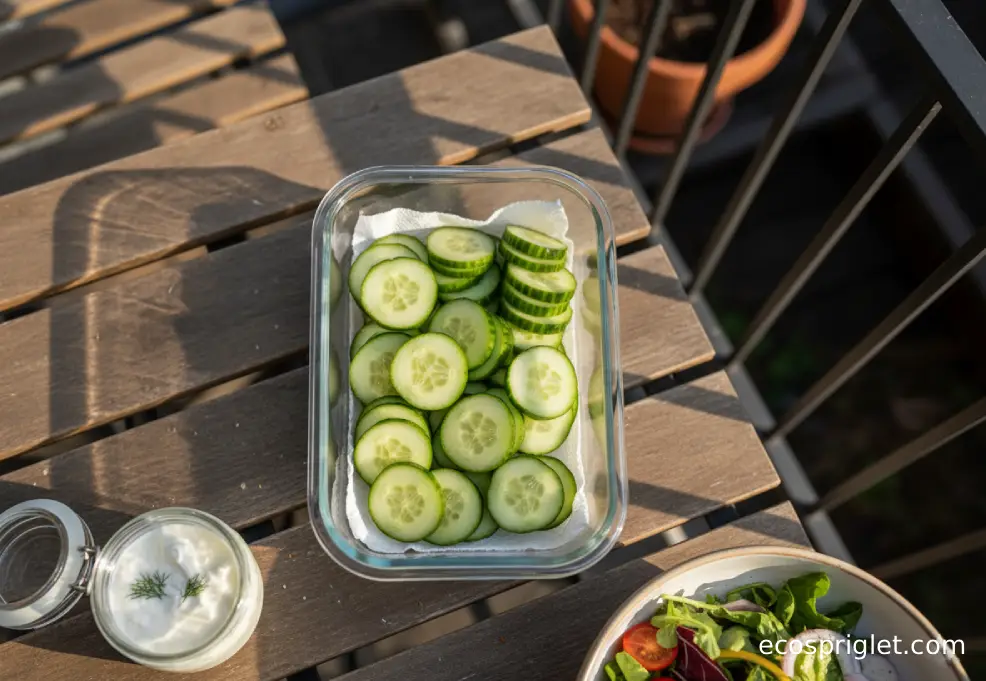
Sliced cucumbers are handy for work lunches, hummus plates, and quick balcony dinners, but they weep water fast. The best way to store cucumber slices is to line an airtight container with a dry paper towel, add the slices in a loose layer, cover, and refrigerate. If the towel is soaked by the next morning, replace it before the slices sit in their own puddle.
I remember prepping a full week of cucumber rounds during a busy summer, feeling very organized, and then opening a container of limp, watery slices by Wednesday. Now I prep two days at a time. It is a small shift, but it keeps the crunch.
- For crisp snack slices, cut them 1/4 to 1/2 inch thick.
- For salads, salt slices only right before serving unless you want them to release water.
- For packed lunches, keep dip separate so the slices do not soften.
- For very thin slices, plan to use them the same day.
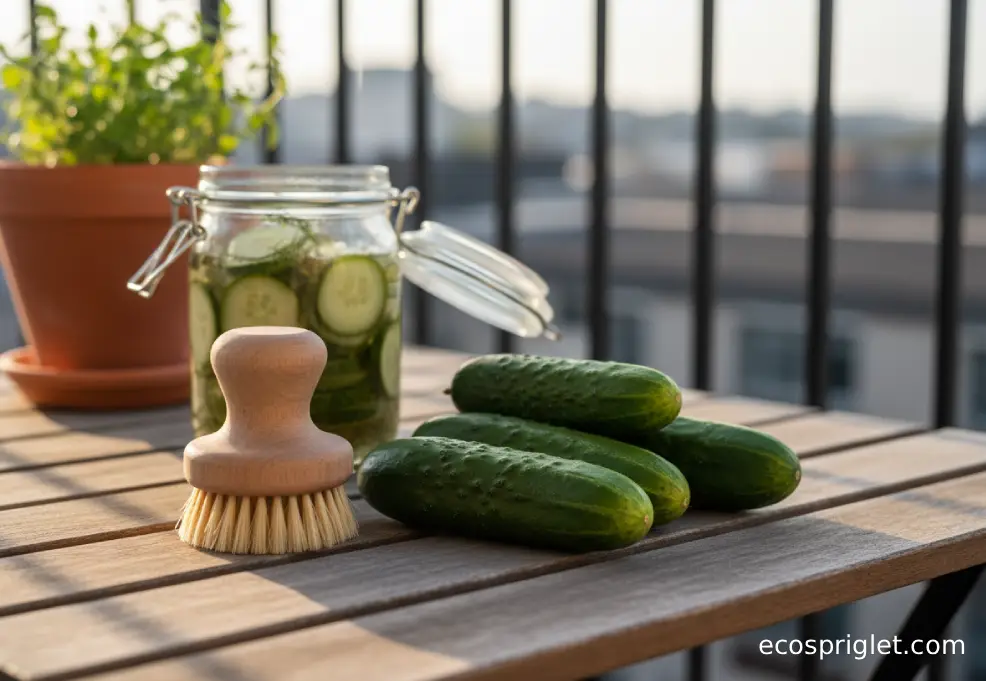
Wash cucumbers before slicing, not before long storage. The FDA recommends washing produce under running water before preparing or eating it, scrubbing firm produce such as cucumbers with a clean produce brush, and drying it with a clean towel or paper towel. Soap, detergent, and commercial produce washes are not recommended.
Mini, English, and Garden Cucumbers: What Changes?
The basic storage method stays the same across most cucumber types: keep them whole when possible, dry on the surface, lightly wrapped, refrigerated, and away from fruit. The difference is mainly skin thickness and packaging. English cucumbers often come wrapped because their skin is thin and they lose moisture quickly. Mini cucumbers can also soften faster once their package is opened, especially if condensation builds inside the bag.
For English cucumbers, keep the original wrap intact until you cut into it. After cutting, cover the exposed end and refrigerate the remainder in a sealed container or bag. For mini cucumbers, open the package, remove any wet or damaged cucumber, and tuck a dry paper towel into the bag if condensation is heavy. For homegrown slicing cucumbers, skip the sink wash before storage and brush off dry soil instead.
If you grow cucumbers in containers, harvest slicing cucumbers while they are still firm and green rather than waiting for oversized, yellowing fruit. University of Minnesota Extension lists six inches as a slicing harvest cue, and Mississippi State University Extension advises avoiding shriveled, dull, or yellow-spotted cucumbers when selecting them.
Common Mistakes That Make Cucumbers Go Bad Faster
Most cucumber storage failures come from too much water, too much cold, or too much time after cutting. I learned this the hard way in a narrow apartment fridge where the back corner froze anything green. Cucumbers looked fine on Monday, then had soft sunken spots by Thursday. That was not bad luck; it was cold damage.
- Washing before storage: Extra moisture can encourage spoilage. Wash under running water right before cutting or eating instead.
- Sealing whole cucumbers while wet: Dry the surface first, then use a loose bag or paper-towel wrap.
- Storing beside apples or tomatoes: University of Minnesota Extension specifically advises not storing cucumbers with apples or tomatoes.
- Pushing cucumbers to the back of the fridge: Cold spots can contribute to pitting and water-soaked areas.
- Meal-prepping too many slices: Cut cucumbers are best used within 2 days, according to Mississippi State University Extension.
One more fix: store cucumbers where you can see them. A clear bin near eye level reduces waste more than any fancy container.
When to Wash, Peel, Toss, or Pickle Cucumbers
Wash cucumbers right before eating, slicing, peeling, or pickling. The FDA’s produce-safety guidance is straightforward: wash under running water, scrub firm produce such as cucumbers with a clean produce brush, and dry with a clean towel or paper towel. Even if you plan to peel the cucumber, wash first so dirt and bacteria are not dragged from the skin into the flesh by your knife or peeler.
Peeling is optional unless the skin is waxy, bitter, tough, or damaged. Purdue Extension notes that cucumber bitterness tends to be stronger near the stem end and in or under the skin, so peeling can improve flavor when a cucumber tastes harsh.
Toss cucumbers that are slimy, moldy, sour-smelling, deeply soft, leaking, or badly discolored. Trim small bruised areas before preparation, but do not try to rescue produce that looks rotten. If you have too many firm cucumbers to eat fresh, quick refrigerator pickles are a practical save. They are not shelf-stable canned pickles, so keep them refrigerated and follow a tested Extension recipe, especially if you move beyond a simple vinegar-brine snack.
Conclusion: Store for Crunch, Not Just Cold
Good cucumber storage is not about finding the coldest part of the fridge. It is about keeping cucumbers whole as long as possible, dry on the surface, lightly protected from moisture loss, and away from fruit that speeds yellowing. For whole cucumbers, think one week as your practical fridge window. Once they are cut or peeled, plan on using them within 2 days. Sliced cucumbers are best prepped close to when you will eat them, with a dry paper towel inside the container to manage the extra moisture.
The simplest routine is the one I use after a balcony harvest: dry the cucumbers, skip washing until prep time, wrap or bag them loosely, store them near the front of the crisper, and check them before buying more. It keeps salads crisp, snack plates easy, and food waste lower in a small apartment kitchen.