If you garden on a balcony, you’ve probably stared at a new spot on a leaf and thought, “Please don’t let this be a whole thing.” That’s where baking soda for plants gets its reputation: it’s cheap, it’s in the kitchen, and it’s often mentioned for fungus. The real story is a little more nuanced. Baking soda (sodium bicarbonate) can change the surface conditions on leaves in ways that make it harder for some fungi (especially powdery mildew) to get going. But it’s not a miracle cure, and it can absolutely backfire if you treat it like fertilizer or dust it all over your soil.
In this guide, I’ll walk you through what baking soda does for plants, the safest way to try a baking soda spray for plants, and why “more” is usually the fastest route to leaf scorch—especially on tomatoes in containers. I’ll also cover the brown sugar and baking soda for plants trend (spoiler: it’s not doing what people think), plus practical balcony-friendly alternatives when you need more reliable results.
What Does Baking Soda Do for Plants?
Baking soda is alkaline and salty. That’s the whole reason it’s a “maybe” in the garden: used correctly, it can make the leaf surface less welcoming to certain fungal spores, but used incorrectly, it can burn foliage and build up salts where you don’t want them—especially in potting mix that has nowhere to “flush” naturally the way in-ground beds do.
Here’s the practical takeaway for apartment gardeners:
- Best use: a properly diluted foliar spray as part of early powdery mildew management (think: first dusty patches, not a plant already coated).
- Worst use: sprinkling baking soda into pots or around tomato stems “for health.” In containers, sodium is the long-term troublemaker.
University and Extension guidance tends to treat sodium bicarbonate as a preventive or early intervention, not a cure-all. NC State Extension and UW–Madison Division of Extension both describe baking soda mixes (often paired with horticultural oil) for powdery mildew prevention/control, with strong warnings about leaf scorch if concentration is too high or conditions are too hot.
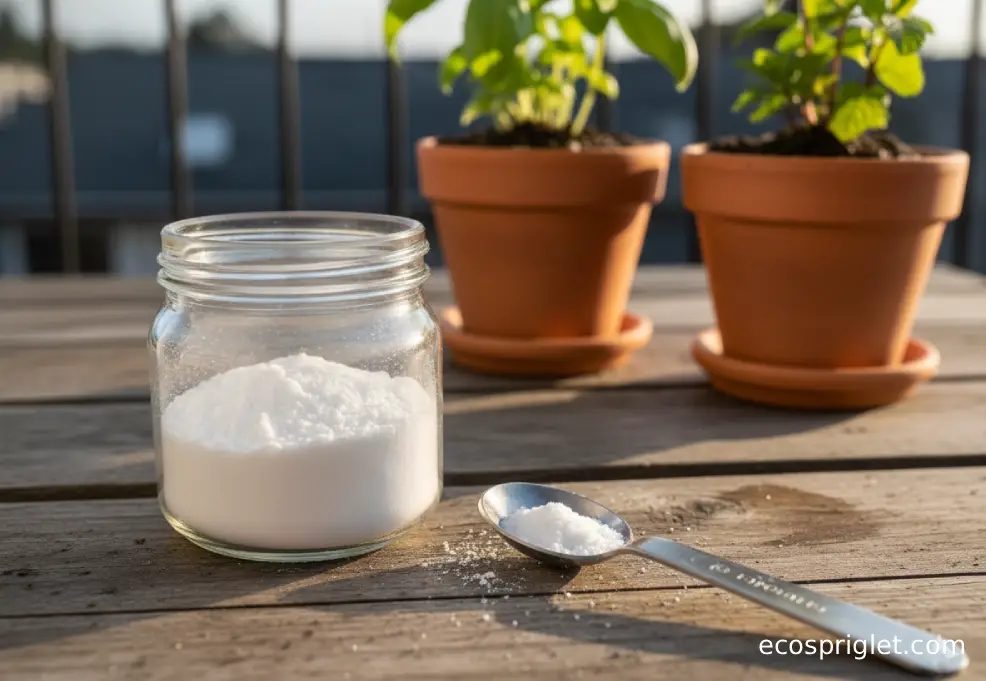
Is Baking Soda Good for Plants or a Fast Track to Leaf Burn?
So, is baking soda good for plants? Sometimes—if you treat it like a carefully measured tool, not a tonic.
Most of the horror stories I hear come from one of these moves:
- Spraying too strong. “A little worked, so I doubled it.” That’s a classic leaf-scorch recipe. Extension resources repeatedly flag higher-than-recommended concentrations as a cause of damage.
- Spraying at the wrong time. Full sun + warm temps + a DIY spray is where tender leaves get punished. Clemson’s HGIC guidance on powdery mildew mixes also cautions about using oils in high heat (they often note avoiding applications around 90°F).
- Treating soil like it’s a chemistry experiment. Baking soda adds sodium. In containers, sodium can accumulate and interfere with water uptake and nutrient balance. If you’ve ever had a pot that suddenly starts acting “hydrophobic” and cranky despite good watering habits, salt buildup is one suspect.
If you want to try baking soda in the garden, the “good” version is: dilute, spray, and spot-test first. Which brings us to the actual mixing.
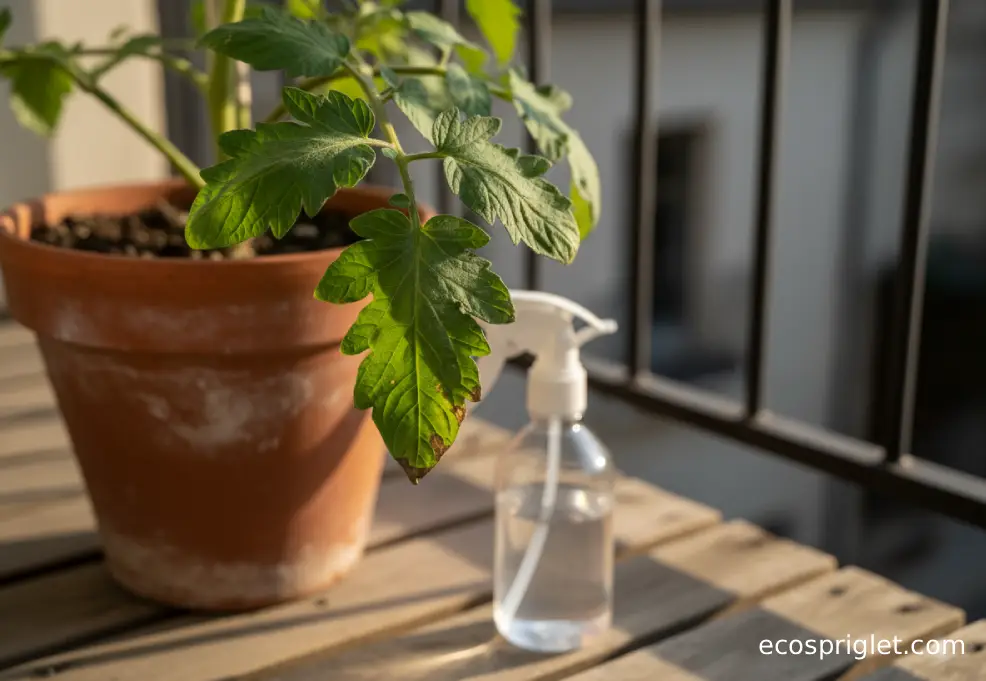
Baking Soda Spray for Plants: A Safe Balcony Recipe and Schedule
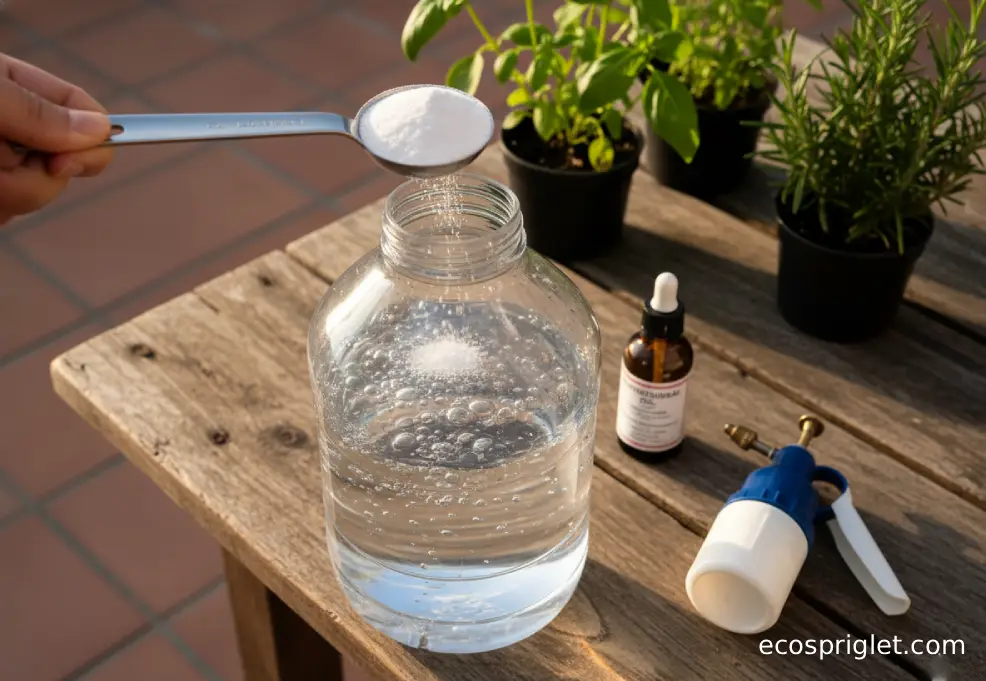
There are a few Extension-backed versions of a baking soda and water for plants mix. The common thread: about 1 tablespoon per 1 gallon of water, often paired with a small amount of horticultural oil as a spreader-sticker. UCANR shares a Cornell-developed homemade spray approach using baking soda with ultrafine canola oil; NC State Extension’s handbook also lists a similar preventive mix and warns that stronger concentrations can scorch leaves. UW–Madison Extension provides a comparable ratio (they list a baking soda + horticultural oil combo) and recommends pretesting on a small area.
| Goal | Starting Mix (per 1 gallon water) | How Often |
|---|---|---|
| Early powdery mildew prevention | 1 tbsp baking soda + 1 tbsp summer horticultural oil | Every 7–14 days (or per Extension guidance) |
| When mildew pressure is high | Same mix, but apply more consistently | About weekly; some sources suggest more frequent preventives |
My balcony-safe method (because containers are less forgiving):
- Spot-test first: Spray a few leaves, wait 24 hours. If you see spotting, curling, or crispy edges, stop.
- Spray timing: Early morning or evening. Avoid hot afternoons, and don’t spray stressed plants.
- Coverage: Mist until leaves are evenly coated but not dripping, including undersides where mildew likes to start.
- Rinse plan: If you accidentally overapply, a gentle rinse with plain water later can help reduce residue.
If you’re dealing with recurring powdery mildew on balcony cucumbers, squash, rosemary, or even ornamentals, also fix the environment: give plants more spacing, prune for airflow, and water at the soil line (not overhead). Those steps often outperform any spray.
Baking Soda on Tomato Plants: When It’s Worth Trying
Tomato plants and baking soda get paired up constantly online, usually for fungus. Here’s the grounded version: a baking soda spray can be a supporting player for surface fungal issues like powdery mildew, especially if you catch it early and combine it with better airflow. It is not a magic shield against every tomato disease, and it won’t fix problems rooted in watering swings, nutrient imbalance, or poor light.
When I first tried baking soda on tomato plants, I did what a lot of people do: I sprayed more often because I was anxious. Within a week, a few leaves looked tired and speckled—nothing catastrophic, but enough to remind me that tomatoes are productive, not delicate… until we start experimenting on them.
If you’re considering baking soda for tomato plants, use these guardrails:
- Use it only as a foliar spray (properly diluted) and only when mildew is the problem you’re actually seeing.
- Avoid soil applications around the base. In containers, sodium accumulation is a real risk.
- Don’t spray in heat or intense sun. Oils + heat can increase injury risk; several Extension resources caution against hot-weather oil sprays.
And if your tomato issue is leaf spots that aren’t powdery, don’t assume baking soda is the answer. For anything spreading fast, it’s often better to remove infected leaves, improve airflow, and consider a labeled product appropriate for edible crops (Extension sites typically stress following label directions). When you want a full balcony tomato routine, How to Grow Tomatoes in Pots can help you troubleshoot the basics first.
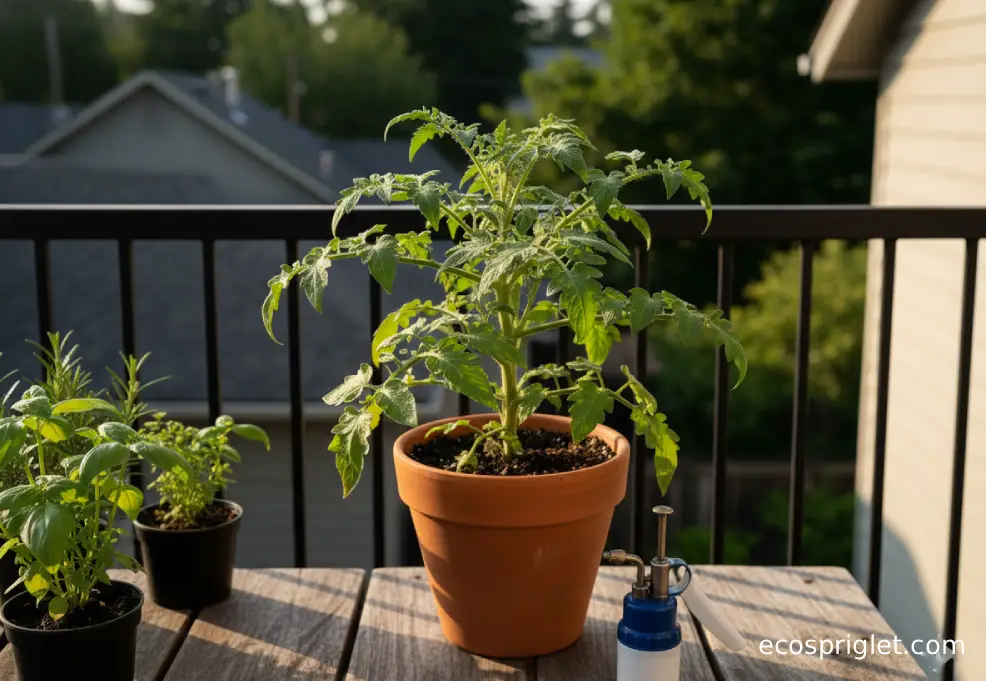
Too Much Baking Soda on Tomato Plants: Signs and Quick Fixes
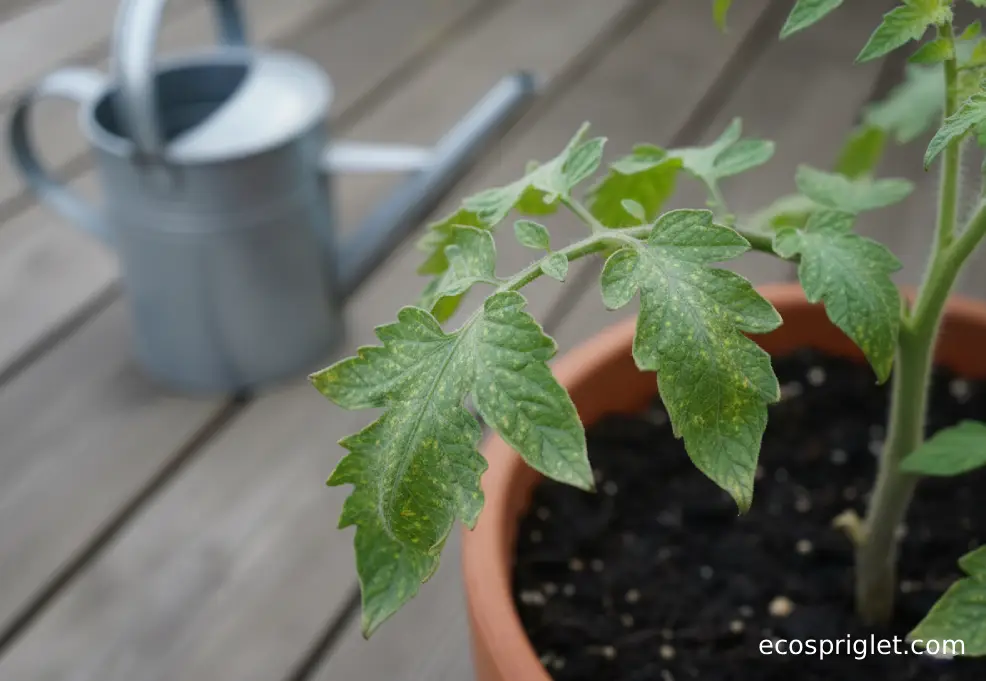
If you’ve ever wondered about too much baking soda on tomato plants, it usually shows up as plant stress that looks annoyingly non-specific. Common signs after spraying too strong or too often include:
- Leaf edges turning crispy or brown (a “burned” look)
- Speckling or spotting that appears within a day or two of spraying
- Leaves curling or looking dull and dehydrated even when the soil is moist
What to do: Stop spraying. Rinse foliage gently with plain water later the same day (or the next morning), and remove badly damaged leaves if they’re not contributing much. Then focus on the fundamentals: water at the base, keep the top 1–2 inches of potting mix evenly moist (not soggy), and give the plant breathing room. If you’ve been dusting baking soda into the potting mix, do a slow “flush” watering: water until you get steady drainage, pause 10 minutes, then water again. That helps move salts downward and out—something container plants depend on.
If damage keeps happening even with gentle mixes, switch tactics. For powdery mildew, labeled horticultural oils, sulfur products (used appropriately), or biofungicides can be more consistent than DIY solutions—especially in humid microclimates created by balcony walls and tight spacing.
Brown Sugar and Baking Soda for Plants: Why This Trend Doesn’t Hold Up
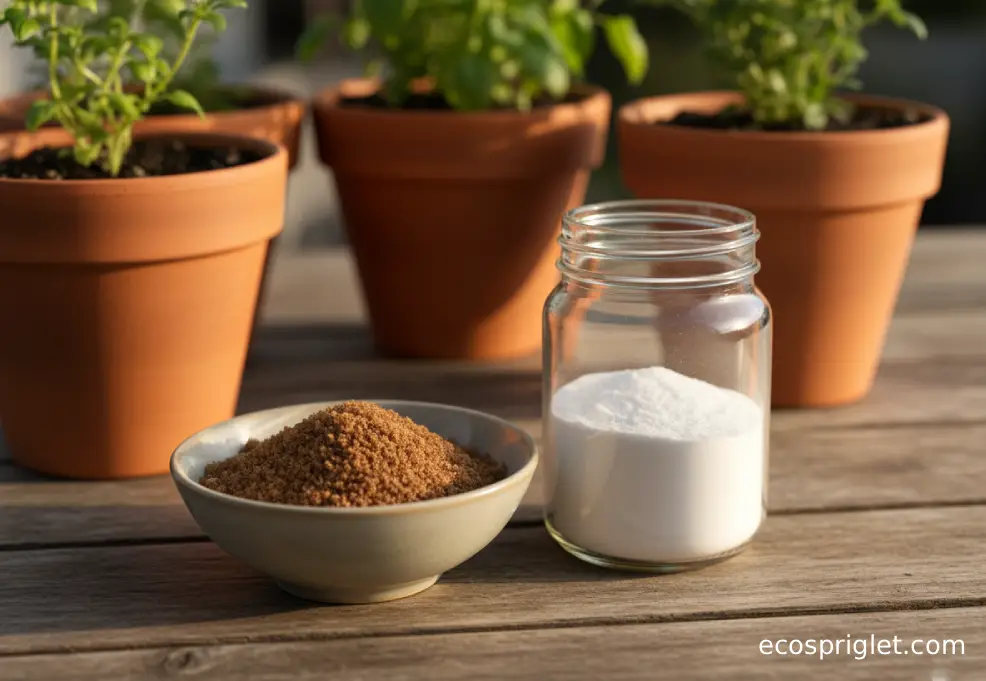
I get why this one spreads: it sounds like a “feed the microbes” idea, plus baking soda’s fungus reputation. But in real container life, brown sugar and baking soda for plants is more likely to create side effects than benefits.
Here’s what’s happening in plain language:
Sugar doesn’t equal plant food. Plants make sugars through photosynthesis. Pouring sugar into a pot can feed microbes (and sometimes pests), but it doesn’t reliably translate into healthier roots or better yields in a balcony container.
Baking soda adds sodium. Sodium is not a nutrient your tomatoes are begging for. In pots, it can accumulate, making it harder for roots to manage water and nutrients.
If you want a “microbe-friendly” move that actually fits containers, top-dress with ½–1 inch of finished compost (not raw kitchen scraps) and keep mulch light so the surface can dry a bit between waterings. That’s a far more predictable way to support soil life without turning your pot into a sticky science project.
Common Mistakes New Balcony Gardeners Make With Baking Soda
I learned this the hard way: DIY sprays feel “gentle” because they’re homemade. But plants don’t care if something came from your pantry—concentration and timing still matter.
| Mistake | Fix |
|---|---|
| “If it’s good for fungus, I’ll sprinkle it in the pot.” | Keep baking soda off your potting mix; use foliar sprays only when needed. |
| Spraying in midday sun. | Spray early morning or evening, and avoid hot, bright conditions. |
| Skipping the spot-test. | Test a few leaves and wait 24 hours before treating the whole plant. |
| Treating mildew without improving airflow. | Space pots, prune crowded growth, and water at the base. |
If you’re dealing with repeated fungal issues, step back and check your setup: are your pots packed tight against a warm wall? Are you wetting leaves every night? A small change—like moving two pots 6 inches apart—can do more than any spray.
Better Alternatives to Baking Soda in the Garden for Fungus and General Plant Health
If your main question is “is baking soda good for vegetable plants?” my honest answer is: it’s not my first pick. It’s a sometimes-tool for a specific job. For most balcony growers, these options are more dependable:
For powdery mildew: Start with airflow + morning watering + removing heavily infected leaves. Then consider a labeled horticultural oil product (follow label directions) or other registered options recommended by Extension resources for edibles. UW–Madison Extension and Clemson HGIC both discuss fungicide options and the importance of using products labeled for edible crops.
To support leaf health and resilience, use a consistent feeding plan instead of pantry experiments. For container vegetables, I like a slow-release fertilizer mixed into potting mix at planting, plus a light liquid feed during heavy fruiting—following product directions carefully.
The underrated “clean garden wins” matter too: sanitize pruners, remove fallen leaves from pot surfaces, and keep your balcony floor clear of plant debris. Those simple habits reduce disease pressure more than most DIY sprays.
Other Uses of Baking Soda in the Garden That Actually Make Sense
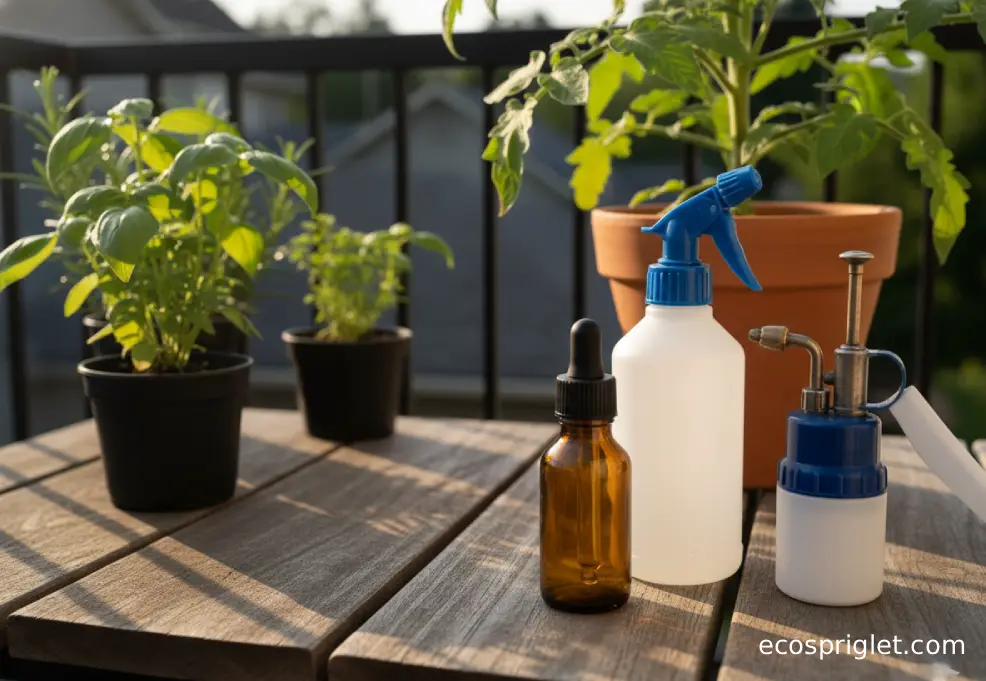
If you love baking soda because it’s handy, here are uses for baking soda in the garden that I’m much more comfortable recommending—because they don’t involve salting your soil or stressing leaves:
- Cleaning pots and trays: A baking soda paste (baking soda + a little water) works well for scrubbing mineral crust and grime before you reuse containers.
- Deodorizing empty compost caddies: A sprinkle + rinse can help reset smells (especially helpful for apartment kitchens).
- Gentle scouring for tools: Good for trowels, plant saucers, and plastic trays that picked up algae.
That’s the lane where baking soda shines: cleaning and deodorizing. For plant health, keep it targeted and minimal.
Baking soda for plants is one of those “it depends” tools: it can help slow powdery mildew when mixed correctly and used at the right time, but it’s easy to overdo—and container gardens punish overuse fast. If you remember just two things, make them these: don’t put baking soda in your pots, and always spot-test a diluted spray before you treat a whole plant. For tomatoes, that caution matters even more; baking soda on tomato plants is best treated as an occasional, early-stage mildew tactic, not a routine.
If fungal problems keep coming back, treat the cause: airflow, spacing, watering at the base, and pruning crowded leaves. Then reach for more consistent options (like labeled horticultural products) if you need them.