Potatoes feel like the “always-there” staple—until you find a sprouted bag behind a cereal box, or a sad sweet potato that went squishy overnight. If you’re an apartment dweller with limited pantry space (and a fridge that’s always too full), knowing the realistic shelf life of potatoes can save money and help you avoid sketchy dinners.
Here’s the short version: raw potatoes last the longest in a cool, dark, well-ventilated spot, while cooked potatoes follow standard leftover rules. Sweet potatoes play by slightly different storage rules than white potatoes, and the fridge can be helpful for leftovers—but not always ideal for raw spuds. I’ll walk you through timelines you can actually use, how to set up a small-apartment storage “zone,” and the spoilage signs that matter most.
Potato Shelf Life at a Glance
Use these as everyday, apartment-friendly ranges. Your exact timeline depends on temperature, humidity, airflow, and whether any potatoes were bruised or already starting to sprout.
| Type | Best Storage Spot | Typical “Good Quality” Window |
|---|---|---|
| Raw potatoes (white/russet/yellow/red) | Cool, dark, ventilated (not the fridge) | About 2–12 weeks (shorter in warm kitchens) |
| Raw sweet potatoes | Cool (but not cold), dark, dry | About 1–8 weeks (often ~2 months in ideal conditions) |
| Cooked potatoes (plain) | Refrigerator (≤40°F) | 3–4 days |
| Mashed potatoes | Refrigerator (≤40°F) | 3–4 days |
| Potato salad | Refrigerator (≤40°F) | About 3–5 days (depends on ingredients) |
How Long Do Raw Potatoes Last in an Apartment Pantry?
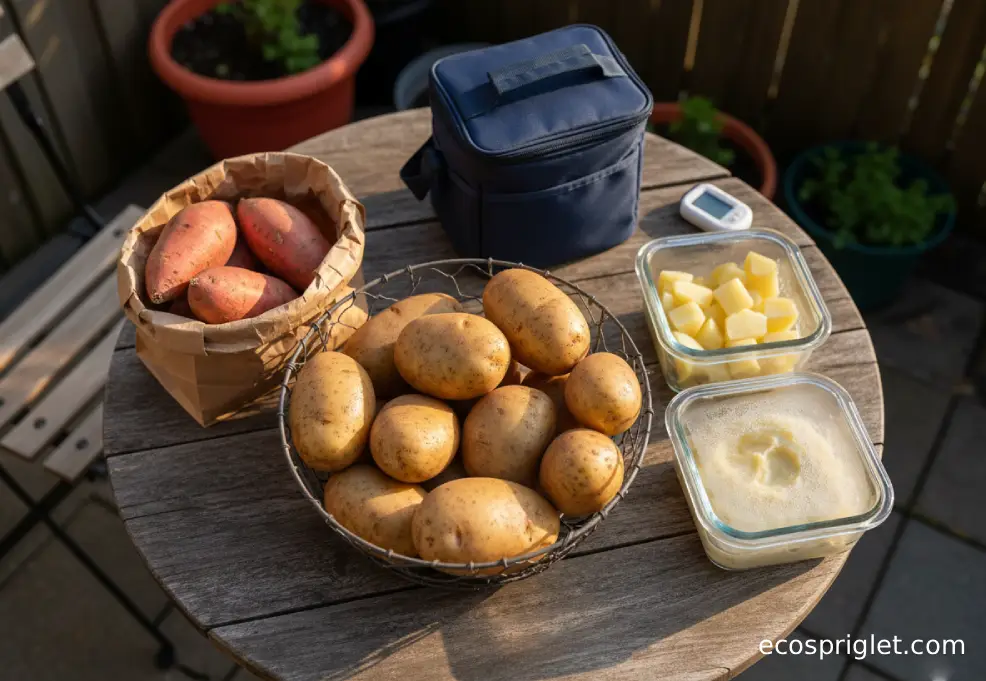
In most apartments, “pantry temperature” swings a lot—especially if your kitchen runs warm or the storage spot is near an oven, dishwasher, or sunny window. For the longest life, potatoes want it cool and dark with airflow. Michigan State University Extension-style guidance commonly points to a cool, dark, ventilated area around the mid-40s to ~50°F as a sweet spot. In real apartment terms, that often means the lowest, darkest cabinet away from heat, or a closet shelf that stays cooler than the kitchen.
A quick rule I use at home: if the spot feels noticeably warmer than the rest of the apartment, your potatoes will act like it’s “fast-forward mode.” Expect closer to 1–2 weeks before sprouting or softening. If you can keep them cooler and well-ventilated, you may get several weeks, sometimes longer.
- Best container: a wire basket, mesh bag, or paper bag left open at the top (avoid sealed plastic).
- Light control: keep them truly dark to reduce greening.
- Air + dryness: don’t wash before storing; moisture shortens shelf life.
Common beginner mistake: storing potatoes in a closed plastic bag under the sink. That spot often traps humidity (and sometimes cleaning fumes), which can speed up rot. Swap to a breathable basket and move them to a darker, cooler shelf.
How Long Do Sweet Potatoes Last (And Why the Fridge Is Tricky)?
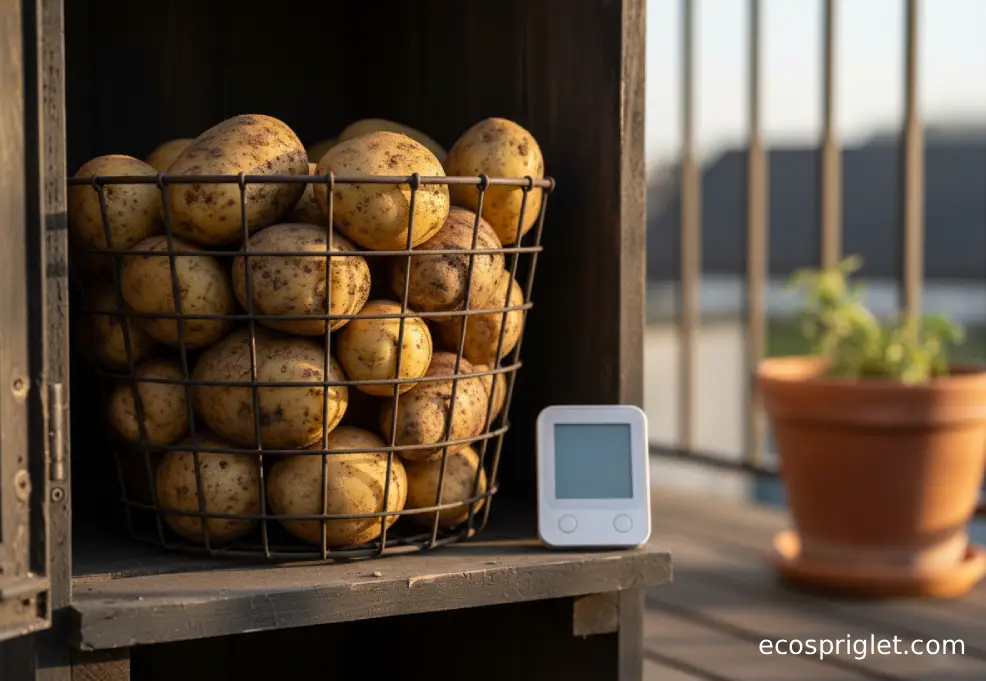
Sweet potatoes are more sensitive to cold than regular potatoes. Extension guidance often recommends storing them around the mid-50s to ~60°F in a dark, dry place, and avoiding refrigeration for raw sweet potatoes because cold can cause quality problems (think hard centers and off flavors). In a warm apartment, you might only get 1–2 weeks before they start to dehydrate or sprout, but in a cooler spot you can often keep them for several weeks—sometimes up to around two months in decent conditions.
If you only have two options—warm countertop or fridge—choose the cooler indoor spot that stays dry and shaded. If you do refrigerate raw sweet potatoes anyway, they’re usually not “instantly unsafe,” but quality can drop fast. I treat that as a last resort and plan to cook them soon.
Should You Refrigerate Raw Potatoes?
For most home cooks, the simplest guidance is: keep raw potatoes in a cool, dark place—not the fridge—unless you have a very specific reason. Some food and agriculture guidance warns that cold storage can convert more starch to sugars, which can change taste and browning behavior when you cook at high heat. If your goal is crispy oven fries or roasted potatoes, raw-fridge storage is rarely your best move for quality.
That said, if your apartment is consistently hot (summer heat + tiny kitchen), refrigeration can slow sprouting. If you do refrigerate raw potatoes, keep them in a breathable paper bag in the crisper, then let them warm up at room temperature for a bit before cooking to help with more even browning.
How Long Do Cooked Potatoes Last in the Fridge?
Cooked potatoes follow standard leftover safety guidance: refrigerate promptly and aim to eat within about 3–4 days when stored at ≤40°F. If you won’t get to them in that window, freezing is the better plan for safety and convenience (quality is usually best within a few months).
Two practical tips that make a big difference in small kitchens:
- Cool fast, store shallow: spread hot potatoes in a shallow container so they chill quickly (big deep tubs stay warm too long).
- Portion what you’ll actually eat: smaller containers mean less “open-and-warm” time every time you grab a serving.
Common mistake: letting a pot of boiled potatoes sit on the stove until bedtime. Food-safety guidance emphasizes getting perishable cooked foods into the fridge in a timely way (the “two-hour rule,” shorter in hot weather). When in doubt, cool, cover, and refrigerate sooner.
How Long Do Mashed Potatoes Last in the Fridge?
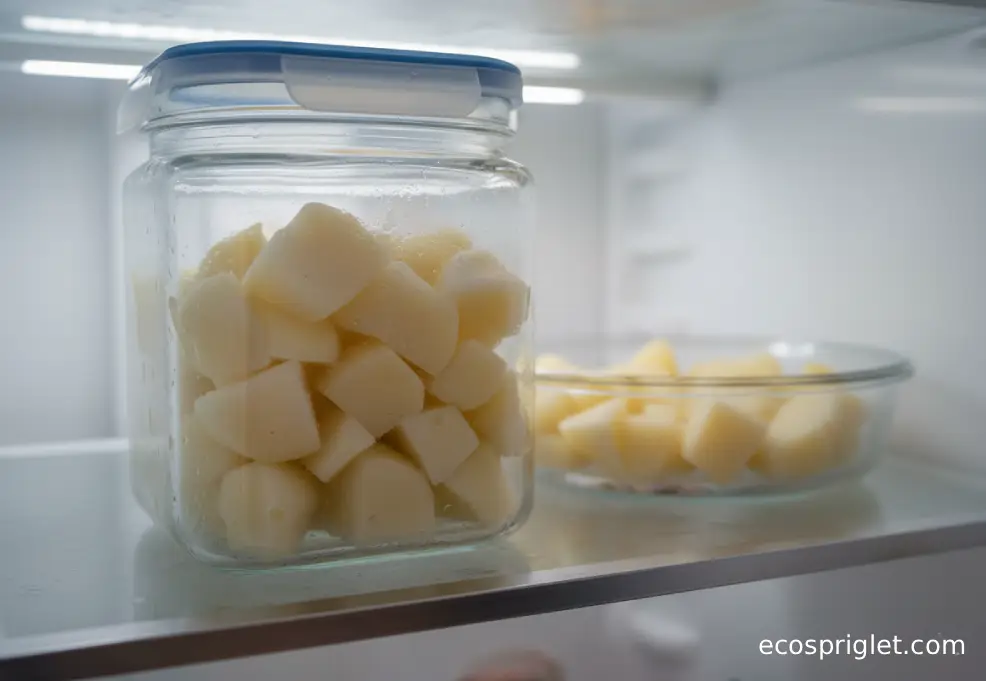
Mashed potatoes are still “leftovers,” and the safest, easiest rule is the same: 3–4 days in the fridge when stored at ≤40°F. Because mashed potatoes often include dairy (milk, butter, sour cream), I don’t stretch the timeline “just because they smell fine.” If I’m not going to eat them by day four, I freeze them.
Apartment-friendly quality trick: add a small splash of milk (or a pat of butter) when reheating, and reheat gently. Overheating can turn the texture gluey.
How Long Does Potato Salad Last (And When to Toss It)?
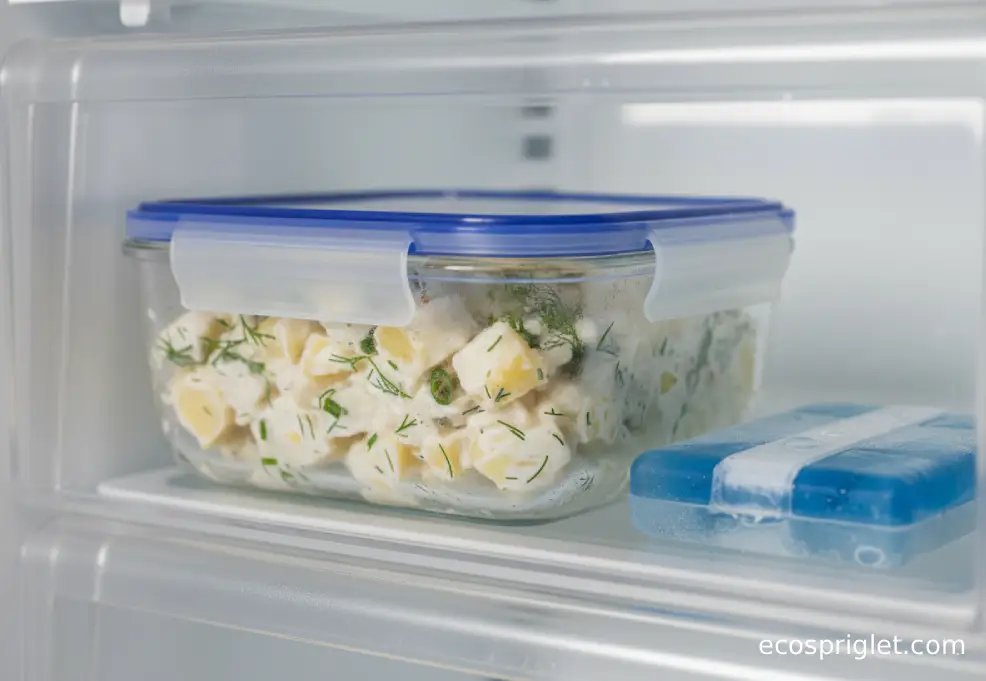
Potato salad is one of those foods that can go from “perfect” to “questionable” quickly if it sits out. Keep it cold and covered, and follow the same basic leftover window—often around 3–5 days in the refrigerator for best safety and quality, depending on ingredients (mayo, eggs, chopped veggies) and how well it stayed chilled.
Two outdoor rules I stick to for picnics and rooftop hangouts:
- Don’t let it sit out over 2 hours (or over 1 hour if it’s above 90°F).
- Serve it on ice if it’s going to be out for more than a quick plate-and-eat moment.
When to toss it immediately: if it was left out too long, smells sour or “fermenty,” looks watery and separated, or has a slimy texture. Potato salad isn’t the place to be brave.
Common Mistakes to Avoid (I Learned These the Hard Way)
I remember my first “tiny pantry” phase in Portland: I stored potatoes and onions together in the darkest cabinet and felt very organized—right up until the potatoes started sprouting like it was their side hustle. I didn’t connect the dots at first, but crowding, warmth, and poor airflow were doing me no favors.
- Don’t store in sealed plastic: trapped moisture encourages rot.
- Don’t ignore greening: green skin is a warning sign (light exposure), and heavily green potatoes are better discarded than “trimmed and hoped for.”
- Don’t “set and forget” big bags: check weekly and pull any soft or rotting potato so it doesn’t spoil the rest.
- Don’t wash before storage: store them dry; wash right before cooking.
If you want a simple apartment system, try this: one breathable basket for potatoes, kept low and dark; one small bin for onions, kept separate; and a once-a-week “quick scan” while you’re waiting for your coffee.
When Do Potatoes Go Bad?
Here’s what I treat as “done” versus “still usable”:
Usually Safe to Use (With a Little Prep)
If a potato has a few small sprouts but is still firm, many cooks will peel it, remove the sprouts and eyes, and cook it soon. Keep the bar high: if it’s sprouting because it’s old and warm, it’s not going to get better sitting longer.
Time to Toss
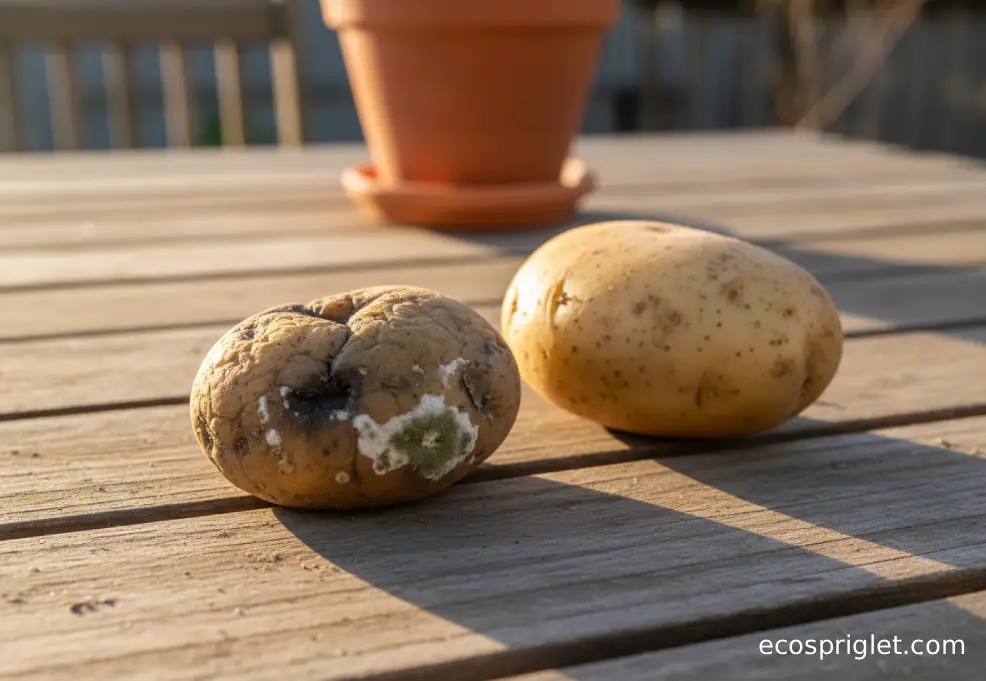
- Soft, squishy, or leaking: that’s rot territory.
- Mold: discard (don’t just cut it off).
- Strong off odor: sour, musty, or “chemical” smells are a no.
- Lots of sprouts + shriveled body: it’s used up its stored energy.
- Greening: light exposure caused chlorophyll; heavy greening is a strong discard signal.
When in doubt, I go by texture first. A potato that’s truly firm is usually still in the game; a potato that gives under finger pressure is telling you it’s time to let go.
If there’s one thing I want you to take from this: potatoes last longest when you treat them like a “cool, dark, breathable” pantry item, and cooked potatoes last safest when you treat them like any other leftover. In a small apartment, a simple setup—a wire basket on a low shelf, a quick weekly check, and shallow containers for leftovers—does more than any fancy hack.
Aim for raw potato storage that’s cool and dark with airflow, keep raw sweet potatoes out of the cold, and follow the dependable 3–4 day refrigerator window for cooked potatoes and mashed potatoes. For potato salad, be extra strict about time and temperature, especially in warm weather.